What Makes a Closed-Toe Sandal Good for Plantar Fasciitis?
The best closed-toe sandals for plantar fasciitis pair firm, contoured arch support with a stable heel cup, cushioning, and a secure fit. Choose a roomy toe box and adjustable straps so your toes can spread without your foot sliding. Avoid flat, floppy soles: a covered toe alone does not support the plantar fascia.
Closed-toe styles add protection for travel and daily walks, but comfort depends on the footbed and fit. In this roundup, we compare supportive options and the trade-offs that matter most.
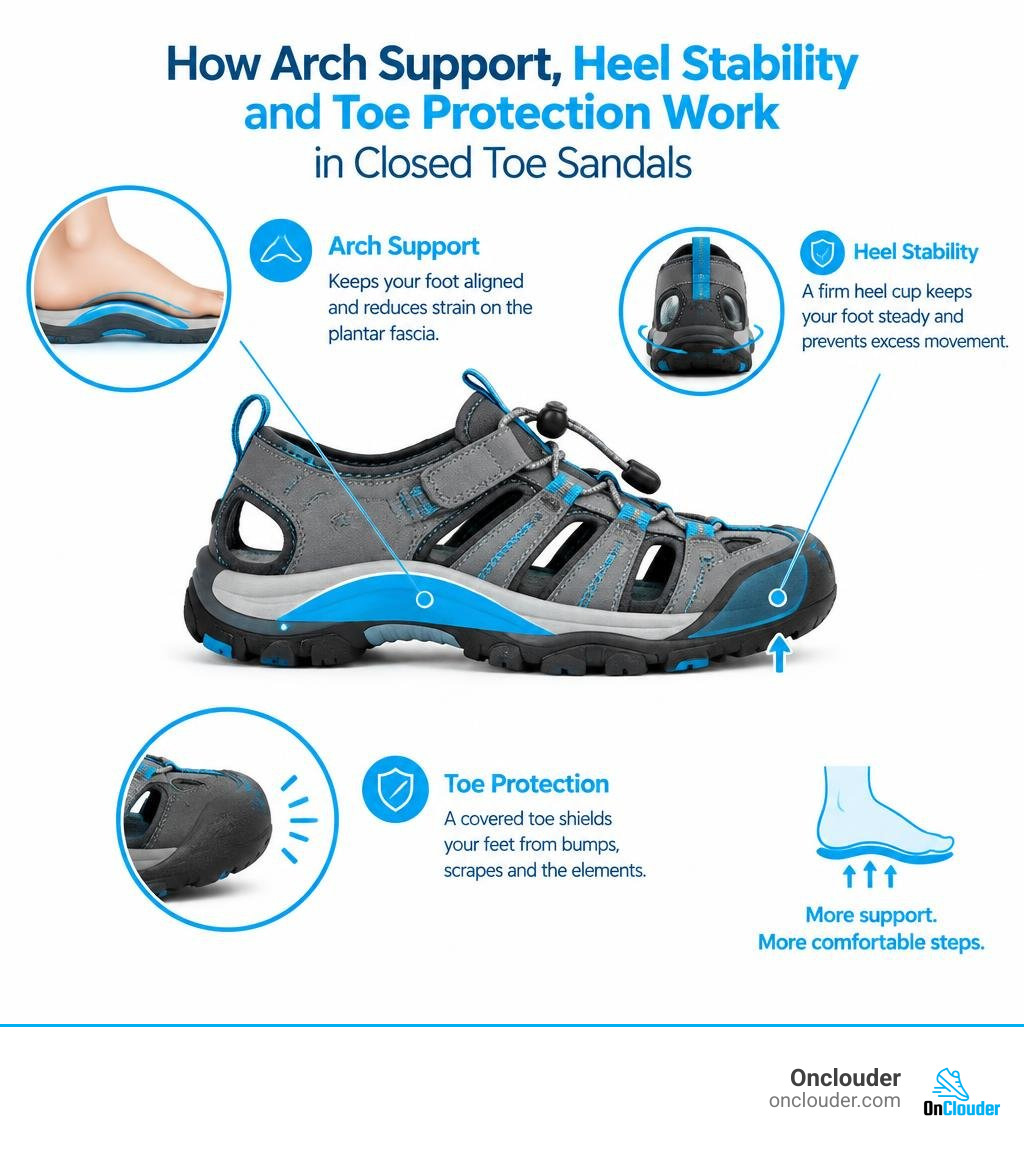
Best closed toe sandals for plantar fasciitis word guide:
- best casual women’s shoes for plantar fasciitis
- best indoor sandals for plantar fasciitis
- best hiking sandals for plantar fasciitis
Essential Anatomy of Supportive Closed Toe Footwear
When dealing with chronic morning heel pain, ditching supportive sneakers for flimsy summer footwear can quickly cause symptoms to flare up. The plantar fascia—a thick band of tissue running along the bottom of your foot—requires continuous support to prevent micro-tears and chronic inflammation.
To keep your feet pain-free, supportive closed-toe sandals rely on specific structural components:
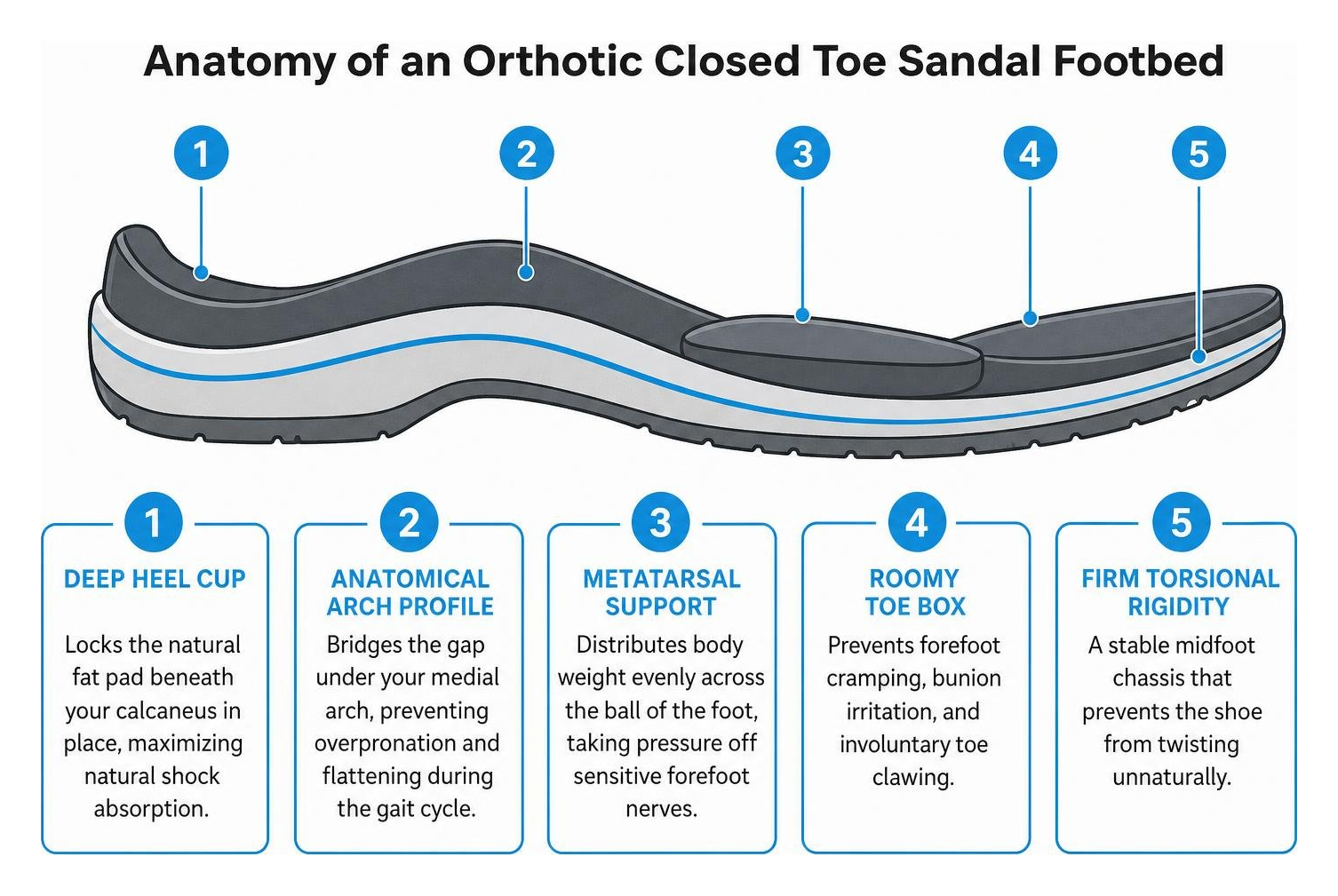
- Deep Heel Cup: Locks the natural fat pad beneath your calcaneus in place, maximizing natural shock absorption upon heel strike.
- Anatomical Arch Profile: Bridges the gap under your medial arch, preventing overpronation and flattening during the gait cycle.
- Metatarsal Support: Distributes body weight evenly across the ball of the foot, taking pressure off sensitive forefoot nerves.
- Roomy Toe Box: Prevents forefoot cramping, bunion irritation, and involuntary toe clawing.
- Firm Torsional Rigidity: A stable midfoot chassis that prevents the shoe from twisting unnaturally.
For a broader breakdown of how footwear mechanics impact foot health, explore The Definitive Guide to Best Shoes for Foot Pain.
Key Features That Define the Best Closed Toe Sandals for Plantar Fasciitis
Finding the best closed toe sandals for plantar fasciitis requires checking for structured support rather than soft, pillowy cushioning alone. While ultra-plush foam feels great for the first ten minutes, unsupportive foam compresses quickly and leaves your plantar fascia vulnerable to strain.
- Structured Arch Contouring: A supportive footbed holds its shape under full body weight. Sandals engineered with anatomical arch profiles help align the lower limbs, easing strain on ankles, knees, and lower back.
- Heel Stabilization: A slight heel lift (typically between 0.8 and 1.2 inches) takes direct tension off the Achilles tendon and plantar fascia insertion point.
- Adjustable Enclosures: Multi-point hook-and-loop straps or functional buckle systems keep your foot firmly seated against the footbed contour, eliminating internal friction and heel slippage.
- Targeted Pressure Redistribution: Anatomically molded footbeds spread ground reaction forces across the entire plantar surface rather than concentrating pressure on the heel spur region.
If you enjoy open-back styles around the house, compare these designs with Top Podiatrist Picks for Plantar Fasciitis Flip Flops and Best Flip Flops for Plantar Fasciitis Women’s Podiatrists Recommend.
Materials for Durability and Shock Absorption
The materials used in an orthotic sandal determine its lifespan, breathability, and impact protection:
- Natural Leather & Suede Uppers: Premium leather conforms over time to your foot shape without stretching out of control. It offers natural breathability and friction-free contact over bunions or hammertoes.
- Cork and Latex Composite Footbeds: Cork blends provide an ideal balance of firmness and responsive flex. Cork naturally absorbs ground shocks while molding slightly to your unique foot imprint over time.
- Dual-Density EVA Midsoles: Ethylene-vinyl acetate (EVA) provides lightweight cushioning. Dual-density formulations place firmer EVA under the arch for stability and softer EVA beneath the heel pad for shock dissipation.
- Durable Rubber Outsoles: Non-marking, slip-resistant rubber outsoles deliver dependable traction across wet pavements, cobblestones, and light gravel trails.
For those requiring deeper structural correction inside enclosed shoes, pairing proper footwear with The Best Arch Support Insoles for Total Foot Relief or reading An Essential Guide to Best Shoes for Arch Support can provide useful baseline benchmarks.
Top Picks: Best Closed Toe Sandals for Plantar Fasciitis Compared
To help you find the right fit for your summer plans, travel itineraries, and daily routines, we evaluated the leading orthotic models across several key categories.
| Model / Style Profile | Primary Arch Support Mechanism | Midsole & Cushioning | Width / Fit Profile | Standout Feature | Price Range |
|---|---|---|---|---|---|
| ABEO Oasis Cross | Built-In BIOsystem® 3D Orthotic | Memory Foam Mid-layer & Rubber Outsole | Roomy Toe Box, Adjustable Straps | Optional Metatarsal Pad; 4.9/5 User Rating | Premium ($120–$150) |
| Aetrex Jillian | Signature Built-In Orthotic Contour | Ultra-Light Cork & Memory Foam | Standard with Adjustable Velcro | 1.1-inch Heel Lift, Antimicrobial Microfiber | Mid-to-High ($139.95) |
| Strive Anguila | Biomechanical Footbed Technology™ | Lightweight EVA with Elevated Heel Lift | D+ Width Fitting | APMA-Approved, Natural Leather Upper | Mid-Range (£62.97 / ~$80) |
| Pimali EVA Comfort Slide | 15° Ergonomic Contour | 4cm Thick Compression EVA | Wide Fit with Dual Buckles | 180g Ultra-lightweight, 100% Waterproof | Budget (£25.99 / ~$35) |
| PowerStep ArchWear | Neutral Arch Contour with Deep Heel Cradle | Cushioning EVA with Textured Footbed | Standard Men’s Width | Webbing Straps, Pronation Alignment | Budget-Friendly ($69.95) |
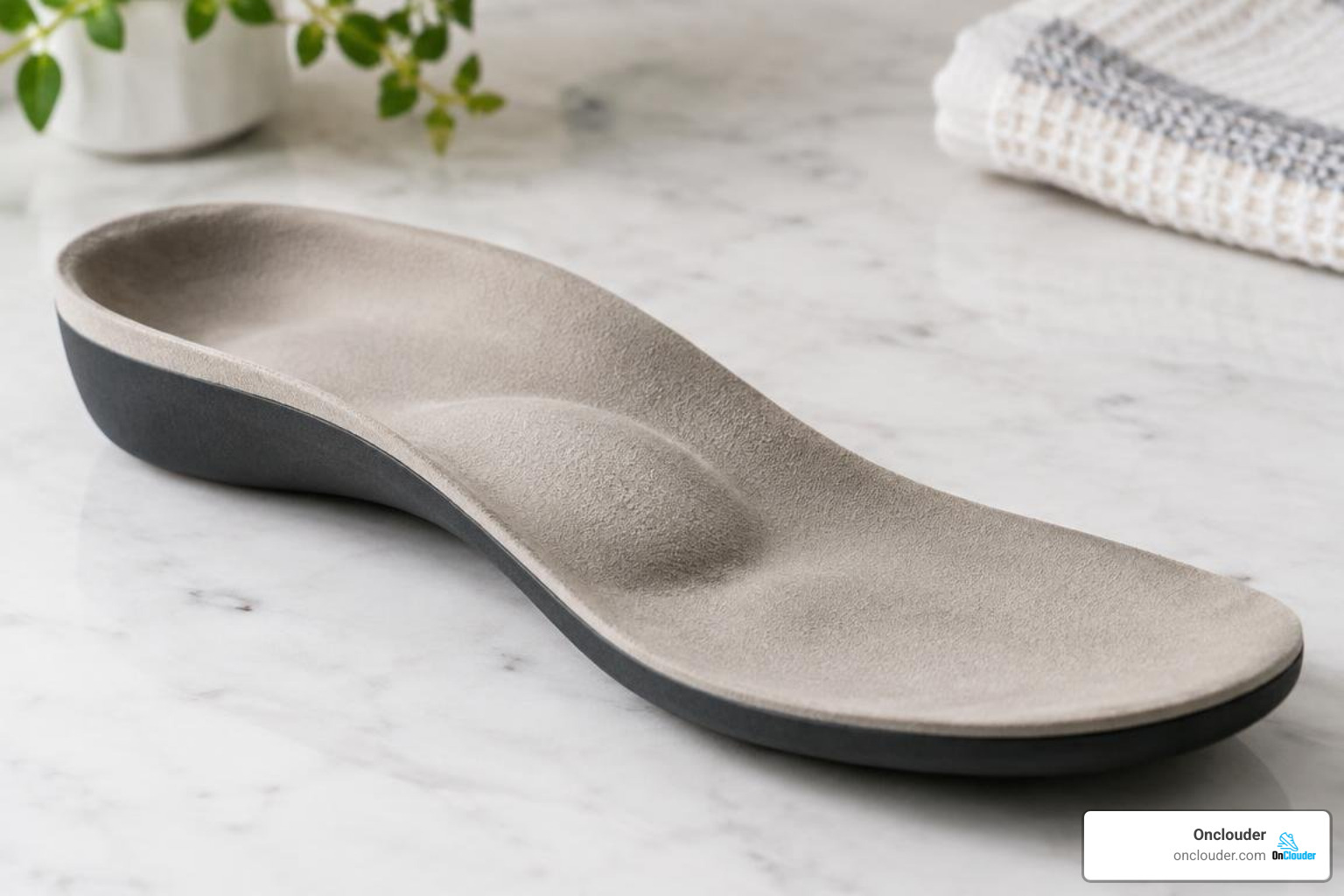
Built-In Orthotic Support
The Oasis Cross – The Walking Company represents a high standard for therapeutic closed-toe styling. Built around a proprietary BIOsystem® orthotic footbed, it provides balanced alignment and responsive shock attenuation directly out of the box.
- Orthotic Insole Integration: Features built-in anatomical arch contouring that cradles the longitudinal arch and stabilizes overpronation.
- Metatarsal Relief: Available with an integrated metatarsal pad that offloads pressure from the ball of the foot, helping manage conditions like Morton’s neuroma alongside plantar fasciitis.
- Adjustable Leather Uppers: Premium leather straps across the forefoot and ankle allow easy customization if your feet tend to swell during warm weather.
- Proven Satisfaction: The sandal holds a 4.9 out of 5-star rating across 19 verified reviews, with owners giving it a 5.0 out of 5 for overall comfort.
If you are currently evaluating clinical options, reviewing Podiatrist-Approved Best Shoes for Plantar Fasciitis provides helpful context on how built-in orthotics compare to podiatrist-prescribed footwear.
Memory Foam and Cork Support
For warm-weather walking that rivals traditional athletic shoes, the Best Sandals for Plantar Fasciitis This Summer | Aetrex – aetrex Jillian line stands out as an exceptional performer.
- Dual-Layer Midsole Architecture: By layering slow-recovery memory foam over a lightweight cork base, the footbed cushions heel strike without bottoming out under your arch.
- Protective Geometry: A gentle 1.1-inch heel lift reduces strain on the Achilles tendon and plantar fascia insertion.
- Odor and Friction Control: The antimicrobial microfiber footbed lining wicks moisture and prevents slipping during long days on your feet.
- Travel-Ready Comfort: Verified user reviews highlight pain-free days exploring theme parks and walking over European cobblestones.
While custom specialist orthotics typically range from $200 to $500, the Aetrex Jillian delivers integrated medical-grade arch support at a reasonable $139.95.
Biomechanical Footbed Technology
If you are looking for an elegant style suitable for dressier summer events, the Strive Footwear I Anguila Women’s Orthotic Sandals with Arch Support to help Plantar Fasciitis brings podiatrist-designed structure to a sleek silhouette.
- Biomechanical Footbed Technology™: Reshapes conventional flat footbeds into a 3D contour that mimics the natural shape of a healthy foot.
- Posture-Aligning Elevation: Features an elevated heel lift and memory foam cushioning designed to reduce stress on your knees and lower back.
- D+ Width Fit: Accommodates natural toe splay, providing a secure fit that won’t pinch the forefoot.
- Premium Materials: Built with soft natural leather uppers, an EVA midsole, and a durable rubber outsole. Reduced from £89.95 to £62.97 GBP, it delivers excellent value for an APMA-approved design.
For additional stylish footwear options, check out our guide on Top Ecco Picks to Ease Plantar Fasciitis Strain Without Sacrificing Style.
Ultralight Waterproof EVA Cushioning
For beach days, poolside lounging, or recovery wear around the house, the Sandals for Plantar Fasciitis – Women’s Orthopedic Arch Support Sandals | Wide Fit EVA | Pimali – Pimali offers an affordable, waterproof option.
- Thick Shock-Absorbing Platform: Features a 4cm thick compression-molded EVA sole that absorbs ground impact on hard tile and pavement.
- 15° Ergonomic Contour: An angled arch profile keeps your foot supported and prevents it from flattening out.
- Featherlight Build: Weighing just 180 grams per shoe, it keeps foot fatigue to a minimum during casual walks.
- Accessible Value: Priced at £25.99 (reduced from £49.99), it serves as an economical alternative to pricier orthotics.
Men seeking supportive casual sandals can also look into the Orthopedic Sandals with Arch Support | Plantar Fasciitis Relief For Men – PowerStep ArchWear ($69.95, averaging 3.63/5 across 141 reviews), or read The Ultimate Reddit Guide to Men’s Plantar Fasciitis Shoes.
Closed Toe vs. Open Toe Sandals for Plantar Fascia Relief
Choosing between closed-toe and open-toe sandals involves balancing breathability against stability and forefoot protection.
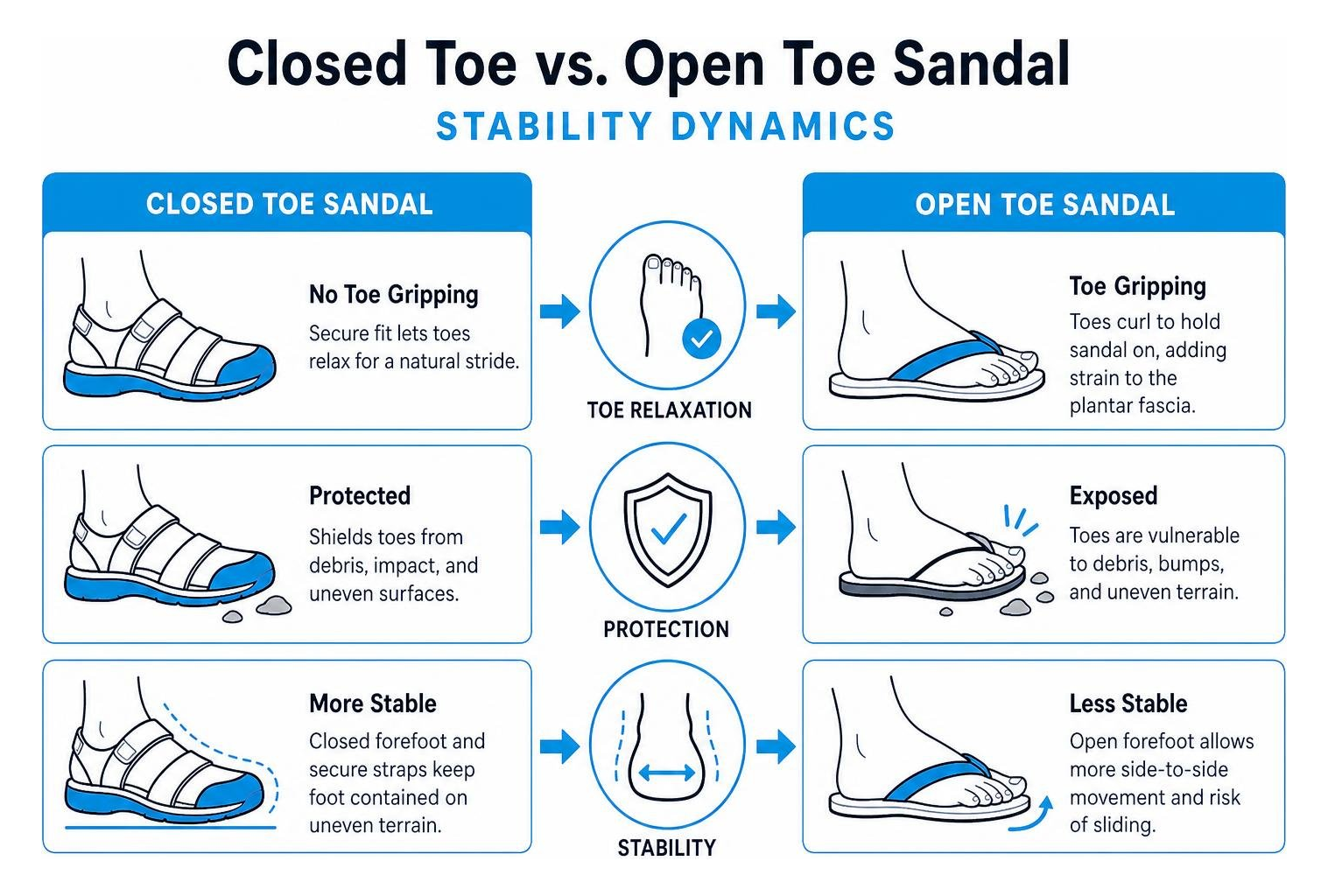
Key Functional Differences
- Elimination of Toe Gripping: Open-toe flip-flops often cause you to curl your toes with every step to keep the sandal on. This continuous contraction tensions the plantar fascia. Closed-toe sandals hold the foot securely via upper straps and toe bumpers, letting your toes relax into a natural stride.
- Debris and Hazard Protection: Closed-toe designs shield your toes from loose gravel, curbs, and uneven walking surfaces during travel and outdoor walks.
- Midfoot Enclosure and Stability: A covered forefoot provides better lateral containment, preventing your foot from sliding off the footbed on uneven terrain.
For indoor use where toe protection is less critical, you might consider Best Indoor Slippers for Women Suffering from Plantar Fasciitis to keep your arches supported on hard interior floors.
Sizing and Fit Guide for the Best Closed Toe Sandals for Plantar Fasciitis
Getting the right fit is essential to ensure your orthotic sandals support your feet properly:
- Measure Heel-to-Toe Length Accurately: Stand on a sheet of paper with your heel against a flat wall. Mark your longest toe, measure the length in centimeters, and compare it to the brand’s size chart.
- Allow Adequate Toe Clearance: Maintain roughly a thumb’s width (1/2 inch) of space between your longest toe and the inside front of the toe bumper. Your toes should never press against the front while walking downhill.
- Plan for Warm-Weather Swelling: Feet naturally expand slightly during warm weather and long days of walking. Choose designs with adjustable forefoot and instep straps to adapt as needed.
- Follow a Gradual Break-In Schedule: If you are new to structured biomechanical footbeds, wear your new sandals for 1 to 2 hours on the first day. Increase wear time gradually over several days to allow your arches to adapt comfortably.
For additional tips on fine-tuning fit, see The Best Arch Support Pads for Shoes to End Foot Pain and The Ultimate Guide to Arch Pads for Flat Feet and Pronation.
Frequently Asked Questions About Closed Toe Orthotic Sandals
Can closed toe orthotic sandals replace custom inserts for all-day walking?
Yes, high-quality models from brands like ABEO, Aetrex, and Strive feature built-in orthotic footbeds that mirror the support of custom inserts. While custom orthotics from a medical specialist typically cost between $200 and $500, supportive sandals priced between $60 and $140 provide targeted arch contouring, deep heel cradles, and cushioning in an integrated package.
If you alternate between sandals and athletic shoes, explore our performance guides on 10 Best Support Shoes for Plantar Fasciitis 2026 Expert Picks, The Best Arch Fit Shoes for Running and Walking, and Shoes That Are Best for Plantar Fasciitis.
Are closed toe sandals suitable for wide feet and bunions?
Yes, provided you choose models with a wide toe box and adjustable upper straps. Styles with D+ width fittings, soft unlined leather uppers, or adjustable hook-and-loop closures accommodate wider forefeet and bunions without painful rubbing.
For running shoe comparisons with generous toe boxes, check out Podiatrist Recommended Hoka Shoes for Plantar Fasciitis Relief and Top Hoka Shoes for Women Battling Plantar Fasciitis Pain.
What is the typical price range for quality orthotic sandals?
Quality closed-toe orthotic sandals generally fall into three price tiers:
- Budget EVA Recovery Styles ($30–$50): Lightweight, waterproof EVA designs like the Pimali Comfort Slide offer basic arch contouring and thick cushioning for casual use.
- Mid-Range Support ($60–$90): Practical models like the Strive Anguila and PowerStep ArchWear feature contoured footbeds and durable outsoles.
- Premium Leather Orthotics ($120–$160): Comprehensive orthotic models such as the ABEO Oasis Cross and Aetrex Jillian incorporate advanced footbeds, metatarsal pads, premium leathers, and cork midsoles.
To see how athletic brands compare across price and support metrics, read our reviews on Best Adidas Women’s Shoes for Plantar Fasciitis That Actually Help, Adidas Women’s Shoes for Plantar Fasciitis Tested for Comfort, Ditch Foot Pain with the Best Asics for Plantar Fasciitis Men’s Runners Swear By, and Asics Heel Support Shoes Ranked for Plantar Fasciitis Relief.
Conclusion
Managing plantar fasciitis during warm weather doesn’t mean you’re stuck wearing heavy running shoes all summer. Choosing closed-toe orthotic sandals gives you the breathability and toe protection of a sandal alongside the anatomical arch support and heel stability of a supportive shoe.
Prioritize models built with deep heel cups, rigid torsional shanks, and structured footbeds made from cork, firm EVA, or integrated BIOsystem® orthotics. By choosing the right support for your foot shape, you can enjoy all-day walks, summer travel, and casual outings without aggravating heel pain.
For more expert advice on supportive daily footwear, explore our comprehensive Work Shoes for Plantar Fasciitis Guide to keep your feet comfortable in every setting.