
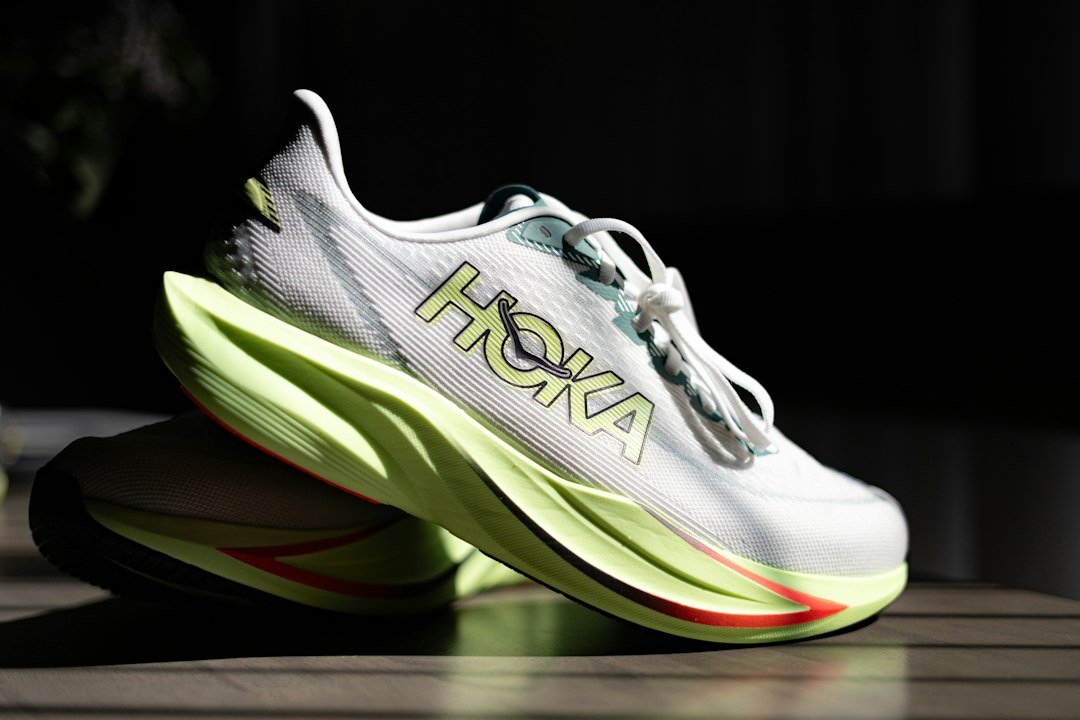
Understanding Heel Pain: Why Footwear Biomechanics Matter
For women seeking the best HOKA shoe for plantar fasciitis, the top models are the Bondi 8 for maximum plush cushioning, the Arahi 7 for overpronation stability, and the Clifton 9 for balanced daily walking. These designs reduce strain on the plantar fascia, the thick band of fibrous tissue running along the bottom of your foot that connects your heel bone to your toes. Its primary job is to act like a shock-absorbing bowstring, supporting your longitudinal arch every time your foot bears weight.
When biomechanical stress overloads this tissue, microscopic tears and localized inflammation develop. Plantar fasciitis accounts for roughly 80% of all clinical heel pain cases and 8–10% of running-related injuries. It affects roughly 2 million Americans every year and carries a 10% lifetime prevalence across the general population, peaking between ages 40 and 60.
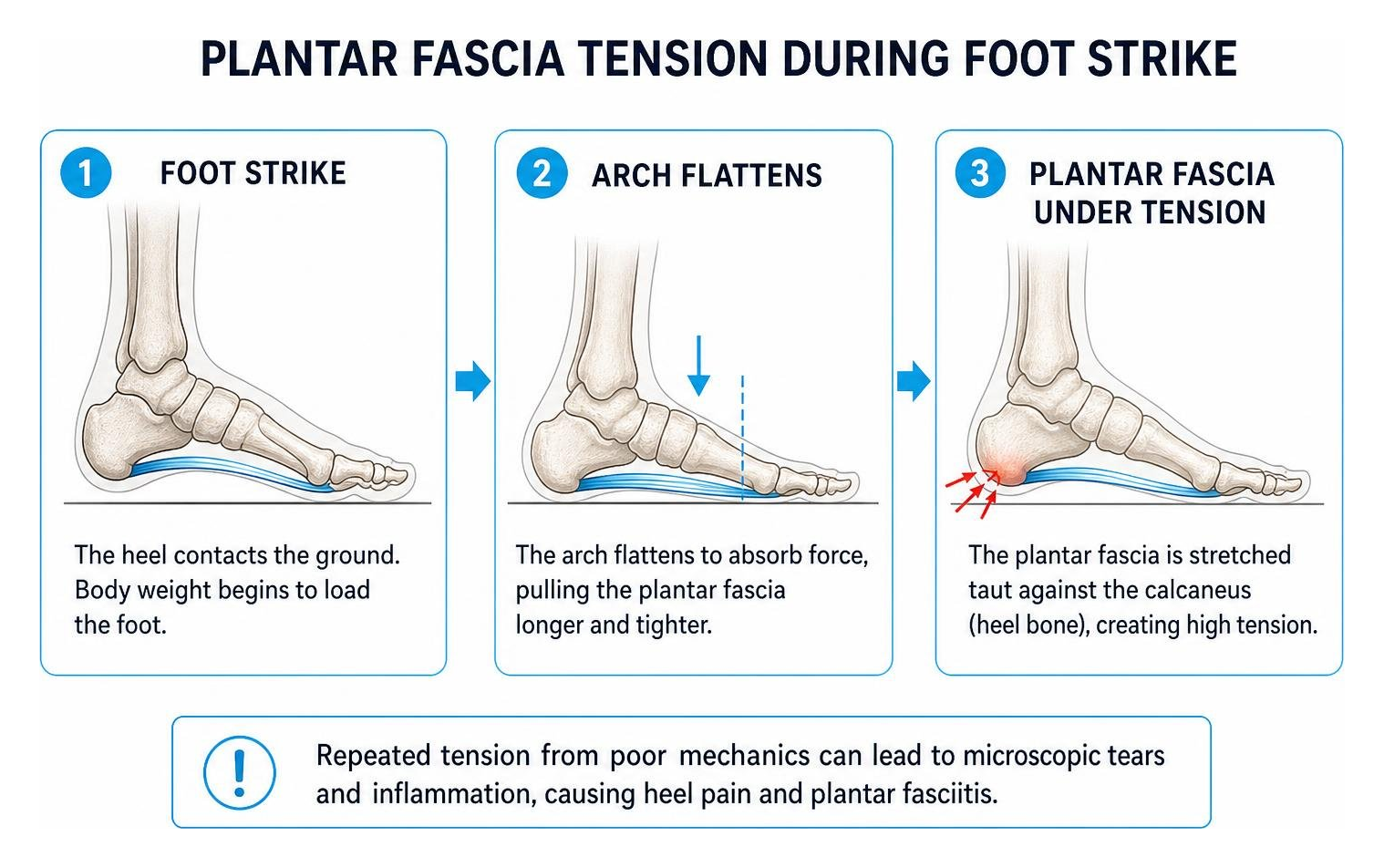
When you walk barefoot or wear unsupportive, flat shoes, your arch flattens excessively with each step. This movement pulls the plantar fascia taut against the calcaneus (heel bone). Over time, poor mechanics radiate tension upward through your Achilles tendon, calves, and entire kinetic chain. Understanding plantar fasciitis and prioritizing plantar fasciitis prevention begins with footwear that reduces traction on this strained tissue.
Key Features That Make HOKA Footwear Effective for Heel Relief
HOKA shoes have become widely recognized for soothing stubborn foot ailments. Podiatrists often point patients toward these designs because several specific engineering features work together to offload stress from the plantar fascia:
- Early-Stage Meta-Rocker: Instead of a traditional flat sole, HOKA builds a subtle rocking chair profile into the outsole. This geometry guides your foot smoothly from heel strike through toe-off, cutting down the forefoot flexion that strains the plantar fascia.
- Thick EVA and CMEVA Midsoles: HOKA’s maximalist foam absorbs ground impact forces before they can jolt through your calcaneus and irritate damaged fascia fibers.
- Active Foot Frame: Rather than resting your foot on top of a flat slab of foam, HOKA embeds your heel and arch inside the midsole sidewalls, providing inherent cradling without harsh plastic posts.
- J-Frame and H-Frame Support: In stability models, firmer-density foam wraps around the inside medial edge and heel, preventing excessive inward rolling (overpronation).
- Moderate Heel-to-Toe Drop: Most HOKA models feature a 4 mm to 6 mm drop. This geometry slightly elevates the heel relative to the forefoot, easing Achilles tendon pull without pitching your body forward.
You can explore our deep dive into podiatrist recommended Hoka shoes for plantar fasciitis relief or discover everyday walkers in our guide on Hoka walking shoes for plantar fasciitis.
Finding the Best HOKA Women’s Shoe for Plantar Fasciitis: Top Model Reviews
Selecting the right pair depends on your unique arch structure, gait mechanics, and daily routine. To help you choose, here is an overview of how the top contenders compare:
| Model | Cushion Level | Support Type | Heel Drop | Ideal Use Case |
|---|---|---|---|---|
| Bondi 8 | Maximum Plush | Neutral | 4 mm | All-day standing, severe heel impact sensitivity |
| Arahi 7 | Moderate / Balanced | Dynamic Stability (J-Frame) | 5 mm | Flat arches, overpronation, structured walking |
| Clifton 9 | Balanced Plush | Neutral | 5 mm | Daily walking, light jogging, versatile wear |
| Gaviota 5 | Maximum Plush | Structured Stability (H-Frame) | 6 mm | Severe overpronation, high body weight, heavy standing |
HOKA Bondi 8: Best HOKA Women’s Shoe for Plantar Fasciitis with Maximum Cushion
For women who experience immediate, sharp heel pain the second their foot hits hard flooring, the Bondi 8 is the gold standard. It delivers the highest level of shock attenuation in HOKA’s road lineup.
- Why It Works: The Bondi 8 features an expanded bed of soft EVA foam and an extended heel crash pad. When your heel contacts the ground, the midsole absorbs the bulk of the impact, preventing forceful jarring from aggravating the inflamed fascia insertion point.
- Upper Comfort: A memory foam collar wraps gently around the ankle, locking the heel in place to eliminate friction and irritation.
- Fit & Feel: It feels plush and forgiving underfoot. While it is one of HOKA’s heavier models, the rocker sole ensures you do not feel bogged down during long shifts on concrete or extended walks.
HOKA Arahi 7: Best HOKA Women’s Shoe for Plantar Fasciitis with Overpronation Stability
If you have flexible, collapsing arches or notice that your ankles roll inward when walking, pure cushioning alone may allow your foot to collapse too deeply. The Arahi 7 delivers necessary stability without feeling rigid.
- Why It Works: Built around HOKA’s patented J-Frame technology, the Arahi 7 utilizes firmer-density foam along the medial side and around the heel cup. This guides your foot through a neutral forward path and minimizes medial arch collapse, relieving tension along the plantar band.
- Ride Profile: It provides a firmer, more connected feel compared to the Bondi, creating a stable platform for women who find maximal pillow-soft midsoles wobbly.
- Fit & Feel: The flat-knit upper offers targeted midfoot lockdown, keeping your arch supported all day.
HOKA Clifton 9: Lightweight Balance for Daily Walking
The Clifton 9 is HOKA’s most popular neutral daily trainer, balancing cloud-like cushioning with an agile, lightweight feel.
- Why It Works: With an updated compression-molded EVA midsole that adds 3 mm of stack height without adding weight, the Clifton 9 softens heel impact while maintaining a bouncy, responsive push-off.
- Daily Versatility: If you find the Bondi 8 too bulky for walking or casual gym sessions, the Clifton 9 offers the sweet spot of impact reduction and effortless movement.
- Fit & Feel: A plush tongue and streamlined heel collar reduce pressure on the Achilles tendon, helping maintain smooth kinetic chain alignment.
HOKA Gaviota 5: Premium Stability for Severe Heel Strain
When you need maximum stability and maximum cushioning simultaneously, the Gaviota 5 is the premier option.
- Why It Works: The Gaviota 5 incorporates HOKA’s updated H-Frame technology, which stabilizes the foot from both medial and lateral angles without rigid mechanical posts. Combined with ultra-plush cushioning, it delivers support for those with flat feet or high body weight.
- Base Width: It features an exceptionally wide footprint, creating a reassuringly stable base that prevents arch collapse during long hours on your feet.
- Fit & Feel: Roomy in the toe box and soft through the midfoot, it accommodates wider feet or aftermarket orthotics without creating pressure points.
How HOKA Compares to Other Supportive Shoe Designs
Understanding how HOKA contrasts with traditional footwear helps explain why it works well for persistent heel pain:
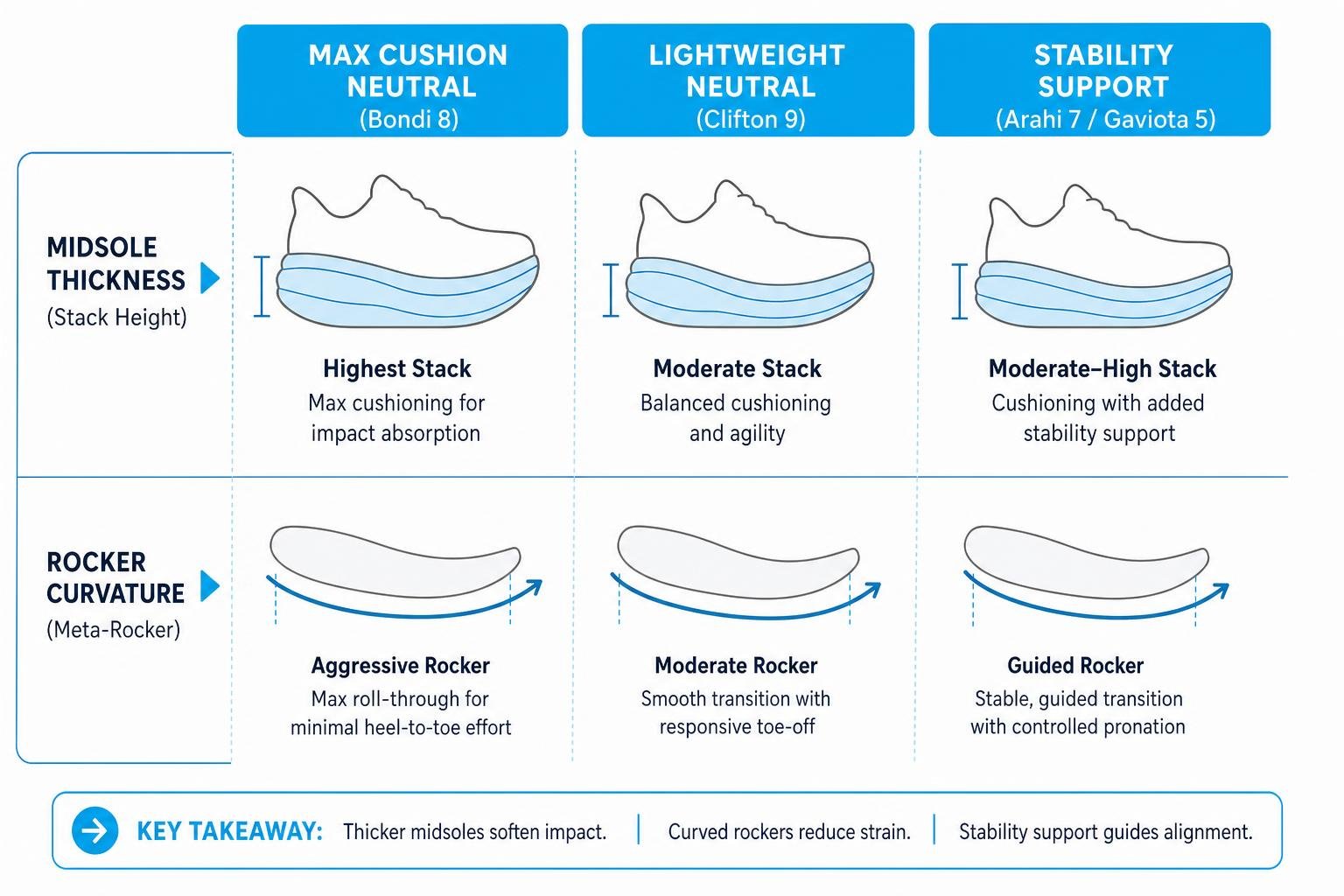
- Cushion Thickness vs. Firm Arch Posts: Traditional orthopedic shoes often rely on stiff, hard plastic arch shanks to hold the foot upright. HOKA uses wide bases, deep sidewall seating, and varied foam densities instead, stabilizing your gait without creating painful pressure points against an inflamed arch.
- Rocker Geometry vs. Flexible Soles: Highly flexible shoes allow the metatarsophalangeal joints to bend deeply, which places high tensile strain on the plantar fascia via the windlass mechanism. HOKA’s curved Meta-Rocker minimizes excessive foot flexion, rolling you forward with less structural strain.
- Low Drop vs. High Heel Pitch: Many traditional stability running shoes feature a steep 10 mm to 12 mm heel-to-toe drop, which can pitch weight into the forefoot and alter posture. HOKA balances a modest 4 mm to 6 mm drop with generous stack height, cushioning the heel without pushing you off balance.
Choosing the Right Pair and Maximizing Your Recovery
Finding the right shoe is a major step toward relief, but pairing it with structured daily habits speeds up recovery:
- Assess Your Arch Profile: Check your wet footprint on concrete. A full, wide footprint indicates flat feet that benefit from the Arahi 7 or Gaviota 5. A narrow band with an isolated heel and forefoot indicates high arches that do best in the Bondi 8 or Clifton 9.
- Incorporate Targeted Stretches: Perform gentle calf and Achilles stretches against a wall three times daily. Keeping the gastrocnemius and soleus flexible reduces tension on your plantar fascia.
- Use Complementary Orthotics When Needed: If your podiatrist recommends specialized support, evaluate shoe inserts vs custom orthotics to see which fits comfortably inside your shoe’s removable footbed.
- Cool Down with Ice Therapy: Roll the arch of your foot over a frozen water bottle for 10 to 15 minutes after extended walking to calm acute inflammation.
- Explore Clinical Therapies for Chronic Pain: For long-term heel pain lasting more than six months, clinical interventions like extracorporeal shockwave therapy show long-term success rates exceeding 82%. Over 95% of plantar fasciitis cases resolve completely without surgery.
Frequently Asked Questions About Women’s HOKA Shoes and Heel Pain
Do HOKA shoes cure plantar fasciitis permanently?
No shoe acts as a standalone cure. HOKA shoes serve as a mechanical offloading tool that protects healing tissues from repetitive trauma. True long-term recovery involves addressing upstream muscle tightness, strengthening intrinsic foot muscles, and allowing tissue micro-tears to heal properly.
Can I insert custom orthotics into women’s HOKA shoes?
Yes. All HOKA road and walking models feature removable factory insoles. Because HOKA builds its shoes with a deep footbed cavity, they readily accommodate over-the-counter arch supports or rigid custom medical orthotics without squeezing the top of your foot.
How often should women replace their HOKA shoes for heel pain relief?
We recommend replacing your shoes every 300 to 500 miles, or roughly every 6 to 8 months if worn for daily standing shifts. Even if the rubber outsole looks intact, EVA foam loses its resilient shock-absorbing properties over time, which can allow heel impact forces to creep back up.
Conclusion
Overcoming persistent heel pain requires listening to your body and wearing footwear that shields vulnerable tissue from excessive stress. Whether you choose the plush cushioning of the Bondi 8, the structured alignment of the Arahi 7, or the supportive platform of the Gaviota 5, HOKA offers specialized solutions that make daily movement comfortable again.
For workplace footwear advice, explore our best work shoes for plantar fasciitis guide to find supportive options tailored for long hours on your feet.
References
Thing J, Maruthappu M, Rogers J. “Diagnosis and management of plantar fasciitis in primary care..” The British journal of general practice : the journal of the Royal College of General Practitioners, 2012. PMCID PMC3404327.
