
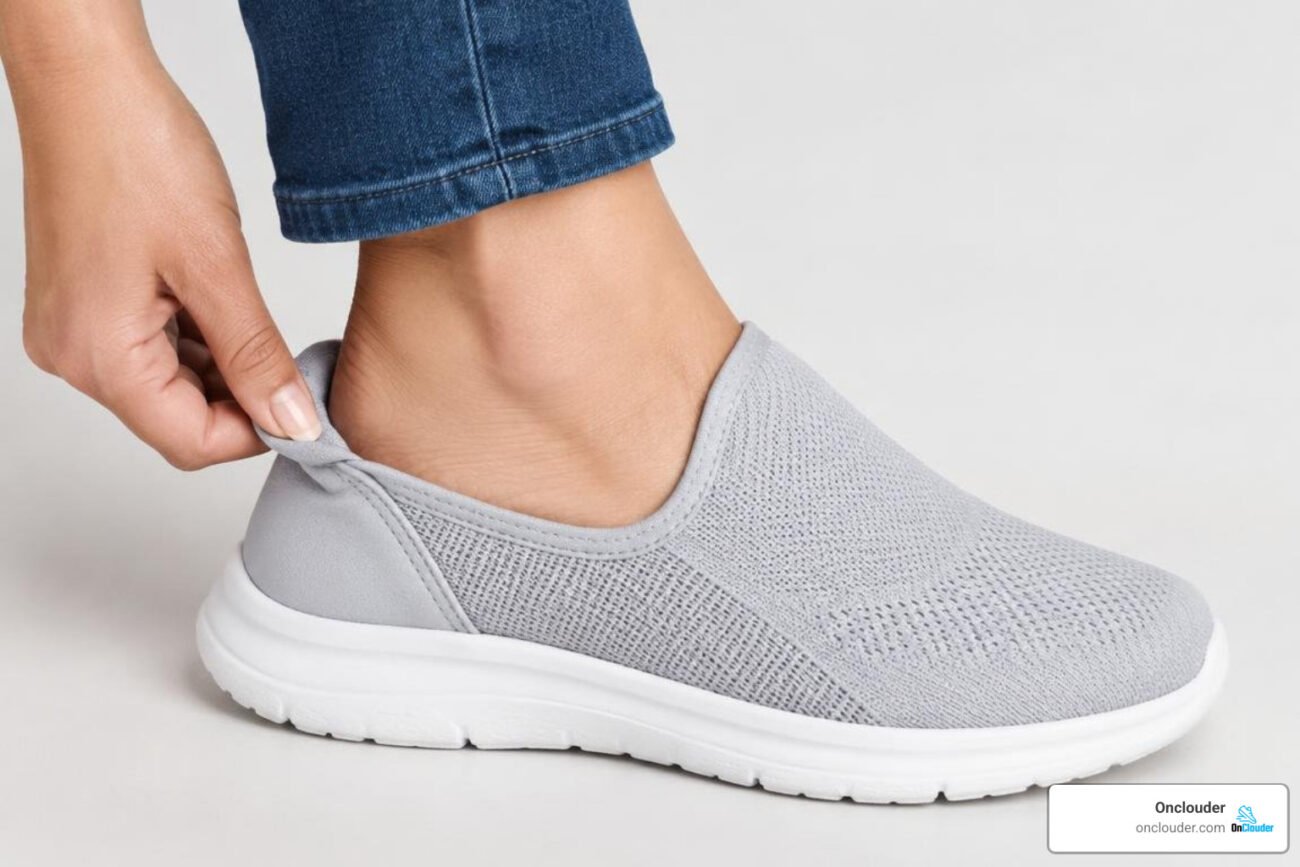
Top Picks: Best Casual Women’s Shoes for Plantar Fasciitis
When dealing with bottom-of-the-heel pain, finding shoes that bridge the gap between therapeutic support and casual aesthetics is essential. We have analyzed, tested, and gathered real-world feedback on top footwear to identify options that genuinely offload strain from the plantar fascia. If you are exploring broader options, checking our guide on podiatrist approved best shoes for plantar fasciitis provides deep clinical context.
| Shoe Model | Type | Key Feature | Price Range | Arch Support Level |
|---|---|---|---|---|
| Matilda Everyday Ease | Suede Sneaker | Side-zip entry, posture footbed | $56.95 (Sale) – $140.00 | High / Anatomical |
| Kizik Athens 2 | Hands-Free Sneaker | Cage® step-in, rocker sole | ~$139.95 | Moderate to High |
| Dr. Scholl’s Feel Nice | Stretch-Knit Sneaker | Shock Guard® technology | $99.99 – $130.00 | Targeted Heel Cushioning |
| MAYKX Orthotic Walker | Walking Sneaker | Removable arch inserts, 3cm rocker | ~$55.99 | Customizable Moderate |
| Pimali Orthopedic EVA | Double-Strap Sandal | 15° arch curve, 4cm thick sole | ~£25.99 – £49.99 | High / Contoured |
Matilda Everyday Ease Sneaker: Best Casual Women’s Shoes for Plantar Fasciitis Overall
The Women’s Orthopedic Sneakers | Suede Arch Support Style known as the Matilda Everyday Ease Sneaker stands out as our top overall recommendation. Boasting a 4.7/5.0 rating from over 862 user reviews, this sneaker blends chic suede styling with clinical orthopedic principles.
What makes it excel is its dual-closure system: it features traditional laces for a dialed-in fit alongside a smooth side zipper for easy on-and-off access. Underneath, a cushioned orthopedic footbed provides targeted arch support that realigns body posture and eases tension along the plantar fascia ligament and heel spurs. The outsole features an anti-slip grip pattern, giving you steady footing across wet tile or uneven pavement. For sizing, if you fall between sizes, measuring your foot from heel to longest toe and sizing up slightly yields the best fit.
Hands-Free and Slip-On Everyday Favorites
For those who want pure convenience without sacrificing structural integrity, the Women’s Athens 2 – Alloy sets the benchmark for step-in footwear. Priced around $139.95, it incorporates patented HandsFree Labs® cage technology that compresses when you step into the shoe and instantly snaps back to secure your heel.
The Athens 2 utilizes a gentle rocker bottom sole paired with a high-rebound foam midsole. This rocker profile rolls your foot forward smoothly during toe-off, directly reducing the tensile strain across an inflamed plantar fascia. Available in Standard, Wide (2E), and Extra Wide (4E), it accommodates higher arches and wider forefeet effortlessly. As we highlight in our roundup of everyday shoes for women, a shoe that removes the physical friction of putting it on makes sticking to supportive habits simple.
Budget-Friendly Support and Orthopedic Sandals
Living with heel pain does not mean spending hundreds of dollars per pair. Several budget-friendly designs offer impressive biomechanical relief:
- MAYKX Women’s Plantar Fasciitis Shoes – Orthotic Arch Support Walking Sneakers, Shock-Absorbing, Non-Slip for Tennis & Daily Wear – Walmart.com: Priced around $55.99 with an impressive 4.7/5 customer rating, this model features a breathable mesh upper, a non-slip rubber tread, a wide toe box, and a 3cm platform rocker. It includes adhesive-backed, removable arch inserts, letting you tailor support levels to your arch type.
- Sandals for Plantar Fasciitis – Women’s Orthopedic Arch Support Sandals | Wide Fit EVA | Pimali – Pimali: Warm-weather relief comes courtesy of these lightweight (180g) EVA sandals. Rated 5/5 by verified reviewers—with customers noting they outperform £90 custom orthotic sandals—they offer a 4cm shock-absorbing base and a built-in 15° arch-support footbed. The waterproof double-buckle design lets you adjust strap width across the instep and forefoot.
- Dr. Scholl’s Feel Nice Plantar Faciitis Sneaker (Women) | Nordstrom: Holding an average rating of 4.7/5 from 53 reviews (with 77% giving a full 5 stars), this sneaker integrates proprietary Shock Guard® technology to dissipate ground impact directly under the calcaneus (heel bone). Its stretch-knit upper keeps feet cool, and the removable footbed easily accommodates third-party inserts.
What Features Make Everyday Footwear Effective for Heel Pain?
Plantar fasciitis occurs when the thick band of tissue running across the bottom of your foot experiences micro-tears and repetitive strain, leading to severe morning pain and tenderness after long periods on your feet. When choosing casual shoes, certain structural features separate everyday fashion footwear from therapeutic designs.
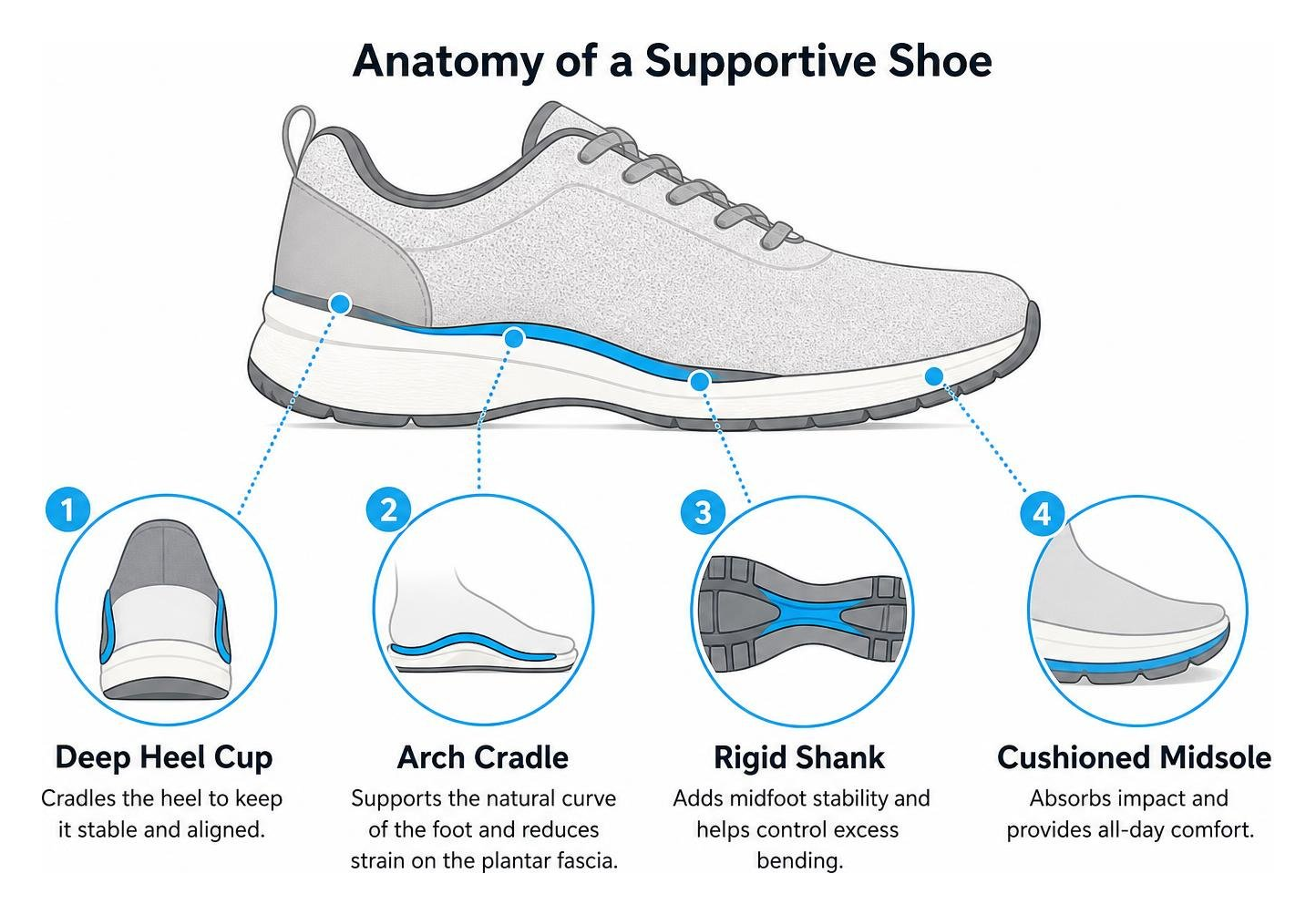
Pairing casual aesthetics with orthopedic support requires a careful balance of rigidity, heel containment, and cushioning. For a deeper breakdown of how structural foundations help foot pain, explore our essential guide to best shoes for arch support and our recommendations for casual walking shoes for women.
Arch Support and Removable Orthotic Footbeds
Proper arch contouring holds the key to offloading tension from the plantar fascia. Without arch reinforcement, the foot overpronates (rolls inward) or collapses, stretching the plantar ligament tightly across the bottom of the foot.
An effective everyday shoe features a contoured medial arch that mirrors the natural foot shape. However, because arch heights differ, removable insoles are a huge advantage. They allow you to swap stock liners for medical-grade orthotics or specialized aftermarket options like the Casual Pain Relief: Insoles for Plantar Fasciitis | Superfeet – Superfeet Worldwide. Rated 4.32/5 across 491 reviews, these Superfeet insoles use an EVOLYTE® carbon fiber stabilizer cap that flexes under weight and rebounds instantly to support the plantar fascia.
If you have unique biomechanical needs, pairing your shoes with the top high arch support insoles or utilizing targeted arch support pads can transform a standard casual slip-on into an all-day comfort shoe.
Shock Absorption, Cushioning, and Sole Materials
Every step sends impact forces through your heel into your knees and lower back. Casual shoes equipped to combat heel pain utilize specific midsoles and structural mechanics to dissipate that energy:
- High-Rebound EVA Foam & Polyurethane (PU): Dual-density EVA foam cushions your landing, while firmer PU sections stabilize the midfoot.
- Deep Heel Cups: A rounded, deep heel cup cradles the calcaneal fat pad beneath your heel bone, naturally amplifying your body’s built-in shock absorption.
- Torsional Rigidity (Midfoot Shanks): A shoe that twists easily like a wet towel offers zero support. A stiff internal shank prevents midfoot twisting and protects the plantar ligament from over-stretching.
- Rocker Bottom Geometry: A subtle upward curve at the toe and heel promotes a forward rolling stride, reducing the amount of flex demanded from your arch joints.
For women who spend hours on hard surfaces, choosing comfortable shoes for standing all day with shock-absorbing soles is crucial for preventing symptom flare-ups.
Choosing the Right Fit: Sizing and Foot Conditions
Finding the best casual women’s shoes for plantar fasciitis involves more than selecting your usual street shoe size. Foot volume, daily swelling, and coexisting structural issues play a massive role in finding lasting comfort.
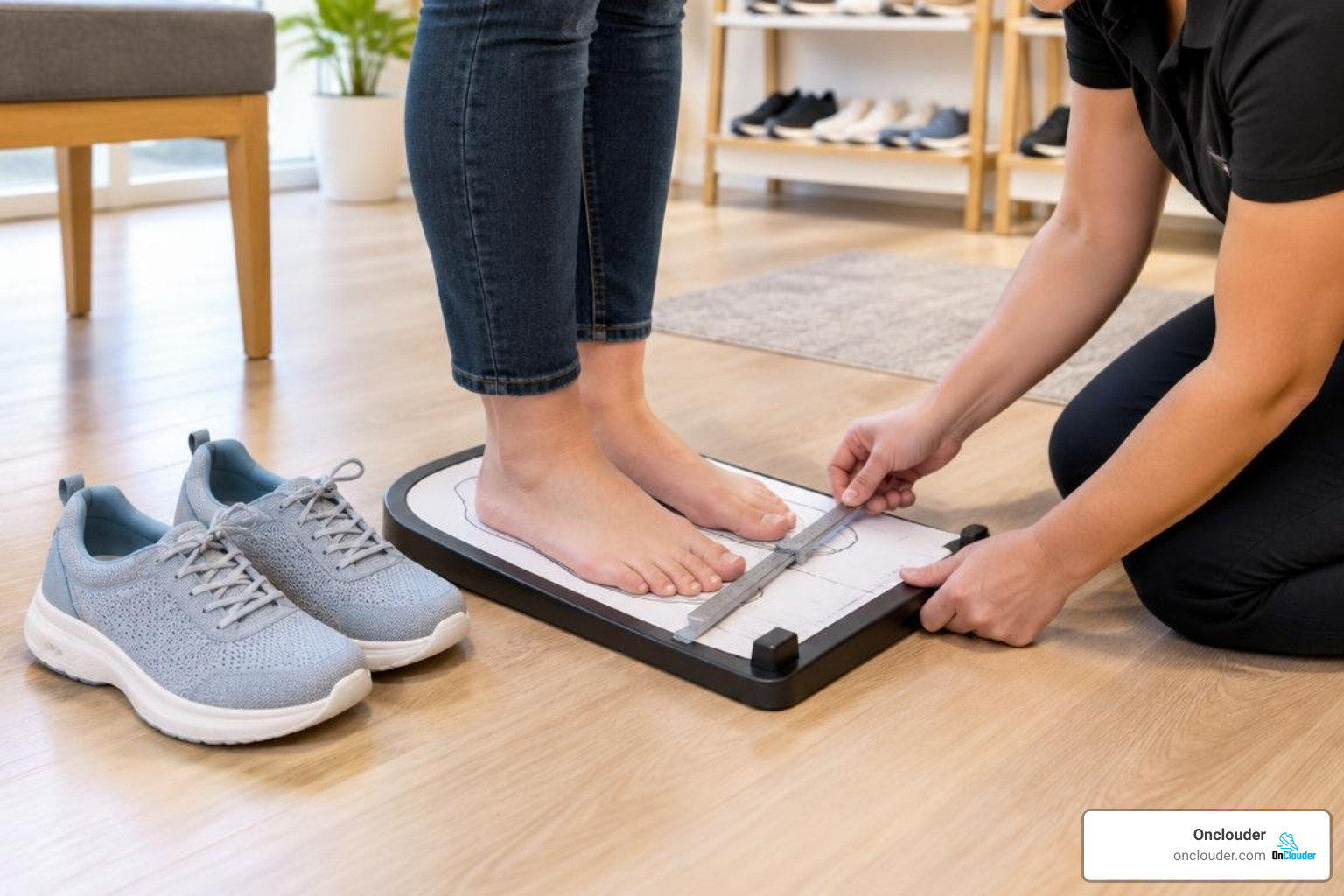
Always measure your feet at the end of the day when they are at their largest. Stand on a sheet of paper against a wall, mark the tip of your longest toe, and measure the distance in centimeters. If one foot is slightly larger—which is completely normal—always size to fit the larger foot.
Accommodating Bunions, Flat Feet, and Heel Spurs: Best Casual Women’s Shoes for Plantar Fasciitis
Plantar pain rarely travels alone. Many women also manage bunions (hallux valgus), structural flat feet, or bony calcaneal heel spurs.
- Bunions & Hammertoes: Shoes with pointed or narrow toe boxes squeeze the metatarsals together, worsening bunion pain and destabilizing the big toe joint. Opting for womens wide toe box shoes allows your toes to splay naturally, creating a wider base of support that eases plantar strain.
- Flat Feet (Pes Planus): Fallen arches pull the plantar fascia taut. Shoes designed with structured medial support and firm heel counters keep the ankle aligned. Learn more about how targeted contouring works in our guide on why your flat feet crave these arch support insoles.
- Work & Formal Environments: When sneakers aren’t an option, you don’t have to sacrifice your arches. You can maintain proper heel containment by choosing supportive flats for the office, most comfortable dress flats with arch support, or stylish womens arch support dress shoes.
Transitioning, Replacement Lifespan, and Complementary Therapies
Upgrading to supportive casual footwear is a huge step forward, but managing plantar fasciitis requires a practical approach to wear and longevity:
- Gradual Break-in Period: Orthopedic footwear and rigid arch insoles alter the alignment of your foot and ankle muscles. Wear new pairs for 1 to 2 hours per day initially, gradually increasing wear-time over a two-week span to avoid muscle fatigue.
- The 300 to 500-Mile Lifespan: Casual shoes may look clean on the outside, but their internal midsole foam compresses over time. In general, daily casual shoes lose their optimal shock-absorbing ability after 300 to 500 miles—or roughly 6 to 9 months of regular wear. Inspect the midsole for visible creasing or uneven heel wear.
- Complementary Daily Habits: Footwear alone cannot fix tight soft tissue. Combine your supportive shoes with daily calf and Achilles stretches, gentle plantar fascia rolls with a frozen water bottle, and supportive night splints if morning pain remains severe.
Frequently Asked Questions About Everyday Shoes for Plantar Fasciitis
Can casual shoes alone cure plantar fasciitis?
While wearing supportive casual shoes significantly reduces mechanical strain and eases pain, footwear works best as part of a complete recovery plan. Pairing supportive shoes with calf stretches, plantar rolling, foot strengthening exercises, and targeted rest helps calm tissue inflammation and promotes long-term healing.
How do I know when my supportive casual shoes need replacement?
Check the midsole for deep compression lines, test the heel counter for loss of stiffness, and look for uneven tread wear on the outsole. If your familiar morning heel pain begins creeping back despite no change in daily activity, the internal cushioning and arch structure have likely worn down.
What is the difference between regular sneakers and plantar fasciitis shoes?
Standard lifestyle sneakers often prioritize lightweight materials and flexible soles, allowing the foot to twist and the arch to collapse. Plantar fasciitis footwear incorporates torsional rigidity, a firm midfoot shank, an anatomical arch cradle, a deep heel cup, and targeted shock-absorbing foam to prevent excessive plantar ligament stretching.
Conclusion
Managing heel pain does not mean you have to settle for clinical, clunky shoes. The latest designs from brands like Matilda, Kizik, Dr. Scholl’s, and Pimali show that you can enjoy sleek suede sneakers, hands-free slip-ons, and summer-ready sandals while protecting your arches and heels.
By looking for footwear with contoured arch support, shock-absorbing midsoles, deep heel cups, and roomy toe boxes, you give your feet the structured environment they need to heal. If you are also searching for dependable footwear for your professional workday, check out our comprehensive guide to work shoes for plantar fasciitis to stay comfortable on your feet from morning to night.

3 thoughts on “Stylish Women’s Everyday Shoes That Protect Against Plantar Pain”
Comments are closed.