
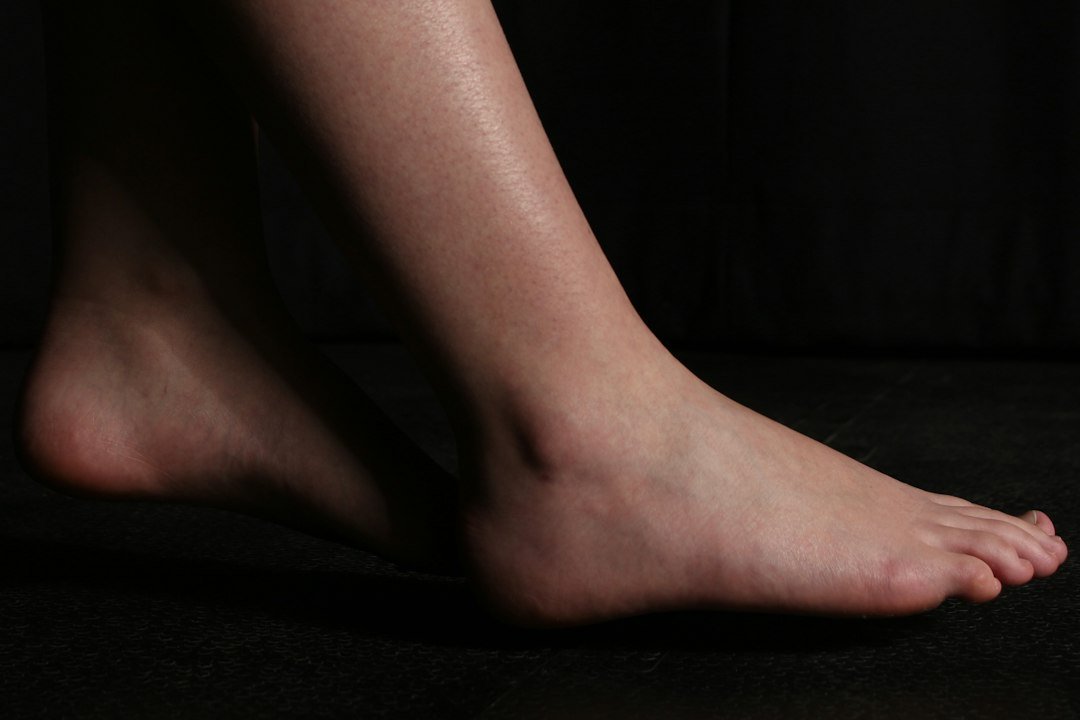
Clinical Biomechanics: Why Flat Sandals Aggravate Heel Pain
The best flip flops for plantar fasciitis feature firm anatomical arch contours, deep heel cups, and stiff rocker soles or metatarsal pads that offload tensile strain from the plantar fascia. Unlike flat, unsupportive foam thongs, structured sandals maintain natural foot alignment and eliminate the painful arch collapse that drives chronic heel pain.
Plantar fasciopathy affects roughly 10% of the population at some point in their lives. The plantar fascia is a thick band of connective tissue running along the bottom of the foot, connecting the heel bone (calcaneus) to the base of the toes. Every time you take a step, this structure acts like a bowstring through the Windlass mechanism, stretching and tightening to absorb impact and support the medial longitudinal arch.
Standard, flat foam flip flops offer zero structural resistance. When your heel strikes the ground in a completely flat sandal, your arch collapses downward. This movement places severe tensile stress on the plantar fascia origin at the medial calcaneal tubercle. Over time, repetitive micro-tears and localized inflammation lead to the classic hallmark of plantar fasciitis: sharp, stabbing morning heel pain during those first steps out of bed.
To keep a traditional loose sandal on your foot, your toes must also instinctively claw at the footbed with every push-off. This toe-gripping activates the flexor muscles and winds the plantar fascia even tighter, increasing strain across the bottom of the foot.
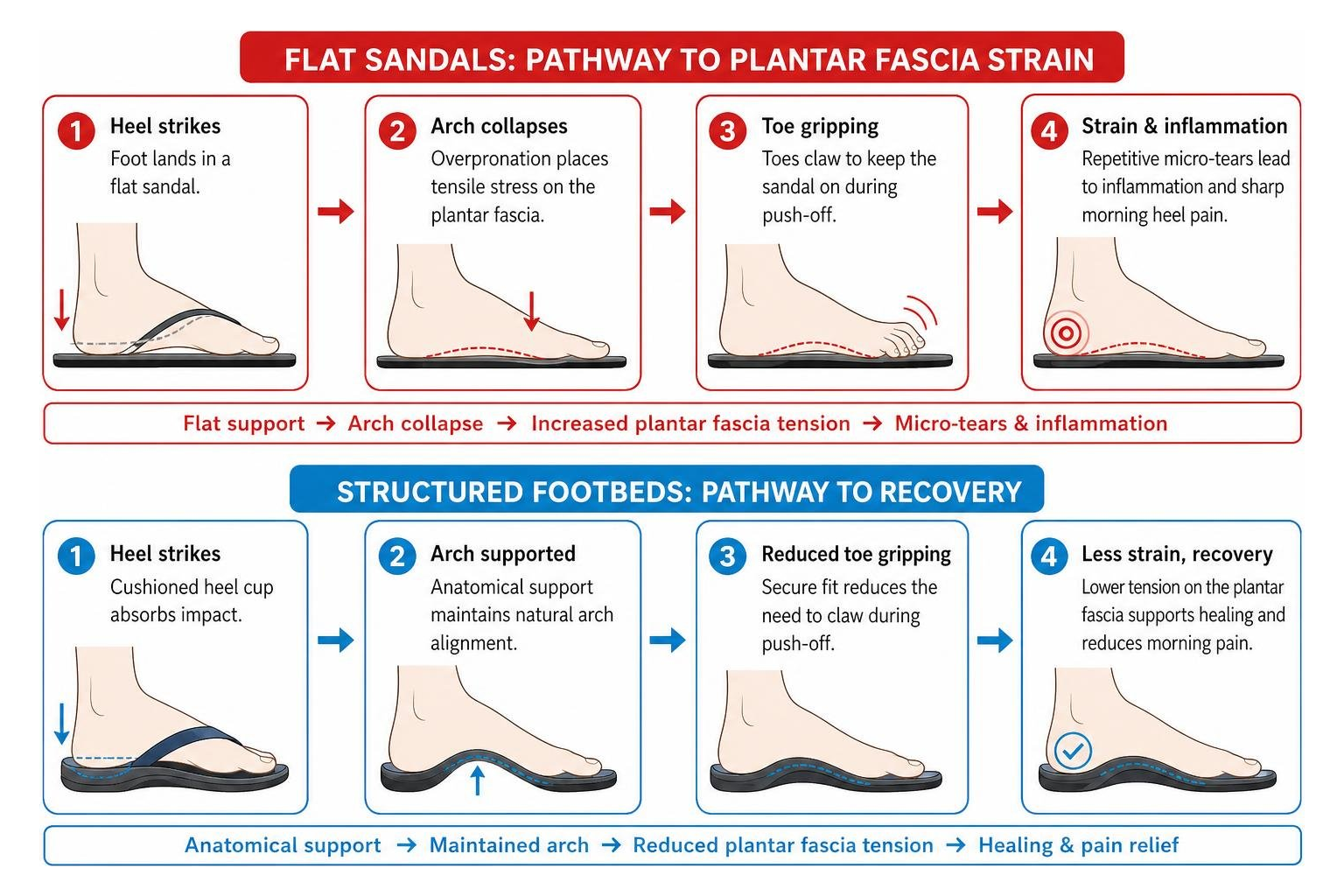
Clinical research demonstrates that structured warm-weather footwear changes these biomechanics. In a 12-week randomized, double-blind controlled study, researchers evaluated the effects of adapted insoles in flip-flop sandals on people with plantar fasciopathy. Participants who wore sandals modified with anatomical insoles for an average of 6 hours per day experienced a statistically significant reduction in morning pain (a mean reduction of –1.82 cm on a 10-point visual scale) compared to those in flat sandals.
Furthermore, the insole group achieved significantly greater improvements on the Foot Function Index (mean difference = –0.10) and reported higher overall treatment satisfaction (P = 0.008). Having the right summer footwear works alongside your primary recovery routine, just as picking the right closed shoes does in our complete guide to best shoes for foot pain.
Essential Ergonomic Features in the Best Flip Flops for Plantar Relief
Finding the best flip flops for plantar fasciitis recovery requires looking beyond standard plush foam. Soft, squishy footbeds feel good for the first thirty seconds, but they quickly compress under body weight and leave your arches unsupported. Look for these core structural elements:
- Deep Heel Cups: A contoured heel cup cradles the natural fatty pad of your heel, concentrating that tissue beneath the calcaneus to maximize your body’s built-in shock absorption. It also reduces lateral heel slippage.
- Medial Longitudinal Arch Support: A firm, anatomically shaped arch contour prevents excessive overpronation and stops the plantar fascia from overstretching during mid-stance. For more details on arch heights, explore the ultimate guide to best shoes with arch support.
- Rocker Bottom Soles: An upward curve at the toe and heel allows your foot to roll smoothly through the gait cycle without requiring forced extension through the metatarsophalangeal joints.
- Metatarsal Bars or Pads: Raised support just behind the ball of the foot offloads pressure from the forefoot, spreading impact evenly across the transverse arch.
- Dual-Density or Resilient Closed-Cell EVA: A firm base layer delivers torsional stability, while a slightly softer top layer cushions impact without bottoming out.
- Snug, Wide Strap Geometry: Straps that hold the foot securely against the footbed stop your toes from clawing to keep the sandal on.
- Neutral Toe Boxes: A wide, open forefoot profile prevents crowding, accommodating conditions like bunions, hammertoes, or hallux rigidus.
Top-Rated Orthopedic Sandals Reviewed for Daily Comfort
We put leading supportive flip flops through hands-on testing to evaluate their arch support, sole stiffness, strap comfort, and day-to-day pain relief.
Rocker-Sole Sandal: Surgeon-Designed Rocker Sole
Designed by an orthopedic foot surgeon, this rocker-sole flip flop treats plantar fasciitis through biomechanical offloading. Instead of acting as just another cushioned sandal, this design functions as a wearable therapy tool.
- Key Features: Rigid rocker-bottom outsole, raised metatarsal bar, deep heel cup, and a firm structural footbed.
- How It Supports Recovery: The stiff rocker sole keeps the big toe joint in a neutral position, gently stretching the plantar fascia while eliminating the bending forces that pull on the heel bone. The integrated metatarsal bar offloads the ball of the foot, making it an excellent choice if you also deal with metatarsalgia or bunions.
- Real-World Experience: Clinical data from the brand shows patients experienced noticeable relief on average within 2 to 4 weeks of consistent daily wear. Because the footbed is intentionally firm, it requires a break-in period of 7 to 14 days. Start with 15 to 30 minutes of indoor walking per day to let your feet adjust. It pairs nicely with the guidance in our podiatrist-approved best shoes for plantar fasciitis lineup.
Molded EVA Flip Flop: Physical Therapist-Engineered Support
Physical therapists engineered this molded EVA flip flop to solve a common problem: traditional flat thongs causing chronic arch fatigue.
- Key Features: Up to 2.2 cm of orthotic arch support, patented one-piece molded closed-cell foam, and an elastic memory strap.
- How It Supports Recovery: This design looks like a classic, minimalist flip flop, but its continuous arch profile matches an over-the-counter orthotic. The closed-cell foam gradually molds to the natural shape of your foot while retaining its structural height. A tighter strap design keeps the sandal secured against the sole of your foot, preventing toe-clawing.
- Real-World Experience: With over 131,000 reviews and a 4.7 out of 5-star average rating, these flip flops offer an easy transition for anyone used to casual footwear. The one-piece build eliminates snapped toe posts, and the brand offers a 60-day comfort guarantee.
Durable Casual Flip Flop: High-Durability Build
For outdoor activities, yard work, or casual daily errands, models built with tactical-grade materials offer rugged longevity alongside baseline support.
- Key Features: Injection-molded high-traction outsoles, reinforced tubular nylon straps, and dense dual-density midlayers.
- How It Supports Recovery: These sandals provide a stable, puncture-resistant foundation that stops sharp rocks and uneven ground from twisting your foot. While their arch profile is milder than medical rocker sandals, the dense midlayer cushions heel strike without bottoming out.
- Real-World Experience: Holding average user ratings around 4.64 out of 5 stars across hundreds of verified reviews, these flip flops excel in build quality and outdoor traction, serving as a reliable warm-weather option once acute plantar pain has calmed down.
Comparing Sandal Profiles: Selecting the Best Flip Flops for Plantar Recovery
| Feature / Model | Rocker-Sole Medical Sandal | Molded Orthotic EVA Sandal | Durable Casual Sandal |
|---|---|---|---|
| Primary Mechanism | Rocker-bottom sole & metatarsal bar | Continuous contoured arch & heel cup | High-density shock absorption & traction |
| Arch Support Level | High (Rigid structure) | High (Flexible/Molded) | Moderate (Standard contour) |
| Break-In Period | 7–14 Days | 2–5 Days | 1–3 Days |
| Best Used For | Acute morning heel pain & forefoot issues | All-day walking, indoor house shoe use | Outdoor utility, beach, & casual wear |
| Approximate Price | $75 – $120 | $40 – $50 | $55 – $80 |
| Trial / Guarantee | Standard return window | 60-Day Comfort Guarantee | Lifetime manufacturer warranty against defects |
Clinical Protocols: Maximizing Recovery and Ensuring Proper Fit
Custom Orthotics vs. Over-the-Counter Supportive Footwear
When addressing plantar fasciopathy, runners and walkers often wonder whether they need expensive custom orthotics or if over-the-counter supportive footwear is enough.
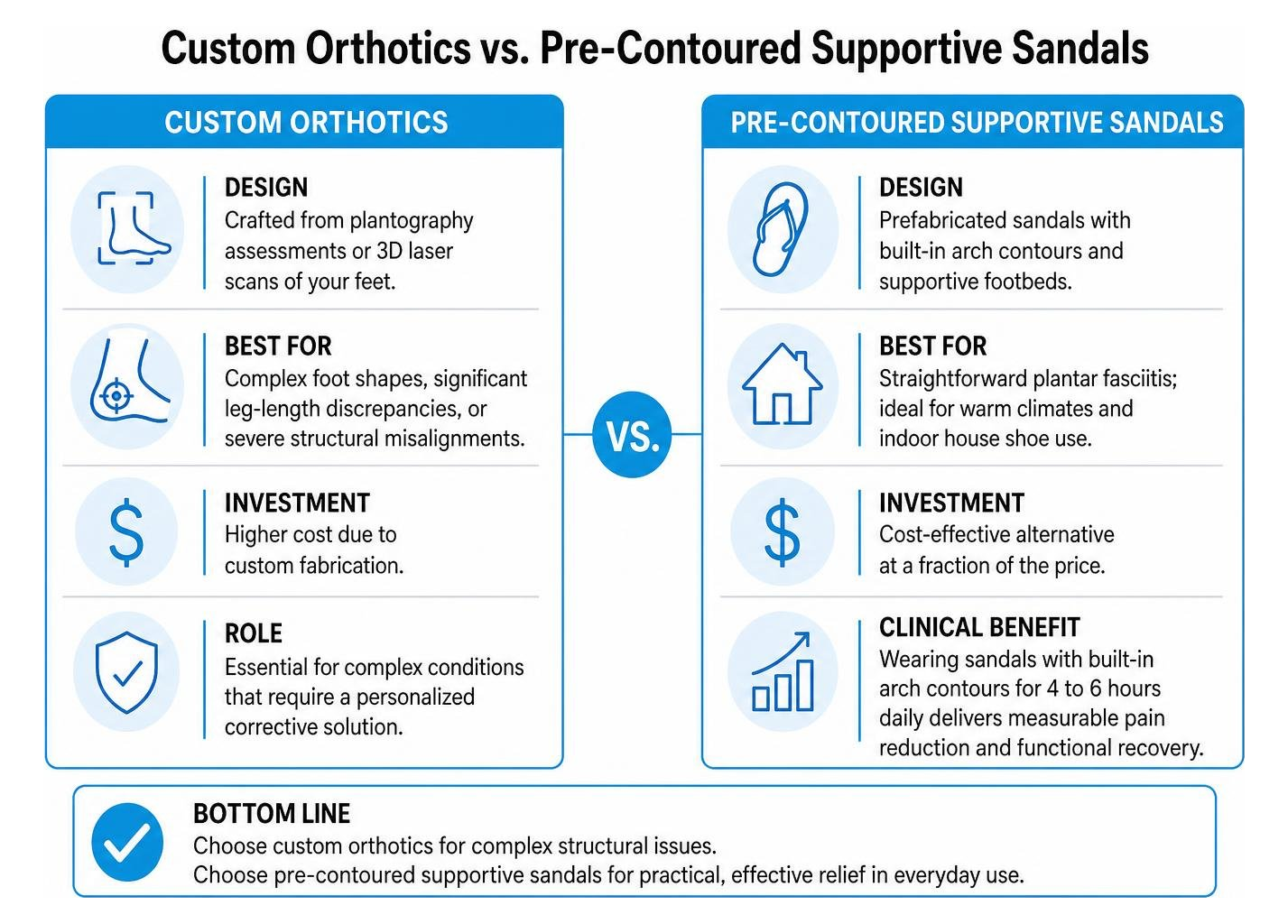
Custom orthotics are crafted from plantography assessments or 3D laser scans of your feet. They are essential for complex foot shapes, significant leg-length discrepancies, or severe structural misalignments. You can read more about standalone inserts in our guide to the best arch support insoles for total foot relief.
However, for straightforward plantar fasciitis, prefabricated orthopedic flip flops provide a practical, cost-effective alternative—especially in warm climates or as indoor house shoes. As demonstrated in clinical studies, wearing sandals with built-in arch contours for 4 to 6 hours daily delivers measurable pain reduction and functional recovery at a fraction of the price of custom orthotics. Check out our expert foot health tips and the best shoes to prevent pain for more simple ways to protect your feet.
Fit Guidelines and Choosing the Best Flip Flops for Plantar Issues
An improper fit can turn a supportive sandal into a source of foot irritation. Follow these fitting rules:
- Heel Placement: Your heel must sit entirely within the heel cup. If your heel rests on the rear rim, that edge will press directly into the plantar fascia insertion point.
- Arch Alignment: The apex of the sandal’s arch contour must line up with your natural navicular bone. If the arch sits too far forward or backward, it creates localized pressure.
- Sizing for Half Sizes: Most orthopedic flip flop brands do not offer half sizes. If you normally wear a half size, size up to the next full size to ensure adequate length and avoid heel overhang.
- Strap Snugness: You should be able to slide one finger beneath the strap. If the strap is too loose, your foot will slide; if it is too tight, it can chafe the dorsal nerves.
Complementary Plantar Fascia Rehabilitation Routine
Supportive sandals work best when paired with targeted physical rehabilitation:
- Morning Plantar Fascia Stretch: Before getting out of bed, cross your affected leg over your knee. Pull your toes back toward your shin until you feel a gentle stretch along the bottom of your foot. Hold for 30 seconds across 3 repetitions.
- Calf Eccentric Heel Drops: Stand on the edge of a step with your heels hanging off. Rise up on both feet, shift your weight to the injured side, and slowly lower your heel below the step level over 3 to 4 seconds. Complete 3 sets of 10 repetitions.
- Plantar Rollouts: Roll the arch of your foot over a firm massage ball or a frozen water bottle for 3 to 5 minutes after extended walking to relieve tension and soothe local discomfort.
- Toe Yoga & Marble Pickups: Strengthen the intrinsic foot muscles by lifting your big toe while keeping your smaller toes flat, then alternating.
Frequently Asked Questions About Plantar Fasciitis Footwear
How long does it take for supportive flip flops to relieve heel pain?
Most people experience an initial reduction in walking discomfort within 7 to 14 days of wearing supportive flip flops. In clinical trials tracking structured footwear, significant improvements in morning heel pain and overall Foot Function Index scores occurred steadily over a 2 to 4-week window, with maximum recovery milestones reached after 12 weeks of consistent daily wear (at least 4 to 6 hours per day).
Can orthopedic flip flops replace structured walking shoes for plantar fasciitis?
Orthopedic flip flops are not a complete replacement for structured, lace-up athletic footwear during long fitness walks, workouts, or heavy manual labor. While supportive sandals make great warm-weather recovery shoes and indoor house slippers, lace-up shoes provide lateral stability and rearfoot motion control that open-back sandals cannot match. We recommend rotating between supportive sandals at home and structured shoes for high-mileage days.
Are therapeutic sandals eligible for HSA or FSA reimbursement?
Yes, certain orthopedic sandals designed specifically to treat plantar fasciitis (such as surgeon-designed rocker models) can be eligible for reimbursement through Health Savings Accounts (HSA) or Flexible Spending Accounts (FSA). Under IRS regulations, you typically need a Letter of Medical Necessity (LMN) or a written prescription from your podiatrist or physician diagnosing your condition. Always check with your specific benefits administrator before purchasing.
Conclusion
Plantar fasciitis does not mean you have to give up open-toed footwear all summer long. By swapping flat, unsupportive foam thongs for sandals engineered with deep heel cups, rigid arch contours, and rocker soles, you can protect your plantar fascia from unnecessary strain with every step.
Make sure to transition into new orthopedic sandals gradually, allowing your foot muscles to adapt over a week or two. Pair your footwear with regular calf stretching, targeted arch strengthening, and stable supportive shoes when you are on the clock. For work environments that require closed-toe footwear, explore our best work shoes plantar fasciitis guide to keep your feet pain-free all day long.
