
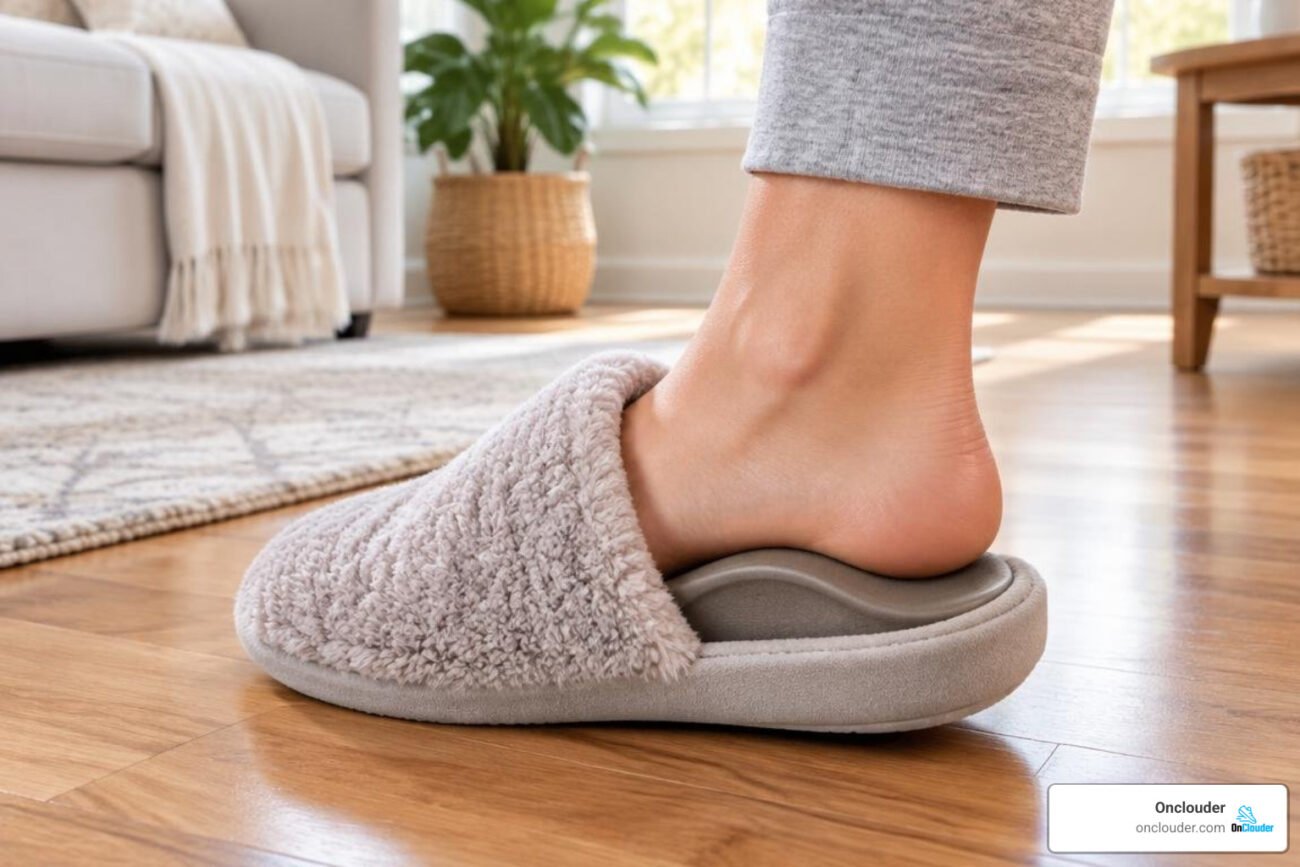
Key Criteria for Evaluating the Best House Slippers for Plantar Fasciitis Women’s
The best house slippers for plantar fasciitis women’s collections combine a deep heel cup, a structured arch contour, and a shock-absorbing midsole. Our top recommendations are the ABEO Amble Slipper for built-in orthotic support and the PowerStep ArchWear Clog for medical-grade pronation control. Both stabilize the heel and reduce strain on the plantar fascia during indoor walking.
When managing plantar fasciitis, walking barefoot on tile, hardwood, or laminate floors can trigger acute heel pain. Every unassisted step places direct tension on the plantar fascia—the thick band of tissue spanning your heel to your toes. Standard flat house slippers offer plush linings, but their thin, pancake-flat soles allow the foot arch to collapse inward, worsening inflammation.
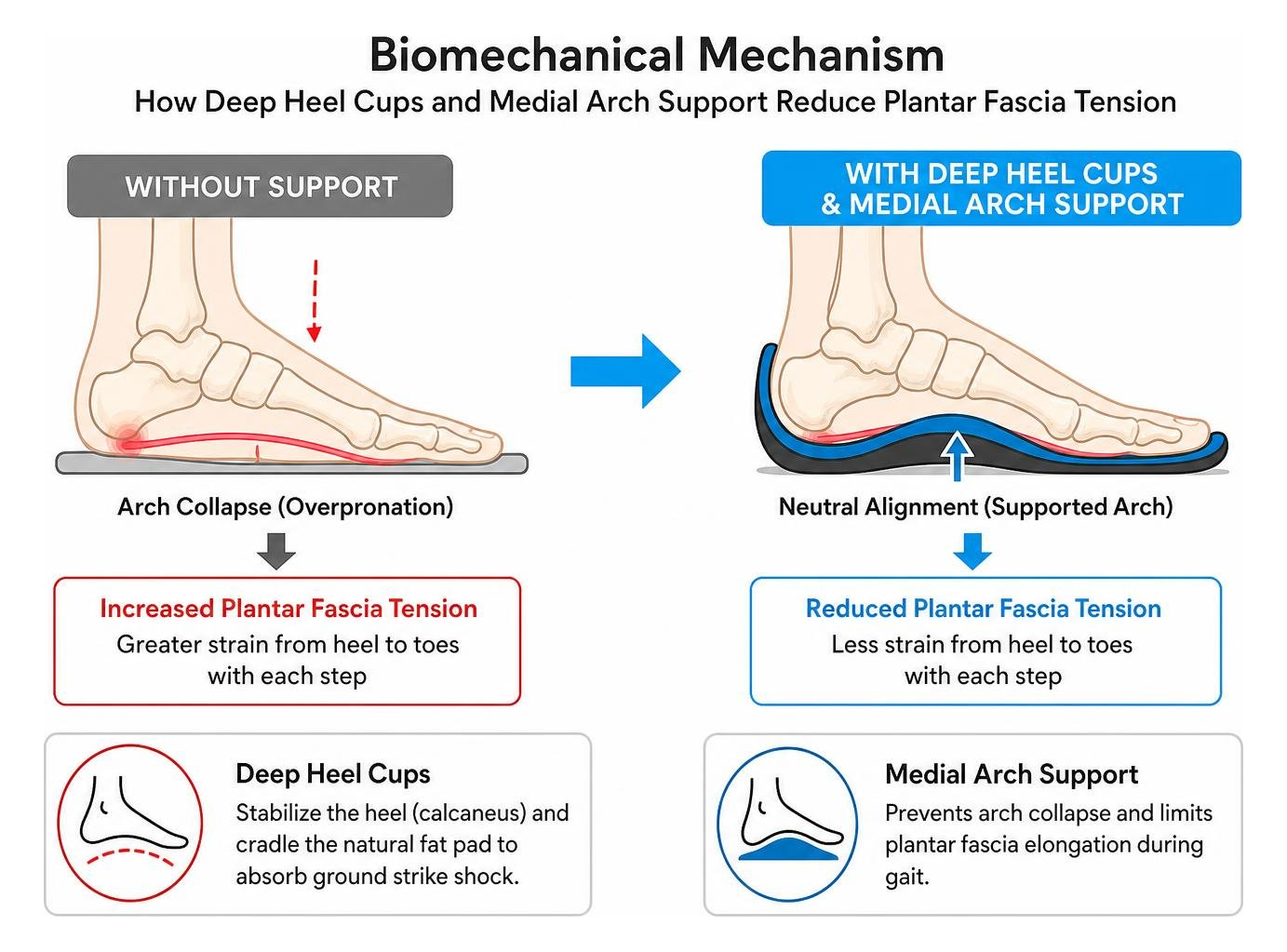
Orthotic house shoes prevent this strain by promoting anatomical alignment. To evaluate the best house slippers for plantar fasciitis women’s footwear lines offer, we focus on specific biomechanical elements:
- Medial Arch Support: Prevents overpronation and limits the elongation of the plantar fascia during your gait.
- Deep Heel Cups: Stabilize the calcaneus (heel bone), cradling the natural fat pad beneath your heel to absorb ground strike shock.
- Structured Midsoles: EVA or polyurethane foam foundations that disperse body weight evenly rather than concentrating pressure on the heel spur region.
- Rigid or Semi-Rigid Outsoles: Non-slip rubber outsoles that resist excessive torsional twisting while offering dependable traction indoors and outdoors.
Understanding these features is just as important as selecting podiatrist-approved best shoes for plantar fasciitis for daytime wear outside the home.
Key Arch Features in the Best House Slippers for Plantar Fasciitis Women’s
A supportive arch profile must match the functional biomechanics of your foot. An effective arch design does not simply feel soft; it acts as a structural shelf that halts arch collapse. When stepping onto bare floors, tension along the plantar aponeurosis increases sharply without support.
Women dealing with flat feet need firm, stabilizing arch contours to manage inward rolling (pronation). Those with higher arches require contoured medial support that fills the negative space under the foot to disperse downward forces. Investing in dedicated, supportive house slippers prevents cumulative micro-tears in the fascia, reducing morning stiffness and daily foot fatigue.
Heel Cushioning and Forefoot Pressure Relief
While arch support controls foot motion, calcaneal cushioning absorbs the initial impact of every step. Women suffering from plantar fasciitis frequently develop secondary heel sensitivity or plantar spurs. Slippers designed with shock-absorbing foam or specialized heel gel pads keep sensitive bone structures off rigid surfaces.
Many women also experience secondary forefoot pain, such as metatarsalgia or ball-of-foot burning. Built-in metatarsal pads help by offloading pressure from the metatarsal heads and encouraging natural toe splay. For comprehensive relief across all daily footwear, reviewing our complete guide to best shoes for foot pain provides actionable strategies for whole-foot alignment.
Top Indoor Recovery Footwear for Women with Plantar Fasciitis
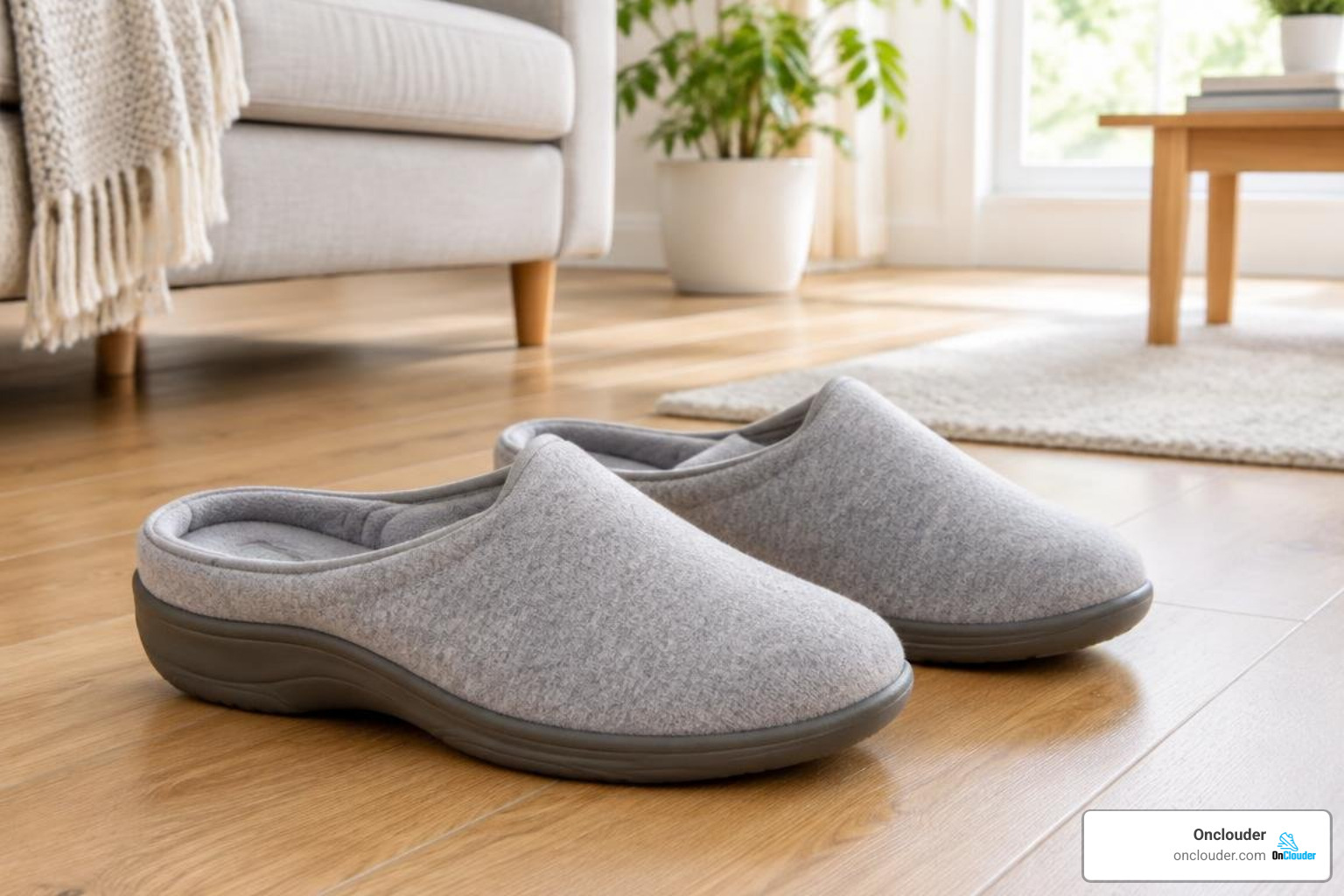
We evaluated the top indoor footwear designed to alleviate morning heel pain, stabilize pronation, and cushion tired arches. Here are our top four recommendations tested for fit, support, and durability.
ABEO Amble Slipper: Built-In Orthotics and Metatarsal Support
The ABEO Amble Slipper combines orthotic engineering with everyday comfort. Built with an integrated BIOsystem® orthotic footbed, this slipper features a deep heel cradle that aligns the lower body and absorbs impact on hard indoor surfaces.
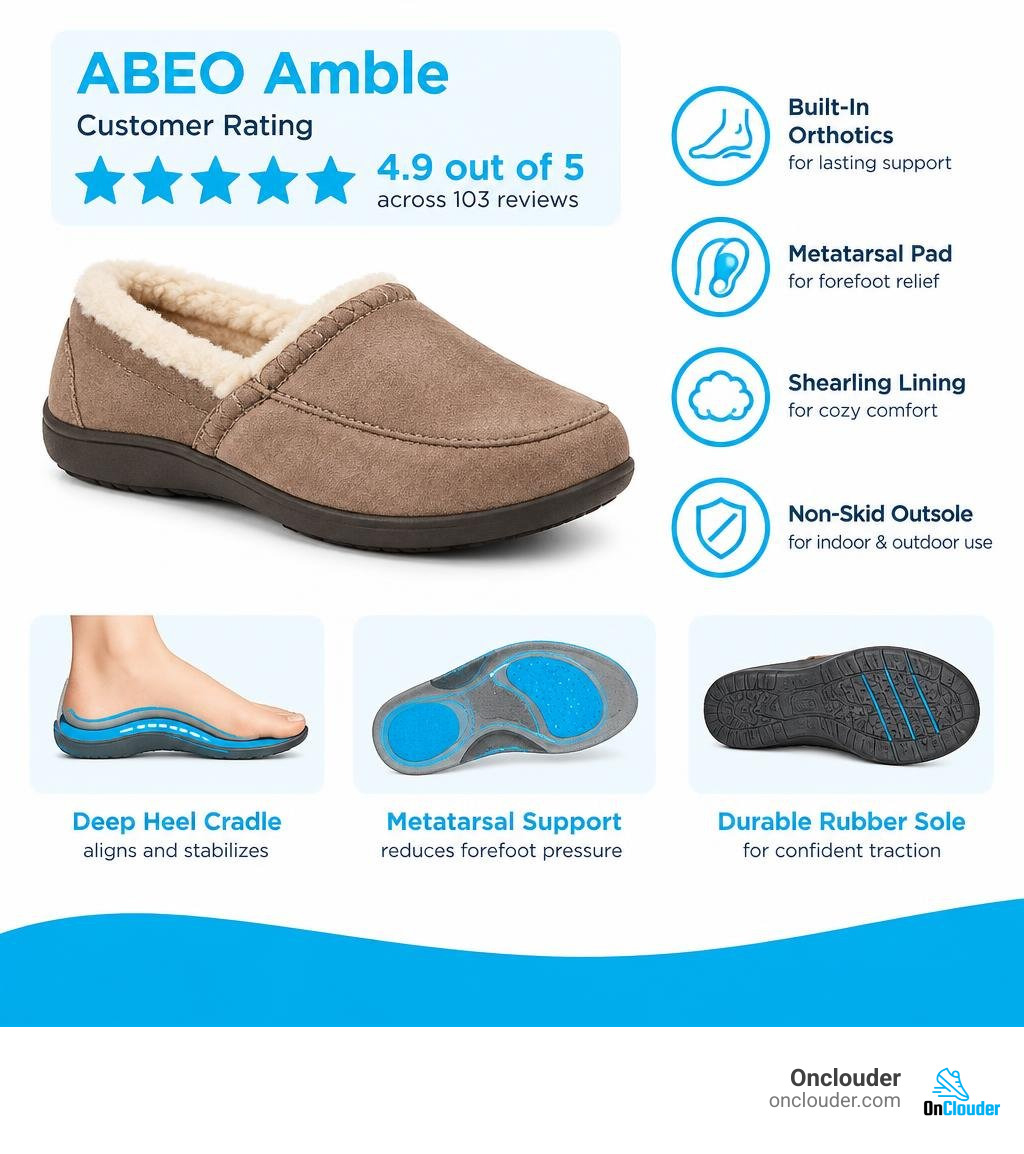
A key differentiator is the option for a built-in metatarsal pad. The ABEO Amble Metatarsal Slipper redistributes forefoot pressure, making it an excellent choice for women managing both plantar fasciitis and forefoot fatigue. The upper is crafted from water-resistant leather lined with cozy shearling, supported by a durable rubber outsole suitable for quick trips outside. With a 4.9 out of 5-star customer rating across 103 verified reviews, it stands out for high arch support and premium build quality.
- Best For: Women needing targeted arch contouring and forefoot pressure relief.
- Key Specs: BIOsystem® footbed, genuine shearling lining, water-resistant leather upper, non-skid rubber sole.
PowerStep ArchWear Clog: Medical-Grade Neutral Arch Support
Renowned for clinical-grade orthotics, PowerStep incorporates its proven support structure directly into the PowerStep ArchWear Orthotic Clog. This clog-style slipper features a built-in neutral arch shape that stabilizes the heel and controls excessive pronation.
Customer feedback highlights its support performance: across 410 reviews, the slipper holds a 4.1-star rating, with 30% of customer review topics specifically praising its arch support. It features a lightweight EVA midsole to absorb shock, a raised heel back to keep the foot secure, and a synthetic fleece lining finished with a faux-fur cuff. A distinct advantage is practicality: the supportive insole is fully removable, and the outer slipper shell is machine-washable.
- Best For: Everyday indoor chores and severe pronation requiring firm, clinical-style arch cradling.
- Key Specs: Built-in neutral orthotic insole, shock-absorbing EVA midsole, machine-washable shell, faux-fur trim.
Muya Darcie Slipper: Gel Cushioning and Anatomical Sole
The Muya Darcie Slippers combine targeted heel protection with anatomical shaping. Designed specifically for heel discomfort, the Darcie utilizes an anatomical footbed paired with a specialized gel insert under the heel to disperse strike forces.
The sole features a 3.5 cm heel height with a 1.5 cm platform, creating a gentle forward incline that helps reduce Achilles tendon tension and eases strain on the plantar fascia. Constructed with breathable, smooth polar textile and felt, the upper keeps feet warm in winter while preventing overheating during warmer months.
- Best For: Sufferers of acute heel spur tenderness who need plush, targeted gel impact absorption.
- Key Specs: Anatomical gel-cushioned footbed, 3.5 cm elevated heel, dual-season breathable upper, lightweight polyurethane base.
Xero Shoes Pagosa Cozy: Zero-Drop Natural Foot Health
For women who prefer minimal, unrestricted footwear, the Xero Shoes Pagosa Cozy takes an alternative approach. Instead of rigid orthotic arches, this model uses a barefoot-inspired design featuring a zero-drop platform and a wide, foot-shaped toe box.
Weighing just 4.8 oz per shoe, the Pagosa Cozy allows toes to splay naturally, which can help engage the foot’s intrinsic musculature over time. It features a synthetic wool upper, faux-shearling lining, and a collapsible heel counter that converts the shoe from a slide into a secure slipper. Backed by a 5,000-mile sole warranty, its flexible FeelTrue® rubber outsole provides grip for quick steps outdoors while keeping feet warm and comfortable.
- Best For: Natural movement advocates and women who prefer zero-drop alignment over rigid orthotics.
- Key Specs: Zero-drop FeelTrue® rubber sole, wide toe box, convertible drop-down heel, 4.8 oz ultra-lightweight build.
Comparison Table: Best House Slippers for Plantar Fasciitis Women’s
| Model | Arch Support Type | Heel Drop / Profile | Removable Insole | Primary Outsole Traction | Ideal Foot Concern |
|---|---|---|---|---|---|
| ABEO Amble | High anatomical BIOsystem® with optional metatarsal pad | Standard contoured heel | Yes | Flexible rubber outsole | Plantar fasciitis & ball-of-foot pain |
| PowerStep ArchWear | Medical-grade neutral arch cradle | Moderate elevated clog | Yes | Non-slip thermoplastic rubber | Overpronation & plantar fascia strain |
| Muya Darcie | Anatomical with embedded heel gel | 3.5 cm heel / 1.5 cm platform | No | Polyurethane anti-slip sole | Heel spur impact & acute heel strikes |
| Xero Shoes Pagosa Cozy | Flat / natural foot shape | 0 mm (Zero-drop) | No | Flexible FeelTrue® rubber | Toe crowding & intrinsic foot strengthening |
Sizing, Durability, and Orthotic Compatibility Guide
Selecting the right size is essential when buying supportive house shoes. An improperly positioned arch contour can cause pressure points along the plantar fascia rather than relieving tension.
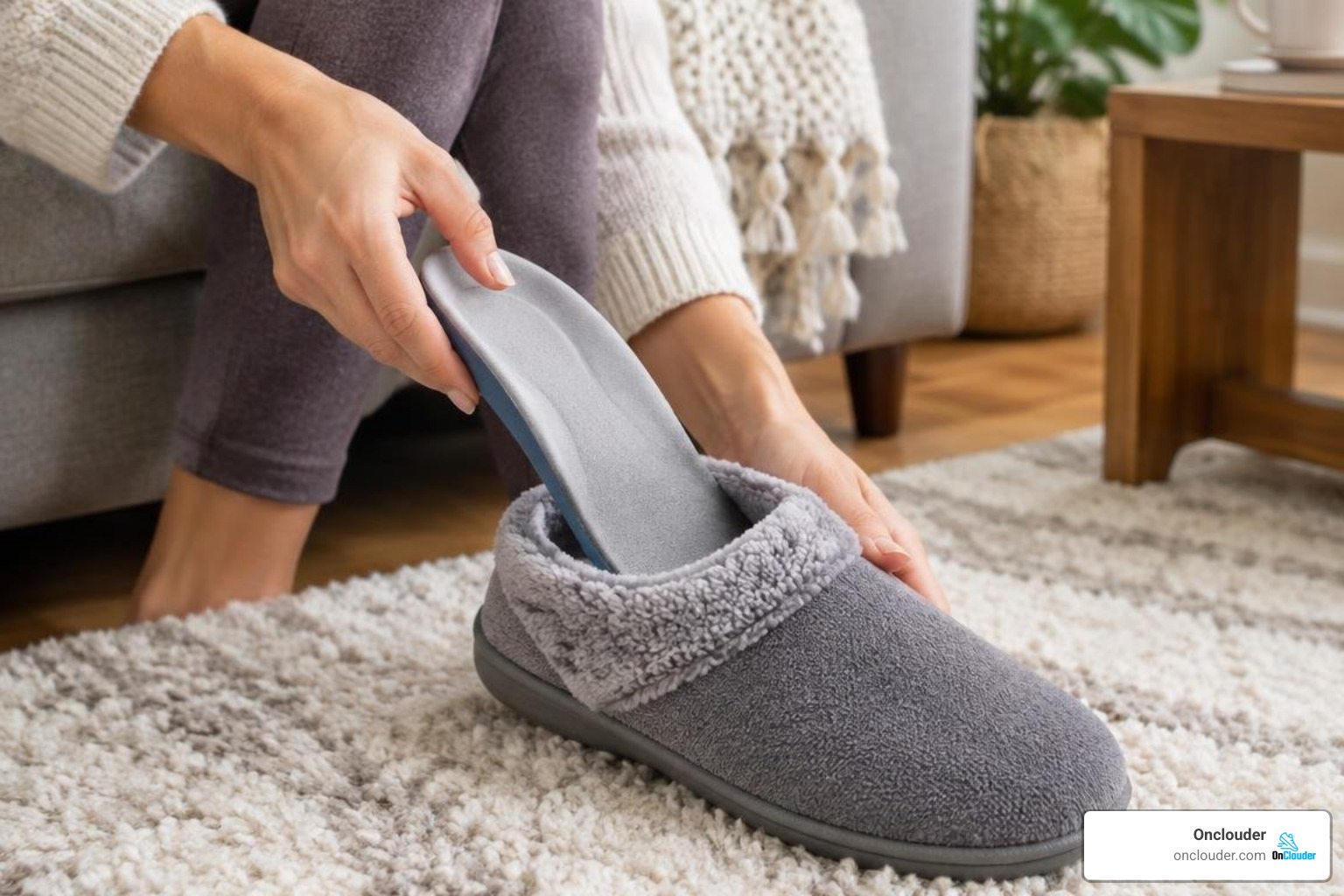
Keep these key fitting and care guidelines in mind:
- Account for Half Sizes: Most supportive slippers come only in whole sizes. If you sit between sizes or plan to wear thick socks, sizing up usually prevents heel spillover over the rear lip.
- Evaluate Toe Box Width: Look for a roomy forefoot that lets your toes spread naturally. Cramped toe boxes force the big toe inward, reducing natural arch stabilization.
- Check Insole Removability: If you already use prescription orthotics, choose a slipper with a removable footbed like the ABEO Amble or PowerStep ArchWear. This lets you swap in your custom orthotics or your best arch support insoles without crowding your feet.
- Prioritize Outsole Traction: Opt for durable rubber treads to prevent slips on hardwood or tile floors. Slippers with indoor-outdoor soles also hold up well for quick trips outside to grab the mail. Explore our curated guide to arch support house shoes for more traction-focused recommendations.
Frequently Asked Questions About Women’s Plantar Fasciitis Slippers
What is the typical price range for high-quality plantar fasciitis slippers?
High-quality orthotic slippers generally range from $85 to $115. While conventional slippers sell for $20 to $40, they lack the structural support needed for foot recovery. Premium models incorporate dual-density EVA midsoles, medical-grade arch profiles, water-resistant leathers, and durable rubber soles, making them a worthwhile investment for long-term foot comfort.
Can slippers with removable footbeds accommodate custom orthotics?
Yes. Slippers designed with removable footbeds feature deep interior cavities that can fit custom prescription orthotics or specialized OTC insoles. Swapping out the factory footbed ensures your custom orthotic rests flat against the midsole without altering the shoe’s internal fit.
How do slippers with metatarsal pads help plantar fasciitis sufferers?
A metatarsal pad sits just behind the ball of the foot, lifting and supporting the transverse arch. This spreads the metatarsal bones, offloads forefoot pressure, and promotes natural toe alignment. By balancing weight distribution across both the heel and forefoot, it reduces total stress on the plantar fascia.
Conclusion
Recovering from plantar fasciitis requires consistent arch support and shock absorption from the moment your feet hit the floor in the morning. Leaving your feet unsupported on rigid indoor floors undoes the relief achieved during rest and daytime care. Our testing confirms that the best house slippers for plantar fasciitis women’s feet need combine orthotic structure with everyday comfort.
Choosing a dedicated orthotic slipper—such as the ABEO Amble with its BIOsystem® footbed or the PowerStep ArchWear Clog with its medical-grade arch support—protects your heel and supports daily recovery at home. To keep your feet supported when heading out the door, explore our comprehensive guide on the best work shoes for plantar fasciitis.
