
Best Support Shoes for Plantar Fasciitis: What to Look For
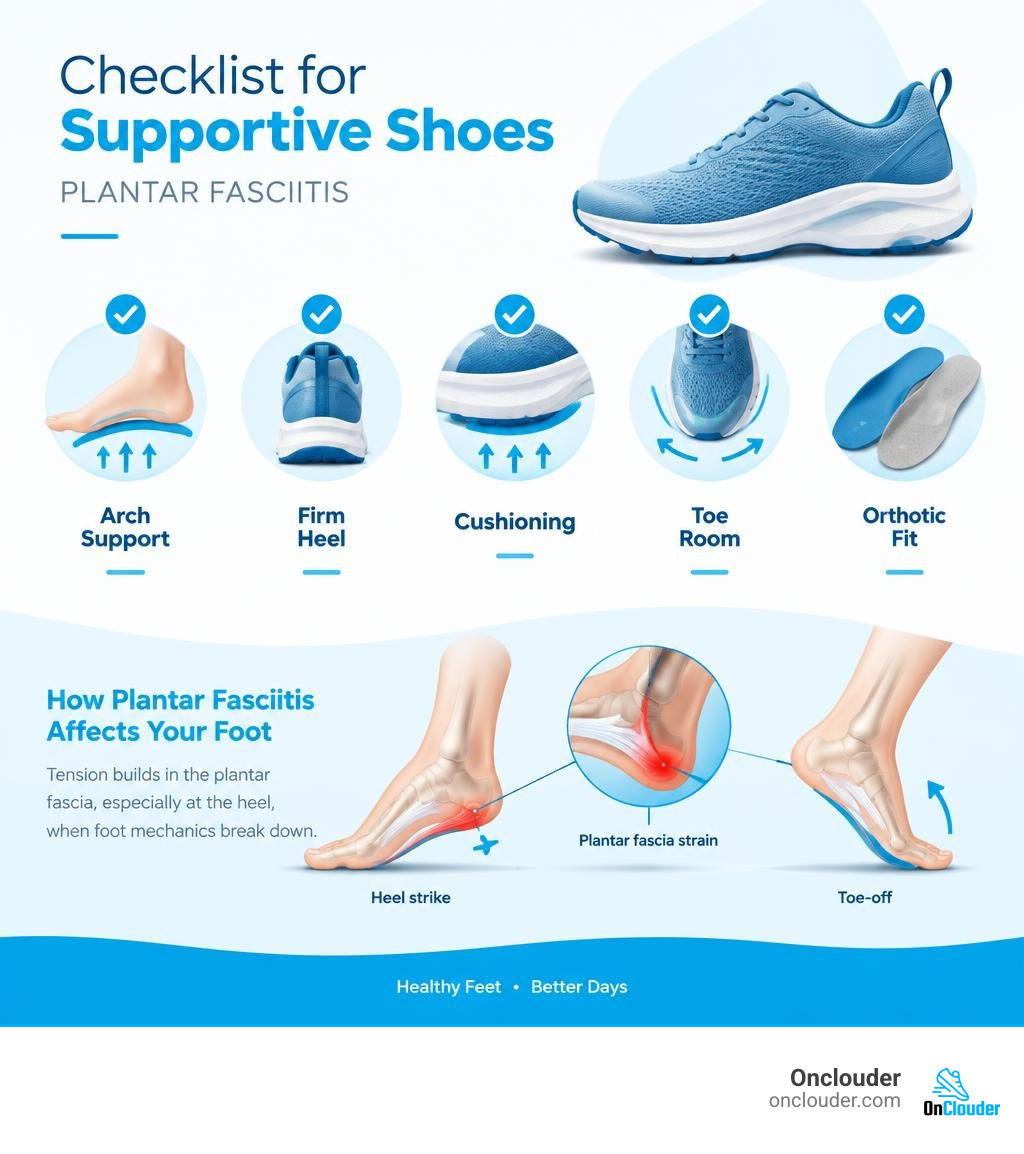
Start with fit, not a brand name. The best support shoes for plantar fasciitis have an arch that feels comfortable, a firm heel that holds your foot in place, and enough cushioning to soften each step. Look for room at the toes, and choose a removable insole if you use orthotics. A shoe should feel secure without pinching when you try it on.
If you spend long hours standing or walking, style matters too: you need a pair you will actually wear. This 2026 guide compares 10 supportive footwear options and explains how to find the right fit for work and everyday life.
Biomechanics Behind Top Support Shoes Plantar Fasciitis Sufferers Rely On
Plantar fasciitis occurs when the thick band of tissue running along the bottom of your foot—connecting your heel bone to your toes—experiences micro-tears and chronic inflammation. This tissue acts like a dynamic bowstring, supporting the longitudinal arch of your foot and absorbing ground reaction forces with every strike. When foot mechanics break down, usually through excessive pronation or inadequate shock absorption, tension builds directly at the medial calcaneal tubercle.
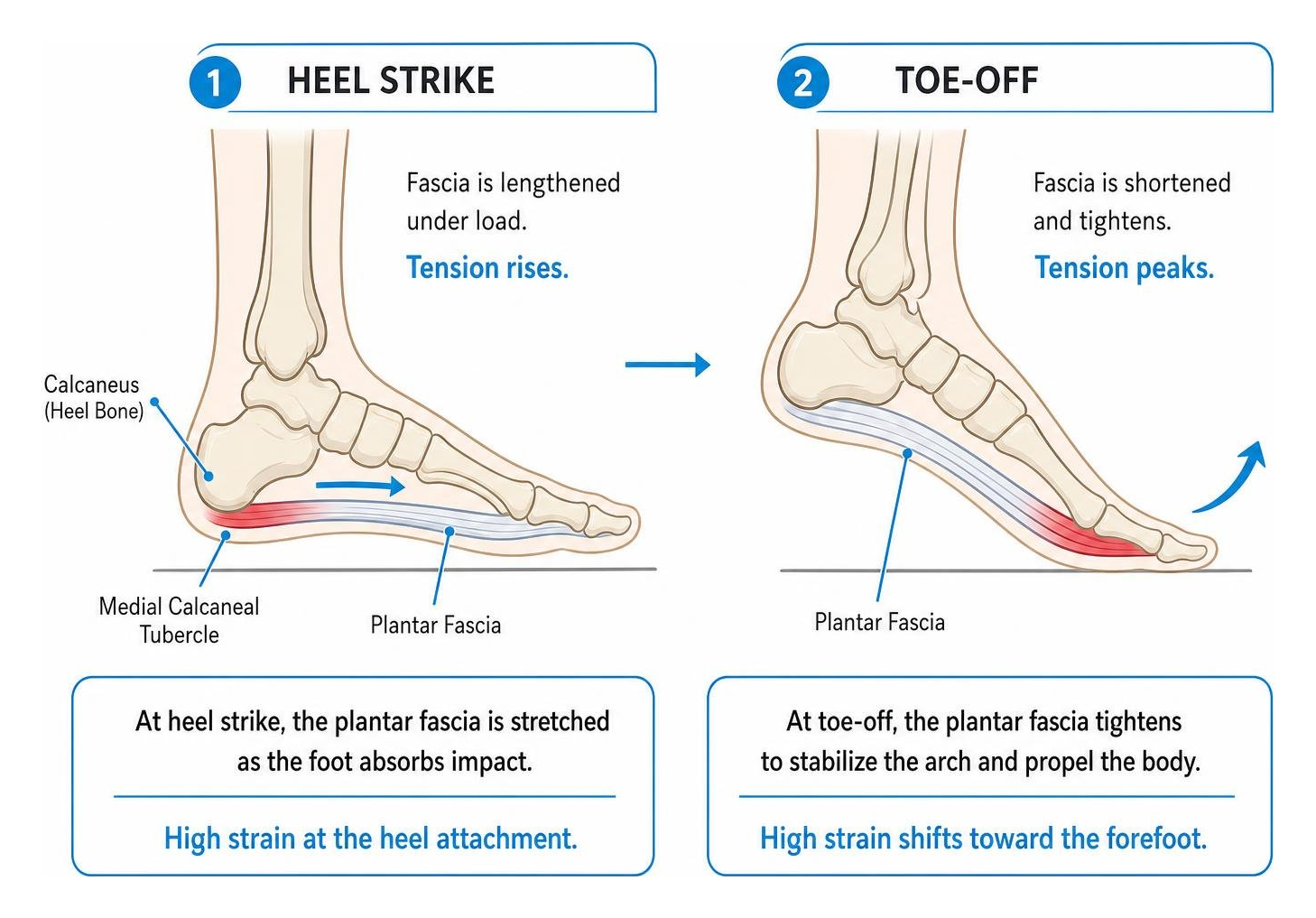
To ease this burden, supportive footwear must perform several mechanical tasks at once:
- Fascia Unloading: Preventing the arch from collapsing under full body weight.
- Kinetic Chain Alignment: Keeping the ankle, knee, and hip tracking properly to prevent asymmetrical loading.
- Overpronation Control: Resisting inward rolling during mid-stance.
- Impact Dispersion: Dissipating ground contact forces before they reach the heel bone.
When evaluating footwear, understanding these mechanics is essential. For a broader perspective on addressing lower-limb discomfort, our guide to the best shoes for foot pain covers foundational structural traits that safeguard the plantar fascia.
Deep Heel Cups and Shock Absorption
A proper heel construction forms the cornerstone of effective plantar fascia support. The human heel pad serves as a natural hydraulic shock absorber, composed of specialized fat compartments that cushion impact. Standard flat shoe footbeds allow this fat pad to splay outward, thinning the natural cushioning right where you need it most.
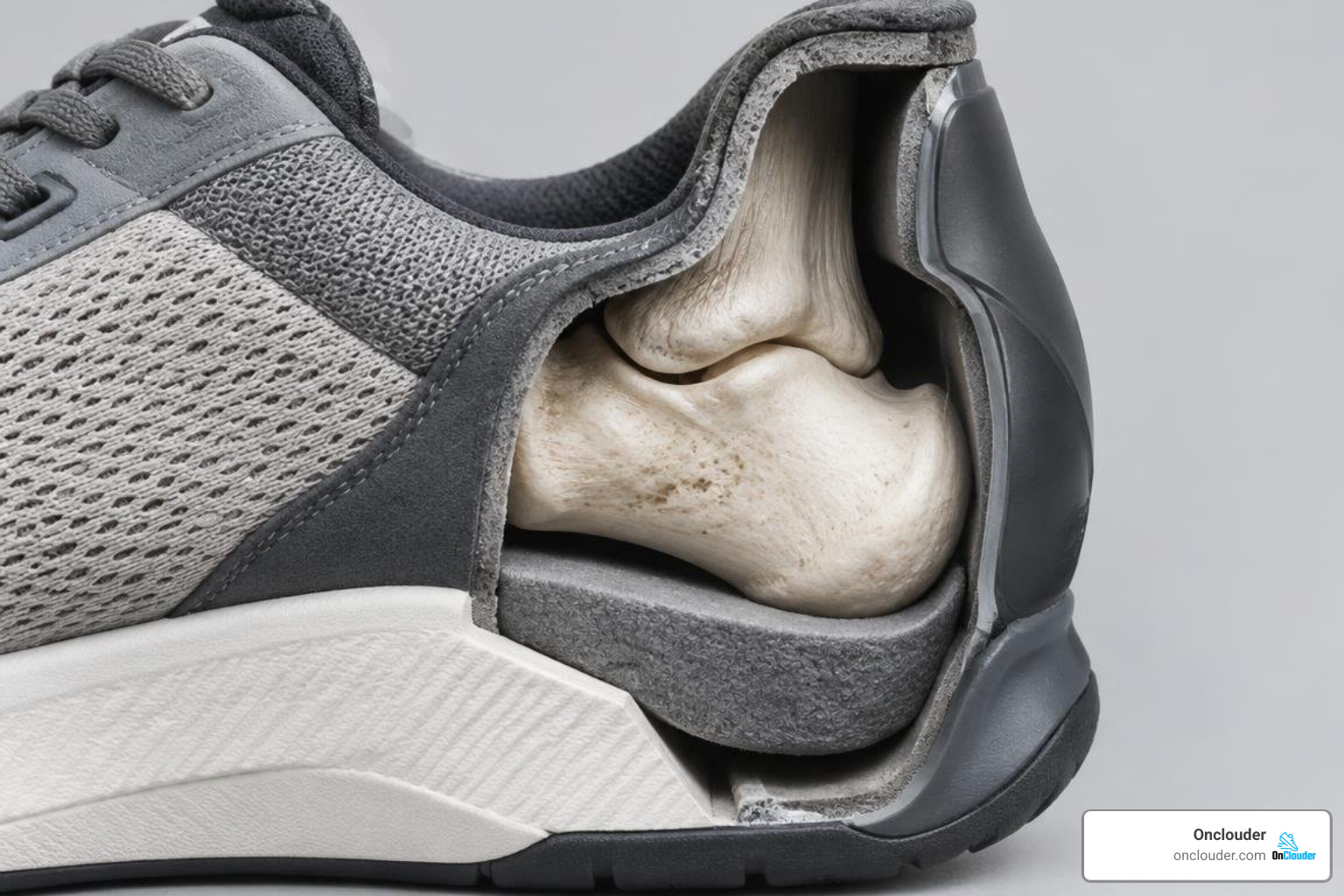
Quality support shoes incorporate deep, structured heel cups paired with rigid or semi-rigid external heel counters. This combination cradles the calcaneus, locks the heel pad in place, and prevents excessive eversion. By maintaining the natural density of the heel pad, the shoe drastically dampens impact forces during initial contact.
Targeted Arch Contouring and Drop Dynamics
Arch support must actively cradle the foot rather than merely act as a hard barrier. Anatomical contouring fills the space beneath the medial longitudinal arch, distributing body weight evenly across the entire plantar surface rather than concentrating pressure on the heel and forefoot.
Equally critical is the heel-to-toe drop—the height difference between the heel cushion and the forefoot platform. Shoes with a moderate drop (typically 8 mm to 12 mm) slightly elevate the heel, shortening the Achilles tendon and calf complex. This reduced tension at the posterior chain translates directly into lower mechanical stress on the plantar fascia. Integrating flex grooves along the forefoot ensures that the shoe bends naturally at the metatarsal heads without flexing through the midfoot arch, maintaining structural integrity throughout the gait cycle. You can learn more about finding the right arch profile in our guide to shoes for arch support.
Top 10 Footwear Styles for Plantar Fascia Strain Relief
Finding the ideal footwear profile depends on how you move throughout your day. Below is an overview of the top footwear profiles engineered to alleviate heel and arch strain.
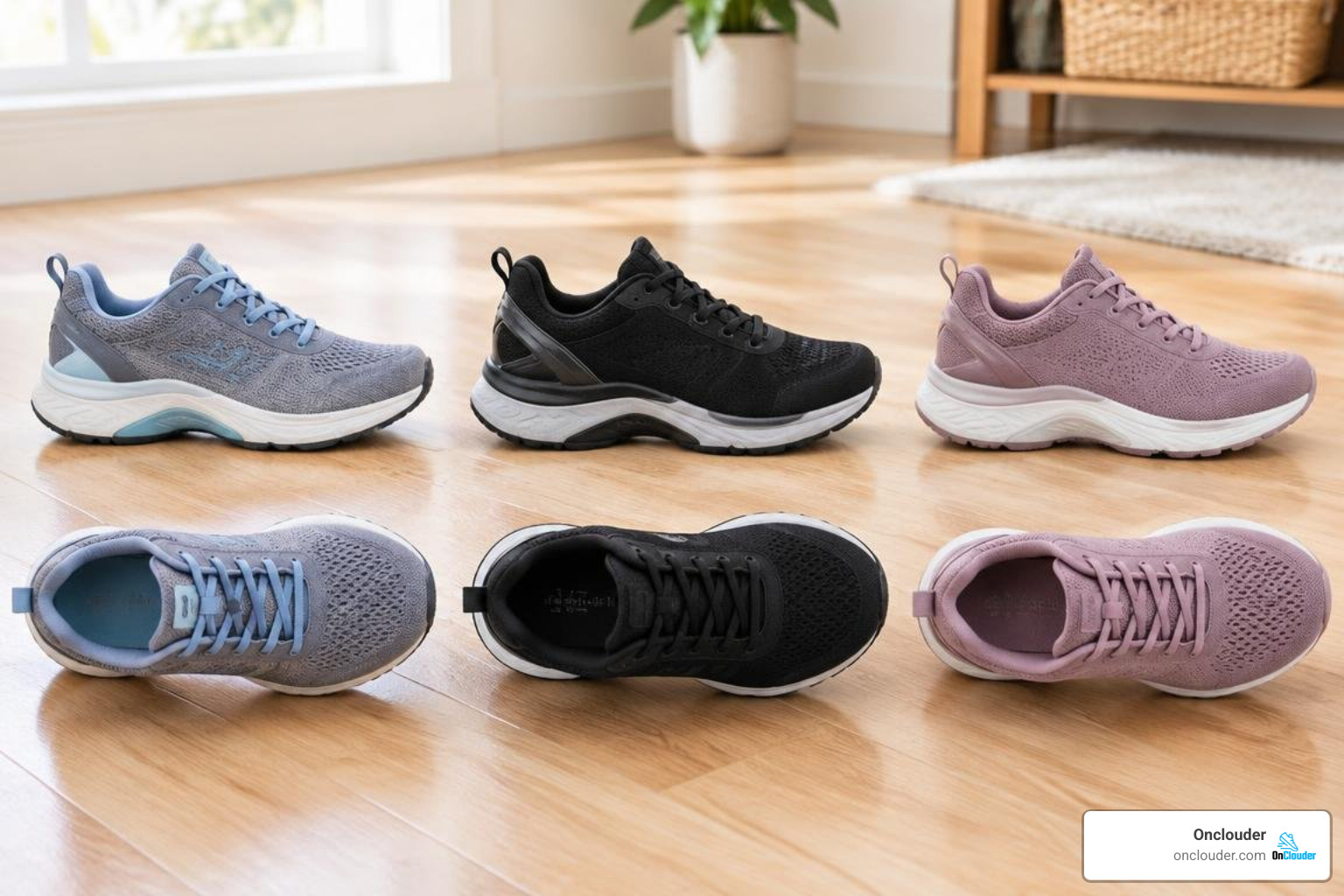
| Shoe Model / Category | Arch Profile | Heel-to-Toe Drop | Primary Feature | Best Use Case |
|---|---|---|---|---|
| Men’s Ultimate Arch Support Shoes | High / Dynamic | 8 mm | Shock Queller® Technology | Daily Walking & Light Athletics |
| Danika Arch Support Sneaker | Medium-High | 13.3 mm | UltraSKY™ Cushioning | Active Walking & Travel |
| Ivy Arch Support Sneaker | Medium | 0.9″ Heel Height | Global Foot-Scan Ergonomics | Casual Everyday Wear |
| Superfeet Casual Insole Pairing | High Carbon Support | Adaptable | EVOLYTE® Carbon Cap | Work Shoes & Dress Flats |
| Maximum Cushion Road Runner | Neutral / High | 10 mm | High-Stack EVA Midsole | Road Running & High Impact |
| Ergonomic Rocker-Sole Trainer | Moderate Rocker | 6 mm | Meta-Rocker Transition | Smooth Forward Propulsion |
| Slip-Resistant Service Shoe | Reinforced Medial | 10 mm | Rigid Midfoot Shank | Long Standing Shifts |
| Supportive Athletic Trainer | Dynamic Stability | 8 mm | Dual-Density Medial Post | CrossFit & Gym Workouts |
| All-Day Casual Leather Sneaker | Anatomical Cup | 9 mm | Removable Orthotic Insole | Office & Commuting |
| Lightweight Breathable Slip-On | Adaptive Arch Band | 8 mm | Plant-Based Memory Foam | Quick Errands & Home Recovery |
Daily Walking Profiles: Selecting Support Shoes Plantar Fasciitis Sufferers Trust
For everyday walking, footwear must balance structural rigidity with lightweight comfort. Heavy, clunky orthopedic designs are things of the past. Modern options, such as the Men’s Ultimate Arch Support Shoes, combine lightweight designs (weighing roughly 288.8 grams) with an 8 mm heel-to-toe drop and Shock Queller® Technology. These builds utilize soft knit uppers crafted from recycled materials to maintain breathability while locking down the midfoot.
User feedback consistently reflects these benefits: across 5,998 verified reviews, this style maintains a 4.8 out of 5-star rating, with 98% of wearers recommending it for heel pain relief. Reviewers frequently note how the combination of plant-based Memory® foam and structured heel cups prevents post-walk flare-ups. If you are exploring community-tested options, take a look at our men’s plantar fasciitis shoe recommendations to see how real-world feedback stacks up.
Active Recovery: Evaluating Support Shoes Plantar Fasciitis Runners Need
Running introduces impact forces between three and five times your body weight. For athletes recovering from plantar fasciitis, shoes must provide responsive energy return alongside firm motion control. Models such as the Men’s Athletic Shoes with Arch Support feature dynamic stretch lacing, anti-microbial topcloths, and wet-grip rubber outsoles that secure footing on varied surfaces.
Athletic trainers that incorporate responsive midsole compounds ensure smooth heel-to-toe transitions, preventing harsh heel strikes that aggravate the plantar fascia insertion point. To review specialized performance trainers designed for road and track impact, explore our top supportive running shoes for comfort and protection.
Occupational and All-Day Standing Footwear
Standing on hard concrete floors for 8 to 12 hours places constant, unyielding pressure on the arches. Occupational footwear demands rigid shanks, slip-resistant outsoles, and substantial forefoot and heel cushioning.
When your job requires you to stay on your feet all day, standard sneakers simply compress within hours, leaving your heel unsupported. Specialty occupational styles prevent foot fatigue by locking the medial arch into an anatomically neutral posture throughout the shift. For dedicated workplace options, read our best work shoes for plantar fasciitis guide.
Casual Orthotic Sneakers and Custom Insole Support
For casual wear, options like the Ivy Arch Support Sneaker ($159.95, 4.5/5 rating across customer reviews) combine premium lifestyle aesthetics with anatomical engineering derived from tens of millions of global foot scans. Featuring a 0.9-inch heel height and Cobra Orthotic Technology, it relieves arch and metatarsal strain without looking like clinical footwear.
Similarly, the Danika Arch Support Sneaker ($149.95, 4.59/5 rating across 266 reviews) provides UltraSKY™ cushioning paired with an impressive 13.3 mm heel-to-toe drop—ideal for offloading the Achilles tendon and calf muscles.
If you prefer to convert your existing casual footwear into pain-relieving options, medical-grade orthotic inserts like the Superfeet Casual Pain Relief Insoles ($69.99, 4.33/5 rating from 488 reviews) offer an effective solution. Featuring an EVOLYTE® carbon fiber stabilizer cap and a removable heel stabilizer, these insoles fit into casual shoes, boots, and flats to provide rigid, weight-defying arch support wherever you step.
Essential Fitting Guidelines and Orthotic Integration
Even the best engineered footwear will fail to resolve heel pain if the fit is incorrect. Follow these practical fitting guidelines to ensure your shoes provide maximum therapeutic support:
- Measure Both Feet While Standing: Your arches lengthen and flatten under body weight. Always measure your foot dimensions while standing, ideally in the afternoon when your feet are slightly swollen from daily activity.
- Prioritize Toe Box Volume: Ensure there is roughly a thumbnail’s width (about 0.5 inches) of space between your longest toe and the end of the shoe. A cramped toe box restricts the big toe (hallux), hindering natural windlass mechanics and increasing strain across the plantar fascia.
- Verify Heel Counter Rigidity: Squeeze the back collar of the shoe. If it collapses easily between your fingers, it will not provide adequate lateral stability for your calcaneus.
- Implement a Staged Break-In Schedule: When transitioning to structured orthotic shoes or rigid insoles, wear them for 1 to 2 hours on the first day, gradually increasing wear-time over 10 to 14 days to allow your plantar tissue and kinetic chain to adapt.
- Pair with Supportive Socks: Select moisture-wicking socks with targeted arch compression bands to minimize friction and prevent blisters.
- Ensure Flat Orthotic Seating: If you use custom inserts, remove the shoe’s factory footbed completely before placing the orthotic. Ensure the insert lies completely flat without curling at the edges or shifting during movement.
Frequently Asked Questions About Plantar Fasciitis Footwear
What heel-to-toe drop is best for plantar fasciitis?
A heel-to-toe drop between 8 mm and 12 mm is generally recommended for plantar fasciitis. A moderate drop slightly elevates the heel, which decreases the pull from the Achilles tendon and relieves strain on the plantar fascia during the push-off phase of walking. Zero-drop or minimalist shoes should typically be avoided during active flare-ups, as they place maximal stretch on tight calf muscles and the plantar tissue.
Can removable orthotic insoles replace dedicated support shoes?
High-quality orthotic insoles can effectively upgrade neutral footwear by adding contoured arch support and a deeper heel cup. However, an insole cannot fix a shoe that lacks torsional rigidity or features a worn-out, unsupportive midsole. For optimal relief, place structured insoles inside footwear built with a firm heel counter and a rigid midfoot shank.
How often should support shoes be replaced to prevent heel pain?
Supportive shoes should generally be replaced every 300 to 500 miles, or every 6 to 8 months for daily wear. Midsole cushioning materials like EVA foam suffer from mechanical fatigue and compress over time, losing their ability to absorb shock and support the arch long before the exterior rubber outsole shows obvious signs of wear.
Conclusion
Overcoming heel pain requires a smart footwear strategy built around anatomical arch contouring, deep heel stabilization, and balanced impact absorption. Whether you spend your days walking, running, or standing at work, investing in properly fitted footwear unloads the plantar fascia and supports natural biomechanics.
For a deeper look into clinically validated footwear options, explore our complete guide to podiatrist-approved shoes for plantar fasciitis to find the right pair for lasting comfort and mobility.

One thought on “10 Best Support Shoes For Plantar Fasciitis 2026 (Expert Picks)”
Comments are closed.