Is On Cloud Cloudzero Good for Plantar Support?
If you’re evaluating On Cloud Cloudzero’s plantar support, the short answer is: thick cushioning and a roomy toe box may feel comfortable, but a zero-drop sole does not provide arch support on its own. If you have active plantar fasciitis, flat feet, or overpronation, look for a shoe that gives your foot the stability it needs rather than relying on foam alone.
There’s also an important naming issue: the Cloud Zero described in some product listings should not be assumed to be an official On Cloud model. Check the maker before comparing its support claims with On’s shoes.
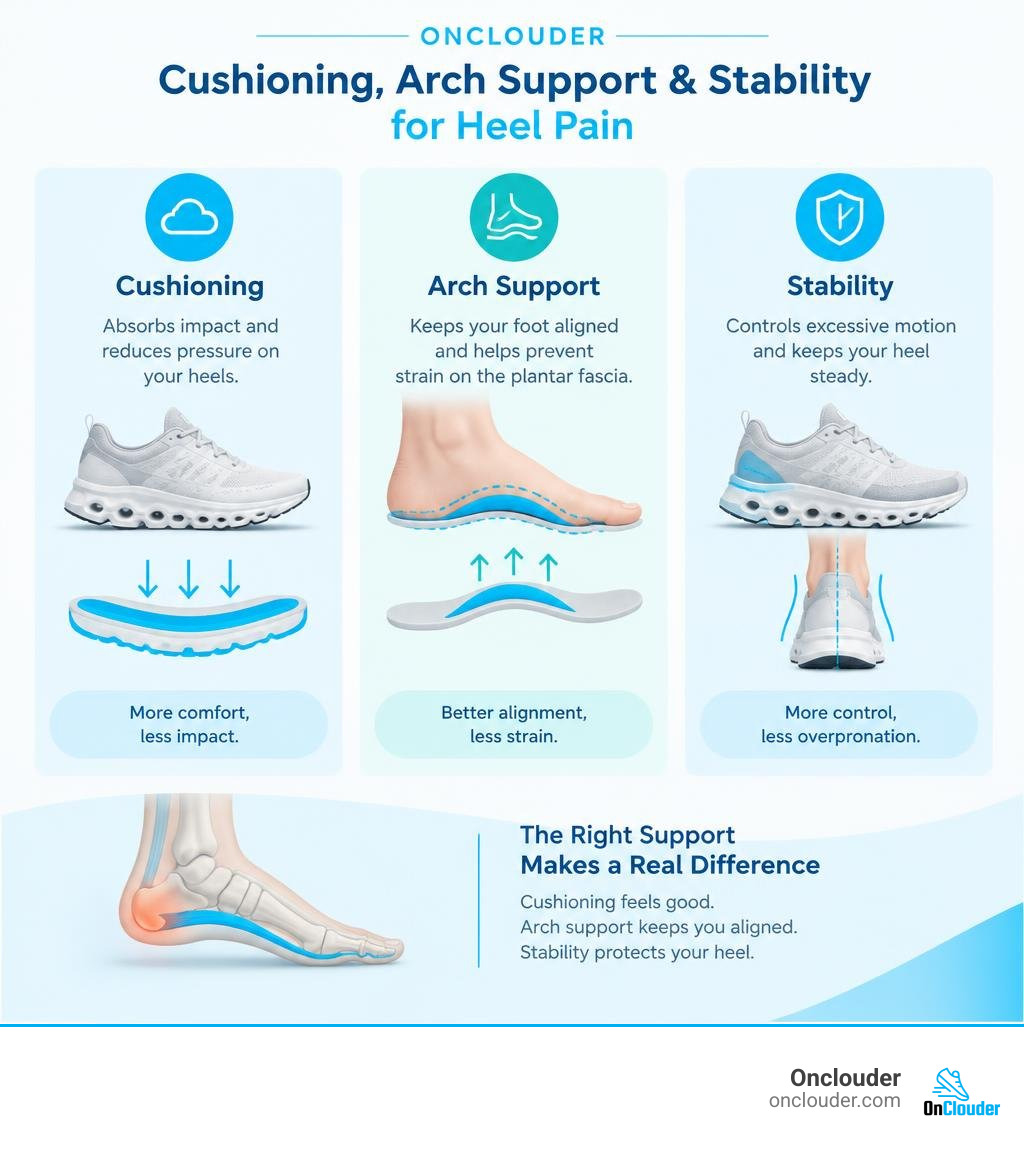
At Onclouder, we have spent years evaluating footwear mechanics to separate marketing buzz from true biomechanical relief. When your heels throb with every morning step, choosing the wrong sole profile can turn a minor ache into chronic inflammation. Let’s break down how zero-drop geometry, foam density, and structural arch reinforcement truly interact with your plantar fascia.
Evaluating On Cloud Cloudzero Plantar Support and Biomechanics
Understanding footwear begins at the foundation. The Cloud Zero profile relies on a massive 40mm stack height from heel to toe, maintaining a completely level platform. While traditional running shoes elevate the heel by 6mm to 10mm above the forefoot, zero-drop geometry places your heel and forefoot on the exact same horizontal plane.
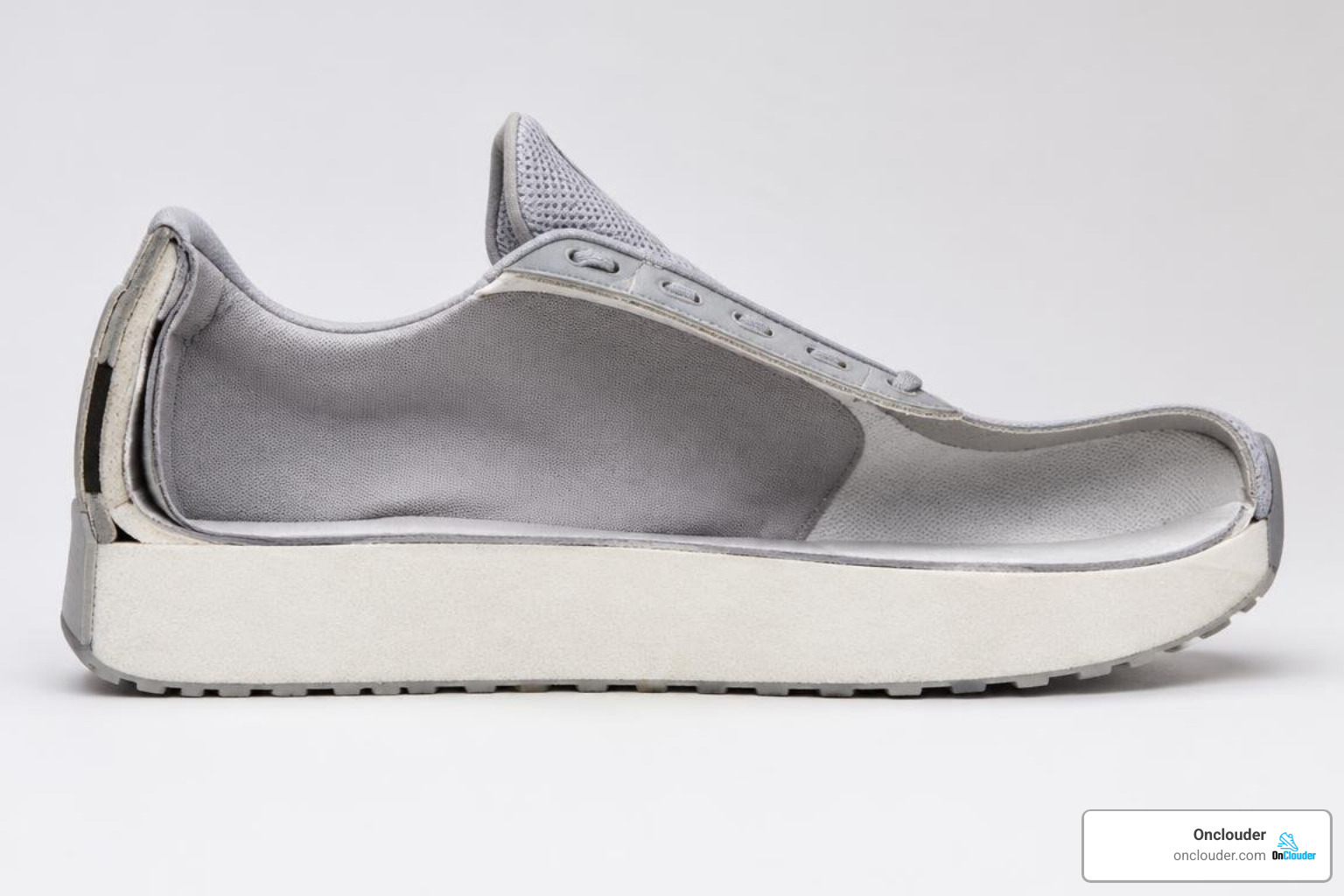
When evaluating arch support across On Cloud models, it becomes immediately obvious that foam thickness alone does not equate to arch integrity. The thick 40mm platform provides high shock absorption under general compression, dampening the harsh impact of hard pavement. This level geometry encourages upright spinal alignment and neutral ankle positioning.
However, cushioning and structural bracing serve two entirely different functions. While standard On Cloud shoes utilize specialized CloudTec pod arrays to collapse vertically and horizontally upon impact, a pure foam zero-drop design absorbs downward forces uniformly. For a neutral walker, this means great shock dispersal. But for an injured foot, the mechanics require a closer look.
How Zero-Drop Design Influences On Cloud Cloudzero’s Plantar Support
The fundamental mechanical effect of a zero-drop platform is that it restores natural tendon excursion. By removing heel elevation, your Achilles tendon and calf muscles lengthen through their full anatomical range during gait. When your ankles stay in a neutral alignment, your body naturally stacks its weight over your midfoot rather than pitching forward.
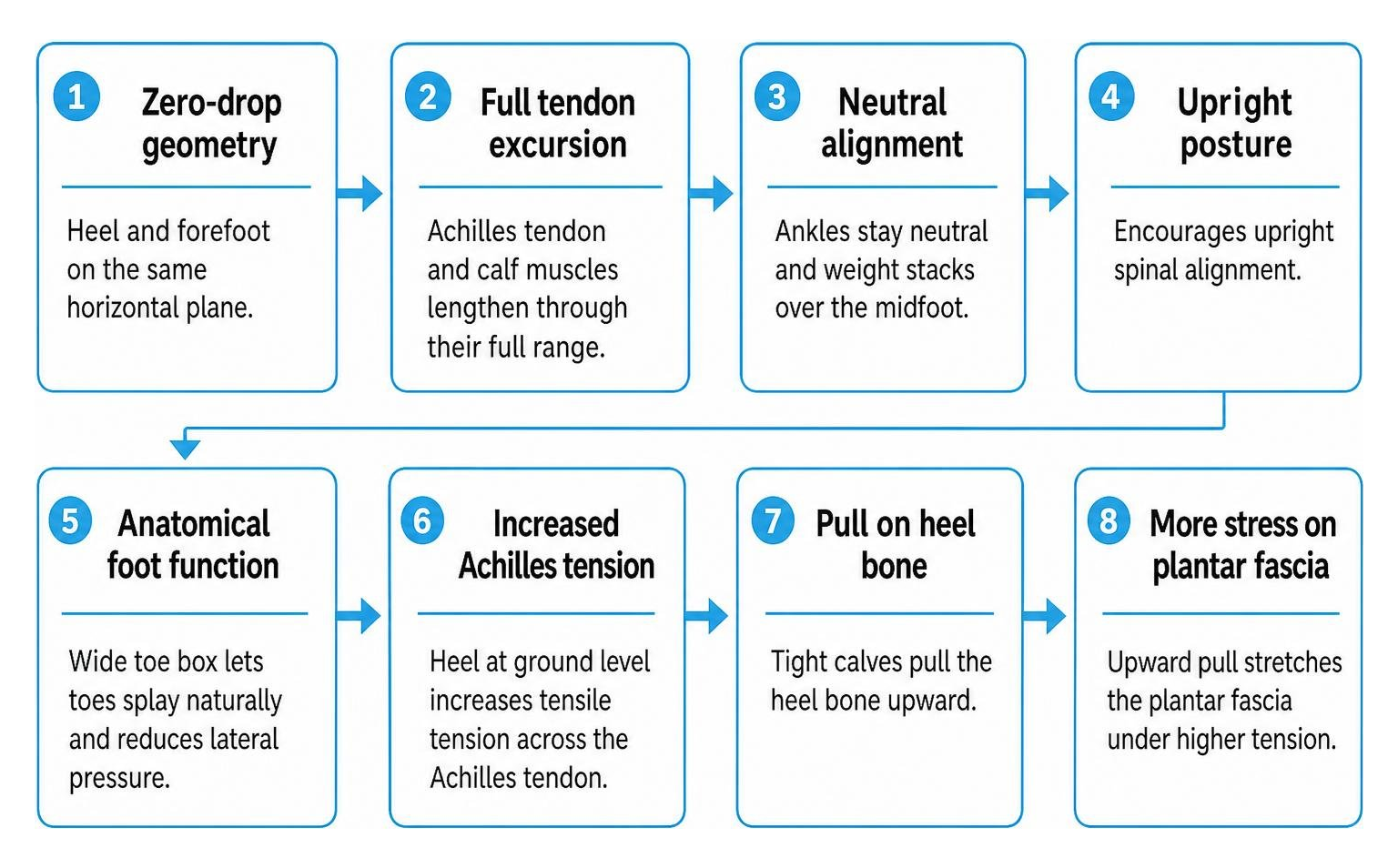
This geometry pairs with an anatomical, wide toe box. Allowing your toes to splay naturally relieves lateral pressure on digital nerves, making this design effective for conditions like metatarsalgia and Morton’s neuroma. When toes spread freely, the transverse arch functions as intended without pinching.
Yet, this exact mechanism creates a significant trade-off for heel pain sufferers. When the heel drops to ground level, tensile tension across the Achilles tendon increases. Because the Achilles tendon connects directly to the plantar fascia via the calcaneus (heel bone), tight calves will pull upward on the heel bone, stretching the inflamed plantar fascia under higher tension. Clinical podiatrist insights on pod-based cushioning emphasize that an unassisted, completely flat drop can aggravate acute heel inflammation if the arch lacks dedicated medial posting.
Cushioning Foam, Break-in Adaptability, and Orthotic Compatibility
The adaptive foam used in the Cloud Zero behaves differently than standard molded EVA midsoles. Straight out of the box, the sole feels relatively firm underfoot. Over the course of three to five days of regular wear, body heat and downward pressure cause the closed-cell foam to soften and mold around your unique foot contours, becoming slightly wider in the process.
This break-in period is critical for pressure distribution. As the footbed adapts, localized pressure spikes under the metatarsal heads and heel strike zones gradually decrease. For those managing foot pain with supportive footwear, the initial stiffness yields to a comfortable, non-intrusive cradle.
If you require prescriptive biomechanical correction, accommodating custom orthotics depends heavily on internal volume. The Cloud Zero platform features a wide interior base that easily houses standard orthotic inserts once the factory footbed is removed. Because the upper offers a forgiving grip without rigid overlays, rigid orthotics with deep heel cups sit flat without causing excessive pressure across the top of your instep.
Comparing the Cloudzero to Popular On Cloud Stability and Cushion Models
To understand where the Cloudzero fits within the wider footwear landscape, we must examine how it compares to established engineering standards found across our guide to On Cloud shoe comfort and support in 2026.
| Feature / Model | Cloudzero | On Cloudrunner 2 / 3 | On Cloudflyer 5 | On Cloudmonster 2 |
|---|---|---|---|---|
| Heel-to-Toe Drop | 0mm (Level) | 8mm | 10mm | 6mm |
| Stack Height | 40mm / 40mm | 31mm / 23mm | 31mm / 21mm | 36mm / 30mm |
| Support Category | Neutral Cushion | Mild-to-Moderate Stability | Maximum Stability | Max Cushion / Rocker |
| Midsole Tech | Solid Adaptive Foam | CloudTec + Firm Cradle | Dual-Density J-Frame + Pods | Oversized CloudTec |
| Arch Support Level | Adaptive / Flat | Structured Medial Arch | Rigid Medial Post | Rocker-Assisted Neutral |
| Primary Target | Forefoot Pain & Splay | Flexible Flat Feet | Overpronation & Tendonitis | Impact Shock Relief |
Standard On running shoes rely on open CloudTec pods that compress during heel strike to absorb shear and vertical forces before locking solid for propulsion. However, because these hollow pods absorb energy over smaller surface contact areas, they behave very differently than continuous, solid foam slabs.
Stability vs. Neutral Cushioning for Flat Feet and Overpronation
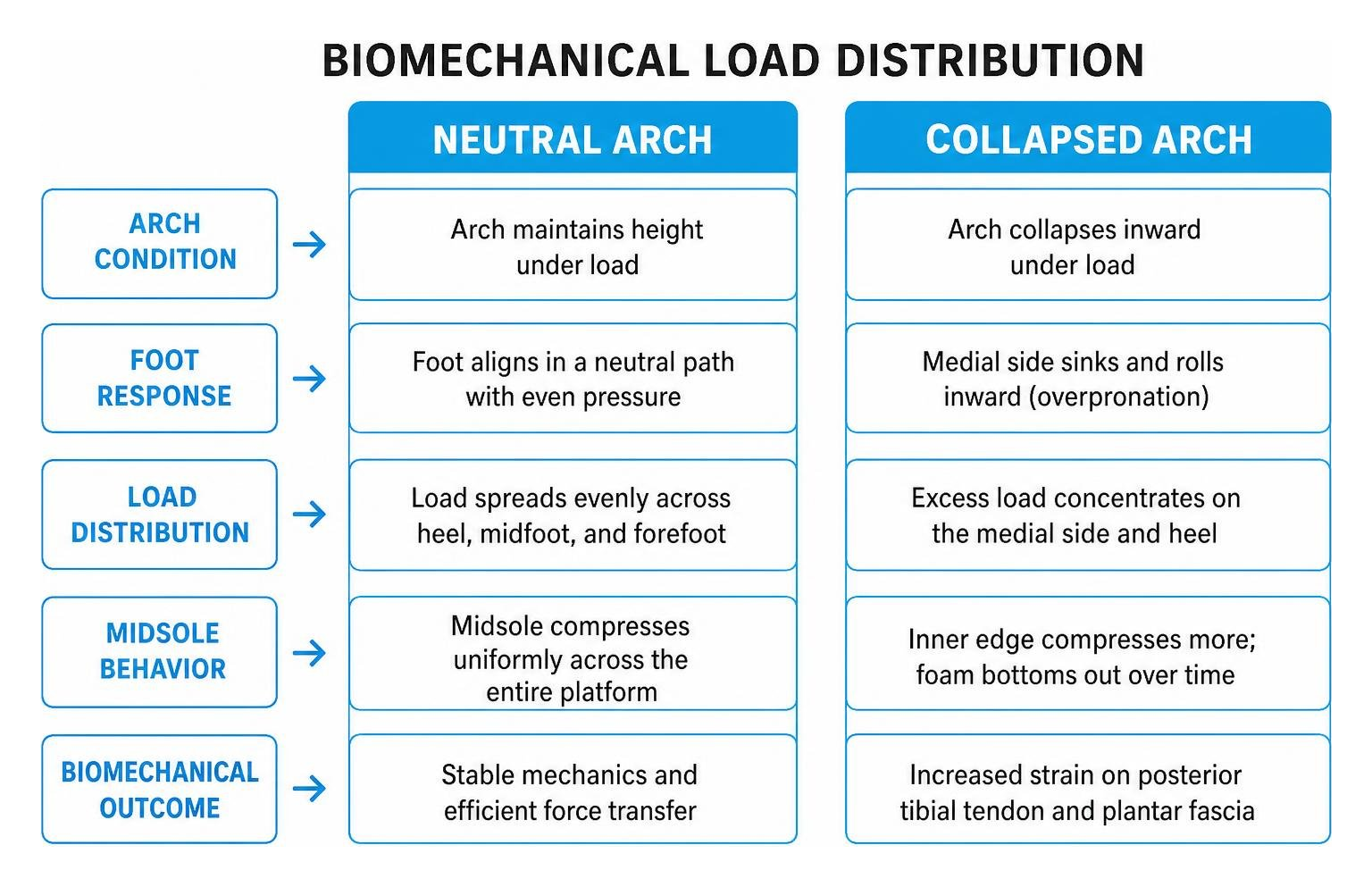
Navigating flat feet requires identifying whether you have flexible or rigid arches. A flexible flat foot displays an arch when non-weight-bearing, but collapses inward under load. For this foot type, neutral foam cushions will simply compress under the collapsing medial side, offering zero resistance to inward ankle rolling.
When finding the right fit for arch support, overpronators require mechanical resistance. The Cloudflyer 5 addresses this by utilizing a firmer, dual-density foam configuration arranged in a J-shape along the medial sidewall. This prevents the arch from bottoming out. Similarly, the Cloudrunner uses wider base geometries and reinforced sidewalls to guide the foot along a neutral path.
In contrast, the Cloudzero features a uniform foam density across the entire platform. Without medial reinforcement or higher sidewalls, a collapsing arch will crush the inner edge of the foam over time, exacerbating overpronation and placing added strain on the posterior tibial tendon.
Max Cushion Alternatives for Active Heel Inflammation
When dealing with a severe, throbbing flare-up of plantar fasciitis, pod geometry becomes paramount. In standard pod-based shoes, the hollow voids create distinct edges beneath the heel. For an acutely inflamed plantar fascia insertion point, these pod borders can concentrate localized pressure directly where the tissue is most sensitive.
Our extensive review of On Cloud running footwear demonstrates why high-stack rocker designs like the Cloudmonster 2 are frequently preferred for heel pain over flat profiles. The Cloudmonster combines substantial foam with a stiff forefoot rocker. This rocker rolls your foot smoothly from heel strike to toe-off without requiring the plantar fascia to wind tightly around the metatarsal joints (the Windlass mechanism). The elevated 6mm drop also slightly elevates the calcaneus, taking direct mechanical strain off the connective tissue under the heel.
Clinical Verdict: Who Should Choose or Avoid the Cloudzero?
Footwear is never one-size-fits-all. A design that brings tremendous relief to someone with nerve compression in the forefoot can easily trigger pain in a runner with a tight Achilles tendon.
Podiatric analysis and real-world testing from our closer examination of On Cloud engineering reveal that shoe durability also plays a major role in plantar health. While traditional solid foam midsoles maintain uniform support over hundreds of miles, open-pod configurations typically last 300 to 400 miles before the pods lose their mechanical rebound. Knowing your specific condition ensures you invest in footwear that actively protects your kinetic chain.
Podiatrist Perspectives on On Cloud Cloudzero’s Plantar Support for Heel Pain
From a clinical standpoint, podiatrists evaluate the Cloudzero as an excellent offloading tool for specific forefoot pathologies, but approach it with caution for acute heel disorders.
- Metatarsalgia and Forefoot Relief: The combination of a generous 40mm forefoot stack and an unrestricted toe box dramatically lowers peak pressures under the metatarsal heads. Users suffering from Morton’s neuroma benefit immediately from the absence of narrow lateral squeeze.
- Postural Realignment: For individuals with chronic lower back or knee discomfort stemming from anterior pelvic tilt, the zero-drop platform encourages the pelvis to settle into a neutral posture, improving upright spinal mechanics.
- Plantar Fascia Tension Considerations: Because zero-drop geometry places the Achilles tendon under sustained stretch, podiatrists recommend that heel pain sufferers gradually adapt to zero-drop footwear rather than jumping in cold. Those with tight posterior muscle chains may experience increased morning heel soreness during the initial transition period.
As detailed in our comprehensive guide to On Cloud models, matching the shoe’s drop and structure to your current stage of injury rehabilitation is essential for lasting comfort.
Foot Types and Conditions That Should Look Elsewhere
You should look for structured stability alternatives rather than the Cloudzero if your feet fall into the following categories:
- Acute, Active Plantar Fasciitis: If your heel is acutely inflamed and tender to the touch, you need a shoe with an 8mm to 10mm drop to temporarily offload tension from the fascia and Achilles complex.
- Severe Overpronation or Rigid Flat Feet: Without a medial stability post or firm arch shank, flat feet will tilt inward, quickly breaking down the internal medial foam.
- Heavy Heel Strikers (Over 220 lbs): High-impact heel striking concentrated on uniform foam without a supportive plate can cause early midsole bottoming out, reducing protective shock absorption.
- Severe Calf Tightness or Achilles Tendinopathy: If you have limited ankle dorsiflexion, a flat zero-drop profile will force your Achilles to overstretch, worsening tendon pain.
Frequently Asked Questions About Plantar Support in On Cloud Footwear
How long does the Cloudzero take to break in and mold to the foot?
The high-density adaptive foam in the Cloudzero typically requires three to five days of regular daily walking to fully conform to your foot shape. During this break-in window, the material reacts to ambient warmth and continuous pressure, softening significantly and widening slightly around your forefoot to create a personalized footbed impression.
Can the Cloudzero replace dedicated orthopedic shoes for severe flat feet?
No. The Cloudzero features neutral geometry with a uniform-density sole. While it accommodates aftermarket custom orthotics quite well due to its wide base, the shoe itself does not possess the medial posting, dual-density foam, or reinforced heel counters necessary to correct structural flat-foot collapse or severe overpronation on its own.
Are CloudTec pods suitable for active plantar fasciitis flare-ups?
Standard open CloudTec pods can sometimes aggravate acute plantar fasciitis because the individual edges of the hollow pods concentrate impact forces on a smaller contact surface under the heel. For active inflammation, solid-base max-cushion models or shoes paired with full-contact orthotics provide more even pressure distribution.
Conclusion
Finding genuine relief from persistent heel and arch pain requires looking past marketing buzzwords and assessing the biomechanics of your own feet. While the Cloudzero provides an exceptionally plush 40mm foam cushion, neutral spinal alignment, and generous room for toe splay—making it a standout choice for metatarsalgia and forefoot comfort—its zero-drop profile and neutral platform lack the built-in structural posting required for severe overpronation or acute plantar fasciitis.
If you struggle with collapsing arches or morning heel pain, consider a dedicated stability platform like the Cloudrunner or a higher-drop cushioned rocker. To explore our full, clinical-grade testing of footwear built for standing long hours without discomfort, explore our comprehensive guide to the best work shoes for plantar fasciitis. Invest in the right structural support today, and take your next steps in complete comfort.