
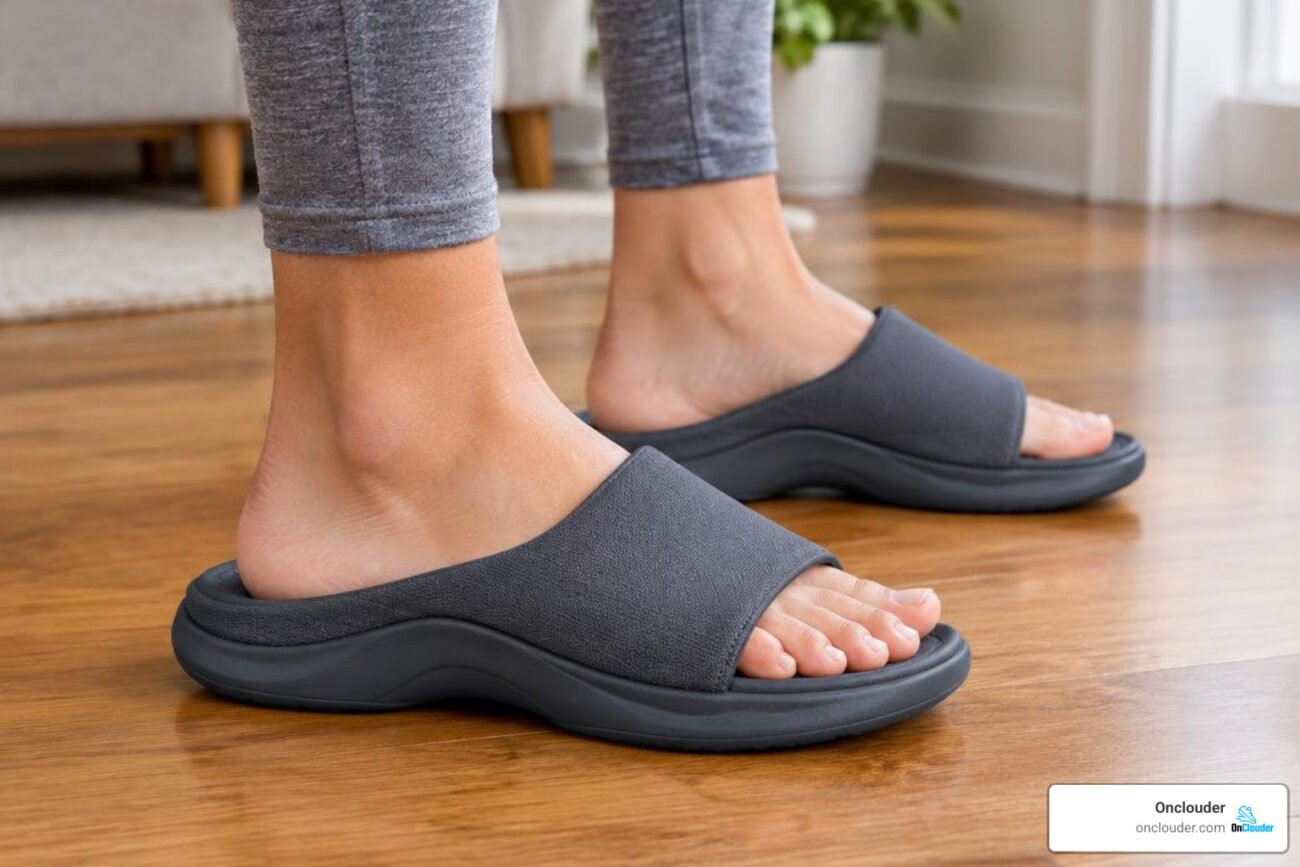
Best Indoor Sandals for Plantar Fasciitis: What to Look For
Start with a house slide that has a shaped arch, a cupped heel, cushioning that does not flatten under your weight, and a sole that grips your floors. Adjustable straps can help keep it in place. A plush slide may feel good at first, but softness alone will not give your foot much support.
Plantar fasciitis often causes sharp heel pain with your first steps in the morning. Supportive indoor sandals can make walking on hard floors more comfortable, but they are one part of managing the condition, not a cure. Finding the best indoor sandals for plantar fasciitis means looking for structured footwear that stabilizes your gait and cradles your heel from the second you get out of bed.
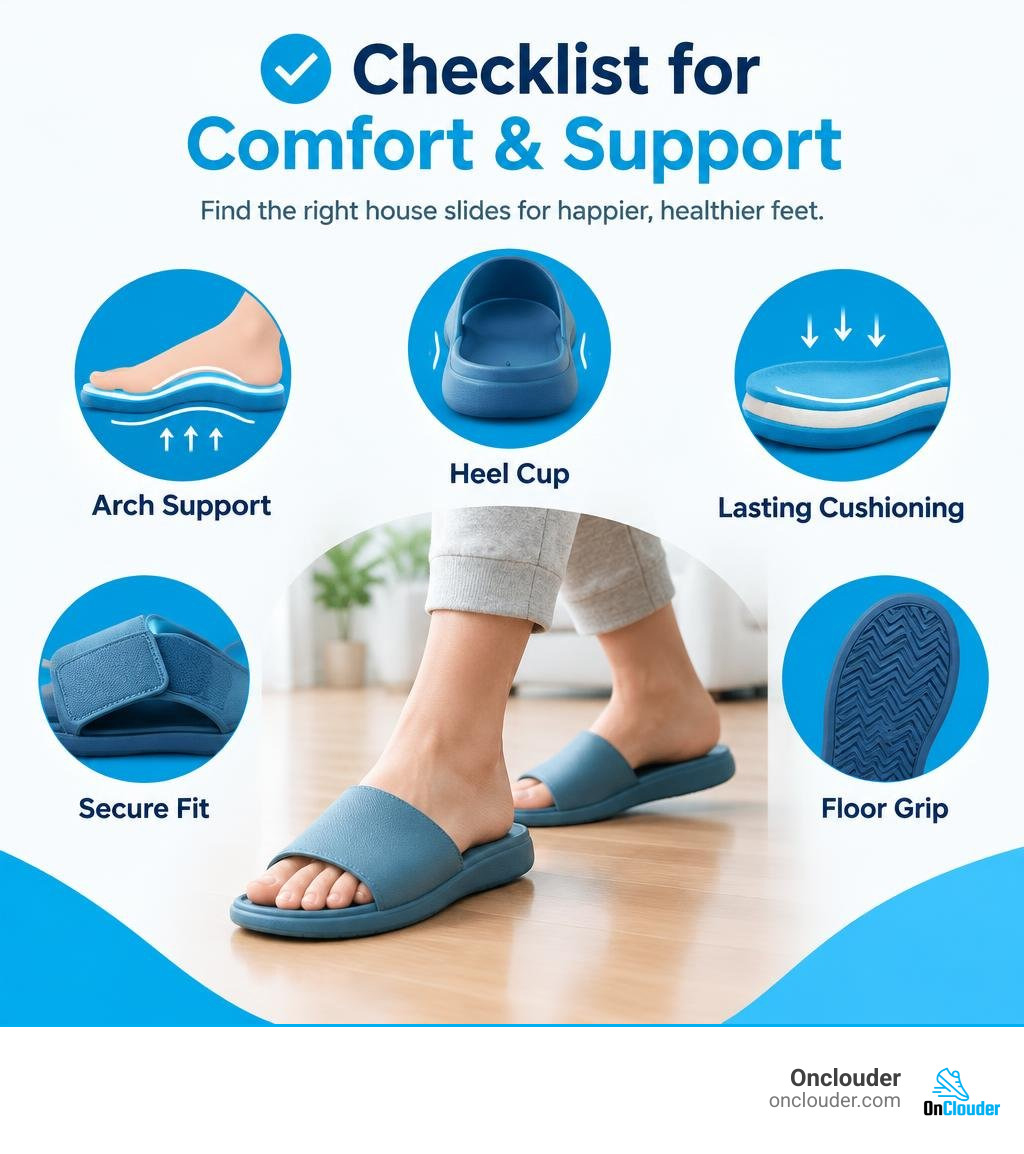
Depending on your lifestyle and preferences, you might explore different types of indoor and outdoor relief. For cozy lounging during cooler months, consider the best house slippers for plantar fasciitis women’s styles that offer structured orthotic footbeds. If you prefer open-toe breathability, look into the best flip flops for plantar fasciitis women’s models designed with contoured arches. For transitions from home to running errands, pairing these indoor solutions with the best casual women’s shoes for plantar fasciitis provides seamless protection throughout your entire day.
Why Indoor Footwear Matters for Plantar Fasciitis Relief
When managing heel pain, what you wear inside the house is just as critical as your outdoor footwear. Plantar fasciitis involves degenerative micro-tearing and chronic tension at the medial tuberosity of the calcaneus (heel bone). Most common between the ages of 40 and 60, this condition is exacerbated by excessive weight bearing, high or low arches, and hard walking surfaces such as tile, hardwood, and polished concrete.
Stepping out of bed barefoot onto hardwood, laminate, or tile subjects an inflamed heel to direct impact forces. Without in-shoe heel cushioning and arch support, the plantar fascia stretches abruptly under full body weight. Over time, repeated barefoot walking depletes and compresses the delicate subcalcaneal fat pad—the natural shock absorber under your heel. As this protective fat pad thins, ground reaction forces travel straight into the calcaneus and plantar aponeurosis, perpetuating inflammatory cycles.
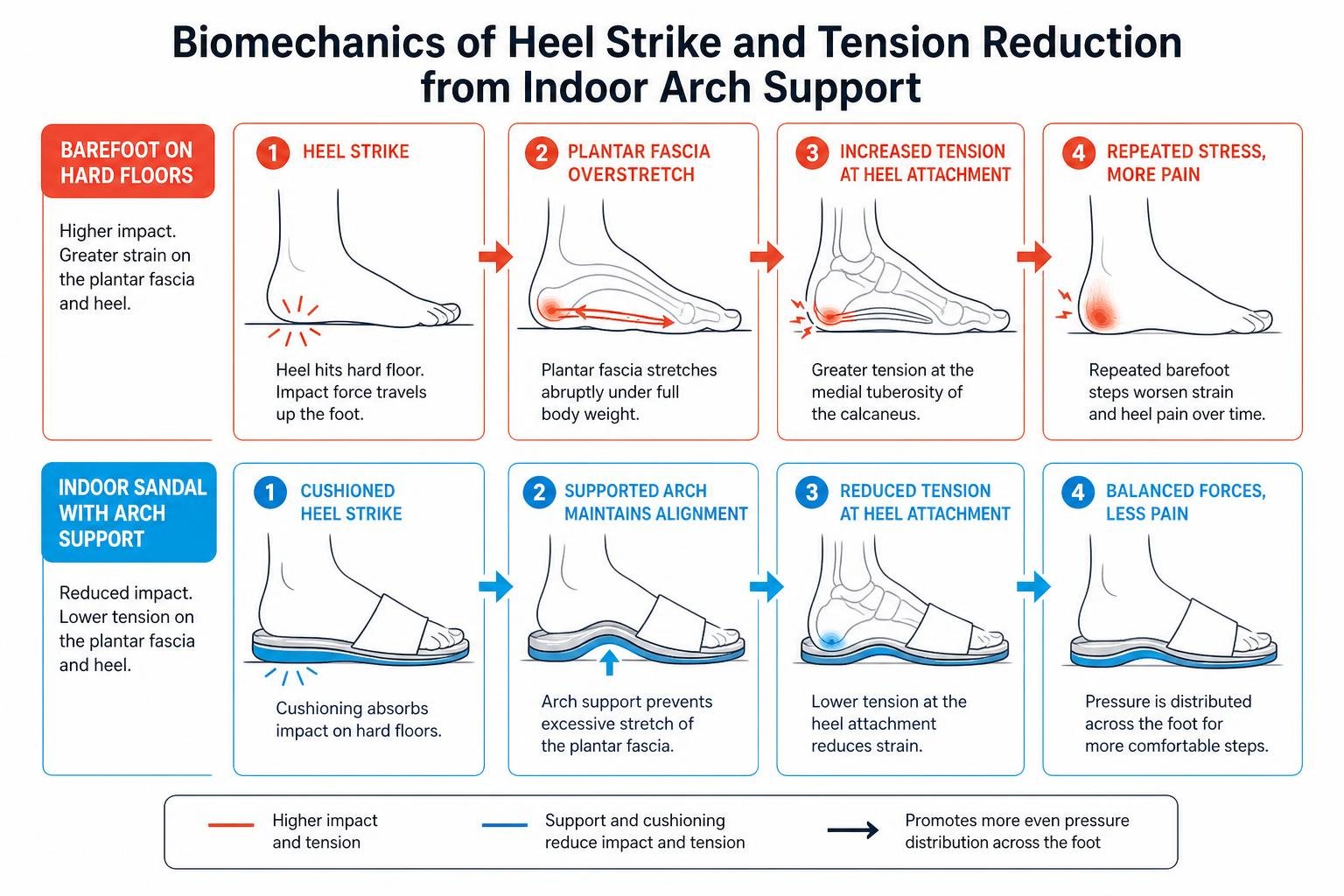
Choosing structured indoor arch support slippers helps cradle the calcaneus, preventing extreme collapse of the plantar fascia with every step. Additionally, research demonstrates that altered plantar sensory feedback shifts gait biomechanics and increases peak localized pressures (Nurse & Nigg, 2001). Wearing stable, well-fitted house shoes maintains balanced sensory input, redistributing ground reaction forces across the entire foot instead of concentrating them at the painful heel attachment.
For men, the same principles apply: supportive house footwear with a firm arch and deep heel cup reduces strain on the plantar fascia during indoor walking. Whether you are recovering from an acute morning flare-up or preventing long-term chronic damage, consistent indoor support creates the stable physical environment your connective tissues need to heal.
Key Design Features: Support vs. Softness in Indoor Footwear
Many people reach for marshmallow-soft slides expecting immediate relief, only to find their heel pain worsening after a few days. True pain relief comes from structural stability rather than excessive plushness. Understanding the anatomical elements of a recovery slide helps you choose a pair that protects your fascia.
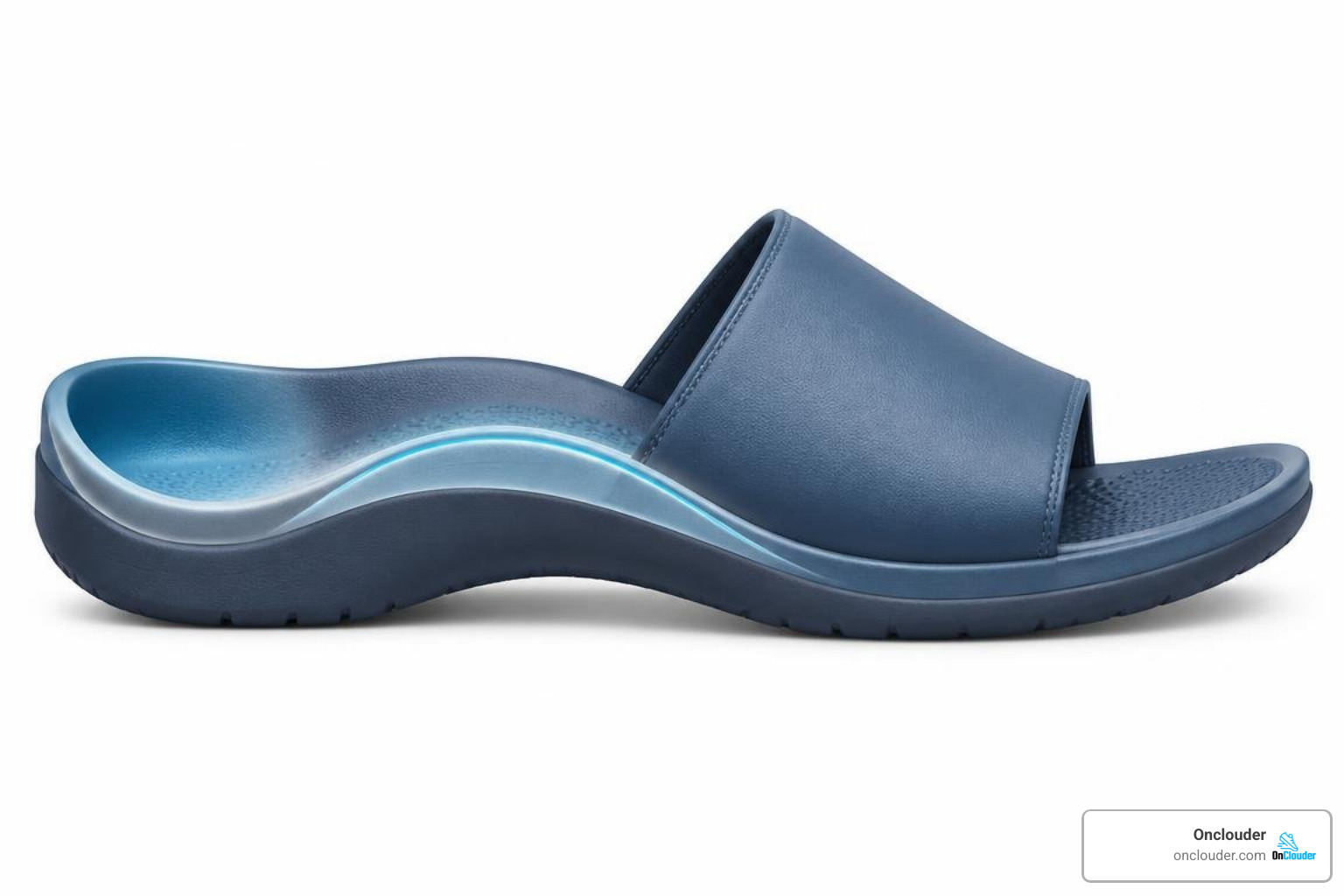
How the Best Indoor Sandals for Plantar Fasciitis Support Your Arches
Effective indoor recovery slides incorporate a shaped, anatomical arch contour that physically bridges the gap between your heel and metatarsal heads.
- Contoured Cork and Firm Midlayers: High-density materials like natural cork or dual-density EVA prevent the arch from bottoming out under body weight, preserving structural integrity for thousands of steps.
- 10–20 mm Heel-to-Toe Drop: A slight heel elevation eases Achilles tendon tightness, directly offloading tension from the plantar fascia band where it anchors to the calcaneus.
- Balanced Pressure Redistribution: By supporting the medial longitudinal arch, the slide shifts body weight away from the sensitive calcaneal origin and spreads impact evenly across the forefoot and midfoot.
To learn more about the mechanics of arch cradles, read our complete guide on how arch support inserts relieve pain.
Why Soft Cushioning Alone Isn’t Enough for the Best Indoor Sandals for Plantar Fasciitis
Walking across hard floors in ultra-soft, flat slides is like trying to build a bridge out of pillows: it gives way under pressure. Without a firm foundation, the arch collapses inward (overpronation), overstretching the plantar fascia band and exacerbating micro-tearing.
Standard flat flip-flops or non-supportive foam shoes lack heel cup depth, allowing the heel fat pad to splay outward upon impact. A deep, rigid heel cup centers the natural padding directly beneath the bone, absorbing impact forces naturally and guiding the foot through a neutral gait cycle. For a deeper look at this mechanism, explore our guide on the dangers of unsupportive flip-flops.
The Best Indoor Sandals for Plantar Fasciitis: Top Tested House Slides
We evaluated dozens of indoor slides, testing for arch rigidity, heel cup depth, traction on smooth floors, and adjustable fit. Here is how leading recovery models compare:
| Model / Style | Primary Footbed Material | Arch Profile | Adjustability | APMA / Orthotic Seal | Best For |
|---|---|---|---|---|---|
| Orthopedic EVA Slide | 4 cm Lightweight EVA | 15° Pronounced Curve | Double Buckle | Ergonomic Design | Hard tile floors & water resistance |
| Memory Foam & Cork Sandal | Memory Foam & Cork Midsole | Built-in Signature Arch | Multi-Strap Hook-and-Loop | Podiatrist Approved | All-day wear & bunion accommodation |
| Contoured Cork Slide | Anatomical Contoured Cork | Firm Anatomical Curve | Dual Buckle Straps | Classic Orthotic | Wide feet & structured stability |
| Yoga-Mat Cushion Flip Flop | Yoga-Mat Synthetic Cushion | Moderate Orthotic Arch | Thong Style | APMA Seal of Acceptance | Lightweight indoor recovery |
| Biomechanical Footbed Sandal | Biomechanical Footbed (EVA/Leather) | High 3D Biomechanical | Adjustable Buckles | APMA & FDA Registered | Severe heel pain & posture alignment |
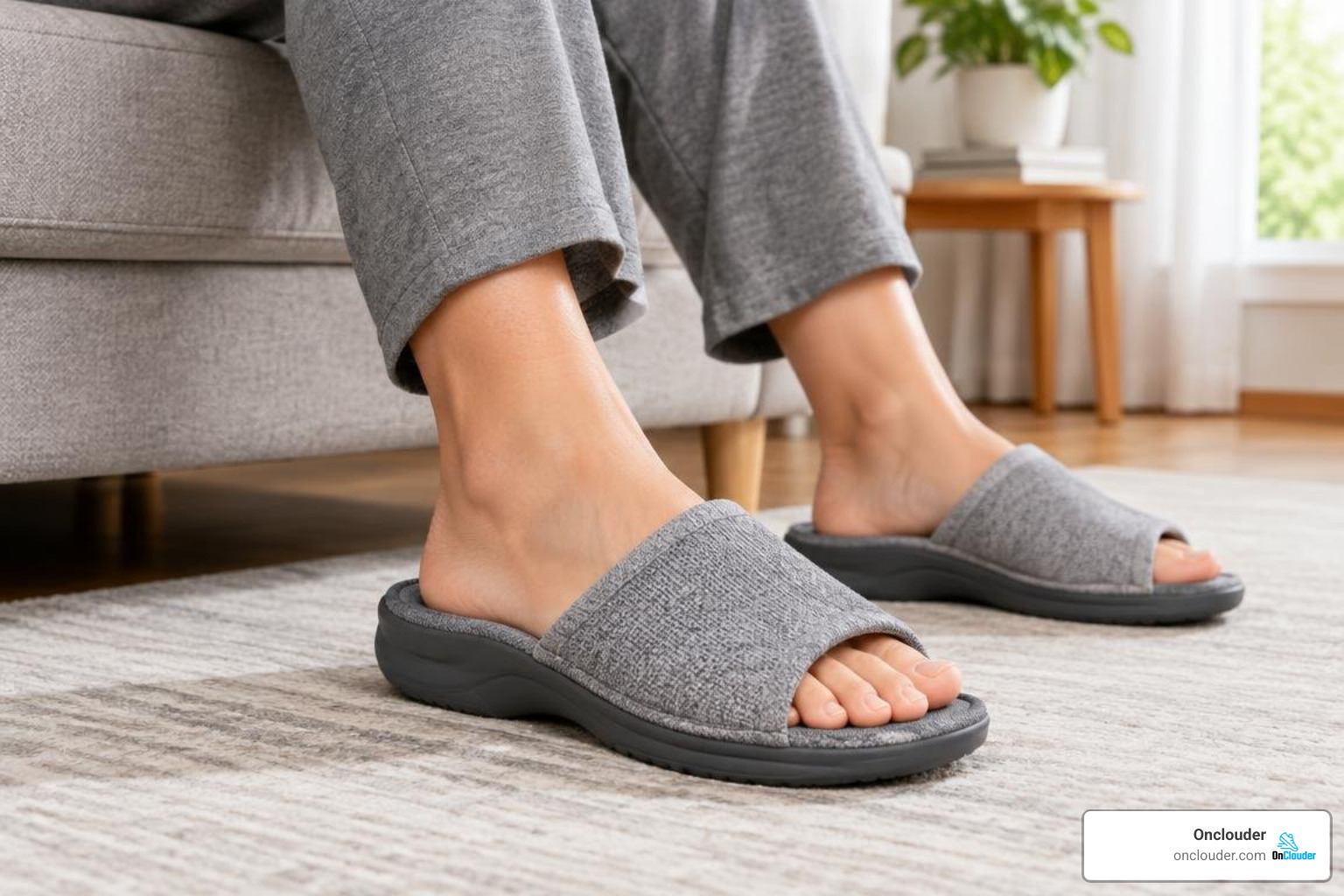
When choosing among these options, consider the specific demands of your home environment. Water-resistant EVA slides excel in kitchens and bathrooms where spills occur, while cork-and-leather designs mold naturally to your unique foot contours over weeks of use. For additional everyday and work footwear recommendations, explore our full review of podiatrist-approved best shoes for plantar fasciitis.
Complementary Therapies and Proper Break-In Strategies
While supportive indoor slides prevent daily re-injury, combining footwear with targeted rehabilitation produces the fastest recovery.
- Targeted Daily Stretching: Perform non-weight-bearing stretches for the plantar fascia and Achilles tendon every morning before getting out of bed. Clinical research indicates that combining radial shock wave therapy with tissue-specific plantar fascia stretching achieves significantly higher patient satisfaction (59%) compared to shock wave therapy alone (32%) (Rompe et al., 2015).
- Night Splints: Using a night splint keeps the plantar fascia in a gentle, prolonged stretch overnight, preventing the tissue from contracting and reducing sharp morning pain upon rising.
- Gradual Break-In Routine: Orthotic footbeds alter how your foot muscles fire. Wear your new indoor sandals for 1 to 2 hours on the first day, increasing daily wear gradually over a week to prevent arch fatigue and allow intrinsic foot muscles to adapt.
- Slip-Resistant Soles: Ensure indoor sandals feature textured rubber outsoles to maintain grip on smooth tile and polished wood, preventing accidental slips that can violently wrench healing tendons.
In addition to these strategies, consider rotating between two pairs of supportive house shoes to allow materials to recover their shape between wears. This simple habit extends the life of the arch support, maintains resilient cushioning, and keeps your recovery on a steady upward trajectory.
Frequently Asked Questions About Plantar Fasciitis House Shoes
Can wearing indoor sandals cure plantar fasciitis or do they just manage pain?
Indoor sandals do not cure plantar fasciitis on their own, but they play a vital role in recovery. By shielding the calcaneus from hard floors and maintaining arch support, they offload constant tension from the damaged tissues, allowing micro-tears to heal without being re-injured each time you stand up. When combined with stretching, calf strengthening, and lifestyle modifications, consistent indoor offloading accelerates long-term tissue healing and prevents painful recurring flare-ups.
Is a contoured cork footbed better than memory foam for indoor wear?
A contoured cork footbed provides superior structural support and compression resistance compared to memory foam alone. While memory foam feels soft initially, it compresses flat under sustained body weight, offering little biomechanical alignment after minutes of standing. The best designs combine a firm cork or dense EVA base with a thin layer of memory foam on top for pressure relief and long-term arch stability. This dual-density approach balances immediate comfort with the rigidity needed to prevent arch collapse.
How long does it take to break in new orthotic indoor slides?
Most people require between 3 to 7 days to adjust to structured orthotic slides. Because the contoured arch realigns your foot mechanics, mild muscle awareness is normal during the first few days. Starting with short wear periods prevents arch soreness while your tissues adapt. If discomfort persists beyond a week, gradually increase wear time in 30-minute increments and pair the slides with gentle foot stretches to support adaptation.
Conclusion
Managing plantar fasciitis requires consistent foot protection throughout the day, especially at home on unforgiving floors. Stepping onto hard surfaces without support places immense strain on an already inflamed plantar fascia. Investing in a structured indoor slide with anatomical arch support, a deep heel cup, and resilient cushioning keeps tension off the plantar fascia and supports long-term recovery.
By pairing supportive house slides with morning stretching and proper daily habits, you give your feet the optimal environment to heal. For comprehensive footwear recommendations that protect your feet at work and on the move, see our detailed guide to the best shoes for plantar fasciitis.
Urban Gardening: How to Cultivate a Green Space in Your Apartment
