
How to Choose Shoes for Plantar Fasciitis
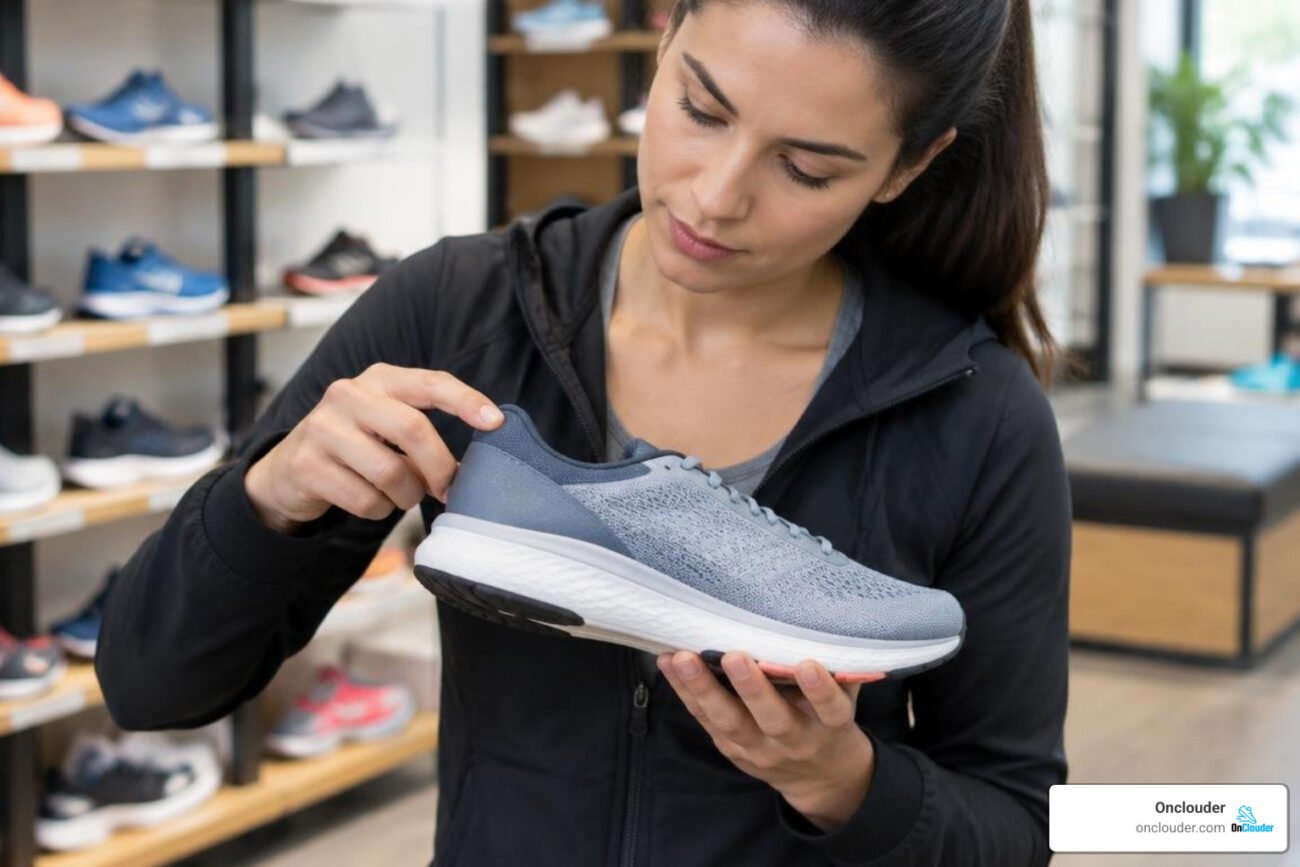
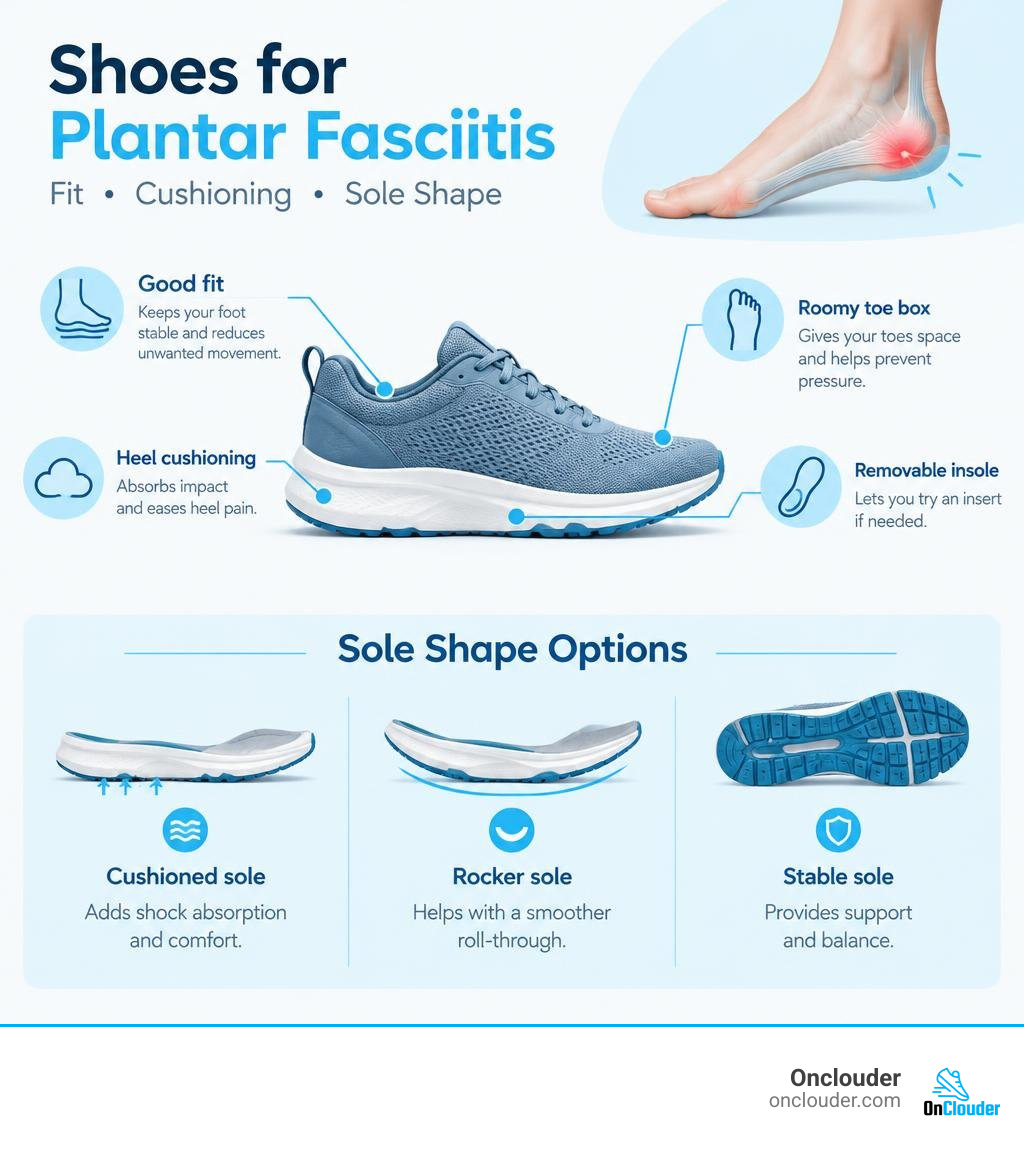
Start with a comfortable, well-fitting shoe with good heel cushioning and a stable feel. A roomy toe box helps prevent pressure, while a removable insole gives you room to try an insert if needed. Some people like a rocker sole, but no shoe design or brand has been proven best for everyone.
If your current shoes are worn out, a new cushioned pair may ease daily heel pain. Shoes are only one part of care, though: plantar fasciitis can take months to improve, and exercise and changes to your activity matter too. This guide will help you sort useful features from marketing claims and choose what feels right on your feet.
Simple shoes that are best for plantar fasciitis glossary:
- Adidas Ultra Boost for Plantar Fasciitis
- Best Flip Flops with Arch Support for Men
- Best ECCO Shoes for Plantar Fasciitis
Biomechanics and Shoes That Are Best for Plantar Fasciitis
When you take a step, the plantar fascia—a thick band of fibrous tissue running along the bottom of your foot—acts like a shock-absorbing bowstring. Every heel strike compresses the tissue, and during push-off, the windlass mechanism tightens the fascia to turn your foot into a rigid lever.
Roughly 2 million people in the United States seek treatment for plantar fasciitis each year, and the condition accounts for 5 to 10 percent of all running-related injuries. Managing this mechanical strain comes down to finding footwear that offloads tissue stress without creating unnatural movement patterns.
Clinical guidelines from the Journal of Orthopaedic & Sports Physical Therapy (JOSPT) highlight that effective footwear for plantar heel pain relies on three primary biomechanical features:
- Shock Absorption & Midsole Foam: Modern responsive foams absorb ground reaction forces at initial contact, sparing the calcaneal attachment of the fascia from sharp impact spikes.
- Heel Cup Stability: A deep, rigid heel cup prevents the fat pad beneath your heel from flattening out sideways, keeping natural cushioning centered directly under the calcaneus.
- Rocker Sole Geometry: A curved forefoot rocker allows your foot to roll forward smoothly during the terminal stance phase, decreasing peak extension at the big toe joint and unloading tensile pull on the fascia.

| Design Profile | Midsole Cushioning | Torsional Rigidity | Best Suited For |
|---|---|---|---|
| Maximal Neutral | Deep, plush stack | Moderate to High | High-mileage runners, workers on concrete floors, and severe morning heel pain |
| Rocker Geometry | Structured, curved foam | High | Runners needing toe-off relief and reduced Achilles/fascia lever arm stress |
| Traditional Stability | Medial posting or firm foam | Rigid | Individuals with true structural hypermobility requiring midfoot containment |
If you need a pair tailored to everyday life, exploring podiatrist approved shoes for plantar fasciitis relief can help you match foot mechanics with the proper platform.
Key Features of Shoes That Are Best for Plantar Fasciitis Daily Wear
Selecting footwear for daily wear requires examining subtle structural components rather than aesthetic design:
- Heel-to-Toe Drop (8–10mm): A moderate drop slightly elevates your heel relative to your forefoot. This pitch shortens the Achilles tendon slightly, reducing tension along the posterior chain and relieving pulling forces at the heel bone.
- Torsional Rigidity: A shoe should bend naturally at the ball of the foot where your toes flex, but it should resist twisting like a wet towel through the midfoot arch.
- Wide Toe Box: Pointed shoes crowd the digits and pull the big toe inward (hallux valgus alignment), which restricts blood flow through the lateral plantar artery. A wide forefoot allows natural toe splay.
- Removable Sockliners: A generous internal depth allows you to replace the standard factory insole with structured orthotics or custom medical insoles if your treatment requires extra arch contouring.
Options like Hoka walking shoes for sore arches or exploring the Asics heel support lineup give you these exact daily comfort features.
Cushioning and Stability in Shoes That Are Best for Plantar Fasciitis Relief
For years, the running industry operated under the assumption that overpronation was the primary cause of plantar heel pain, leading clinicians and retail staff to automatically recommend stiff stability or motion-control shoes. Modern biomechanical research has shifted away from this mindset.
Foot pronation is actually a natural dampening mechanism. When you over-constrain the foot using dense medial dual-density posts, ground impact forces are redirected up the kinetic chain or concentrated right at the heel pad. For the vast majority of people with heel pain, a stable neutral shoe with generous stack height offers superior symptom relief compared to aggressive motion-control footwear.
If you are deciding between different brand philosophies, reviewing comparisons like Hoka vs Brooks for plantar fasciitis provides clear insights into how max-cushion neutral platforms compare against guide-rail stability options.
Clinical Research and Evidence: What Controlled Trials Show
Evidence-based clinical reviews show that 80 to 90 percent of plantar fasciitis cases resolve within 10 to 12 months using conservative care. But what role do specific shoes play in that recovery?
Research reveals measurable benefits when transitioning to fresh, well-cushioned footwear:
- The 12-Week Neutral Cushioning Trial: In a 12-week randomized trial, participants who were given new, high-cushioned neutral trainers (ASICS Gel-Nimbus) reported an average pain reduction of 21.6 mm on a 100 mm Visual Analogue Scale (p=0.006) compared to participants who continued wearing their existing, worn shoes.
- The Motion-Control Paradox: In a controlled study involving 81 female runners, motion-control shoes designed to restrict foot motion produced significantly more self-reported pain across both neutral and pronating runners, and accounted for the highest number of missed training days.
- Orthotic Interventions: According to clinical analyses on shoe inserts vs custom orthotics, over-the-counter contoured inserts provide pain relief comparable to expensive custom orthotics for short-to-medium term recovery when paired with supportive footwear.
For in-depth analyses on scientific footwear literature, researchers like Dr. Antti explore the clinical boundaries of running shoe studies. Podiatric roundups from publications like DNYUZ and consumer performance testing at The Consumers Guide confirm that comfort and cushioning depth outweigh rigid gait correction.
Low-Structure and Flexible Shoes: Evidence and Risks
Minimalist and barefoot-style shoes are often promoted for their ability to strengthen the intrinsic muscles of the foot. While progressive foot strengthening is valuable, jumping directly into flexible, zero-drop shoes while dealing with active plantar fasciitis poses substantial risks.
In a clinical study testing flexible footwear (such as the Nike Free) in individuals with chronic plantar fasciitis, researchers noted a high dropout rate: 2 out of 12 participants in the flexible shoe group withdrew due to acute symptom aggravation. Without adequate midsole cushioning and longitudinal arch support, the plantar fascia must absorb high tensile loads before the intrinsic foot muscles have built sufficient capacity to help.
If you want to try minimalist footwear, treat it as a late-stage rehabilitation tool rather than an acute treatment during the painful flare-up phase.
Combining Footwear with Active Rehabilitation
Putting on a well-cushioned shoe provides immediate mechanical relief, but footwear alone does not rebuild tissue capacity. Combining supportive shoes with targeted exercise offers the fastest, most durable recovery.
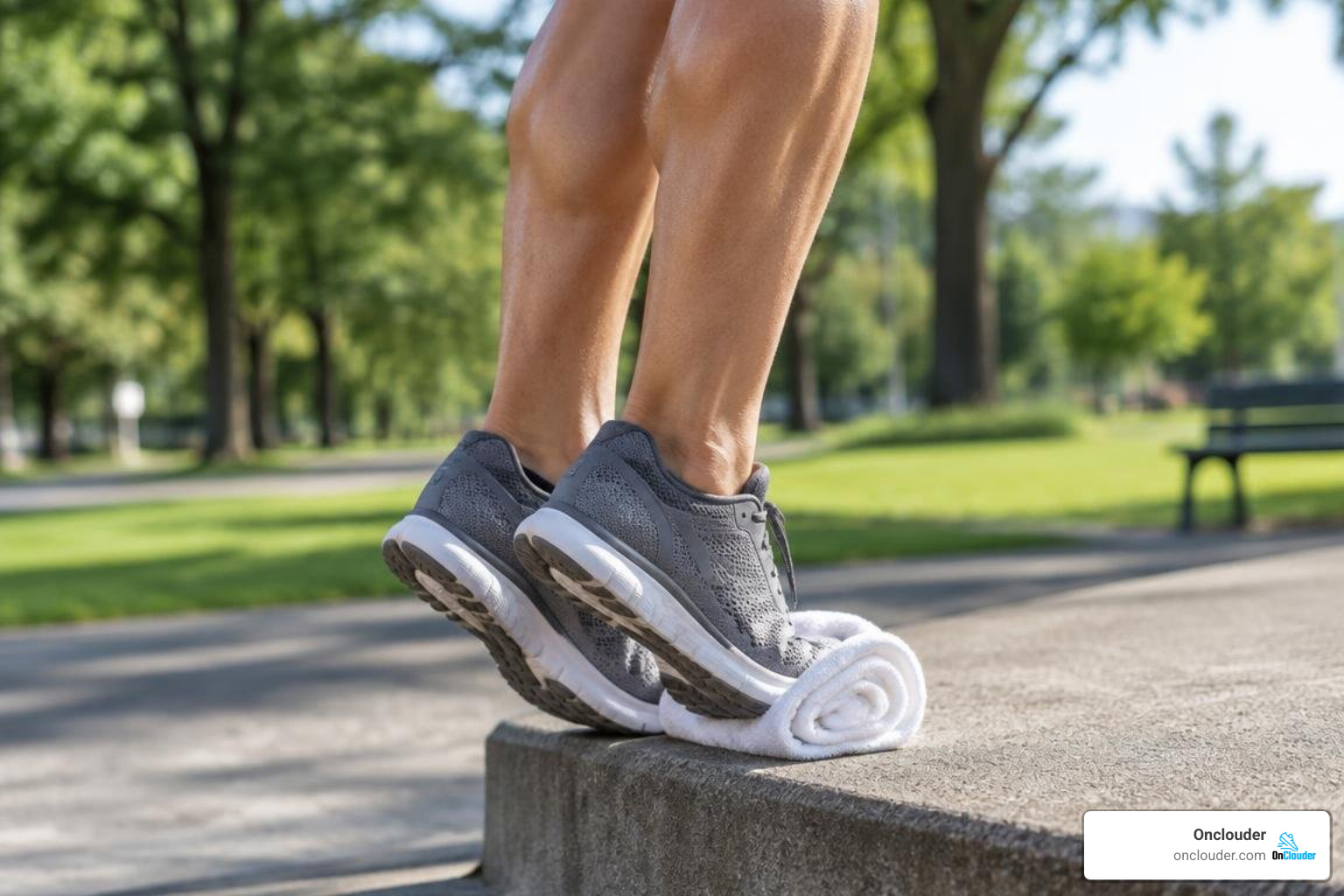
A landmark Danish randomized controlled trial demonstrated that high-load strength training stimulates tissue remodeling in the plantar fascia far better than passive stretching alone. At the 3-month primary endpoint, patients performing heavy, slow heel raises scored 29 points lower on the Foot Function Index (95% CI 6–52, p=0.016) than those following a standard stretching protocol.
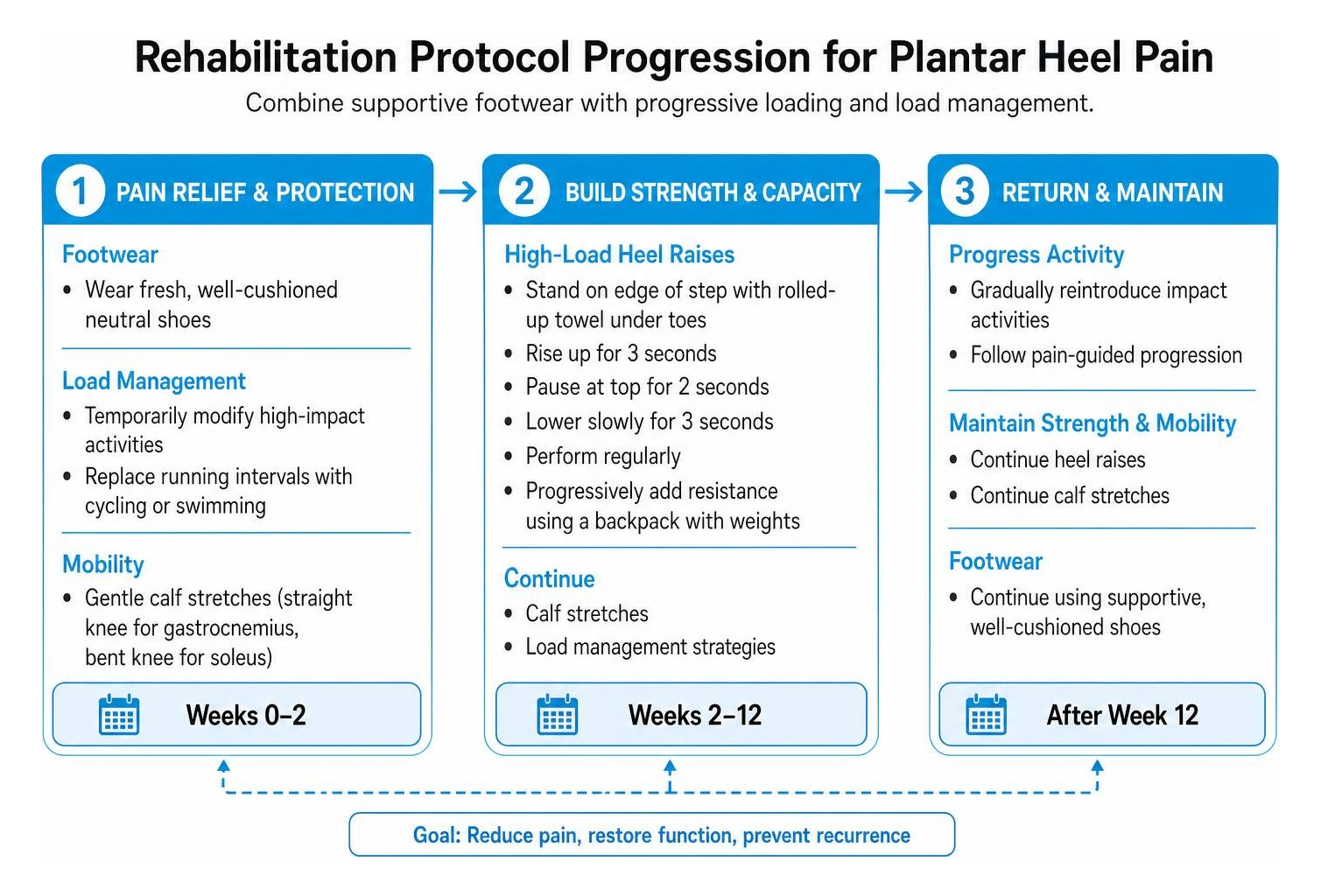
- High-Load Heel Raises: Stand on the edge of a step with a rolled-up towel under your toes (to engage the windlass mechanism). Rise up for 3 seconds, pause at the top for 2 seconds, and lower slowly for 3 seconds. Progressively add resistance using a backpack with weights.
- Gastrocnemius and Soleus Mobilization: Perform gentle calf stretches against a wall with both a straight knee (gastrocnemius) and a bent knee (soleus) to reduce Achilles tension.
- Load Management: Temporarily modify high-impact activities. Replace running intervals with cycling or swimming to allow the fascia to heal without losing cardiovascular fitness.
Integrating these active habits alongside proven plantar fasciitis prevention strategies will help protect your heels from future flare-ups.
Replacement Guidelines and Footwear Longevity
Even the best running and walking shoes have a finite lifespan. As you rack up daily steps, the microscopic air pockets inside EVA and TPU midsole foams compress and fail to rebound fully, degrading the shoe’s shock attenuation properties.
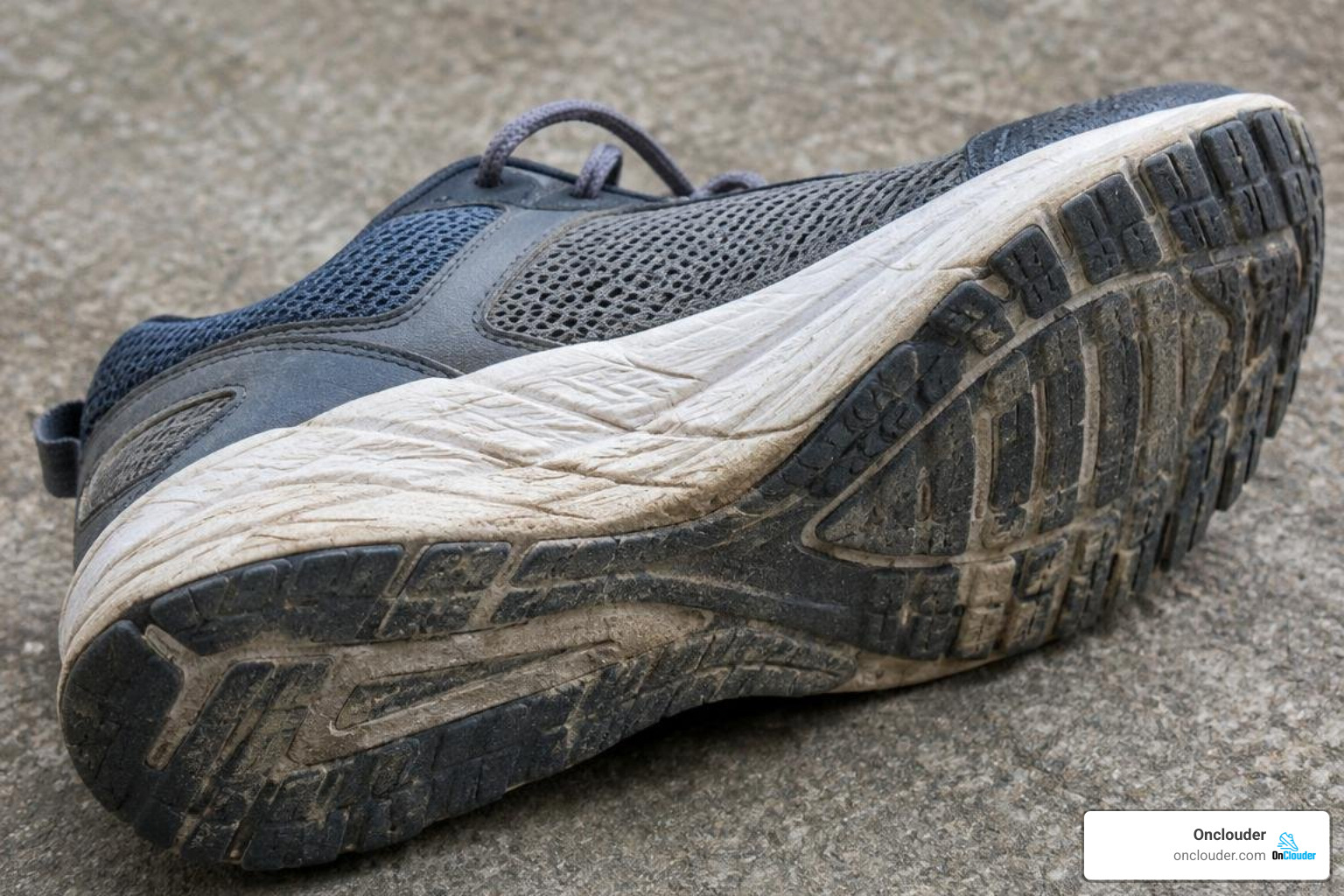
- The 300 to 500-Mile Mark: Running shoe midsoles generally lose their protective cushioning between 300 and 500 miles. For daily walkers logging 10,000 steps a day, this translates to roughly 4 to 6 months of daily use.
- Body Weight and Compression: Heavier individuals compress midsole foams faster. If you are over 200 lbs, expect to replace your primary walking or running shoes closer to the 300-mile mark.
- Visual Warning Signs: Check your shoes for diagonal compression wrinkles along the side walls of the midsole, uneven outsole wear that tilts your stance, or a feeling of hard ground contact at heel strike.
Rotating between two pairs of supportive shoes allows the midsole foam 24 to 48 hours to decompress between uses, extending the functional life of both pairs.
Frequently Asked Questions About Plantar Fasciitis Footwear
Can I keep running or walking while recovering from plantar fasciitis?
Yes, in most cases you do not need complete rest. Follow a simple pain-monitoring model: keep your discomfort during and after activity below a 3 out of 10 on a pain scale. If heel pain spikes the next morning during your first steps out of bed, reduce your mileage, avoid sprint or hill work, and switch to softer running surfaces while your tissues adapt.
Is a higher or lower heel-to-toe drop better for heel pain?
A moderate heel-to-toe drop of 8 to 10 mm is generally best for managing active heel pain. High-drop shoes reduce the stretch on the calf muscles and the tensile pull on the plantar fascia. Zero-drop or flat shoes place the Achilles under maximum stretch at heel-off, which often aggravates sensitive heel attachments.
How long does plantar fasciitis take to heal with the right shoes?
With a consistent conservative approach—combining supportive footwear, load management, and high-load strength exercises—most cases resolve within 6 to 12 months. Shoes provide immediate comfort and reduce daily micro-trauma, but biological tissue remodeling takes time and patience.
Conclusion
Finding lasting relief from plantar heel pain does not require chasing fads or buying overly restrictive motion-control shoes. Focus on the core fundamentals supported by biomechanical research: choose a shoe with generous heel cushioning, a stable base, a smooth forefoot rocker, and a moderate heel-to-toe drop.
Use your shoes to quiet down acute daily pain, and pair them with progressive heel-raise exercises to build strong, resilient foot arches. If your daily routine requires formal or workplace-specific attire, make sure to check out our comprehensive guide to the best work shoes for plantar fasciitis to stay comfortable on your feet all day long.
