Can Orthopedic Arch Support Slippers Help Foot Pain?
Orthopedic arch support slippers can ease foot pain, but they do not fix its cause. Unlike flat house slippers, they have a shaped footbed that supports the arch and cushions the heel. That can make walking on hard floors more comfortable, especially if you have heel pain, flat feet, or tired feet.
Look for an arch that feels supportive without digging in, enough room for your toes, and a sole that grips the floor. If pain persists or gets worse, see a healthcare professional rather than relying on slippers alone.
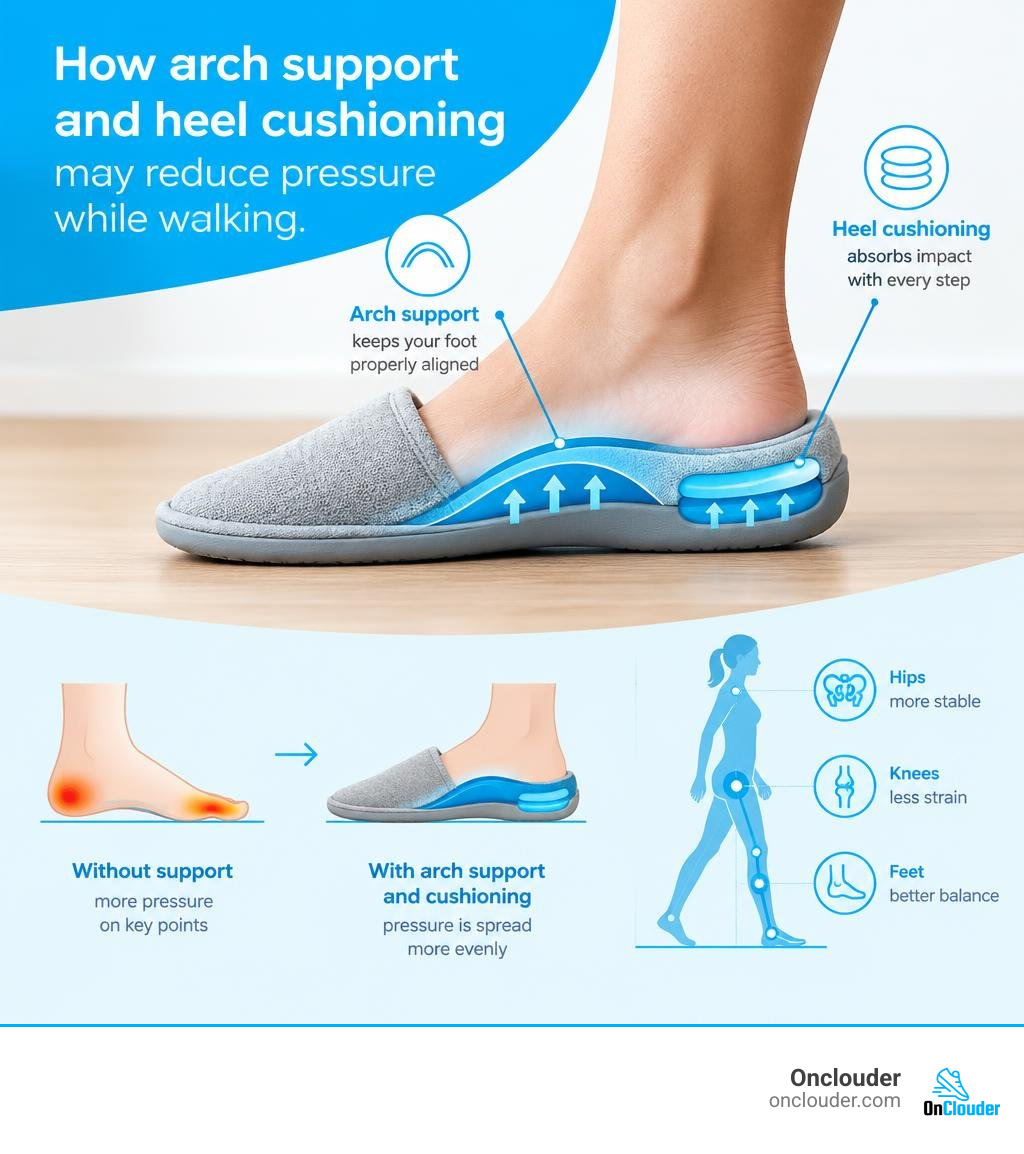
How Orthopedic Arch Support Slippers Differ from Traditional House Shoes
Many of us look forward to kicking off our work shoes the moment we get home. However, transitioning immediately to bare feet or flimsy, paper-thin house shoes on modern hardwood, tile, or laminate flooring strips away essential structural support. Traditional house slippers often feature flat soles made of thin cardboard or low-density synthetic fluff. While they provide surface warmth, they offer zero biomechanical elevation. Over time, standing on unyielding indoor surfaces forces the natural curves of your feet to flatten under your full body weight.
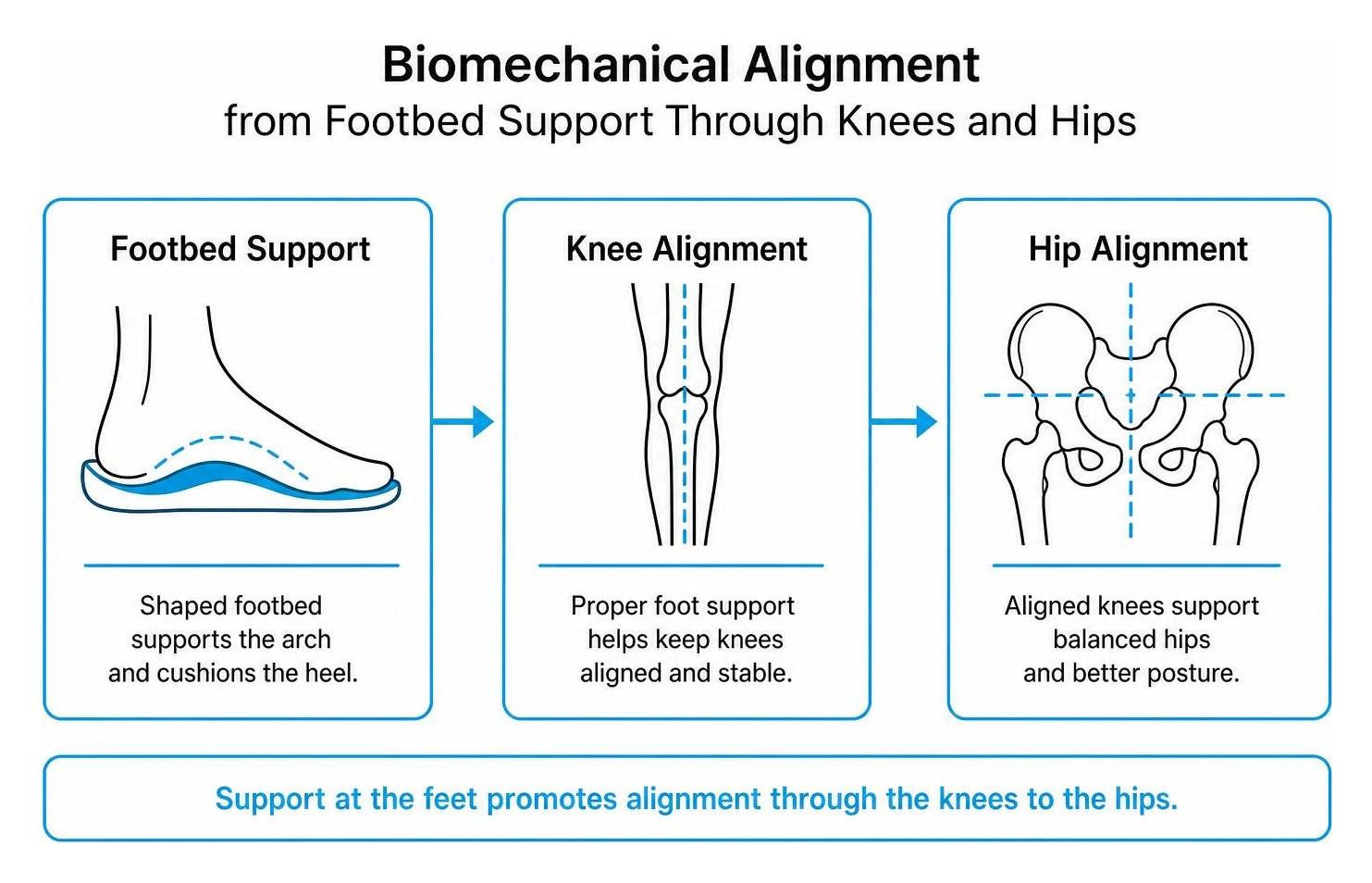
In contrast, structured house footwear integrates an anatomical footbed. Instead of letting your arch collapse inward upon every step, these designs cradle the plantar surface with an elevated arch profile and a deep heel cup. This stabilizing structure redistributes downward pressure across the entire sole rather than concentrating physical impact on the heel bone and metatarsal heads.
When you treat your feet to supportive house slippers, you prevent excessive foot fatigue and maintain healthy posture throughout your daily indoor routine.
| Feature | Traditional House Slippers | Orthopedic Arch Support Slippers |
|---|---|---|
| Footbed Profile | Completely flat; minimal contours | Anatomically molded with raised longitudinal arch |
| Heel Stability | Flat, unstructured, or open-edge | Deep, cradled heel cup to stabilize the calcaneus |
| Impact Absorption | Standard thin foam or synthetic plush | Dual-density EVA, resilient PU, or orthotic foam |
| Midsole Rigidity | Highly flexible, twists easily in hand | Balanced torsional stability with gentle forefoot flex |
| Outsole Durability | Thin fabric, felt, or smooth synthetic | Non-slip textured rubber suitable for quick outdoor steps |
| Pain Relief Target | Surface cold protection only | Plantar fasciitis, metatarsalgia, flat feet, knee/back strain |
Key Anatomy of Orthopedic Slippers with Arch Support
Understanding the internal architecture of therapeutic slippers helps clarify why they feel distinctly supportive. A high-quality model is engineered much like a premium recovery shoe, balancing firm structural reinforcement with targeted cushioning.
- Biomechanical Arch Elevation: Rather than a soft squishy bump that collapses under pressure, the arch contour provides resilient upward resistance to sustain your natural foot bridge.
- Deep Heel Cup: Holding the heel securely centers the fatty pad beneath your heel bone, naturally increasing your foot’s built-in shock absorption.
- Dual-Density Midsole: Many therapeutic models utilize multi-layered EVA foam. A firm base layer delivers stability, while a softer top layer cushions tender pressure zones.
- Non-Skid Outsole: Durable rubber outsoles with herringbone or multidirectional tread patterns prevent dangerous slips on polished stone, tile, and hardwood floors.
- Roomy, Non-Binding Toe Box: Extra forefoot width allows your toes to splay naturally, which relieves friction over bunions, hammertoes, or swollen joints.
Finding the comfiest house slides for plantar fasciitis relief often comes down to choosing models that combine these architectural features into a lightweight package.
Slipper Styles: Open-Back, Closed-Back, and Open-Toe
Supportive house shoes come in multiple silhouettes to accommodate personal comfort preferences, seasonal climates, and mobility needs:
- Open-Back Clogs and Mules: These slip-on designs offer effortless convenience. Premium versions feature a subtle lip around the heel perimeter or deep contouring to ensure your heel remains centered over the arch support without sliding backward.
- Open-Toe Slides: Ideal for warmer months or warm sleepers, open-toe models provide maximum ventilation while retaining an orthopedic footbed. Many designs feature broad hook-and-loop straps across the instep, allowing you to loosen or tighten the fit if your feet swell throughout the day.
- Closed-Back Booties and Loafers: For maximum ankle stability and winter warmth, full-coverage slippers secure the entire rearfoot. They prevent your heel from lifting away from the contoured footbed, making them the safest choice for individuals with balance concerns or severe gait instability.
How Arch Support Relieves Plantar Fasciitis, Arthritis, and Flat Feet
The human foot contains 26 bones, 33 joints, and over a hundred muscles, tendons, and ligaments working in concert. When your foot strikes a hard floor without support, the kinetic chain transmits shock straight up through your ankles, knees, hips, and lower spine. Consulting an essential guide to best shoes for arch support reveals how proper biomechanical positioning reduces these cumulative daily stresses.
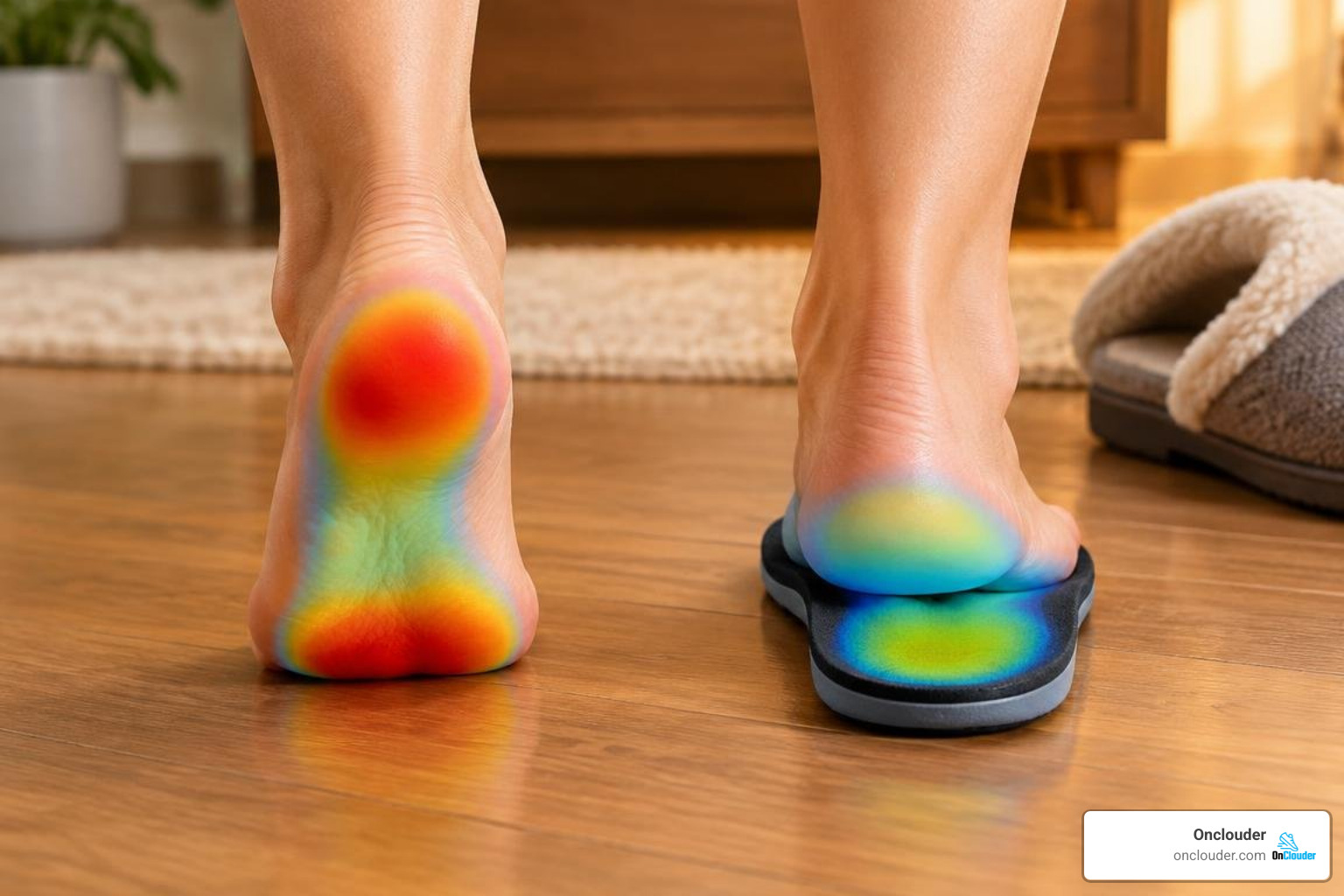
Why Plantar Fasciitis Sufferers Benefit from Orthopedic Arch Support Slippers
Plantar fasciitis involves micro-tears and inflammation within the thick band of fibrous tissue running across the bottom of your foot. Sufferers frequently endure sharp, stabbing sensations during their first steps out of bed in the morning. When you step directly onto hard floors, that resting, tightened ligament is forcefully stretched, triggering severe pain.
Wearing dedicated house footwear with a contoured footbed cushions the initial heel strike and maintains gentle upward elevation on the arch. This prevents the plantar fascia from over-elongating, shielding sensitive attachments while you make morning coffee or complete routine household chores. Medical professionals widely endorse structured home footwear because consistent arch protection prevents the recurring morning trauma that delays tissue recovery.
Alleviating Arthritis, Neuroma, and Postural Fatigue
The therapeutic benefits of structured house footwear extend far beyond heel pain:
- Flat Feet (Overpronation): Those with fallen arches experience inward ankle rolling upon weight-bearing. Elevated longitudinal support counters excessive pronation, keeping the lower legs and patellar tendons aligned.
- Osteoarthritis: Joint degradation in the midfoot or metatarsals turns every step into bone-on-bone friction. A cushioned, rigid-soled slipper absorbs floor shock before it impacts arthritic joint capsules.
- Morton’s Neuroma & Metatarsalgia: Thickened nerve tissue between the toes flares up when tight footwear pinches the forefoot. Slippers equipped with wide toe boxes and built-in metatarsal pads relieve ball-of-foot pressure.
- Lower Back and Hip Strain: Misaligned foot mechanics force the pelvic girdle to tilt irregularly. Stabilizing your foundation with dedicated arch support house shoes for daily relief lessens muscular compensation throughout your lumbar region.
Choosing, Sizing, and Caring for Your Supportive Footwear
Selecting the right supportive slipper requires evaluating width, internal volume, and daily usage patterns. Checking comprehensive resources like the ultimate guide to best shoes with arch support can provide additional sizing context across various footwear types.
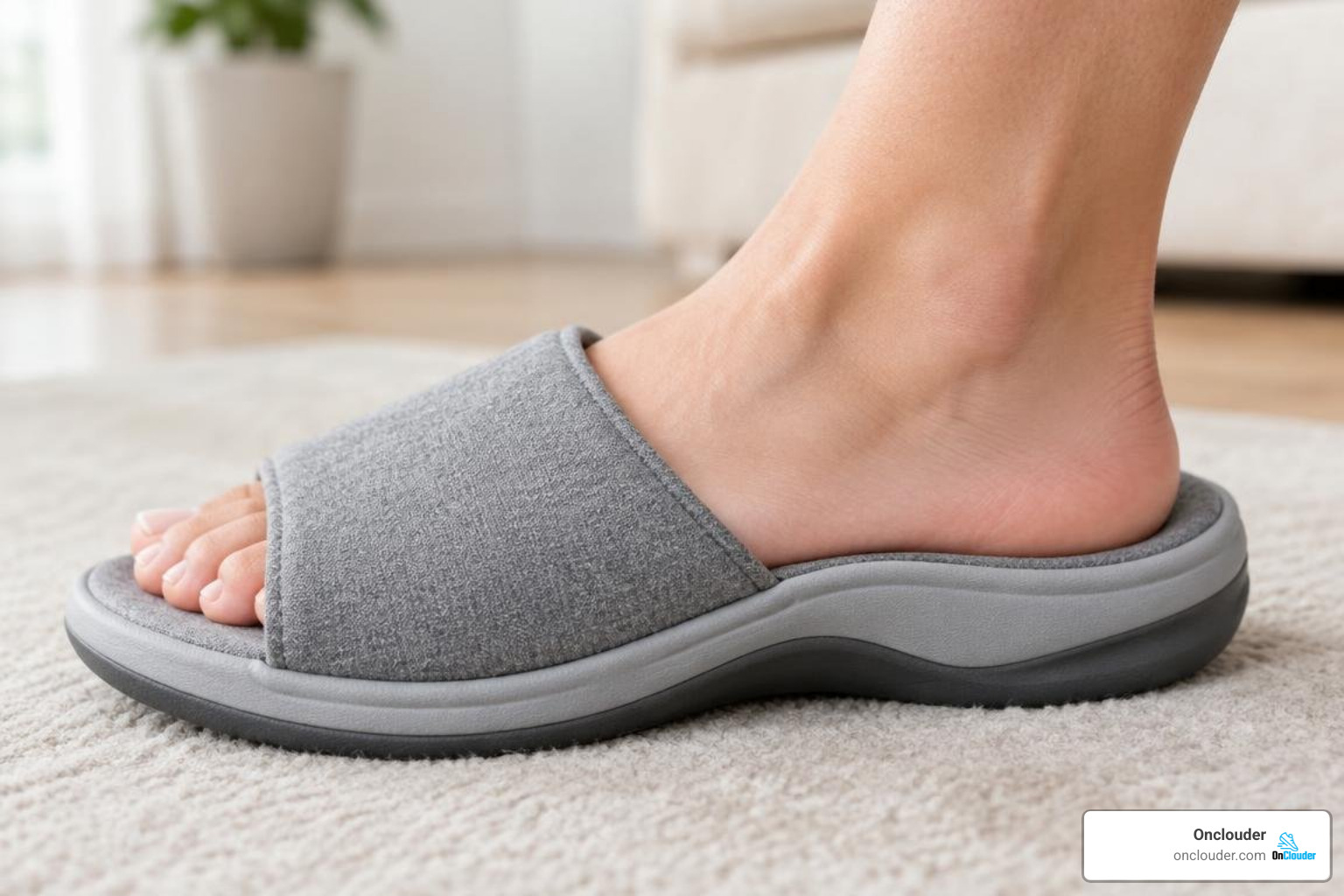
Sizing and Fit Recommendations
- True-to-Size Baseline: Order your standard walking shoe size. If you plan to wear thick winter socks, verify whether the manufacturer recommends sizing up.
- Width Accommodations: Look for styles offering dedicated wide or extra-wide widths if you manage bunions, edema, or require space for custom-molded orthotics.
- Adjustability: Slippers with velcro straps across the instep allow customized tightness, preventing slippage if your feet fluctuate in size from morning to evening.
Cleaning and Maintenance
To preserve the anatomical contours and shock-absorbing foams of your slippers:
- Spot Clean Only: Avoid submerging orthotic footwear in household washing machines unless explicitly labeled machine-washable. Rapid agitation can warp internal composite arch shanks and degrade water-based adhesives.
- Mild Detergent and Damp Cloth: Gently wipe down uppers and footbeds using lukewarm water and a small drop of mild soap.
- Air Dry Naturally: Keep your slippers away from direct heat sources like radiators, floor vents, or clothes dryers, as excessive heat shrinks EVA midsoles and dries out natural wool or suede.
Indoor vs. Outdoor Wear and Lifespan Guidelines
While modern orthopedic slippers frequently feature rugged herringbone rubber outsoles capable of short trips to the mailbox, driveway, or patio, their primary cushioning is formulated for home comfort. Continual outdoor walking across coarse asphalt accelerates tread wear and compresses therapeutic foam prematurely.
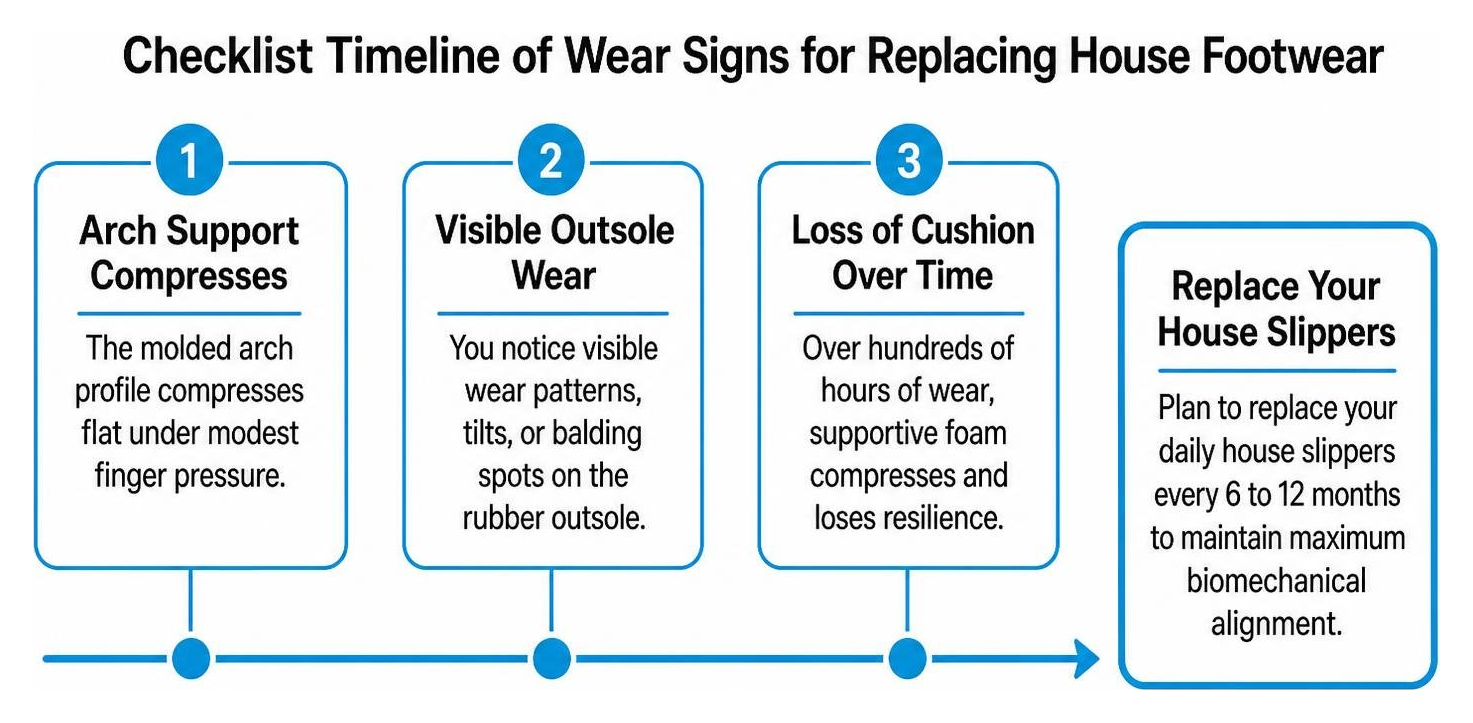
To maintain maximum biomechanical alignment, plan to replace your daily house slippers every 6 to 12 months. Over hundreds of hours of wear, supportive memory foam and EVA cells compress, losing their resilience even if the upper fabric still appears clean.
Signs it is time to replace your slippers:
- The molded arch profile compresses flat under modest finger pressure.
- You notice visible wear patterns, tilts, or balding spots on the rubber outsole.
- Morning heel stiffness or lower back fatigue begins creeping back during indoor chores.
- The heel counter has softened and no longer keeps your foot upright.
Frequently Asked Questions About Supportive House Footwear
How often should you replace orthopedic arch support slippers?
House slippers should generally be replaced every 6 to 12 months with regular daily use. Even when the outer fabric remains intact, the internal EVA foam and arch shanks experience structural fatigue from bearing your full body weight over time, gradually diminishing their therapeutic pain-relief properties.
Can you wear orthopedic slippers outside?
Yes, most quality orthopedic slippers feature durable, anti-skid rubber outsoles designed to handle quick outdoor steps, such as fetching the mail, stepping onto the patio, or taking out the trash. However, they are not intended to replace regular walking shoes for extended outdoor exercise on pavement.
Do podiatrists recommend slippers for flat feet?
Yes, podiatrists routinely recommend supportive indoor house shoes for people with flat feet. Walking barefoot on hard residential flooring allows fallen arches to collapse completely, causing overpronation and placing undue stress on the ankles, knees, and lower back. Built-in arch contours keep the foot biomechanically aligned inside the home.
Conclusion
At Onclouder, our hands-on testing across hundreds of footwear designs reinforces one fundamental rule: foot recovery does not stop when you walk through your front door. If you spend significant portions of your day standing on hard residential floors, switching from unstructured flats to dedicated orthopedic house footwear provides vital joint protection, relieves plantar fascia strain, and keeps your posture properly aligned.
Take the next step in caring for your feet by exploring our detailed comparison guide to walk on clouds with the best slippers for foot support and find the ideal pair for your home routine.