
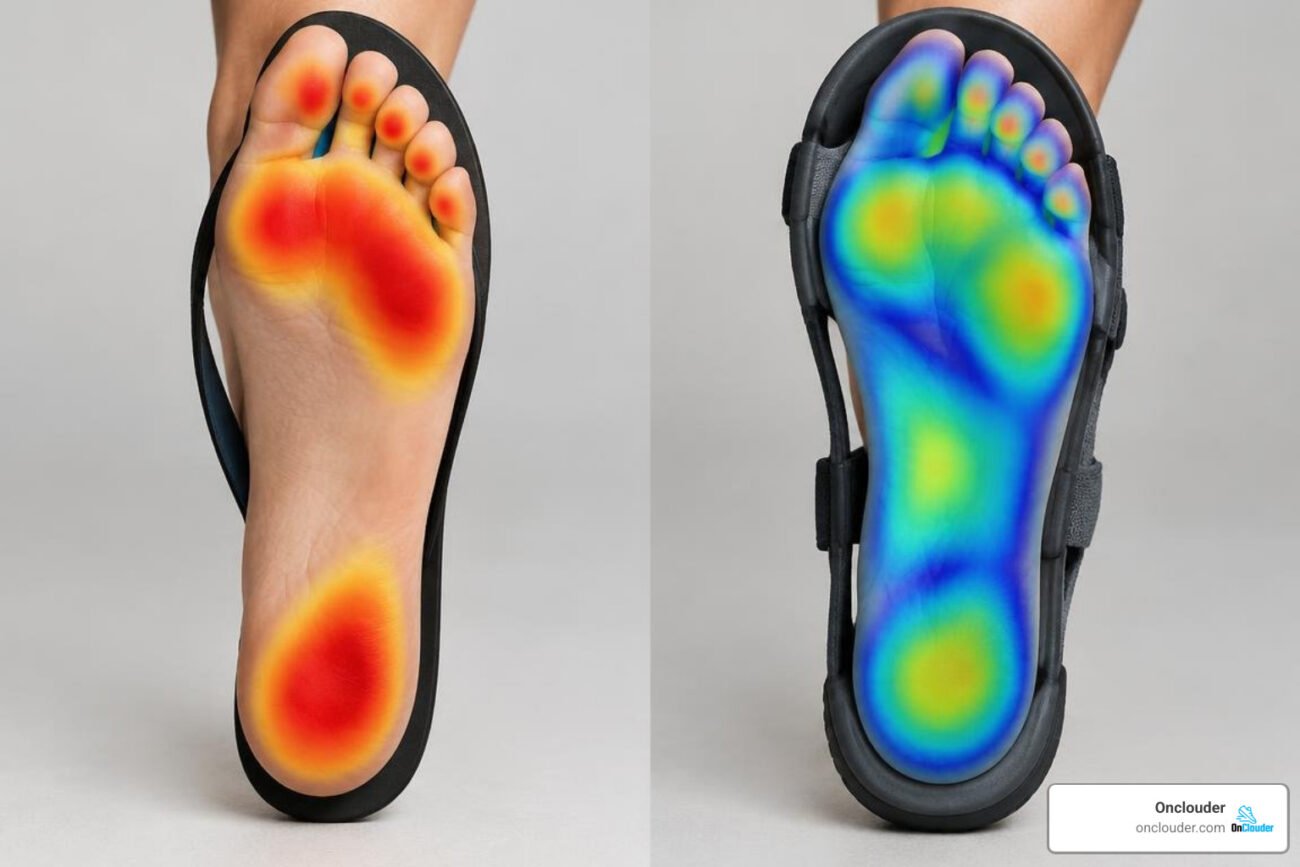
Why Traditional Thong Sandals Trigger Plantar Fascia Pain
When evaluating structured recovery sandals, podiatrists consistently recommend models that combine deep heel cups, anatomical arch support, and shock-absorbing midsoles to offload the inflamed fascia. Many of these designs are built to meet standards set by organizations like the American Podiatric Medical Association, which independently evaluates footwear for biomechanical soundness. For women searching for the best flip flops for plantar fasciitis, women’s foot health experts agree that standard, flat flip flops are notorious culprits behind sudden flare-ups of heel and arch pain. The plantar fascia is a thick band of fibrous tissue running along the bottom of your foot, connecting your heel bone to your toes. When you take a step, this tissue acts like a shock-absorbing bowstring, supporting the arch under the load of your body weight.
When you walk in flat, unsupportive sandals, several biomechanical problems occur simultaneously:
- Excessive Strain on the Arch: Without anatomical arch support, the plantar fascia flattens completely against the ground with every step. This continuous overstretching creates micro-tears along the fascia, especially near the heel attachment.
- Harsh Heel Strikes: Traditional flip flops feature thin, dense foam or hard rubber that offers almost zero impact attenuation. Your calcaneus (heel bone) absorbs the full force of every step directly.
- Toe Gripping and the Windlass Mechanism: To keep a flimsy thong sandal from sliding off, your toes instinctively curl and grip the footbed. This continuous clawing activates the windlass mechanism prematurely, shortening the plantar fascia and placing it under extreme tension during the push-off phase of your stride.
Switching to footwear built specifically for plantar fasciitis corrects these mechanics by elevating the heel slightly, filling the arch cavity, and stabilizing the rearfoot so your toes can relax.
Top Contenders for the Best Flip Flops for Plantar Fasciitis Women’s Podiatrists Recommend
Finding the right supportive sandal requires matching your specific foot profile with the right design features. Whether you need rigid therapeutic correction or ultra-cushioned beach comfort, here is how the top supportive styles compare:
| Style Category | Key Features | Primary Benefit | Best For |
|---|---|---|---|
| Rocker-Bottom Orthotic Flip Flops | Patented rocker bottom, firm structural footbed, dual-density heel | Offloads fascia tension and promotes gentle stretch | Active recovery & therapeutic daily walking |
| Lightweight Orthotic Beach Flip Flops | Yoga-mat textured footbed, certified orthotic seal, vegan leather | Shock absorption with certified orthotic arch support | Beach days, poolside wear, & casual errands |
| Orthotic Flip Flops with Metatarsal Support | Multi-layer orthotic footbed, built-in metatarsal pad, leather upper | Relieves both heel pain and forefoot/ball-of-foot pressure | Metatarsalgia, high arches, & extended standing |
| Lightweight EVA Flip Flops | Thick EVA sole, featherlight weight, non-slip tread | High-rebound pillow cushioning with ergonomic arch contour | Wet environments, house wear, & sensitive feet |
| Water-Friendly Orthotic Flip Flops | Injected EVA footbed, contoured rearfoot, cushioned toe post | Lightweight, water-friendly floating foam with deep heel cradle | Water sports, pool decks, & active beach recovery |
Rocker-Bottom Orthotic Flip Flops
For women dealing with persistent, stubborn heel pain, therapeutic footwear engineered with a structured offloading design provides support that soft cushions cannot match alone. These styles typically use a patented rocker-bottom outsole paired with a firm, biomechanically contoured footbed.
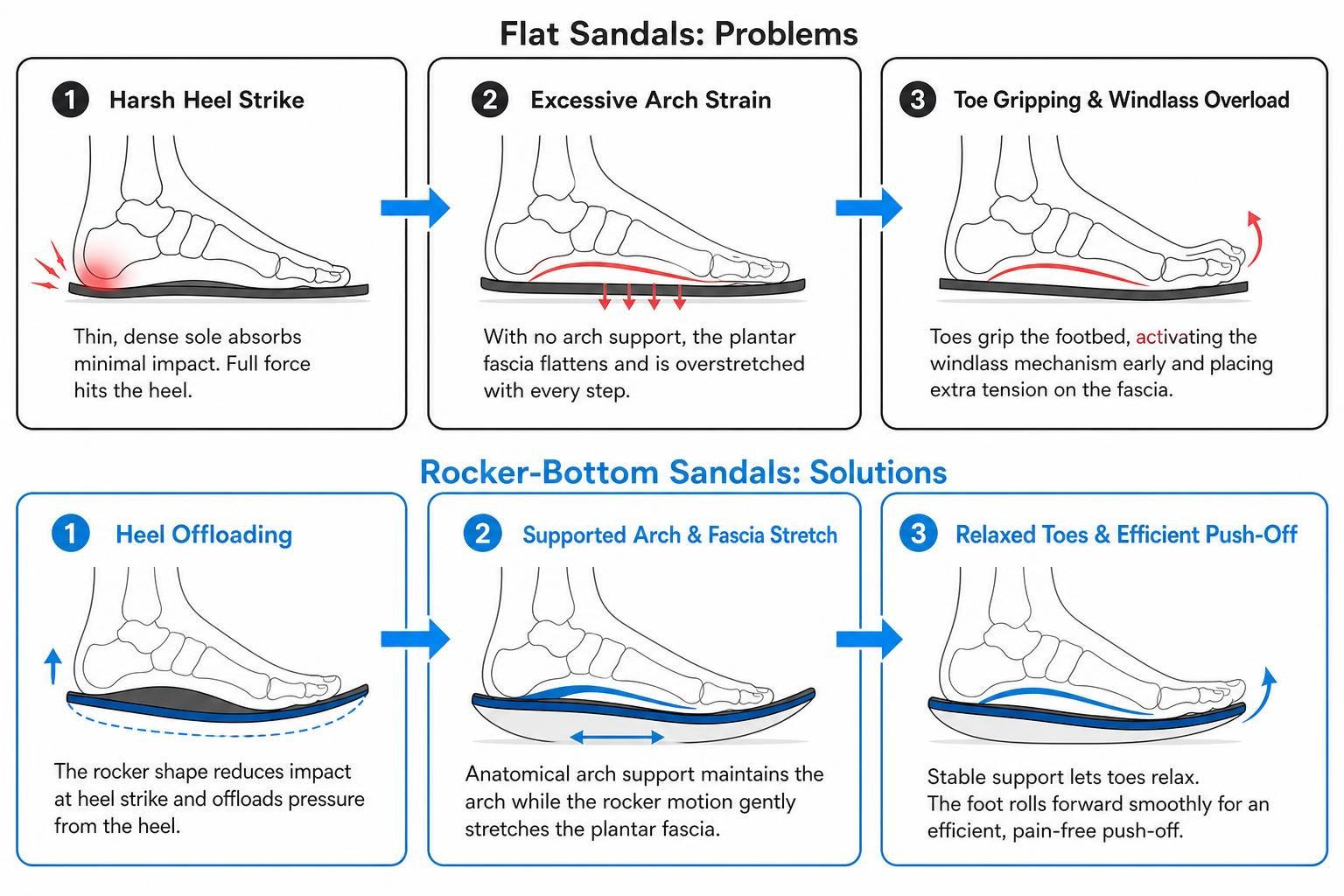
Instead of letting your foot bend sharply at the ball, the rocker sole rolls your foot smoothly from heel strike to toe-off. This motion reduces the stretch placed across the inflamed plantar fascia. It also incorporates a compressible inner heel section that absorbs point-pressure shock while the firmer outer perimeter maintains stability.
In clinical trials, patients experienced noticeable relief on average within 2 to 4 weeks of consistent wear. Because the footbed is intentionally firm to retrain foot musculature, it typically requires a 7 to 14-day break-in period to allow the footbed to form-fit to your natural arch contours.
Lightweight Orthotic Beach Flip Flops
If you love warm-weather outings but dread the morning heel stiffness that follows a beach day, lightweight styles provide a balanced combination of comfort and clinical support. Look for options that carry an official podiatric seal of acceptance, validating their biomechanical design.
The best of these feature a springy, yoga-mat style footbed that cushions the calcaneus, combined with a pronounced anatomical arch structure that prevents overpronation. Soft vegan leather upper straps are gentle against the skin, preventing friction blisters between the toes while keeping the foot centered. Quick-drying and water-friendly, they offer an ideal bridge between casual summer style and orthotic therapy.
Orthotic Flip Flops with Metatarsal Support
Plantar fasciitis often does not travel alone; many women also experience burning discomfort in the ball of the foot (metatarsalgia) or toe joint friction. Look for a design that integrates a multi-layer orthotic footbed directly into a premium leather thong sandal.
Alongside robust arch contours and a deep heel cup, the best metatarsal-support styles include a built-in metatarsal pad. This raised central dome spreads and lifts the transverse arch of the forefoot, redistributing weight away from sensitive nerve endings and metatarsal heads. A memory-foam middle layer molds to your unique pressure points, making these an excellent choice if you need to stand for hours at outdoor events or social gatherings without aggravating your lower limbs.
Lightweight EVA Flip Flops
For maximum impact absorption and cloud-like underfoot comfort, high-density EVA sandals deliver generous relief. Built with an ultra-thick, cushioned sole, these flip flops can weigh significantly less than traditional supportive cork or leather sandals.
The thick platform elevates your heel above the forefoot to take acute tension off the Achilles tendon and plantar fascia. Additionally, waterproof, sand-resistant materials with a textured non-slip outsole provide confident grip on slick pool tiles and wet bathroom surfaces. If you prefer double-strap adjustability, you can also explore double-strap sandal options for customizable volume control over the instep as part of broader plantar fasciitis relief strategies.
Water-Friendly Orthotic Flip Flops
If you need a pair that can transition effortlessly from the swimming pool straight into the lake or shower, look for fully molded, floating orthotic support made from proprietary injected EVA, which delivers high energy return and impact dispersion.
The best designs feature a soft, seamless toe post that eliminates the raw rubbing common to synthetic sandals. A contoured rearfoot cradles the heel fat pad directly beneath the bone, optimizing your body’s natural shock-absorbing capacity. With a gentle heel lift of around 1 inch, these styles minimize tension along the plantar band while remaining light enough to float if dropped in the water.
Essential Features in Orthopedic Sandals for Women
When shopping for supportive footwear, ordinary fashion flip flops should never be confused with biomechanically structured recovery sandals. The most effective models incorporate targeted design elements to offload pressure points:
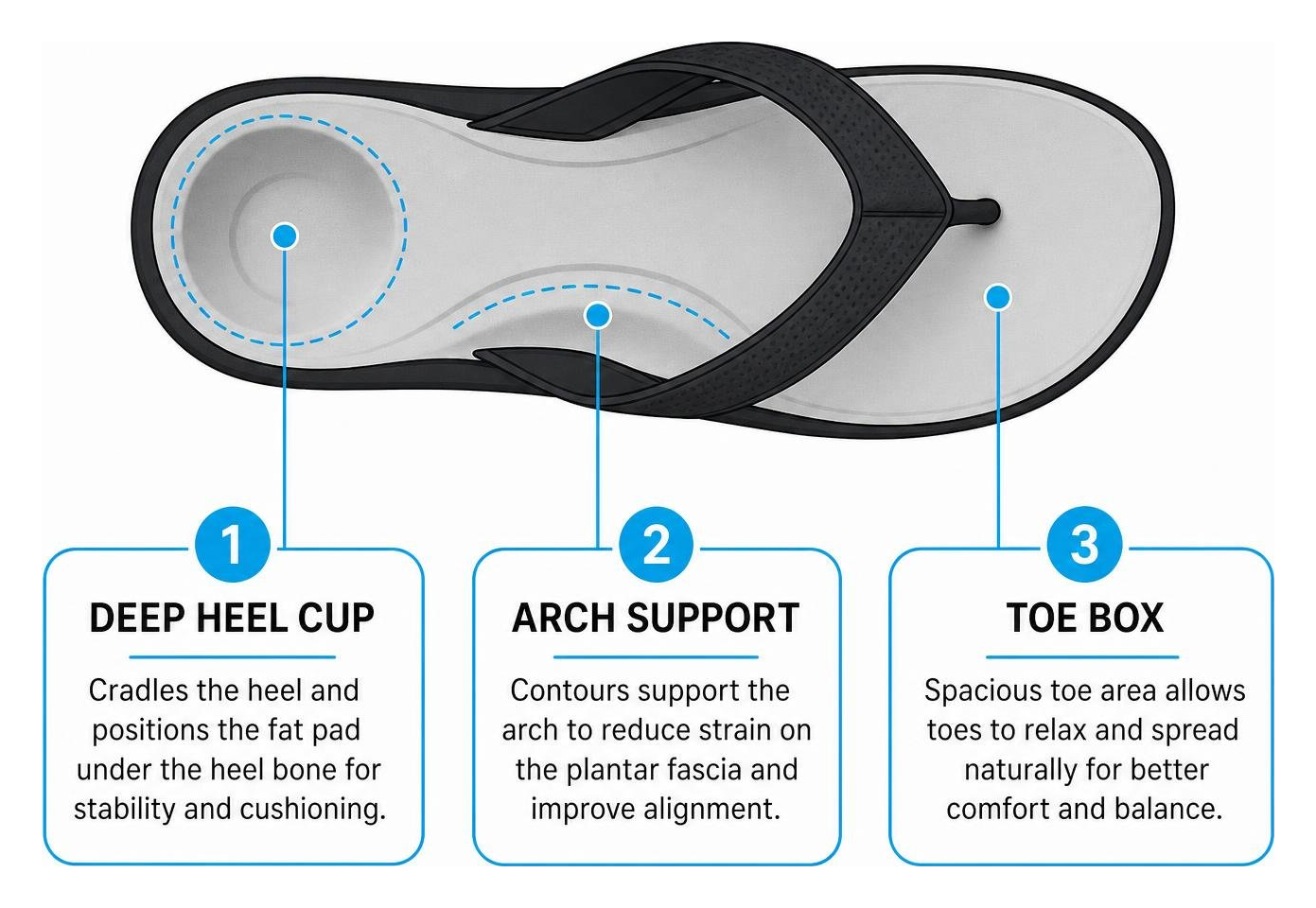
- Deep Heel Cup: A firm, cupped heel pocket stabilizes the calcaneus and gathers the natural fat pad directly beneath your heel bone, maximizing natural cushioning and preventing excess inward rolling (overpronation).
- Anatomical Arch Contours: Whether you have high or flat arches, the contour should make direct contact with your midfoot, sharing ground reaction forces that would otherwise stretch the fascia band.
- Multi-Density Cushioning: A firmer base combined with a shock-absorbing top layer (such as EVA or memory foam) dampens the impact spikes of heel strikes on hard surfaces.
- Elevated Heel-to-Toe Drop: A slight heel elevation (between 0.75 and 1.25 inches) keeps the Achilles tendon and calf muscles slightly slackened, taking direct pulling pressure off the heel insertion.
- Soft, Ergonomic Toe Posts: A seamless, rounded thong post prevents toe pinching, enabling your toes to rest in a relaxed, natural position without reflexively grabbing the footbed.
Evaluating the Best Flip Flops for Plantar Fasciitis Women’s Needs
Foot shapes vary dramatically, meaning a sandal that offers complete relief for one woman might feel awkward or uncomfortable for another. Evaluating your specific foot mechanics ensures you choose the proper pair:
- Flat Feet / Low Arches: Look for firm medial arch control and a rigid heel cup to prevent excessive pronation from collapsing your arch.
- High Arches: Prioritize cushioned, flexible contours that fill the gap beneath your foot to distribute body weight evenly rather than concentrating it solely on the heel and ball.
- Wider Feet or Bunions: Select wide-bed designs or adjustable alternatives with soft straps that sit comfortably away from the first metatarsophalangeal (big toe) joint.
Investing in properly contoured summer footwear is one of the most effective long-term plantar fasciitis prevention techniques, protecting your feet between workouts and daily activities.
How Sizing and Fit Impact Arch Placement
Fit accuracy is critical with orthotic footwear. In a flat sandal, being off by a half size rarely causes problems. In an orthotic flip flop, improper sizing places the contoured arch apex in the wrong spot beneath your foot, creating painful pressure points.
- Match Foot Length, Not Just Shoe Size: Stand with your heel against a wall, measure your foot length in centimeters, and compare it with the brand’s specific size chart.
- Look for Edge Clearance: Ensure your heel sits completely inside the heel cup without spilling over the rear rim, leaving approximately 0.5 cm of clearance at the heel and toe.
- Adjusting Between Sizes: If you fall between sizes or have a wider foot profile, size up to ensure the arch contour sits comfortably beneath your natural arch rather than biting into your heel.
How to Transition Safely and Maximize Foot Recovery
When introducing structured orthotic sandals to your routine, your feet and lower leg muscles need time to adjust. Even the best orthopedic sandals alter how your muscles and ligaments bear weight.
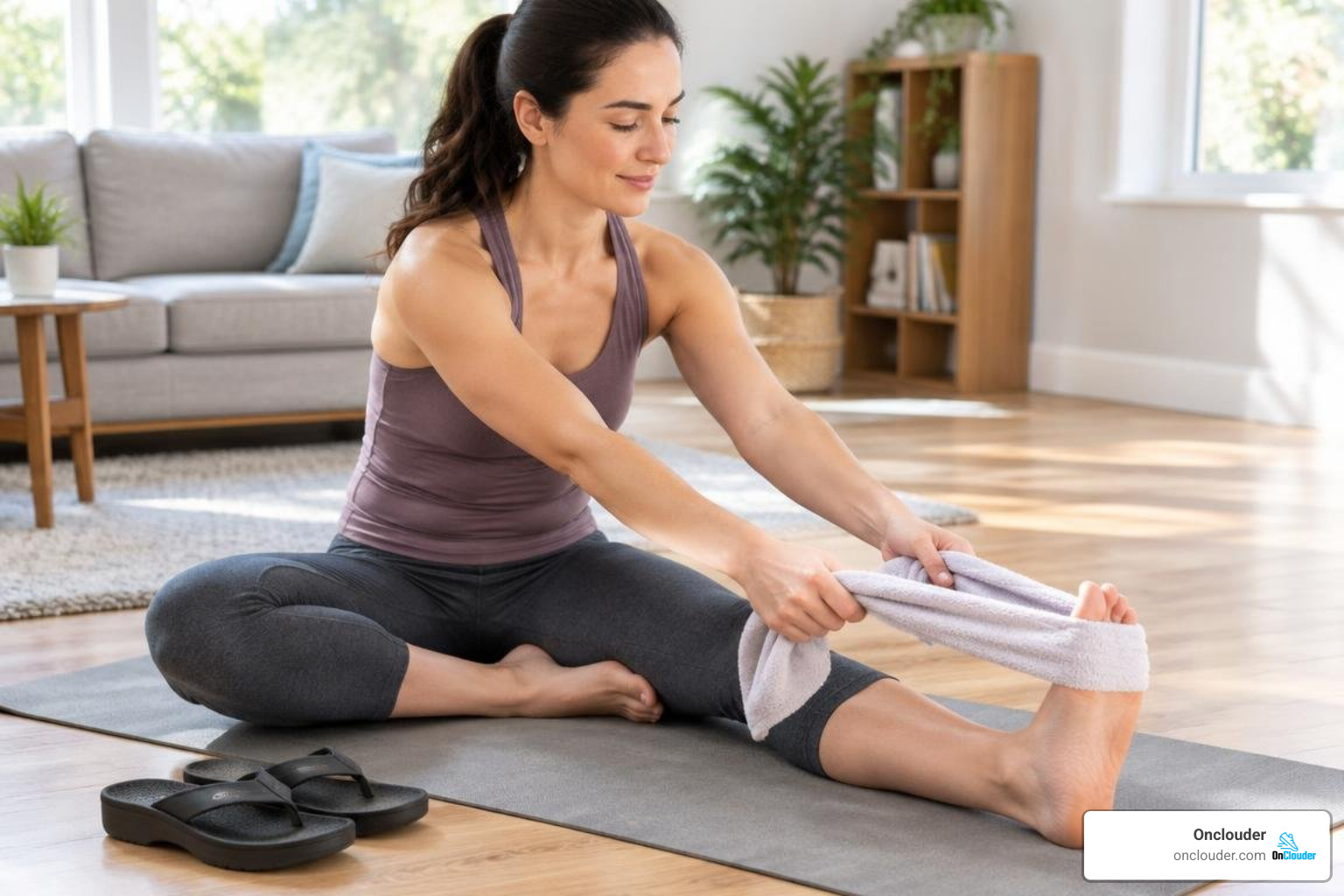
To prevent minor muscle fatigue or arch soreness, follow a gradual break-in schedule:
- Days 1–3: Wear your new sandals for 1 to 2 hours around the house on flat floors.
- Days 4–7: Increase wear time to 3 to 4 hours, incorporating light outdoor errands or walks.
- Days 8–14: Transition to full-day casual use as the materials soften and your plantar fascia adapts to the supportive contours.
Complement your new footwear with gentle calf stretches, rolling the bottom of your feet over a cold water bottle, and avoiding barefoot walking on hard tile or hardwood floors at all times.
Frequently Asked Questions about Orthotic Flip Flops
Can you wear supportive flip flops all day without worsening heel pain?
Yes, provided they feature structured arch support, a deep heel cup, and adequate shock-absorbing foam. However, for extended high-impact walking (such as sightseeing on concrete or hiking), a full orthotic sneaker or closed-toe walking shoe with ankle stabilization remains the better option.
How do orthotic flip flops compare to recovery slides or orthopedic shoes?
While orthotic flip flops use a thong post between the toes, recovery slides use a wide band across the instep. Slides often offer slightly more upper security for wide feet, whereas flip flops provide maximum breathability in hot conditions. Both provide comparable underfoot arch offloading when properly contoured.
How long does it take for plantar fasciitis flip flops to relieve pain?
Most women experience noticeable reduction in acute heel soreness within 2 to 4 weeks of consistent wear. While initial cushion comfort is immediate, soft tissue repair and reduced fascia inflammation require sustained support throughout daily weight-bearing activities.
Conclusion
Living with plantar fasciitis doesn’t mean you have to retire your open-toe sandals for good. By choosing flip flops engineered with deep heel stabilization, anatomical arch support, and shock-absorbing materials, you can enjoy warm summer days and beach trips completely free of stabbing heel pain.
For broader footwear recommendations beyond summer sandals, explore our complete reviews of podiatrist-approved best shoes for plantar fasciitis or check our guide on the best work shoes for plantar fasciitis to keep your feet fully supported year-round.
