The Best Dress Shoes for Overpronation: What to Look For
The best dress shoes for overpronation hold the heel steady, support the arch, and leave room for your foot without squeezing it. For very wide feet, the DT620 and DT627 offer firm heel support and removable inserts. The Apis 9921 adds extra depth and an adjustable strap. For a dress-casual look, the Anodyne No. 52 has a supportive shank and room for an orthotic.
Overpronation means the foot rolls inward more than it should as you walk. In dress shoes with little support, that can leave your feet tired by the end of the day. The right fit matters as much as the shoe’s support features: your heel should feel secure, and your toes should have space to move.
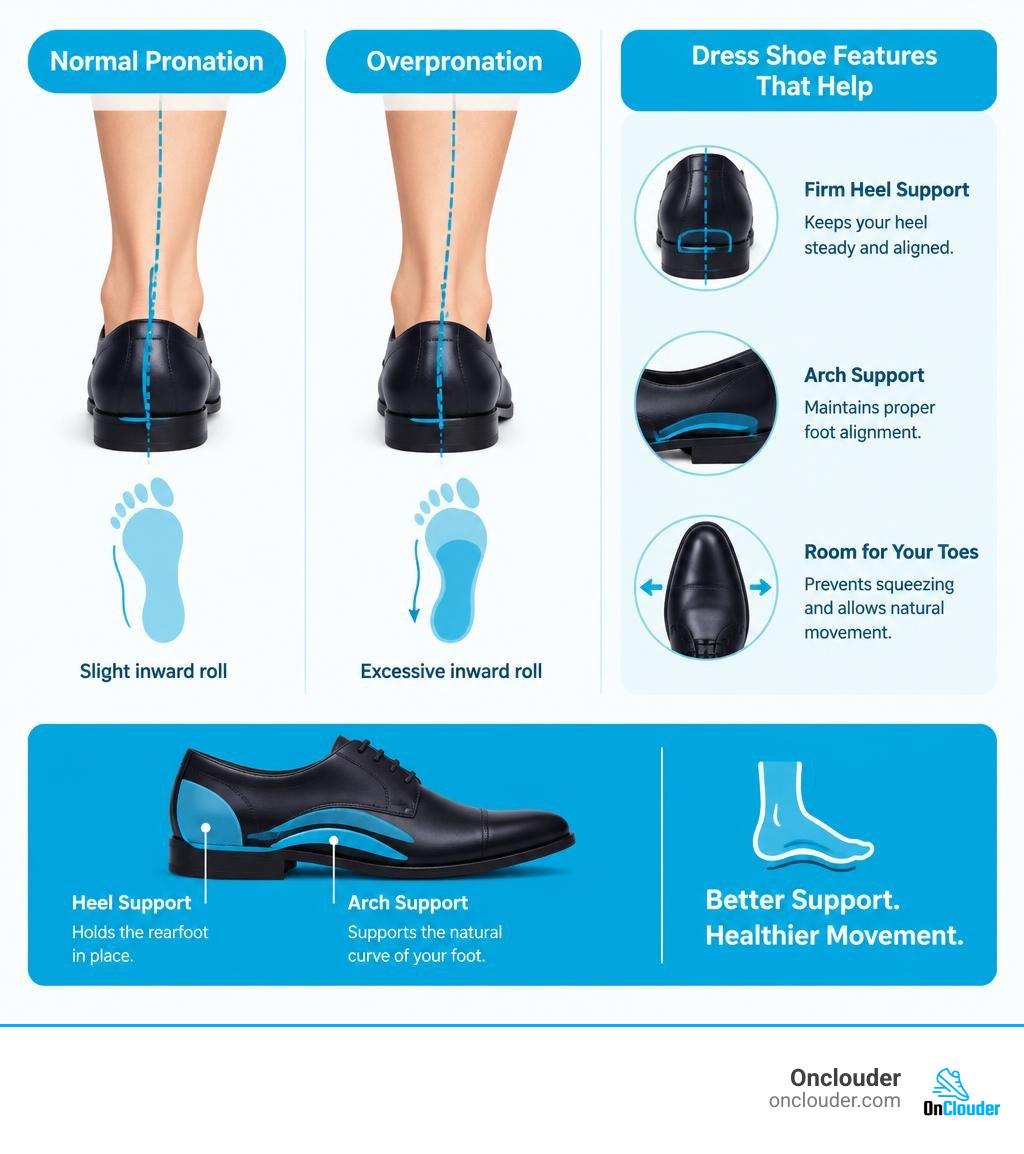
Understanding Overpronation and Dress Shoe Biomechanics
When we talk about pronation, we are describing the natural side-to-side movement of the foot as you walk or run. Normal pronation helps absorb shock: your foot rolls slightly inward (around fifteen percent) to distribute the impact of your heel striking the ground. With overpronation, however, the arches collapse downward excessively, causing the ankle to roll deeply inward.
This inward collapse triggers a negative chain reaction up your kinetic chain. As the subtalar joint rolls inward, your tibia rotates internally, putting uneven stress on your knees, hips, and lower back. At the foot level, overpronation stretches the plantar fascia—the thick band of connective tissue running along the bottom of your foot—leading to micro-tears, inflammation, and chronic heel pain. Consulting our selection of top podiatrist approved shoes for overpronation reveals that structured footwear with solid arch cradles and firm rearfoot support is essential for maintaining healthy joint alignment.
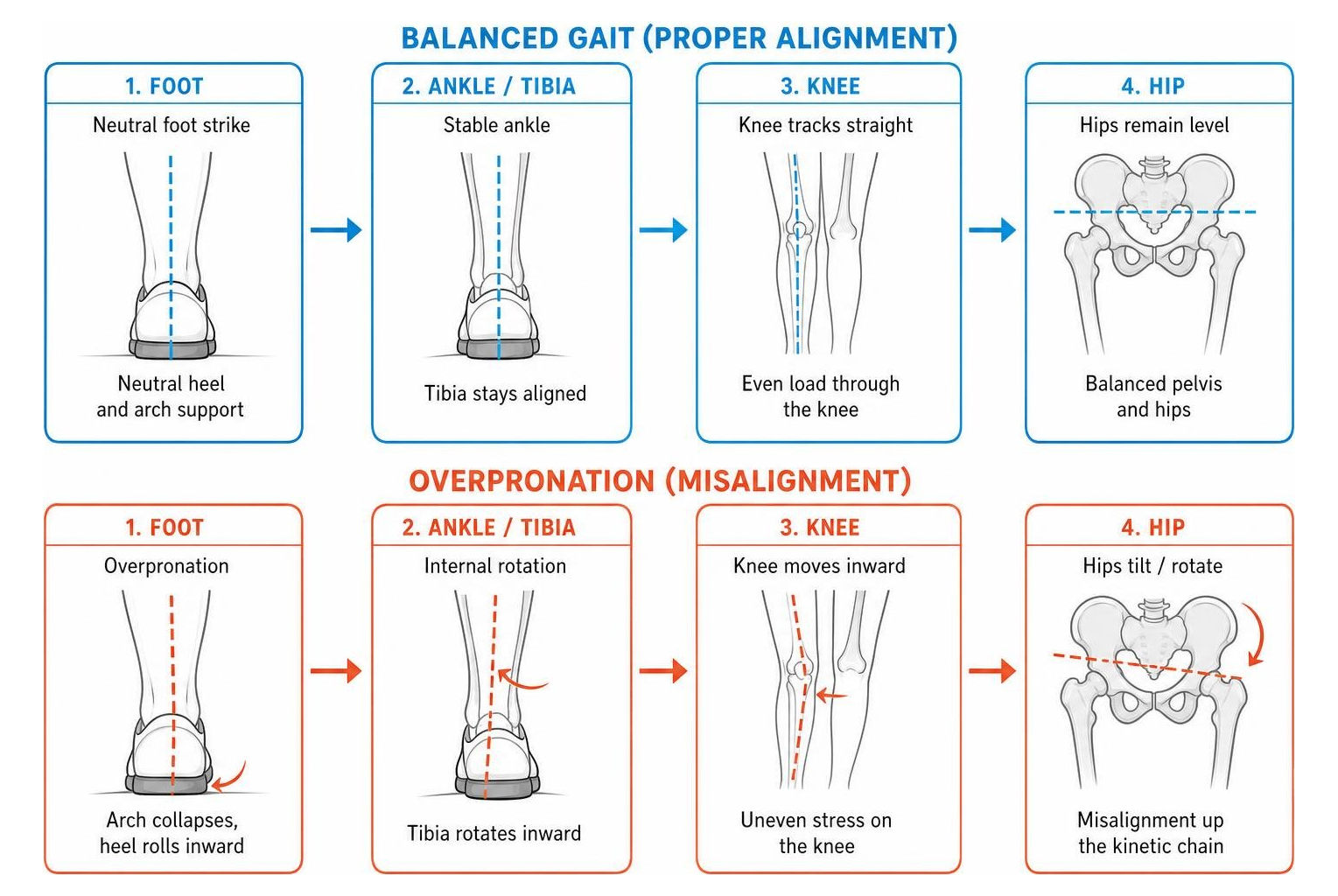
Why Everyday Formal Wear Needs the Best Dress Shoes for Overpronation
Most traditional formal shoes are notoriously bad for biomechanics. Classic oxfords and brogues frequently feature flat, unyielding leather soles, minimal arch contouring, and flimsy heel counters that fold under slight lateral pressure. When an overpronator spends eight to ten hours in rigid, flat-soled formal wear, their arches repeatedly bottom out against hard surfaces.
This lack of medial support creates severe tension in the Achilles tendon and strains the plantar fascia. Over time, it accelerates foot fatigue and contributes to bunions, hammertoes, and postural instability. Finding formal footwear that integrates biomechanical stability is vital, as outlined in our best overpronation shoes guide 2026, ensuring you do not have to sacrifice foot health for boardroom professionalism.
Motion Control vs Stability in Dress Footwear
When selecting supportive footwear, it helps to understand the difference between stability and motion control:
- Stability Shoes: Designed for mild to moderate overpronators, these shoes use subtle medial posting, structured arch profiles, and firm heel counters to gently guide the foot into neutral alignment without feeling excessively rigid.
- Motion Control Shoes: Built for severe overpronation, heavier individuals, or those with flat, flexible feet. They feature extra-firm medial and lateral counters, wider sole bases, rigid stabilizing shanks, and reinforced midfoot sections to physically block inward rolling and bilateral twisting.
For moderate pronation, a stability dress shoe with built-in orthotic contours works wonderfully. For pronounced arch collapse or high-volume feet, maximum motion control with full-depth counters is the way to go.
The Best Dress Shoes for Overpronation in 2026
To help you find the right pair, we tested and analyzed the leading orthotic-ready and motion-controlling formal shoes available. Below is a comparison of our top recommendations:
| Model | Primary Stability Feature | Available Width Range | Insole System | Best For | Price |
|---|---|---|---|---|---|
| Align Atworth Black | Dual-density Align™ orthotic insole | Medium (M) to 4E | Integrated corrective orthotic | Professional styling & built-in alignment | ~$1,292 |
| DT Footwear DT620 / DT627 | Extra-firm medial/lateral counters | 6E, 9E, 10E, 14E | Triple-layer removable inserts | Extreme widths & heavy stability needs | $360 |
| Apis Mt. Emey 9921 | High-density injected EVA & deep counters | D to 14E (Sizes 5–20) | Extra depth with heat-moldable inserts | Severe pronation, bunions & swelling | ~$180–$240 |
| Anodyne No. 52 | Lightweight stabilizing shank & heel counter | D/E, 2E, 4E | Removable cushioned footbed | Business casual comfort & sensitive feet | $169 |

Whether you need sleek oxfords or roomier options like the best black dress shoes and boots for long hours on your feet, these pairs provide dependable support.
Align Atworth Black Oxford
The Align | Atworth Black is engineered for professionals who want classic tailoring without sacrificing alignment. Constructed with premium full-grain leather uppers, this oxford conceals advanced orthopedic tech beneath a polished exterior.
The centerpiece is the Align™ corrective footbed—a dual-density orthotic insole designed to place the foot into optimal neutral alignment. By cradling the heel and bracing the medial arch, it redistributes body weight evenly across the footbed, dramatically reducing pressure on the plantar fascia and surrounding tendons. Paired with a lightweight EVA midsole, a slip-resistant rubber outsole, and a structured 57mm heel counter, the Atworth offers executive style with dependable support.
DT Footwear DT620 and DT627 Therapeutic Dress Shoes
For individuals who require maximum motion control or have hard-to-fit wide feet, the Men’s Fashionable Dress Shoe | DT Footwear DT620 6E 9E 10E 14E Widths and Men’s Leather Dress Shoe | DT627 stand in a league of their own. (A similar build is also available in the Men’s Fashionable Dress Shoe | DT Footwear DT641 6E 9E 10E 14E Widths ).
Crafted from soft Nappa leather, these shoes feature extra-firm medial and lateral counters alongside a reinforced mid-and-heel section to eliminate bilateral movement. They come standard with a triple-layer insert system that can be removed to accommodate custom orthotics or AFOs. To prevent the foot from hanging over the side of the sole, DT Footwear builds their ultra-wide options with extended outsoles (for instance, building a 10E upper on an 11E base), delivering a stable foundation for heavy wearers.
Apis Mt. Emey 9921 Extra Depth Shoe
The Men’s Extra Depth Dress Shoe | Apis 9921 is an accommodating therapeutic dress shoe that holds a 4.67/5 customer rating. Designed for moderate to severe overpronation, it features extra-firm rearfoot stability counters and a high-density injected EVA outsole that absorbs impact.
The shoe uses an extra-depth design and an adjustable Velcro strap closure, allowing you to fine-tune the fit as your feet naturally expand throughout the day. It easily houses custom rigid orthotics and relieves pressure over bunions and hammertoes. With sizes ranging from 5 to 20 and widths from standard D up to 14E, the Apis 9921 provides an adaptable fit for complex foot profiles.
Anodyne No. 52 Casual Dress Shoe
If your work environment calls for refined casual style, the Men’s Casual Dress | Anodyne No. 52 delivers everyday comfort. It is built with an extra-depth construction, a padded collar, and a protective, seam-free interior lining.
A lightweight, rigid composite shank sits beneath the midfoot, working in tandem with a reinforced rear heel counter to stabilize the foot during transitions. Its removable cushioned insole allows you to drop in personalized inserts easily. If you are comparing versatile footwear for busy workdays, see our review of the best dress shoes for standing all day to see how the No. 52 balances all-day cushion and arch structure.
Critical Features to Look for in Arch-Supporting Dress Shoes
Finding dress shoes that control overpronation requires looking beyond aesthetic appeal. You need specific architectural elements that resist excessive foot motion:
- Rigid Heel Counter: Squeeze the back of the shoe above the heel. It should resist collapsing. A firm counter holds the calcaneus (heel bone) vertical, preventing early inward rolling.
- Torsional Rigidity: Grasp the shoe at the toe and heel, then twist. A supportive dress shoe should resist twisting through the midfoot.
- Removable Footbeds: Integrated footbeds are great, but shoes with removable insoles give you the freedom to insert custom medical orthotics.
- Flared Base of Support: A wider outsole footprint under the arch and heel prevents the foot from rolling over the shoe’s edges.
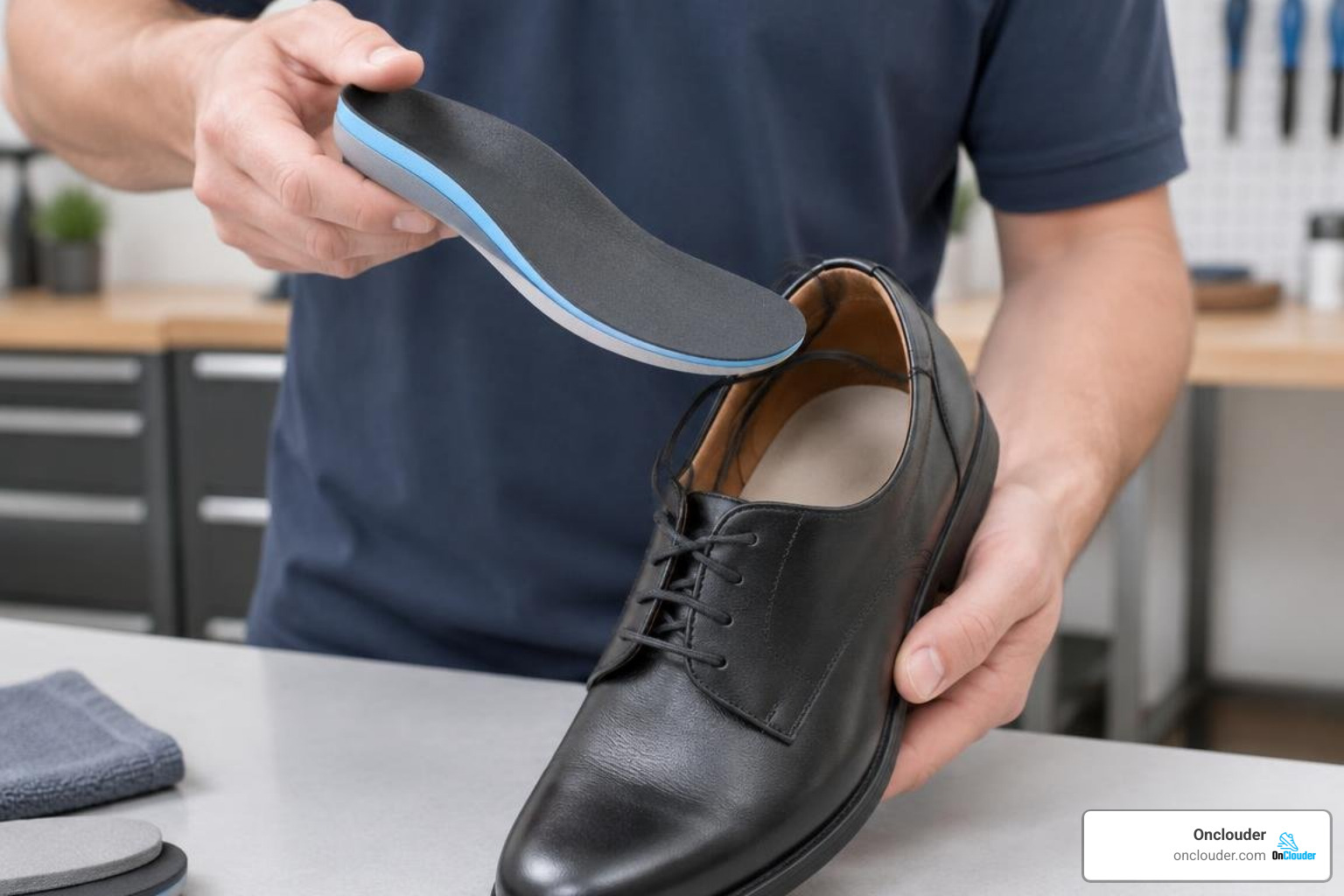
These stability elements work alongside proper cushioning to create a shoe that keeps you comfortable, similar to our top picks for the best dress shoes for standing and looking sharp.
Choosing the Best Dress Shoes for Overpronation Based on Foot Width and Volume
A common reason dress shoes fail overpronators is improper width and volume. When an overpronating foot collapses, it flattens and widens across the midfoot and forefoot. If forced into a narrow shoe, the arch spills over the medial edge of the sole—a condition known as “foot hangover.”
Selecting extended widths (from 2E up to 14E for specialized needs) ensures the entire foot rests on the solid base of the shoe. Extra-depth builds provide additional vertical clearance, accommodating high insteps, custom orthotics, and daily fluid retention without pinching the top of the foot.
Toe Box Geometry: Oblique vs Tailored Styles
The shape of the front of the shoe plays a major role in gait mechanics. When exploring options in the ultimate guide to wide toe box dress shoes, you will generally encounter two primary silhouettes:
- Tailored Toe Box: Tapers slightly toward the front for a sleek, formal look. While sharp, narrow tailored cuts can squeeze the toes, pushing the big toe inward and destabilizing the arch.
- Oblique Toe Box: Follows the natural organic splay of human toes, offering a broader, contoured forefoot.
An oblique toe box allows your great toe to engage fully during push-off. This big-toe activation helps naturally raise the arch and stabilize the foot. It also prevents the friction and pressure that cause bunions and hammertoes.
Outsole Density, Stabilizing Shanks, and Custom Heat-Moldable Inserts
The base of your shoe must handle hundreds of pounds of cumulative pressure each day. Premium stability dress shoes use high-density injected EVA or dual-compound rubber outsoles that attenuate shock while resisting medial compression.
Inside the sole, a rigid fiberglass or steel shank bridges the heel and forefoot, preventing the shoe from bending across the arch. When paired with custom heat-moldable inserts—which can be heated and formed directly to your foot’s contours—the shoe cradles your arch, evenly redistributes pressure, and keeps your gait balanced.
Frequently Asked Questions About Supportive Dress Shoes
Can dress shoes with EVA outsoles provide sufficient arch support?
Yes, provided it is high-density or injected EVA paired with an internal stabilizing shank. High-density EVA offers lightweight shock absorption without collapsing under the medial arch like softer running-shoe foams. When reinforced with a rigid shank and a firm heel counter, an EVA outsole creates a durable, supportive platform for overpronation control.
How do extra-depth dress shoes alleviate plantar fasciitis and bunions?
Extra-depth shoes provide additional vertical space inside the shoe. This extra room allows you to use thick orthotics that cradle the arch and reduce strain on the plantar fascia. Furthermore, extra-depth builds eliminate pressure over the tops of the toes and provide ample lateral room around the first metatarsophalangeal joint, preventing painful friction against bunions.
How long does it take to break in corrective orthotic dress shoes?
Adapting to corrective orthotic dress shoes typically takes one to two weeks. Because corrective insoles alter your foot posture and engage previously underused muscles, we recommend a gradual break-in schedule: wear your new shoes for two to three hours on day one, and add an hour or two each day until your feet adjust comfortably to all-day wear.
Conclusion
Overpronation does not mean you are sentenced to painful workdays or clunky orthopedic footwear. Modern design has made it possible to find dress shoes that combine sleek leather styling with firm heel counters, high-density outsoles, and orthotic-ready footbeds.
Whether you choose the orthotic-integrated Align Atworth, the ultra-wide DT Footwear series, or the adaptable Apis 9921, prioritize heel stability, midfoot torsional rigidity, and proper width. Explore our comprehensive essential guide to best overpronation shoes to discover full-range footwear solutions that keep your gait balanced, aligned, and comfortable.