Best Women’s Walking Shoes for Travel in Europe: Start With Fit
The best women’s walking shoes for travel in Europe are supportive sneakers that fit your feet well and feel steady on uneven ground. For days that may mean eight miles of sightseeing, look for a roomy toe box, secure heel, comfortable cushioning, and rubber tread with good grip. Try them on with your travel socks, then walk in them before you leave.
A stylish shoe can still work for a long day. But don’t choose by looks alone: cobblestones, hard pavement, and tired feet will quickly reveal a poor fit.
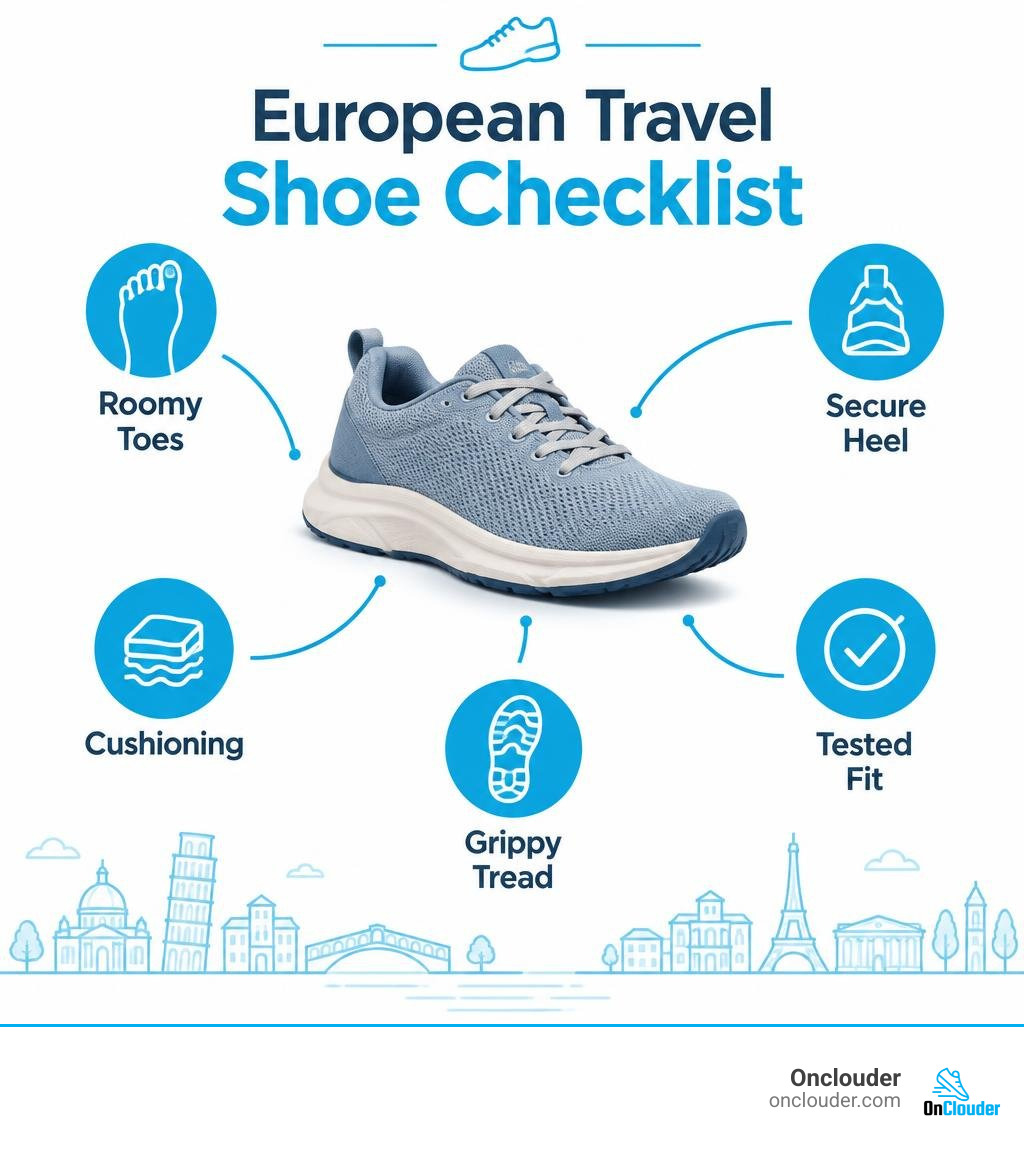
Key Features of the Best Women’s Walking Shoes for Travel in Europe
Planning a European getaway means preparing your body for serious mileage. Between touring world-class museums, navigating ancient stone staircases, and strolling down charming alleyways, your step counter will easily surpass 15,000 to 20,000 steps per day. To keep your feet happy, your footwear must incorporate specific engineering elements built for unforgiving surfaces.
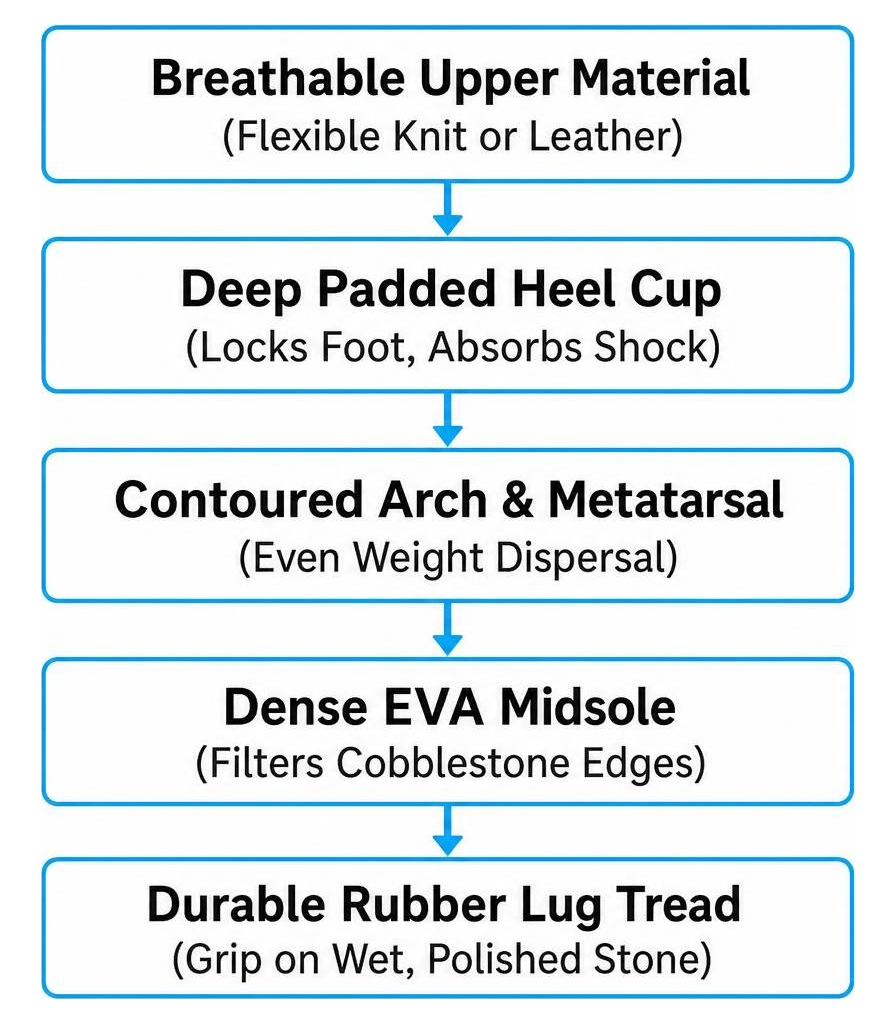
1. Robust Arch Support and Deep Heel Cups
Cobblestones create an unpredictable walking surface where your foot tilts at varying angles with every stride. A deep, structured heel cup holds the natural fatty pad of your heel in place, maximizing natural shock absorption. Pair this with structured arch support to keep your plantar fascia from overstretching across 8-mile walking days.
2. Dense Midsole Cushioning (EVA Foam)
Soft, marshmallow-like foam feels great in a store for five minutes, but it collapses quickly under repetitive, multi-mile pressure. High-density EVA (ethylene-vinyl acetate) foam provides responsive cushioning that absorbs impact without bottoming out against hard pavement.
3. Anatomical Toe Box and Metatarsal Support
Feet naturally expand and swell by up to half a shoe size during long days of walking and warm-weather travel. A wide, foot-shaped toe box prevents bunion friction, blister formation, and hammertoe compression. Metatarsal pads help redistribute pressure away from the balls of your feet, preventing the burning sensation known as metatarsalgia. When evaluating options, consulting The Ultimate 2026 Walking Shoe Guide can help you match midsole density with your personal stride mechanics.
4. High-Traction Rubber Outsoles
Centuries of foot traffic have polished historic European pavers into slick, low-friction hazards, especially when morning mist or rain sets in. Look for full-coverage rubber outsoles with multi-directional tread patterns or grooved siping to channel away moisture and keep your footing secure.
5. Flexible, Breathable Uppers
Whether you choose a premium leather shoe that molds to your unique foot profile or an engineered stretch-knit upper, breathability is non-negotiable. Quality materials regulate interior foot temperature and reduce internal friction. The clinical experts at The Royal College of Podiatry emphasize that selecting footwear with secure fasteners, stable heel counters, and adequate toe clearance is vital for preventing chronic lower-limb fatigue during continuous walking.
Top-Rated Footwear Styles for High-Mileage Sightseeing
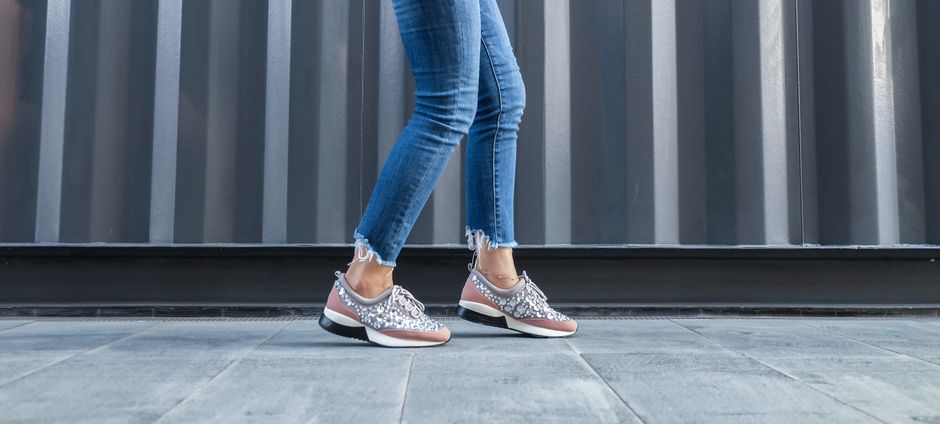
Finding the right balance between athletic performance and European street style is completely achievable. European fashion tends to lean toward sleek, minimalist aesthetics, meaning you do not have to settle for bulky, neon gym trainers to stay comfortable.
| Footwear Category | Cushioning Level | Weight (per shoe) | Traction Quality | Best For | Typical Price |
|---|---|---|---|---|---|
| Budget walking sneaker | High (responsive EVA) | Lightweight | Strong rubber tread | Cobblestones and everyday sightseeing | Budget-friendly |
| Rocker walking shoe | Maximum (rocker curve) | Moderate | Lugged rubber | Knee relief and long walks | Mid-range to premium |
| Wide-fit walking shoe | High (metatarsal support) | Lightweight | Medium-high | Wide feet and plantar fasciitis | Mid-range to premium |
| Leather walking sneaker | Medium-firm (orthotic-friendly) | Moderate | Grooved rubber | Arch support and dining out | Mid-range to premium |
| Supportive leather sandal | Medium (cork or foam) | Lightweight | Medium | Warm-weather sightseeing | Mid-range to premium |
Best Women’s Walking Shoes for Travel in Europe on Cobblestones
Navigating historic city centers like Rome, Edinburgh, or Prague requires footwear specifically engineered to handle uneven ground. If you struggle with joint sensitivity or ankle instability, shoes with curved rocker sole geometry can make a massive difference. Rocker soles gently roll your foot forward from heel strike to toe-off, reducing the bending motion required by your metatarsal joints and easing strain on your ankles and knees.
Models featuring rocker profiles, paired with cloud-cushioned travel footwear, offer active shock attenuation on uneven stone surfaces. These designs distribute impact forces across the entire gait cycle, preventing the localized bruising that often occurs when stepping directly on pointed cobblestone edges.
Budget-Friendly Picks: Choosing the Best Women’s Walking Shoes for Travel in Europe
You do not need to overspend to get supportive footwear for an overseas trip. Focus on a walking sneaker with a stable heel, a removable insole, breathable upper materials, and a rubber outsole rather than choosing by a brand name alone.
When comparing budget walking sneakers for European travel, look for these practical features:
- Heel Stability: A deep heel cup padded with proprietary EVA foam cushions against shock when stepping directly onto concrete or hard stone.
- Adaptive Fit: Available in both standard and wide widths, the breathable engineered knit upper stretches comfortably to accommodate natural foot swelling over long travel days.
- Wet-Surface Grip: A durable rubber-soled tread delivers reliable traction across slick, polished streets.
- Customizable Insole: The removable factory footbed offers solid arch support out of the box, while leaving ample room for custom orthotics if needed.
Use this field test of budget walking sneakers in Europe as an example of the practical checks to make before departure: stability on uneven ground, room for travel socks, and prior testing on longer walks.
Walking Shoes vs. Running Shoes: Biomechanics on Historic Pavement
Many travelers wonder if they can simply pack their favorite everyday running shoes for a European holiday. While premium running shoes offer generous cushioning, their underlying biomechanics differ significantly from walking-specific footwear:
- Gait Mechanics and Heel-to-Toe Drop: Running involves a spring-loaded, forward-propelling movement where you push off your toes with higher vertical force. Walking is a continuous, rolling pendulum motion from heel strike to toe roll.
- Meta-Rocker Interference: Many modern running shoes feature aggressive meta-rockers and high stack heights designed to propel runners forward at speed. When you are walking at a sightseeing pace, this forward tilt can disrupt your natural cadence, shifting unwanted pressure into your shins and lower back.
- Lateral Instability on Cobblestones: High-stack, ultra-plush running foams can feel tippy on uneven stones, increasing the risk of an ankle roll. Walking-specific shoes sit closer to the ground, offering a broader, more stable platform that keeps your ankles secure.
- Supination Considerations: Runners who supinate (wear down the outer edges of their outsoles) may find that soft, stability-oriented running shoes push their feet too far outward. Walking shoes with neutral, structured platforms keep your foot centered on irregular cobblestones.
When evaluating walking footwear, exploring durable shoes built for long-distance walking helps ensure you select a platform engineered for durability and lateral stability.
Comparing Travel Footwear Styles: Sneakers, Loafers, and Walking Sandals
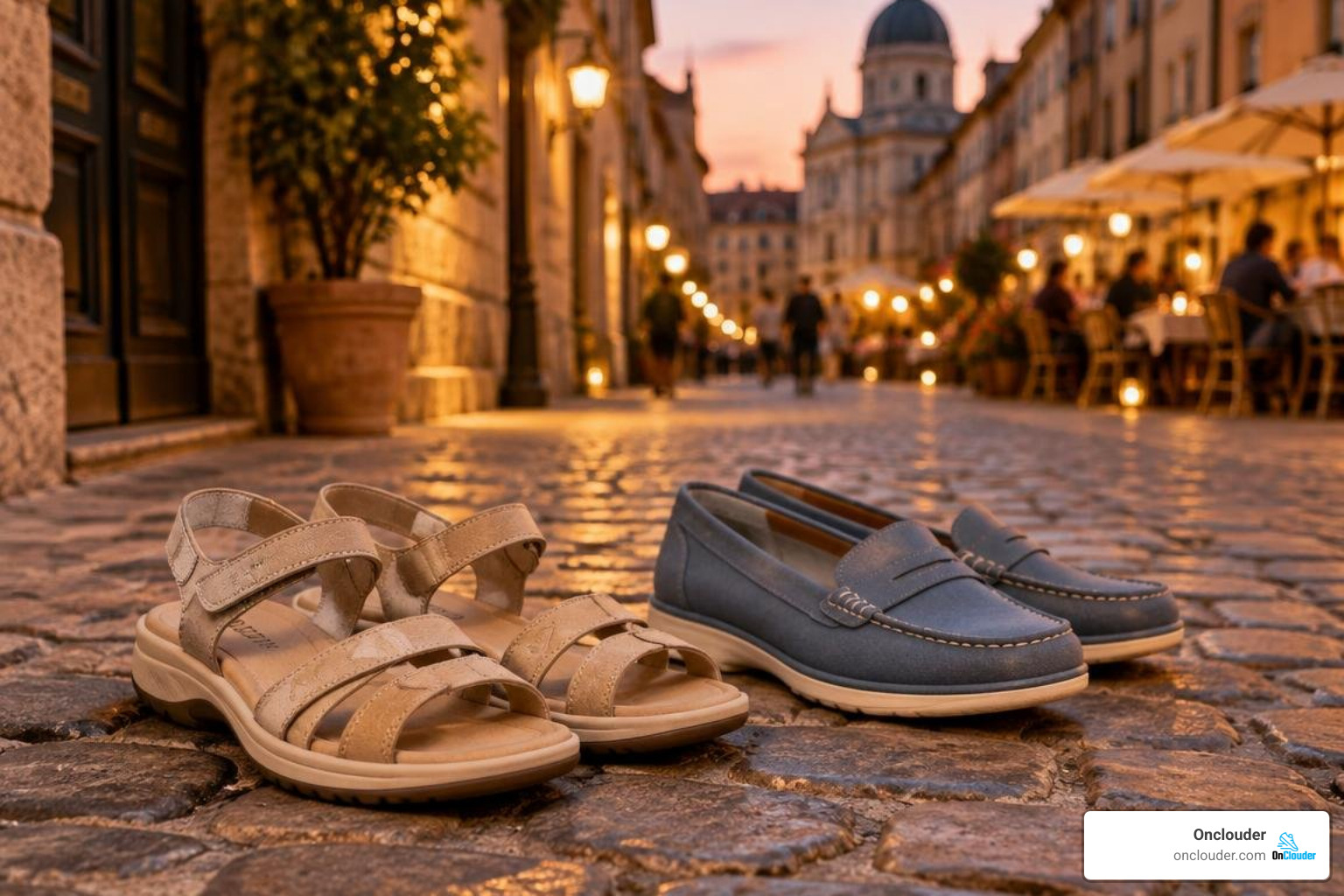
A versatile travel wardrobe balances all-day walking support with polished style for museum visits, upscale dining, and evening strolls.
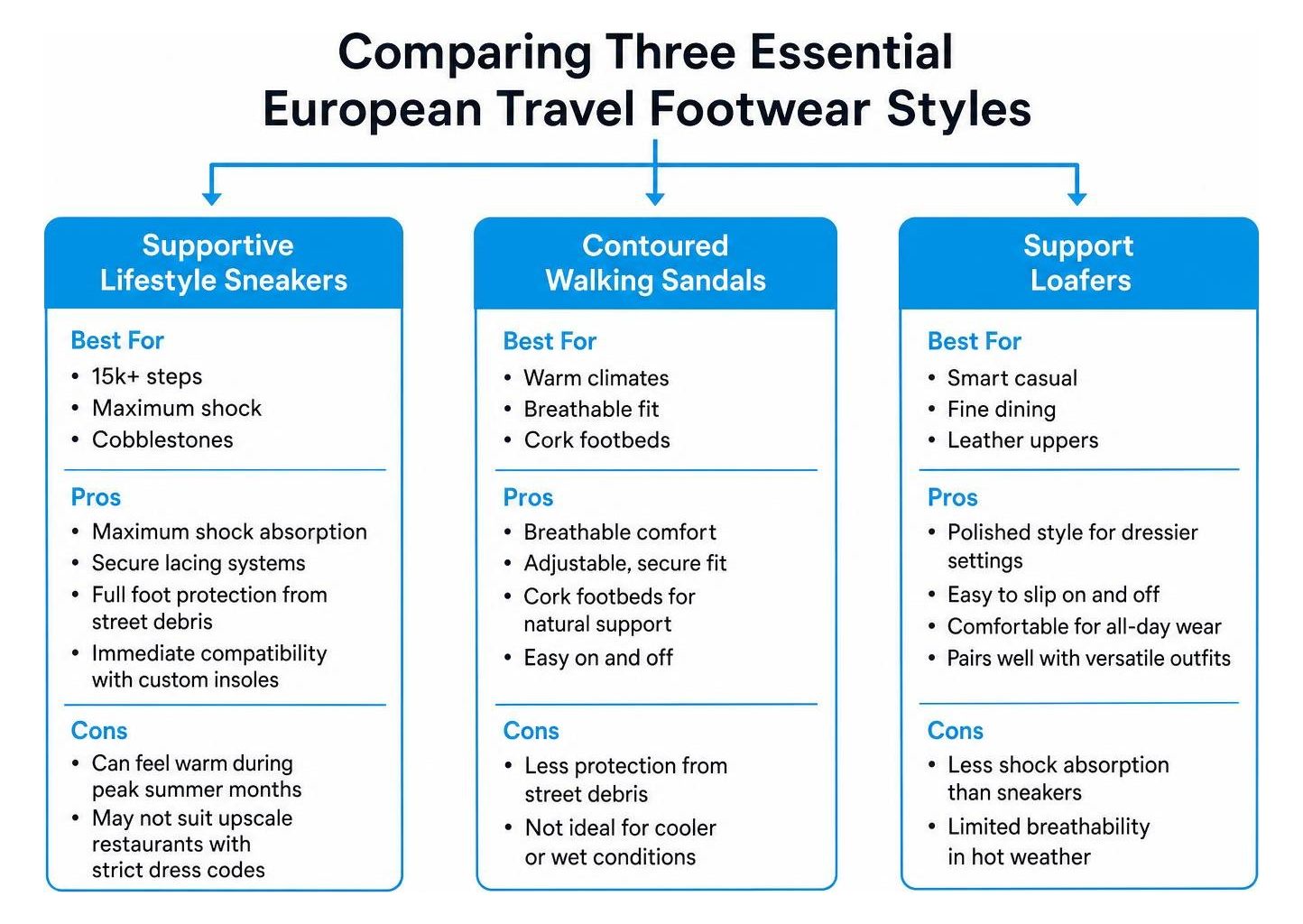
1. Supportive Lifestyle Sneakers
- Pros: Maximum shock absorption, secure lacing systems, full foot protection from street debris, and immediate compatibility with custom insoles.
- Cons: Can feel warm during peak summer months; may not suit upscale restaurants with strict dress codes.
- Travel Tip: Choose clean, low-profile leather or monochromatic knit sneakers in white, black, or tan. These pair effortlessly with trousers, sundresses, and tailored shorts. You can find versatile options in our curated guide to stylish everyday walking shoes for women.
2. Contoured Leather Walking Sandals
- Pros: Exceptional airflow for summer heat in Mediterranean destinations; contoured cork or polyurethane footbeds mold to your arches.
- Cons: Open toes leave you vulnerable to stubbed toes on irregular cobblestones; thin straps can cause friction blisters if not broken in thoroughly.
- Travel Tip: Look for adjustable ankle straps and arch-supporting footbeds. Avoid flat, unsupportive flip-flops at all costs.
3. Arch-Support Loafers and Slip-Ons
- Pros: Easy to slip on and off during airport security screenings; instantly elevates a casual outfit for evening dinners or theater visits.
- Cons: Less shock absorption for 10-mile trekking days; minimal lateral support on steep, uneven stone steps.
- Travel Tip: Select leather loafers with built-in orthotic contours and rubber outsoles rather than rigid wooden or hard plastic bases. Check out our roundup of vacation-ready casual walking shoes to find slip-on styles built for easy packing.
Foot Health, Insoles, and Strategic Packing for High-Mileage Days
Taking care of your feet begins before you zip your suitcase. Managing foot fatigue requires smart packing habits, proper recovery routines, and targeted fit adjustments.
Managing Foot Pain, Fallen Arches, and Wide Widths
- Plantar Fasciitis: Look for a rigid heel counter and a firm shank that prevents the shoe from twisting through the middle. A slight heel-to-toe drop (between 6mm and 10mm) takes active tension off the Achilles tendon and plantar fascia.
- Fallen Arches / Overpronation: Choose footwear with medial post support or a wide, structured midfoot base to prevent inward foot collapse during long walking tours.
- Bunions and Wide Forefeet: Prioritize shoes available in true wide widths (D width) or models crafted with seamless, flexible stretch-knit uppers that expand without rubbing tender joints. Pairing soft uppers with everyday comfort footwear for women helps keep pressure off sensitive forefoot areas.
- Arthritis and Joint Pain: Thick, uniform EVA foam or rocker outsoles minimize the force transmitted up through your ankles, knees, and hips when walking on historic stone.
Upgrading Support with Aftermarket Travel Insoles
You do not necessarily need to retire your favorite pair of casual sneakers to get travel-ready comfort. Replacing standard, paper-thin factory sock liners with high-performance aftermarket insoles can turn casual shoes into capable city walkers.
- Structured arch-support insoles: Choose an insole with a deep heel cup and firm arch support to help disperse ground impact across concrete and cobblestones.
- Cork insoles: Cork can gradually conform to your arch profile and help cushion repetitive impacts during city exploration.
- Metatarsal-specific inserts: Insoles with integrated metatarsal pads can redistribute pressure across the ball of the foot and reduce burning forefoot discomfort.
Frequently Asked Questions About Walking in Europe
How many pairs of walking shoes should I pack for a European vacation?
We strongly recommend packing two pairs of supportive walking shoes and one dressier lifestyle pair (such as a supportive leather sandal or structured loafer). Alternating your walking shoes every other day allows the midsole foam to decompress and regain its shock-absorbing capacity. It also ensures the interior lining completely dries out between wears, significantly reducing friction, odor, and blister risks.
Can I wear running shoes for walking 10 miles a day on cobblestones?
While quality running shoes provide great cushioning, models with ultra-soft foams, extreme stack heights, or aggressive forward rockers can feel unstable on historic, uneven pavers. A walking-specific shoe or a stable, low-profile lifestyle sneaker provides superior lateral stability and a more natural heel-to-toe roll for sightseeing.
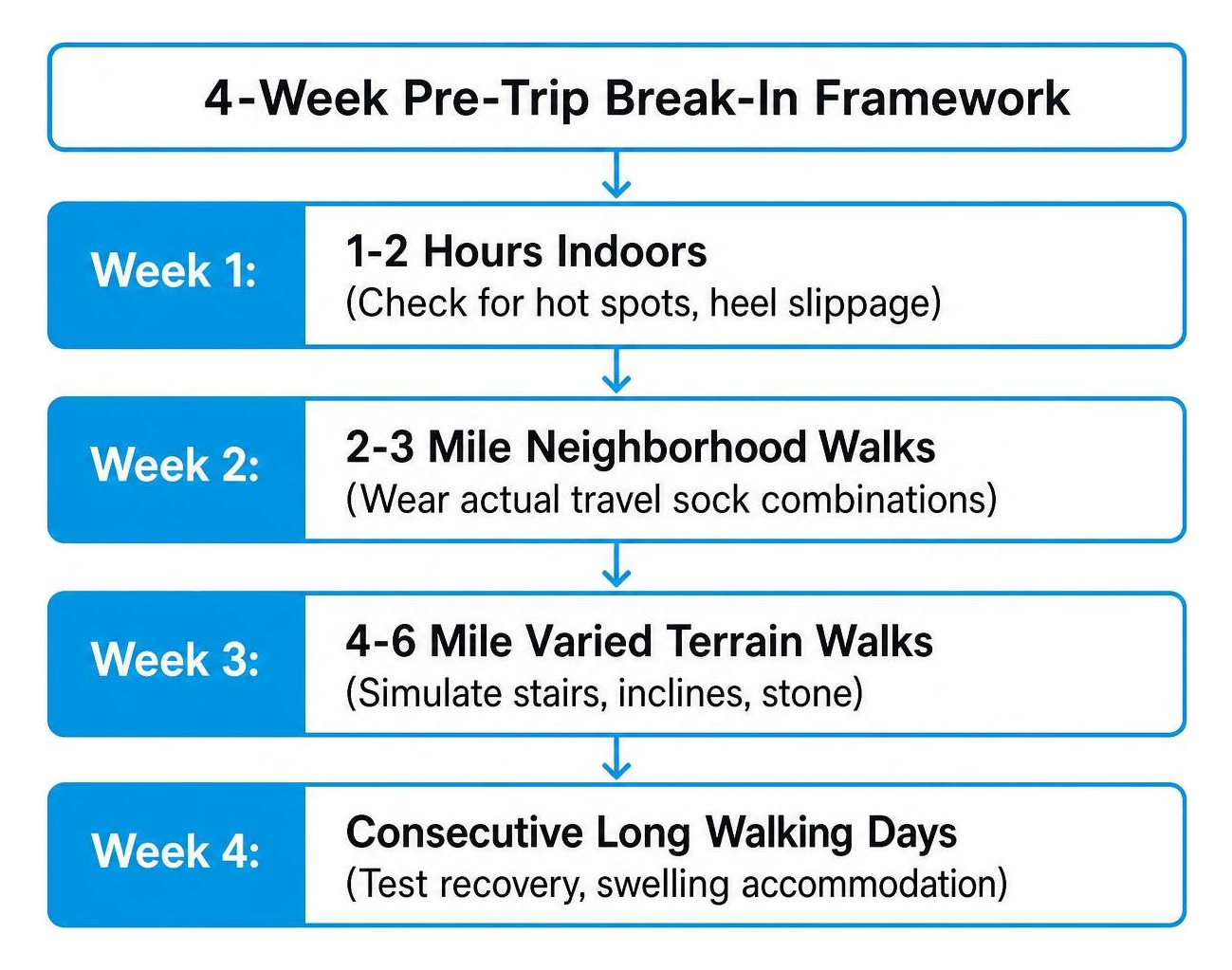
What is the best way to break in walking shoes before departure?
Begin breaking in new shoes at least three to four weeks before your trip. Start by wearing them around the house with your planned travel socks to identify any friction points. Gradually build up to 3-mile and 5-mile outdoor walks across mixed surfaces, including stairs and hills. Never wear brand-new, untested footwear on an international flight.
Conclusion
A dream vacation across Europe should be filled with unforgettable memories—not ruined by blisters, arch cramps, or throbbing joints. By choosing footwear with deep heel cups, resilient EVA cushioning, wide toe boxes, and reliable traction, you can explore historic city centers with confidence.
Before you head overseas, rotate your footwear, test your complete setup with moisture-wicking socks, and consider supportive insoles to customize your fit. For additional guidance on finding footwear that minimizes joint stress during long days on your feet, explore our analysis of impact-absorbing footwear for high-mileage walking. Have a wonderful, comfortable trip!