What Makes a Shoe Good for Plantar Fasciitis?
Good shoes to wear for plantar fasciitis have arch support that fits your foot, cushioning under the heel, a firm heel counter, and enough room for your toes. Start with a supportive walking or running shoe, such as a Brooks Ghost, New Balance Fresh Foam 1080, or Hoka Bondi. The best choice is the one that fits securely and feels comfortable when you walk.
Plantar fasciitis often causes heel pain with your first steps in the morning. Supportive shoes can make those steps more comfortable, but they are one part of recovery. If pain persists, a podiatrist can help you decide whether stretching, an insole, or other care would help.
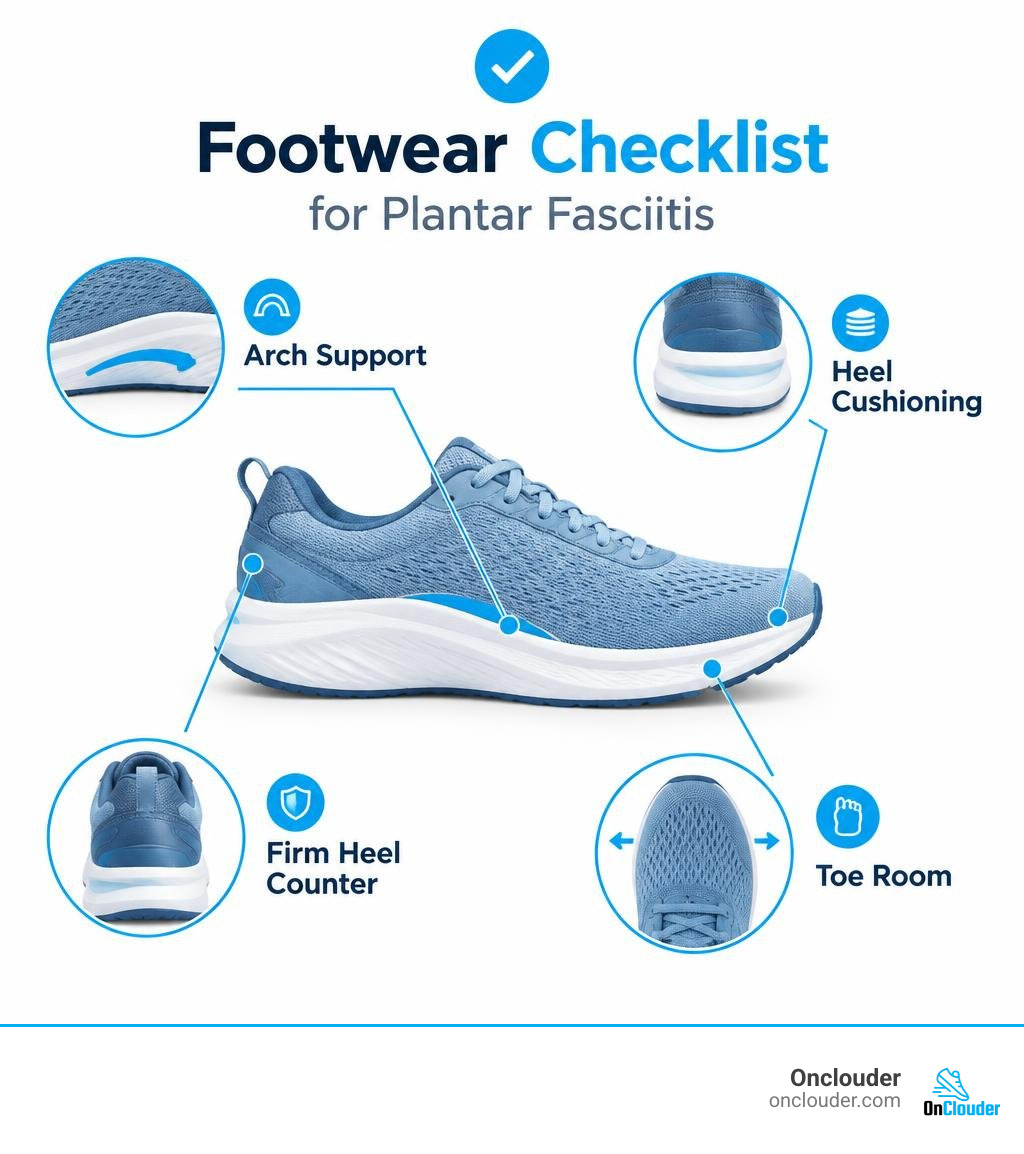
Key good shoes to wear for plantar fasciitis vocabulary:
- shoes that are best for plantar fasciitis
- supportive shoes for plantar fasciitis
- plantar fascia orthotic insole
Key Features of Good Shoes to Wear for Plantar Fasciitis
When dealing with sharp, stabbing heel pain, your choice of footwear directly dictates how much strain travels through the plantar fascia—the thick band of tissue running along the bottom of your foot. Biomechanically, footwear acts as an external suspension system. Selecting the right design can mean the difference between steady healing and constant flare-ups.
To determine what constitutes a truly therapeutic shoe, we evaluate six essential biomechanical criteria:
- Firm Arch Support: Proper arch contouring prevents excessive foot pronation (the inward rolling of the foot), which stretches the plantar fascia taut. Studies show that shoes with proper arch support can significantly reduce plantar pressure in patients with flat feet. For a deeper breakdown of structural foundations, explore A Comprehensive Guide to Shoes with Good Arch Support for Plantar Fasciitis.
- Deep Heel Cup: A structured, cupped heel cradles the natural calcaneal fat pad. This maximizes your body’s built-in shock absorption and limits lateral heel movement upon foot strike.
- Midsole Cushioning: Premium responsive foams (like EVA blends, nitrogen-infused midsoles, or specialized gel units) attenuate vertical impact forces before they reach the calcaneus.
- Heel-to-Toe Drop (8mm to 12mm): A 10mm heel drop maintains slight plantarflexion, reducing resting fascial tension by approximately 12% compared to completely flat footwear.
- Rigid Torsional Shank: If you can twist a shoe like a dishcloth, it will not protect your arch. A stiff shank prevents midfoot bending where the foot naturally requires stability.
- Rocker Sole Geometry: Shoes with an early-stage rocker profile allow for a smooth heel-to-toe transition, offloading the forefoot and preventing excessive elongation of the plantar fascia during the push-off phase.
| Feature | Biomechanical Function | Direct Impact on Plantar Fasciitis |
|---|---|---|
| Contoured Arch | Distributes plantar pressures evenly | Prevents excessive arch collapse and fascial micro-tearing |
| Deep Heel Cup | Concentrates and protects the natural fat pad | Decreases localized calcaneal pressure at initial contact |
| 10mm Heel Drop | Keeps the Achilles tendon slightly relaxed | Reduces tensile strain across the plantar fascia by ~12% |
| Rigid Midfoot Shank | Resists midfoot torsion and unnatural bending | Maintains structural integrity throughout gait cycle |
| Rocker Sole | Promotes forward momentum through roll | Decreases strain during the terminal stance/toe-off phase |
Understanding the science behind shoes for foot pain makes it easier to spot designs that promote long-term recovery over temporary softness.
Podiatrist-Recommended Footwear Across Daily Activities
Managing heel pain requires consistent support throughout your daily routine. Different activities create unique stress patterns across your feet, making it vital to match your shoes to your specific demands.
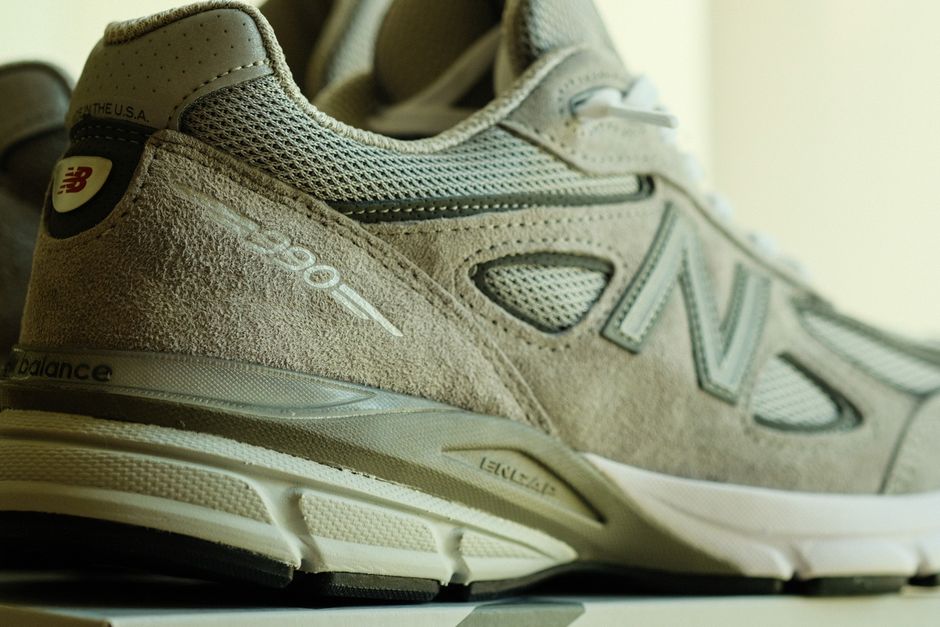
To help streamline your search, check out our curated guide on Podiatrist Approved Best Shoes for Plantar Fasciitis to find tested solutions across everyday categories.
Top Athletic and Walking Models: Good Shoes to Wear for Plantar Fasciitis
Athletic and walking shoes serve as the first line of defense against impact shock. When walking or running, ground reaction forces can reach up to three times your body weight.
- Max-Cushioning Road Warriors: Shoes like the Hoka Bondi and Hoka Clifton offer substantial foam stacks paired with Meta-Rocker technology to roll you smoothly through your step. If you rely on maximum cushioning, read about Hoka Walking Shoes for Plantar Fasciitis Real Help for Sore Arches or browse Podiatrist Recommended Hoka Shoes for Plantar Fasciitis Relief. Women seeking high-stack support can also reference Top Hoka Shoes for Women Battling Plantar Fasciitis Pain.
- Structured Neutral Trainers: The Brooks Ghost and Brooks Glycerin offer balanced DNA LOFT cushioning and stable heel counters that absorb shock without feeling squishy. They also pair seamlessly with over-the-counter orthotics.
- Plush Everyday Walkers: The New Balance Fresh Foam X 1080 features a generous heel stack and stable platform, making it a reliable pick for high daily step counts.
- Rearfoot Shock Absorbers: The Asics Gel-Nimbus and Gel-Cumulus provide targeted gel and foam setups under the calcaneus. For dedicated runners, see our breakdown of Asics Heel Support Shoes Ranked for Plantar Fasciitis Relief and Ditch Foot Pain with the Best Asics for Plantar Fasciitis Mens Runners Swear By.
- Responsive Energy-Return Styles: Walkers who prefer responsive, springy midsoles can review Adidas Ultra Boost Review for Runners with Plantar Fasciitis, The Runners Buying Guide to Adidas Plantar Fasciitis Shoes, and Upgrade Your Daily Walk with Adidas Plantar Fasciitis Footwear.
Everyday and Dress Options: Good Shoes to Wear for Plantar Fasciitis
You do not have to wear bulky running sneakers to every event or office setting. Modern orthopedic and comfort brands offer office-ready footwear that maintains proper foot mechanics.
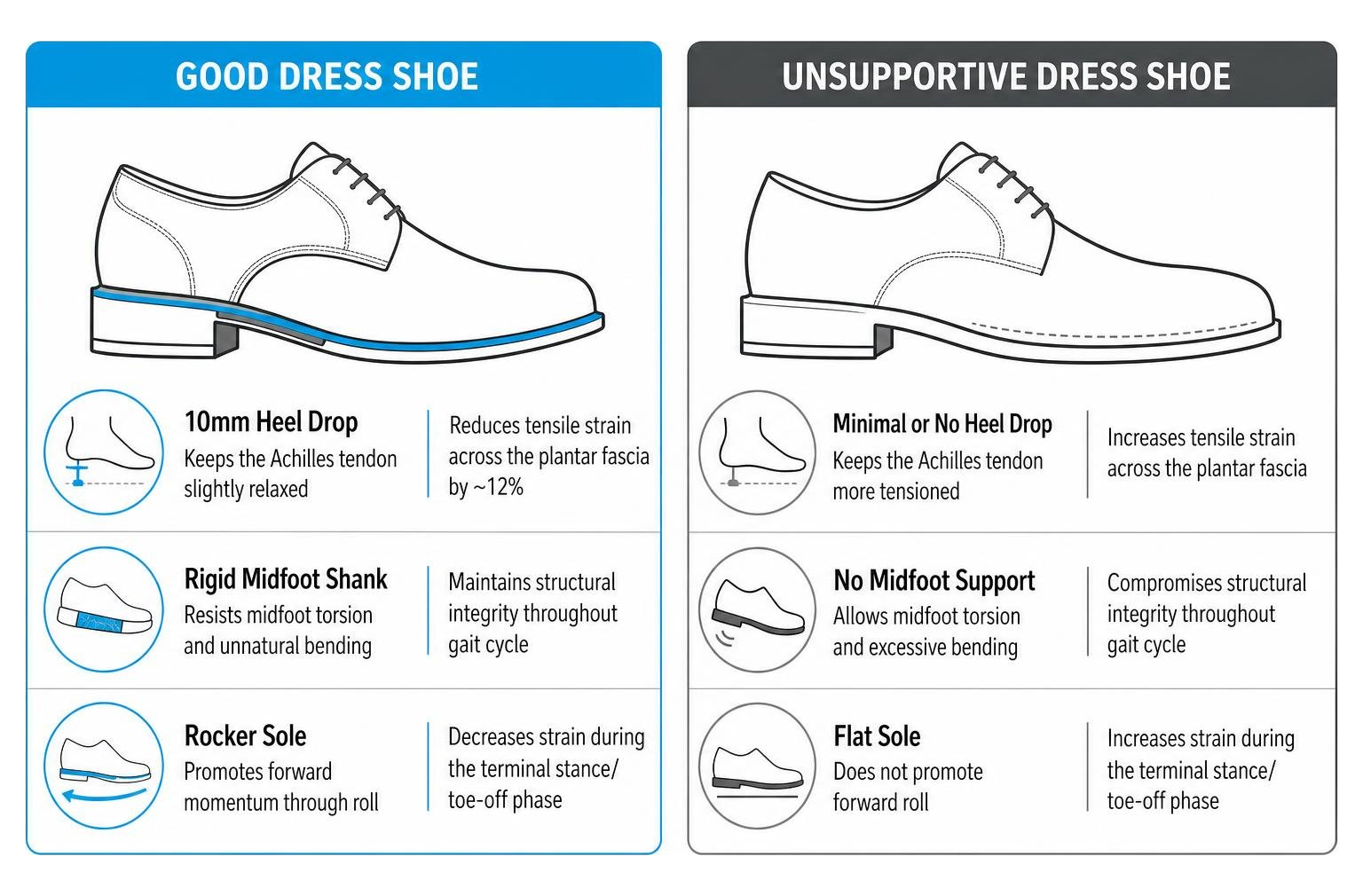
When selecting work or dress shoes, keep these clinical standards in mind:
- Low Block Heels & Wedges (1 to 1.5 Inches): A modest heel elevates the calcaneus slightly, shortening the Achilles tendon and reducing tension across the plantar fascia. Avoid thin stilettos, which shift up to 80% of your body weight forward onto the metatarsal heads.
- Supportive Clogs and Loafers: Brands like Dansko and ABEO incorporate firm midsoles and contoured footbeds that hold the arch stable during long hours of standing.
- Refined Casuals and Boots: Everyday leather footwear can deliver excellent stability. Check out Stylish Womens Everyday Shoes That Protect Against Plantar Pain, find chic options in Fancy Footwear Without the Flare Ups, or explore Top Ecco Picks to Ease Plantar Fasciitis Strain Without Sacrificing Style.
- Fall & Winter Support: When temperatures drop, you can maintain arch alignment with Ankle Boots for Plantar Fasciitis and Chic Ankle Boots That Deliver Uncompromised Plantar Fascia Support. Outdoor adventurers can also consult Hiking Boots for Plantar Fasciitis along with The Trail Explorers Field Guide to Plantar Friendly Hiking Footwear.
For an in-depth clinical look at female-specific footwear needs, podiatric research in Best Shoes for Plantar Fasciitis Women 2026 — Podiatrist Picks and our own guide to Best Adidas Womens Shoes for Plantar Fasciitis That Actually Help (plus Adidas Womens Shoes for Plantar Fasciitis Tested for Comfort) highlight the value of rigid shanks and structured heel counters.
The Wide Toe Box Dilemma and Drop Mechanics
Roughly 30% of the population has wider-than-standard feet. While wide toe box footwear allows natural toe splay and relieves pressure on the big toe, it presents a common biomechanical pitfall for plantar fasciitis: the zero-drop paradox.
Many wide-toe-box shoes feature completely flat (zero-drop) platforms. Research shows that zero-drop shoes increase fascial strain by 15% to 25% compared to 10mm drop shoes at a matched pace. A completely flat base pulls the Achilles tendon and calf complex tight, directly increasing tensile pull on the calcaneal attachment.
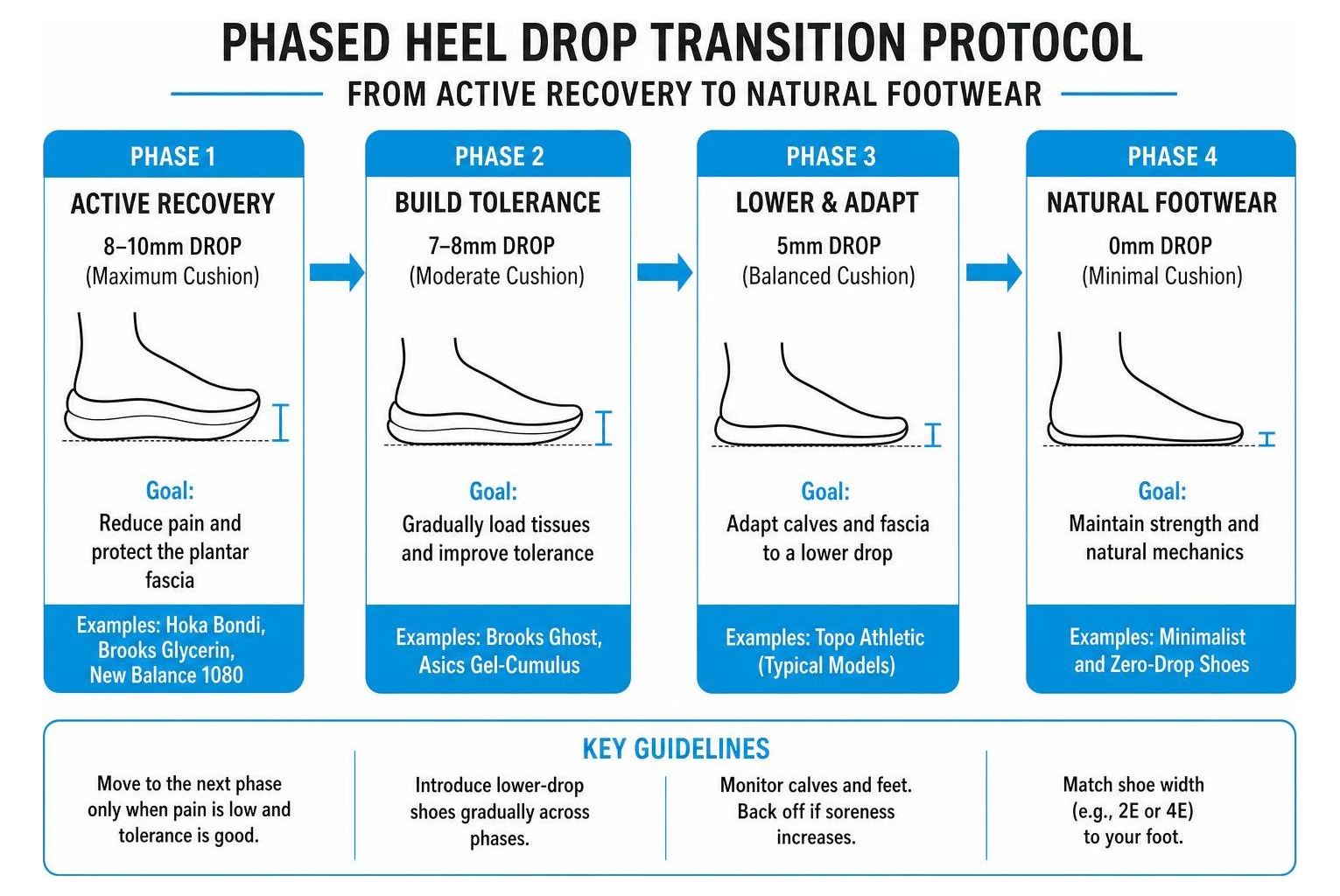
To safely balance toe room with heel protection:
- Choose genuine wide lasts (2E or 4E widths) built on traditional 8mm to 10mm drops, such as wide configurations of the New Balance 1080 or Brooks Glycerin.
- If transitioning to lower-drop anatomical shoes like Topo Athletic (typically 5mm drop), introduce them gradually across distinct recovery phases to avoid overstraining your calves.
- Review our expert selections in 10 Best Support Shoes for Plantar Fasciitis 2026 Expert Picks and consult podiatry insights on Best Wide Toe Box Shoes for Plantar Fasciitis 2026 | DPM to find the ideal balance of forefoot width and drop height.
Crucial Footwear Styles and Mistakes to Avoid
Wearing the wrong shoes can quickly undo months of recovery. Understanding which footwear styles aggravate plantar fasciitis is just as important as knowing which shoes to buy.
Avoid these common footwear missteps:
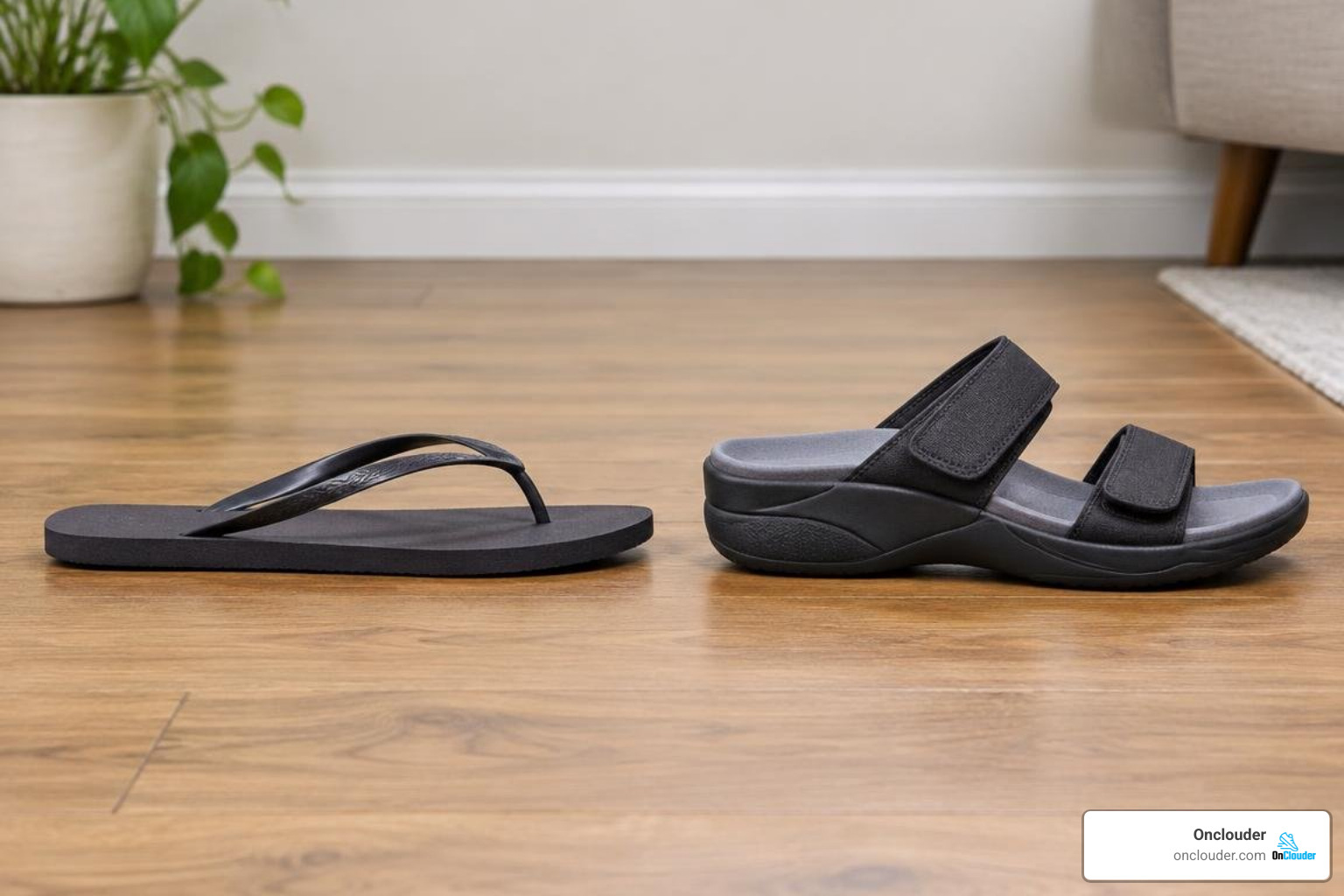
- Flat, Flimsy Flip-Flops: Standard summer thongs lack arch support, heel elevation, and midfoot stability, forcing your toes to claw the footbed and straining the plantar fascia. If you need warm-weather options, look for structured alternatives highlighted in Top Podiatrist Picks for Plantar Fasciitis Flip Flops, Best Flip Flops for Plantar Fasciitis Womens Podiatrists Recommend, Why Supportive Flip Flops Might Be Your Best Defense Against Foot Pain, and Top Mens Orthotic Flip Flops to Keep Heel Pain Away.
- High Stilettos: Thin, high heels shift body weight forward, driving forefoot pressure up by as much as 80% while tightening your calf muscles.
- Worn-Out Midsoles: Athletic shoe cushioning degrades significantly after 300 to 500 miles of use, even if the tread and upper look pristine. Dead foam loses its ability to absorb shock, transferring impact straight into your heel.
- Walking Barefoot on Hard Floors: Taking unassisted steps on tile or hardwood floors—especially first thing in the morning—places immediate, unyielding tensile shock on cold, contracted fascial tissues.
- Overly Flexible Flats: Ballet flats without structural shanks bend entirely in the middle, leaving your arch unsupported with every step.
Maximizing Relief with Orthotics and Indoor Footwear
Footwear is only one piece of the plantar fasciitis puzzle. Approximately 30% of patients dealing with persistent foot pain require an added structured insole to achieve proper alignment and pain relief.
When stock shoe insoles are too flat, you can upgrade them with specialized orthotics:
- Over-the-Counter (OTC) Orthotics: High-quality prefabricated inserts feature rigid arch bridges and deep heel cups that correct overpronation. Explore our practical recommendations in Shoe Inserts Arch Support Plantar Fasciitis and Upgrade Your Arch Support with the Best Shoe Brands for Plantar Fasciitis. For heavier wearers requiring firmer arch platforms, see Heavy Duty Insoles 220 Lbs Plantar Fasciitis.
- OTC vs. Custom Orthotics: While custom orthotics are molded specifically to your foot, quality OTC inserts offer an effective, accessible starting point for mild to moderate cases. To compare both approaches, read Shoe Inserts vs Custom Orthotics 2026 Best for Plantar Fasciitis.
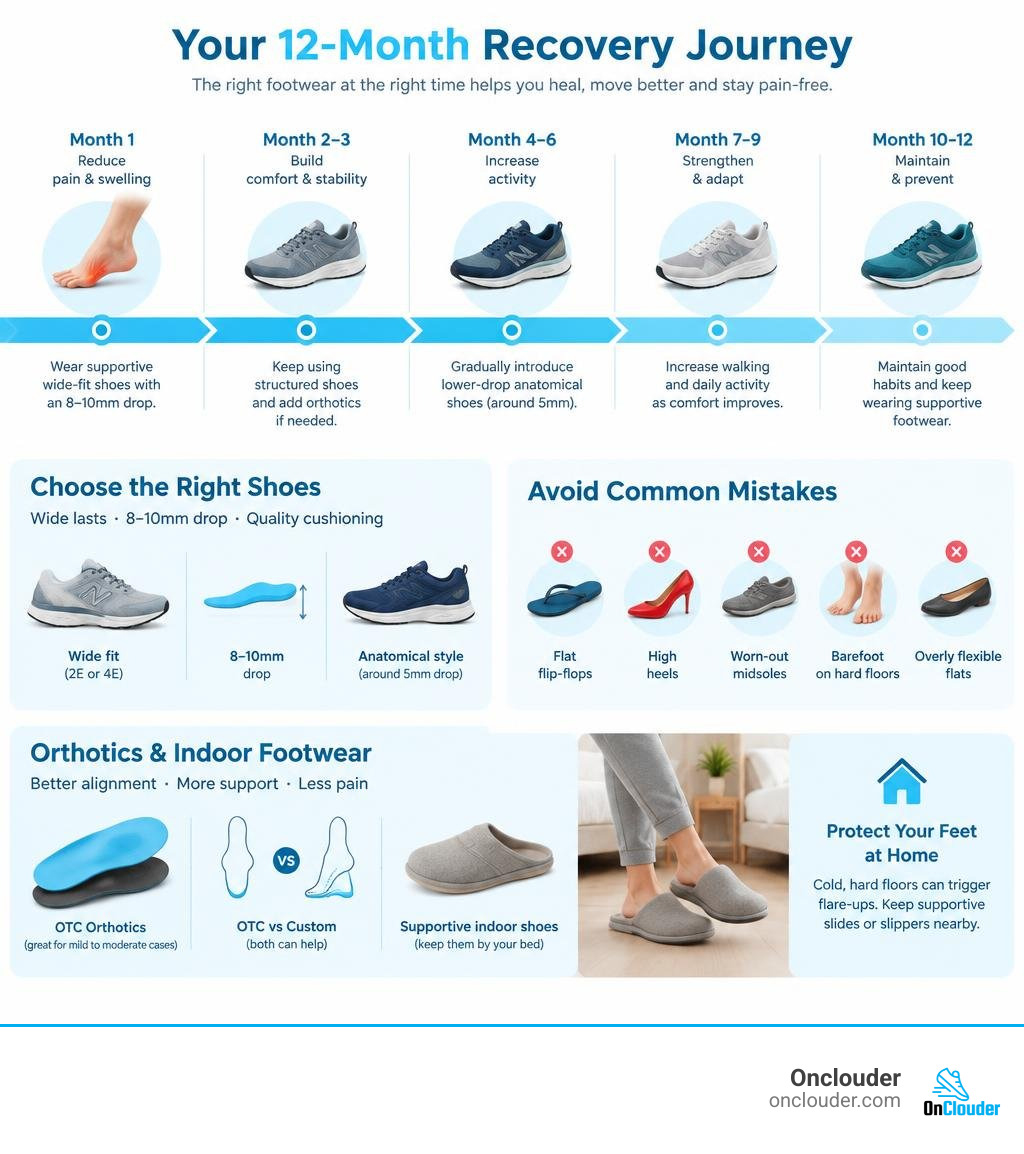
Never overlook what you wear inside your home. Stepping out of bed onto cold, hard floors is one of the most common triggers for acute heel flare-ups.
To protect your feet around the house:
- Keep structured recovery slides or orthopedic slippers next to your bedside.
- Browse our tested options in Best Indoor Slippers for Women Suffering from Plantar Fasciitis and The Comfiest House Slides for Plantar Fasciitis Relief.
- For warm-weather home wear, consider supportive cork or contoured sandals. Learn more in Birkenstocks and Plantar Fasciitis Explained, Active Sandals That Support Plantar Fasciitis Recovery, Top Rated Amazon Sandals for Instant Heel Pain Relief, Beach Sandals with Arch Support, and Stylish Summer Sandals That Love Your Arches.
- Male readers can also check community-tested recommendations in The Ultimate Reddit Guide to Mens Plantar Fasciitis Shoes.
Frequently Asked Questions About Plantar Fasciitis Footwear
How long does it take for plantar fasciitis to improve with proper shoes?
A full recovery from plantar fasciitis typically takes anywhere from six to 12 months. While supportive footwear often provides noticeable pain relief within the first two to four weeks by reducing daily tissue strain, true collagen repair and fascial remodeling require sustained biomechanical support, daily calf stretching, and activity management over several months.
Can I wear supportive sandals if I have heel pain?
Yes, as long as the sandal features a contoured arch, a deep heel cup, and a firm, shock-absorbing midsole. Look for supportive sport sandals, contoured cork footbeds, or structured recovery slides. Steer clear of cheap, flat flip-flops that lack arch contouring and force your toes to grip the footbed during movement.
Should I size up my shoes to accommodate wide feet and arch pain?
No. Sizing up in length to gain width misaligns the shoe’s internal arch support and flex point relative to your foot’s natural anatomy. This places the built-in support under the wrong part of your arch and increases friction. Instead, choose your correct shoe size in a true wide last (2E or 4E width) to ensure the arch contour and heel cup sit exactly where they belong.
Conclusion
Overcoming plantar fasciitis requires consistent daily foot support. By selecting shoes that feature structured arch support, a deep heel cup, responsive cushioning, and a modest heel drop (8mm to 12mm), you effectively shield your plantar fascia from excess tensile strain with every step. Combine your daily footwear with supportive indoor slippers, replace worn-out midsoles every 300 to 500 miles, and introduce orthotic insoles if you need extra pronation control.
At Onclouder, we personally wear-test and analyze footwear to help you make informed, confident choices. If your job keeps you on your feet all day, compare our top workplace recommendations in our comprehensive work shoe comparison for plantar fasciitis (and review our Best Work Shoes Plantar Fasciitis Guide) to find the lasting comfort and stability you need.