The Best Shoes for Plantar Fasciitis Start With Support
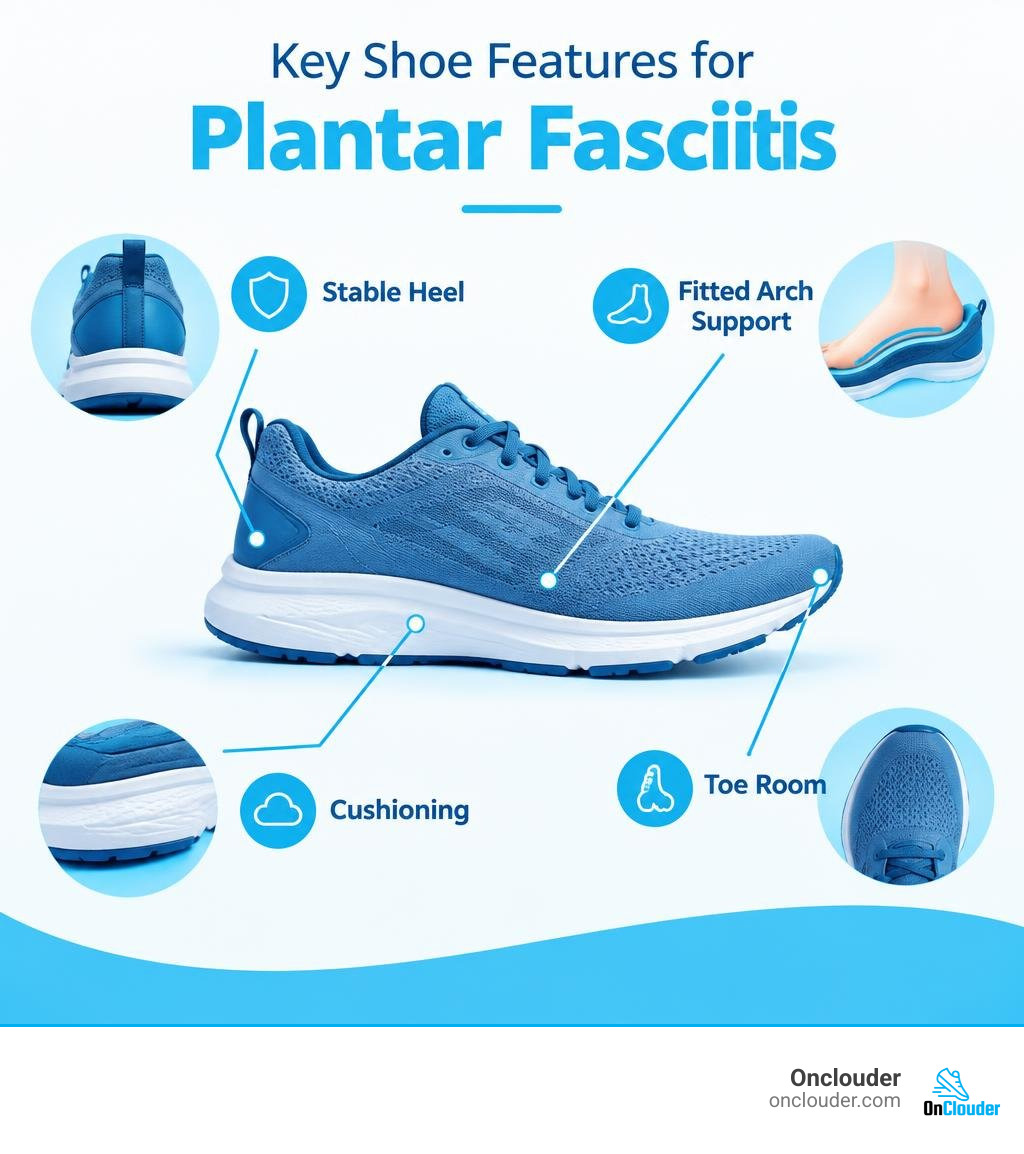
The best shoes for plantar fasciitis have a stable heel, arch support that fits your foot, cushioning, and enough room for your toes. A well-fitting walking or running shoe is a good place to start. For work or warm weather, look for the same support in a work shoe or a sandal with a contoured footbed. Avoid thin, flat soles and shoes that let your heel slip.
Heel pain can make your first steps in the morning feel like the hardest part of the day. The right shoes may ease strain while you walk or stand, but fit matters more than a label that says “plantar fasciitis.” This guide will help you choose by activity and spot when a pair is no longer doing its job.
Shoes for fasciitis plantar glossary:
- plantar fasciitis shoes
- arch support inserts plantar fasciitis
- best shoes to wear with plantar fasciitis
How to Choose Shoes for Plantar Fasciitis
Plantar fasciitis involves irritation of the thick band of tissue running along the bottom of the foot, from the heel toward the toes. Supportive footwear can help manage the forces placed on that tissue during walking and standing. It does not cure every cause of heel pain, and no single shoe works for everyone.
We suggest starting with an activity you do often, then checking for these features:
- Arch and midfoot support: The shoe should support your arch without digging into it. A stable midfoot can help limit excessive inward rolling, but the support should feel comfortable rather than forceful.
- A stable heel cup: A structured heel helps hold the foot in place. A cushioned, well-shaped heel area can also make each step feel less jarring.
- Cushioning and shock absorption: A cushioned midsole can soften impact, especially on hard floors. More cushioning is not automatically better if the shoe feels unstable.
- A secure fit and roomy toe box: Your heel should not slip, and your toes should have space to spread without rubbing or pressing against the shoe.
- A flexible forefoot and firmer middle: The shoe should bend near the toes, not fold easily through the arch. This balance supports the midfoot while allowing a natural step.
- Torsional stability: Hold the shoe at the heel and toe and gently twist it. Some resistance through the middle is useful; a shoe that twists like a towel may offer too little support.
- A comfortable heel-to-toe drop: This is the height difference between the heel and forefoot. It is not the same as the total heel height. A 2022 study reported a heel-height range of 5 to 40 mm as suitable for people with plantar fasciitis, but that broad range is not a prescription for every foot. Comfort, stability, and fit still matter.
People with flat feet may prefer a stable shoe that controls excessive inward rolling, while those with high arches may value cushioning and a supportive, contoured footbed. These are starting points, not rules: the best choice is the pair that fits your foot and eases your symptoms. Our guide to supportive footwear for plantar fasciitis goes into more detail, and additional shoe-selection advice is available.
What to look for in shoes for plantar fasciitis
Look for a footbed that follows your foot’s shape and supports the arch without creating a pressure point. The heel should feel held, and the shoe should feel steady under the middle of your foot. A contoured footbed may help distribute pressure more comfortably than a completely flat one.
Check that the forefoot bends where your toes bend, while the midfoot stays relatively firm. If the shoe feels comfortable only when you stand still, it may not be right for longer walks. When possible, try shoes in person and walk around in them. The fit should feel comfortable right away, without pinching, slipping, or needing to be “broken in” through pain.
How shoes for plantar fasciitis should fit
Try shoes near the end of the day, when feet may be slightly larger, and wear the socks you expect to use with them. Leave a little space in front of the longest toe, check that your heel stays in place, and make sure the widest part of your foot is not squeezed.
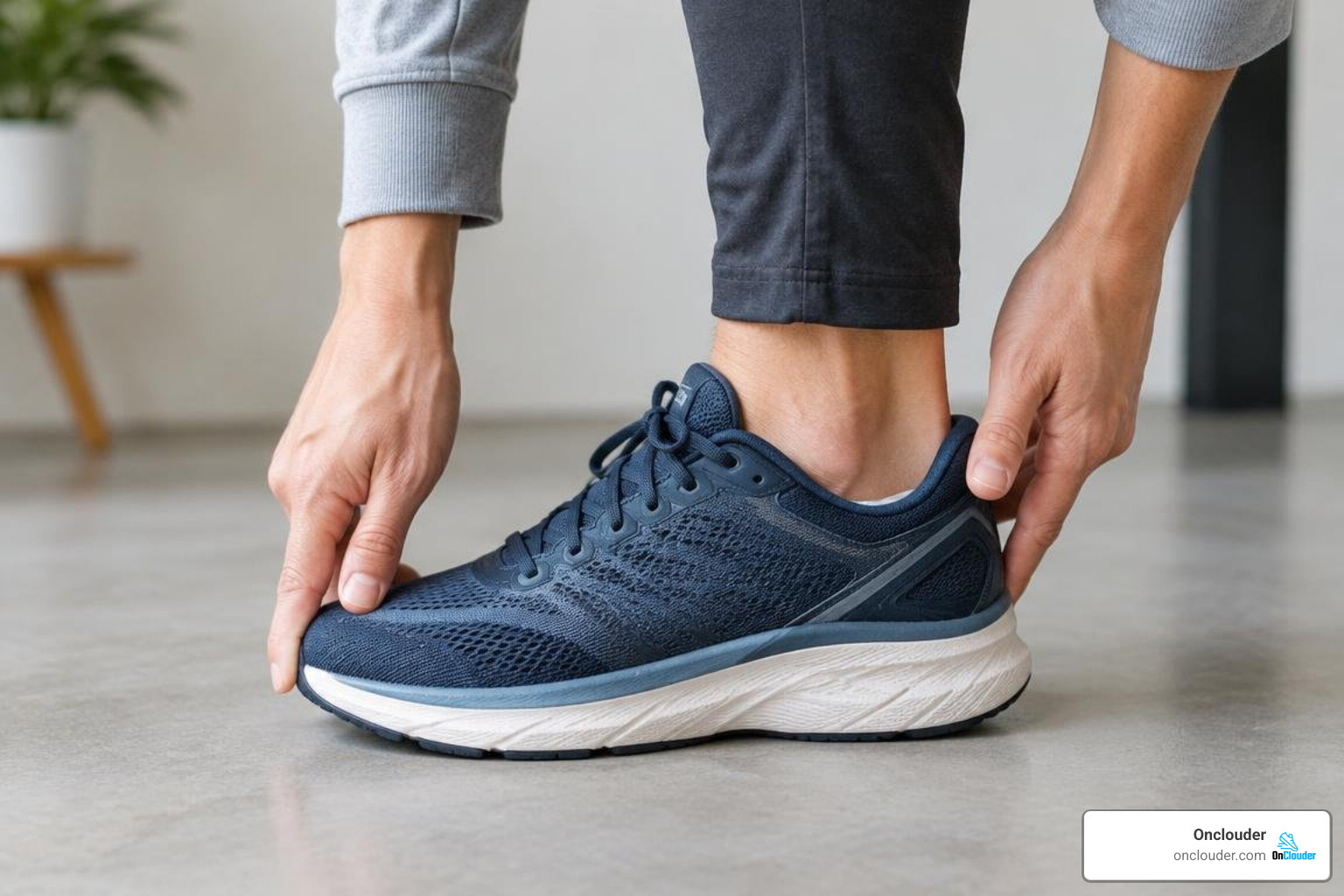
If your feet swell during the day, choose a fit that remains comfortable then. Once you have a new pair, wear it for shorter periods at first and increase use gradually. Stop if it causes sharp or increasing pain; discomfort is not a useful test of whether a shoe is “working.” Our supportive shoe checklist can help you assess a pair before committing.
Best Shoes for Plantar Fasciitis: A Shortlist by Need
The right style depends on where and how long you wear it. A walking shoe may work for errands, while a work shoe needs to stay comfortable through a long shift. For a quick overview, compare enclosed shoes and open styles by their stability, cushioning, fit, and the support they provide. No single model is the best choice for every person. Models and versions change, so check current specifications, review additional product examples, and try on the pair if possible.

Choose footwear for your actual routine, not just the label. Our guide to shoes that work well with plantar fasciitis covers more options.
Best walking shoes for plantar fasciitis
For everyday walks and errands, look for a cushioned midsole, a stable heel, secure lacing or another reliable closure, and enough room in the toe box. A rocker sole, which curves upward near the toe, can help some people move through a step comfortably. Others may find the shape awkward, so try it before relying on it for a long walk.
If you walk frequently, rotate between suitable pairs when practical and pay attention to changes in comfort. A shoe that once felt supportive may become less effective as its cushioning wears down.
Best work and dress shoes for plantar fasciitis
For long shifts on hard floors, prioritize a stable base, cushioning, arch support, and a secure fit. If your job requires a dressier style, look for a supportive footbed, a low and stable heel, and a toe box that does not narrow sharply. A modest wedge may feel steadier than a high, narrow heel, but it still needs to fit comfortably.
Avoid choosing a pair based on appearance alone if you will stand in it for hours. If a work shoe has a removable footbed, you may be able to use an insert that suits you, provided there is enough room. See our guide to work shoes for plantar fasciitis for more work-focused selection advice.
Best sandals and hiking shoes for plantar fasciitis
Supportive sandals should have a contoured footbed, a stable base, and straps that keep your foot from sliding around. Recovery slides can be a comfortable option for short periods around the house or after activity, but many are not designed for long walks or uneven ground. Brand claims about impact absorption are specific to the brand and product, not a guarantee of pain relief.
For hiking, look for a supportive midsole, a secure fit, a grippy outsole, and enough ankle coverage for the terrain and your needs. Break them in with short walks before a longer hike. Thin flip-flops and flat sandals usually offer less support and are better limited to brief use, such as at a pool.
Our hiking boot guide for plantar fasciitis explains what to check for outdoor use.
Insoles, Wear Habits, and Other Relief
An over-the-counter insole can add cushioning or arch support to a shoe you already own. A custom orthotic is made to fit your foot and may be recommended by a clinician when an off-the-shelf option is not suitable. Neither works well if it makes the shoe too tight or pushes your arch uncomfortably.
Before buying an insert, check whether the shoe has a removable footbed and whether the replacement will leave enough room for your toes. Introduce a new insole gradually and stop using it if it causes new or worsening pain. We explain the options in our guides to insoles for plantar fasciitis and shoe inserts versus custom orthotics.
Footwear is one part of managing symptoms. Gentle calf, soleus, and plantar fascia stretches may help maintain flexibility. For a calf stretch, stand facing a wall with one leg behind you, keep the back heel down, and lean forward gently. To target the soleus, bend the back knee slightly while keeping the heel down. For a foot stretch, sit down, cross one foot over the other knee, and gently draw the toes back until you feel a stretch along the arch. Avoid bouncing, and stop if you feel sharp pain.
You can also roll a frozen water bottle under the arch while seated for a few minutes. Some people benefit from a night splint that holds the foot in a gentle stretch during sleep. Increase walking or exercise gradually rather than making a sudden jump in activity. A clinician can help assess persistent symptoms and suggest a plan tailored to you.
How long do plantar fasciitis shoes last?
With regular use, supportive shoes may last around 12 to 18 months. Frequent use, long shifts, running, body weight, walking surfaces, and shoe construction can shorten that period; some heavily used shoes may lose support in about six months.
Replace shoes based on their condition, not the calendar alone. Watch for compressed cushioning, worn tread, uneven outsole wear, a tilted heel, or new discomfort in a pair that used to feel good. A shoe can look fine on top while its midsole has lost resilience.
Do I need to wear supportive shoes all the time?
You do not necessarily need to wear supportive shoes every minute, but many people find consistent support helpful during weight-bearing activities such as walking, exercise, and long periods of standing. Indoor footwear matters too: hard floors, barefoot walking, or thin slippers may aggravate symptoms for some people.
Use symptoms as a guide. If your heel hurts after walking barefoot around the house, try supportive indoor shoes or slides. If a particular pair worsens pain, stop wearing it and reassess the fit and support.
Can insoles help, and what shoes should I avoid?
Insoles can help by adding cushioning or support, especially when they fit the shoe and your foot comfortably. They do not replace a well-fitting shoe, and a shoe with an appropriate built-in footbed may work well without an extra insert.
Avoid or limit shoes with thin, unsupportive soles, very flat footbeds, narrow toe boxes, or unstable high heels. Many flip-flops lack arch support and let the foot move around; save them for brief wear rather than long walks. Worn-out shoes and barefoot walking on hard surfaces may also be uncomfortable during a flare. If pain persists, becomes severe, or keeps worsening despite changes in footwear and activity, seek advice from a healthcare professional.
Conclusion
Start with fit, stability, cushioning, and support that feels right for your foot and routine. Wear supportive shoes for the activities that trigger symptoms, check them regularly for wear, and replace them when cushioning or stability breaks down. Recovery can take time, and shoes are one part of care rather than a guaranteed quick fix.
We create practical footwear guides and buying advice to help you compare options for your needs. If you spend long hours on your feet, compare supportive work-shoe options as a next step.