Choosing Arch Support Insoles for Plantar Fasciitis
For plantar fasciitis, start with an insole that supports your arch and cushions your heel. Choose a shape that fits your foot and a thickness that leaves room in your shoe. An insole that is too soft may flatten under your weight; one that presses painfully into your arch is not the right fit.
Plantar fasciitis is irritation of the band of tissue under your foot. It often causes sharp heel pain with your first steps in the morning. Arch support can help spread pressure across the foot and reduce strain on that tissue, but the best choice depends on your arch, shoes, and daily activity.
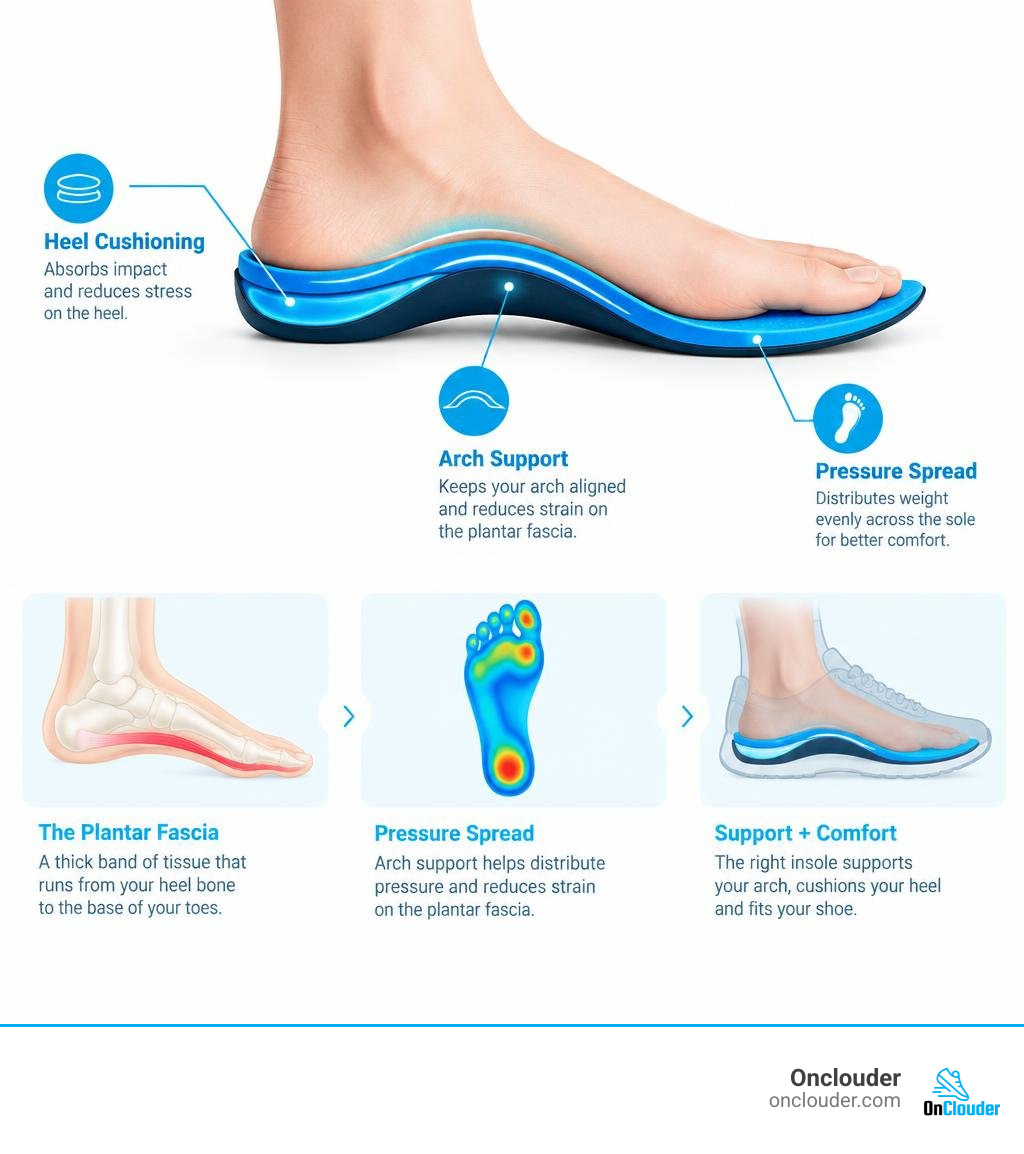
Understanding Biomechanics and Shoe Insoles Arch Support Plantar Fasciitis
When you take a step, your foot absorbs up to several times your body weight in ground reaction force. The plantar fascia—a thick, fibrous band of connective tissue running from your heel bone (calcaneus) to the base of your toes—acts like a bowstring. It stretches and tensions to maintain the structural integrity of your arch.
When that bowstring is repeatedly overstretched, microscopic tears develop near its insertion point at the heel. This micro-trauma triggers localized inflammation, resulting in that dreaded morning heel pain.
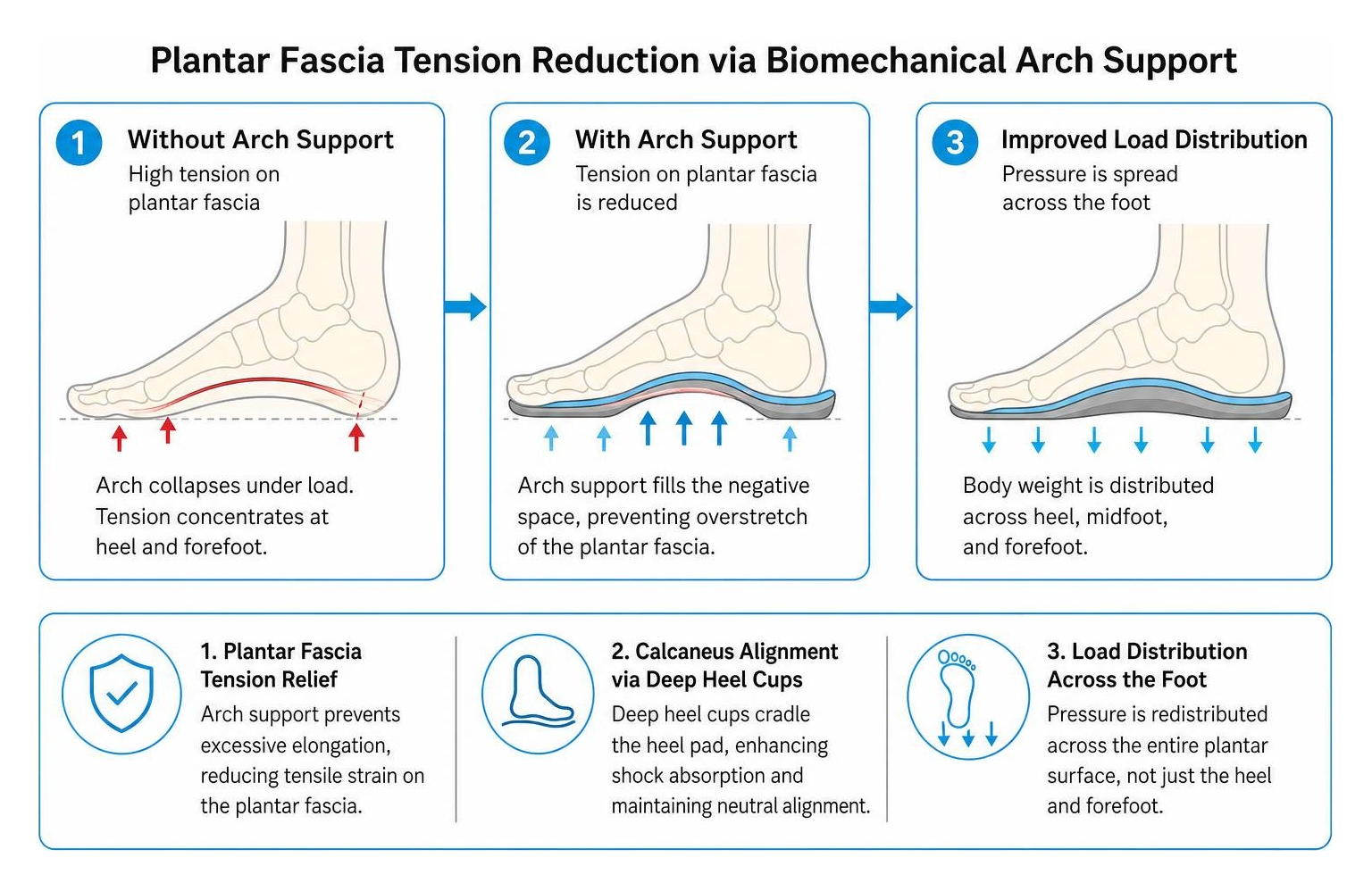
Finding the right shoe insoles arch support plantar fasciitis solution works by modifying the underlying mechanical forces that aggravate this tissue:
- Plantar Fascia Tension Relief: By physically filling the negative space beneath your arch, a structured orthotic prevents the plantar fascia from elongating excessively under load. Proven biomechanical arch support principles show that stabilizing the arch bridge significantly reduces tensile strain on the plantar fascia band.
- Calcaneus Alignment via Deep Heel Cups: A flat shoe bed allows the fatty pad under your heel to spread out thin upon impact. A deep, rigid heel cup cradles this natural fat pad directly beneath the calcaneus, maximizing natural shock absorption while locking the rearfoot in a neutral alignment.
- Load Distribution Across the Entire Plantar Surface: Without arch contact, your entire body weight concentrates over two isolated zones: the heel and the ball of the foot (metatarsal heads). Contoured orthotics redistribute downward pressure evenly across the midfoot.
- Kinetic Chain Realignment: Collapsed arches cause inward tibial rotation, placing torque on the knees, hips, and lower back. Correcting foot posture stabilizes your entire kinetic chain.
When evaluating over-the-counter options, understanding the differences when comparing shoe inserts to custom orthotics helps determine if medical-grade retail inserts provide enough correction. Even the highest-rated insole cannot overcome a flimsy shoe base, making selecting shoes with good arch support a critical partner step in lasting recovery.
Matching Shoe Insoles Arch Support Plantar Fasciitis to Flat, Normal, and High Arches
No two feet share the exact same structural curvature. Matching the arch profile of your insole to your anatomical arch height is essential to prevent pressure hotspots or inadequate support.
- Flat Feet (Pes Planus): Low or fallen arches tend to overpronate, rolling inward and stretching the plantar fascia taut with every stride. Flat feet require structured orthotic inserts for flat feet featuring firm medial arch posts and deep rearfoot cradles to halt inward ankle roll.
- Neutral / Standard Arches: Normal arches flex dynamically during gait but still suffer from repetitive strain on hard floors. They thrive with balanced, semi-rigid insoles that supply continuous contouring alongside dual-density impact cushioning.
- High Arches (Pes Cavus): High arches create minimal contact with the ground, concentrating harsh impact forces strictly at the heel and forefoot. These feet demand targeted high arch support options featuring elevated arch bridges and thick shock-absorbing layers to bridge the gap and dampen impact shock.
Beyond Heel Pain: Relief for Achilles Tendonitis, Heel Spurs, and Back Alignment
Because the human body functions as a continuous kinetic chain, foot instability travels upward. Plantar fasciitis rarely travels alone; it often coexists with calcaneal heel spurs and Achilles tendonitis. The plantar fascia and Achilles tendon anchor into opposing sides of the calcaneus, meaning tension in one structure directly increases strain on the other.
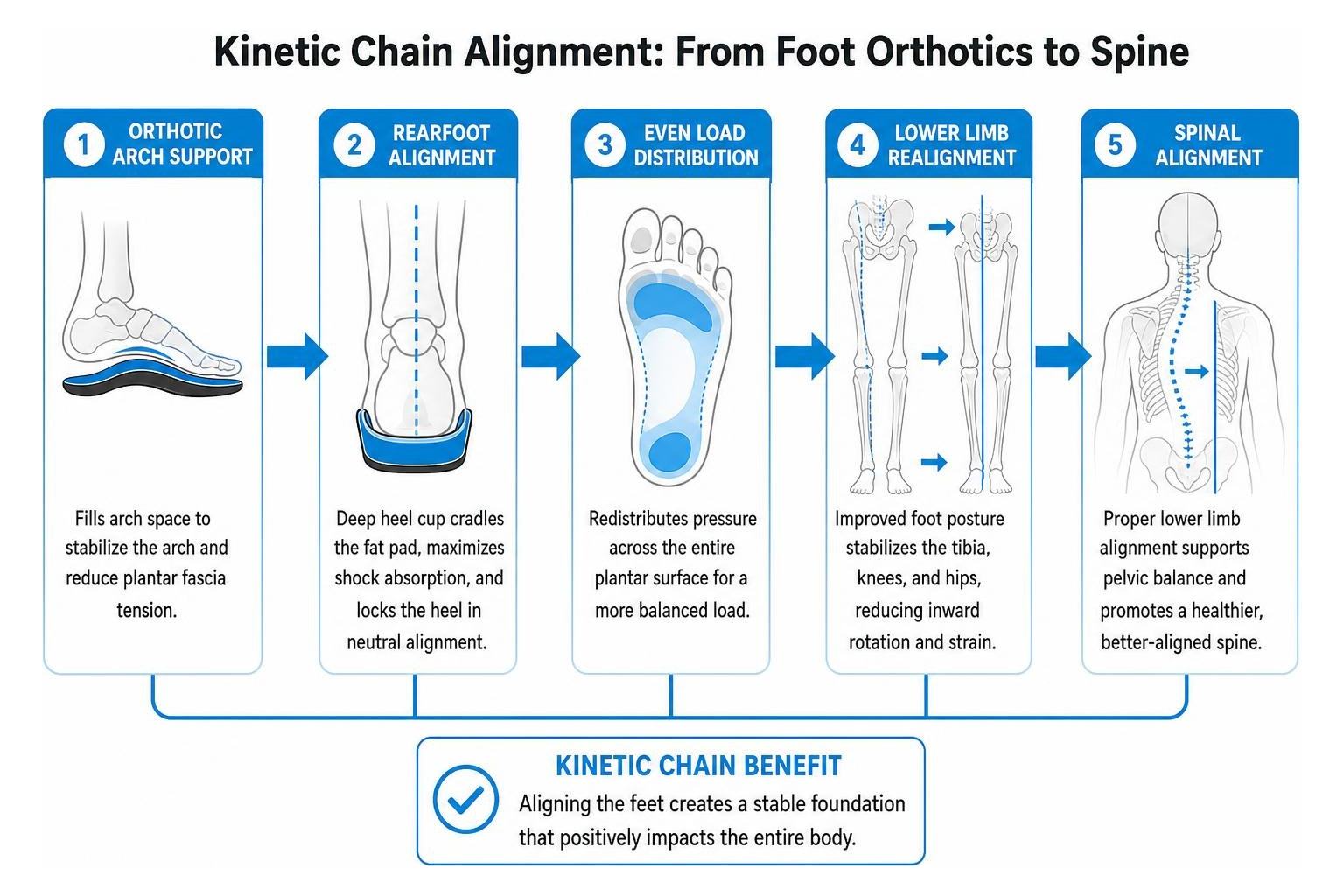
Orthotic insoles with deep heel cups and slight heel elevation shorten the active pull on the Achilles tendon, easing calf tightness and reducing tension on calcaneal spurs. Simultaneously, correcting overpronation aligns the tibia and patella, reducing uneven knee joint tracking and mitigating anterior pelvic tilt. Pairing these inserts with proven supportive footwear for lower-body alignment helps relieve compensatory lower back and hip strain.
Insole Construction: Materials and Support Profiles Compared
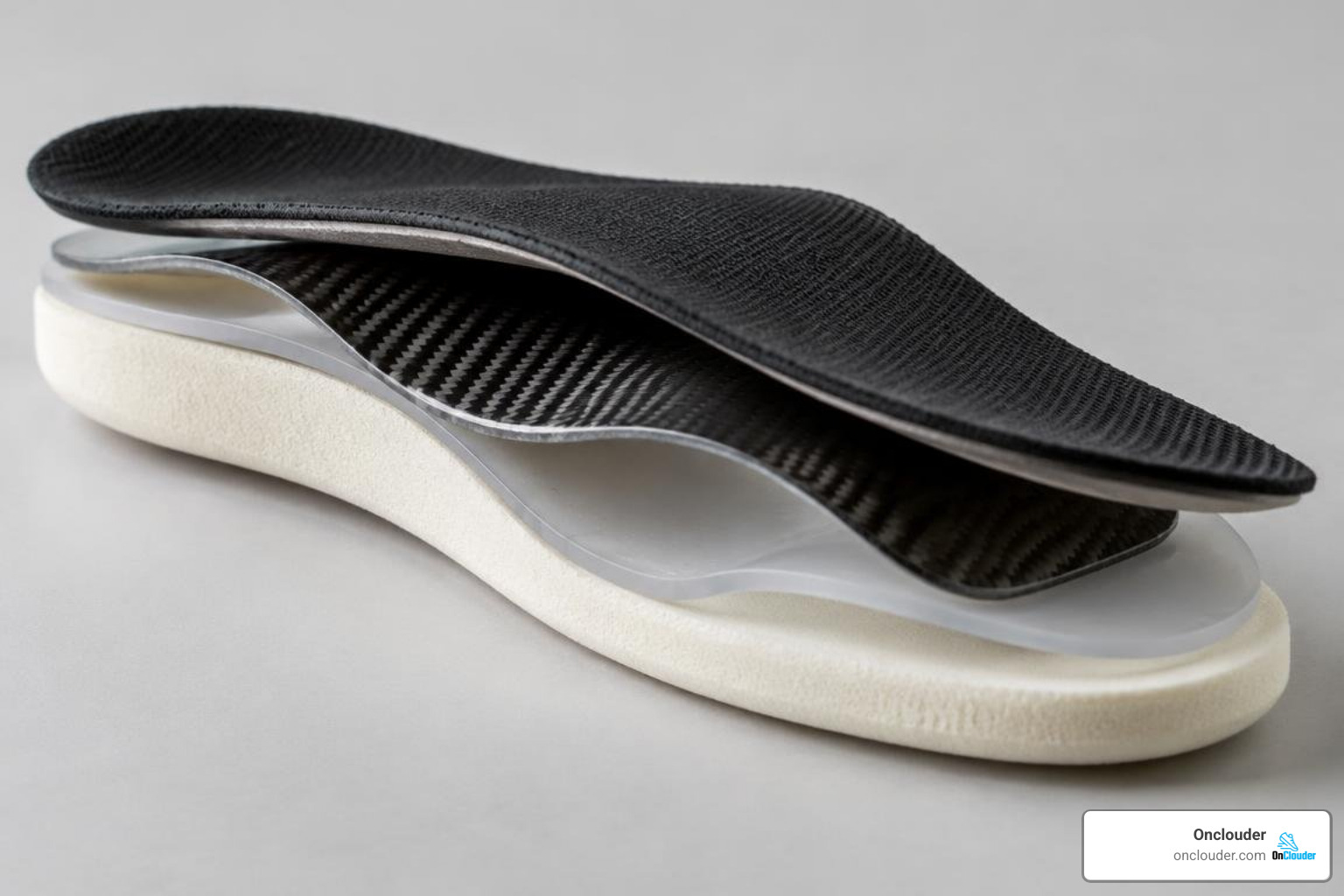
An orthotic insole is an engineered sandwich of specialized materials. Each layer serves a specific mechanical purpose:
- High-Density EVA (Ethylene-Vinyl Acetate): The standard workhorse of orthotic bases. High-density EVA delivers resilient, long-lasting shock absorption without bottoming out under heavy daily pressure.
- Polypropylene Shells: Semi-rigid thermoplastic composite bridges that flex slightly under dynamic load while providing dependable arch stability.
- Carbon Fiber Stabilizers: High-tech composite layers engineered for maximum rigidity and high strength-to-weight ratios. Advanced rigid carbon fiber arch technology resists torsion and bending, making it ideal for high-mileage athletes and heavy-duty demands.
- Memory Foam & Open-Cell Polyurethane: Top-layer materials designed to mold gently to the unique contours of the plantar surface, minimizing friction and relieving sensitive pressure points.
- Antimicrobial Top Fabrics: Advanced breathable moisture-wicking top cloths regulate shoe temperature, pull sweat away from the foot, and combat odor-causing bacteria during long shifts.
Comparing Budget vs. Premium Shoe Insoles Arch Support Plantar Fasciitis
Many people wonder if a $15 drugstore insert can deliver the same relief as a $50 to $70 podiatrist-grade orthotic. The difference lies in structural integrity, material density, and biomechanical engineering.
| Feature / Metric | Budget Foam Inserts ($12–$20) | Premium Orthotic Insoles ($40–$70) |
|---|---|---|
| Arch Support Structure | Flat, die-cut soft foam or thin gel | Molded polypropylene or carbon fiber composite cradle |
| Heel Stabilization | Shallow or non-existent heel cup | Deep (15mm–25mm) anatomical heel cup |
| Weight-Bearing Limit | Compresses fully under moderate pressure | Engineered for heavy-duty high-weight support (up to 300+ lbs) |
| Deformation Resistance | Low; flattens permanently within 4–8 weeks | High; maintains arch geometry for 6–12 months |
| Target Mechanism | General sensory softness | Targeted biomechanical fascia offloading |
| Medical Recognition | Rare | Frequently APMA-accepted or podiatrist-recommended |
Budget insoles offer temporary plushness, but their soft foam compresses completely under body weight, leaving the plantar fascia unsupported. Premium orthotics maintain their rigid geometry to stop ligament overstretching.
Choosing Between Rigid Arch Support and Plush Shock-Absorbing Cushioning
A common dilemma is deciding between rigid arch shells and plush, pillowy cushions.
- Rigid Arch Support: Best for active overpronators, severe morning heel pain, and structural foot collapse. Rigid shells physically prevent the arch from sagging, immobilizing the plantar fascia so micro-tears can heal.
- Plush Shock-Absorbing Cushioning: Best for rigid high arches, heel pad atrophy, and sensitive metatarsal heads. Plush materials dampen ground vibration on impact.
If you are unsure where your feet land on the spectrum, explore our guide on finding the right balance for foot pain to match support rigidity to your specific gait pattern.
Best Insole Strategies for Standing All Day on Hard Surfaces
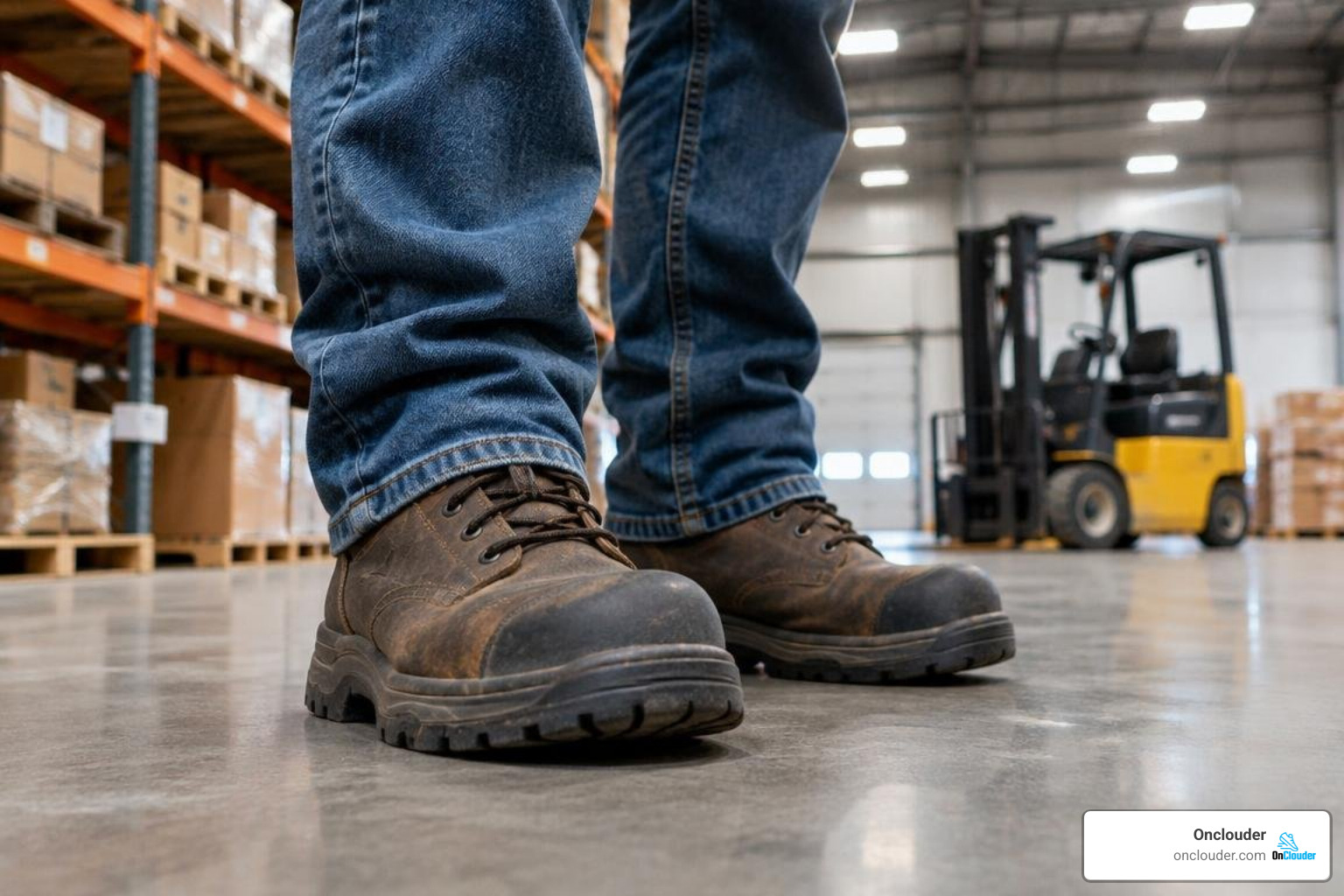
Standing on unyielding concrete or tile for 8 to 12 hours pushes the feet to their physical limits. Unlike walking, where foot muscles contract and relax dynamically to pump blood, static standing causes continuous compression of the heel fat pad and constant low-grade tension on the plantar fascia.
To combat occupational foot strain in warehouses, retail floors, and hospitals:
- Prioritize Dual-Density Foam Bases: Choose insoles engineered for long standing shifts that combine a rigid polymer support cradle with an energetic rebound foam top layer (such as PU or specialized EVA).
- Account for Shoe Volume: Orthotics take up vertical space. Ensure your work boots have removable factory liners so high-volume orthotics do not crush your instep or pinch your toes.
- Match with Supportive Work Shoes: An insole works best inside a stable shoe. Pair your inserts with dedicated work footwear for plantar fasciitis featuring stiff outsoles and wide, slip-resistant base platforms.
- Target Heel Pad Protection: Look for inserts featuring gel or specialized open-cell foam shock pads embedded directly beneath the center of the heel cup to disperse vertical strikes on unyielding concrete.
How to Properly Fit, Trim, and Break In Your Orthotic Insoles
Inserting a new pair of orthotic insoles requires a few simple steps to ensure proper alignment and comfort.
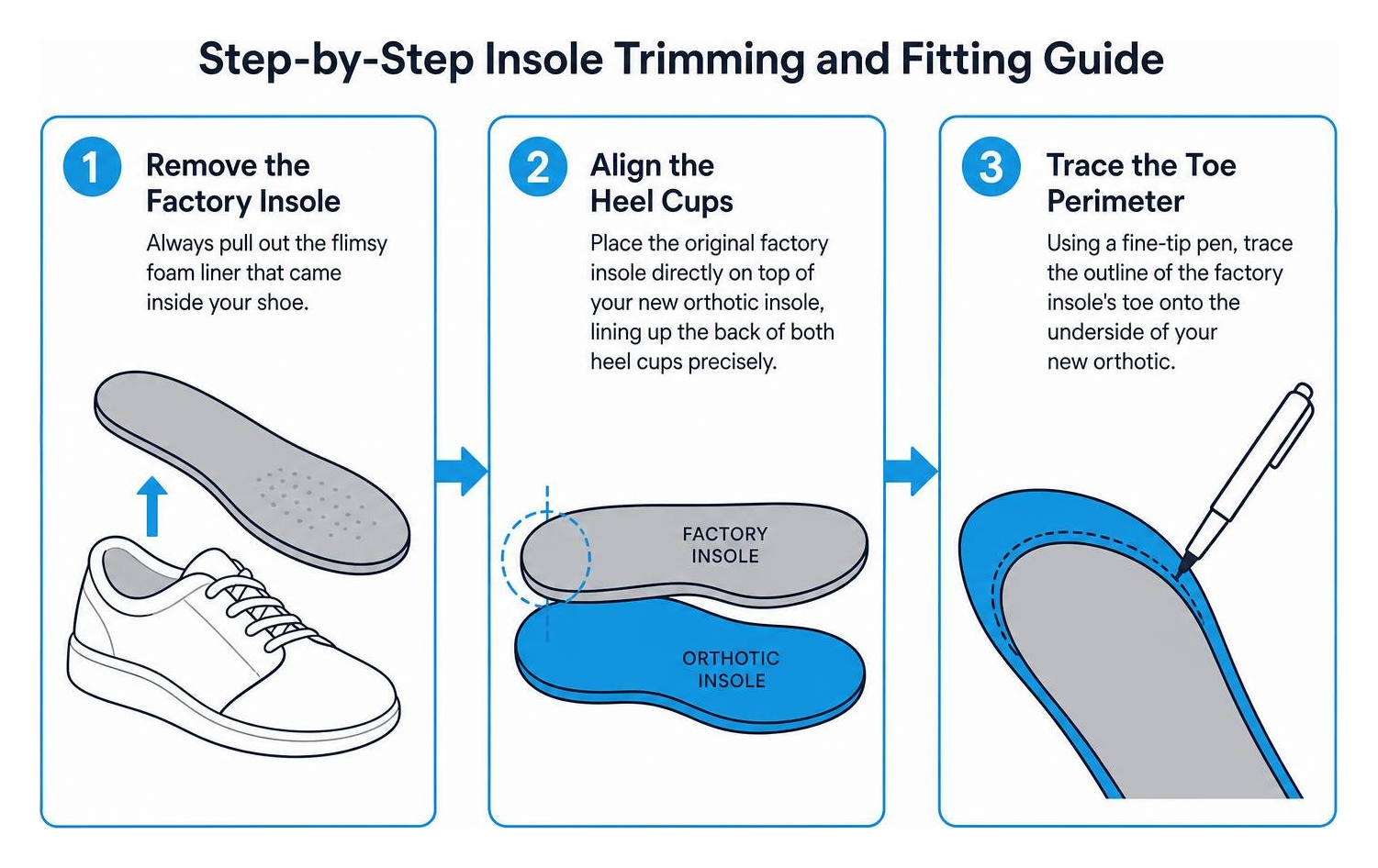
Step-by-Step Fitting and Trimming Guide
- Remove the Factory Insole: Always pull out the flimsy foam liner that came inside your shoe. Layering an orthotic on top of an existing insole crowds the toe box, elevates your heel too high, and alters shoe fit.
- Align the Heel Cups: Place the original factory insole directly on top of your new orthotic insole, lining up the back of both heel cups precisely.
- Trace the Toe Perimeter: Using a fine-tip pen, trace the outline of the factory insole’s toe onto the underside of your new orthotic.
- Trim with Heavy-Duty Scissors: Carefully cut along the inside of your traced line. Trim conservatively—it is easy to trim away extra material later, but you cannot replace over-trimmed edges!
- Test the Fit Inside the Shoe: Slide the trimmed insole into your shoe, fabric side up. The insole should sit flat from heel to toe without buckling, bunching, or curling up at the edges.
For a deeper dive into sizing nuances and footwear compatibility, refer to our fundamental arch insert fitting guide.
Managing the Adaptation Period
A firm orthotic repositions muscles and ligaments that may have functioned in a collapsed state for years. Adapting to this new alignment takes time:
- Days 1–2: Wear the insoles for 1 to 2 hours during light, low-impact daily activities.
- Days 3–4: Increase wear time to 3 to 4 hours.
- Days 5–7: Progress to 6 to 8 hours, introducing them to full work shifts or longer walks.
- Week 2: You should now be fully adapted for all-day wear and athletic activities.
Frequently Asked Questions About Plantar Fasciitis Insoles
How long do orthotic insoles last before needing replacement?
Quality over-the-counter orthotics generally last between 6 and 12 months with daily use. Replace your insoles sooner if you notice visible cracking in the composite arch shell, permanent compression of the top cushioning layer, or a gradual return of morning heel tenderness.
How long does the break-in period take for firm arch support?
Most people adapt within 3 to 7 days, though firm carbon-fiber or rigid polypropylene shells can require up to two full weeks of progressive wear. Mild muscular awareness is normal during the first few days, but sharp, pinching pain indicates an incorrect arch height or contour.
Can over-the-counter arch support insoles replace custom orthotics?
For mild-to-moderate plantar fasciitis, high-quality over-the-counter orthotic insoles provide exceptional relief and are often recommended as a first-line treatment by podiatrists. However, individuals with severe rigid flatfoot deformities, significant leg length discrepancies, or active diabetic neuropathy should seek custom-molded orthotics from a medical professional.
Conclusion
Plantar fasciitis can make every morning step feel like walking on broken glass, but consistent biomechanical arch support changes the equation. By pairing a rigid, contoured arch with a stabilizing deep heel cup, you offload stress from the plantar fascia and give your inflamed tissues the rest they need to repair.
At Onclouder, we test and review supportive footwear solutions daily to help you stay active and pain-free. Take control of your daily comfort and explore our complete overview of the best arch support insoles for total foot relief to find the ideal orthotic upgrade for your favorite shoes.