How to Choose Supportive Shoes for Plantar Fasciitis
Start with a secure heel, arch support that fits your foot, a cushioned but stable sole, and enough room for your toes. For walking or running, consider models such as the HOKA Bondi or Brooks Ghost. For home, try contoured sandals or recovery slides from Vionic or OOFOS. The best pair is the one that feels supportive on your feet without adding pain.
Heel pain during your first steps in the morning can make even a short walk feel hard. This guide helps you check shoe features, compare picks for daily activities, and spot styles to avoid, including flimsy flip-flops and worn-out flats.
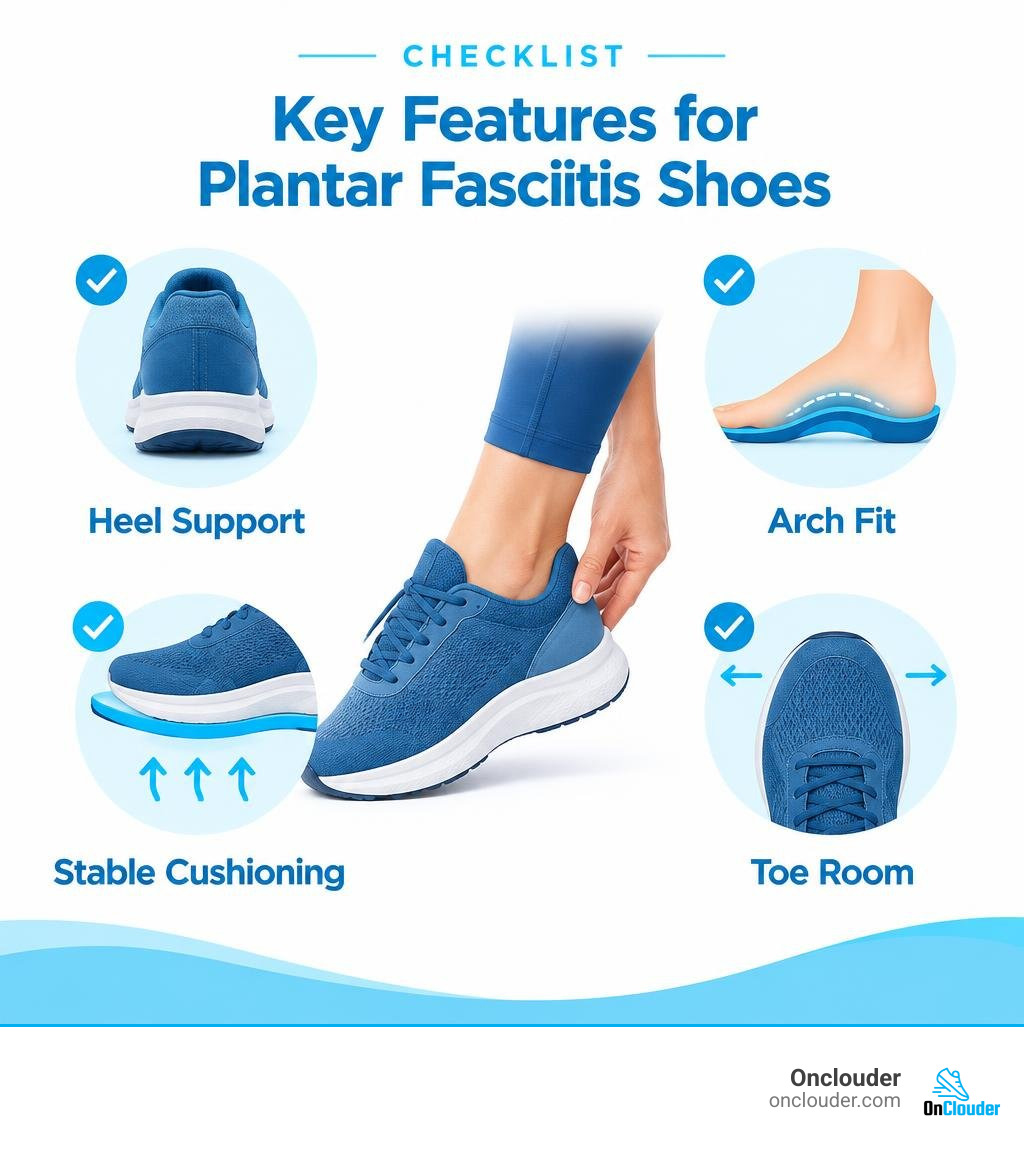
Quick supportive shoes for plantar fasciitis terms:
- shoes that are best for plantar fasciitis
- shoes with good arch support for plantar fasciitis
- best shoe brands for plantar fasciitis
Key Anatomy: Why You Need Supportive Shoes for Plantar Fasciitis
About 10% of adults experience plantar fasciitis at some point in their lives, making it the leading cause of adult heel pain. Most cases occur between ages 40 and 60, but runners, service workers, and active walkers face significant risk regardless of age.
When you stand, walk, or run, your foot absorbs ground reaction forces that exceed your total body weight. Without adequate mechanical support, the repetitive load inflames the thick tissue band spanning the bottom of your foot. Proper footwear acts as a shock attenuation system that reduces tissue strain and stabilizes biomechanical motion.
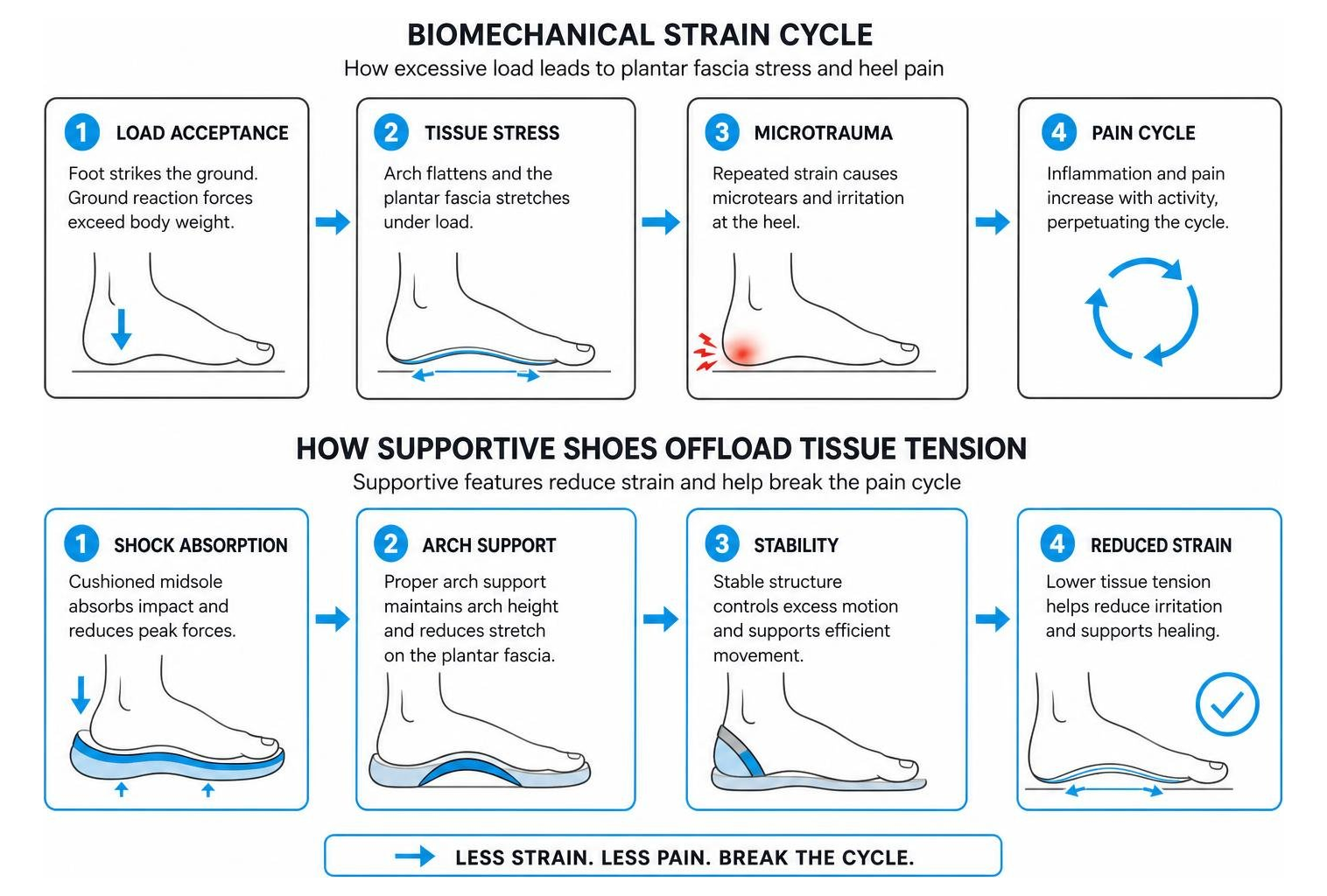
Plantar Fascia Strain and Heel Pain Mechanics
The plantar fascia originates at your medial calcaneus (the inner bottom edge of your heel bone) and extends across your midfoot to insert into your toe bases. It acts like a bowstring to maintain your arch height and stiffen your foot during push-off via the windlass mechanism.
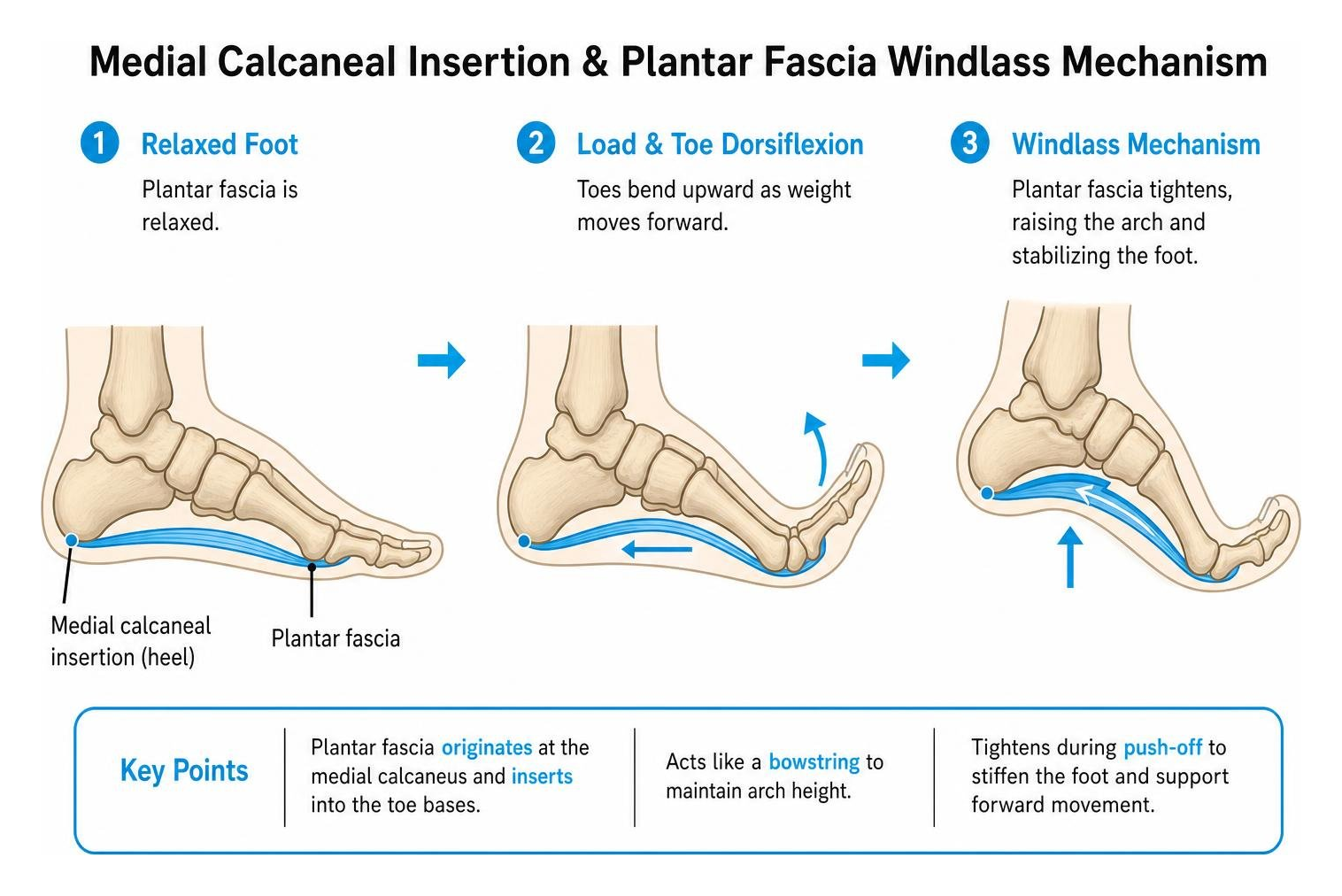
When you walk without proper footwear, excessive pronation or sudden heavy impact creates microtears near that heel bone attachment. Overnight, the body tries to mend these tears while your foot rests in a shortened position.
The moment you stand up out of bed, your body weight abruptly forces the fascia to stretch, re-tearing healing fibers and triggering that telltale morning heel pain. Choosing shoes that are best for plantar fasciitis provides the structured foundation needed to prevent this cycle of re-injury.
Arch Support, Heel Drop, and Cushioning Impact
Footwear geometry directly dictates fascial stress:
- Heel Height & Drop: Research shows an elevated heel height of 5 to 40 mm is optimal for relieving tension on the Achilles tendon and plantar fascia. A moderate drop reduces the stretch placed on calf musculature during gait.
- Structured Arch Contours: Firm arch structures prevent collapse of the medial longitudinal arch, dispersing ground contact pressure across the entire sole rather than concentrating it at the heel.
- Midsole Foams: Modern foams (such as nitrogen-infused EVA, Supercritical EVA, or dual-density polymers) absorb shock at initial heel strike.
- Rocker Bottom Soles: Curved rocker profiles (such as HOKA’s Meta-Rocker) gently roll the foot forward from heel to toe, minimizing the bend of the forefoot joints and offloading fascial strain during toe-off.
Selecting shoes with good arch support for plantar fasciitis balances these four elements to offload overworked connective tissue.
The Ultimate Checklist for Evaluating Plantar Fasciitis Footwear
Not all cushioned sneakers provide real therapeutic benefits. We use a standardized checklist during our hands-on footwear evaluations to determine whether a shoe actively shields the plantar fascia.
| Evaluation Metric | Supportive Shoe Feature | Unsupportive Shoe Hazard |
|---|---|---|
| Heel Counter | Rigid, deep cup locking calcaneus | Soft, collapsible heel causing rearfoot wobble |
| Midsole Torsion | Resists twisting along the arch | Twists like a dish towel, zero arch integrity |
| Forefoot Flexion | Bends only at the natural toe break | Folds entirely in half across the midfoot |
| Heel-to-Toe Drop | 5 mm to 12 mm moderate elevation | 0 mm drop or extreme stiletto elevations |
| Outsole Platform | Broad base with firm perimeter stability | Narrow waist that lets the arch spill inward |
| Toe Box Volume | Anatomical room for natural toe splay | Pointed, constrictive boxes crowding metatarsals |
Essential Features in Supportive Shoes for Plantar Fasciitis
When analyzing footwear, podiatrists emphasize several critical criteria:
- Deep Heel Cups: A contoured heel cup cradles the foot’s natural fatty heel pad, concentrating it directly beneath the calcaneus to maximize your body’s built-in cushioning.
- Torsional Rigidity: A stiff shank or dense midfoot structure stops the shoe from twisting during uneven steps, keeping your foot in a neutral alignment.
- Targeted Pronation Control: Features like medial sidewalls, asymmetrical heel clips, or guide rails gently align your step without aggressive, uncomfortable wedging.
- Podiatric Endorsement: Shoes bearing credentials like the American Podiatric Medical Association (APMA) Seal of Acceptance have been evaluated by foot and ankle specialists to confirm they promote natural foot health.
You can explore our top-tested recommendations in our guide on the 10 best support shoes for plantar fasciitis.
Testing Footwear Rigidity and Heel Cup Stability
You do not need specialized laboratory tools to evaluate a shoe. You can perform three quick physical tests right in your living room:
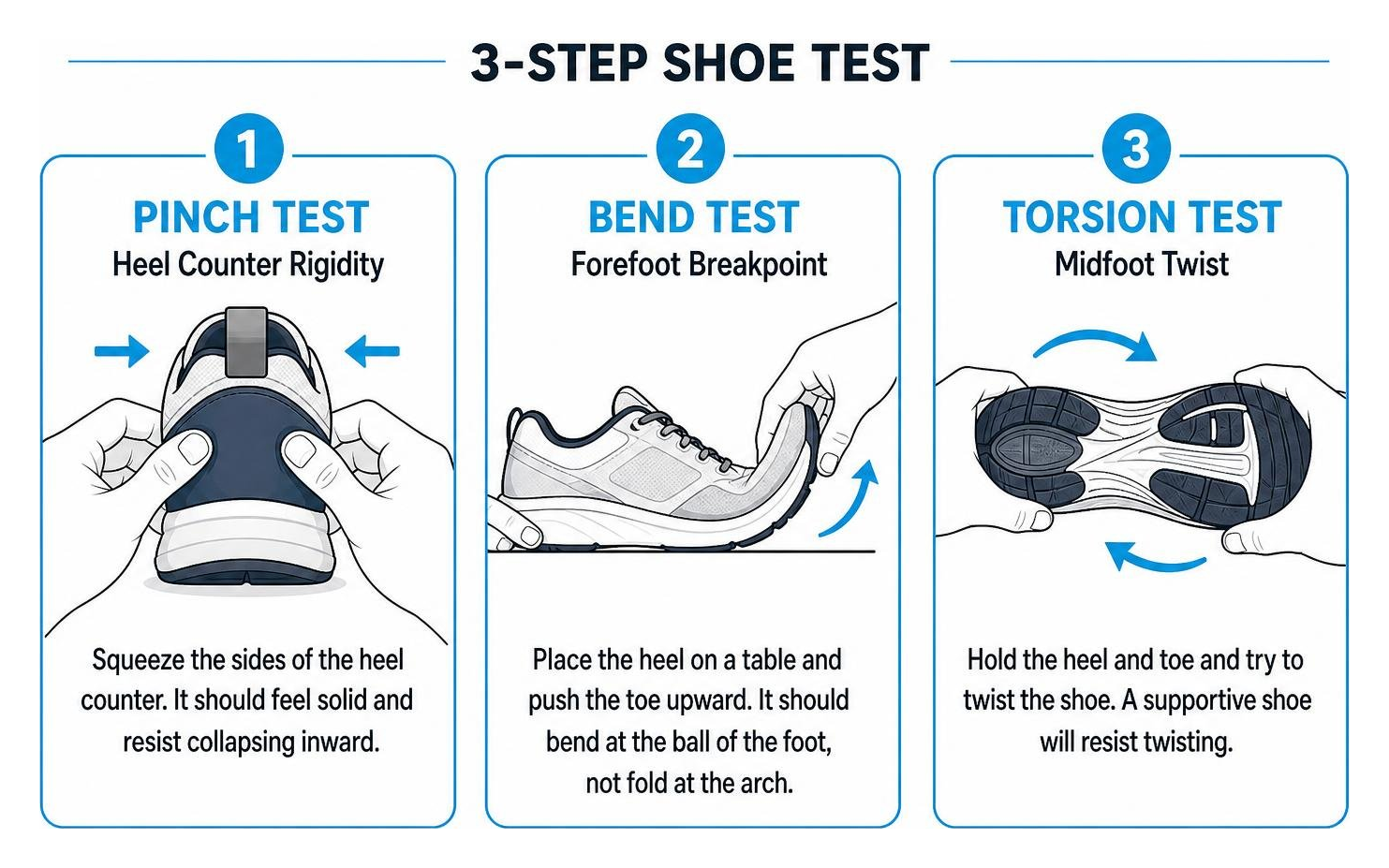
- The Pinch Test (Heel Counter Rigidity): Grab the back of the shoe by the heel collar. Squeeze the sides of the heel counter firmly between your thumb and index finger. It should feel solid and resist collapsing inward.
- The Bend Test (Forefoot Breakpoint): Place the heel on a table and push the toe upward toward the heel. The shoe should bend smoothly across the ball of the foot (where your toes flex). If it buckles directly under the middle of the arch, reject it.
- The Torsion Test (Midfoot Twist): Hold the shoe with one hand on the heel and the other on the toe box. Attempt to wring the shoe out like a wet cloth. A supportive model will resist twisting along its central axis.
For more details on evaluating stability, review our podiatrist-approved best shoes for plantar fasciitis breakdown.
Styles and Footwear Designs to Avoid Completely
Steer clear of these common shoe types that worsen heel inflammation:
- Flimsy, Flat Flip-Flops: Completely flat soles offer zero arch support, and your toes are forced to grip the front strap, increasing fascial tension with every stride.
- Paper-Thin Ballet Flats: These lack midsole cushioning, sending sharp impact shocks directly into your heel bone.
- Extreme High Heels: While high heels shorten the calf in the short term, steep inclines place immense pressure on the ball of the foot and strain the foot’s supporting structures.
- Unpadded Minimalist / Barefoot Shoes: If your plantar fascia is actively inflamed, removing all cushioning and arch contouring places maximum tensile load on the irritated tissue.
Best Footwear Picks and Categories for Daily Wear and Recovery

Top-Rated Athletic and Running Footwear
Running and fitness walking generate substantial impact forces, making shock-absorbing midsoles essential:
- HOKA Clifton & Bondi Series: Celebrated for their plush EVA cushioning and Meta-Rocker geometries that smooth transitions from heel-strike to toe-off.
- Brooks Ghost & Adrenaline GTS: The Adrenaline uses GuideRails technology to keep excess inward foot rolling in check, while DNA Loft foam delivers balanced cushioning.
- ASICS Gel-Kayano & GT-2000: These incorporate rearfoot PureGEL alongside structured medial support systems to reduce fascial pull during high-mileage runs.
- On Cloudrunner: Uses CloudTec cushioning combined with an asymmetrical heel clip to stabilize landings without excessive bulk.
Explore our comprehensive analysis of the best shoe brands for plantar fasciitis to find the right athletic match for your foot profile.
Occupational and All-Day Standing Footwear
Healthcare workers, teachers, retail staff, and hospitality employees often log 8 to 12 hours on rigid concrete floors:
- Dansko Professional Clog: Features a sturdy rocker bottom, contoured polyurethane midsole, and wide heel base that reduces forefoot stress during long shifts.
- Orthofeet Edgewater & Kita: Built with anatomical arch boosters, generous toe room, and hands-free slip-on designs that ease pressure on tired joints.
- Crocs Specialist II & Bistro Pro LiteRide: Enclosed-heel occupational models that combine slip-resistant outsoles with thicker footbeds than standard lifestyle clogs.
Review our detailed best work shoes plantar fasciitis guide for footwear built to handle long hours on hard floors.
Supportive Shoes for Plantar Fasciitis at Home and Recovery Sandals
Walking barefoot on hardwood or tile floors can quickly undo the benefits of your daytime sneakers. Using dedicated indoor footwear maintains consistent support:
- OOFOS OOahh Recovery Slides: Proprietary OOfoam absorbs roughly 37% more impact than standard EVA foams, taking pressure off sensitive heel attachments while you move around the house.
- Vionic Tide & Restore Sandals: Engineered with a biomechanically contoured arch and a deep heel seat to align your stride, even in an open-toe profile.
- Birkenstock Classic Footbeds (Arizona/Boston): Use natural cork-latex footbeds that mold to your foot over time, providing firm, structured arch distribution.
Check out our top podiatrist picks for plantar fasciitis flip flops to maintain steady arch support in warm weather.
Complementary Treatments, Orthotics, and Replacement Guidelines
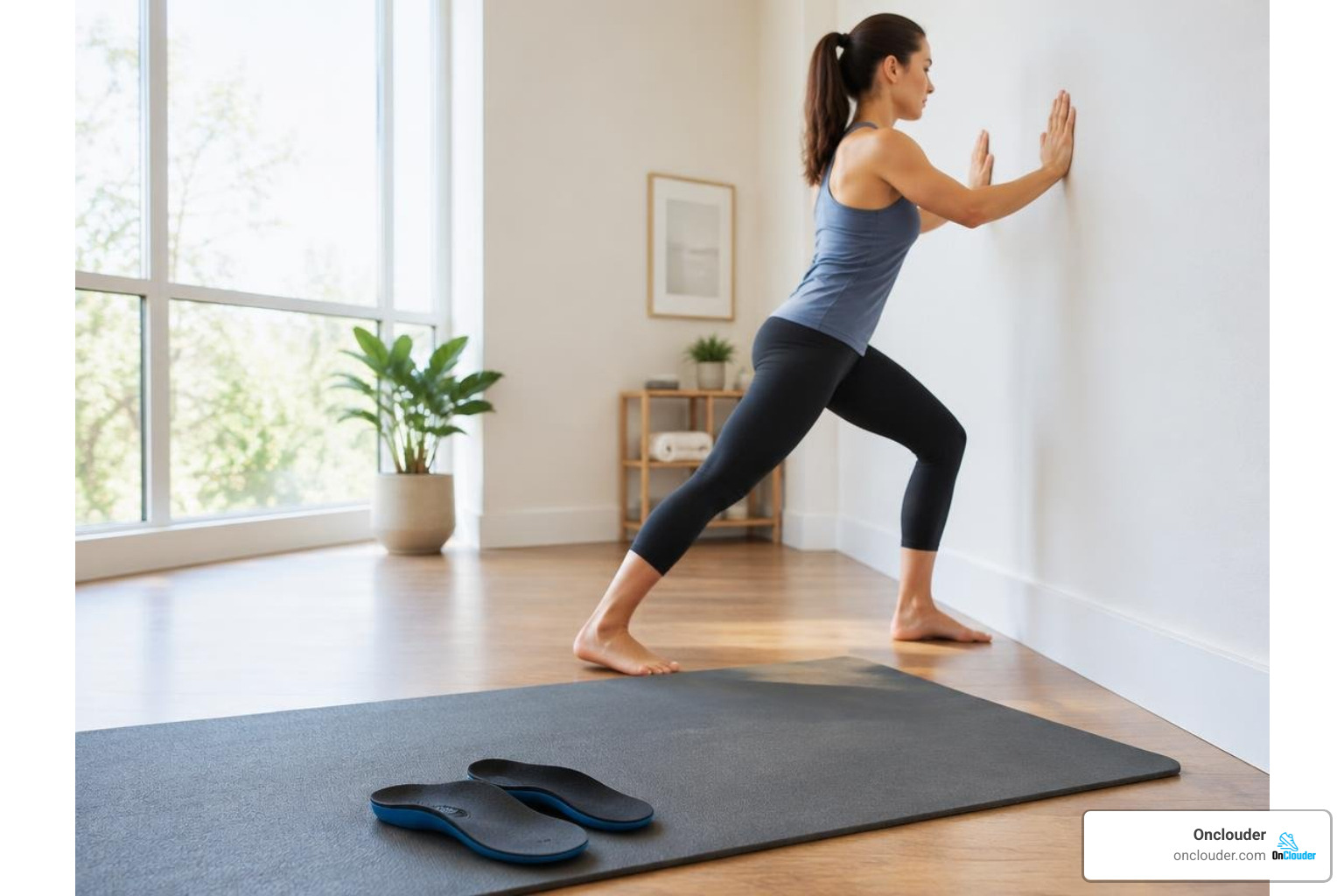
Over-the-Counter Inserts vs Custom Orthotics
When a shoe’s factory insole lacks sufficient structure, aftermarket inserts can provide tailored reinforcement:
- Over-the-Counter (OTC) Insoles: Brands like Superfeet Green, Powerstep Pinnacle, and Walk Hero feature rigid or semi-rigid composite arch plates with deep heel cradles. They are cost-effective options for mild to moderate arch pain.
- Custom Podiatric Orthotics: Cast or scanned by a podiatrist to address specific structural misalignments (such as severe overpronation, leg length discrepancies, or rigid high arches).
To determine which path suits your routine, read our guide on shoe inserts vs custom orthotics.
Daily Stretches and Targeted Pain Relief
Footwear works best when paired with daily conservative home care:
- Wall Calf Stretch: Place your hands on a wall, step one leg back keeping the heel flat on the floor, and bend the front knee until you feel a gentle stretch in the calf. Hold for 30 seconds across 3 sets.
- Plantar Fascia Stretch: Sit down, cross your affected foot over the opposite knee, grasp your toes, and gently pull them backward toward your shin until you feel tension along the arch.
- Frozen Bottle Roll: Roll the arch of your foot over a frozen water bottle for 10 minutes each evening to massage the plantar fascia while reducing localized inflammation.
- Night Splints: These braces gently hold your foot in a neutral 90-degree position overnight, preventing the fascia from healing in a contracted state and easing morning pain.
When to Replace Worn-Out Shoes
Even the most supportive shoes lose their structural integrity over time. Midsole foams compress under repeated impact, gradually diminishing shock absorption and arch stability.
- Replacement Timeline: Most walking and running shoes should be replaced every 300 to 500 miles, or roughly every 6 months for regular daily wear.
- Visual Warning Signs: Check for uneven tread wear on the outsole, visible wrinkles or creasing throughout the midsole foam, or a heel counter that tilts inward when the shoe rests on a flat table.
Frequently Asked Questions About Footwear for Heel Pain
Can wearing flat shoes permanently worsen plantar fasciitis?
Yes. Wearing unsupportive, flat shoes repeatedly flattens the medial longitudinal arch, placing intense tensile strain on the plantar fascia insertion. Over time, this chronic tension can cause ongoing microtears, persistent inflammation, and the formation of traction bone spurs on the calcaneus.
How long does it take for supportive footwear to relieve symptoms?
Many people notice a drop in morning heel pain within a few days to two weeks of switching to supportive shoes. However, connective tissues heal slowly due to limited blood supply, so full recovery often takes several months of consistent support, daily stretching, and rest.
Are zero-drop or minimalist shoes safe for plantar fasciitis?
Zero-drop and minimalist shoes are generally not recommended during active flare-ups. A flat profile increases strain on the Achilles tendon and calf muscles, which transfers tension directly into the plantar fascia. Transitioning to lower-drop footwear should only be considered after symptoms have fully resolved, and even then, only with a gradual adaptation period.
Conclusion
Overcoming heel pain begins with your daily footwear. Choosing shoes with rigid heel counters, structured arch contours, and shock-absorbing midsoles protects your plantar fascia with every step.
Perform the simple bend and pinch tests before buying new shoes, avoid walking barefoot on hard floors, and replace worn-out footwear every six months to keep your feet properly supported. For workplace recommendations, consult our best work shoes plantar fasciitis comparison guide to stay comfortable on your feet throughout the day.