How to Choose Footwear for Plantar Fasciitis
Start with a shoe that supports your arch, cushions your heel and forefoot, and holds your heel securely. The sole should feel stable rather than folding easily in half. Try shoes on and walk in them: the right fit should feel comfortable without your heel slipping or your toes feeling squeezed.
Supportive footwear may ease heel pain, including during your first steps in the morning, but it is only one part of care. Stretching and physical therapy may also help. This guide will help you choose shoes for daily wear, exercise, and time at home without relying on a brand name alone.
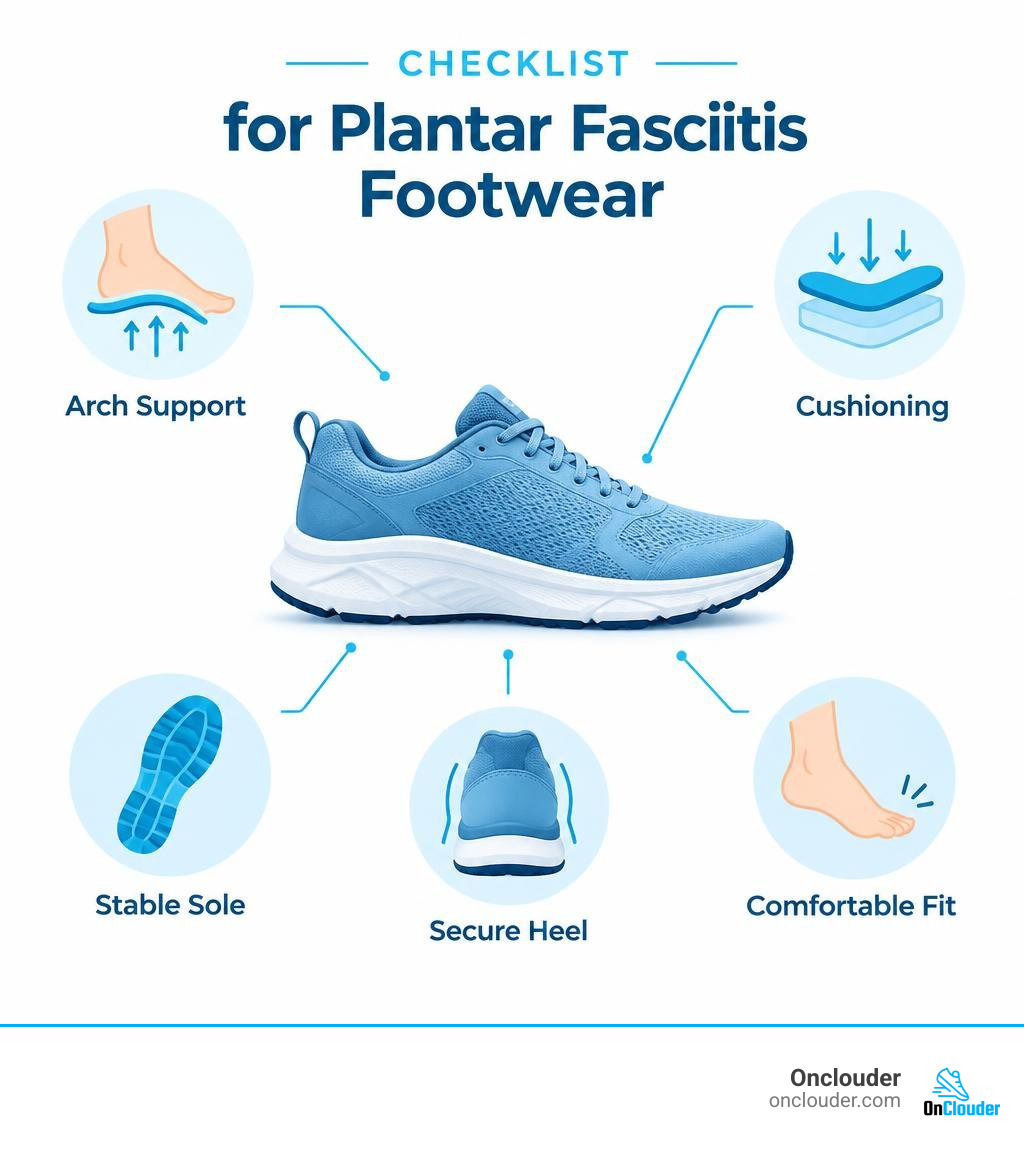
Must-know footwear for plantar fasciitis terms:
Essential Features of Effective Footwear for Plantar Fasciitis
When you are dealing with heel pain, not just any sneaker or slip-on will do. Plantar fasciitis occurs when the thick band of tissue running along the bottom of your foot—connecting your heel bone to your toes—becomes excessively strained and inflamed. Roughly 1 in 4 adults visiting podiatric practices struggle with this issue, making footwear choices a daily priority.
To properly offload that band of tissue, look for podiatrist approved best shoes for plantar fasciitis that feature targeted architectural elements. The goal is to minimize tensile stress across the arch while absorbing the ground reaction forces of every step.
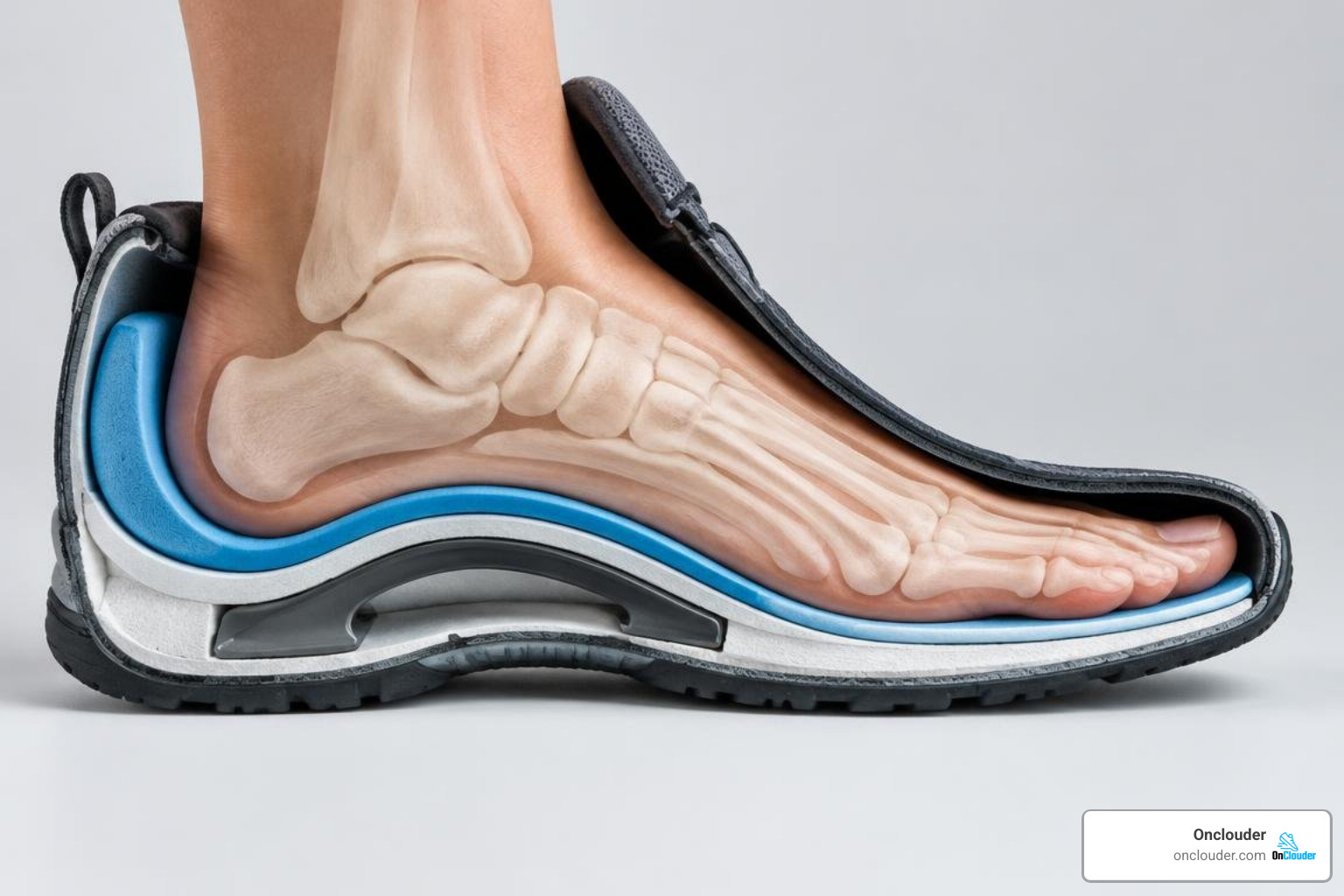
When evaluating footwear, examine these foundational components:
- Contoured Arch Support: A molded footbed prevents your arch from collapsing during mid-stance. We recommend consulting a comprehensive guide to shoes with good arch support for plantar fasciitis to understand how built-in contours reduce strain. Brands like Aetrex, for instance, build Signature Arch Support directly into their footbeds using data derived from over 50 million foot scans.
- Deep Heel Cup: Cupping your heel secures the natural fat pad right under your calcaneus (heel bone), maintaining its shock-absorbing shape.
- Multi-Zone Cushioning: Targeted cushioning under the heel and metatarsal heads dulls impact forces. Advanced materials like OOFOS OOfoam absorb up to 37% more impact than standard EVA foam.
- Torsional Rigidity: A supportive shoe should resist twisting like a wet rag. A firm midfoot shank prevents unnatural foot flexion.
- Subtle Rocker Sole: A curved forefoot profile promotes a natural heel-to-toe transition without forcing your plantar fascia to overextend at the push-off phase.
Critical Biomechanical Requirements
The mechanics of walking require your foot to alternate between a mobile shock absorber and a rigid lever. To keep stress off the plantar fascia, your shoe must perform part of this mechanical work.
Use our ultimate checklist for plantar fasciitis supportive shoes to test any pair before buying:
- The Flex Test: Bend the shoe by pushing the toe toward the heel. It should bend gently at the ball of the foot (where your toes flex), never in the middle of the arch.
- The Heel Squeeze: Pinch the heel counter (the back of the shoe). It should feel stiff and structured, not soft or collapsible.
- The Twist Test: Grab the heel with one hand and the toe with the other, then twist in opposite directions. Minimal twisting indicates solid midfoot support.
Common Footwear Mistakes to Avoid
The wrong shoes can quickly undo weeks of healing. Avoid these common culprits:
- Completely Flat Shoes and Ballet Flats: These place the plantar fascia on constant tension, stretching it taut with every step.
- Worn-Out Midsoles: Foam breaks down over time. Running and walking shoes generally lose their protective cushioning after 300 to 500 miles.
- Ultra-Flexible Minimalist Shoes: Shoes that roll up into a ball force your intrinsic foot muscles and fascia to absorb 100% of the landing shock.
- High Heels: Regularly wearing high heels shortens the Achilles tendon and calf muscles. When you eventually transition to flat ground, your tightened calves pull aggressively on the plantar fascia.
Clinical Evidence and Treatment Integration
Footwear is a vital cornerstone of recovery, but it achieves the best outcomes when paired with active rehabilitation. Clinical research reinforces that combining supportive gear with physical therapy produces superior, lasting relief.
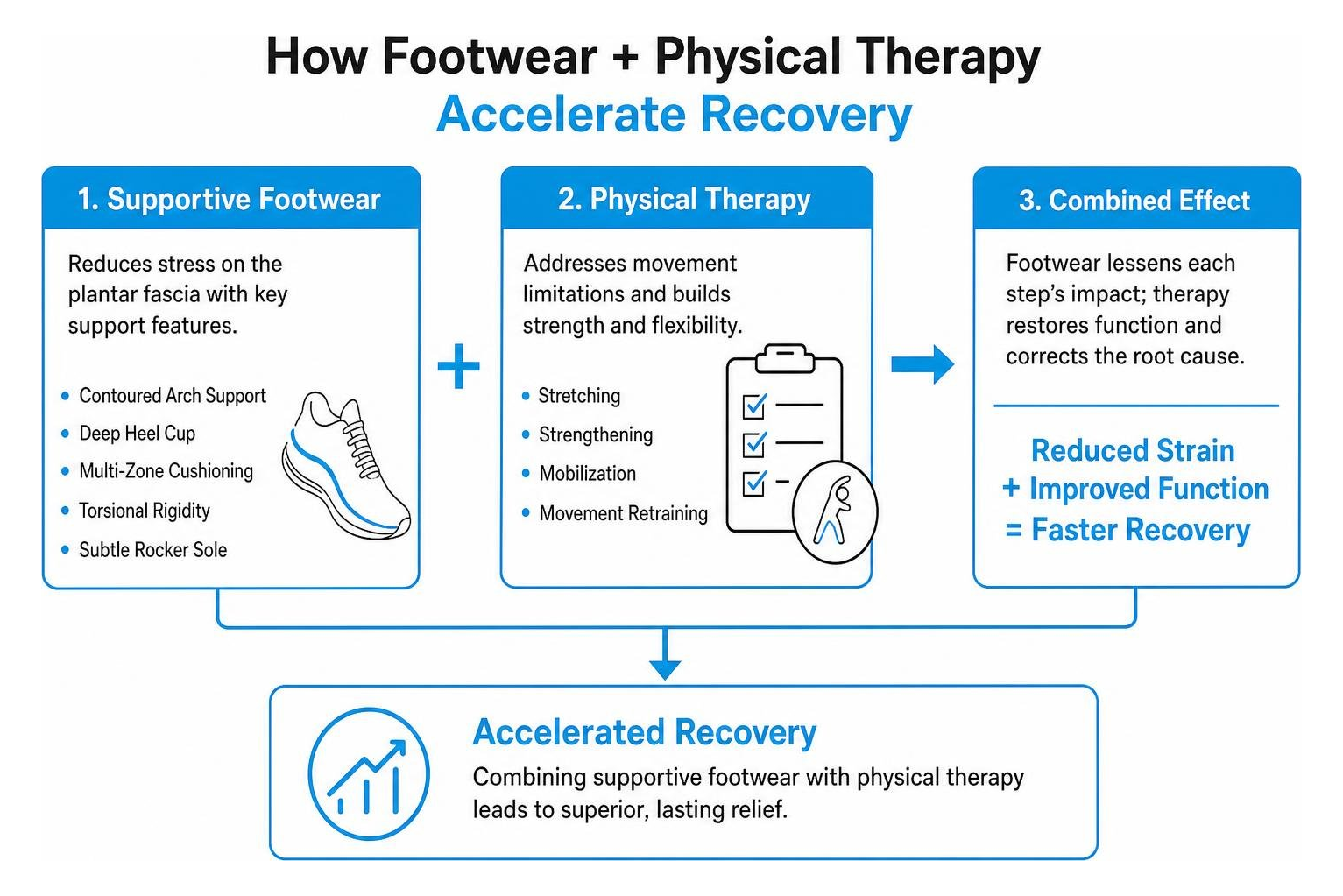
In a study of 66 participants with plantar fasciitis published in the research for Physical therapy combined with flip-flops versus physical therapy alone in plantar fasciitis, researchers evaluated the difference between combining exercise with supportive footwear versus doing physical therapy alone over an 8-week period:
| Outcome Measure | Physical Therapy Alone | PT + Supportive Footwear | Clinical Insight |
|---|---|---|---|
| First-Step Morning Pain | 27 / 33 met MCID | 27 / 33 met MCID | High baseline relief across both structured interventions |
| Post-Inactivity Pain | 26 / 33 met MCID | 27 / 33 met MCID | Marginally greater improvement in footwear group (p=0.05) |
| LEFS Functional Scale | 17 / 33 met MCID | 17 / 33 met MCID | Meaningful functional improvement achieved in both groups |
| Global Rating of Change | 20 / 33 meaningful recovery | 20 / 33 meaningful recovery | Consistent patient-reported recovery over 8 weeks |
Note: MCID = Minimum Clinically Important Difference; LEFS = Lower Extremity Functional Scale.
Clinical Evidence on Footwear for Plantar Fasciitis Relief
The clinical community has evaluated prefabricated orthopedic footwear across a variety of lower-limb musculoskeletal conditions. According to the systematic evaluation on Orthopedic Footwear for People With Lower-Limb Conditions – NCBI Bookshelf [[ADAPTIFYMEDICALCITATION:mcnbk3e9110ba42be:INLINE]], prefabricated orthopedic shoes show clear evidence of reducing plantar peak pressure and improving physical function in conditions like rheumatoid arthritis over 30-day to 6-month intervals [[ADAPTIFYMEDICALCITATION:mcnbk3e9110ba42be:INLINE]]. Rigid rocker-sole designs were also shown to reduce localized forefoot stress significantly [[ADAPTIFYMEDICALCITATION:mcnbk3e9110ba42be:INLINE]].
While clinical trials for isolated plantar fasciitis show variable outcomes depending on patient compliance and foot shape, offloading pressure via structured soles consistently mitigates acute strain on the heel [[ADAPTIFYMEDICALCITATION:mcnbk3e9110ba42be:INLINE]]. Around 8% to 12% of individuals report minor adverse events with orthopedic shoes—most commonly heel slippage or heat buildup—underscoring the importance of selecting breathable, properly fitted footwear [[ADAPTIFYMEDICALCITATION:mcnbk3e9110ba42be:INLINE]].
Combining Shoes with Insoles and Orthotics
If your current footwear lacks built-in contours, supplemental inserts can bridge the gap. Deciding between options depends on the severity of your symptoms:
- Over-the-Counter Inserts: Prefabricated shoe insoles arch support for plantar fasciitis offer immediate relief for mild to moderate arch pain at an accessible price point.
- Custom Orthotics: When prefabricated inserts fail to resolve persistent pain, custom-molded devices tailored to your specific biomechanical alignment provide targeted correction.
To determine the best fit for your routine, review our comparison on shoe inserts vs custom orthotics.
Choosing Footwear for Different Environments and Lifestyles
Managing heel pain is an all-day commitment. Switching into unsupportive shoes for work or outdoor activities can reignite inflammation in minutes.

Whether you need rugged trail protection like hiking boots for plantar fasciitis or professional workplace options outlined in our best work shoes plantar fasciitis guide, look for footwear that maintains structural rigidity and cushioned heel protection throughout long shifts.
Indoor Footwear for Plantar Fasciitis and House Shoes
One of the biggest mistakes people make is walking barefoot on hard tile or hardwood floors at home. Stepping out of bed directly onto unyielding flooring stretches the cold, contracted plantar fascia abruptly, causing sharp morning pain.
A dedicated house shoe is essential:
- Avoid Flat Novelty Slippers: Thin, flat fleece slippers offer zero arch contour and often allow the heel to slide uncontrollably.
- Choose Recovery Slides and Supportive Clogs: High-cushion slides from brands like OOFOS or Hoka provide thick, shock-absorbing midsoles that insulate your feet from hard floors.
- Arch-Supported Thongs for Warm Climates: Podiatrists often recommend structured recovery sandals, such as the best flip flops for plantar fasciitis, to keep your feet supported during warmer months.
For detailed home footwear recommendations, explore this podiatrist guide to best house shoes and slippers.
Athletic and Walking Footwear Selection
Daily exercise requires athletic footwear that balances responsive cushioning with motion control. High-mileage walking and running shoes should stabilize your stride and prevent excessive inward rolling (overpronation).
To compare top-performing options, review our expert roundup of the 10 best support shoes for plantar fasciitis and browse our comprehensive catalog of shoes that are best for plantar fasciitis to find the ideal match for your foot profile.
When to Seek Professional Podiatric Care
While supportive footwear solves morning stiffness for many people, conservative self-care is not always enough. You should consult a board-certified podiatrist or orthopedic specialist if you experience:
- Sharp heel pain that persists for more than 4 to 6 weeks despite wearing supportive shoes and performing daily stretches.
- Numbness, tingling, or burning sensations around the heel or arch (which may indicate nerve entrapment, such as tarsal tunnel syndrome).
- Severe pain that interferes with your ability to bear weight or carry out everyday tasks.
- Redness, noticeable swelling, or unexplained heat radiating from the heel.
A podiatrist can perform diagnostic ultrasound or X-rays to rule out calcaneal stress fractures, systemic inflammatory conditions, or tears in the plantar fascia, ensuring your treatment plan is tailored to your exact diagnosis.
Frequently Asked Questions About Footwear for Plantar Fasciitis
How quickly can supportive shoes relieve plantar fasciitis symptoms?
Many people notice a reduction in first-step morning pain within a few days of switching to supportive footwear. However, true biological remodeling of chronically inflamed fascia tissue typically requires 6 to 12 weeks of consistent support, stretching, and activity modification.
Is walking barefoot at home harmful for plantar fasciitis?
Yes. Walking barefoot on rigid surfaces like hardwood, laminate, or tile places immense tension directly onto your plantar fascia. Keeping a pair of supportive house shoes or recovery slides right beside your bed helps prevent sharp morning pain during those first crucial steps.
Can supportive footwear alone completely cure plantar fasciitis?
Supportive footwear is essential for offloading mechanical stress, but it works best as part of a comprehensive recovery strategy. Lasting relief generally requires pairing your shoes with daily calf and plantar fascia stretching, targeted strengthening exercises, and temporary load management.
Conclusion
Finding the right footwear is a foundational step toward breaking the cycle of chronic heel pain. By prioritizing rigid torsional stability, contoured arch profiles, deep heel cups, and impact-absorbing midsoles, you give your plantar fascia the environment it needs to recover. Keep supportive slides by your bed, avoid walking barefoot on hard floors, and invest in daily shoes built with structured support.
To find the perfect footwear for your daily routine, explore our comprehensive guide to the best work shoes for plantar fasciitis and step into lasting comfort.
Medical References
[[ADAPTIFYMEDICALCITATION:mcnbk3e9110ba42be:REFERENCE]]