Can a Plantar Fascia Orthotic Insole Help Heel Pain?
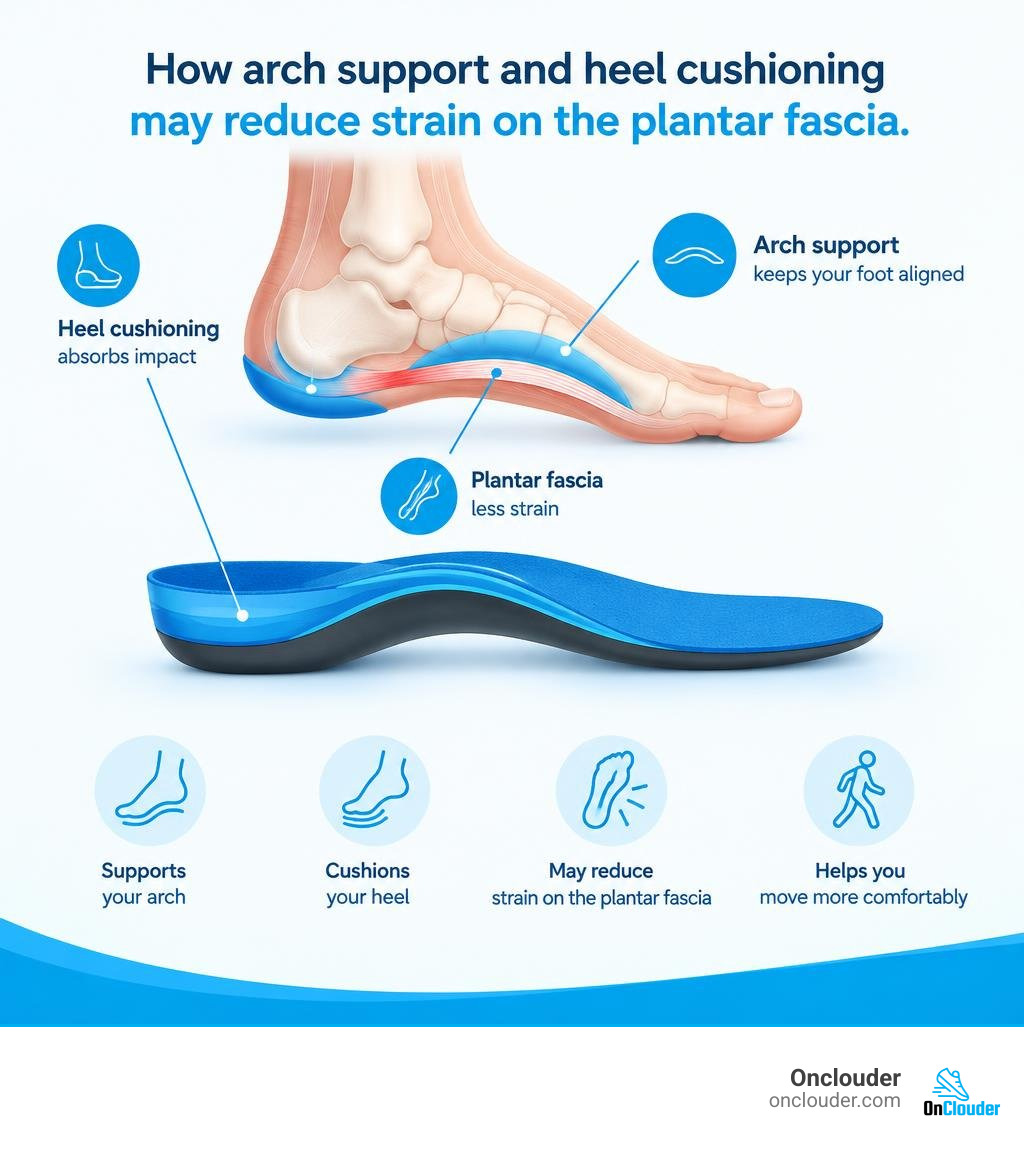
A plantar fascia orthotic insole supports your arch and cushions your heel, which may reduce strain on the tissue along the bottom of your foot. Look for an insole with an arch shape that feels supportive, a stable heel cup, and enough room to fit comfortably in the shoes you wear most.
Plantar fasciitis often causes sharp heel pain with your first steps in the morning or after sitting. Insoles can help, but they work best alongside stretching, supportive shoes, and changes to activities that worsen the pain. Relief may take several weeks, so an insole that feels good on day one is only part of the decision.
Key terms for plantar fascia orthotic insole:
- shoes that are best for plantar fasciitis
- shoes with good arch support for plantar fasciitis
- supportive shoes for plantar fasciitis
Understanding How a Plantar Fascia Orthotic Insole Relieves Heel Pain
Plantar fasciitis is responsible for approximately 80% of all reported heel pain and accounts for 8% to 10% of running-related injuries. With an estimated lifetime prevalence of 10% in the general population, it is one of the most widespread musculoskeletal complaints we encounter in footwear testing (Thing et al., 2012).
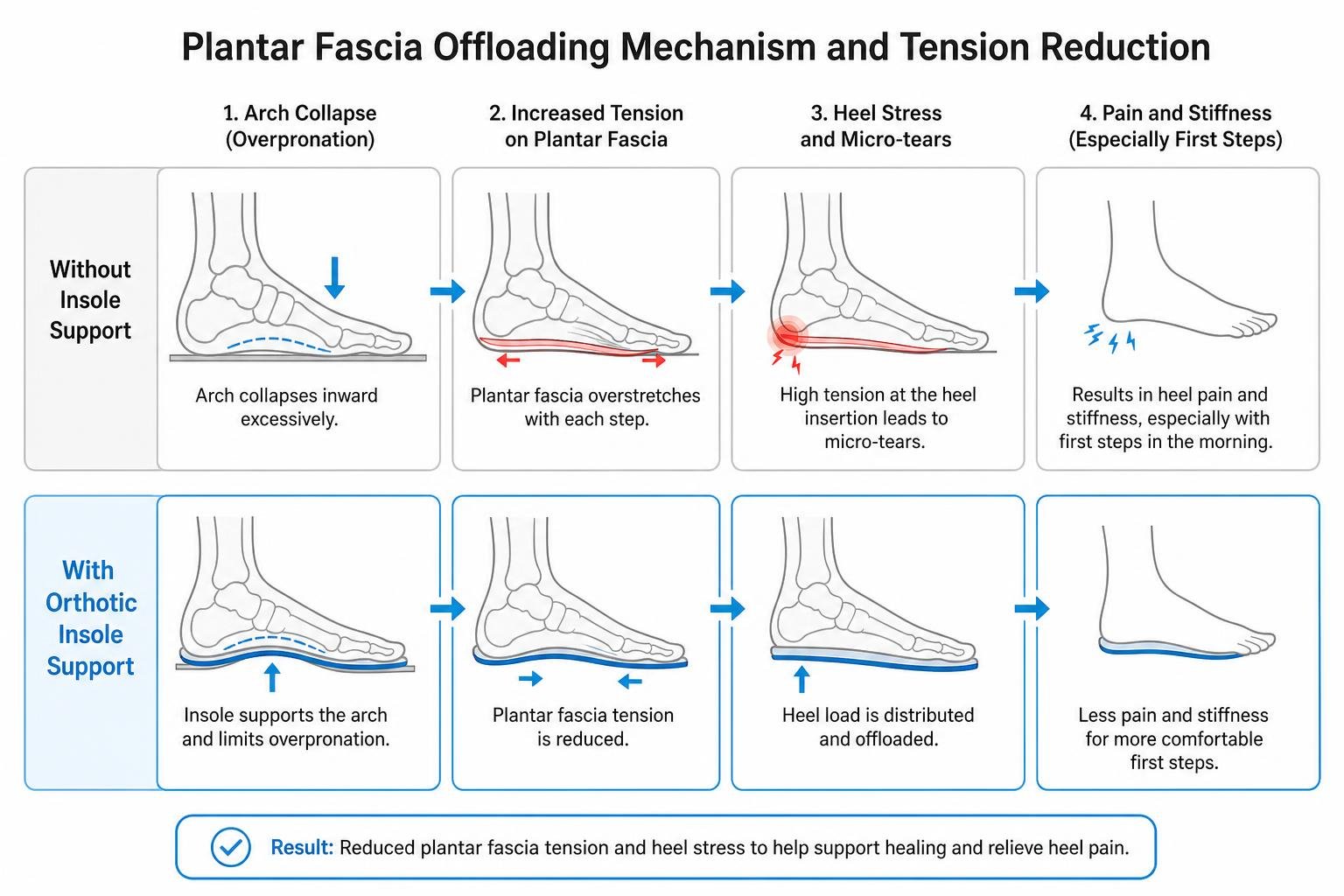
The plantar fascia is a thick band of connective tissue running from the calcaneus (heel bone) forward to the base of your toes. Every time your foot strikes the ground, this band stretches to absorb impact and support your longitudinal arch. When mechanical overload creates excessive tension, micro-tears develop at the calcaneal insertion point, leading to chronic tenderness, stiffness, and sharp discomfort during initial morning steps.
An orthotic insole works by altering the biomechanical load across the bottom of the foot. Rather than acting as a soft pillow, an effective insole redistributes ground reaction forces, controls excessive joint movement, and mechanically offloads the plantar fascia so the tissue can heal.
Biomechanics and Fascial Tension Relief
When you walk, the arch of your foot naturally flattens slightly to absorb shock and then recoils to propel you forward—a biomechanical process known as the windlass mechanism. If your foot overpronates (rolls inward excessively), the arch collapses too far, placing extreme tensile stress on the plantar fascia.
Using targeted shoe inserts for arch support and plantar fasciitis prevents this excessive inward collapse. By maintaining the structural integrity of the medial longitudinal arch, the insole shortens the distance between the heel and the ball of the foot during weight-bearing activities. This simple structural support dramatically decreases tension at the heel anchor point. Furthermore, a well-formed insole cupping the calcaneus prevents the natural heel fat pad from spreading outward, keeping your body’s natural shock absorber directly under the bone.
Key Features of an Effective Plantar Fascia Orthotic Insole
Not all shoe inserts provide therapeutic value. When evaluating options, look for several critical structural elements:
- Deep Heel Cup: A structured, deep cup stabilizes the rearfoot, prevents lateral rolling, and consolidates the heel fat pad directly beneath the calcaneus for natural shock attenuation.
- Semi-Rigid Arch Shell: While purely flexible foam compresses flat within minutes, a semi-rigid arch structure (often made of engineered composite or dense EVA) sustains arch height under full body weight.
- High-Rebound Cushioning: Top layers built from materials like high-rebound polyurethane or specialized polymer foam dissipate step impact without packing out prematurely.
- Metatarsal Support: A subtle metatarsal pad helps distribute forefoot pressure evenly, preventing compensatory forefoot pain as your walking pattern adjusts.
Understanding how to choose the best insoles for foot pain starts with identifying whether an insert offers real structural stability rather than superficial memory foam padding.
Comparing Custom vs. Over-the-Counter Insoles for Plantar Fasciitis
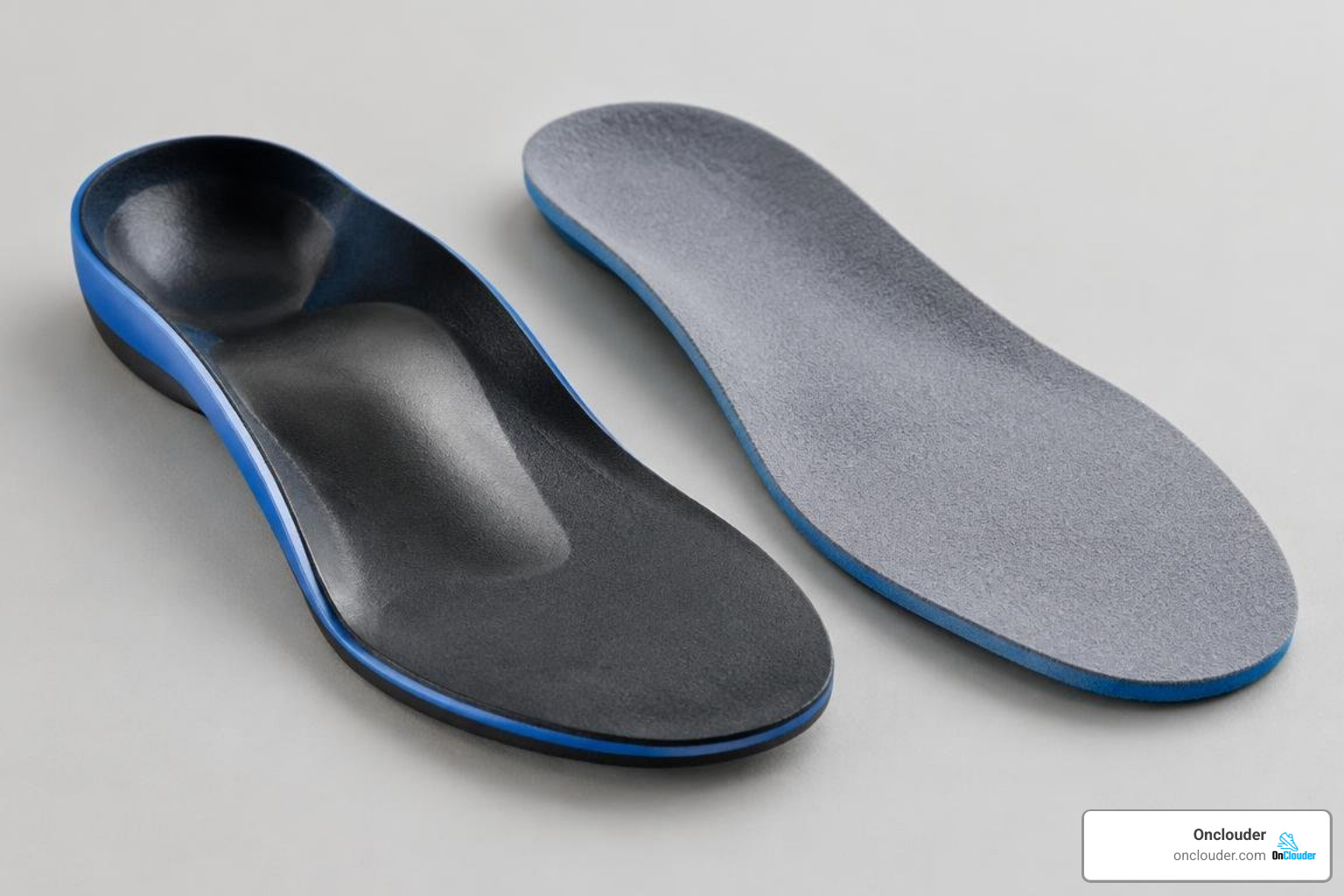
When seeking relief, you will encounter two primary categories: prefabricated over-the-counter (OTC) inserts and custom podiatric orthotics. Both serve to align the foot and offload tissue, but they differ significantly in construction, personalization, and cost.
Over-the-counter insoles are mass-manufactured based on generalized foot morphology. High-grade prefabricated orthotics utilize dense EVA foam, rigid polymer support shells, and standardized arch curves designed to correct common pronation patterns. They are readily available and provide immediate relief for most typical biomechanical issues.
Custom orthotics, by contrast, are custom-fabricated from a physical cast or precise 3D digital scan of your individual foot. Podiatrists capture your sub-talar joint in a neutral position to create a device tailored to distinct structural imbalances, leg length discrepancies, or complex foot shapes. Exploring the differences between custom orthotics versus over-the-counter shoe inserts helps clarify which option fits your clinical needs and budget.
| Feature | Over-the-Counter (OTC) Insoles | Custom Podiatric Orthotics |
|---|---|---|
| Fit & Customization | Standardized arch profiles and sizes | Exact 1:1 match from 3D scans or physical molds |
| Average Cost | $15 – $60 | $250 – $600+ |
| Durability | 6 to 12 months of daily use | 2 to 5 years (with periodic refurbishment) |
| Break-In Period | 3 to 7 days | 1 to 3 weeks |
| Best For | Mild-to-moderate strain, standard arches | Severe deformities, rigid flat feet, chronic non-responders |
Clinical research indicates that high-quality prefabricated orthotics often achieve short-term pain reduction comparable to custom devices in uncomplicated cases of plantar fasciitis. Starting with a reputable over-the-counter insert is generally the most cost-effective first step.
Full-Length vs. 3/4-Length Plantar Fascia Orthotic Insole Options
Orthotic insoles are primarily available in two lengths, each tailored to specific shoe types and volume requirements:
- Full-Length Insoles: These replace the factory liner that came with your shoe. They extend from heel to toe, providing integrated forefoot cushioning alongside structured arch and heel support. Full-length models are ideal for running sneakers, hiking boots, and work footwear featuring removable insoles.
- 3/4-Length Insoles: Ending just behind the metatarsal heads (the ball of the foot), these compact inserts sit directly on top of existing footbeds. Because they leave the forefoot completely unencumbered, they prevent toe crowding in slim dress shoes, low-profile casual loafers, and footwear with non-removable insoles. Reviewing specific 3/4 length orthotic insole features is helpful if you need support in professional or dress footwear.
Selecting the Right Insole for Your Foot Type and Activity Level

A functional orthotic must match your specific arch architecture and daily physical demands. Selecting the wrong profile can increase pressure on sensitive nerves or fail to unload the fascia.
Matching Arch Architecture
- Low Arches / Flat Feet (Pes Planus): Flat feet tend to overpronate heavily, stretching the fascia outward with every stride. Look for an insole featuring strong medial arch posting, a rigid structural base, and a deep heel cup to prevent excessive inward rolling.
- High Arches (Pes Cavus): High arches are naturally rigid and poor at shock absorption. The plantar fascia remains pulled taut like a bowstring. High arches require an insole with an elevated, full-contact arch profile and generous cushioning to distribute pressure across the entire sole.
- Neutral Arches: Neutral feet need balanced support with semi-rigid flex that guides healthy biomechanics without overly restricting natural movement.
Finding proven arch support insoles for total foot relief involves matching the apex of the insole’s arch directly to your anatomical navicular bone.
Factoring in Activity Demands
Your daily movement patterns dictate the required durability and material density:
- Workplace Standing: Standing on concrete or hard tile floors places continuous static pressure on the heel. Prioritize dense polyurethane bases, thick heel cushioning, and ergonomic arch contours. Many people choose medical-grade prefabricated insoles specifically for long shifts in service or healthcare environments.
- High-Impact Running and Athletics: Athletic training requires dynamic energy return and lightweight durability. Opt for carbon composite or responsive EVA insoles that control pronation without adding unnecessary bulk to your running shoes.
Combining Orthotics with Multimodal Treatments for Long-Term Relief
While a supportive insole creates the mechanical environment required for recovery, passive support alone is rarely a standalone cure. Clinical guidelines consistently demonstrate that at least 90% of patients resolve plantar fasciitis through conservative, multimodal care within six to eight weeks.
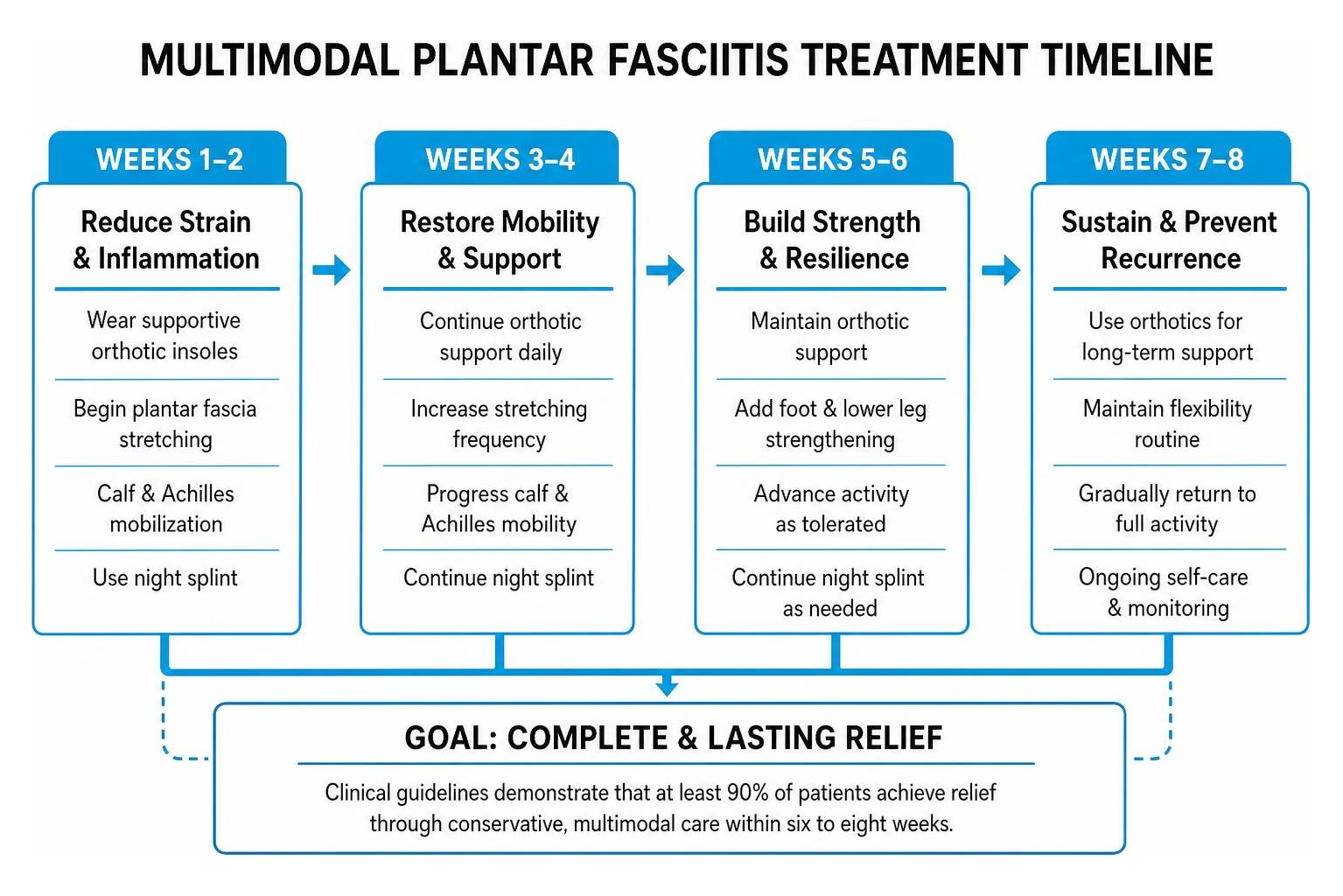
To achieve complete and lasting relief, combine your orthotics with the following proven interventions:
- Plantar Fascia-Specific Stretching: Cross your affected leg over your opposite knee, grasp your toes at the base, and pull them back toward your shin until you feel tension along the arch. Perform this stretch before taking your first steps out of bed.
- Calf and Achilles Tendon Mobilization: Tight gastrocnemius and soleus muscles restrict ankle dorsiflexion, forcing the arch to flatten prematurely during movement. Stretch your calves against a wall several times daily.
- Night Splints: Wearing a structured night splint or tension sock keeps the ankle and toes in a neutral, dorsiflexed position overnight, preventing the fascia from healing in a shortened, tight state.
- Extracorporeal Shockwave Therapy (ESWT): In chronic cases, radial shockwave therapy delivers acoustic pulses to stimulate local blood flow and tissue regeneration. In a randomized controlled trial of 152 patients with chronic plantar fasciopathy, 59% of those treated with shockwave therapy combined with tissue-specific stretching achieved successful outcomes, compared to only 32% treated with shockwave therapy alone (Rompe et al., 2015).
Frequently Asked Questions About Plantar Fascia Orthotics
How Long Does It Take for Orthotic Insoles to Relieve Plantar Fasciitis?
Most individuals notice an initial reduction in heel tenderness within one to two weeks of consistent daily wear. However, biological tissue remodeling takes time. Significant structural healing and lasting symptom relief typically require six to eight weeks of combined conservative therapy. Chronic cases that have persisted for over six months may take several months of structured load management before resolving entirely.
Are There Any Risks or Downsides to Using Orthotic Insoles?
The primary risk comes from sudden overuse or choosing an improper arch height. Introducing a rigid orthotic immediately for full 12-hour shifts can lead to temporary muscle soreness, arch bruising, or blisters. We recommend a gradual break-in schedule: wear your new insoles for two to three hours on day one, increasing wear time by one to two hours each day over the course of a week. If you experience persistent midfoot aching, the arch profile may be too aggressive for your foot structure.
Can Orthotic Insoles Prevent Plantar Fasciitis from Recurring?
Yes. Once acute inflammation subsides, continuing to wear supportive insoles during high-mileage running or prolonged standing helps maintain proper skeletal alignment and prevents excess tensile load from returning. Pair your insoles with ongoing calf mobility routines and avoid walking barefoot on hard indoor surfaces to keep heel pain from recurring.
Conclusion
Overcoming heel pain requires taking control of your daily foot biomechanics. A supportive orthotic insole provides the mechanical arch stabilization, heel fat pad containment, and impact dampening needed to calm irritated fascial tissues.
At Onclouder, we emphasize pairing high-performance insoles with appropriate, supportive footwear to create an optimal healing environment. If your daily routine involves long hours on hard floors, consult our guide to the best work shoes for plantar fasciitis to build a stable, comfortable foundation for every step.
References
Thing J, Maruthappu M, Rogers J. “Diagnosis and management of plantar fasciitis in primary care..” The British journal of general practice : the journal of the Royal College of General Practitioners, 2012. PMCID PMC3404327. Rompe JD, Furia J, Cacchio A, Schmitz C, Maffulli N. “Radial shock wave treatment alone is less efficient than radial shock wave treatment combined with tissue-specific plantar fascia-stretching in patients with chronic plantar heel pain..” International journal of surgery (London, England), 2015. PMID 25940060.