Stylish Ankle Boots for Plantar Fasciitis: What to Look For
The best ankle boots for plantar fasciitis pair a supportive arch and cushioned heel with a firm heel cup, a roomy toe box, and a stable heel no higher than 2 inches. If you wear custom orthotics, look for a removable insole and enough depth to fit them without crowding your foot.
You can find those features in both casual booties and polished work styles. The key is to check the fit and support, not just the look: a stylish boot should feel good on your feet, too.
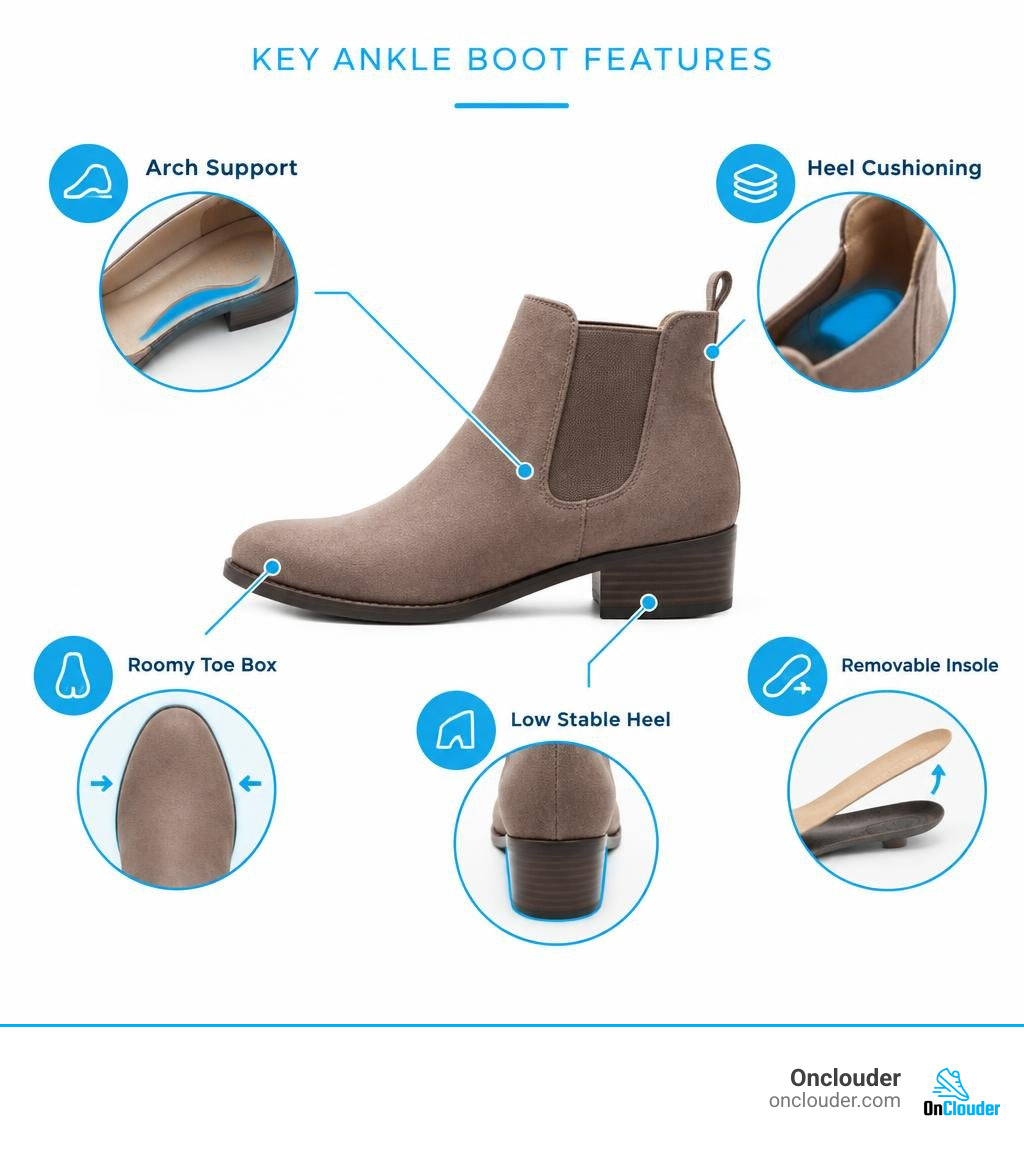
Terms related to ankle boots for plantar fasciitis:
- best casual women’s shoes for plantar fasciitis
- supportive shoes for plantar fasciitis
- plantar fascia orthotic insole
Essential Podiatrist Criteria for Supportive Booties
Finding boots that blend aesthetic charm with clinical-grade relief requires looking past the surface leather. When you live with plantar fasciitis, your footwear must perform delicate biomechanical duty: shielding your heel from micro-trauma while gently unloading tension from the plantar fascia band.
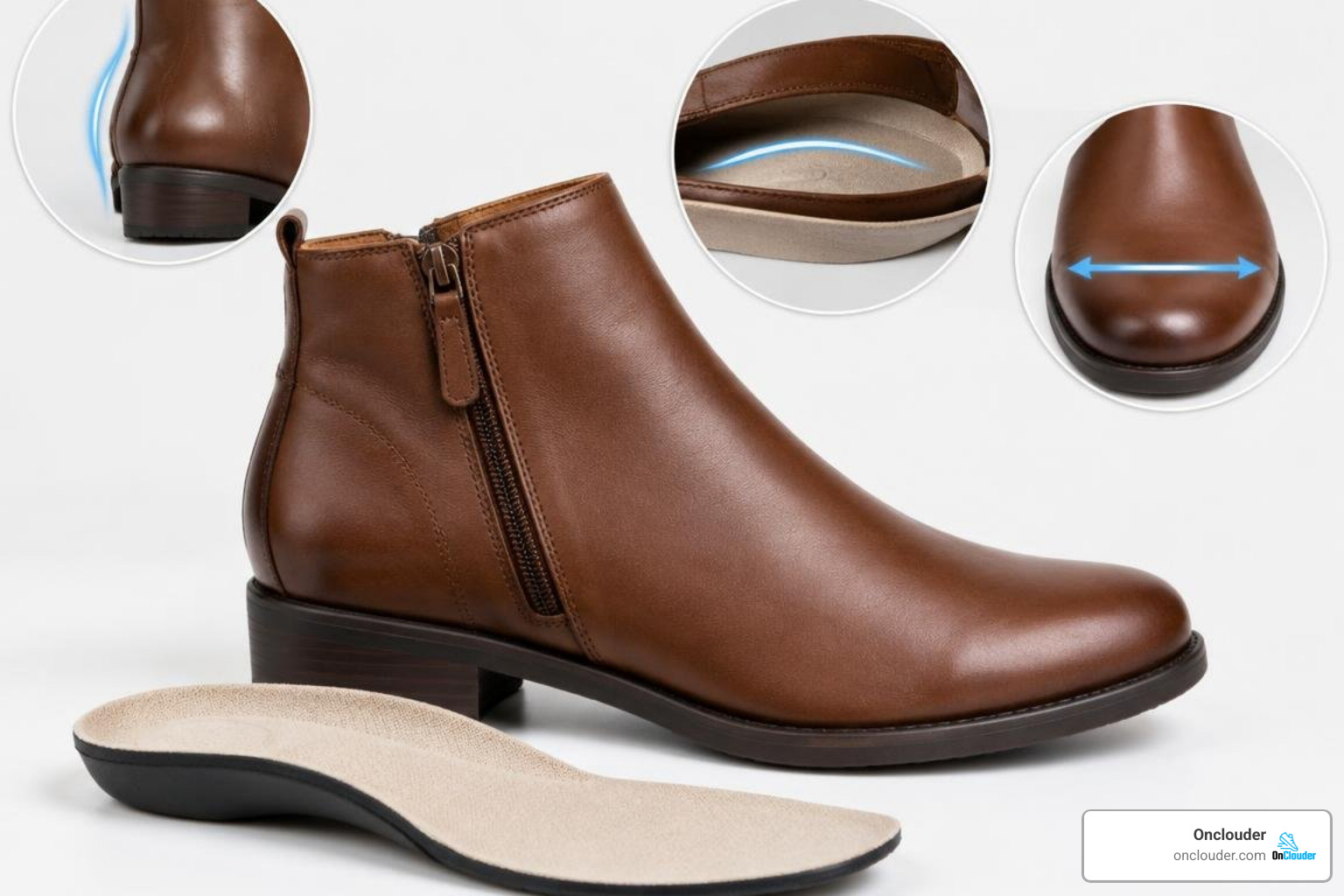
A boot must absorb shock at heel strike without collapsing under your body weight. You can easily upgrade your arch support with the best shoe brands for plantar fasciitis, but the structural integrity of an ankle boot brings distinct advantages that sneakers sometimes lack—namely, upper ankle stability and rigid rearfoot control.
Arch Contour, Heel Cups, and Safe Lift
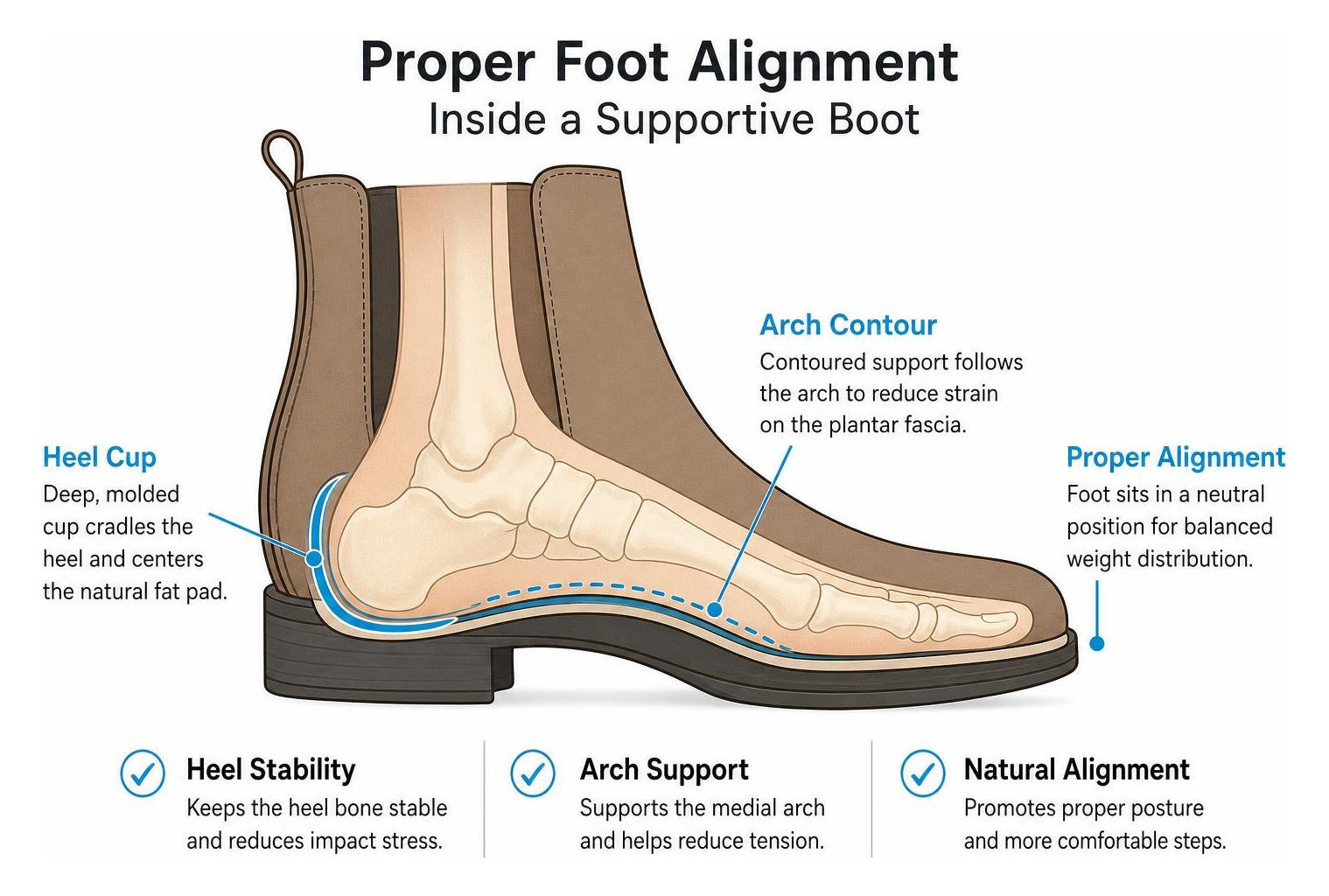
The foundation of every therapeutic boot starts with the medial longitudinal arch. Without contoured arch contact, the plantar fascia stretches excessively every time your foot pronates, causing tiny tears at the calcaneus insertion.
Pairing solid contours with a deep, molded heel cup stabilizes your heel bone and centers the natural fat pad right under your heel, naturally dampening impact forces.
Elevation is another critical factor. While dead-flat boots can overstretch tight Achilles tendons, tall heels shift dangerous amounts of weight forward onto your forefoot while altering your kinetic chain. Podiatrists recommend keeping heel height under two inches, ideally pairing low elevation with a wide block heel to balance ground reaction forces. Choosing podiatrist approved best shoes for plantar fasciitis ensures you maintain optimal tendon alignment without sacrificing balance.
Toe Box Dimensions, Custom Orthotic Depths, and Upper Materials
A boot might boast exceptional arch contours, but if the front is shaped like a tapered pencil, your feet will pay the price. A wide, anatomically shaped toe box allows natural metatarsal splay, preventing digital compression that can indirectly strain plantar tissues and aggravate bunions.
For those using prescription inserts, look for designs featuring removable EVA footbeds and extra interior depth. Quality materials make a tangible difference:
- Supple full-grain leather or suede: Conforms to the foot’s contours over time while resisting external moisture.
- Seamless microfiber linings: Prevent friction blisters over bony prominences.
- Strategic seam placement: Keeps stitching away from bunion joints and hammer toes.
- Shock-absorbing outsoles: Durable rubber or blown EVA compounds that blunt repetitive pavement impacts.
Investing in shoes that are best for plantar fasciitis means securing a spacious interior envelope capable of handling custom orthotics without pressing the top of your foot against the upper.
The Best Ankle Boots for Plantar Fasciitis for Work and Casual Wear
Managing chronic foot discomfort does not mean wearing orthopedic sneakers to professional meetings or dinner dates. Modern footwear design has evolved, offering stylish ankle booties that conceal podiatric-grade orthotic footbeds beneath sleek leather exteriors. Check out our curated 10 best support shoes for plantar fasciitis 2026 expert picks to see how modern engineering transforms everyday silhouettes into therapeutic staples.
Top Workday and Casual Ankle Boots for Plantar Fasciitis

In corporate and business-casual environments, footwear must project polish while carrying you through long hours on hard floors. Premium supportive ankle boots combine tailored profiles with hidden biomechanical features, such as low, stacked block heels, dual-density cushioning, and rigid shank stabilizers.
If you spend long hours standing or walking across polished floors, explore our guide on the best black dress shoes and boots for long hours on your feet to find silhouettes that look completely professional while protecting your heels.
Orthopedic Weatherproof Ankle Boots for Plantar Fasciitis
Cold, wet conditions require rugged durability without compromising arch support. Standard winter footwear often relies on flat rubber shells that leave the plantar fascia completely unsupported on icy terrain.
For severe overpronation, diabetic foot needs, or those who wear ankle-foot orthoses (AFOs), specialty footwear like the FiTec 9317 – Womens Winter Boots provides medical-grade depth, thermal insulation, and multi-width sizing (from D wide up to 5E). These winter options ensure that cold weather never forces you to compromise on heel stability or slip resistance.
Daily Ankle Boots vs. Night Splints and CAM Walkers
Navigating recovery requires matching the right footwear or medical device to your current stage of healing. While stylish ankle boots handle daily activity, acute flare-ups and chronic morning stiffness often call for targeted clinical devices.
| Feature / Metric | Daily Supportive Ankle Boots | Nocturnal Dorsiflexion Splints | Controlled Ankle Movement (CAM) Walkers |
|---|---|---|---|
| Primary Purpose | Weight-bearing support, shock absorption, and lifestyle mobility | Passive overnight stretching of fascia and Achilles tendon | Complete immobilization and offloading during acute injuries |
| Usage Timeframe | Daytime wear for work, walking, and social outings | Worn overnight during sleep (6–8 hours) | Daytime use during severe flare-ups or post-trauma |
| Biomechanical Action | Distributes plantar pressure; limits excess pronation | Maintains foot in 5° dorsiflexion to prevent morning contracture | Rigid shell with rocker sole eliminates foot flex and joint load |
| Typical Cost Range | $90 – $240 | $30 – $80 (OTC) / $150+ (Custom) | $80 – $200 |
| Primary Benefit | Pain-free daily movement without looking clinical | Reduces classic “first-step” morning heel pain | Allows soft tissue recovery without requiring a plaster cast |
Nocturnal Immobilization and Dorsiflexion Splints
When you sleep, your feet naturally drop into plantarflexion (pointing downward), causing the plantar fascia band to heal in a shortened, contracted position. The moment you take that first step out of bed, the sudden stretch tears those newly formed fibers, triggering sharp morning pain.
Clinical trials show an 80% improvement in morning heel pain within one to three months of consistent night splint use. Devices such as anterior shell splints or rigid thermoplastic frames hold your ankle at a gentle 5-degree dorsiflexion angle throughout the night. If you are deciding between sleep aids and daytime boots, read our clinical breakdown on Plantar Fasciitis Night Splint vs. Boot: Which Works B | DPM to determine which tool matches your symptom timeline.
Medical Offloading With CAM Walkers
For acute inflammation, partial fascial tears, or debilitating heel pain that makes regular walking unbearable, daily shoes may not provide enough rest. In these scenarios, podiatrists often prescribe a Controlled Ankle Movement (CAM) walker.
As highlighted in the clinical guide on CAM Walker or ‘Moon Boots’ for Load Optimisation | Pride Podiatry , these rigid walking boots use a specialized rocker sole to roll your foot through the gait cycle without bending the plantar fascia or loading the arch. Once acute swelling and pain subside, you can safely step down from the CAM walker into structured, orthotic-friendly everyday ankle boots.
Boot Longevity and Replacement Guidelines
Even the highest-quality ankle boots have a finite lifespan. Over time, internal cushioning foams compress, shanks lose their rigidity, and outsoles wear unevenly, gradually reducing the boot’s protective capabilities.
- Mileage Limits: Podiatrists recommend replacing daily footwear every 300 to 500 miles.
- Time Guidelines: For regular work boots worn multiple days per week, plan to replace them every 6 to 12 months.
- The Tabletop Test: Place your boots on a flat table at eye level. If they tilt inward or wobble, the structural heel counter has broken down.
- Midsole Creasing: Deep, permanent horizontal wrinkles in the EVA foam indicate that the material has lost its shock-absorbing rebound.
- Return of Morning Pain: If your morning heel tenderness begins creeping back after months of comfort, your boots are likely signaling that their internal support has worn out.
Frequently Asked Questions About Plantar Fasciitis Booties
Can I wear custom orthotics inside stylish ankle boots?
Yes, provided you choose boots designed with removable footbeds and sufficient interior depth. Look for styles with removable insoles so you can swap in your custom orthotics without crowding your toes or lifting your heel out of the shoe.
What heel height is safe for plantar fasciitis in ankle boots?
Podiatrists recommend keeping heel height at or below two inches. Opt for broad, supportive block heels rather than narrow stilettos, as block heels distribute pressure evenly across your foot and prevent tendon strain.
How often should ankle boots be replaced to prevent foot pain?
Replace your boots every 300 to 500 miles, or roughly every 6 to 12 months with frequent wear. Once the internal cushioning breaks down, the plantar fascia absorbs significantly more impact force with every step.
Conclusion
At Onclouder, we believe nobody should have to choose between looking stylish and walking without heel pain. By prioritizing anatomical arch contours, stable low block heels, shock-absorbing midsoles, and spacious toe boxes, you can comfortably navigate both professional settings and casual weekends.
Take the time to evaluate your footwear’s structural support, replace worn-out soles before symptoms flare, and consult our comprehensive work footwear comparison to keep every step supported, comfortable, and pain-free.