What Makes a Hiking Boot Better for Plantar Fasciitis?
The best hiking boots for plantar fasciitis support your arch, cushion your heel, and hold your foot securely without squeezing your toes. If you use orthotics, look for a removable footbed and enough room to fit the insert. A moderate heel-to-toe drop may feel better than a flat sole, but the right fit matters more than any single measurement.
This guide compares supportive boot styles and shows you what to check before you buy, so heel pain does not make the choice for you. According to the American Podiatric Medical Association, supportive footwear with adequate arch support and cushioning is a key part of managing plantar fasciitis symptoms.
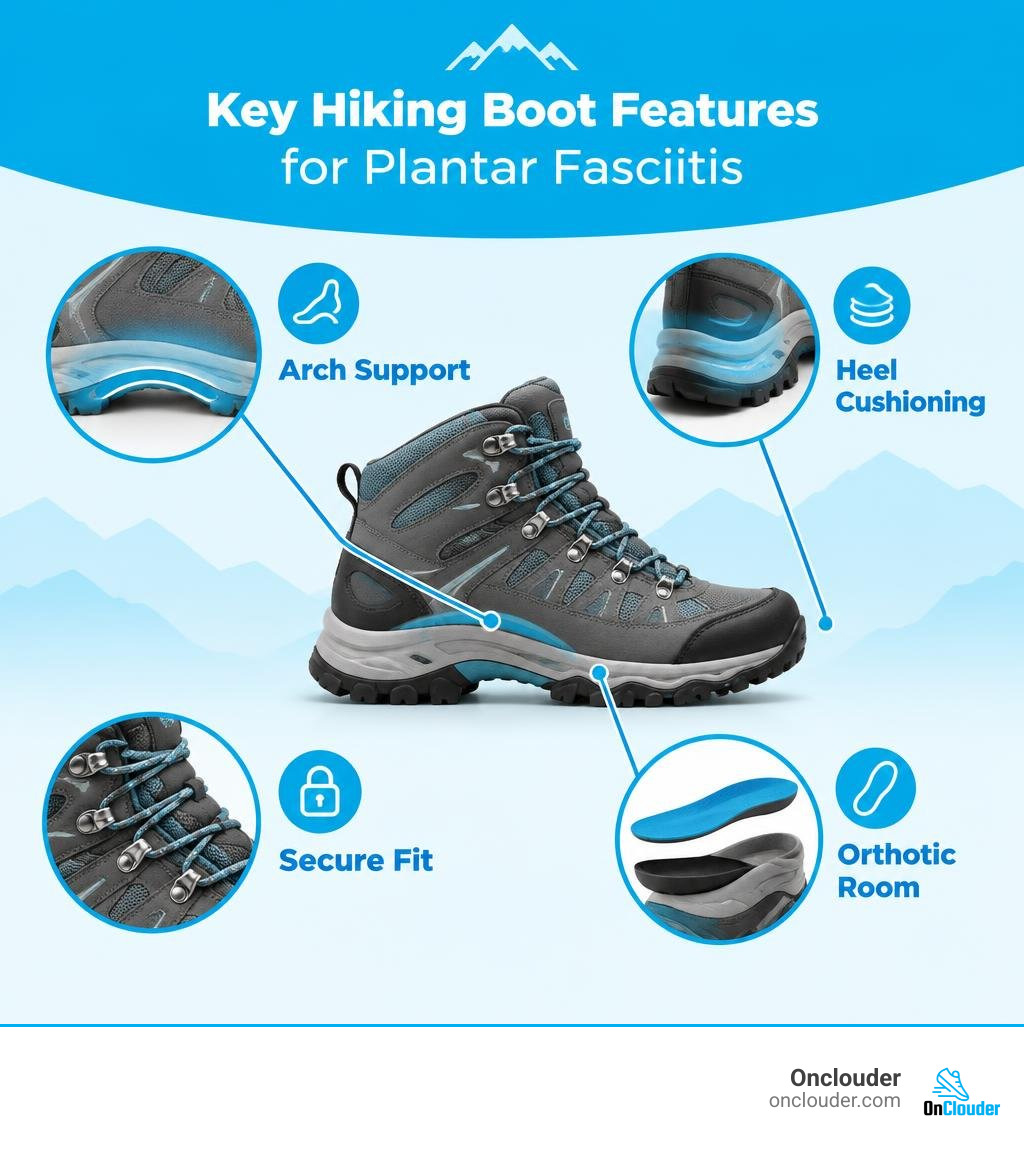
Terms related to best hiking boots for plantar fasciitis:
- best hiking sandals for plantar fasciitis
- supportive shoes for plantar fasciitis
- plantar fascia orthotic insole
How to Choose the Best Hiking Boots for Plantar Fasciitis
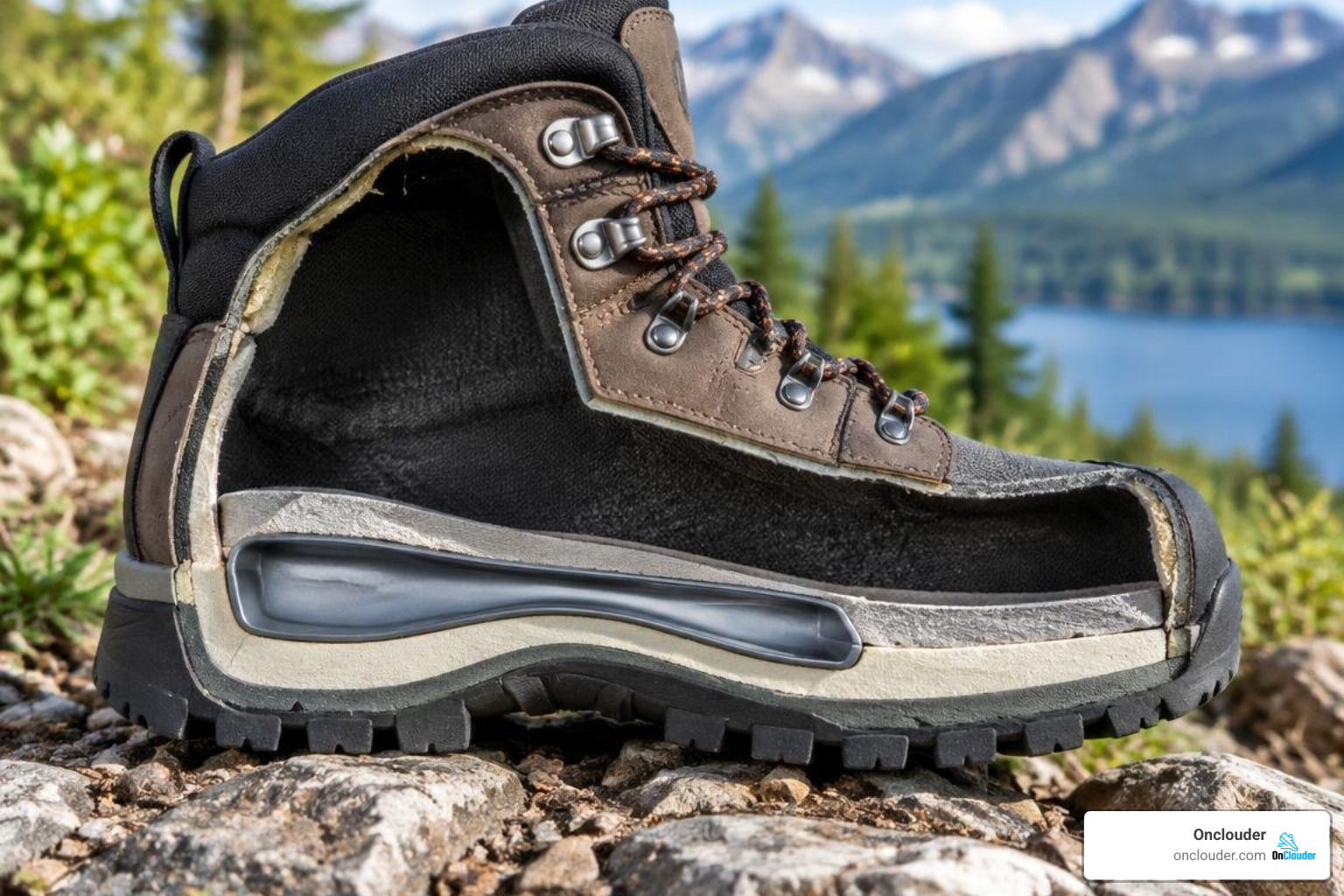
Plantar fasciitis affects roughly 10% of the population at some point in their lives, accounting for over one million patient visits in the United States every single year. When you hike, uneven ground, sharp rocks, and heavy pack weight put intense mechanical stress on the thick band of tissue running along the bottom of your foot. Studies show that wearing supportive footwear with proper shock absorption can reduce plantar fascia pain by up to 50%, with over 70% of sufferers reporting noticeable symptom relief.
Choosing trail footwear requires balancing specific structural elements rather than just picking the softest pair on the shelf. When we test trail footwear, we look for key podiatrist-approved footwear features that keep the plantar fascia from overstretching on steep climbs and rocky descents:
- Torsional Rigidity and Supportive Shanks: A boot should never bend in half like a pair of deck shoes. A built-in nylon, thermoplastic polyurethane (TPU), or steel shank prevents the sole from twisting on jagged rocks, protecting your arch from excessive strain.
- Deep Heel Counters: A stiff, cupped heel pocket locks the calcaneus (heel bone) into place, stabilizing the natural fat pad under your heel to maximize its natural shock-absorbing power.
- Structured Midsole Cushioning: Ultra-plush, squishy foam can cause arch collapse on long trails. Firm ethylene-vinyl acetate (EVA) or molded polyurethane (PU) midsoles deliver sustained shock dampening without fatiguing the foot over multiple miles.
- Arch Support Profiles: Finding reliable models from supportive footwear brands ensures your arch maintains structural contact with the boot through every phase of your stride.
- Waterproof Membranes and Climate Control: Waterproof linings like Gore-Tex keep moisture out during stream crossings, while breathable mesh panels prevent heat and sweat buildup. Keeping feet dry helps maintain skin integrity and prevents compensatory gait changes caused by blisters.
Top Tested Trail Categories for Heel and Arch Relief
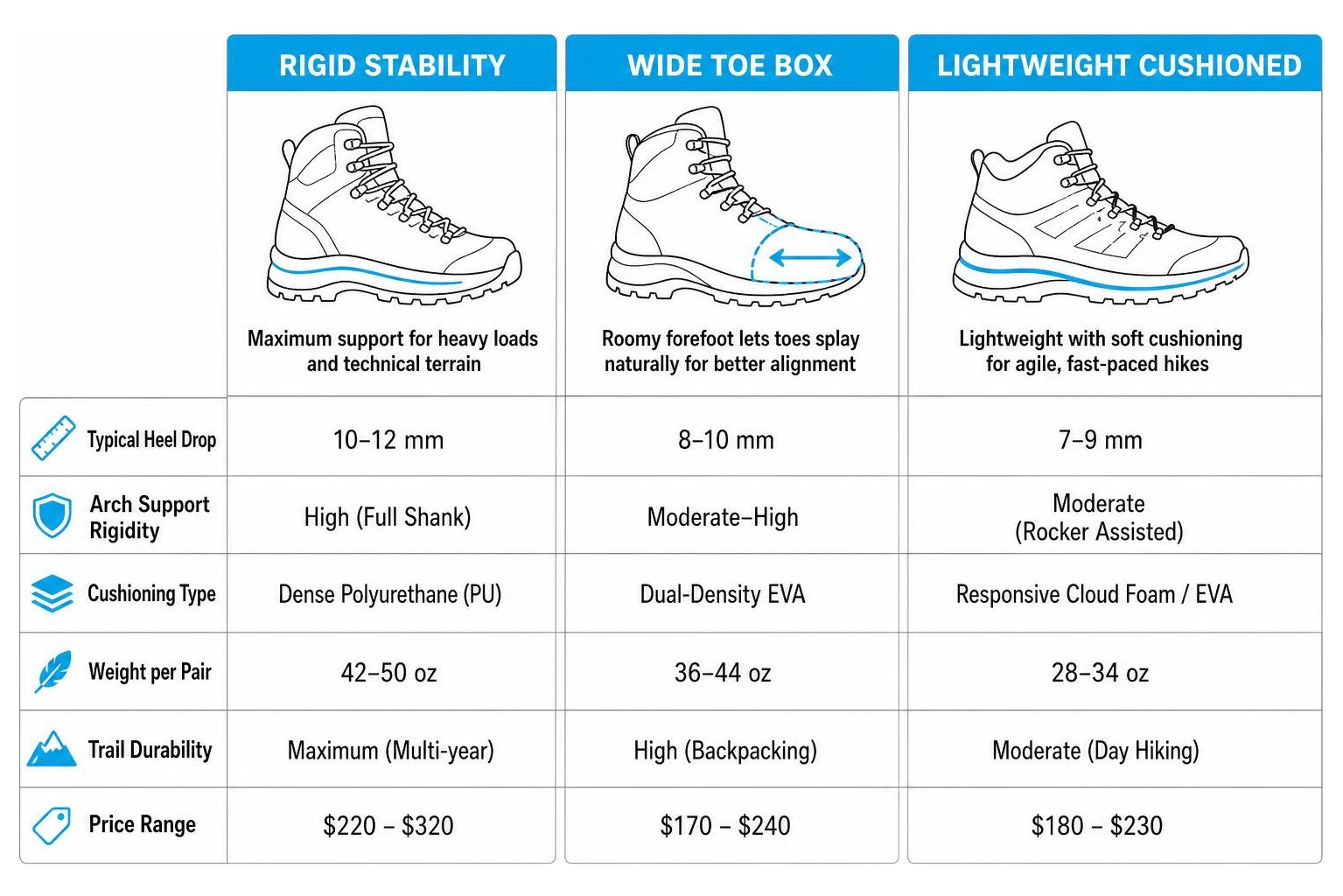
Every hiker’s foot structure and trail demands are unique. To help you match your needs to the right build, we categorized our top-tested boot styles across critical biomechanical metrics:
| Category | Typical Heel Drop | Arch Support Rigidity | Cushioning Type | Weight per Pair | Trail Durability | Price Range |
|---|---|---|---|---|---|---|
| Rigid Stability | 10–12 mm | High (Full Shank) | Dense Polyurethane (PU) | 42–50 oz | Maximum (Multi-year) | $220 – $320 |
| Spacious Comfort | 8–10 mm | Moderate–High | Dual-Density EVA | 36–44 oz | High (Backpacking) | $170 – $240 |
| Lightweight Agility | 7–9 mm | Moderate (Rocker Assisted) | Responsive Cloud Foam / EVA | 28–34 oz | Moderate (Day Hiking) | $180 – $230 |
Rigid Stability: Best Hiking Boots for Plantar Fasciitis and Severe Heel Pain
For hikers carrying heavy multi-day packs or traversing scree fields, rigid stability boots provide unmatched protection. These boots rely on full-length internal shanks, reinforced leather uppers, and ultra-stiff heel counters. By limiting midfoot flexion, they eliminate the windlass mechanism—the natural stretching of the plantar fascia during toe-off—which reduces inflammation during long trail days.
If you struggle with active morning heel pain or severe overpronation, investing in dedicated outdoor adventure boots with rigid motion control prevents your arches from collapsing under load on technical terrain.
Spacious Comfort: Best Hiking Boots for Plantar Fasciitis with Wide Toe Boxes
When your toes are squished into a narrow toe box, your big toe cannot stabilize your foot correctly. This forces the plantar fascia and calf muscles to work overtime. Footwear with wide forefoot geometry lets your metatarsals splay naturally, distributing ground impact across the ball of your foot.
If you deal with wide feet or bunions alongside heel pain, check out our wide toe box hiking boot guide or explore women’s wide-fitting hiking boots for styles that pair roomier toe boxes with snug, locked-in heel pockets.
Lightweight Agility and Maximum Trail Cushioning
Not every hiker needs a heavy, rigid backpacking boot. Speed hikers and day trippers often prefer agile, lightweight models that absorb sharp impacts on hard-packed trails. These designs use multi-density foam and specialized cushioning pods to soften heel strikes on downhill descents.
Hikers who want springy responsiveness for adventures should look at cushioned trail models like the Cloudrock, which deliver supportive ankle collars alongside lightweight, shock-absorbing outsoles.
Biomechanical Factors: Heel Drop, Rocker Soles, and Cushioning
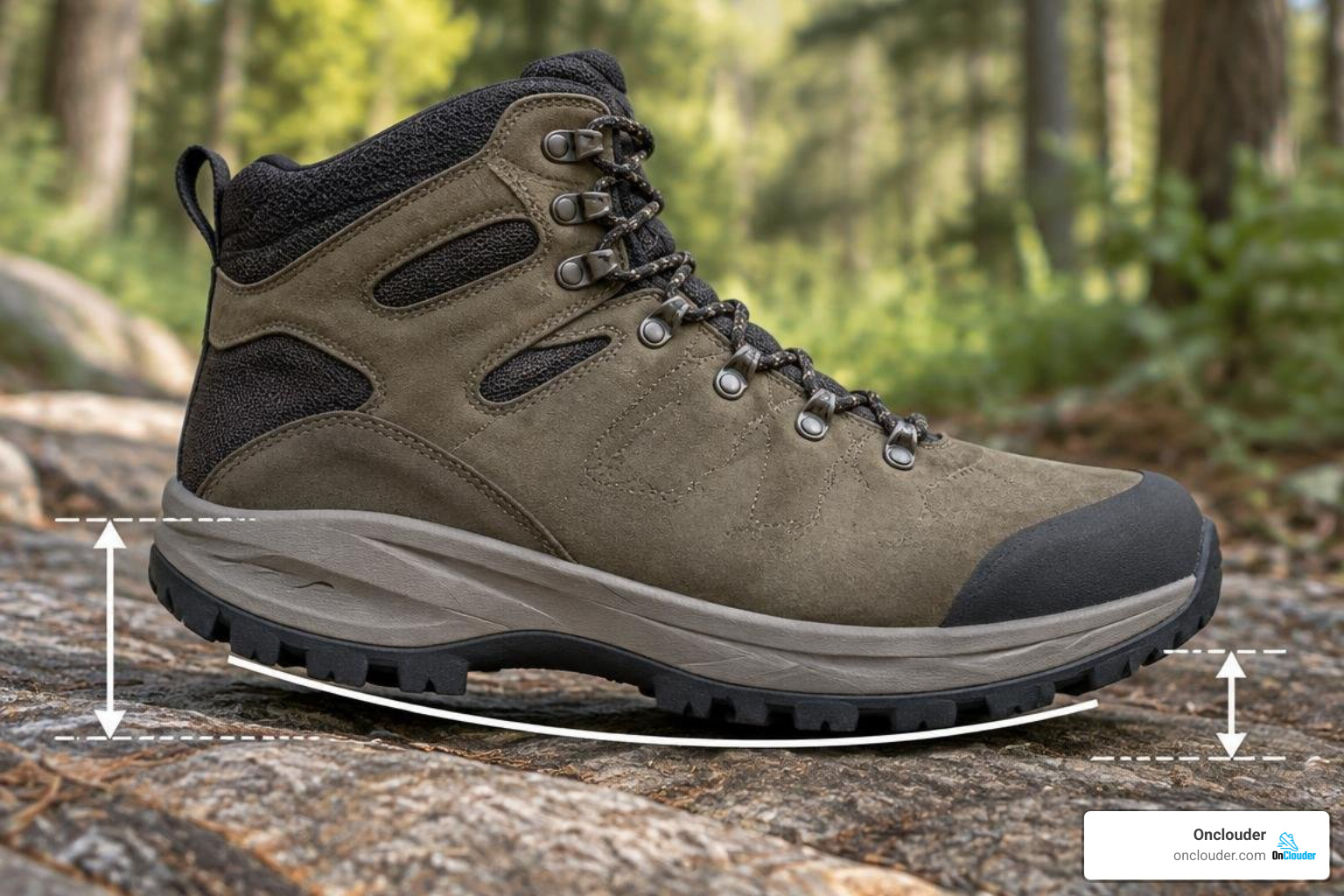
Understanding boot geometry makes shopping for plantar-friendly footwear much easier. Three primary design elements dictate how much stress reaches your heel and plantar fascia:
- Heel-to-Toe Drop (8–12 mm): The difference in height between the heel and the forefoot plays a massive role in tendon tension. Zero-drop and minimalist shoes stretch the Achilles tendon and calf muscles taut, increasing tension on the plantar fascia. An elevated heel drop of 8 to 12 mm slightly unloads the posterior chain, taking stress off the heel spur area.
- Rocker Sole Geometry: A subtle upward curve at the toe and heel helps roll your foot through the gait cycle. Instead of forcing your plantar fascia to flex rigidly as you push off the ground, a rocker sole propels you forward smoothly.
- Targeted Heel Cushioning: While arch stiffness prevents collapse, responsive heel cushioning dampens the initial impact of every step. Pairing trail boots with everyday support shoes for heel pain helps keep your feet pain-free both on and off the trail.
Fit Protocols, Orthotic Compatibility, and Break-In Strategies
A well-designed boot can still cause flare-ups if the fit is incorrect. Because feet swell during long hikes, always try on boots in the late afternoon wearing the exact wool socks you plan to use on the trail. Aim for a full thumb’s width of space between your longest toe and the front of the boot to protect your toenails on descents.
If your boots lack sufficient built-in arch contours, swap out the factory footbeds for specialized trail insoles or consider the differences between over-the-counter inserts versus custom orthotics. Ensure the boot has a deep enough heel pocket so that adding an aftermarket insole does not push your heel too high, which can cause slipping and friction blisters.
Take your time breaking in new footwear:
- Wear your new boots around the house for an hour or two over the first three days.
- Graduate to short, flat neighborhood walks before heading out on rough trails.
- Stretch your calves and hamstrings before and after every outing to keep muscle tension from pulling on your heel.
Frequently Asked Questions About Plantar-Friendly Hiking
What heel-to-toe drop is ideal for hiking with plantar fasciitis?
A heel-to-toe drop between 8 mm and 12 mm is generally ideal for hikers managing plantar fasciitis. This elevation takes tension off the Achilles tendon and calf muscles, which connects directly into the plantar fascia under your heel.
Can I replace factory insoles with custom orthotics in hiking boots?
Yes, most quality hiking boots come with removable factory footbeds designed to accommodate orthotic inserts. Choose boots with sufficient interior volume so your custom orthotic rests flat without crowding your instep or lifting your heel out of the heel counter.
How should I break in new hiking boots without triggering heel flare-ups?
Break in your boots gradually over two to three weeks. Start by wearing them indoors on flat surfaces, then move to short 1- to 2-mile neighborhood walks before tackling steep trails. Rolling your arches with a massage ball and stretching your calves after each walk will help keep your feet flexible and comfortable.
Conclusion
Plantar fasciitis does not have to keep you off your favorite mountain paths. By choosing trail boots with torsional stiffness, deep heel counters, generous arch support, and a supportive 8–12 mm heel drop, you can protect your feet across miles of challenging terrain. For more tips on keeping your feet supported throughout the week, take a look at our comprehensive work and trail plantar fasciitis guide.