Why Finding the Best Shoes for Plantar Fasciitis Can Change Everything
The best shoes for plantar fasciitis can be the difference between hobbling through your day and moving freely without dreading your next step.
Here’s a quick look at the top options:
| Shoe | Best For | Key Feature |
|---|---|---|
| HOKA Bondi 9 | Max cushioning | Rocker sole, wide base |
| Brooks Glycerin GTS 23 | Running & walking | 38mm stack, 8mm drop |
| ASICS Gel-Kayano | Stability & shock absorption | Superior motion control |
| New Balance 990v6 | All-day comfort | 5/5 torsional rigidity |
| Saucony Guide 18 | Lightweight stability | 6mm drop, 35mm heel stack |
| Orthofeet Coral | Wide feet | Stretch knit, wide toe box |
| Dansko XP 2.0 | Work & standing | 2-inch heel, rocker bottom |
| Oofos Recovery Slides | Home recovery | Arch-supportive foam |
Plantar fasciitis affects roughly 1 in 10 people — and 83% of cases hit between the ages of 25 and 65, right in the middle of the most active years of your life. That sharp, stabbing heel pain when you take your first steps in the morning? That’s the plantar fascia — a thick band of tissue running from your heel to your toes — telling you it’s under too much stress.
The right footwear won’t just dull the pain. It redistributes pressure, stabilizes your foot mechanics, and gives that inflamed tissue a chance to recover.
But not all “supportive” shoes are created equal. What works brilliantly for one person can make another’s pain worse. The research is clear: features like heel drop, midsole firmness, torsional rigidity, and arch support all play a measurable role in how much relief you actually get.
I’m Faisal S. Chughtai, a footwear expert with years of experience helping people find the right shoes for conditions like plantar fasciitis — and in this guide, I’ve done the deep research to cut through the noise and show you which shoes actually deliver on the promise of the best shoes for plantar fasciitis. Let’s get into what separates the good from the great.
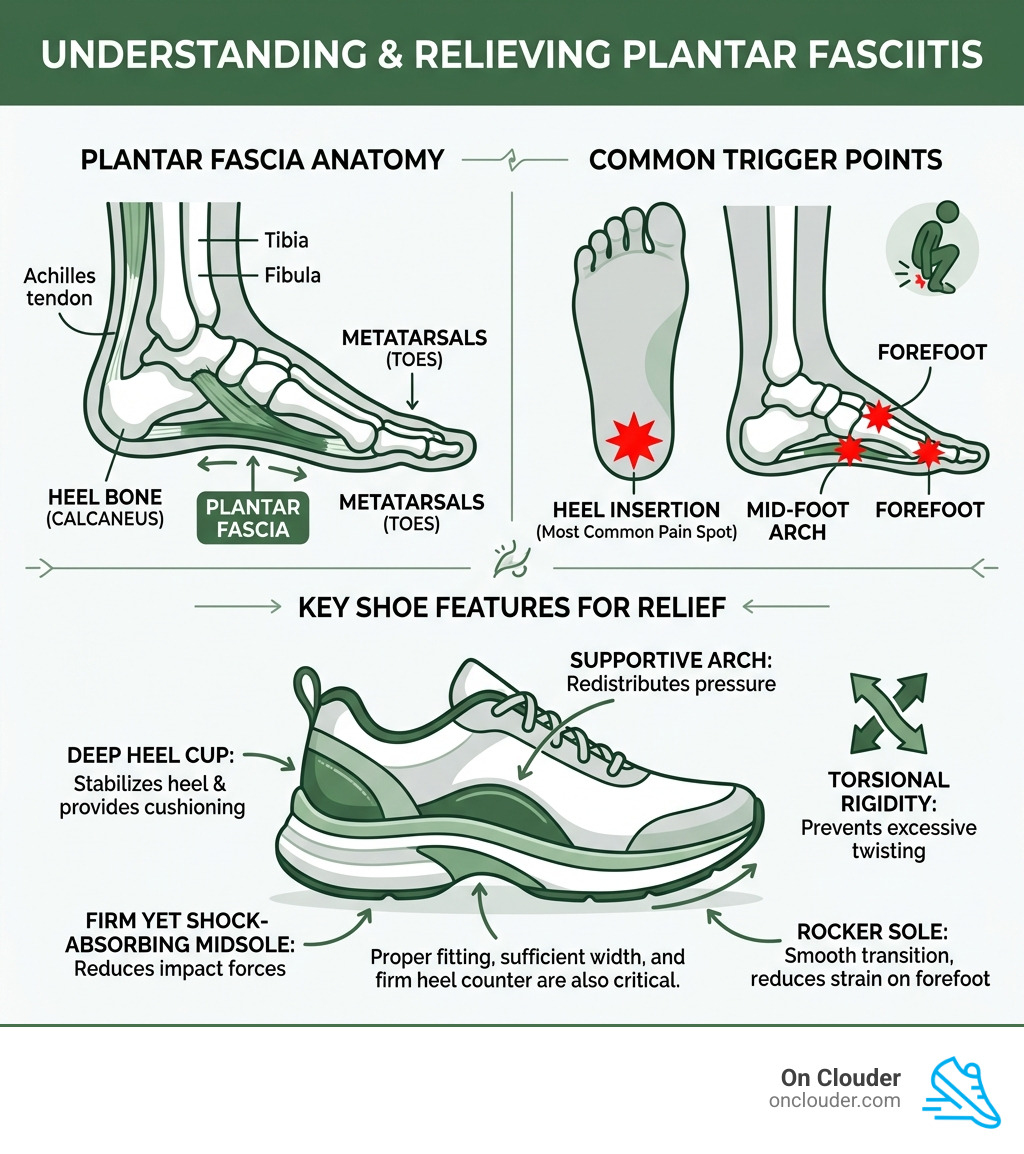
Quick look at best shoes for plantar fasciitis:
Understanding Heel Pain and the Role of Supportive Footwear
If you’ve ever felt like a hot needle was being pressed into your heel the moment your feet hit the floor in the morning, you’ve met plantar fasciitis. This condition is essentially an inflammation of the thick band of tissue (the fascia) that connects your heel bone to your toes. Its job is to act as a shock absorber and support the arch of your foot, but when it’s overworked, it develops tiny tears and gets angry.
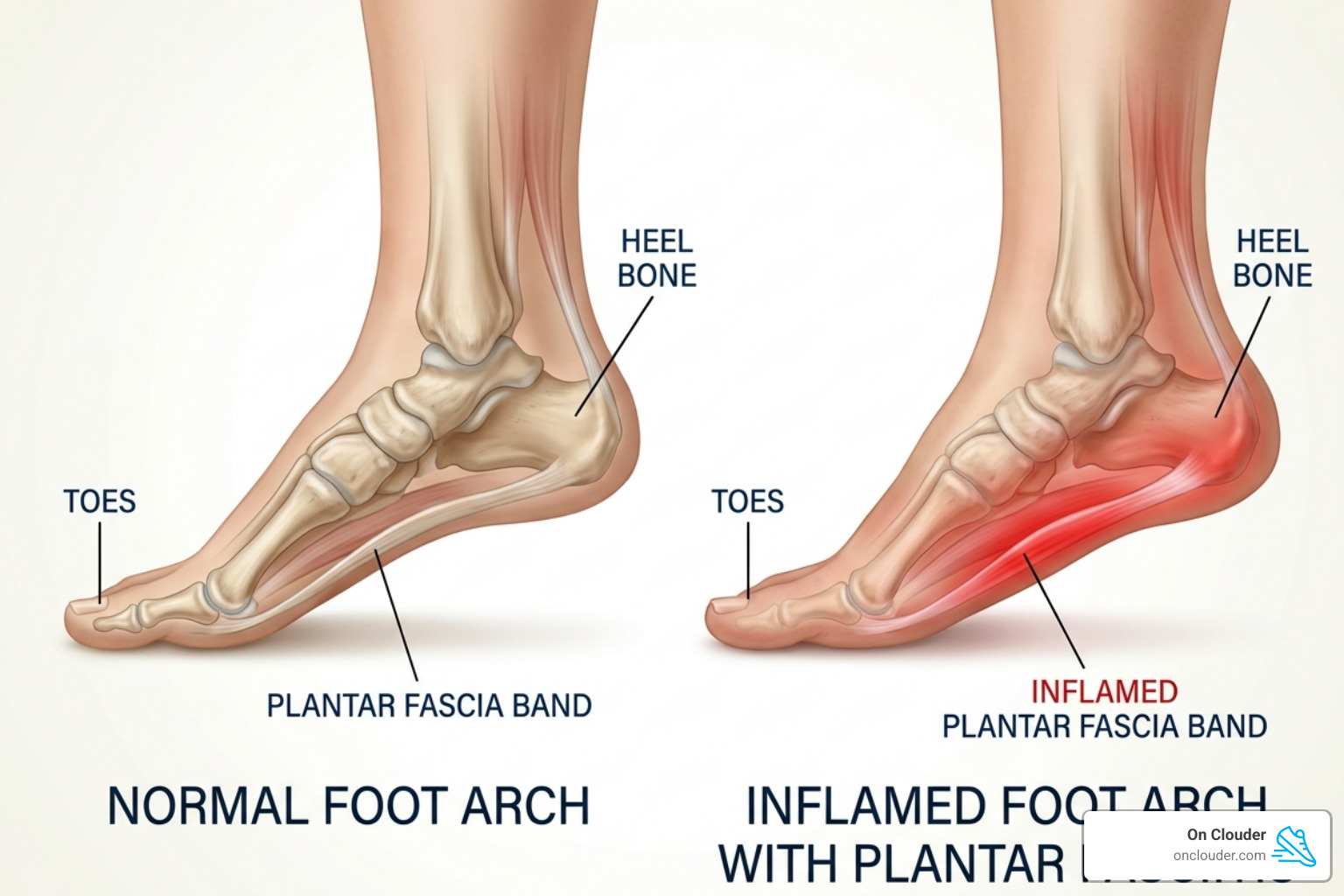
Why does it happen? Often, it’s a combination of biomechanical alignment issues and lifestyle factors. If you have flat feet or high arches, your weight isn’t distributed evenly. This leads to overpronation (where the foot rolls inward too much) or supination, putting excessive tension on the fascia. Standing for long hours on hard surfaces or sudden increases in physical activity can also trigger a flare-up.
This is where Plantar Fasciitis Relief begins with your footwear. The best shoes for plantar fasciitis work by correcting these biomechanical flaws. They provide a stable platform that prevents the fascia from overstretching, while specialized cushioning absorbs the impact that would otherwise rattle your heel bone. Understanding that Plantar Fasciitis is a mechanical issue means we must look for mechanical solutions in our shoes.
Key Features of the Best Shoes for Plantar Fasciitis
When we evaluate footwear for heel pain, we aren’t just looking for “soft” shoes. In fact, shoes that are too soft can actually make things worse by providing no stability. According to expert testing from 7 Best Sneakers For Plantar Fasciitis in 2026 – RunRepeat, there are five non-negotiable features you should look for:
- Arch Support: This is the “bridge” that shares the load across your entire foot, preventing the arch from collapsing and overstretching the fascia.
- Heel Drop (8mm+ Threshold): A higher heel-to-toe drop (the height difference between the heel and the forefoot) shifts your weight forward, taking the direct pressure off your aching heel.
- Torsional Rigidity: If you can twist a shoe like a pretzel, put it back on the shelf. A shoe should be firm through the middle to prevent excessive foot twisting.
- Firm Heel Counter: This is the back part of the shoe. It should be stiff enough to lock your heel in place, preventing the “wobble” that causes micro-trauma to the fascia.
- Rocker Soles: These curved soles help you roll through your stride smoothly, reducing the amount of work your foot muscles have to do at “toe-off.”
Some brands use specialized tech, like Dr. Scholl’s Shock Guard® Technology, which is specifically engineered to absorb the impact of every step. As we discuss in The Complete Guide To Best Shoes For Foot Pain, the goal is a “firm but cushioned” midsole that offers stability without feeling like you’re walking on concrete.
Best Shoes for Plantar Fasciitis for Running and Walking
For those of us who refuse to let heel pain stop our daily miles, the running and walking category is where the most advanced technology lives.
| Feature | HOKA Bondi 9 | Brooks Glycerin GTS 23 |
|---|---|---|
| Stack Height | 39mm (Heel) | 38mm (Heel) |
| Heel Drop | 5mm | 8mm |
| Weight | Approx. 10.8 oz | Approx. 10.5 oz |
| Best For | Max Cushioning | Stability & Support |
The HOKA Bondi 9 is a fan favorite for a reason. Its massive stack height acts like a “crash pad” for your legs. While it has a lower 5mm drop, its aggressive rocker sole compensates by moving you through your stride without straining your arch. On the other hand, the Brooks Glycerin GTS 23 uses GuideRails® technology to keep your foot in its natural path of motion. If you’re debating Hoka Vs Brooks For Plantar Fasciitis, Hoka usually offers more “plush” volume, while Brooks offers a more traditional, stable feel.
Other top-tier contenders include the ASICS Gel-Kayano, famous for its shock-absorbing gel in the heel, and the New Balance 990v6, which provides incredible torsional rigidity. If you prefer a lighter feel, the Saucony Guide 18 offers a 35mm heel stack with a 6mm drop, striking a great balance for Plantar Fasciitis Running Shoes.
Best Shoes for Plantar Fasciitis for Wide Feet and Work
If you work on your feet all day—nurses, teachers, retail workers—your needs are different. You need shoes that can handle a 12-hour shift on hard hospital floors or warehouse concrete.
The Orthofeet Coral is a lifesaver for those with wide feet or bunions. It features a stretch-knit upper and a wide toe box that allows your toes to splay naturally, reducing pressure across the entire forefoot. For a more professional look, Dr. Scholl’s Beyond Comfort collection offers slip-ons that look like standard loafers but hide podiatrist-approved arch support inside.
For those who need maximum durability, Dansko XP 2.0 Clogs are the industry standard. They feature a 2-inch heel and a rocker bottom that significantly unloads the plantar fascia during long periods of standing. We’ve covered more options in our guide to Stop The Foot Pain With These Top Rated Standing Shoes. And if you’re an Adidas fan, don’t miss The Ultimate Guide To The Best Adidas Shoe For Standing All Day, which highlights models with Boost technology that helps manage heel impact.
Recovery and Lifestyle: Sandals, Slides, and Home Care
One of the biggest mistakes people make is walking barefoot at home. Hardwood or tile floors are brutal on an inflamed fascia. Podiatrists often recommend “recovery footwear” to be worn as indoor slippers.
The Oofos Recovery Slides are essentially made of magic foam (well, OOfoam™ technology) that absorbs 37% more impact than traditional footwear. They have a patented footbed that cradles your arches in a way that feels like a constant massage. If you prefer a firmer feel, the Birkenstock Arizona with its cork footbed provides world-class arch support that molds to your foot over time.
According to users on Best shoes for plantar fasciitis that actually work? – Reddit, combining the right shoes with home care is the secret to long-term relief. This includes:
- Calf Stretching: Tight calves pull on the heel, which in turn pulls on the fascia.
- Ice Therapy: Rolling your foot over a frozen water bottle for 15 minutes can reduce inflammation.
- Night Splints: These keep your foot in a stretched position overnight, preventing that “first step” pain in the morning.
For more expert advice, check out The Best Shoes for Plantar Fasciitis, According to Podiatrists – Health.
Maintenance and When to Replace Your Footwear
Even the best shoes for plantar fasciitis won’t last forever. Most high-quality supportive shoes have a lifespan of 12 to 18 months with regular use. However, if you are a heavy runner or spend 40+ hours a week on your feet, you might need to replace them every 6 months.
How do you know it’s time?
- Midsole Compression: If the foam looks “wrinkled” or feels flat, the shock absorption is gone.
- Uneven Tread Wear: If the bottom is worn down on one side, your alignment is being compromised.
- Recurring Pain: If that familiar heel twinge starts coming back, your shoes have likely lost their structural integrity.
Proper maintenance is also a part of The Definitive Guide To Best Shoes For Back Pain, as worn-out shoes can cause a chain reaction of pain up to your knees and back. When you do replace them, consider eco-conscious brands. For instance, Dr. Scholl’s has planted over 221,807 trees as part of their sustainability initiatives, making your purchase good for your feet and the planet.
Frequently Asked Questions about Plantar Fasciitis Shoes
Can the right shoes cure plantar fasciitis?
While the right shoes are a critical part of the puzzle, they are generally considered a tool for symptom management rather than a “cure.” They provide the environment for the fascia to heal by reducing inflammation and preventing further tearing. For a full recovery, you often need to combine supportive footwear with physical therapy and stretching.
What types of shoes should I avoid if I have heel pain?
Avoid anything with flat soles (like basic canvas sneakers or flip-flops), minimalist “barefoot” shoes, and high heels. These styles either provide zero arch support or put extreme pressure on the forefoot and heel, which can exacerbate the condition. Also, steer clear of old, worn-out shoes where the midsole has collapsed.
How do I choose between stability and neutral shoes?
It depends on your gait analysis. If you overpronate (your feet roll inward), you need stability shoes with a firm “medial post” to correct your stride. If you have very high arches or a “neutral” stride, a neutral shoe with high cushioning might be better. When in doubt, visit a specialty running store for a free gait analysis.
Conclusion
At On Clouder, we know that living with foot pain is exhausting. But by choosing the best shoes for plantar fasciitis—shoes with real arch support, a protective heel drop, and a stable base—you are taking the most important step toward recovery. Whether you choose the plush comfort of HOKA or the precision stability of Brooks, the goal is to find the personalized comfort that lets you stop thinking about your feet and start enjoying your life again.
For more tips on keeping your feet happy, check out our 10 Expert Foot Health Tips and the Best Shoes to Prevent Pain. Your journey to pain-free walking starts from the ground up!