What to Look for in Beach Sandals for Plantar Fasciitis
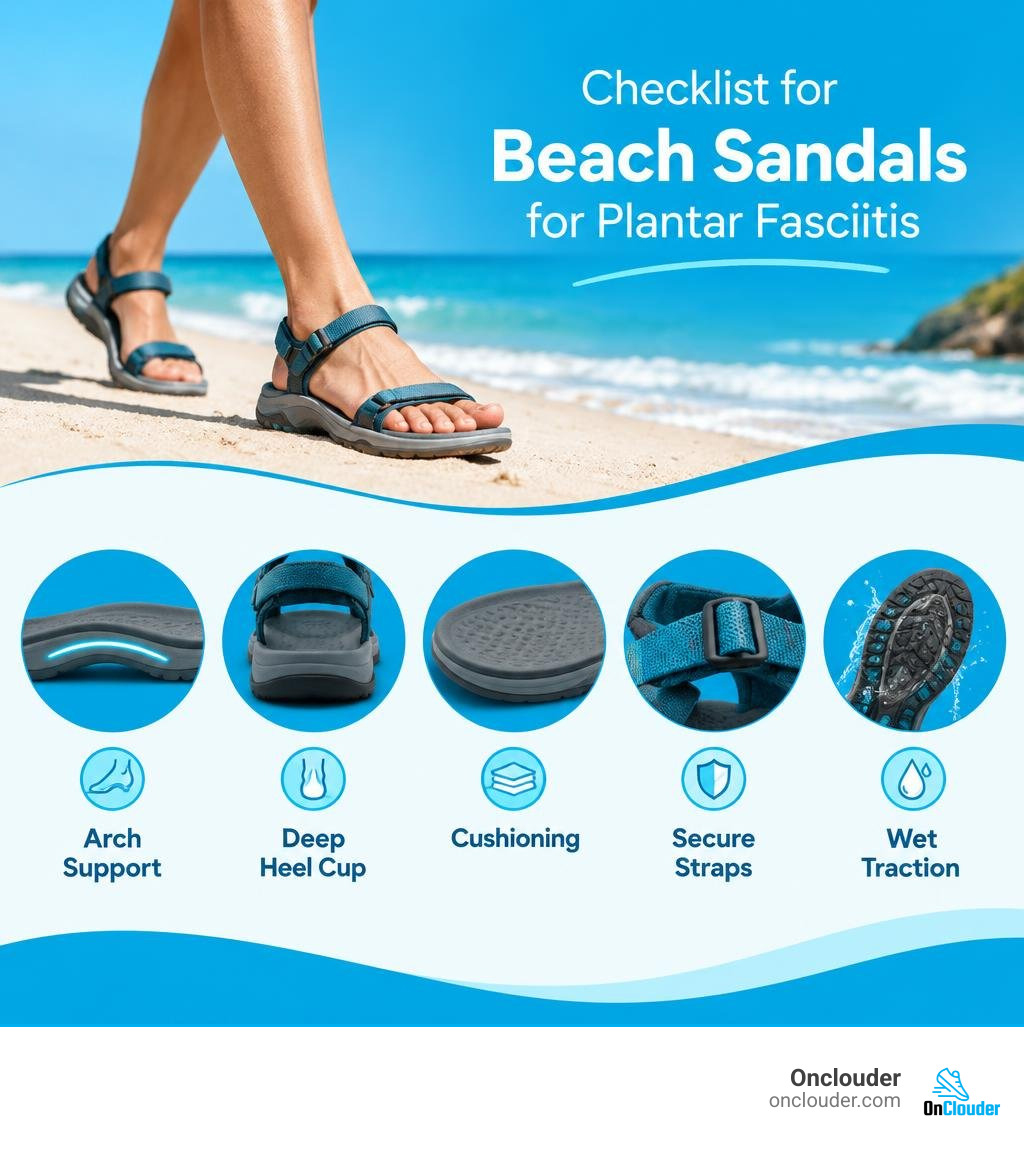
The best beach sandals for plantar fasciitis have built-in arch support, a deep heel cup, cushioning, and a secure fit. For wet beach days, look for quick-drying straps and a water-friendly foam footbed. Choose a sole with grip if you will walk on wet paths or rocks.
Soft sand can make your feet work harder, while flat flip-flops may leave your heels and arches unsupported. In this roundup, we compare supportive options for beach walks, poolside wear, and everyday use so you can find a pair that fits your feet and plans.
Explore more about best beach sandals for plantar fasciitis:
- best athletic sandals for plantar fasciitis
- best flip flops for plantar fasciitis women’s
- best dress sandals for plantar fasciitis
Essential Features of the Best Beach Sandals for Plantar Fasciitis
When you head down to the shoreline, your footwear needs to do far more than look great in vacation photos. The thick band of tissue running along the bottom of your foot—the plantar fascia—acts like a shock-absorbing bowstring. On shifting, unstable sand, that bowstring undergoes intense tensile stress with every stride.
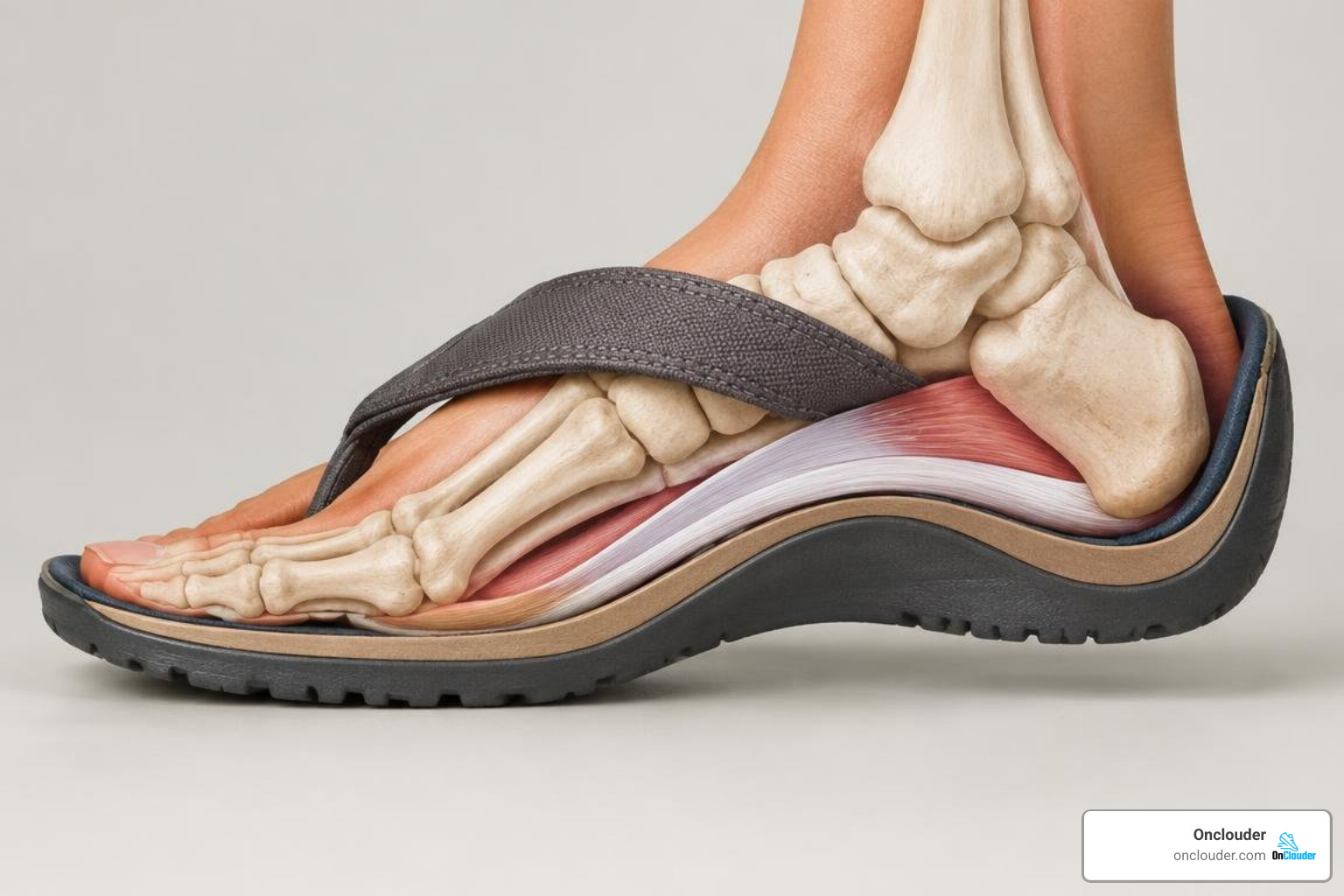
Understanding why supportive flip-flops prevent summer foot pain starts with identifying the core anatomical features necessary for relief:
- Anatomical Arch Support: The sandal must feature a firm, contoured structure that mirrors your foot’s natural medial longitudinal arch. This keeps the plantar fascia from collapsing downward and overstretching.
- Deep Heel Cradle: A recessed heel cup aligns your calcaneus (heel bone), dampens vertical impact shock, and prevents your foot from slipping sideways on uneven terrain.
- High-Rebound Cushioning: Quality midsoles absorb ground reaction forces so your heels and joints do not have to endure direct impact trauma.
- Slight Heel Elevation: A subtle heel-to-toe drop of around 10 to 15 millimeters takes acute strain off tight Achilles tendons and the posterior calf complex.
Water-Friendly Materials and Wet Traction
A day near the ocean or pool demands materials that handle moisture without losing their structural integrity. Standard leather or unsealed cork footbeds break down quickly when soaked with saltwater. Instead, look for:
- Molded Closed-Cell EVA (Ethylene Vinyl Acetate): Lightweight, flexible, fully waterproof, and buoyant. Closed-cell EVA does not absorb moisture, preventing mold, odor, and premature degradation.
- Polyurethane (PU) Gel Footbeds: Dense and durable, PU maintains its arch contour over long distances and provides exceptional resilience under heavy body weight.
- Hydrophobic Synthetic Straps: Neoprene or quick-dry polyester linings protect your skin against painful chafing while drying rapidly in the sun.
- Siped Rubber Outsoles: Patterned treads with micro-grooves channel water away from the contact patch, giving you reliable grip on wet docks, slippery pool decks, and smooth beach boardwalks.
Avoiding Flat Soles and Toe Gripping
Traditional flat flip-flops are among the primary culprits behind summer heel pain. Without built-in contouring or secure upper straps, your toes must reflexively curl and “claw” at the footbed just to keep the sandal on your foot as you swing your leg forward.
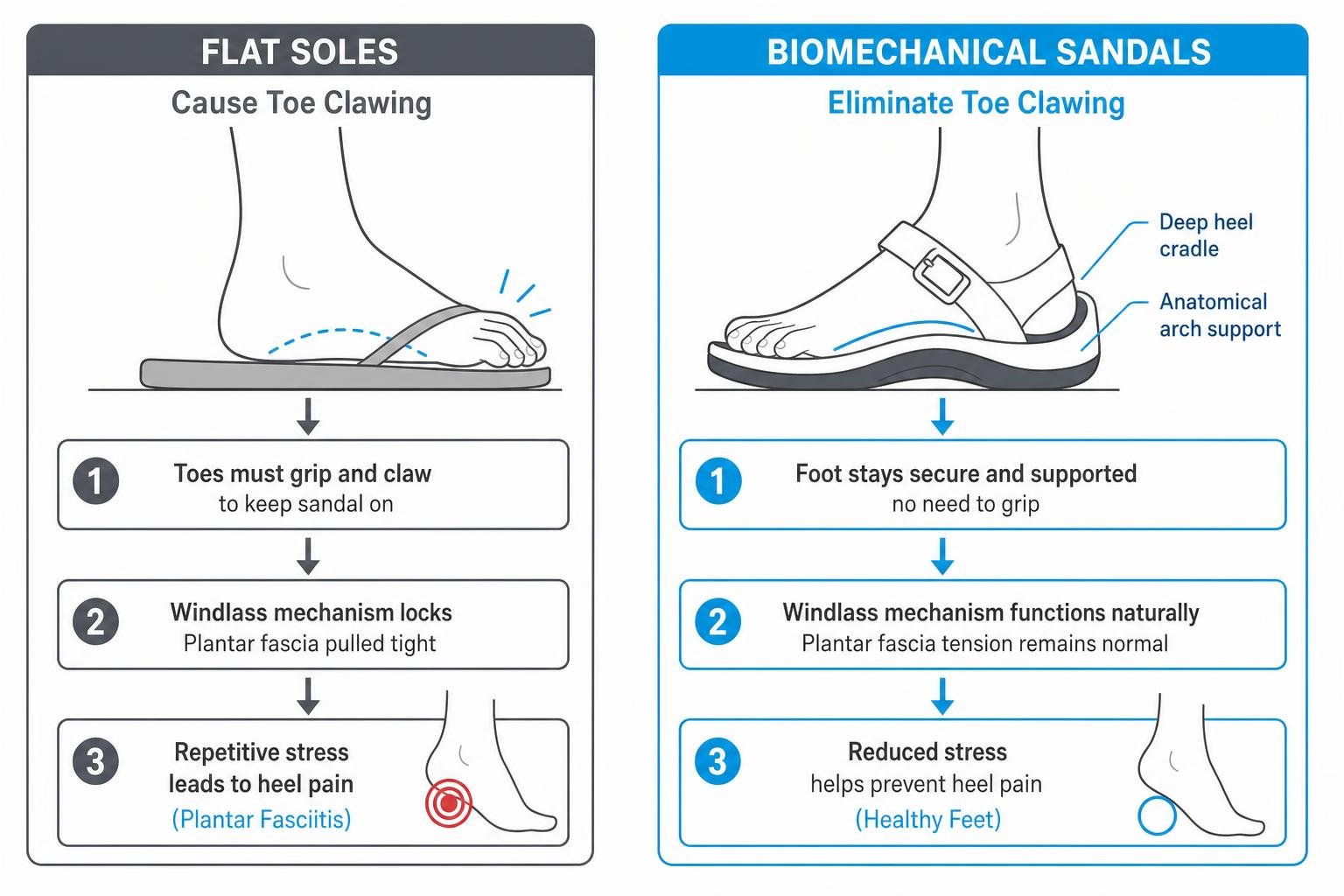
Toe clawing locks the windlass mechanism of the foot into constant tension, pulling the plantar fascia tight right at its insertion point on the heel bone. Over time, this repetitive stress creates microscopic tears, inflammation, and the telltale stabbing pain of plantar fasciitis. Choosing sandals with structured contours and secure strap geometry completely eliminates this damaging reflex.
Top Tested Picks: Beach Footwear That Relieves Heel Pain
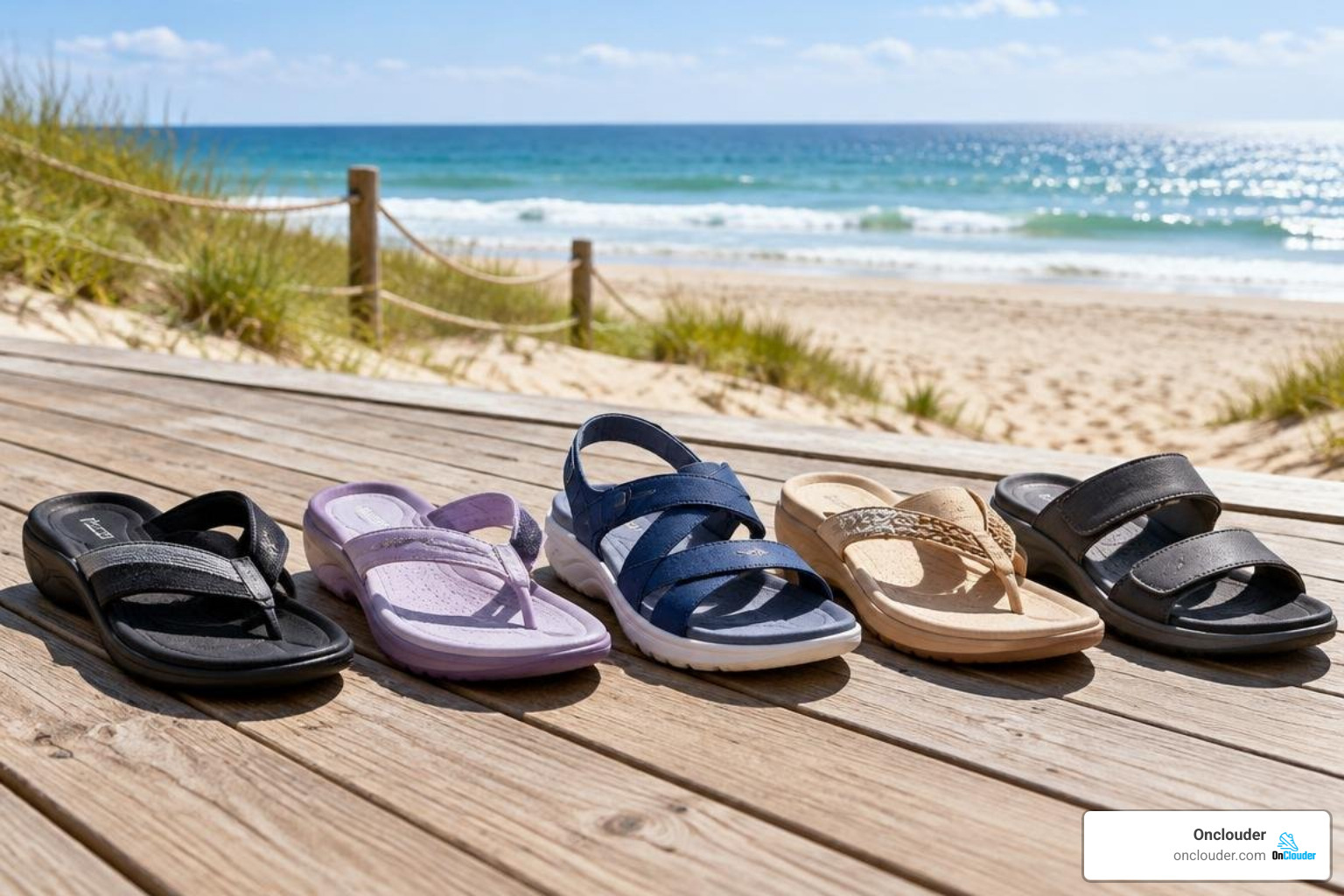
To help you find the right fit for your summer plans, we have tested and evaluated leading orthotic footwear against real-world beach conditions. Exploring stylish summer sandals that love your arches proves you never have to sacrifice medical-grade support for casual warm-weather style.
| Sandal Type | Arch Profile | Water Resistance | Cushioning Material | Best For |
|---|---|---|---|---|
| Recovery Foam Sandal | Moderate / Dynamic | 100% Waterproof | Proprietary High-Rebound Foam | Post-beach recovery & maximum impact absorption |
| Budget Orthotic Sandal | High / Rigid Orthotic | Water-Friendly Synthetic | Gel-infused Polyurethane | Budget-friendly daily beach & poolside wear |
| Adjustable-Fit Sandal | Moderate / Soft | Water-Resistant EVA | Cushioned Dual-Density EVA | Adjustable fit for narrow to wide feet |
| Lightweight Waterproof EVA Sandal | High / Firm Orthotic | 100% Waterproof | One-piece Molded EVA | Structured alignment & lightweight water wear |
| Orthotic Thong Sandal | High / Biomechanical | 100% Waterproof | Specialized Closed-Cell Foam | Classic thong look with built-in orthotic support |
Recovery Sandal — Maximum Impact Absorption
For anyone experiencing active, throbbing heel pain, maximum impact reduction is essential. Sandals built with proprietary high-rebound recovery foam absorb up to 37% more impact energy with every footstrike compared to traditional footwear foams.
Reviewing top podiatrist picks for plantar fasciitis flip-flops consistently highlights this closed-cell technology. The dynamic footbed cradles the arch while reducing energy exertion in your ankles and knees, making it the ideal pair to step into after a long walk along the shoreline.
Budget Orthotic Sandal — Best Beach Sandals for Plantar Fasciitis on a Budget
Effective orthotic alignment does not require spending top dollar. Many affordable orthotic sandals feature a medically certified design backed by an American Podiatric Medical Association (APMA) seal of acceptance, with some options earning user ratings above 4.5 out of 5 from hundreds of verified reviews.
These budget-friendly sandals typically feature a water-friendly vegan leather upper and a polyurethane gel-infused footbed that delivers structured arch stabilization alongside soothing heel cushioning. This design gives beachgoers a reliable defense against heel strain without breaking the bank.
Adjustable-Fit Sandal — Adjustable Fit for Beach Walks
Feet naturally swell in high temperatures and direct sunlight, which can turn fixed straps into blister magnets. Look for sandals with an adjustable hook-and-loop closure discreetly integrated into the upper strap to solve this problem.
Available in dozens of vibrant colors, these lightweight options pair an EVA footbed with a flexible rubber outsole. The adjustable closure lets you customize the midfoot tension throughout the day, keeping your heel firmly planted inside the contoured bed without pinching your instep.
Lightweight Waterproof EVA Sandal — Lightweight Waterproof Support
If you love the rigid, supportive structure of classic cork footbeds but need complete waterproof durability, one-piece molded EVA sandals offer an outstanding solution.
These ultralight slides feature deep heel cups, pronounced longitudinal and transverse arch supports, and a raised toe bar that encourages natural foot motion. Because they are molded entirely from closed-cell EVA foam, they can be submerged in the ocean or rinsed under a beach hose without absorbing a single drop of water.
Orthotic Thong Sandal — Orthotic Thong Profile
If you prefer the clean, minimalist look of a classic flip-flop without the flat-soled hazards, biomechanically designed thong sandals deliver the best of both worlds. Designed by physical therapists, these thongs feature up to 2.2 centimeters of built-in orthotic arch contour.
Checking out the top men’s orthotic flip-flops to prevent heel pain showcases how one-piece molded constructions eliminate weak glue joints and toe-post blowouts. Their snug, tight-fitting upper strap keeps the sole glued to your foot during your gait cycle, eliminating clawing while maintaining authentic beach style.
How to Choose the Right Size, Width, and Fit
Selecting an orthotic sandal requires a slightly different approach than buying standard sneakers. When managing plantar fasciitis, your foot must sit precisely over the sandal’s engineered contours.
Keep these fit factors in mind when making your selection:
- Arch Placement Over Length: Your foot’s arch apex must sit directly above the sandal’s contoured curve. If the arch bump sits too far forward or too far back toward your heel, it can irritate the plantar fascia instead of supporting it.
- Heel Cup Alignment: Your heel must sit completely inside the rear recess. If your heel bone rests on the raised outer rim, it can cause uncomfortable friction and compromise shock absorption.
- Width Accommodation: Never let the sides of your feet spill over the footbed edges. Many supportive footwear brands offer dedicated wide widths to accommodate broad feet and bunions comfortably.
- Strap Tension: The upper strap should fit snugly against your instep. When the upper holds your foot securely, your muscles do not have to work overtime to stabilize the shoe.
Understanding why arch support slides and thongs are essential ensures you evaluate every pair for stability, strap snugness, and proper weight distribution before heading outside.
Practical Tips for Managing Plantar Fasciitis at the Beach
Even the most supportive sandals cannot completely counteract the intense demands of loose, dry sand. Shifting sand requires significantly more muscular effort from your calves and arches with every step.
Follow these practical habits to protect your feet during beach trips:
- Avoid Barefoot Walking on Soft Sand: Walking barefoot across dry, sloping dunes places massive tensile strain on cold, unstretched plantar tissue. Wear your orthotic sandals from the parking lot down to the water’s edge.
- Stick to the Hard-Packed Wet Sand: If you want to stroll along the coastline, walk near the low-tide line where the sand is compact and stable, reducing excessive pronation.
- Stretch Your Calves and Arches Daily: Perform gentle gastrocnemius and soleus wall stretches before heading out. Tight calves pull on the Achilles tendon, which directly increases tension on the plantar fascia.
- Use Ice Therapy After Beach Activity: Roll the sole of your foot over a frozen water bottle for 10 to 15 minutes after returning home to calm acute inflammation and soothe aching heels.
- Pack Dedicated Recovery Footwear: Rotate into specialized active sandals that support foot pain recovery once your beach session wraps up to keep your arches supported through evening dinners and boardwalk strolls.
Frequently Asked Questions About Beach Sandals and Heel Pain
Can I wear regular flat flip-flops on the beach if I have plantar fasciitis?
We strongly advise against wearing flat flip-flops if you suffer from heel pain. Traditional flat sandals offer zero medial arch support and minimal shock absorption, allowing your arch to collapse under your body weight. This causes repetitive micro-tearing at the calcaneal attachment of the plantar fascia, which quickly leads to painful flare-ups.
Are the best beach sandals for plantar fasciitis completely waterproof?
Many top options are 100% waterproof, particularly those made from injection-molded closed-cell EVA foam or synthetic rubber compounds. Other designs use water-resistant materials, such as treated vegan leathers with polyurethane footbeds. These handle splashes and damp sand easily, though they should be rinsed with fresh tap water after saltwater exposure to maintain their durability.
How often should I replace my orthotic beach sandals?
Even high-grade orthotic sandals lose their shock absorption and structural firmness over time. If you notice horizontal compression creases along the midsole walls, visible tread wear on the outsole, or a flattened arch contour, it is time to replace them. For frequent beachgoers, refreshing your primary supportive sandals every 8 to 12 months ensures continuous protection.
Conclusion
Plantar fasciitis should never force you to sit out sunny vacations or beachside strolls. By swapping flimsy, flat flip-flops for sandals engineered with anatomical arch support, deep heel cradles, and high-impact cushioning, you can keep your feet stable, aligned, and comfortable on shifting sands.
At Onclouder, our hands-on testing shows that the right pair of supportive sandals makes all the difference for summer foot health. For dependable, all-day relief on hard surfaces when your vacation ends, explore our comprehensive guide to finding the best work shoes for plantar fasciitis to protect your arches year-round.