Which Birkenstocks Are Best for Plantar Fasciitis?
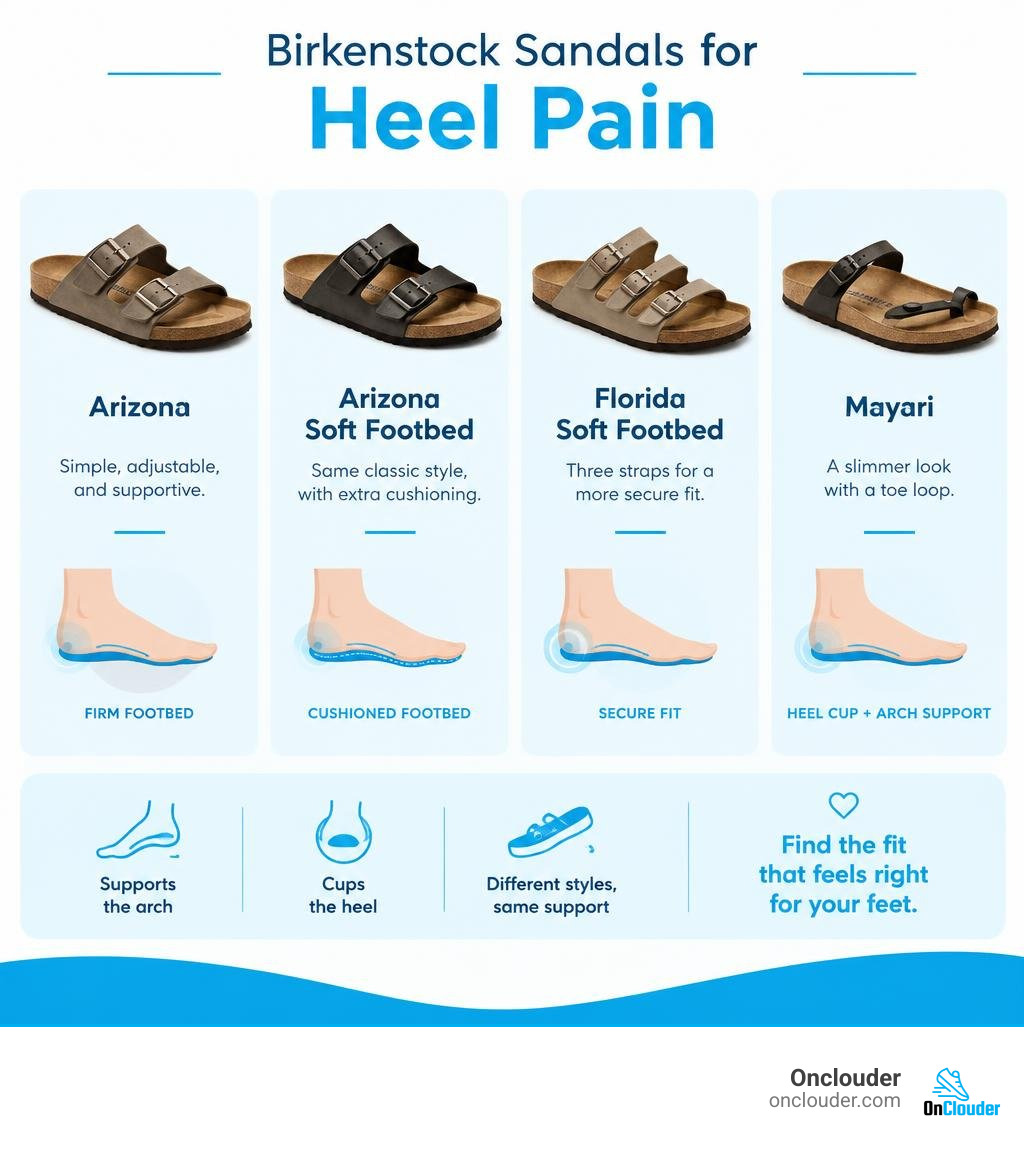
Finding the best birkenstock sandals for plantar fasciitis comes down to matching your foot shape with the right level of support. Start with the Arizona if you want a simple, adjustable sandal with a firm, contoured footbed. Choose the Arizona Soft Footbed if you prefer a little more cushioning. The Florida Soft Footbed adds a third strap for a more secure fit, while the Mayari offers a slimmer look with a toe loop.
All four can be worth trying for plantar fasciitis because their footbeds support the arch and cup the heel. But fit matters more than the model name: your arch should feel supported, not pressed, and your heel should sit inside the heel cup. Birkenstocks may ease discomfort for some people, but they are not a treatment for plantar fasciitis.
Helpful related footwear guides:
- best flip flops for plantar fasciitis women’s
- best casual women’s shoes for plantar fasciitis
- best house slippers for plantar fasciitis women’s
Introduction
Plantar fasciitis is one of the most frustrating, nagging foot conditions anyone can face. That sharp, stabbing pain under your heel during your first morning steps happens when the thick band of connective tissue running along the bottom of your foot—the plantar fascia—becomes strained, irritated, or overloaded. When your foot overpronates or your medial longitudinal arch collapses without adequate support, microtears develop near the calcaneus (heel bone), making every step feel like walking on hot gravel.
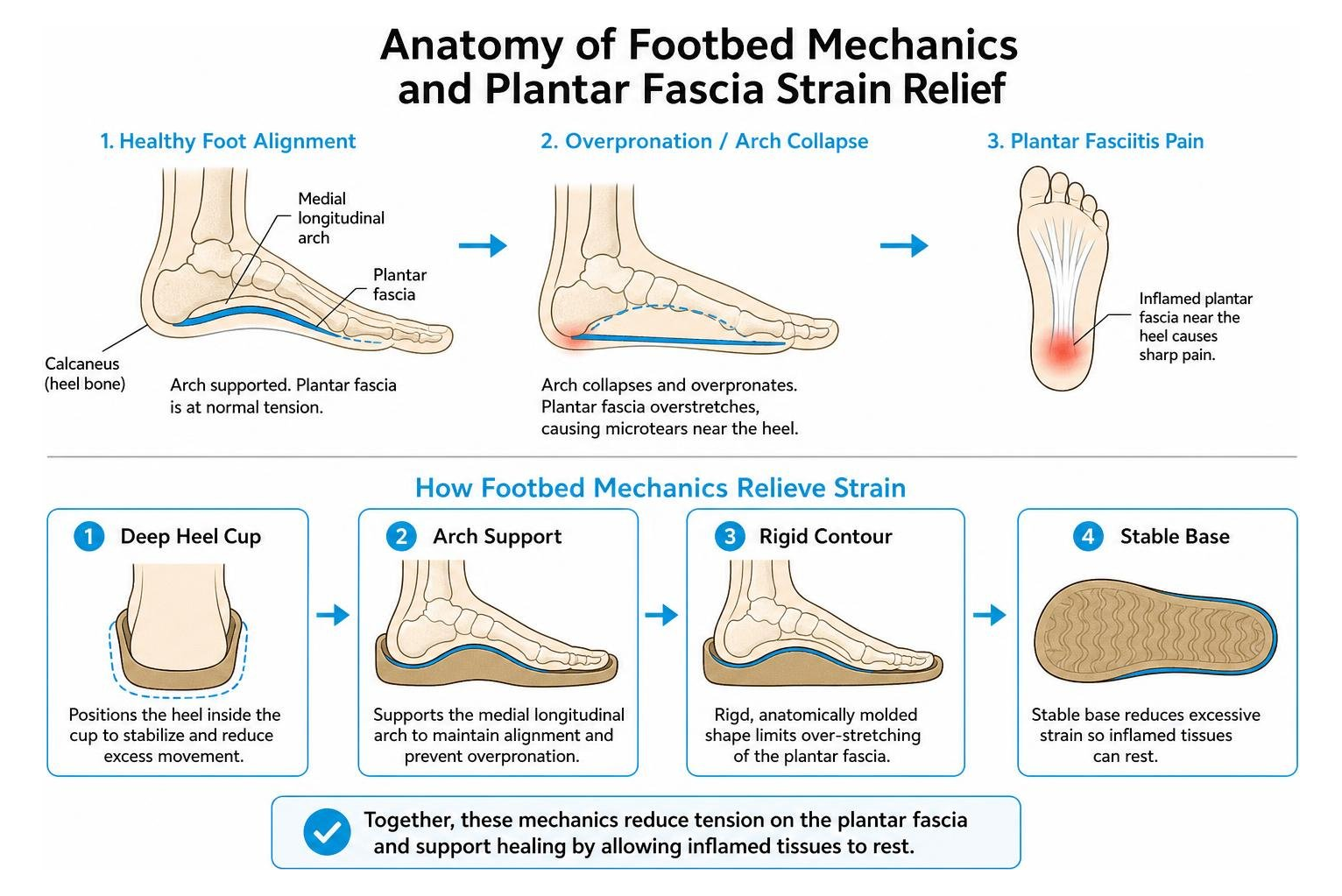
Conservative management begins with stabilizing the foot framework. Walking barefoot on hard tile or hardwood floors increases tension across the plantar fascia. This is where finding structured, anatomically molded sandals becomes essential. By incorporating rigid arch contouring, a cupped heel, and a stable base, you can prevent excessive stretch and allow inflamed tissues to rest.
Top Picks: The Best Birkenstock Sandals for Plantar Fasciitis
When evaluating the best birkenstock sandals for plantar fasciitis, we look at strap adjustability, footbed geometry, and impact dampening. Below is a snapshot of our top-tested recommendations as of October 2026:
| Model | Footbed Type | Straps / Closure | Weight (Per Shoe) | Approximate Price | Best For |
|---|---|---|---|---|---|
| Arizona Classic | Original Cork-Latex | 2 Adjustable Buckles | ~7.5 oz | $117.95 | Rigid structural support & wide feet |
| Arizona Soft Footbed | Cushioned Cork + Foam | 2 Adjustable Buckles | 7.0 oz (W7-7.5) | $155.00 | Sensitive heels & daily walking |
| Florida Soft Footbed | Cushioned Cork + Foam | 3 Slender Buckles | ~7.2 oz | $123.95 | High insteps & targeted pressure spread |
| Mayari | Original Cork-Latex | Toe Loop + 2 Buckles | ~6.8 oz | $112.95 | Forefoot guidance & stylish outings |
| Gizeh | Classic / Platform | Thong Post + 1 Buckle | ~7.0 oz | $124.00 | Minimalist thong feel with arch control |
| Boston Clog | Original / Soft | Closed Toe + 1 Buckle | ~8.5 oz | $169.95 | Year-round wear & indoor house protection |
For a broader breakdown of medical-grade footwear, check out our guide on podiatrist approved best shoes for plantar fasciitis.
Birkenstock Arizona: The Classic Dual-Strap Recovery Sandal
The Birkenstock Arizona remains the quintessential silhouette for anyone recovering from heel pain. Its two wide, individually adjustable buckled straps allow you to dial in an exact midfoot lock without pinching the dorsal nerve bundle.
Available in both standard Birko-Flor (priced at $117.95) and the premium suede or oiled leather Arizona Soft Footbed ($155.00), this sandal weighs in at a lightweight 7 oz per shoe (in women’s size 7–7.5). It features a true 0 mm heel-to-toe drop, which encourages natural calf elongation while the deep cork molding keeps the calcaneus firmly cradled.
Birkenstock Florida Soft Footbed: Triple-Strap Targeted Security
If your feet tend to slip forward or you require a more customized fit across varying points of your instep, the Florida Soft Footbed is an exceptional alternative. Priced at roughly $123.95, this design splits the upper into three slender, adjustable straps.
By distributing pressure across three separate zones instead of two broad bands, the Florida minimizes targeted friction over high arches. It prevents the foot from sliding around during the gait cycle, keeping your plantar fascia aligned over the cork contour.
Birkenstock Mayari: Elegant Toe-Loop Stabilization
For those seeking a lighter aesthetic without sacrificing orthotic-grade mechanics, the Mayari ($112.95) stands out. It incorporates a crisscross toe loop that gently holds the big toe (hallux) in place, preventing the forefoot from splaying out of alignment.
With a heel stack height of approximately 20–25 mm, the Mayari provides adequate ground clearance and shock absorption. The toe-loop mechanism works in tandem with the transversal arch support, reducing tensile pull across the windlass mechanism during push-off. If you love thong profiles, exploring why your summer needs arch support slides and thongs will help explain why structured sandals outperform flat flip-flops every time.
Birkenstock Gizeh and Boston: Thong Contours and Closed-Toe Options
If you prefer classic center-post sandals, the Gizeh offers a molded toe-grip post that pairs with Birkenstock’s signature contours. For those who need a touch of extra heel lift to alleviate Achilles tension, the Gizeh Flex Platform Birko-Flor in Color Sandcastle features a 30 mm elevated sole for enhanced shock dissipation. You can also explore top podiatrist picks for plantar fasciitis flip flops to compare traditional center-post alternatives.
Meanwhile, the Boston Clog is a closed-toe powerhouse for cooler weather and indoor recovery. Slipping into a Boston ensures you never walk barefoot on hard floors at home. Men battling early-morning heel stiffness can also review how Birkenstock men’s slippers deliver unmatched arch support at home.
How Birkenstock Footbed Anatomy Alleviates Heel Pain
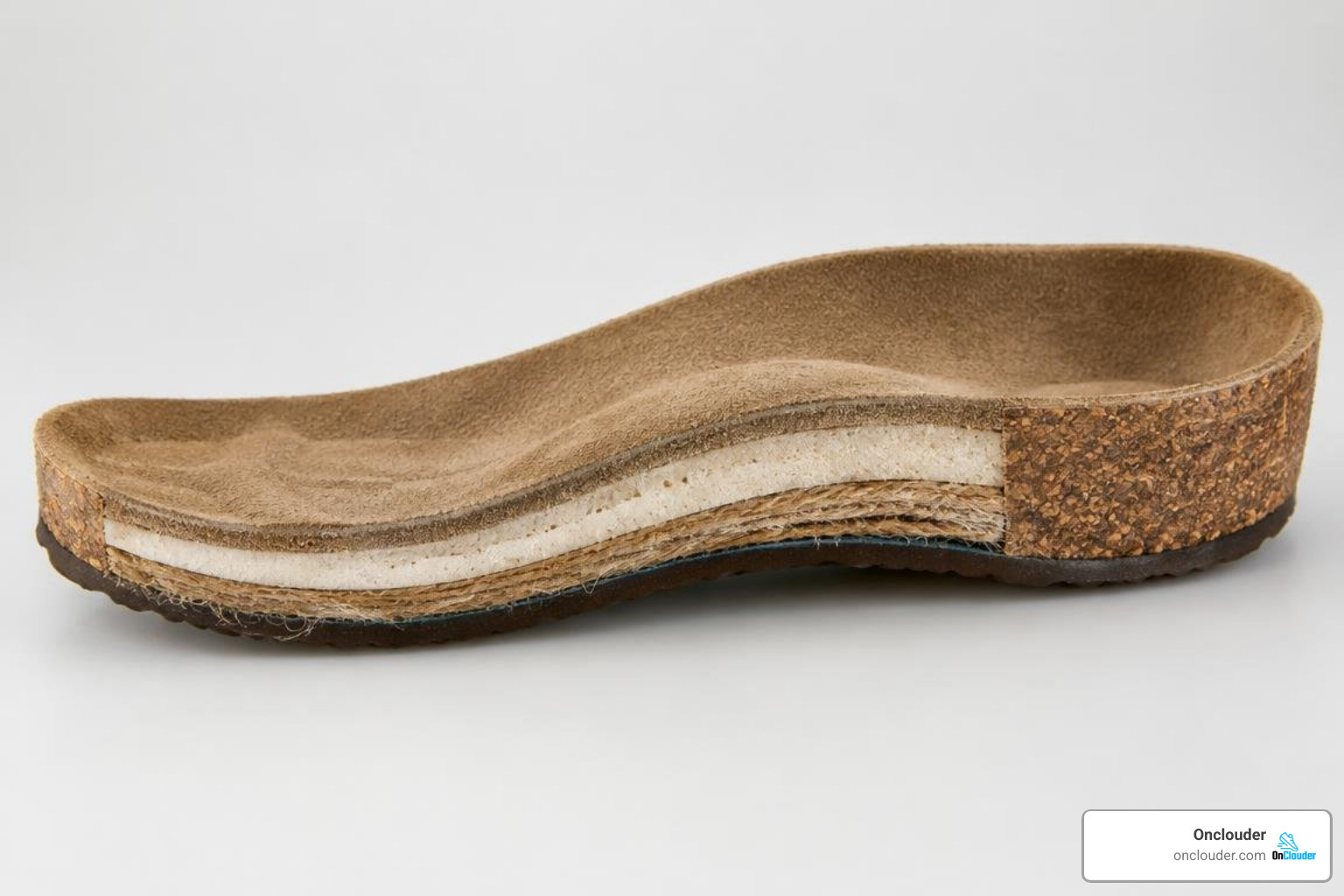
The magic behind Birkenstock’s therapeutic reputation lies in its anatomical footbed geometry. Unlike flat sandals that let the foot flatten completely, Birkenstock uses a multi-layered construction of natural cork, latex resin, jute fibers, and suede linings.
- Deep Heel Cup: Centers the heel bone and compresses the natural fat pad beneath the calcaneus, maximizing natural shock absorption.
- Longitudinal Arch Support: Runs along the inner and outer sides of the footbed, stabilizing the medial and lateral arches to prevent overpronation.
- Transverse Metatarsal Support: A subtle ridge through the middle of the footbed that encourages natural toe positioning and spreads impact forces evenly.
- Raised Toe Bar: Stimulates the natural rolling motion of the toes during gait, engaging foot muscles and preventing clawing.
- Zero-Drop Platform: Keeps the heel and forefoot on an even plane, supporting natural posture and spinal alignment.
Keeping the heel stable and the arch supported prevents the repetitive microtrauma that keeps the plantar fascia inflamed.
Original vs. Soft Footbed: Which Best Birkenstock Sandals for Plantar Fasciitis Provide Optimal Cushioning?
One common dilemma is choosing between the Original Footbed and the Soft Footbed.
- The Original Footbed: Features a firm cork-and-latex mix topped directly with suede lining. It offers maximum structural stability and molds deeply to your foot shape over time, but it feels rigid during initial wear.
- The Soft Footbed: Inserts an anatomically shaped layer of permanently elastic, closed-cell foam beneath the suede lining. This provides instant cushioning at heel strike while preserving the firm cork foundation underneath.
If you are currently experiencing acute, tender heel pain, the Soft Footbed is typically best because it cushions sensitive calcaneal attachments. If you have flexible flat feet that require rigid correction, the Original Footbed offers unyielding support.
Key Podiatrist Insights on Choosing the Best Birkenstock Sandals for Plantar Fasciitis
Podiatrists generally favor Birkenstocks because their rigid cork sole prevents the sandal from twisting midfoot—a critical feature for controlling overpronation. The American Academy of Orthopaedic Surgeons (AAOS) recommends supportive shoes with thick, stable soles for managing heel pain.
While medical experts often suggest them as supportive lifestyle footwear, sandals should complement a broader recovery plan that includes calf stretches, arch strengthening, and load management.
Proper Sizing, Fit Guidelines, and Break-In Strategy
A poorly fitting Birkenstock can worsen foot pain if your heel lands on the raised rim or your arch sits off-center.
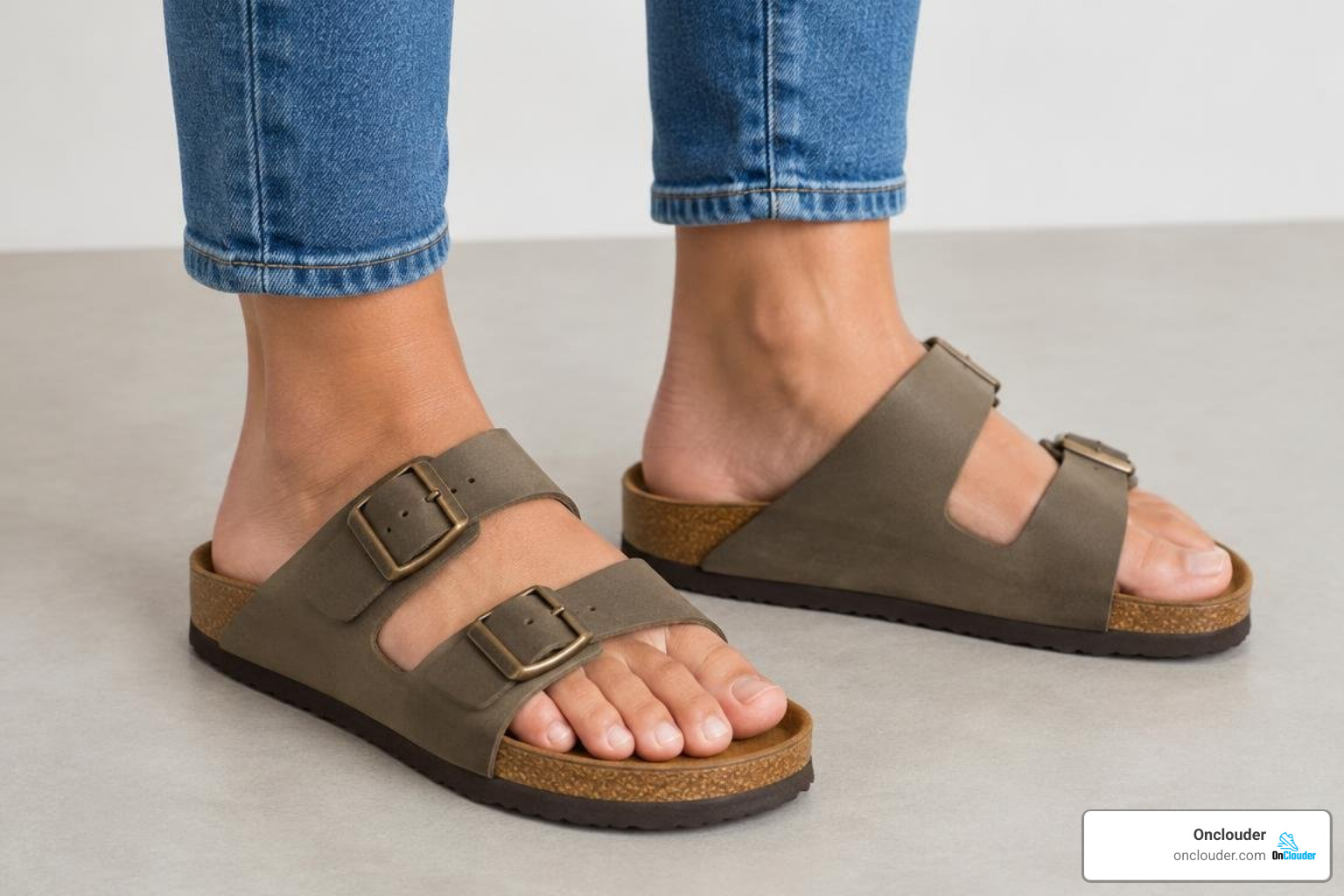
Follow these essential fitting principles:
- Perimeter Space: Ensure you have roughly 1/4 inch (about one finger width) of space between your heel and the rear counter rim, as well as in front of your toes.
- Width Selection: Birkenstock offers Regular (medium to wide) and Narrow fits. The widest part of your forefoot should align comfortably with the widest part of the footbed without overlapping the cork edges.
- Buckle Adjustment: Fasten the straps securely enough to hold your foot in place, but leave enough slack for natural foot flexion during movement.
Birkenstock explicitly recommends starting with just one to two hours of wear per day. Natural cork molds to your foot’s unique contours over time, but giving your feet time to adapt prevents early arch soreness.
Durability, Orthotic Pairing, and Recovery Alternatives
Birkenstocks are known for their multi-year longevity. The natural cork-latex core compresses slightly to create a custom anatomical mold of your foot. When the lightweight EVA outsole eventually wears down, the sandal can be completely resoled by a certified repair cobbler, making it both cost-effective and environmentally friendly.
Can You Pair Birkenstocks with Orthotics?
Because Birkenstock sandals feature built-in raised contours, standard thick prescription orthotics cannot simply be placed on top without pushing your foot out of the footbed. However, individuals needing localized relief can pair a thin, 3/4-length adhesive orthotic insert over the arch area if extra medial posting is required.
If your condition requires more formal footwear for long shifts on hard surfaces, explore our comprehensive guide to the best work shoes for plantar fasciitis. You can also compare stylish alternatives via the best dress sandals with good arch support walk on air or review top men’s orthotic flip flops to keep heel pain away.
Frequently Asked Questions About Birkenstocks and Plantar Fasciitis
Can I wear Birkenstocks if I have acute plantar fasciitis flare-ups?
Yes, but opt for the Soft Footbed versions (such as the Arizona Soft Footbed or Florida Soft Footbed). The added layer of latex foam dampens initial impact forces against tender heel spurs while the cork base prevents the arch from stretching painfully. Start with short periods of indoor wear before using them for long walks.
How long do Birkenstock sandals typically last before losing support?
With basic care, a pair of Birkenstocks typically provides structural support for 2 to 5 years of regular use. Applying cork sealant when the edges lose their shine protects the core from moisture, and the EVA outsoles can be easily resoled once tread depth wears thin.
Can custom orthotics be inserted into standard Birkenstock sandals?
Standard custom orthotics cannot be placed into regular open-heel Birkenstock sandals because the built-in heel cup and raised edges will cause the insert to tilt. If you require rigid, custom-molded medical orthotics, look for closed-back clogs with removable footbeds instead.
Conclusion
Choosing supportive footwear is a vital step toward waking up free from morning heel pain. With their deep heel cups, longitudinal arch support, and stable cork midsoles, Birkenstock sandals offer a dependable blend of structural alignment and all-day comfort.
For the softest step right out of the box, our top pick remains the Arizona Soft Footbed, while the Florida and Mayari provide tailored strap security and elegant forefoot stability. Focus on getting the right width and sizing, take time to break in the cork footbed, and your feet will thank you for miles to come.