Best Athletic Sandals for Plantar Fasciitis: What to Look For
The best athletic sandals for plantar fasciitis have a firm, shaped footbed, a stable heel, and straps that hold your foot in place. For long walks, look for a secure, adjustable sport sandal with good grip. For use after exercise or around the house, a supportive recovery slide may be enough. A soft sole alone is not a sign of good support.
This guide compares those options and shows how to check the fit. Sandals can make walking more comfortable, but they do not replace treatment or supportive shoes for every activity.
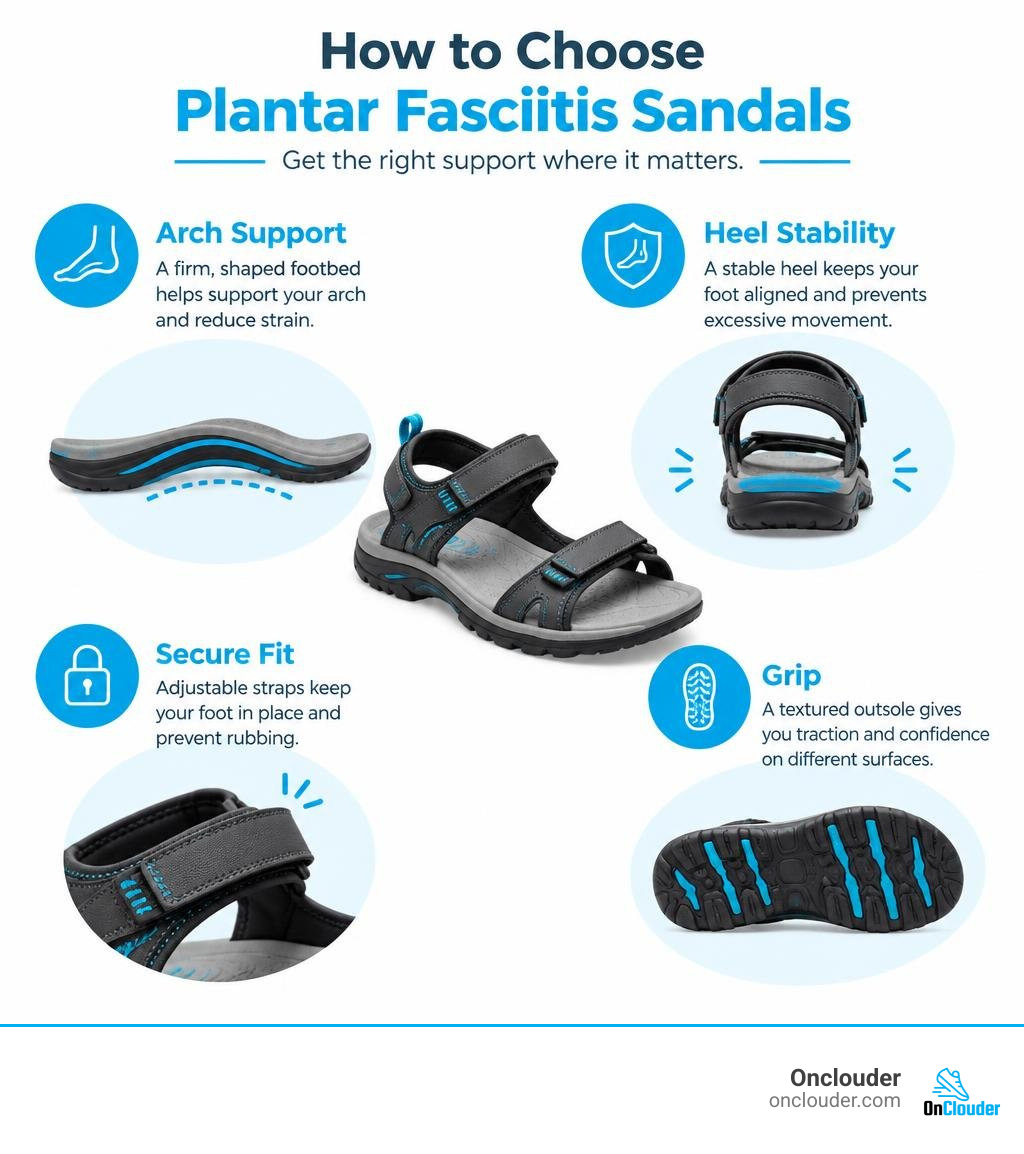
Basic best athletic sandals for plantar fasciitis vocab:
- best hiking sandals for plantar fasciitis
- best flip flops for plantar fasciitis women’s
- best indoor sandals for plantar fasciitis
Key Features of the Best Athletic Sandals for Plantar Fasciitis
When you are dealing with sharp heel pain or morning stiffness, your footwear needs to do far more than just keep your soles off the hot pavement. True athletic recovery sandals function as open-air orthotic devices. They need to stabilize your rearfoot, offload tension from the plantar fascia band, and absorb repetitive ground impact.
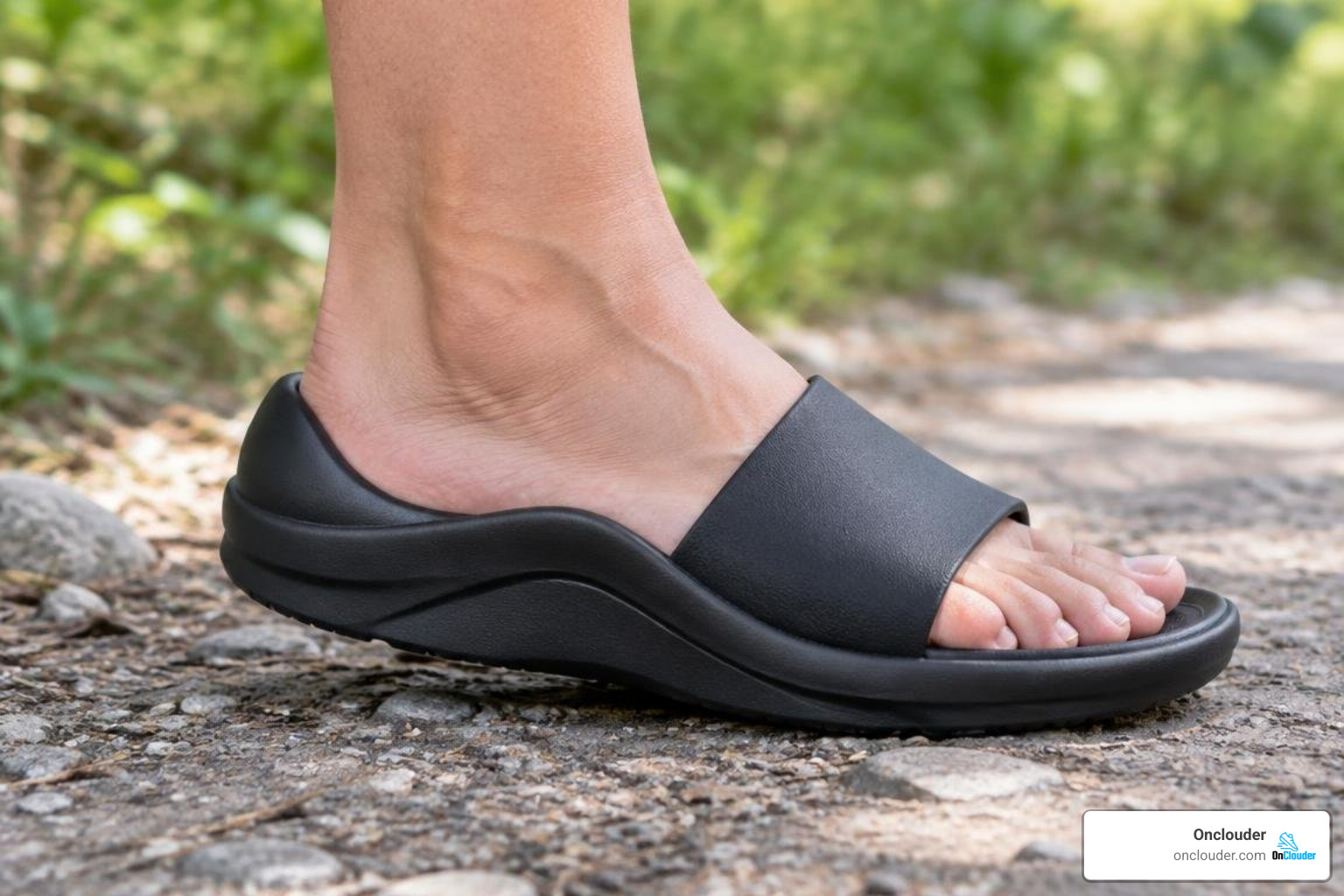
To deliver genuine Plantar Fasciitis Relief, an athletic sandal must integrate several core structural components:
- Deep Heel Cup: A cupped heel bed stabilizes the calcaneus and cradles the natural fatty heel pad. This prevents lateral shifting and centers your weight directly over the midsole’s cushioning zone.
- Anatomical Arch Contouring: Firm, 3D anatomical Arch Support hugs the medial longitudinal arch, preventing excessive pronation and stopping the plantar fascia from overstretching during the midstance phase of your stride.
- Multi-Strap Retention: Adjustable forefoot, instep, and ankle straps hold the foot firmly against the contoured footbed, eliminating the need for your toes to grip or claw for stability.
- Substantial EVA Midsole: A resilient midsole—typically measuring between 3cm and 4cm thick—dissipates strike shock before it radiates into your heel bone and calf muscles.
- Torsional Rigidity: A supportive sandal should resist twisting like a wet towel. Torsional stiffness ensures that your foot remains on a stable, guided plane from heel strike to toe-off.
Why Structural Support Outperforms Soft Cushioning
A common mistake when managing acute Foot Pain is falling into the “cushioning trap.” Ultra-plush, marshmallow-like foam feels wonderful the second you step into it because it alleviates surface pressure points. However, walking on an unsupportive, overly soft foam bed forces your intrinsic foot muscles to work overtime just to keep you balanced.
There is a major biomechanical distinction between plush cushioning and structured support. Soft cushioning simply yields under body weight, allowing the arch to collapse and increasing micro-tears in the plantar fascia with every step. In contrast, structured athletic sandals act like an architectural arch bridge: they provide an unyielding foundation that bears dynamic load, distributes pressure across the entire plantar surface, and delays muscle fatigue.
Sole Geometry and Biomechanical Materials
The materials and geometry underfoot dictate how well your body moves while recovering from plantar fascia irritation. Most podiatrist-approved sport sandals utilize high-density, medical-grade ethylene-vinyl acetate (EVA) or polyurethane compounds. These materials compress slightly to dampen impact forces without losing their structural shape over time.
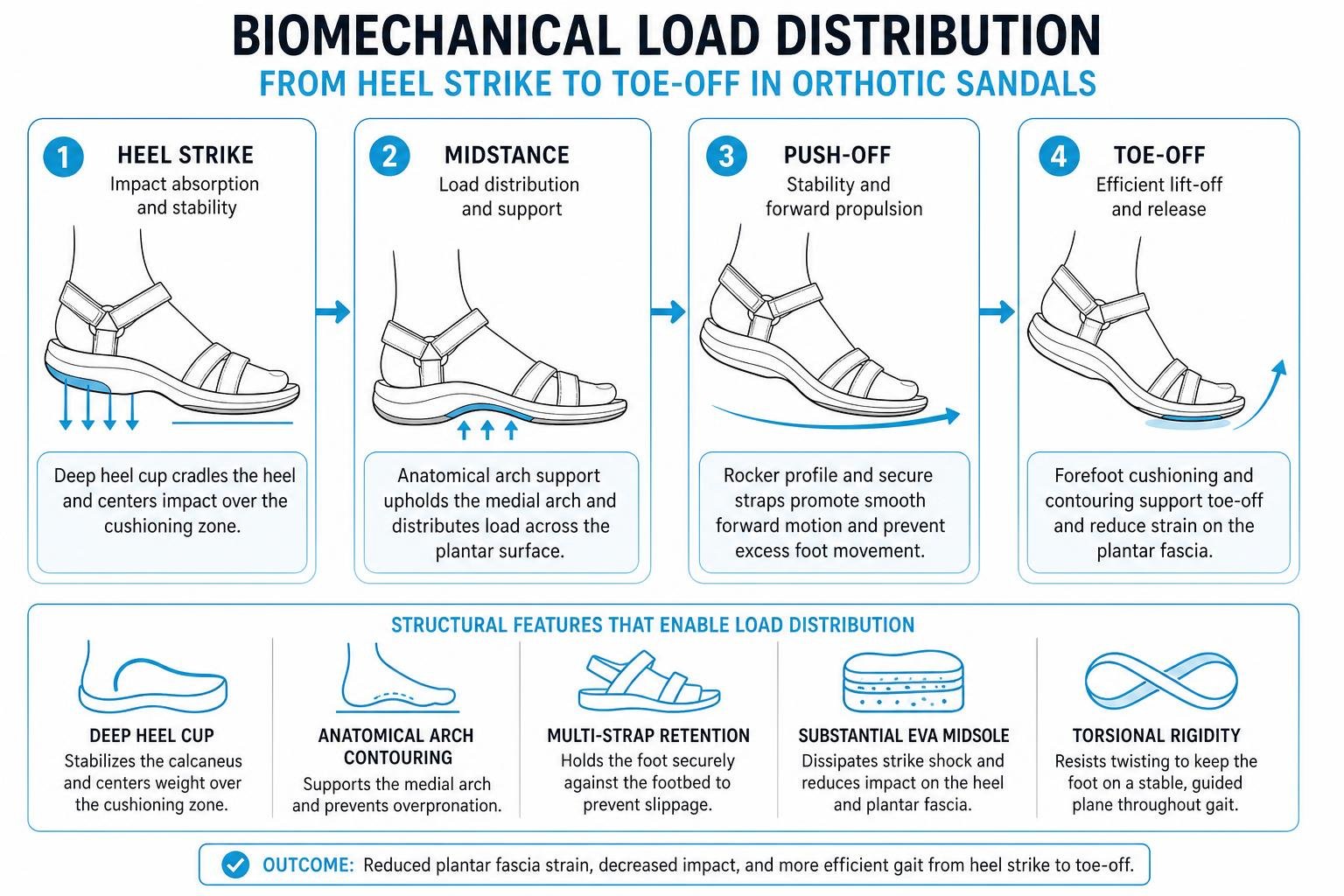
Sole geometry plays an equally crucial role:
- Heel-to-Toe Drop (10–20mm): A moderate heel elevation reduces passive tension on the Achilles tendon and calf complex, which directly eases strain on the connected plantar fascia.
- Rocker Bottom Profiles: A subtle toe spring promotes smooth forward propulsion without requiring excessive bending at the metatarsophalangeal joints.
- Zero-Drop Footbeds: While level footbeds encourage natural gait patterns and toe splay, they require cautious adaptation if tight calves are driving your plantar fascia strain.
- Traction Outsoles: Durable rubber compounds with multi-directional lug patterns deliver confident grip on wet surfaces, loose gravel, and paved trails, preventing slips that cause sudden eccentric tissue strain.
Top Athletic Recovery Sandal Categories Compared
Different daily routines require distinct sandal designs. Whether you are tackling technical outdoor trails, running errands, or recovering after a tough marathon training block, matching your sandal category to your activity is essential for long-term Heel Pain reduction.
| Sandal Category | Primary Use Case | Key Biomechanical Feature | Weight Profile | Best Suited For |
|---|---|---|---|---|
| Multi-Strap Sport & Trail Sandals | Hiking, brisk walking, all-day excursions | Adjustable webbing, firm torsional shank | Moderate (~280g–340g) | Extended outdoor walking & active travel |
| Post-Workout Recovery Slides | Post-run cool down, indoor house wear | 15° arch footbed, 4cm high-rebound EVA | Ultralight (~180g) | Immediate recovery & hardwood floor protection |
| Orthotic Walking Sandals | Daily casual wear, social outings | Deep heel cup, D+ wide toe box | Standard (~220g–260g) | Standing support & all-day lifestyle wear |
When evaluating any athletic sandal for active recovery, keep these stability criteria in mind:
- The footbed does not bend completely in half at the midfoot when subjected to a manual flex test.
- The heel counter or heel cup prevents outward rolling and holds the calcaneus upright.
- The upper straps lock your midfoot down without pinching or creating friction points over your bunions.
- The outsole features textured, slip-resistant tread that meets medical-grade safety standards.
Multi-Strap Sport and Trail Sandals
For hikes and extended walking tours, multi-strap athletic sandals are the gold standard. High-performance models feature rugged nylon webbing with hook-and-loop closures around the ankle, instep, and forefoot. This modular adjustability lets you lock your foot into the footbed, eliminating the sliding and toe clawing common in looser footwear.
These sandals often incorporate thermoplastic arch shanks and rugged rubber outsoles, delivering the lateral stability and underfoot rock protection you need on uneven dirt paths and city streets.
Post-Workout Orthopedic Recovery Slides
Slip-on recovery slides serve a specialized purpose: immediate post-exercise relief and active Plantar Fasciitis Prevention around the house. High-grade slides are molded from closed-cell, waterproof EVA foam, often weighing as little as 180 grams per shoe.
Featuring built-in 15-degree arch contouring and thick 4cm shock-absorbing soles, recovery slides absorb heavy impact forces after hard runs or workouts. They also shield sensitive heels from hard tile and hardwood floors, keeping your plantar fascia properly supported from the moment you step out of bed.
How to Choose, Fit, and Transition into Supportive Sandals
Finding the ideal athletic sandal requires precise sizing and a sensible break-in routine. Because orthotic footbeds actively realign the bones and joints in your feet, your body needs time to adapt to these new mechanics.
When transitioning to structured sandals, follow a progressive wear schedule:
- Day 1 to Day 2: Wear your sandals for only 1 to 2 hours around the house to allow your arch tissues to acclimate.
- Day 3 to Day 5: Increase wear time to 3 to 4 hours during low-intensity daily errands.
- Day 6 and Beyond: Once your feet feel comfortable without fatigue, transition into full-day wear for long walks and active recovery.
For a deeper look into selecting supportive footwear across different categories, explore A Comprehensive Guide To Shoes With Good Arch Support For Plantar Fasciitis.
Sizing and Fitting the Best Athletic Sandals for Plantar Fasciitis
Proper fit is essential to ensure that the sandal’s contoured arch apex aligns perfectly with your foot’s natural medial arch.
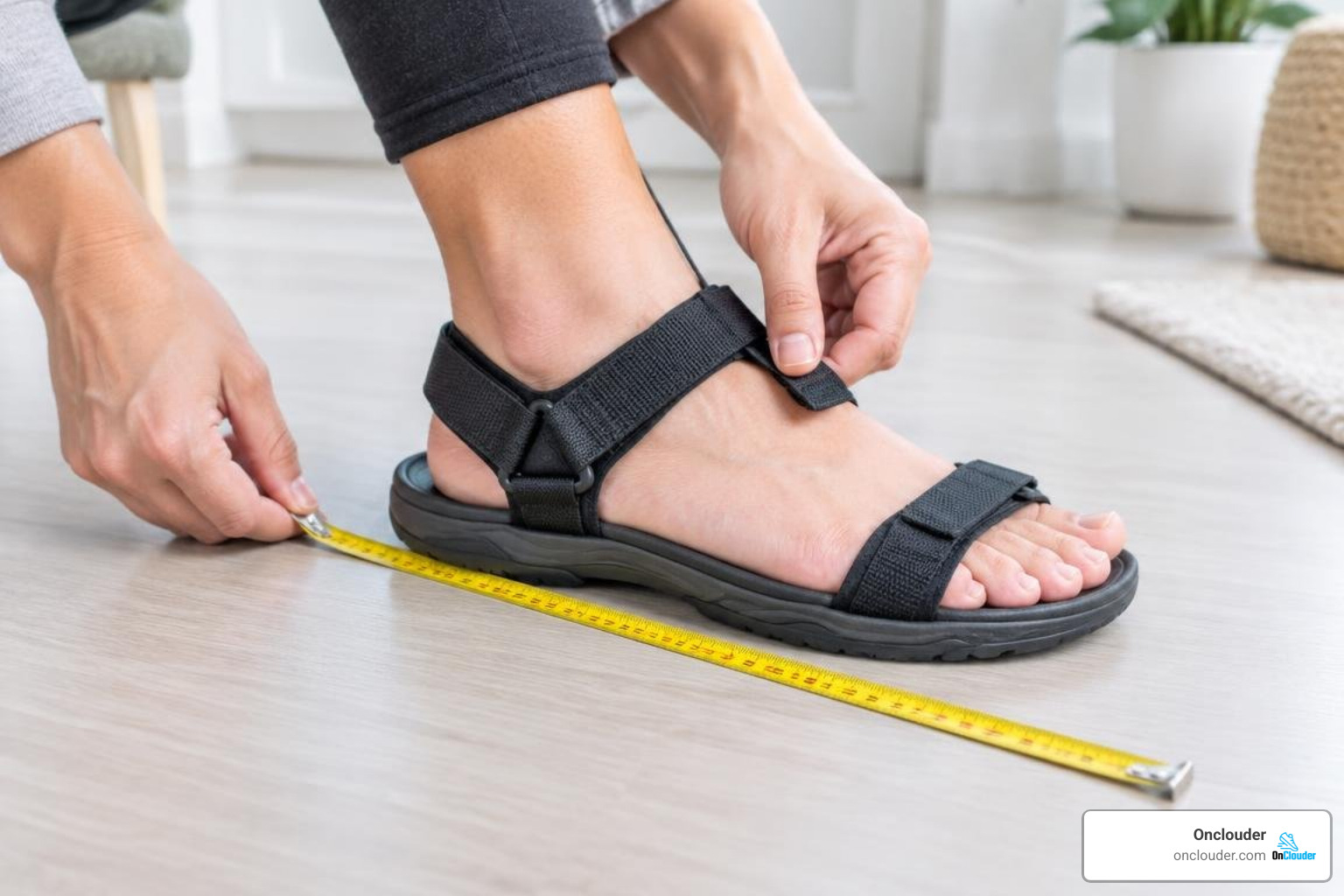
- Measure Standing Foot Length: Always measure your feet in centimeters while standing, as weight-bearing causes natural foot elongation and spread.
- Prioritize Generous Width: Look for footwear designed with wider D+ width fittings and broad toe boxes. This allows your toes to splay naturally during push-off and prevents irritation over bunions or swollen metatarsal heads.
- Align the Arch Apex: The highest point of the sandal’s arch contour must sit directly beneath your navicular bone. If the arch sits too far forward or back, it will create uncomfortable pressure points.
- Dial In Strap Tension: Fasten the instep and heel straps snugly to keep your foot planted firmly in the heel cup, but keep forefoot straps slightly relaxed to allow for natural midfoot expansion.
How the Best Athletic Sandals for Plantar Fasciitis Compare to Running Shoes
Many walkers wonder whether athletic sandals can truly replace closed-toe sneakers. The truth depends on your activity level and support needs.
Well-engineered athletic sandals provide outstanding kinetic chain alignment, open-air breathability, and direct arch contact that rivals high-end Comfortable Walking Shoes. They eliminate upper-shoe friction, making them exceptionally comfortable in hot weather or for swollen feet.
However, running sneakers still offer greater multi-directional lateral support, motion control, and the ability to house customized orthotics. Many active individuals find the best balance by alternating between dedicated Shoes That Are Best For Plantar Fasciitis for intense workouts and supportive recovery sandals for casual walking, travel, and home use.
Frequently Asked Questions About Plantar Fasciitis Sandals
How long does it take to experience pain relief in supportive sandals?
Most people experience a noticeable reduction in acute heel soreness within 3 to 7 days of consistent daily wear. However, long-term tissue remodeling and lasting relief from chronic plantar fasciitis typically take between 3 and 8 weeks of steady arch support, regular calf stretching, and sensible load management.
Can athletic sandals provide sufficient support for long-distance walking?
Yes, provided you choose an athletic sandal built with high torsional rigidity, a firm contoured footbed, and a secure multi-strap retention system. Sport sandals featuring dense EVA or polyurethane midsoles absorb repetitive shock just as effectively as traditional Best Walking Shoes, preventing arch fatigue over high-mileage walks.
Are zero-drop athletic sandals safe for plantar fasciitis recovery?
Zero-drop sandals can be beneficial for strengthening foot musculature over time, but they must be introduced with caution during acute flare-ups. A flat, zero-drop platform places higher eccentric stretch on tight calf muscles and the Achilles tendon. If you are experiencing sharp morning heel pain, starting with a sandal that features a moderate 10–20mm heel-to-toe drop provides a safer, more comfortable recovery path.
Conclusion
Managing plantar fasciitis doesn’t mean locking your feet inside heavy, restrictive shoes all summer long. By choosing athletic recovery sandals equipped with anatomical arch support, deep heel cups, and torsionally rigid midsoles, you can enjoy outdoor adventures, long walks, and relaxed recovery without reigniting chronic heel pain.
At Onclouder, we rigorously test footwear to help you find the perfect balance of structural integrity and real-world comfort. If you need robust support during your workweek, be sure to check out our expert guide to supportive footwear for plantar fasciitis to keep your feet healthy, energized, and pain-free every single day.