Cute Sandals for Plantar Fasciitis Can Still Support Your Feet
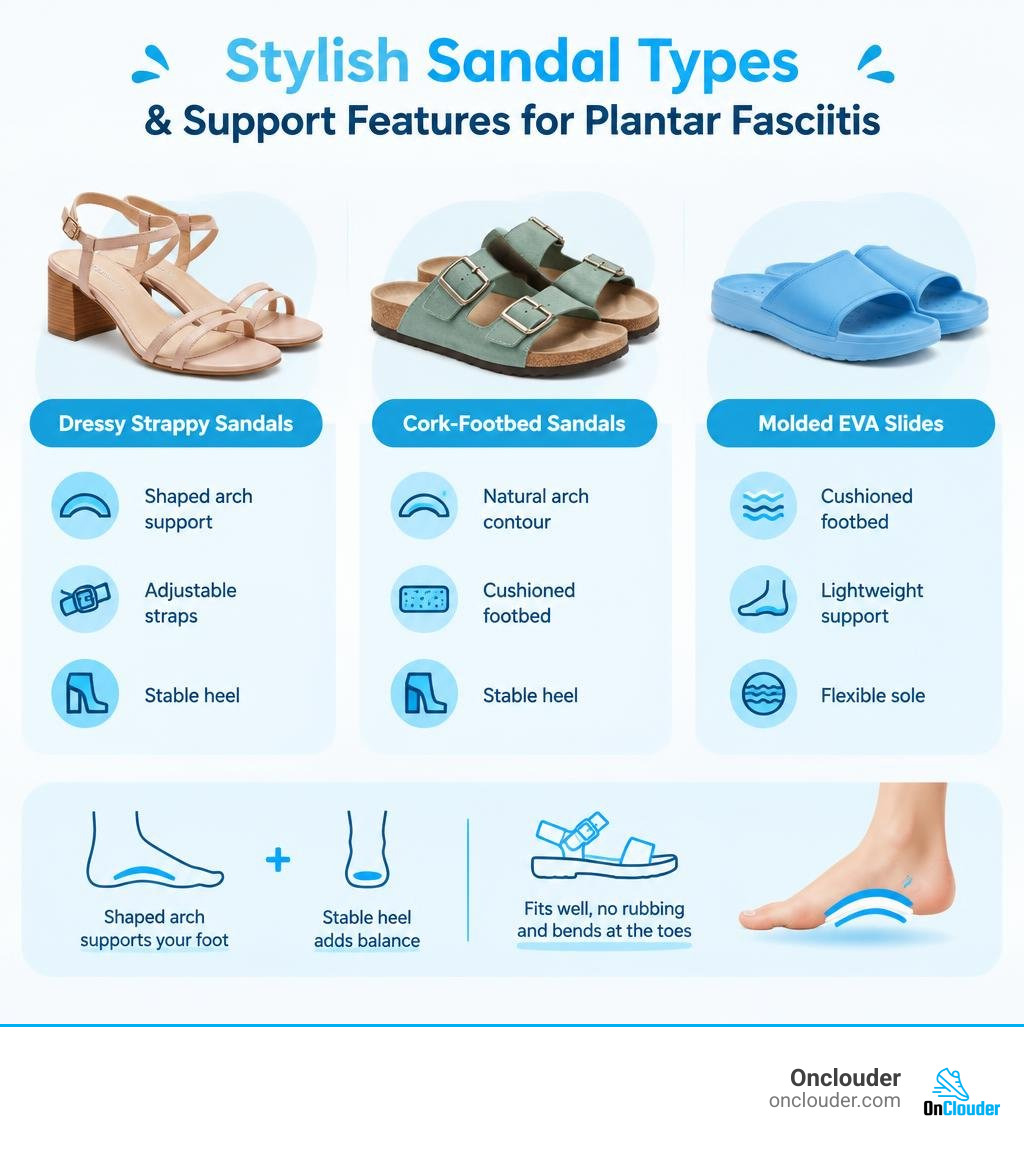
The best cute sandals for plantar fasciitis pair a shaped arch and stable heel with a style you want to wear. Look for dressy strappy sandals with adjustable straps, cork-footbed sandals for everyday walking, or molded EVA slides for the pool. The right choice should fit without rubbing and bend at the toes, not fold in half.
A soft footbed can feel good at first, but cushioning alone is not the same as support. No sandal works for everyone, so start with short walks and pay attention to how your heel feels later that day. According to the American Podiatric Medical Association, supportive footwear with proper arch contouring can help reduce strain on the plantar fascia and prevent recurring heel pain.
Terms related to best cute sandals for plantar fasciitis:
- best dress sandals for plantar fasciitis
- best flip flops for plantar fasciitis women’s
- best hiking sandals for plantar fasciitis
Why Arch Support Matters: Soft vs Supportive Sandal Engineering
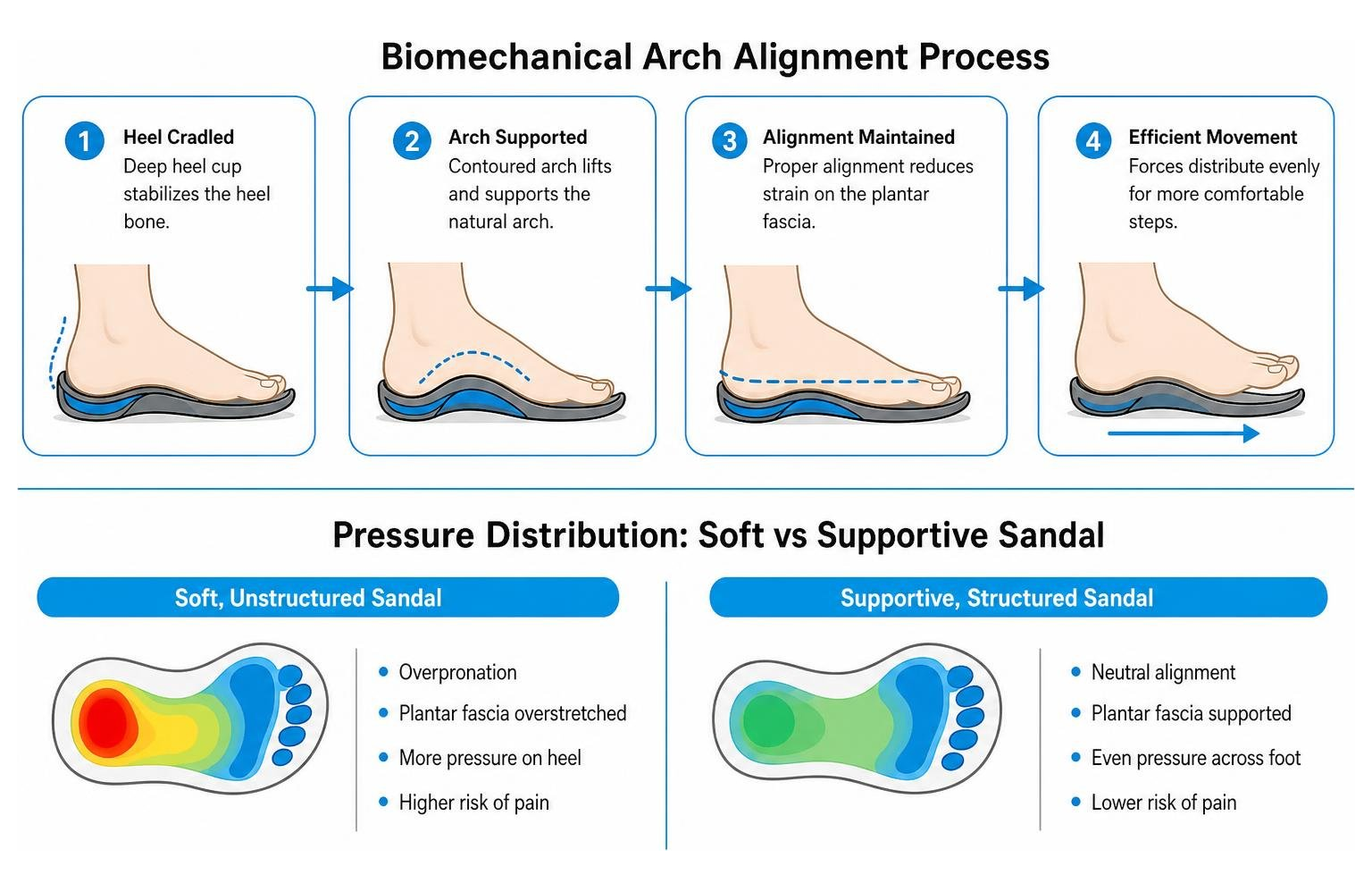
When warm weather arrives, trading structured sneakers for summer open-toes often leads to a sudden resurgence of sharp morning heel pain. Plantar fasciitis occurs when the thick band of tissue running across the bottom of your foot experiences micro-tears and chronic tension. Flat, unsupportive sandals force this tissue to stretch unnaturally with every stride, pulling directly at the heel bone and triggering inflammation.
Biomechanically, your foot needs structured guidance to maintain proper alignment. Choosing stylish women’s everyday shoes that protect against plantar pain or high-quality sandals helps redistribute impact forces across the entire plantar surface rather than concentrating pressure on an irritated heel spur. Medical organizations like the American Podiatric Medical Association (APMA) emphasize that stable footwear minimizes structural fatigue and prevents recurring injuries.
Modern footwear engineering utilizes three-dimensional contouring rather than flat footbeds. Look for podiatrist-backed biomechanical footbed standards and deep heel cups, which cradle your calcaneus (heel bone), maintaining the foot’s natural fatty pad directly underneath the bone for built-in shock absorption.
The Critical Difference Between Cushioning and Arch Stability
One of the most common pitfalls we see when evaluating footwear is mistaking instant pillow-like softness for therapeutic support. Stepping into an ultra-squishy, cloud-like foam slide feels delightful for the first ten minutes. However, walking on an unstructured marshmallow footbed is like trying to build an architectural bridge out of soft pillows.
Without a firm foundation, your foot overpronates—rolling inward and flattening out—which violently overstretches the plantar fascia. Learning why supportive flip flops might be your best defense against foot pain helps you look beyond superficial plushness.
To relieve tension, a sandal requires:
- Structural firmness: A footbed that maintains its shape and resists collapsing under full body weight.
- A slight heel-to-toe drop: A gentle elevation of 10–20 mm reduces tensile strain on the Achilles tendon and plantar fascia.
- Deep heel stabilization: Cups that keep your foot centered and prevent lateral rolling.
Criteria for the Best Cute Sandals for Plantar Fasciitis
Finding chic options that don’t look clinical requires checking three key physical checkpoints before buying:
- The Flex Test: Grab the sandal at both ends and try to bend it. A supportive sandal should bend only slightly at the ball of the foot (where your toes naturally flex) and resist bending in the middle arch. If it folds completely in half like a taco, leave it on the shelf.
- Torsional Rigidity: Hold the heel and twist the toe area in opposite directions. Minimal twisting indicates the midsole will hold your foot steady over uneven ground.
- Secure, Adjustable Fastening: Look into arch support slides and thongs that use adjustable buckle or hook-and-loop straps across the instep and forefoot. Straps prevent toe-gripping (clawing), a subconscious habit that tightens the plantar fascia.
For sizing, always measure your foot length in centimeters at the end of the day when your feet are slightly expanded. If you are between sizes, sizing up provides an essential 5–10 mm margin for natural toe splay.
Top Picks: The Best Cute Sandals for Plantar Fasciitis

We evaluated the top supportive sandal styles on the market in 2026, comparing comfort, materials, adjustability, and value:
| Style Type | Core Support Feature | Adjustability | Water Resistance | Ideal Use Case |
|---|---|---|---|---|
| Leather Strappy Sandal | Biomechanical footbed technology | Buckle ankle strap | Low (Natural leather) | Weddings, dining, evening wear |
| Cork Slide | Contoured cork footbed | Double wide buckles | Moderate (Splash-resistant) | City walking, everyday casual |
| Structured Walking Sandal | Signature arch support + memory foam | Dual hook-and-loop straps | Low (Leather/Microfiber) | Sightseeing, all-day walking |
| EVA Cloud Slide | 15° arch support, 4cm sole | Double adjustable buckles | 100% Waterproof | Beach, pool, indoor recovery |
| Beach Flip Flop | Yoga-mat foam + APMA footbed | Fixed thong strap | Water-friendly | Seaside strolls, casual outings |
Dressy Orthotic Strappy Sandals
For warm-weather weddings, fine dining, or garden parties, you no longer have to compromise between elegance and orthopedic care. Look for styles that combine soft natural leathers with FDA-registered and APMA-approved biomechanical engineering, typically priced in the $60-$90 range.
These designs utilize a contoured 3D footbed with an integrated heel lift that elevates posture, subtly relieves lower back strain, and aligns your ankles without drawing unwanted attention to orthotic features.
Contoured Cork and Memory Foam Walking Slides
Cork is nature’s premier shock absorber because it naturally resists compression over extended wear much better than cheap synthetic foam. Exploring ergonomic cork footbed designs reveals how naturally conforming materials alleviate daily foot strain.
Similarly, well-structured walking sandals demonstrate how marrying ultra-light cork with a plush memory foam top layer prevents bottoming out. Built with digital foot-scanning data and dual adjustable straps over the instep and toe box, these styles easily accommodate bunions, wide forefeet, and hammer toes without painful friction.
Waterproof EVA Cloud Slides for Beach and Pool
Pool decks, spas, and beach boardwalks demand water-friendly footwear that won’t absorb moisture or become slippery. Instead of standard flat foam, pair your warm-weather recovery with the comfiest house slides for plantar fasciitis relief.
Look for lightweight EVA sandals weighing around 180 grams per slide and featuring a 4 cm thick shock-absorbing platform combined with a 15° arch-support footbed. Many buyers find these affordable lightweight slides more comfortable than pricier bespoke orthotics for relaxing around the pool or using as supportive indoor house shoes.
APMA-Approved Beach Flip Flops
If you love the ease of a classic thong sandal, look for podiatrist-recommended flip flops rather than paper-thin gas station options.
Styles that meet the APMA Seal of Acceptance criteria blend vegan-leather aesthetic straps with a springy yoga-mat footbed and an anti-slip rubber outsole. They dry quickly, protect against sharp heel impacts on hard sand, and keep your arches supported through hours of seaside exploring.
How to Wear, Style, and Break In Supportive Summer Footwear
Transitioning to orthotic sandals requires giving your foot musculature time to adapt to corrected structural alignment. If you plan to tackle challenging vacation terrain, consider specialized orthotic outdoor sandals that offer aggressive traction alongside high-profile arch support.
Styling the Best Cute Sandals for Plantar Fasciitis for Every Occasion
Orthotic sandals have evolved far beyond bulky, clinical silhouettes. You can seamlessly integrate them across your seasonal wardrobe:
- Elevated Evenings: Pair metallic or sleek black leather strappy sandals with flowy linen trousers or a floral maxi dress for summer dinners.
- Vacation Sightseeing: Combine double-buckle cork slides with denim shorts, breezy cotton shirts, or sundresses for miles of European cobblestone walking.
- Casual Leisure: Style pastel or neutral EVA cloud slides with athleisure sets, swimwear cover-ups, or loungewear for running quick errands.
Managing Break-In Periods and Daily Wear Schedules
Even the most supportive sandal can cause mild muscle soreness if worn for an eight-hour walking tour on day one. Biomechanical contouring changes how your foot distributes weight, activating underutilized stabilizing muscles.
- Day 1: Wear your new sandals for 1 to 2 hours around the house.
- Days 2–3: Increase wear time to 3 to 4 hours during light daily errands.
- Days 4–7: Adjust the straps as natural leather or synthetic uppers soften and conform to your foot shape. By the end of the first week, your sandals are fully conditioned for all-day use.
Frequently Asked Questions About Footwear for Plantar Fasciitis
How long does it take to feel relief when wearing supportive sandals?
Most people experience noticeable relief from acute heel pain within 3 to 7 days of consistent wear. However, healing the plantar fascia tissue permanently requires 4 to 8 weeks of continuous arch stabilization. Avoid going barefoot on hard tile or hardwood floors during this recovery window.
Can sandals accommodate wide feet and bunions without causing pain?
Yes. Look for styles featuring wide-fit footbed geometries and independently adjustable straps across both the forefoot and instep. Sandals with hook-and-loop or dual-buckle closures allow you to loosen the strap specifically over the first metatarsophalangeal joint (the bunion area) while keeping the heel firmly locked in place.
What is the best waterproof and lightweight sandal for foot pain?
High-density EVA slides with built-in arch contours (such as 180g molded recovery slides) offer the best combination of water resistance and foot protection. They provide rapid drainage, float in water, and deliver thick cushioning that protects sensitive heels from hard poolside surfaces.
Conclusion
Overcoming plantar fasciitis does not mean sacrificing your personal style during the summer months. By prioritizing structured arch contours, rigid midsoles, and customizable straps, you can confidently enjoy beach vacations, garden parties, and daily walks without dreading every step.
For more advice on protecting your feet across every season and activity, explore our comprehensive plantar fasciitis footwear guide to find the ideal balance of biomechanical comfort and fashion.