
Finding Shoes with Good Arch Support for Plantar Fasciitis
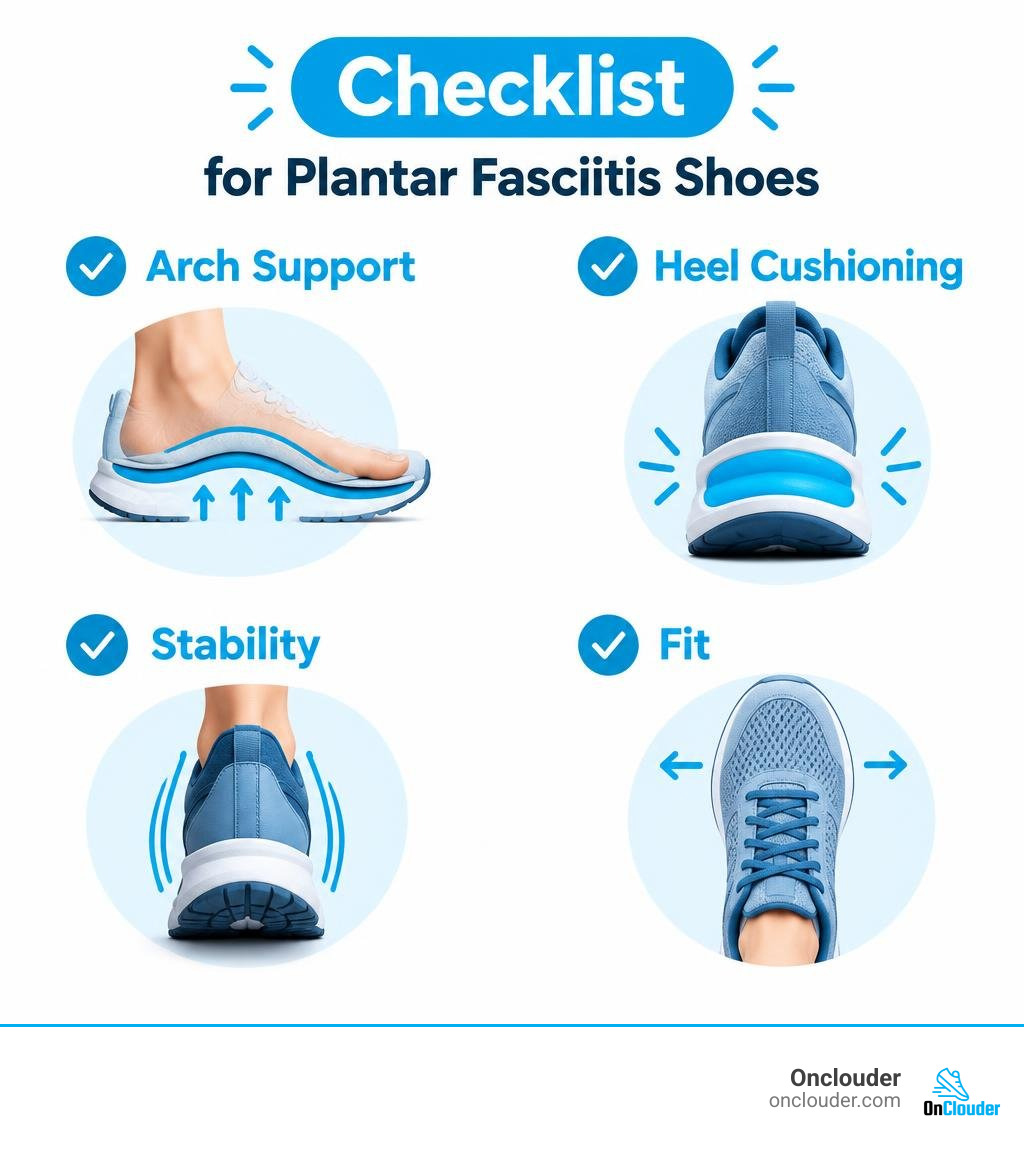
Start with a shoe that supports your arch, cushions your heel, and holds your foot steady. A firm heel counter and a secure fit matter as much as a soft insole. If you use orthotics, look for removable insoles and enough room for your toes.
Plantar fasciitis causes pain in the band of tissue along the bottom of your foot, often near the heel. Supportive shoes may ease strain during walking, running, or long workdays, but the best pair depends on your foot shape and activity. This guide compares the features, fit, and trade-offs that matter most.
Handy shoes with good arch support for plantar fasciitis terms:
- best adidas running shoes for plantar fasciitis
- best casual women’s shoes for plantar fasciitis
- best hoka women’s shoe for plantar fasciitis
How Shoes with Good Arch Support for Plantar Fasciitis Provide Relief
When you step out of bed in the morning and feel that sharp, stabbing sensation in your heel, your plantar fascia is sounding an alarm. The plantar fascia is a thick band of connective tissue that runs along the bottom of your foot, acting as a natural shock absorber and supporting your longitudinal arch. When subjected to repetitive strain, this tissue develops micro-tears and painful inflammation.
Footwear plays a vital role in recovery. To understand how structural footwear protects against daily tissue fatigue, check out our essential guide to arch support. Proper footwear redistributes body weight across the entire plantar surface rather than concentrating force on the heel bone (calcaneus).
Biomechanics of Plantar Fascia Strain and Overpronation
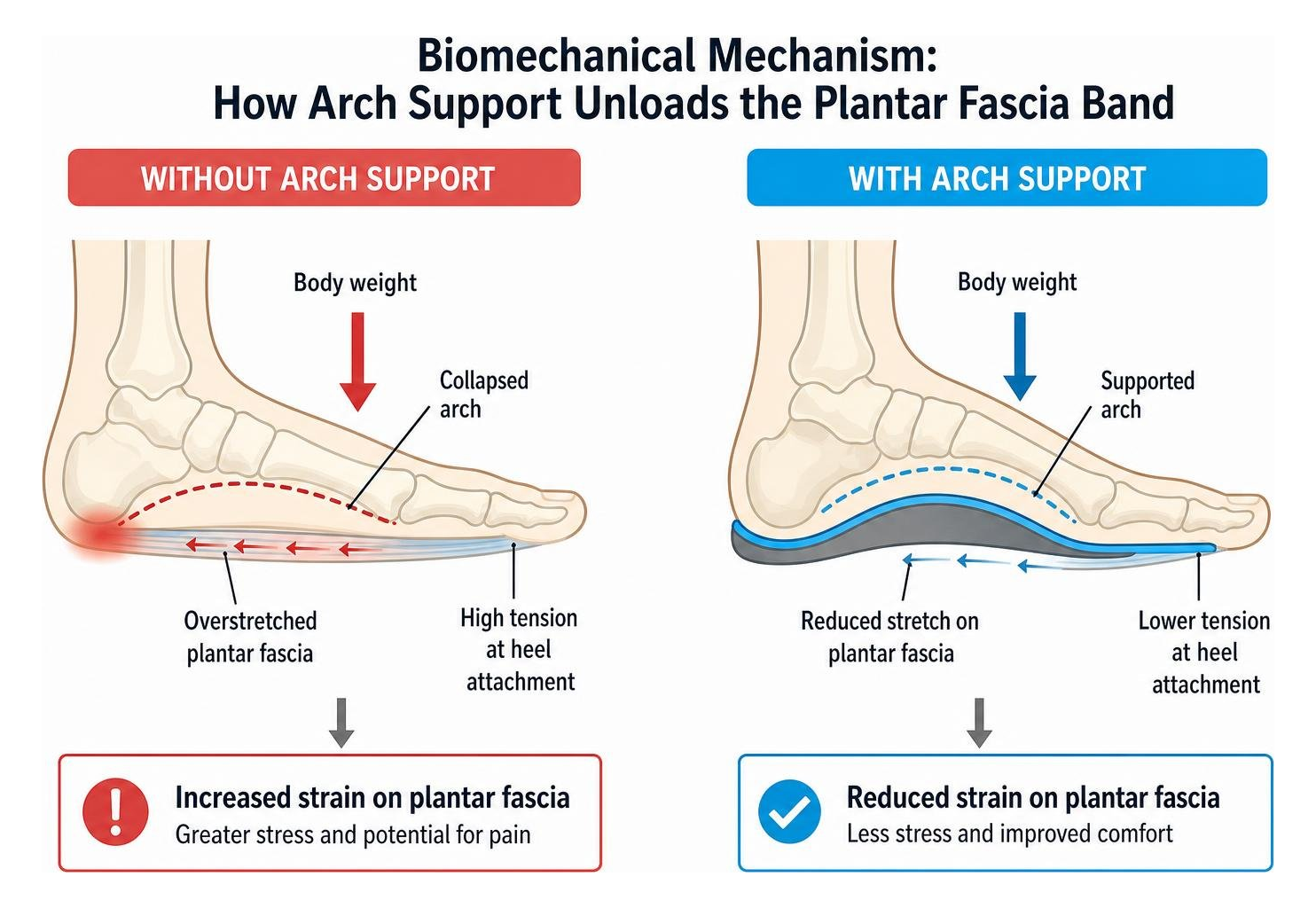
During a standard gait cycle, your foot naturally pronates—rolling inward to absorb impact. However, excessive overpronation causes the arch to collapse excessively, forcing the plantar fascia to stretch beyond its functional elastic limit. This repetitive tensile strain pulls directly at the calcaneal attachment site.
Choosing the right pair from our evaluated lineup of shoes that are best for plantar fasciitis provides the mechanical resistance needed to halt overpronation. By maintaining proper structural alignment from the heel through the midfoot, a supportive shoe keeps the plantar fascia in a relaxed, shortened state during load-bearing phases.
Anatomical Engineering and Foot-Scan Technology
Modern therapeutic footwear has evolved past basic foam wedges. Leading footwear brands now build shoes utilizing anatomical insights gathered from over 50 million global foot scans. This extensive biometric data allows engineers to map pressure distribution patterns precisely.
Advanced designs often incorporate specialized orthotic contours and heel cavity engineering. By creating a slight structural void or localized soft pocket directly beneath the center of the heel bone, the shoe eliminates direct ground reaction forces on the tender inflamed area, transferring load outward toward supportive peripheral structures.
Key Features to Look For in Orthopedic and Supportive Footwear
When evaluating supportive footwear, marketing claims matter less than verified structural characteristics. Here is the checklist we use during hands-on evaluations:
| Feature | Primary Mechanical Function | Why It Matters for Plantar Fasciitis |
|---|---|---|
| Firm Heel Counter | Stabilizes the calcaneus and controls rearfoot motion | Prevents excessive inward rolling and stabilizes heel strike |
| Deep Heel Cup | Centers and gathers natural heel fat pad tissue | Enhances natural shock absorption right beneath the calcaneus |
| Contoured Arch Bridge | Fills space under the medial arch | Unloads tension on the plantar fascia band during midstance |
| Torsional Rigidity | Resists twisting along the midfoot shank | Keeps foot from flexing inappropriately across the arch |
| Shock-Absorbing Midsole | Dissipates ground impact forces | Lowers peak stresses traveling up the lower kinetic chain |
Firm vs. Soft Arch Support and Insole Customization
One of the biggest misconceptions in foot health is that cloud-soft, ultra-squishy insoles solve plantar fasciitis. While pillowy foam feels great for the first five minutes, it often compresses completely under body weight, offering zero structural resistance against arch collapse.
Effective footwear requires dynamic, semi-rigid support that cradles the medial arch while maintaining enough flexibility for natural toe-off. Furthermore, if you require specialized medical inserts, selecting footwear with removable footbeds is critical. For a deeper breakdown of modular versus bespoke options, review our analysis of shoe inserts vs custom orthotics.
Midsole Cushioning, Heel Drop, and Rocker Soles
Heel-to-toe drop—the height difference between your heel and forefoot—significantly influences Achilles tendon and plantar fascia tension. Traditional zero-drop or flat shoes place maximum stretch on the posterior chain. A moderate heel drop (between 8mm and 13mm) elevates the heel slightly, reducing strain on the Achilles tendon and plantar fascia.
Additionally, lightweight cushioned EVA midsoles and gentle rocker geometry help propel the foot through the gait cycle effortlessly. Discover how tuned foam geometry changes daily comfort in our guide to finding your perfect fit with cloud cushioning.
Top Model Comparisons: Best Footwear for Heel and Arch Relief
We put top-rated therapeutic models through structured wear testing, assessing real-world biomechanical support, insole construction, and daily durability.
| Shoe Model | Target User / Style | Approx. Price | Heel Drop / Height | Core Benefit |
|---|---|---|---|---|
| Men’s Ultimate Arch Support Shoes | Men’s Walking / Active | Budget-Friendly | Moderate | Shock Queller® tech, deep heel cup, 98% user recommendation |
| Drew Arch Support Sneaker | Men’s Casual / Lifestyle | $169.95 | 0.9 in Heel | Cobra Orthotic Technology, premium leather, 5.0/5 rating |
| Danika Arch Support Sneaker | Women’s Active / Athletic | $149.95 | 13.3 mm drop (1.1 in) | UltraSKY™ EVA cushioning, machine washable, 4.59/5 rating |
| Ivy Arch Support Sneaker | Women’s Everyday Casual | $63.98 – $159.95 | Moderate | Built-in anatomical arch contour, pressure relief cavity |
| Athena Arch Support Sneaker | Women’s Classic Retro | $149.95 | 0.9 in Heel | Signature arch contour, removable footbed, classic suede styling |
Evaluating Men’s Shoes with Good Arch Support for Plantar Fasciitis
For men seeking active, sporty options, the Men’s Ultimate Arch Support Shoes feature a breathable knit upper made with sustainable materials, plant-based memory foam, and Shock Queller® technology designed to relieve heel pressure. With an overall rating of 4.8 out of 5 stars based on 5,999 reviews (and a 98% recommendation rate), users report marked reductions in heel soreness during daily 5-mile walks and workouts.
For office environments and casual settings, the leather-crafted Drew Arch Support Sneaker – Black features Cobra Orthotic Technology that relieves stress under the calcaneus while controlling severe overpronation. Explore more peer-tested options in our men’s plantar fasciitis footwear guide.
Selecting Women’s Shoes with Good Arch Support for Plantar Fasciitis
Women needing high-mileage athletic performance will appreciate the Danika Arch Support Sneaker – Ivory. Featuring an UltraSKY™ EVA midsole and an accommodating 13.3mm drop, it reduces strain on the heel cord while keeping the ride lightweight and responsive.
If your lifestyle calls for a casual, sleek silhouette, the Ivy Arch Support Sneaker – Hazy Blue offers targeted arch support and a specialized heel pressure cavity. For classic aesthetics combined with therapeutic stability, the Athena Arch Support Sneaker – Black features a removable anatomical insole perfect for custom inserts. You can also explore our curated list of top Hoka shoes for women battling plantar fasciitis pain.
Buyer’s Guide: Sizing, Activity Fit, and Durability Considerations
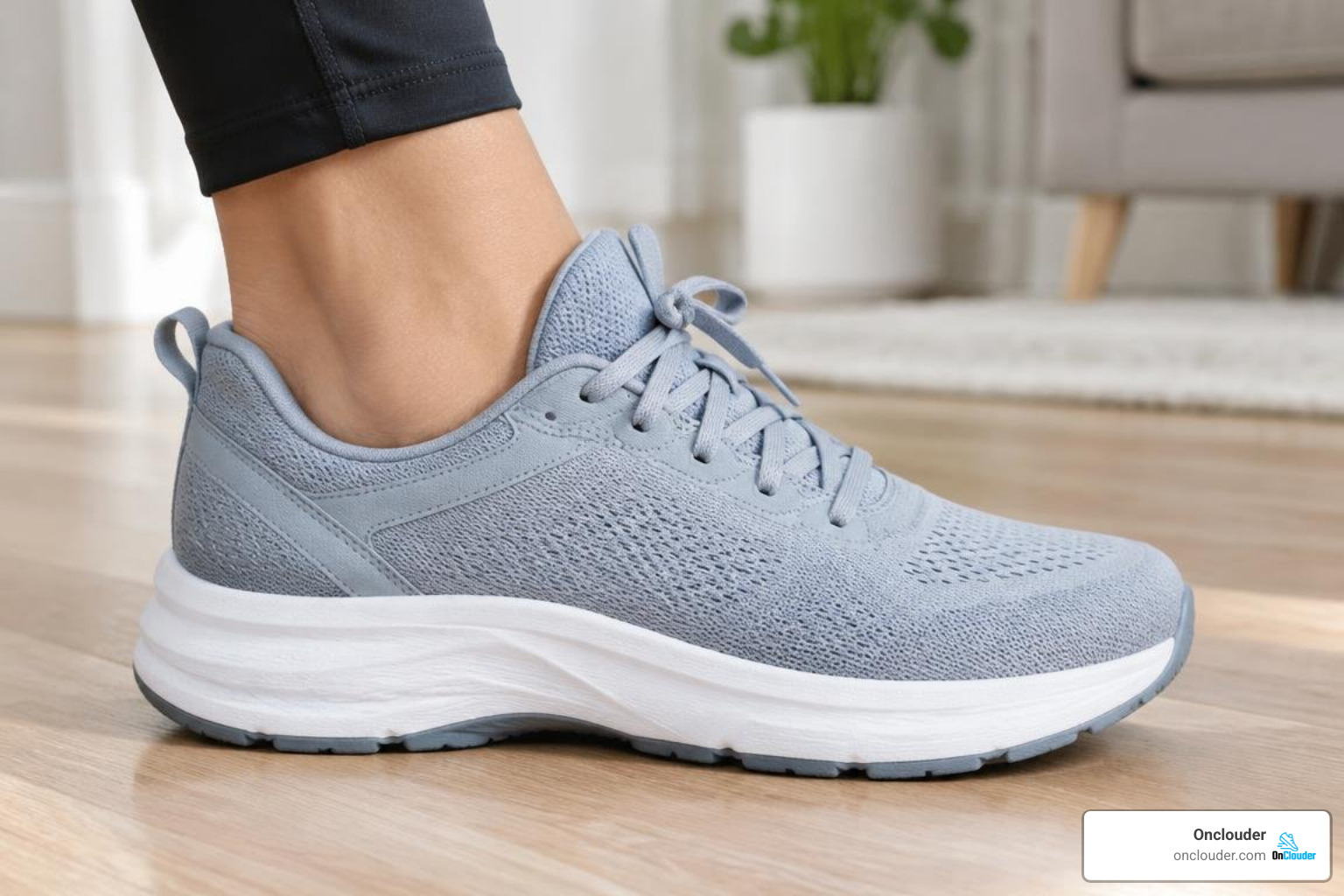
Buying therapeutic footwear requires paying close attention to fit geometry. Even the best arch bridge will cause discomfort if it sits too far forward or backward relative to your foot’s natural flex point.
Sizing for Orthotics and Width Variations
- Toe Box Width: Ensure your toes have ample room to splay naturally. A narrow toe box pinches the forefoot and alters your gait, worsening plantar tension.
- Accommodating Custom Inserts: If you plan to insert custom orthotics, we recommend sizing up by a half size to maintain adequate internal shoe volume.
- Measuring at the End of the Day: Feet naturally swell over the course of daily walking; always measure and try on shoes in the afternoon or evening.
For a deeper dive into matching foot profiles with insole profiles, reference our best arch support shoes and insoles guide.
Choosing Footwear for Running, Walking, and All-Day Work
Different activities place distinct mechanical loads on your feet. Runners need high energy-return midsoles and durable outsoles that resist rapid wear at the lateral heel strike zone. Walkers and healthcare workers on hard flooring benefit from wide outsole bases and rocker geometry to reduce cumulative impact.
Learn how different brands engineer stability by reading our guide to upgrading arch support across shoe brands.
Frequently Asked Questions About Plantar Fasciitis Footwear
How long does it take for arch support shoes to relieve heel pain?
Most individuals notice reduced morning pain within 1 to 3 weeks of consistent daily wear. However, connective tissue remodeling takes time. Allow a short break-in period of a few hours each day if you are unaccustomed to firm medial arch profiles.
Can shoes replace custom orthotics for chronic plantar fasciitis?
For mild to moderate cases, anatomically engineered shoes with built-in firm support provide substantial relief. However, severe rigid flatfoot deformities or asymmetric limb discrepancies may still require medical evaluation. Review our guide on podiatrist recommended shoes for plantar fasciitis relief to see when clinical interventions are necessary.
What is the typical price range for high-quality arch support shoes?
Effective supportive shoes range from budget-friendly models around $50–$80 up to premium orthotic-grade leather designs priced between $150 and $175. Investing in durable midsoles ensures the structural arch does not bottom out prematurely.
Conclusion
Plantar fasciitis does not have to dictate your daily routine. By selecting footwear built with deep heel cups, firm torsional stability, and anatomically calibrated arch contours, you can alleviate painful tissue strain and restore comfortable mobility.
Ready to protect your feet during demanding shifts? Discover our top recommendations in the best work shoes for plantar fasciitis guide to find the perfect supportive pair for your daily routine.
Holistic Health: The Balance of Mind, Body, and Soul in Modern Life
