

Which Adidas 10K Shoes Should You Choose?
Choose the Adizero Adios Pro line for race-day speed, the Adizero Adios line for a lighter feel, or the Adizero Boston 10 for cushioned 10K training. The Boston 10 pairs a responsive midsole with road-ready grip, but at about 10 ounces for a men’s US 9, it is heavier than a dedicated racing shoe.
The fastest option is not always the most comfortable. Your best pick depends on how the shoe fits, how firm you like the ride, and whether you need it for one race or weeks of training.

Finding the right adidas 10k shoes means striking a delicate balance. Running 6.2 miles fast requires high-tempo turnover and snappy toe-offs, but pushing your lactate threshold on unforgiving asphalt can quickly lead to painful arches, numb toes, and battered calf muscles if your footwear lacks adequate protection.
At Onclouder, we bring over a decade of hands-on shoe testing to help you navigate modern running tech. Whether you are aiming for a sub-40-minute personal record or looking to finish your first local race without nagging foot soreness, this guide breaks down how top performance trainers and racers stack up over 10 kilometers.
Top Performance Guide to 10k Shoes
When evaluating footwear for 10k road races, you must look at how stack height, plate mechanics, and foam densities work together. While dedicated super-shoes excel purely on race morning, high-mileage hybrid trainers provide the joint-protecting comfort and structural support necessary for intense training blocks.
| Shoe Model | Category | Weight (Men’s US 9) | Drop | Primary Foam Tech | Best Use Case |
|---|---|---|---|---|---|
| Adizero Boston 10 | Tempo Trainer / Racer | 286g (10.1 oz) | 8 mm (approx. 6.5 mm net) | Lightstrike Pro + Lightstrike EVA | High-volume 10k training, tempo work, stable racing |
| Adizero Takumi Sen 10 | Pure 5k/10k Racer | ~200g (7.0 oz) | 6 mm | Full Lightstrike Pro | Short-distance PR attempts, aggressive cornering |
| Adizero Adios Pro | Marathon / Long Racer | ~220g (7.7 oz) | 6.5 mm | Lightstrike Pro + Carbon Rods | Half/full marathons, plush 10k racing |
| Adizero Adios | Low-Profile Speedster | ~230g (8.1 oz) | 8 mm | Lightstrike Pro + Lightstrike | Fast intervals, traditional low-stack feel |
For dedicated short-distance speed, models like the Takumi Sen sit at the pinnacle of pure racing flats. However, for everyday runners who want one pair to handle speedwork, threshold miles, and race day itself, a cushioned speed trainer like the Adizero Boston 10 hits the sweet spot between performance and joint protection.
Key Technologies in Modern 10k Shoes
The modern era of performance footwear has evolved far beyond traditional flat EVA slabs. Modern designs combine multiple foam densities with anatomical stiffening elements to deliver speed without leaving your feet beat up.
- Dual-Density Midsole Layers: High-performance trainers often place a lively, energy-returning foam (such as adidas Lightstrike Pro) directly underfoot, layered over a firmer, more durable EVA carrier. This setup gives you responsive bounce without the unstable, mushy bottoming-out sensation found in ultra-soft max-cushion shoes.
- Anatomical EnergyRods: Rather than using a single, rigid carbon plate that forces your foot into an unnatural gait, modern designs utilize glass-fiber or carbon-infused rods that mirror your metatarsals. These rods create torsional stiffness and snap through the toe-off phase, propelling you forward efficiently during hard 10k efforts.
- Continental™ Rubber Outsoles: Road races throw everything at you, from wet painted crosswalks to slick asphalt corners. A high-traction outsole ensures zero wasted energy from slippage, translating every ounce of effort directly into forward propulsion.
For runners who cross-train or prefer maximum plushness during recovery, models with Adidas Ultra Boost cushioning offer exceptional shock absorption, though performance racing lineups focus strictly on snappy rebound and weight reduction.
How to Fit and Size Your 10k Shoes for Race Day
Dialing in your fit is vital to avoiding black toenails, blisters, and arch cramping over 6.2 miles. Race-tuned uppers use lightweight, non-stretch engineered mesh combined with internal support bands to lock down the midfoot.
- Check Your Toe Clearance: Ensure you have roughly a thumbnail’s width between your longest toe and the front of the shoe. Because your feet naturally swell during aggressive tempo paces, many runners benefit from going up a half size.
- Evaluate Midfoot Width: Performance shoes feature a snug, race-ready hold around the instep. If you have wider feet or a lower arch, look for wide variations or check our best adidas wide toe box sneakers guide to avoid painful lateral pressure.
- Lace for Heel Security: Utilize the top eyelet (runner’s loop) to prevent heel slippage. A secure heel counter eliminates friction, letting you drive hard through corners without your foot sliding forward into the toe bumper.
In-Depth 10k Testing and Analysis
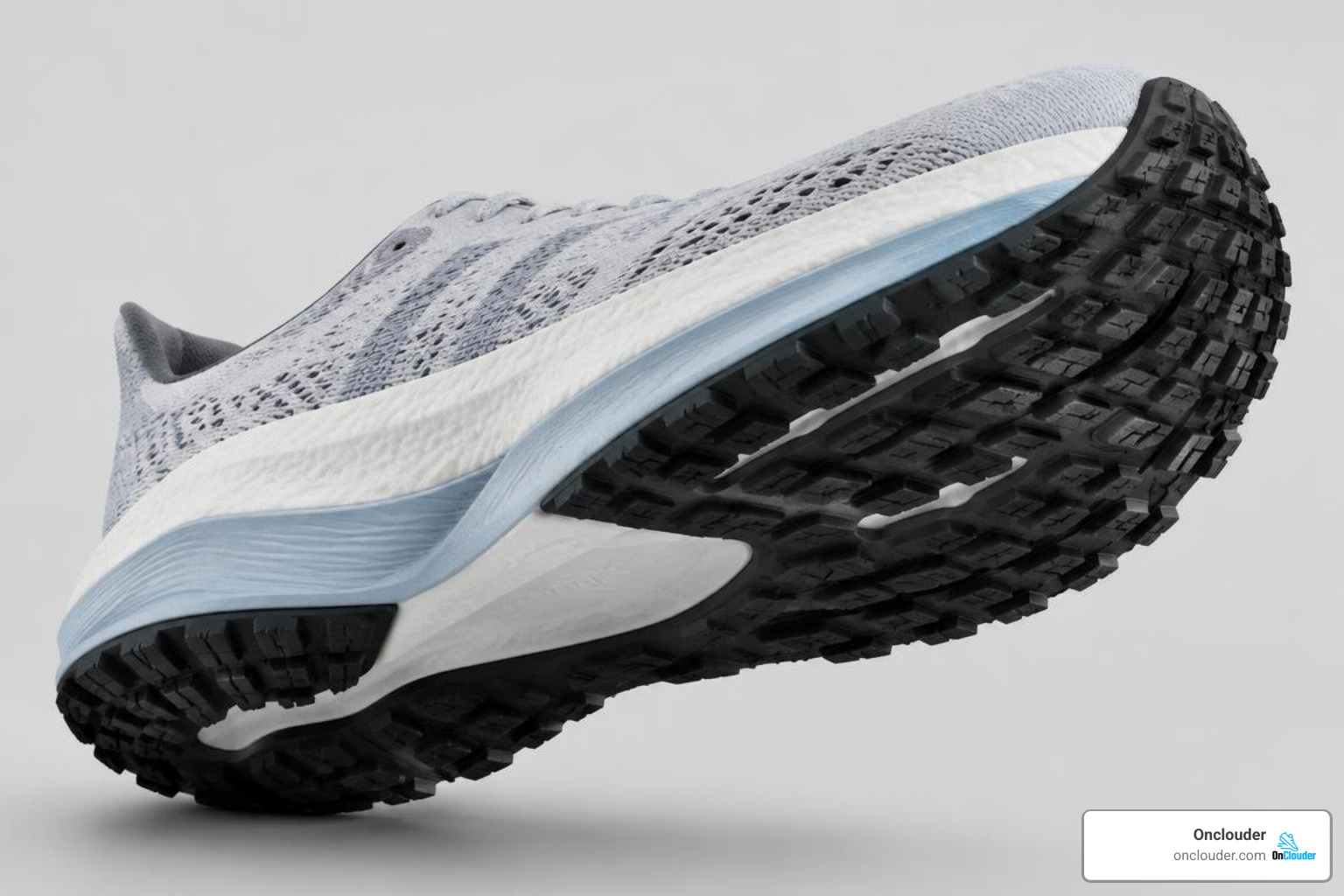
During our road testing, we closely examined how high-stack speed trainers hold up across fast 10k intervals and sustained race-pace efforts. Looking at our performance data and hands-on wear metrics, the shoe’s build sets a clear standard for high-durability speed trainers.
Weighing in at 286 grams (10.1 oz) for a men’s US 9, the Boston 10 carries slightly more heft than a pure racing flat, but it makes up for that weight with enhanced impact protection and long-term durability. Its geometry features an 8 mm heel-to-toe drop (with specs often measured between 6.5 mm and 8 mm depending on stack compression points), creating a natural forward roll that rewards midfoot and heel strikers alike.
Cushioning, Responsiveness, and Ride Quality
The ride character of dual-layer performance trainers balances firm road feedback with protective shock absorption. When you step in, the initial sensation is distinctly firmer than plush lifestyle trainers like the Adidas Swift Run or max-cushion cruisers.
When picking up the pace to target 10k race speeds (around 4:00 to 5:00 min/km or 6:30 to 8:00 min/mile), the Lightstrike Pro layer compresses and rebounds against the internal rods. The firm EVA base keeps your foot level, preventing excessive pronation collapse as your form fatigues in the final two miles.
If you are curious how this firmer, rockered ride compares to cloud-pod cushioning systems, you can read our head-to-head comparison between the On Cloud 5 vs Adidas Ultra Boost or explore our On Cloudmonster vs Adidas Ultraboost breakdown.
Surface Grip and 10k Course Versatility
A strong 10k performance requires supreme confidence when navigating hairpin turns, damp city streets, and smooth asphalt. Our hands-on field testing highlights how premium Continental™ rubber outsoles deliver top-tier traction in variable weather conditions.
- Wet Asphalt: The grooved forefoot pattern cuts through standing water, preventing micro-slips on wet race mornings.
- Paved Park Paths: The firm base deflects minor debris and gravel without tearing up the exposed foam.
- Track Workouts: The rigid torsional spine transitions smoothly across rubberized running tracks for interval prep.
Buyer’s Guide: Pros, Cons, and Runner Profile Matching

Choosing the right shoe comes down to matching its biomechanical design to your running gait, target pace, and training goals. Our wear-testing shows that while high-stack trainers provide long-lasting value, they aren’t the right choice for every single runner.
Pros
- Exceptional Durability: Easily lasts 400+ miles thanks to tough EVA outsoles and thick Continental rubber.
- Stable Speed Transitions: The EnergyRods and firm platform prevent excessive lateral rolling under high fatigue.
- Great Value: With an original MSRP of $139.95 (and frequent discounts), it costs significantly less than $250+ carbon super-shoes.
- Joint Protection: The high stack absorbs harsh road shock over grueling 10k training blocks.
Cons
- Weight Penalty: At over 10 ounces, it is heavier than pure sub-7-ounce racing flats.
- Initial Stiffness: Requires a break-in period of 20 to 30 miles for the dual-foam midsole to soften up.
- Firm Ride: Runners who prefer squishy, cloud-like foam may find the base too firm for easy recovery jogs.
Who It’s Best For
- Neutral Runners with Medium-to-High Arches: The supportive structure and midfoot wrap provide balanced stability without invasive medial posts.
- Heel and Midfoot Strikers: The protective heel stack and rockered forefoot promote smooth forward turnover.
- Runners Battling Underfoot Aches: The stiff forefoot rocker reduces stress on the plantar fascia and metatarsal heads. If you frequently battle morning heel pain, check out our runners buying guide to adidas plantar fasciitis shoes to explore supportive footwear options.
- High-Volume 10k & Marathon Trainees: An ideal everyday workhorse for fast tempo runs, progression runs, and long intervals.
Frequently Asked Questions About 10k Footwear
Are these shoes suitable for beginner 10k runners?
Yes. While super-light racing flats demand strong lower-leg mechanics and near-perfect form, structured speed trainers offer a stable base and ample cushioning that protect beginners as they build up race mileage. Just remember to give the shoes a couple of shorter break-in runs before pinning on your race bib.
How do these shoes compare to traditional racing flats for a 10k?
Traditional racing flats sit lower to the ground and weigh very little (often under 6.5 ounces), but they provide minimal impact protection. Modern 10k speed shoes use higher stack heights and energy rods to shield your legs from muscular fatigue. While you carry a few extra ounces, your legs stay much fresher over the second half of the race.
Can these shoes handle wet weather road races?
Yes. Models equipped with Continental™ rubber outsoles offer industry-leading grip on wet asphalt, damp wooden bridges, and slick painted road lines. The open-mesh upper also drains moisture effectively and breathes well to prevent chafing.
Conclusion
Crushing your 10k personal best without lingering foot pain comes down to choosing footwear that matches your speed goals and comfort needs. While pure racing shoes deliver lightweight snap for elite podium chasers, a structured, energy-rod-powered speed trainer provides the cushioning, stability, and durability that everyday runners need to train hard and race strong.
Ready to explore how top performance shoes compare over even longer distances? Check out our in-depth analysis on the best running shoes for marathons to find your perfect pair for race day!
Remote Work Lifestyle: Creating a Home Office Oasis
