
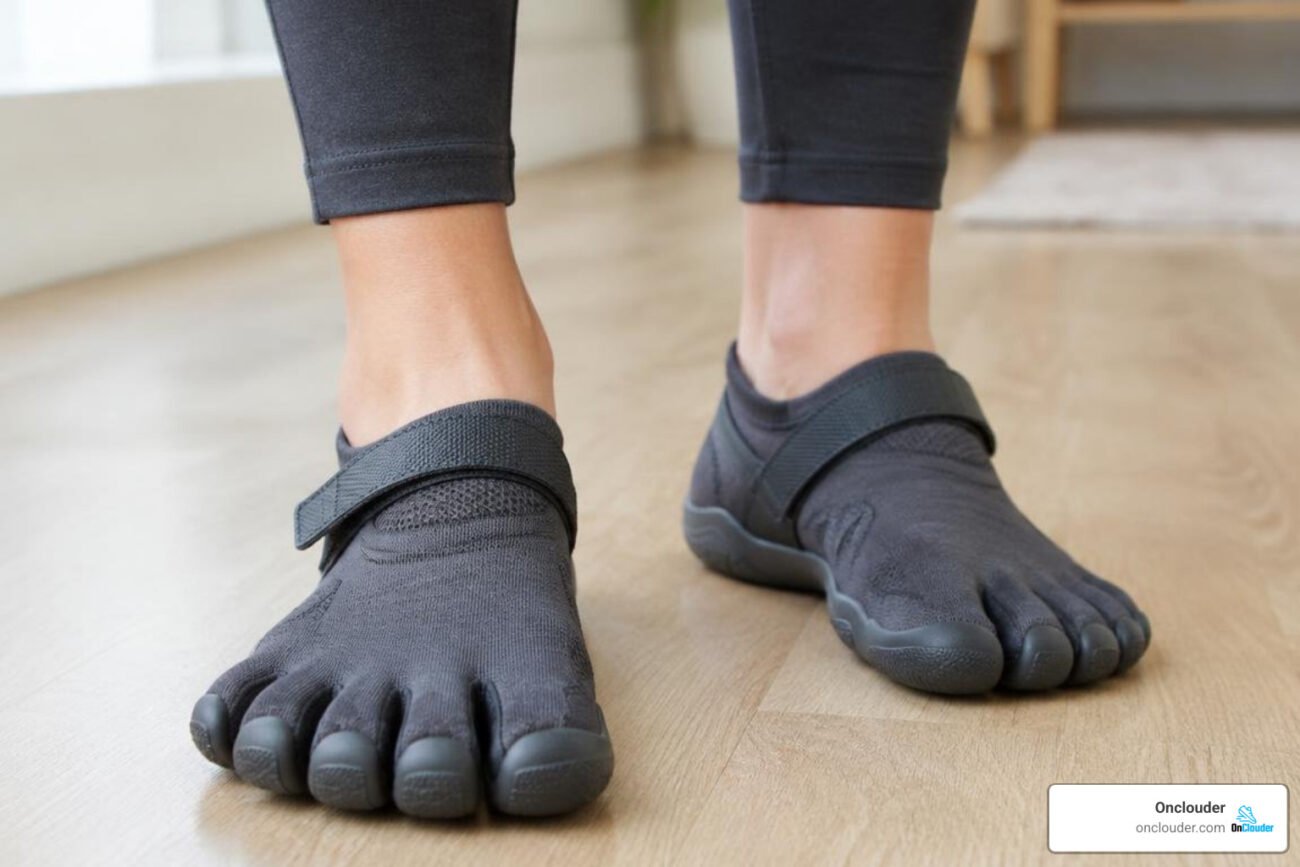
Why Broad Toe Shoes Give Your Feet More Room
Broad toe shoes have a foot-shaped front that lets your toes spread instead of squeezing them together. That extra room can ease rubbing and pressure on crowded toes or bunions, especially when your feet swell during a long day. Unlike barefoot shoes, broad toe shoes can also have plenty of cushioning and support.
If your toes feel pinched, look for a pair that holds your heel securely while leaving room at the front. A better fit may make daily walks or long shifts more comfortable, though it will not fix every cause of foot pain. Over time, wearing shoes that follow the natural fan shape of the foot can also help reduce the daily fatigue that comes from standing or walking in tapered footwear.
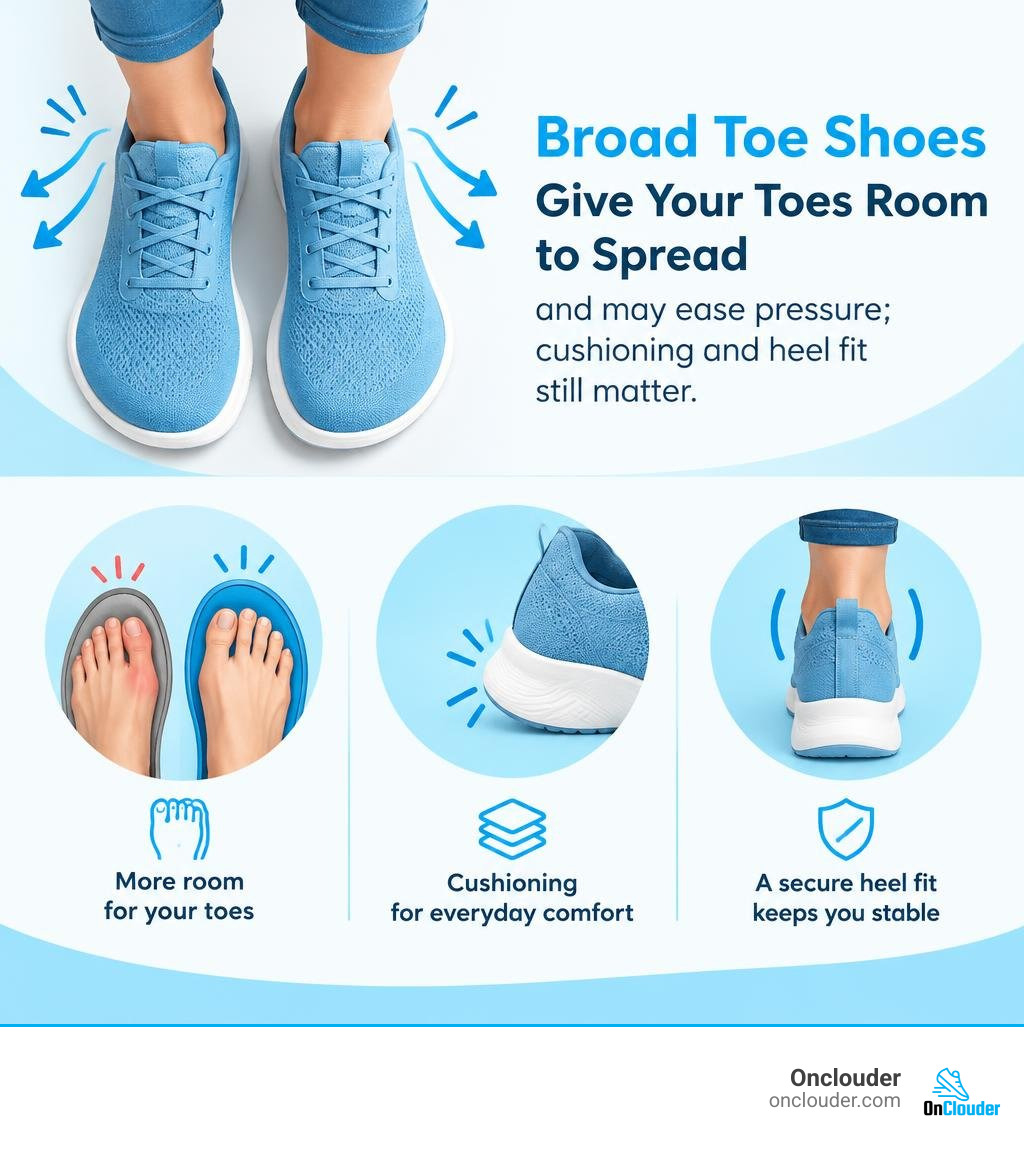
Why Switching to Broad Toe Shoes Transforms Foot Health
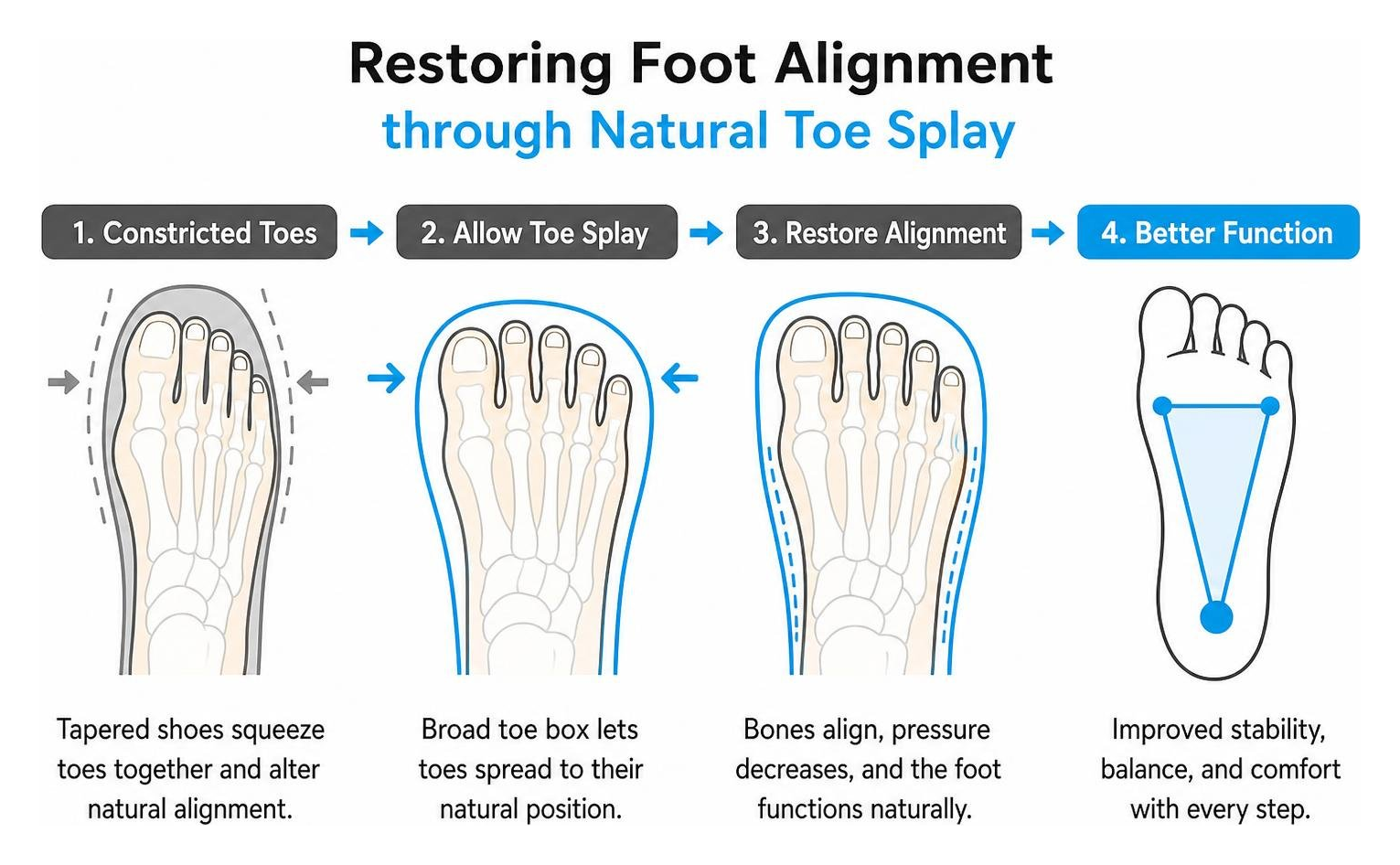
Most modern footwear forces the human foot into a symmetrical, tapered mold. Over time, compressing the metatarsals alters joint alignment and impairs baseline stability. When you allow your toes to splay outward, you create a broader, more stable foundation for the entire body.
Decompressing the front of the foot restores the natural mechanics of the gait cycle. In a 12-week customer panel, 96% of participants reported reduced foot and back discomfort after switching away from restrictive styles. Furthermore, an independent study of over 500 participants showed that 91% noticed measurable improvements in posture within the first week alone. Choosing a properly designed wide toe box enables dynamic balance, which is a core feature of modern foot shaped footwear.
Broad Toe Box vs. Traditional Footwear
The primary difference lies in the anatomical shape of the forefoot. Traditional athletic and dress shoes taper sharply inward from the ball of the foot toward the center, crushing the big toe inward and jamming the pinky toe. A true broad toe shoe features a toe box that is up to 40% wider than standard sneakers, mirroring the natural fan shape of human feet.
Tapered toe boxes create friction hot spots, pinch nerves, and destabilize the foot’s lateral borders. Learning why your toes deserve more room than most shoes allow highlights how space at the front of the shoe prevents chronic metatarsal compression.
| Feature | Standard Tapered Shoes | Anatomical Broad Toe Shoes |
|---|---|---|
| Forefoot Shape | Tapered, symmetrical point | Anatomical, asymmetrical foot shape |
| Toe Space | Constricted, overlapping toes | Allows natural toe splay |
| Balance Base | Narrow, unstable platform | Wide, stable tripod foundation |
| Late-Day Comfort | Pinches as feet swell | Accommodates natural daily swelling |
| Joint Pressure | High lateral metatarsal stress | Evenly distributed plantar load |
Barefoot Shoes vs. Wide Toe Box Shoes
While all barefoot shoes feature wide fronts, not all roomy shoes are minimalist. Barefoot shoes rely on an ultra-thin stack height (often 3 mm to 6 mm) to maximize sensory input from the ground, featuring entirely unpadded, zero-drop soles.
In contrast, non-minimalist roomy footwear offers generous forefoot width while providing thick, shock-absorbing midsoles. If you want ample forefoot space without sacrificing plush foam, explore our recommendations for big toe box shoes that aren’t barefoot. If you prefer minimal structure and full ground feel, you can look into dedicated minimalist shoes.
Top Health Benefits and Real-World Applications
When the forefoot has room to move, the intrinsic muscles of the arch engage naturally during push-off. This reduces excessive strain on the knees, hips, and lower back. For individuals who stand on concrete for 8 to 12 hours daily, this extra room prevents the fatigue caused by cramped metatarsals.
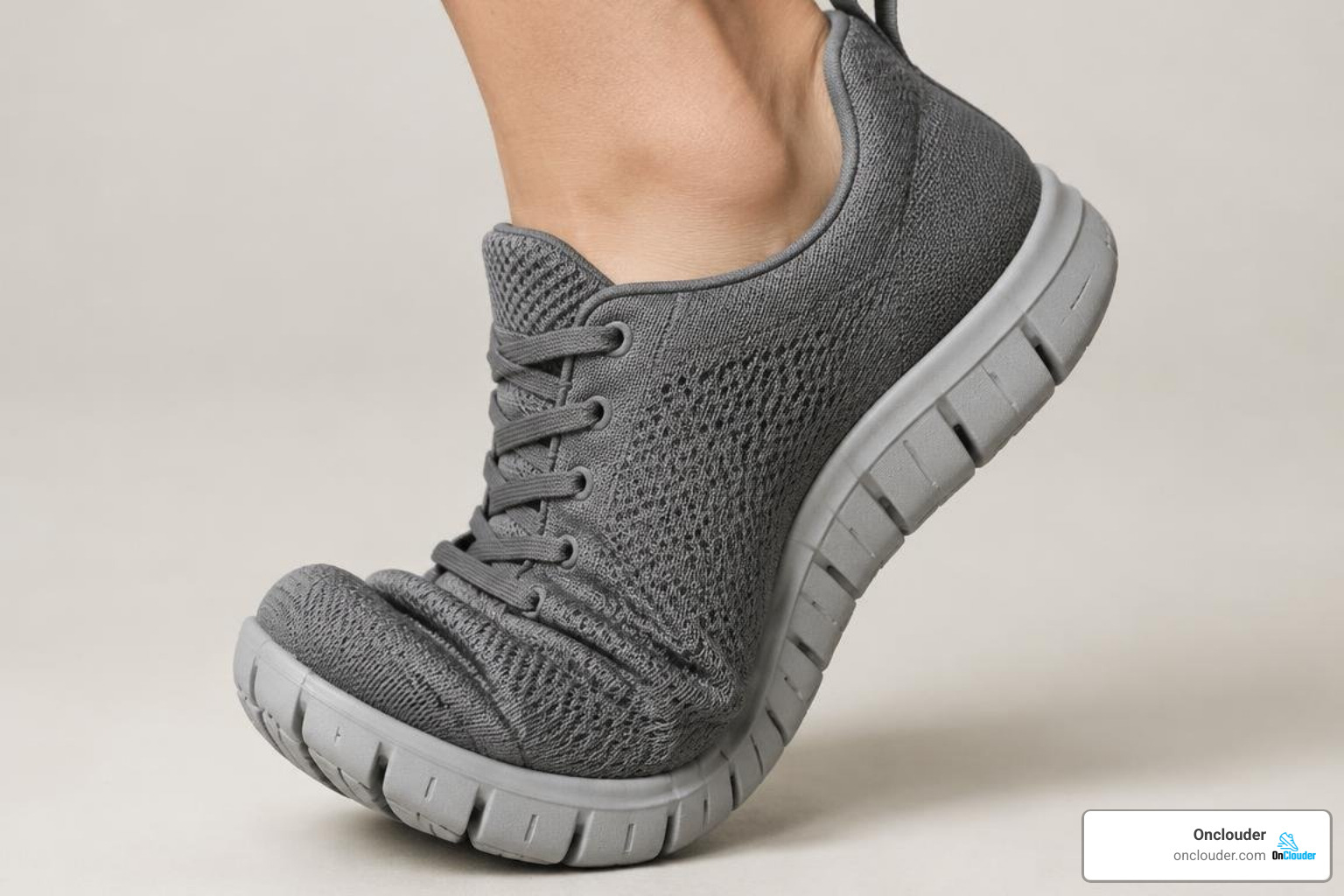
Many walkers find everyday comfort in models like Wide Toe Box Barefoot Trainers, which combine lightweight upper fabrics with flexible outsoles that adapt easily to natural movement.
Who Benefits Most from Broad Toe Shoes?
Anyone who spends extended hours on their feet can benefit from a wider forefoot:
- Healthcare Professionals & Shift Workers: 96% of surveyed shift workers reported reduced aching when wearing anatomical footwear, while 91% reported immediate comfort right out of the box.
- Individuals Managing Bunions: Proper width stops lateral rubbing and prevents the big toe from being forced inward. You can find targeted solutions in our review of wide toe box options for bunions and explore general strategies for bunion relief.
- Hikers and Trail Walkers: Feet swell significantly during sustained ascents. Switching to roomy footwear or dedicated barefoot hiking models prevents blackened toenails and trail blisters.
Targeted Relief for Bunions, Plantar Fasciitis, and Hammer Toes
A standard tapered shoe pushes the big toe inward toward the second toe, worsening hallux valgus (bunions). Broad toe footwear provides the clearance needed for the hallux to sit straight, which helps stabilize the arch.
For plantar fasciitis, cramped toes prevent the plantar fascia from extending fully. Providing adequate room eases tension along the bottom of the foot. When paired with level zero drop footwear, anatomical footwear distributes body weight evenly across the entire sole rather than overloading the heel.
How to Choose, Measure, and Fit Your Shoes
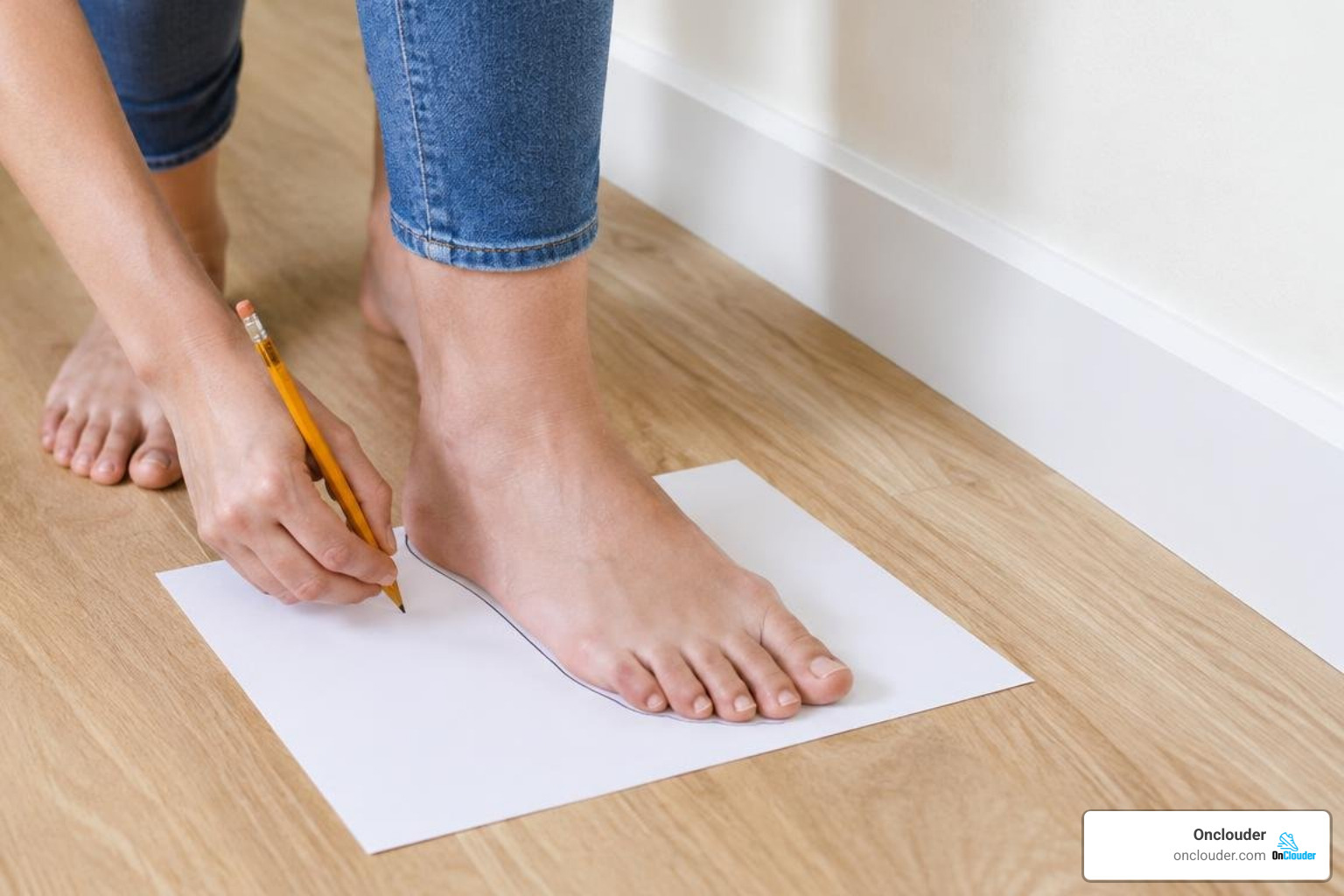
To get an accurate fit, measure your feet at the end of the day when they are at their largest:
- Place a piece of paper on the floor against a flat wall.
- Stand on the paper with your heel lightly touching the wall.
- Trace the longest part of your foot and measure the length in centimeters.
- Add 5 mm to 10 mm of extra clearance to give your toes room to spread forward during movement.
A common issue is finding a shoe that accommodates a broad forefoot without slipping at the rear. Check our guide on matching narrow heels with a wide forefoot to ensure a locked-in heel fit.
Key Design Features to Look For
- Flexible Soles: The outsole should bend easily across the ball of the foot to allow a natural stride.
- Breathable Uppers: Look for flexible engineered mesh or premium leather that molds comfortably around your foot shape over time, like the Wide Toe Box BareFlex™ Leather Sneaker.
- Secure Midfoot Lock: Adjustable laces, drawstrings, or elastic panels ensure your foot stays planted without sliding forward into the toe cap.
Transitioning Safely to Broad Toe Shoes
If you are switching to zero-drop or ultra-flexible shoes, transition gradually so your calves and Achilles tendons can adapt:
- Week 1: Wear your roomy shoes for 1 to 2 hours per day during light indoor activities.
- Week 2: Increase wear time to 3 to 5 hours daily, incorporating short outdoor walks.
- Week 3 and Beyond: Wear them for full work shifts and daily runs as foot strength builds.
For runners adjusting their setup, our beginner wide fit running shoe guide provides additional pacing and form recommendations.
Maintenance and Long-Term Footwear Care
- Mesh and Knit Fabrics: Brush away dry dirt, spot clean using warm water and mild detergent, and let air dry away from direct heat. For quick-dry mesh uppers, a soft brush and a small amount of soapy water are usually enough to remove surface grime without damaging the weave.
- Leather Uppers: Wipe clean with a damp cloth, apply a leather conditioner every few months to maintain flexibility, and treat with a water-repellent spray when needed. Conditioning also helps prevent cracking in the crease zones around the forefoot, which is especially important for roomy shoes that flex frequently during walking.
- Insole Care: Remove insoles regularly to let them air out, keeping the shoe interior fresh and extending the life of the footbed. If the insoles become damp after a long shift or hike, take them out and let them dry separately before wearing the shoes again.
Frequently Asked Questions About Broad Toe Shoes
Are broad toe shoes suitable for 12-hour shifts and all-day standing work?
Yes. They provide the necessary space for feet that swell toward the end of a long shift. Choosing a pair with slip-resistant outsoles and responsive cushioning helps prevent late-shift foot fatigue on hard hospital or retail floors. Many shift workers also find that the wider forefoot reduces the hot spots and pinching that can develop after hours of standing in traditional tapered shoes.
How do I know if I need a wide toe box or a standard wide shoe width?
A standard wide shoe (such as a 2E width) increases volume across the entire shoe, which can cause heel slippage if you have a narrow heel. An anatomical shoe maintains a snug, secure heel and midfoot while flaring out specifically at the forefoot. If your toes fan outward but your heel and midfoot are average or narrow, a broad toe box is usually the better choice.
Do broad toe shoes offer adequate arch support?
Many roomy models use flat, zero-drop platforms designed to help your foot muscles support the arch naturally. For those seeking balanced comfort, reviewing the best zero drop shoes for all-day wear can help you decide between natural muscle activation and structured insoles. Some broad toe shoes also include removable insoles, so you can add your own orthotics if you need extra arch support.
Conclusion
Switching to footwear with an anatomical front gives your toes the space they need to function naturally, reducing pressure points and supporting healthy alignment. Whether you are walking trails, working long shifts, or managing chronic joint discomfort, finding the right pair makes a noticeable difference in how your feet feel at the end of the day.
At Onclouder, we test and compare footwear across real-world conditions so you can make informed choices for your foot health. Explore our comprehensive selection of barefoot wide toe box shoes to stop the squeeze and take the first step toward lasting daily comfort.
The Minimalist Movement: Tips for Decluttering Your Life and Mind
