

Find the Best 10K Shoes for Your Race
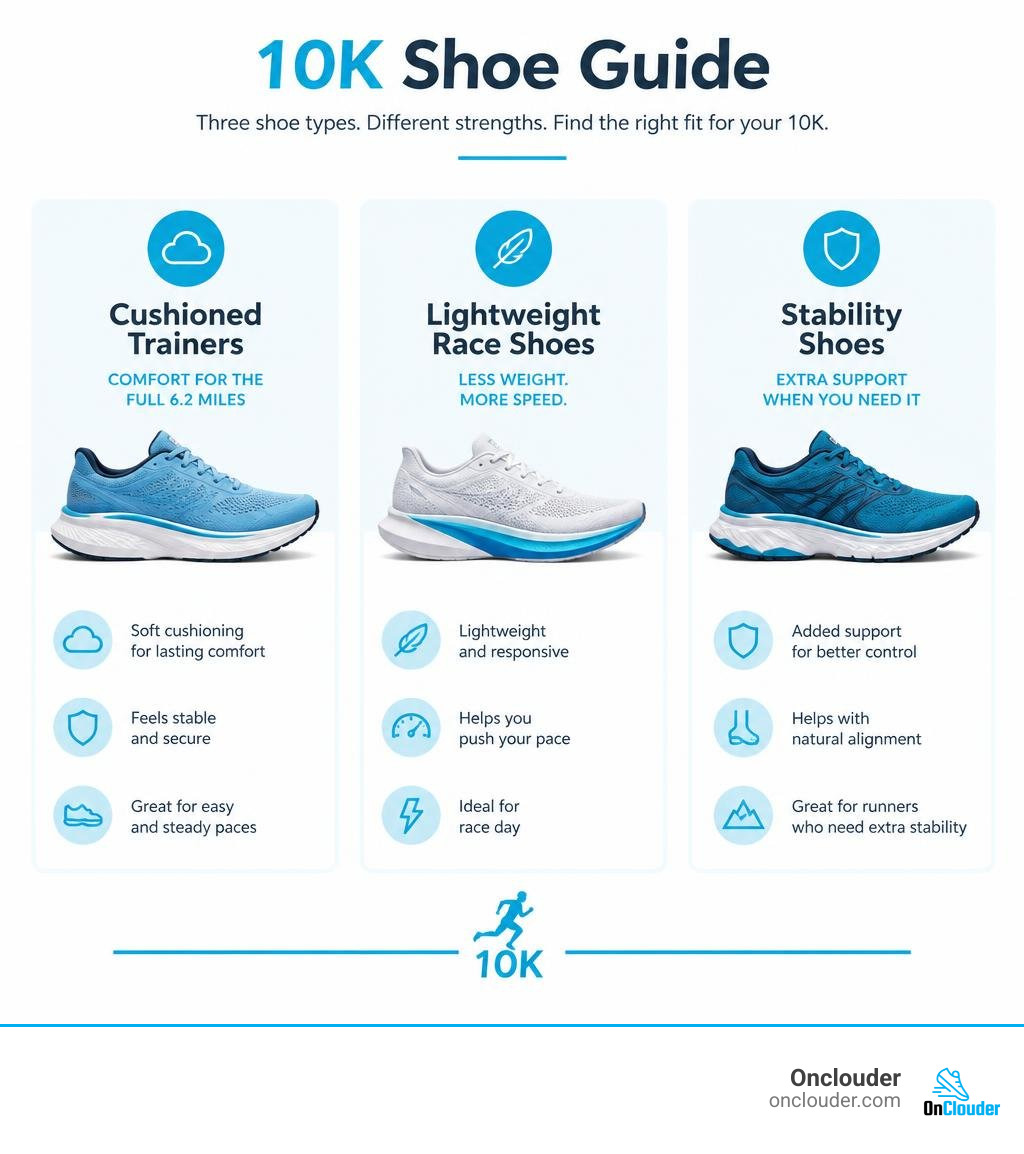
The best 10K shoes depend on your goal. For a comfortable first race, start with a cushioned daily trainer that fits well and feels stable. If you’re chasing a faster time, try a lighter, more responsive shoe. Runners who need extra support should look at stability shoes rather than assuming a neutral pair will work.
You don’t need the most expensive shoe on the start line. You need one that feels good at your race pace and stays comfortable for the full 6.2 miles. This roundup will help you compare those trade-offs without getting lost in shoe jargon.
A 10K is long enough to expose poor cushioning, stiff uppers, and unstable transitions, but short enough that a heavy shoe can still cost you time. The right pair balances impact protection with a smooth, quick turnover. It should feel secure through corners, breathe well as your feet heat up, and keep its composure when fatigue changes your stride late in the race.
For many runners, the best starting point is a versatile daily trainer with a moderate stack height and an 8 mm drop. That setup protects your legs without making the shoe feel sluggish. If you already have race experience, a lighter, more responsive option can help you hold threshold pace with less effort. Runners who overpronate or need extra guidance should prioritize stability features rather than chasing the lightest shoe on the wall.
Fit matters more than any single spec. A shoe that slips in the heel or pinches the midfoot will slow you down more than a few extra grams ever will. Try shoes later in the day when your feet are slightly swollen, wear your normal running socks, and leave enough room in the toe box for your feet to expand over 6.2 miles.
Glossary for best 10k shoes:
Top Criteria When Choosing the Best 10k Shoes
A 10k road race occupies a unique sweet spot in distance running. Covering 6.2 miles, it is long enough to demand serious impact absorption, yet fast enough that bulky, sluggish trainers will sap your turnover. When we evaluate footwear in our testing lab, we balance four mechanical pillars: midsole responsiveness, stack height, heel-to-toe drop, and upper lockdown.
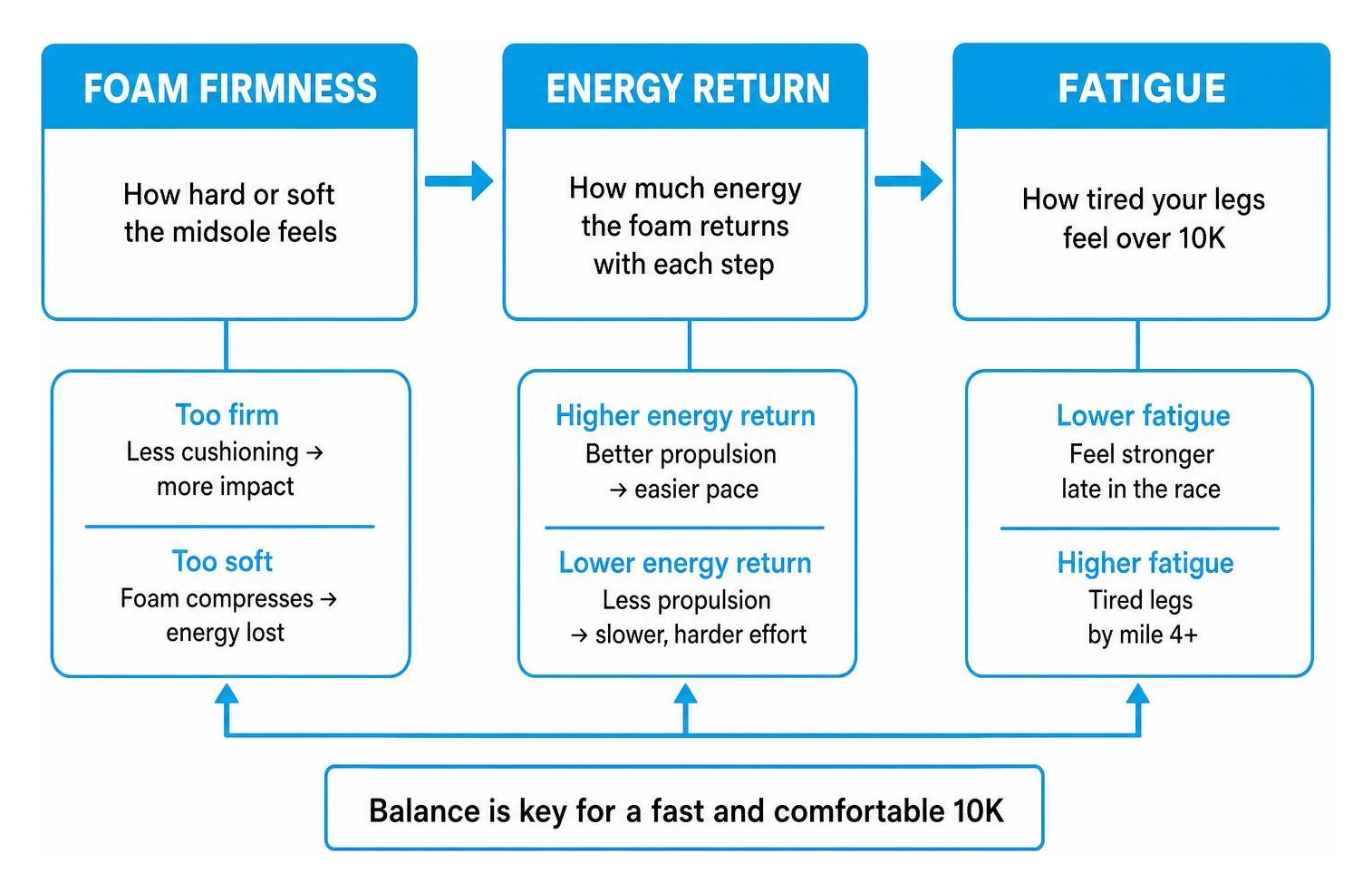
- Midsole Foam & Cushioning System: Over 10 kilometers, your feet endure roughly 6,000 to 9,000 footstrikes. If your foam is too firm, fatigue sets in by mile 4; if it is overly mushy, you lose propulsion. Finding the right balance is why exploring our guide to the best cushioned running shoes helps narrow down materials that preserve energy return without bottoming out.
- Stack Height & Weight: Modern road racing embraces higher stack heights to protect the legs, but added foam often means added grams. For a 10k, keeping total shoe weight around or below 260 g (9.1 oz) prevents your legs from feeling heavy in the final stretch.
- Heel Drop: An 8 mm drop represents the gold standard for mid-distance racing. It provides sufficient heel protection during fatigued late-race heel strikes while maintaining smooth transitions for midfoot striking at threshold pace.
- Engineered Upper Breathability: Heat accumulation inside your shoe increases friction and blister risk. Breathable jacquard or engineered mesh with reinforced eyelets ensures midfoot security through tight corners.
Who Benefits Most from the Best 10k Shoes with Neutral Cushioning?
Neutral running shoes cater primarily to athletes with normal pronation or underpronation (supination). During a typical neutral gait cycle, the outside of the heel makes initial contact before rolling inward roughly 15 percent to absorb shock evenly.
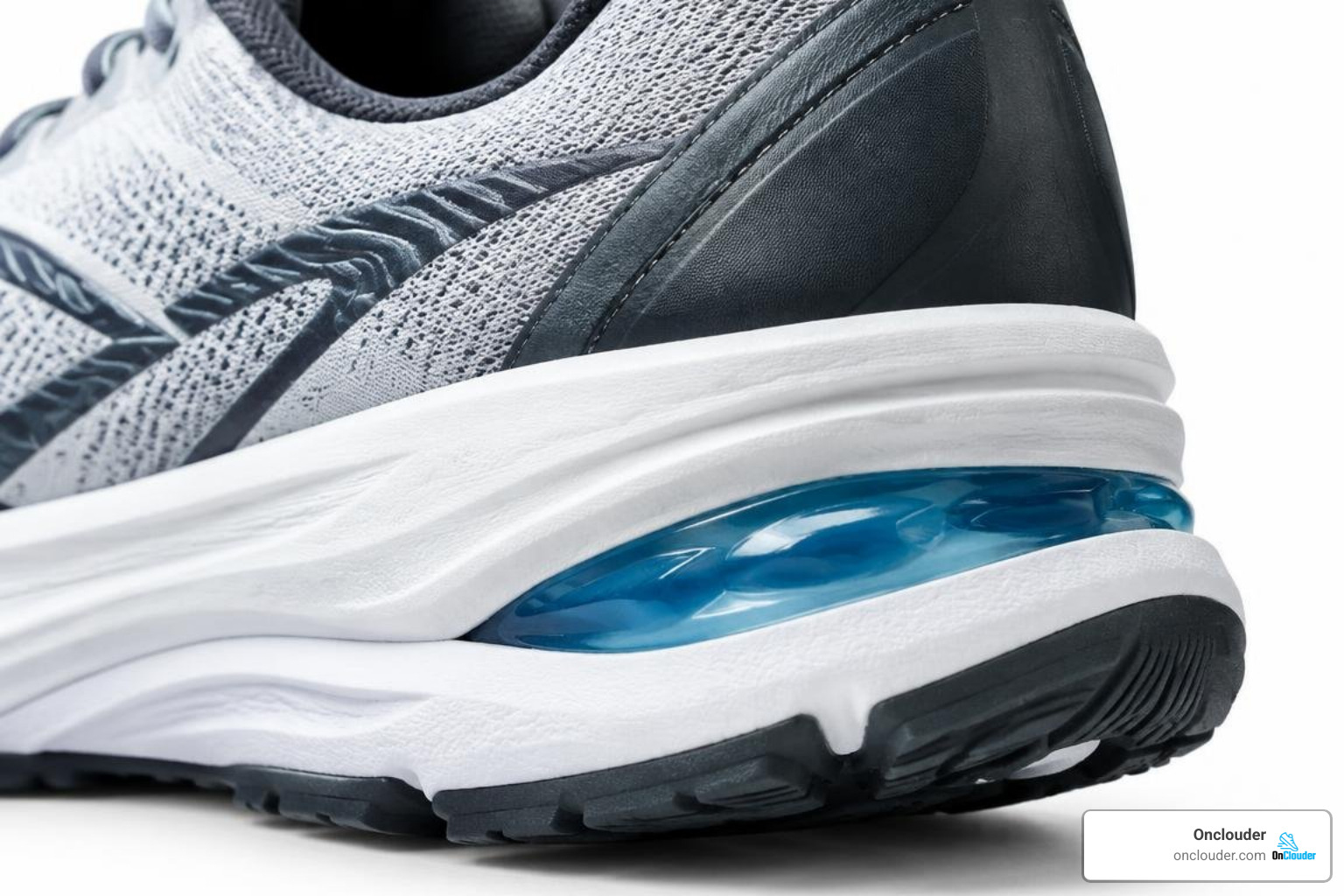
For underpronators, whose feet do not roll inward enough, impact forces concentrate on the outer edge of the foot. Shoes equipped with rearfoot shock-absorbing technologies—such as specialized silicone gels or decoupled heel bevels—distribute these vertical forces safely across the platform. If you naturally overpronate, opting for dedicated supportive running shoes for road protection provides the medial posting or guide rail systems necessary to stabilize your stride.
Neutral cushioning also works well for runners with efficient mechanics who want a predictable, flexible platform. The shoe should follow the foot’s natural motion rather than forcing it into a prescribed path. That freedom can feel more comfortable at faster paces, but it also requires enough lower-leg strength to manage late-race fatigue without excessive inward collapse.
When trying neutral shoes, pay attention to how your ankles feel after a few miles. Mild soreness can be normal as your body adapts, but sharp pain or visible instability is a sign that you may need more structured support. A proper fit should let you hold your natural stride without fighting the shoe.
In-Depth Spotlight: Performance and Road Feel
A Value Champion Among the Best 10k Shoes
When searching for an accessible, performance-ready trainer capable of logging both midweek tempo runs and weekend 10k events, a well-built value daily trainer stands out as an exceptional option.
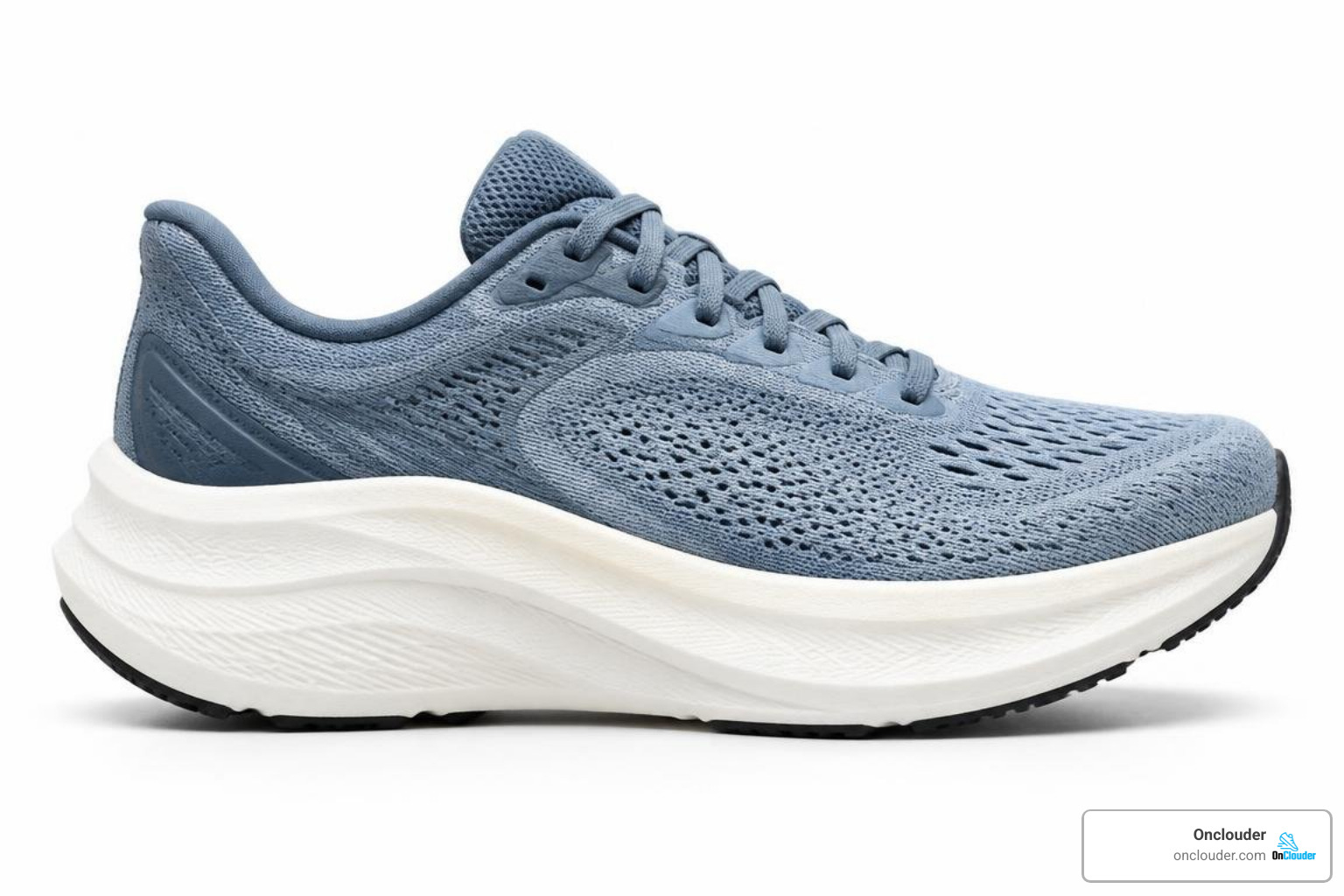
Priced attractively in the $70-$85 range, a good value trainer redefines what budget-conscious runners can expect from dedicated mid-distance footwear. Weighing in at a nimble 260 g (9.1 oz) for a men’s standard size, the best options in this category are noticeably lighter than older models while offering increased stack height for enhanced underfoot protection.
Under the hood, a strong value trainer typically combines a few key elements:
- Responsive Midsole Foam: A forgiving compound engineered to deliver a softer, more comfortable landing without the rapid breakdown typical of entry-level EVA foams.
- Rearfoot Shock Absorption: Strategically positioned cushioning in the heel crash pad to attenuate harsh impact forces, preserving joint health through the 6.2-mile journey.
- Guided Flex Grooves: A longitudinal flex pattern cut into the outsole that guides the foot along a natural path of progression from touchdown to toe-off.
The versatile 8 mm heel drop complements neutral runners and mild supinators alike, ensuring smooth mechanics whether you are running at an easy recovery pace or pushing your threshold limits.
Engineered Mesh and Fit Dynamics for Mid-Distance Racing
Upper construction can make or break your race day. A well-designed value trainer uses an engineered jacquard mesh upper that maximizes airflow while wrapping snugly around the midfoot.
Paired with a moisture-managing sockliner, the interior maintains step-in comfort and prevents hotspots. The best options accommodate a wide range of foot profiles with standard and wide width options across varied colorways. For runners browsing beginner-friendly running shoe options for 2026, this blend of approachable fit, sustainable construction materials, and dependable lockdown offers an effortless transition into competitive racing.
A secure heel counter and reinforced eyelets keep the foot centered during quick changes of direction, while the padded collar reduces pressure on the Achilles. The result is a fit that feels stable at the start and remains comfortable through the final kilometer, when tired feet tend to swell and shift inside the shoe.
Performance Breakdown: Daily Trainers vs Race-Day Picks
Choosing the right pair requires weighing shock absorption against outright speed. Here is how leading mid-distance shoe categories stack up for 10k runners:
| Shoe Category | Typical Weight | Heel Drop | Cushioning Type | Target Runner | Price Range |
|---|---|---|---|---|---|
| Value Daily Trainer | ~260 g (9.1 oz) | 8 mm | Responsive foam + rearfoot shock absorption | Casual fitness & beginner racers | $70 – $85 |
| Max Cushion Cruiser | ~285-310 g (10-11 oz) | 5-10 mm | High-stack supercritical EVA | High-mileage & recovery-focused | $140 – $160 |
| Carbon-Plated Racer | ~185-215 g (6.5-7.6 oz) | 4-8 mm | PEBA foam + full carbon plate | Elite & PB-chasing competitors | $200 – $275 |
Daily trainers prioritize durability and comfort, making them the safest choice for runners who want one shoe for training and racing. Their slightly heavier builds absorb more road vibration and hold up well across hundreds of miles. The trade-off is a less aggressive toe-off, which can feel noticeable during the final push of a 10k.
Race-day picks flip that equation. Lighter foams and snappier geometries reward efficient runners with quicker transitions and a more aggressive feel. However, that speed often comes with reduced long-term durability and a higher price tag. For most runners, the best approach is to train in a dependable daily trainer and reserve a faster shoe for key workouts and race morning.
Frequently Asked Questions About 10k Footwear
What is the ideal heel-to-toe drop for a 10k race?
For most runners, an 8 mm drop provides the best equilibrium. It offers enough heel elevation to ease calf strain during fast paces while accommodating midfoot striking without feeling clunky or unstable through turns.
Are budget running shoes suitable for competitive 10k racing or casual training?
Yes. Modern value trainers utilizing lightweight engineered mesh and dual-density foam platforms offer ample protection and responsiveness for casual racers aiming to finish comfortably or set a solid baseline time without spending premium race-day prices.
How often should you replace your 10k running shoes?
Most standard running shoes should be retired between 300 and 500 miles (480 to 800 km). Signs of replacement include noticeable outsole wear, creasing along the midsole foam that fails to rebound, or lingering post-run joint stiffness.
Can I use the same shoes for 5k and 10k races?
In most cases, yes. A shoe that works well for a 10k will generally perform well for a 5k, since both distances reward a balance of cushioning and turnover. The main difference is that a 10k places more demand on midsole durability and late-race comfort, so avoid shoes that feel harsh after the first few miles.
Should I size up for a 10k race?
Not necessarily. Your feet may swell slightly over 6.2 miles, but a properly fitted running shoe should already leave about a thumb’s width of space in the toe box. If your current shoes feel tight at the end of longer runs, consider a half-size up or a wider width rather than assuming race-day swelling is the only issue.
Conclusion
Finding the right footwear for a 10k race comes down to matching your personal pace goals, foot mechanics, and budget. Whether you lean toward lightweight, high-value trainers with plush rearfoot cushioning or lean race flats, having a dependable pair underfoot ensures you cross the finish line strong. If you are planning to extend your race distances after conquering the 10k, check our comprehensive guide on finding marathon and long-distance running shoes to step up your training journey.
Before race day, test your shoes on at least one longer run and one faster effort. That gives you confidence in the fit, the lacing, and the way the shoe responds when you push the pace. A 10k is short enough to reward smart preparation, but long enough to punish any discomfort you ignore in training. Choose a shoe that disappears on your foot, and you can focus on the race rather than your gear.
Mindful Living: Incorporating Meditation into Your Daily Routine
