
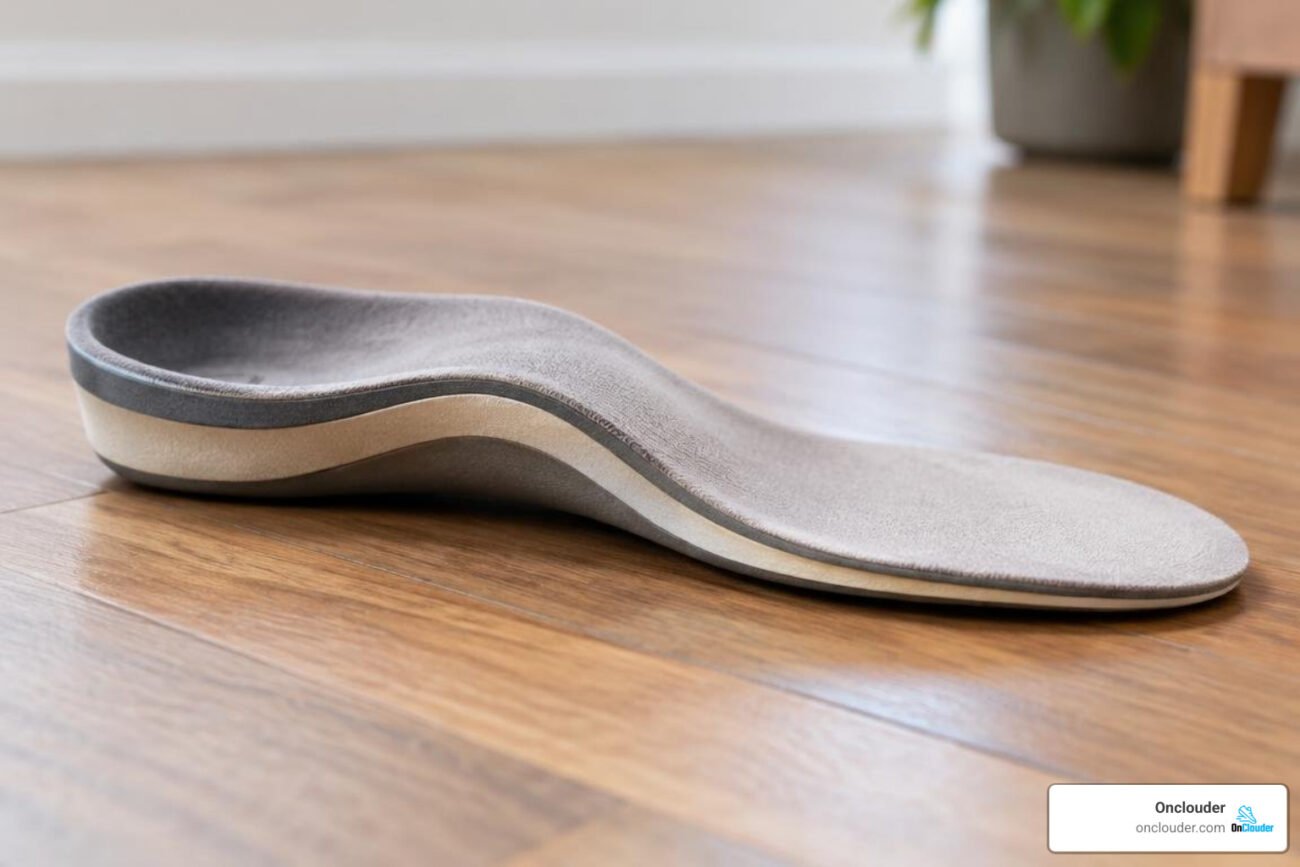
Introduction
If you’re dealing with mild to moderate plantar fasciitis, the first thing you should try is over-the-counter semi-rigid arch support inserts. They usually do the job. Custom orthotics? Those are for serious cases — like when you have a structural problem or the pain just won’t go away with regular inserts.
Here’s a wild fact: plantar fasciitis hits up to 10% of people at some point in their lives. You know that sharp, wincing ache you feel when you take your first steps in the morning on a cold floor? That’s it. The plantar fascia — that thick band running along the bottom of your foot — takes a beating every time your foot hits the ground. Without the right support, tiny tears start forming. And those tears? They cause inflammation, heel pain, and that deep arch fatigue that just won’t quit.
So the real question is: should you grab a cheap over-the-counter insert, or drop hundreds of dollars on custom orthotics from a podiatrist? Honestly, OTC options have come a long way by 2026. We’re talking rigid composite shells, high-rebound foams, and multi-density arches that honestly feel like medical devices.
But still — with so many choices out there, picking the right one can feel overwhelming. That’s exactly why we put this guide together. We’ll break down how these things actually work, compare the key features, and help you find the most effective footbed for your daily routine.
Over-the-Counter Arch Support Inserts for Plantar Fasciitis vs Custom Orthotics
So what really separates over-the-counter inserts from custom orthotics? It comes down to one thing: custom fit vs. mass-produced support. Both do the same basic job. They steady your foot, ease stress on your heel bone, and take pressure off the plantar fascia when you walk. But here’s the thing — they get there in very different ways. Different prices. Different materials. And a totally different process for making them.
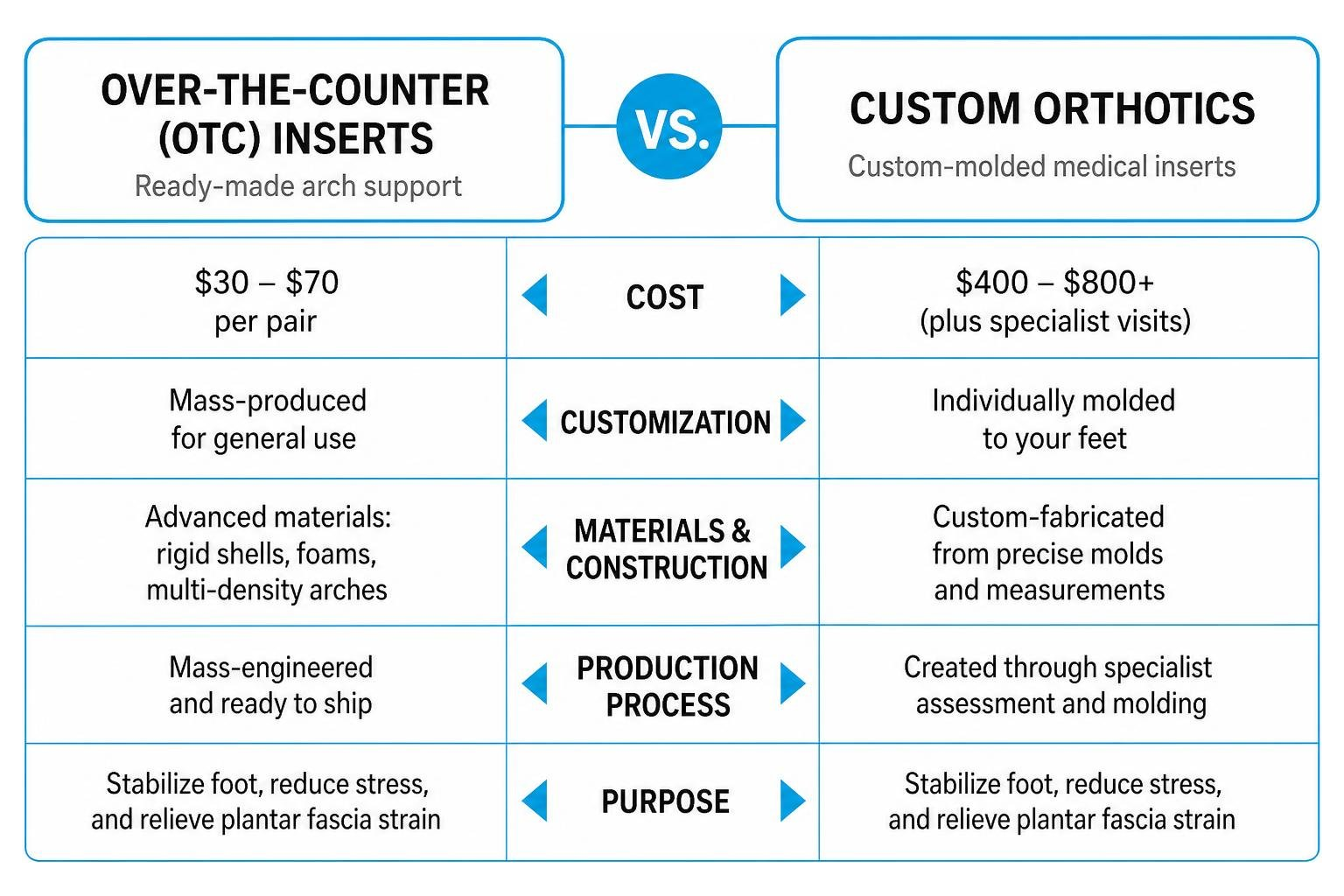
When evaluating foot pain solutions, comparing these core attributes side by side makes it easier to match your specific symptoms and budget:
| Feature | Over-the-Counter (OTC) Inserts | Custom Orthotics |
|---|---|---|
| Average Cost | $30 – $70 per pair | $400 – $800+ (plus specialist visits) |
| Production Time | Instant (off-the-shelf delivery) | 2 to 4 weeks for casting and lab fabrication |
| Arch Design | Standardized contours (Low, Med, High) | Exact cast/3D digital scan of your foot |
| Primary Materials | EVA foam, polyurethane, carbon fiber/nylon shells | Medical-grade semi-rigid plastics, graphite, leather |
| Typical Lifespan | 6 to 12 months | 2 to 5+ years (often refurbishable) |
| Best Suited For | Mild-to-moderate plantar fasciitis, general support | Severe deformities, limb length discrepancy, chronic pain |
OTC insoles offer accessible, immediate relief by distributing pressure away from the heel strike zone and elevating the medial longitudinal arch. Custom orthotics, conversely, address complex individual pathomechanics that off-the-shelf inserts cannot fully correct.
Biomechanical Benefits and Pain Relief Mechanisms
The human foot relies on the windlass mechanism: as your big toe extends during toe-off, the plantar fascia tightens, elevating the arch and turning the foot into a rigid lever for forward propulsion. If you overpronate or have a collapsed arch, the fascia stretches excessively, pulling against its insertion point on the calcaneus (heel bone).
So how do good orthotics fix overpronation? Two ways. First, a deep heel cup locks your foot in place, and a firm arch bridge holds up your medial arch. That keeps the tissue from stretching too far when you move. Second, angled heel designs and special posting — like a 4-degree medial wedge — help line your ankle back up. Clinical studies on plantar fasciitis support back this up. And the payoff? These inserts spread your body weight evenly across your whole foot instead of dumping it all on your heel and the balls of your feet. That’s what drops those peak impact pressures so sharply.
Cost, Longevity, and Break-In Time Differences
Let’s talk money. The price gap between OTC inserts and custom orthotics is huge. A decent pair of prefab inserts runs you $30 to $70. That’s cheap enough to toss a pair in your running shoes and another in your work boots without feeling it. Custom orthotics? Those start around $400 and can hit $800. And insurance might only chip in for part of it.
When weighing orthotic insole buying considerations, lifespan and break-in periods are major factors:
- OTC Lifespan: High-density foam and polymer shells hold up well for 6 to 12 months of daily use before the foam compresses and loses energy return.
- Custom Lifespan: Made of dense graphite or rigid thermomoldable polymers, custom shells often last several years, requiring only occasional top-cover replacements.
- OTC Break-In: Most users adapt within 3 to 7 days of gradual wear.
- Custom Break-In: Custom orthotics demand strict 2- to 3-week break-in schedules because their rigid shape aggressively realigns bone structure.
Key Features to Compare in Over-the-Counter Insoles
Here’s the thing — not every off-the-shelf insert has the support you need to calm down an inflamed plantar fascia. Take those soft, pillowy gel ones. They feel great the second you step on them. But the moment your full body weight hits? They squish flat. Zero resistance. Your arch just keeps collapsing.
So how do you judge whether an arch support insole actually performs? Look for two things working together: arch support insole performance, firm structure and shock-absorbing foam. You want that balance. Materials like molded polypropylene or carbon fiber are semi-rigid. That’s the sweet spot. They flex just enough to let your foot move the way it’s supposed to, but they still put a firm stop to too much inward roll.
Top Features in Arch Support Inserts for Plantar Fasciitis
When shopping for an over-the-counter solution, prioritizing specific engineering elements will save you time and discomfort:
- Deep Heel Cradle: Surrounds the natural fatty heel pad, preventing it from flattening outward upon impact and maintaining natural shock absorption.
- Semi-Rigid Arch Bridge: Must resist downward compression under your body weight to keep tension off the plantar fascia.
- Dual-Density Cushioning: Combines a supportive structural base (EVA or polyurethane) with a softer top layer for impact damping.
- Energy Return: Responsive foams return kinetic energy during the push-off phase to reduce foot fatigue during long shifts.
- Heel-to-Arch Contours: Many top brands utilize specialized heel-to-arch contour engineering to spread load seamlessly across the midfoot.
- Antimicrobial & Odor Control: Built-in fabric treatments (such as silver-ion or Polygiene technology) keep moisture and odor manageable inside closed footwear.
Full-Length vs Three-Quarter and Sizing Compatibility
Most insoles come in one of two shapes: full-length or three-quarter length. Sounds simple, right? But pick the wrong one and you’ll know fast. A full-length insert that doesn’t fit right will jam up your toes. Go three-quarter when you shouldn’t, and it’ll slide around inside your shoe all day.
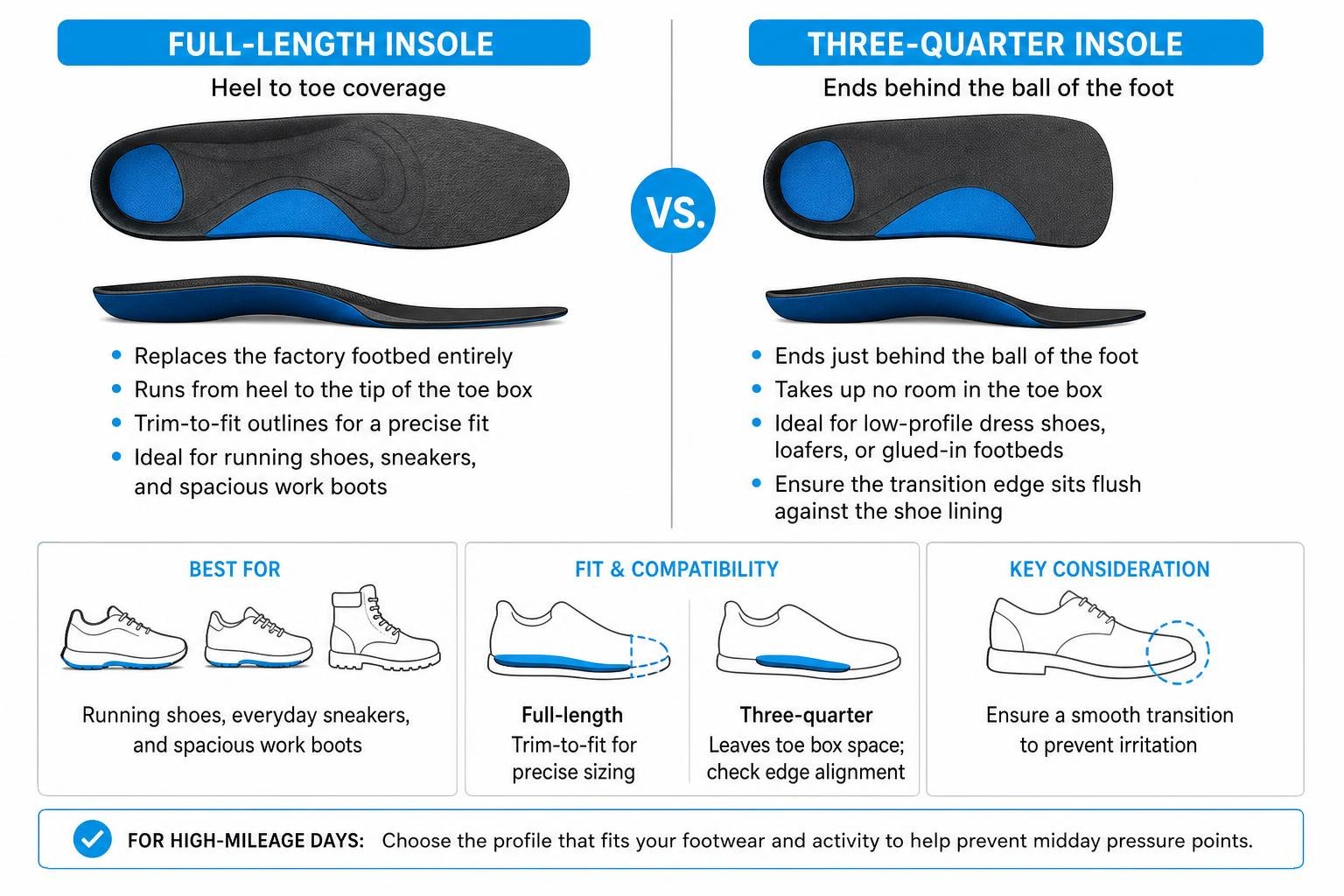
Full-length models replace the factory footbed entirely. They run from the heel to the tip of the toe box and usually feature trim-to-fit outlines, allowing you to trace your shoe’s original insole for a precise fit. These are the gold standard for running shoes, everyday sneakers, and spacious work boots.
Full-length insoles replace the factory footbed completely. They go from your heel all the way to the tip of the toe box. Most come with trim-to-fit outlines, so you can trace your shoe’s original insole and cut for a precise fit. For running shoes, everyday sneakers, and roomy work boots? These are the gold standard.
How to Match Inserts with Your Everyday Footwear
Even a great orthotic insert won’t work if you shove it into the wrong shoe. Take a rigid, high-arch insole and jam it into a narrow, low-volume sneaker. What happens? It pinches the top of your foot. And your heel gets pushed right out of the shoe collar.
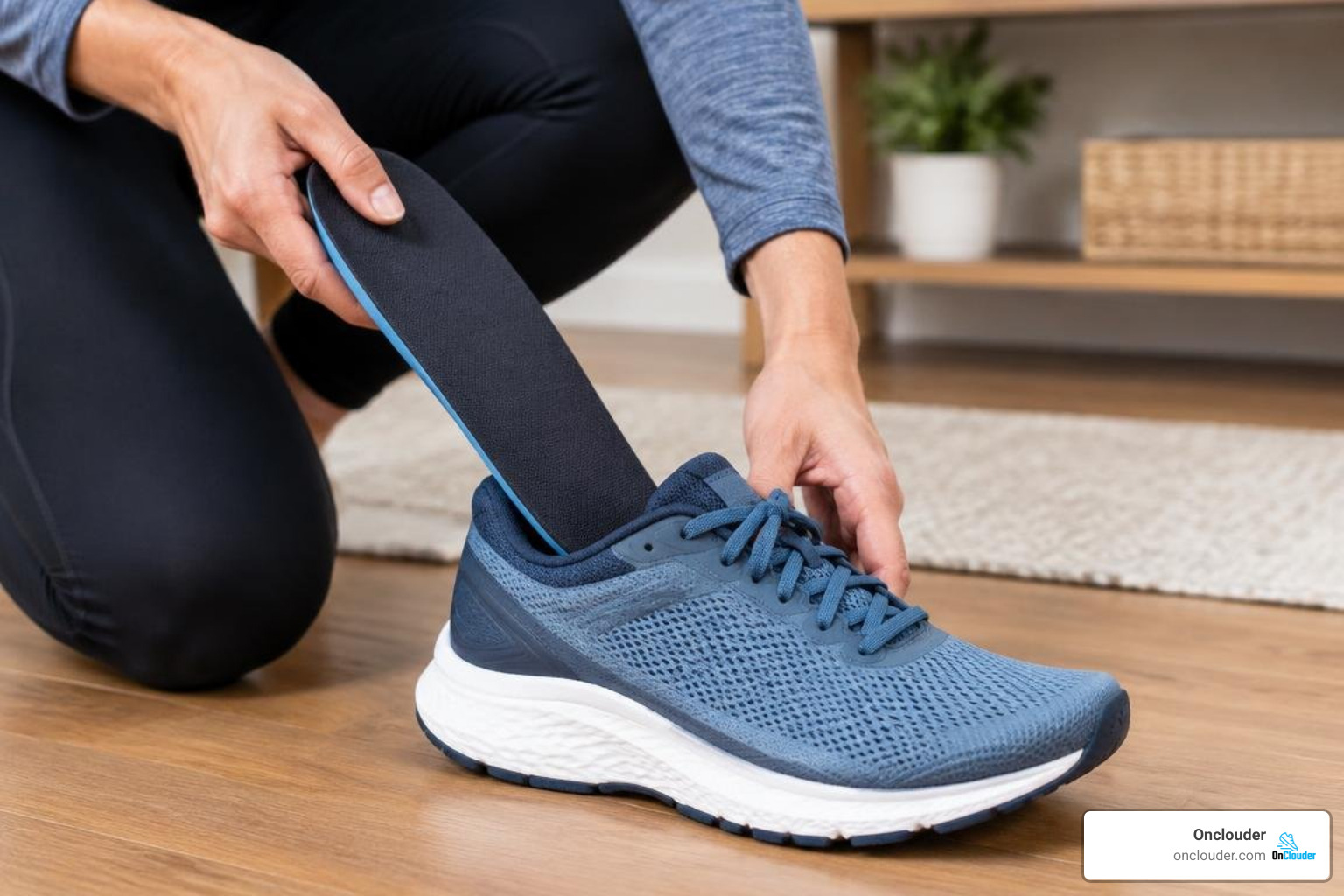
Before making a purchase, review our comprehensive arch support footwear guide to make sure your primary footwear provides a stable foundation for an insert.
Choosing the Right Footwear Pairing for Arch Support Inserts
Want your insoles to actually do their job? Then your shoes need to work with your arch — not against it. So if you’re picking arch support inserts for plantar fasciitis, keep these pairing rules in mind:
- Remove Factory Footbeds: Always take out the flimsy foam liners that came with your shoes before dropping in full-length orthotics. Doubling up reduces shoe volume, crushes your instep, and causes heel slippage.
- Check Shoe Volume: Deep shoes with removable liners easily accommodate high-profile inserts with thick heel cups. Low-profile shoes require ultra-thin composite shells.
- Examine Heel-to-Toe Drop: Footwear with a moderate heel drop (8mm to 10mm) naturally offloads calf and Achilles tension, complementing the arch insert’s work.
- Ensure Midsole Stability: An insert cannot fix a flimsy shoe. If you can twist your sneaker like a dishcloth, it lacks the torsional rigidity needed to support an orthotic. Pairing supportive shoes with high-performance arch inserts ensures optimal biomechanical stability.
Maintenance, Care, and Replacement Timelines
Footwear insoles absorb sweat, friction, and continuous impact force. Proper maintenance extends their operational life and keeps your feet healthy:
- Cleaning: Never place orthotics in a washing machine or tumble dryer, as high heat warps plastic stabilizer caps and degrades adhesives. Hand wash them using lukewarm water, a soft brush, and mild soap.
- Drying: Always air dry them completely away from direct heat sources before sliding them back into your shoes.
- Squeak Prevention: If a hard plastic shell squeaks against the bottom of your shoe, remove the insole, dust a light layer of talcum or baby powder inside the shoe base, and reinsert it.
- Monitoring Foam Fatigue: Check the forefoot foam every few months. Once the material remains permanently compressed or the arch begins sagging under your body weight, it is time for a replacement—typically every 6 to 12 months for active individuals.
Frequently Asked Questions About Insoles and Orthotics
How long does it take for insoles to relieve heel pain?
Most people experience noticeable relief within 7 to 14 days of consistent wear. Because an orthotic shifts your skeletal alignment and alters how your muscles fire, you should break them in gradually: wear them for 1 to 2 hours on day one, adding an hour or two each day until you can wear them comfortably all day long.
Can over-the-counter inserts replace podiatrist-prescribed custom orthotics?
For mild to moderate plantar fasciitis caused by everyday wear, overpronation, or sudden increases in standing activity, quality over-the-counter inserts are often just as effective as custom devices at a fraction of the price. However, OTC options cannot replace custom orthotics if you have severe structural deformities, severe limb length discrepancies, advanced diabetes, or rigid high-arch conditions that require targeted clinical offloading.
How do I know when my shoe inserts need replacing?
Look for visible signs of structural fatigue. If the arch bridge flexes easily under light thumb pressure, the deep heel cup has cracked, or the top cushioning foam has worn down to the hard base, the insole is no longer absorbing shock. A return of your morning heel pain is another clear indicator that your inserts have lost their supportive shape.
Conclusion
Plantar fasciitis can stop your active lifestyle dead in its tracks. But here’s the good news — you don’t always need expensive custom devices right away. Most walkers, runners, and people who stand all day do just fine with a well-made over-the-counter orthotic. It gives you the arch lift, heel support, and shock absorption your plantar fascia needs to heal.
Start by assessing your footwear collection, determining whether you need full-length or three-quarter inserts, and selecting an orthotic that offers genuine semi-rigid arch support over soft, unsupportive foam. If your heel pain persists after several weeks of consistent wear and gentle stretching, consult a podiatrist for an individualized clinical assessment. Ready to upgrade your daily rotation? Explore our roundup of [podiatrist-approved best shoes for plantar fasciitis] to find the ultimate supportive foundation for your feet. Explore our roundup of the podiatrist-approved best shoes for plantar fasciitis to find the ultimate supportive foundation for your feet.

One thought on “Shoe Inserts vs Custom Orthotics 2026: Best For Plantar Fasciitis?”
Comments are closed.