
Which Shoe Brand Is Best for Plantar Fasciitis?
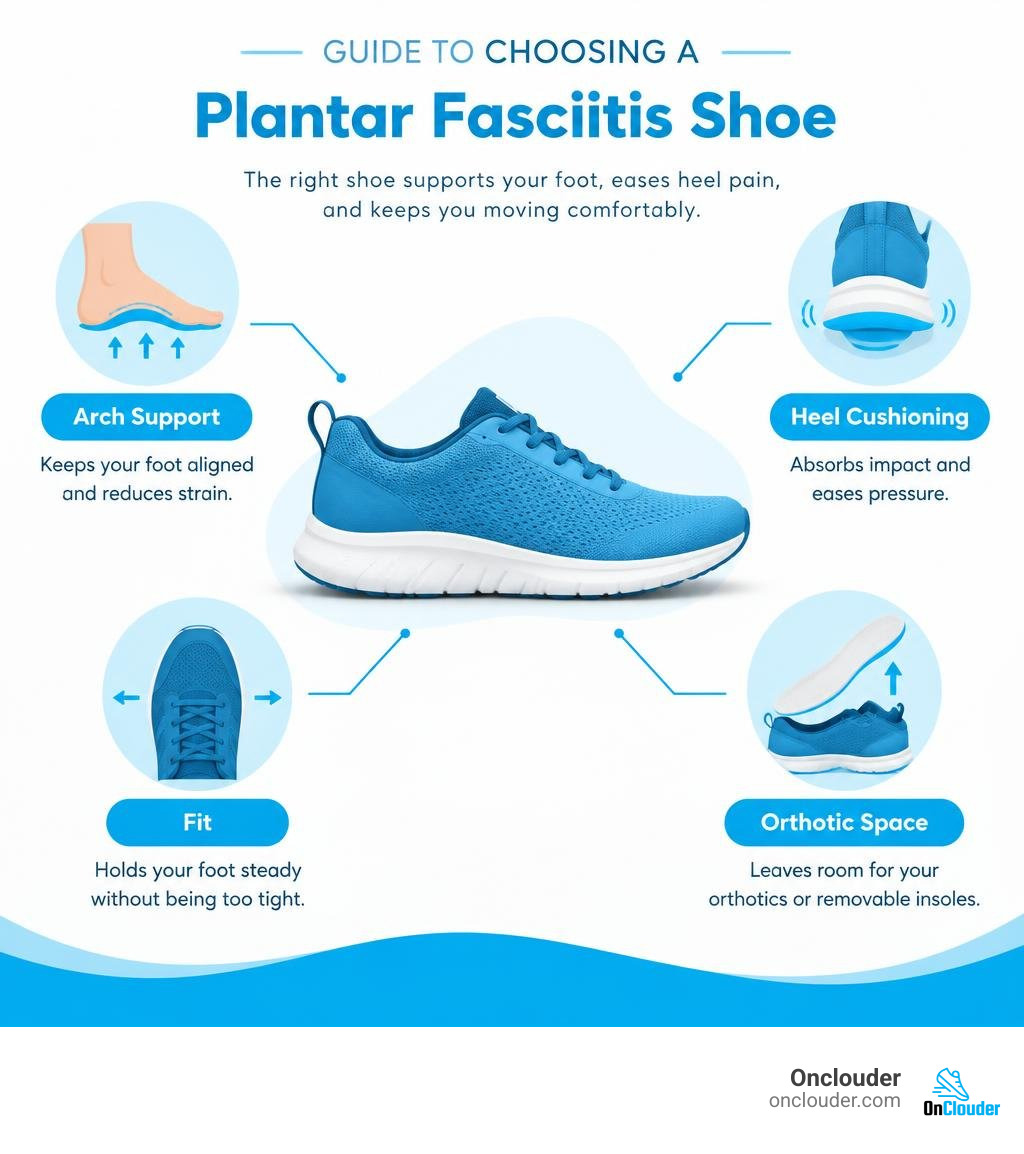
Start with Aetrex, Genext, g-defy, or WalkHero. But don’t just pick a name. Pick by fit and support. What should the right shoe do for your heel pain? It should hold your arch neutral. Cushion your heel with every step. Keep your foot steady inside. And leave room for your toes. Wear orthotics? Then look for a removable insole. So when you compare options, the best shoe brand for plantar fasciitis? It’s the one that matches your foot shape and your daily routine. A shoe you can wear all day beats one that only feels good in the store.
Helpful guides and resources:
Key Features in the Best Shoe Brand for Plantar Fasciitis
Finding the right shoes means understanding how design protects your plantar fascia. Your plantar fascia is a thick band of tissue along the bottom of your foot. It connects your heel bone to your toes. When it gets too much tension or repeated impact, tiny tears form. That’s what causes that sharp heel pain.
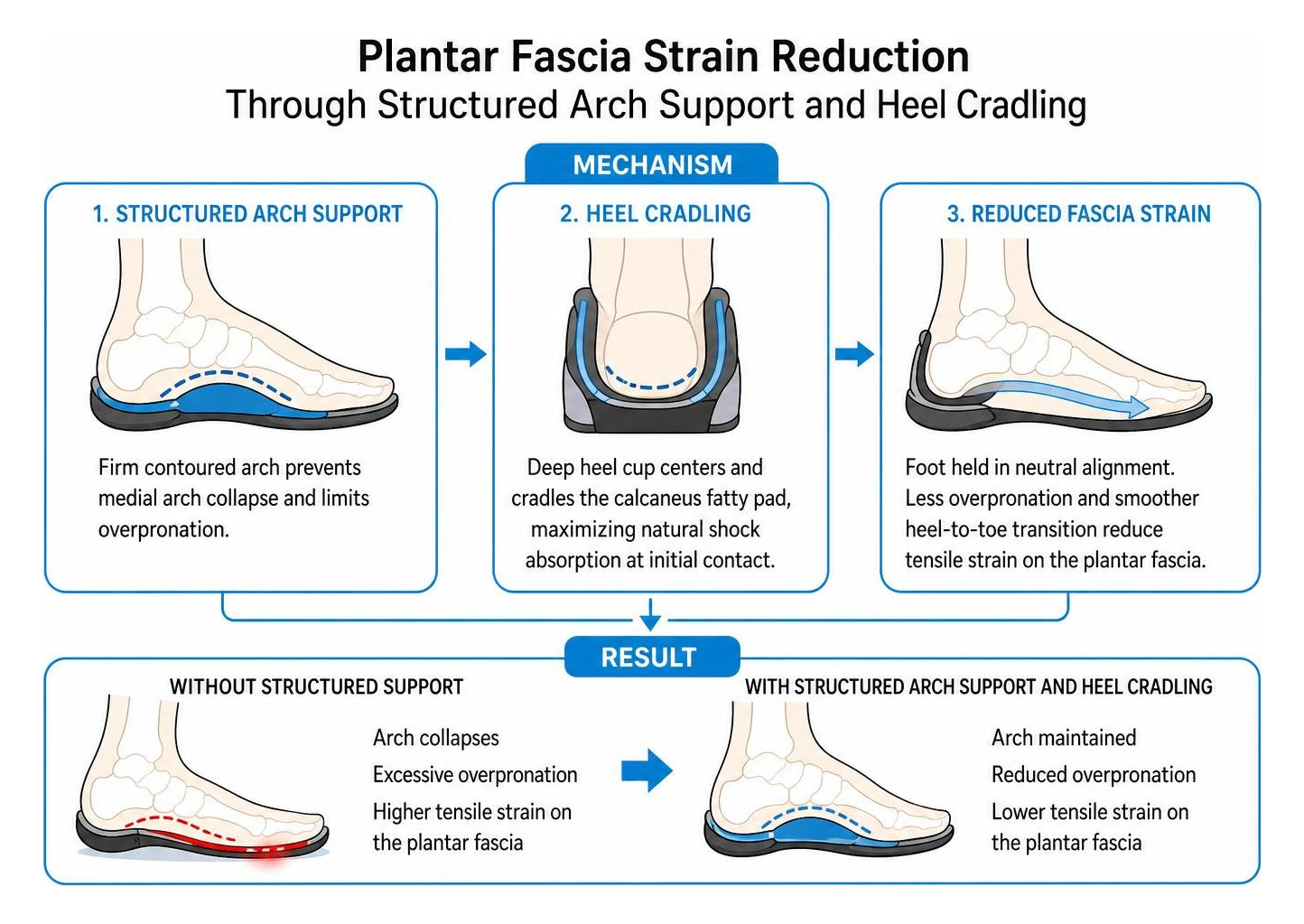
Here’s a big one: over 90% of plantar fascia cases tie directly to overpronation. That’s when your foot rolls too far inward as you walk. Without proper support, that rolling stretches your fascia past its natural stretch. So how do good orthopedic and supportive shoes fight back? They build in specific features to counter those forces.
| Feature | Primary Mechanical Function | Impact on Fascia Recovery |
|---|---|---|
| Firm Arch Structure | Prevents medial arch collapse and limits overpronation | Reduces tensile strain across the plantar fascia band |
| Deep Heel Cup | Centers and cradles the calcaneus fatty pad | Maximizes natural shock absorption at initial contact |
| Rigid Midfoot Shank | Prevents midfoot torsional twisting and shoe bending | Transfers mechanical workload safely toward calf muscles |
| Rocker Bottom Outsole | Promotes a smooth heel-to-toe transition | Reduces forefoot bending and terminal stance stretching |
| Cushioned Midsole | Attenuates vertical ground reaction forces | Shields inflamed heel attachment points from hard impacts |
| Spacious Toe Box | Allows natural metatarsal splay without pinching | Balances plantar pressure distribution across the forefoot |
A firm, contoured arch acts like an outside scaffold. It holds your foot in neutral. Pair that with a deep heel cup, and the shoe locks your foot down. No tiny movements. No heel irritation. In our <mark>comprehensive arch support shoes guide</mark>, we explain how stiff midfoot shanks stop the sole from bending right under your arch. Instead, the shoe bends where it should — at the metatarsal break, where your toes naturally flex.
A rocker sole takes pressure off your fascia. How? It rolls your step forward smoothly. Instead of stretching your plantar fascia tight over the ball of your foot during toe-off, that curved sole just glides through. That’s a big deal for morning stiffness and standing fatigue.
Top Brand Comparisons for Heel Pain and Arch Support
Different footwear brands approach plantar fascia support through distinct engineering philosophies. Some focus on heavy-duty motion control, while others prioritize mechanical spring dampening, deep removable footbeds, or forefoot biomechanical activation.
Evaluating the Best Brand Shoe for Plantar Fasciitis Daily Walking
For daily errands, all-day standing, and walking routines, structured stability and depth are critical.
- Aetrex: Built around proprietary 3D foot-scanning data and decades of ergonomic design, Aetrex integrates built-in orthotic arches and slow-recovery memory foam footbeds. Their designs focus on continuous pressure redistribution across the plantar surface, preventing localized stress concentrations under the calcaneus.
- Genext: Engineered specifically for high-volume custom orthotics and severe foot conditions, Genext walking shoes feature an impressive 9/18-inch total removable depth distributed across three distinct spacer layers. They offer extended heel counters for lateral rearfoot stability and hold ASTM and SATRA slip-resistance certifications, making them reliable options alongside our expert work footwear recommendations.
- WalkHero: A popular choice for everyday comfort, WalkHero integrates its Shock Queller® system with a plant-based memory foam layer. Models like their men’s active line feature an 8 mm heel-to-toe drop and lightweight knit uppers made with recycled materials, offering balanced arch support right out of the box.
Selecting the Best Brand Shoe for Plantar Fasciitis Recovery and Running
High-impact activities and athletic recovery demand specialized kinetic technologies to disperse heavy ground forces:
- g-defy (Gravity Defyer): Utilizing patented spring-loaded sole technology, these shoes incorporate VersoShock® systems that absorb harsh heel strike impacts and return kinetic energy, easing the load on sensitive heel attachments. They include a stabilizing midfoot shank and supply two swappable insoles: a Corrective Fit insole for high arches and a Comfort Fit insole for medium arches.
- WalkHero Performance: With structured athletic models like the Men’s Ultimate Arch Support Shoes, runners and active walkers gain reinforced heel stabilization alongside a firm EVA midsole that resists early compression breakdown. Similar forefoot-activation designs use rocker geometry and dual-density foam to shift landing loads away from the heel toward the forefoot, engaging the calf complex and Achilles tendon eccentrically, and are best introduced gradually, starting at 20 minutes a session, 3 to 4 times weekly, to strengthen the lower leg chain.
- Orthotic Pairing: For shoes with flat internal lasting, dropping in specialized rigid orthotic inserts can transform standard trainers into supportive recovery shoes.
Shoe Support, Overload Syndromes, and Recovery Timelines
Plantar fasciitis rarely shows up alone. Bad biomechanics and flat arches often set off other problems up the chain. Things like metatarsalgia, Achilles tendonitis, and second metatarsal overload syndrome.
So what causes second metatarsal overload? An unstable first metatarsal or a Morton’s toe pushes too much weight onto the second toe joint when you push off. That’s what creates that sharp, burning feeling under the ball of your foot. Shoes with a wide toe box, rigid midfoot stability, and balanced forefoot cushioning? They protect your heel attachment and your metatarsal heads at the same time.
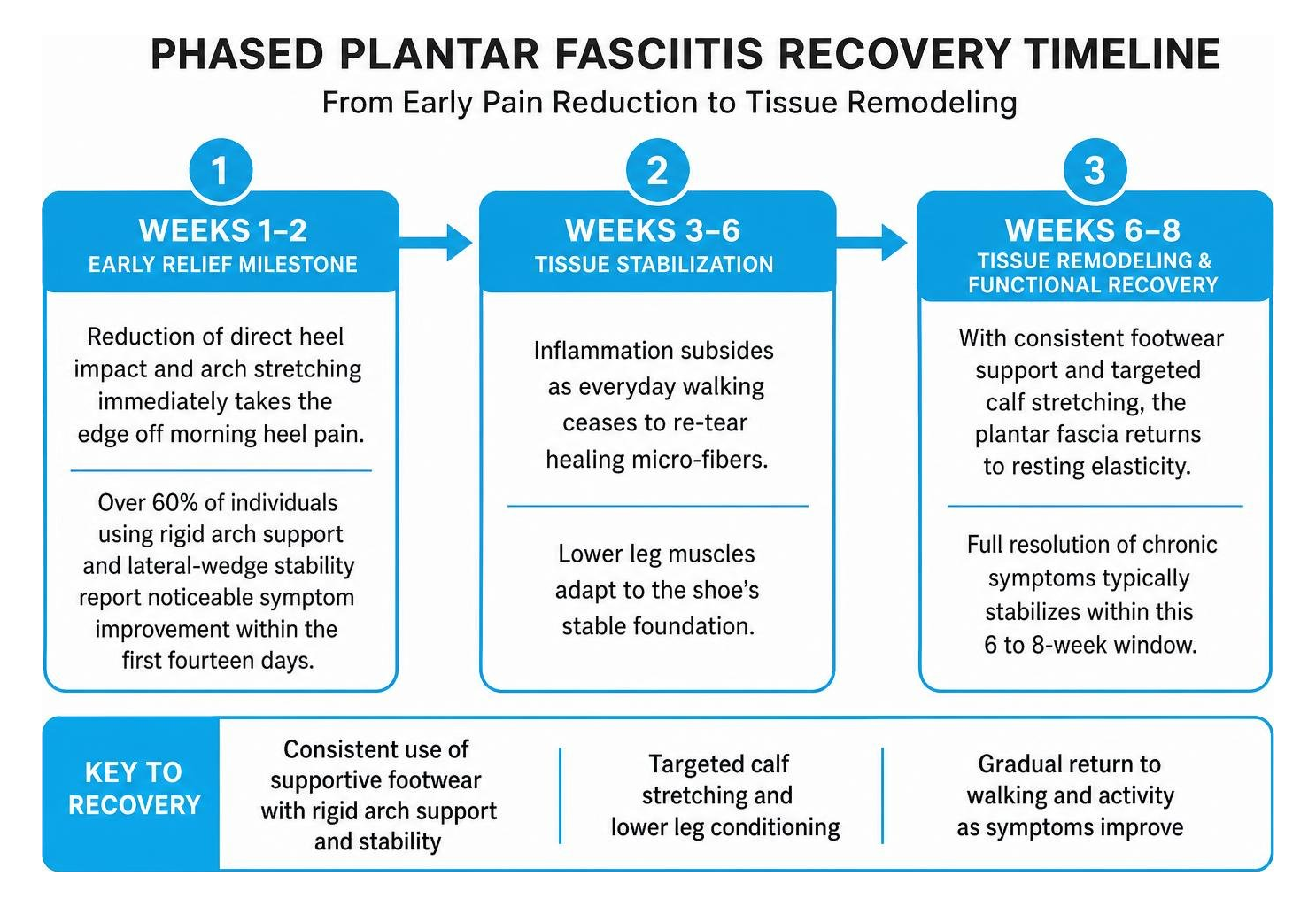
When upgrading to proper supportive footwear, recovery follows a predictable timeline:
- Weeks 1 to 2 (Early Relief Milestone): The reduction of direct heel impact and arch stretching immediately takes the edge off morning heel pain. Over 60% of individuals using rigid arch support and lateral-wedge stability report noticeable symptom improvement within the first fourteen days.
- Weeks 3 to 6 (Tissue Stabilization): Inflammation subsides as everyday walking ceases to re-tear healing micro-fibers. Lower leg muscles adapt to the shoe’s stable foundation.
- Weeks 6 to 8 (Tissue Remodeling & Functional Recovery): With consistent footwear support and targeted calf stretching, the plantar fascia returns to resting elasticity. Full resolution of chronic symptoms typically stabilizes within this 6 to 8-week window.
Frequently Asked Questions About Plantar Fasciitis Shoes
How quickly do supportive shoes provide relief for plantar fasciitis?
Most people experience an immediate reduction in sharp heel pain during the first step due to cushioned heel cups and elevated arch cradling. Significant clinical relief generally occurs within 10 to 14 days of consistent daily wear.
Full structural tissue healing takes between 6 to 8 weeks. To maximize speed of recovery, avoid walking barefoot on hard tile or hardwood floors, even indoors, and pair your shoes with daily calf and plantar stretches.
Can shoes for plantar fasciitis help with metatarsalgia and heel spurs?
Yes. Shoes built for plantar fasciitis incorporate rigid outsoles, firm midfoot shanks, and targeted forefoot cushioning that redistribute ground pressure away from overstressed areas.
By preventing excessive arch collapse, these shoes alleviate strain on the heel spur attachment point and offload the second metatarsal head. Reviewing our essential arch support principles helps explain how full-length support balances pressure along the entire foot profile.
What warranty and return policies should I look for when buying orthopedic footwear?
Footwear needs an adjustment period, so prioritize brands that offer generous home trial periods:
- Trial Durations: Look for minimum 30-day wear tests. Premium medical-grade brands like Genext offer 90-day return windows with free return shipping.
- Workmanship Warranties: Standard manufacturer guarantees range from 6 months to a full year against structural defects, midsole delamination, and excessive premature tread wear.
- HSA/FSA Eligibility: Many recognized orthopedic shoe brands and prescription-grade insoles qualify for Health Savings Account (HSA) and Flexible Spending Account (FSA) reimbursement.
Conclusion
Beating heel pain starts from the ground up. Maybe you need the shock-absorbing springs of g-defy. Or the custom orthotic volume of Genext. Or the contoured alignment of Aetrex. Or the everyday value of WalkHero. Whichever way you go, pick shoes with firm arch contours, heel stabilization, and midfoot rigidity. That’s what recovery depends on.
So take your time. Check your foot width and arch height. Make room for supportive insoles if you need them. And check out our curated list of podiatrist approved footwear for plantar fasciitisto get comfortable, reliable support for every step.
