
How to Choose Adidas Running Shoes for Plantar Fasciitis
Start with a comfortable, well-cushioned shoe, not a shoe labeled for plantar fasciitis. The Adidas Ultraboost is a plush option to try. Solarboost or Solar Glide may suit you if you prefer a more structured feel. Try each pair on and choose the one that feels best while walking and running. Don’t pick a motion-control shoe just because you have flat feet or overpronate.
No clinical trial has shown that an Adidas model treats plantar fasciitis. Research on other brands suggests a cushioned neutral shoe may ease daily heel discomfort, but results vary. Shoes can support recovery; they don’t replace stretching and a gradual strengthening plan.
What Clinical Research Reveals About Running Shoes and Plantar Fasciitis
When heel pain strikes, it is tempting to view a new pair of running shoes as a magic cure. Unfortunately, footwear alone cannot act like a superhero cape for irritated connective tissue. To understand how Adidas models fit into the picture, we have to look closely at the broader clinical literature surrounding footwear mechanics and plantar fasciitis.
The clinical research on running shoes for plantar heel pain generally groups footwear into three distinct categories:
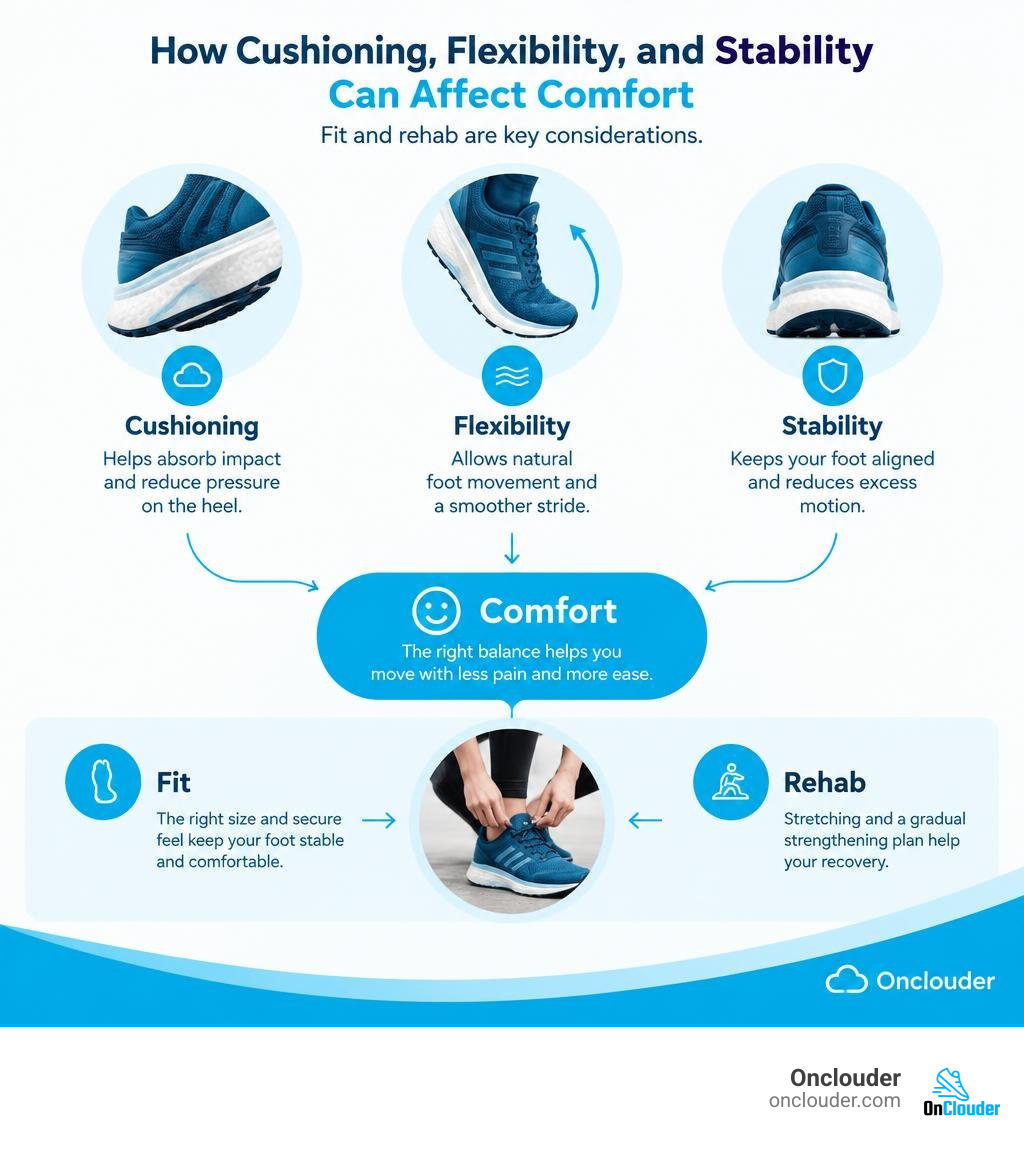
- Well-Cushioned Neutral Trainers: A 12-week randomized trial demonstrated that switching to a new, highly cushioned neutral shoe reduced average daily heel discomfort by 21.6 mm on a 100 mm Visual Analogue Scale compared to continuing in old footwear ($p=0.006$). However, this switch did not significantly eliminate sharp first-step morning pain. The cushioning simply helped attenuate repetitive ground impact forces during everyday steps.
- Flexible Low-Structure Shoes: A small study examining 24 adults with chronic plantar fasciitis paired a flexible, low-structure shoe with physical therapy. While the flexible shoe group achieved numerically greater pain reduction than those wearing conventional footwear, the difference did not achieve statistical significance ($p=0.062$ at midpoint, $p=0.076$ at endpoint). Crucially, 2 of the 12 participants in the flexible-shoe group had to drop out because their foot pain worsened significantly under the increased mechanical strain.
- Motion-Control and Rigid Stability Shoes: Heavy, rigid motion-control shoes are often marketed to runners who overpronate. However, the evidence paints a cautionary picture. In a controlled trial evaluating 81 female runners, motion-control shoes triggered significantly higher pain ratings across all foot postures—both neutral and pronated—and resulted in the greatest number of missed training days compared to neutral or standard stability trainers.
Currently, there are no published randomized controlled trials directly testing Adidas running shoes against plantar fasciitis. As an independent testing team, we extrapolate these findings by mapping specific Adidas midsole technologies, geometries, and heel bevels to the categories supported by clinical data.

Understanding these findings also clarifies why many runners find relief in well-structured options or neutral daily trainers: shock attenuation and natural foot transition take priority over rigid overcorrection.
Top Picks: The Best Adidas Running Shoes for Plantar Fasciitis
To help you find the right setup, we evaluated the brand’s road lineup to identify the best adidas running shoes for plantar fasciitis based on midsole compliance, heel-to-toe drop, and structured support.
| Model | Category | Midsole Foam | Heel Drop | Best Suited For |
|---|---|---|---|---|
| Adidas Ultraboost | Plush Neutral Cushioning | Full-Length Boost / Light Boost | 10 mm | Everyday runs, impact attenuation, daily walking |
| Adidas Solarboost / Solar Glide | Balanced Neutral Support | Boost + EVA Guidance Rail | 10 mm | Structured daily training, arch guidance, long mileage |
| Adidas Adizero Boston | Performance / Rockered | Lightstrike Pro + EnergyRods | 6–8 mm | Uptempo runs, forefoot offloading, late-stage rehab |
Adidas Ultraboost: Best Adidas Running Shoes for Plantar Fasciitis with Maximum Cushioning
The Adidas Ultraboost remains the standard-bearer for plush step-in comfort. Built with expanded thermoplastic polyurethane (e-TPU) Boost foam, the Ultraboost delivers substantial impact absorption right beneath the calcaneus (heel bone), dampening initial contact stress when landing.
With a traditional 10 mm heel-to-toe drop, the Ultraboost keeps the Achilles tendon and calf complex in a slightly relaxed position during stance phase, which can lessen tension along the continuous superficial back line connecting to the plantar fascia. The engineered Primeknit upper adapts well to different foot volumes without squeezing sensitive tissues. Runners seeking female-specific fits can explore tailored models in our review of women’s running shoes for plantar fasciitis.
Adidas Solarboost and Solar Glide: Best Adidas Running Shoes for Plantar Fasciitis with Balanced Neutral Support
If you find pure Boost slightly too squishy or unstable underfoot, the Solar series bridges the gap between pillowy comfort and structured tracking. Both the Solarboost and Solar Glide utilize a dual-density approach: a Boost core for responsive cushioning paired with a firmer EVA Control Rail and the Linear Energy Push (LEP) system.
This design gives your foot a stable path of progression from heel strike through toe-off without resorting to an aggressive, rigid medial post. Furthermore, these models offer slightly more accommodating midfoot and forefoot volume; if you have a broader forefoot, pairing structured guidance with wide toe box sneakers ensures your toes can splay naturally without aggravating plantar nerve pathways.
Adidas Adizero Boston: Responsive Performance for Rehabbing Runners
For runners progressing through the later phases of rehabilitation who want a faster trainer for tempo efforts, the Adizero Boston is an intriguing option. It pairs dual-layer Lightstrike Pro foam with embedded glass-fiber EnergyRods.
The distinct rocker geometry and stiffened forefoot rods help propel you through the terminal stance phase. By creating a smooth, rolling transition, rockered trainers can reduce the peak extension angle required at the first metatarsophalangeal (big toe) joint, effectively lowering the strain generated through the windlass mechanism during push-off.
How to Choose the Right Adidas Shoe for Your Individual Biomechanics
When selecting a pair of running shoes to manage plantar fascia symptoms, don’t rely on basic foot-type categorization or wet-footprint tests. Modern biomechanical consensus emphasizes individual comfort and tissue tolerance over rigid alignment rules.
Keep these key factors in mind during your selection:
- The Comfort Filter: Your subjective perception of comfort serves as a primary indicator of reduced joint stress and tissue strain. If a shoe feels stiff, pinches your heel, or creates arch pressure, it is unlikely to help your recovery.
- Stack Height and Midsole Density: Thick, compliant midsoles (like Boost) reduce peak plantar pressures on hard pavement. However, if you spend long shifts on your feet at work, ensure you balance soft foam with enough lateral stability, as outlined in our guide to Adidas shoes for standing all day.
- Heel-to-Toe Drop: Shoes with an 8 mm to 10 mm drop slightly elevate the heel, offloading the Achilles tendon and plantar fascia. Flat, zero-drop shoes place greater elongation demands on calf muscles and should generally be avoided during acute flare-ups unless introduced gradually under clinical guidance.
- Orthotic Accommodation: If you use orthotics, ensure the shoe features a removable sockliner and sufficient interior volume. Research comparing shoe inserts versus custom orthotics shows mixed outcomes, so a shoe that accommodates either option comfortably is ideal.
Why Footwear Is Only One Part of Plantar Fasciitis Rehabilitation
While a well-cushioned Adidas trainer can reduce daily step pain, research shows that changing your shoes is only one component of a complete recovery plan. Plantar fasciitis is fundamentally a degenerative load-management issue involving the plantar aponeurosis, requiring tissue strengthening alongside passive cushioning.
A benchmark randomized controlled trial conducted in Denmark on 48 patients with ultrasound-confirmed plantar fasciitis demonstrated the power of progressive loading. Patients performing a high-load strength training protocol—consisting of slow, weighted heel raises with a rolled towel under the toes—achieved a 29-point lower Foot Function Index score at 3 months compared to patients performing daily plantar-fascia stretching alone ($95\%\text{ CI } [6, 52], p=0.016$).
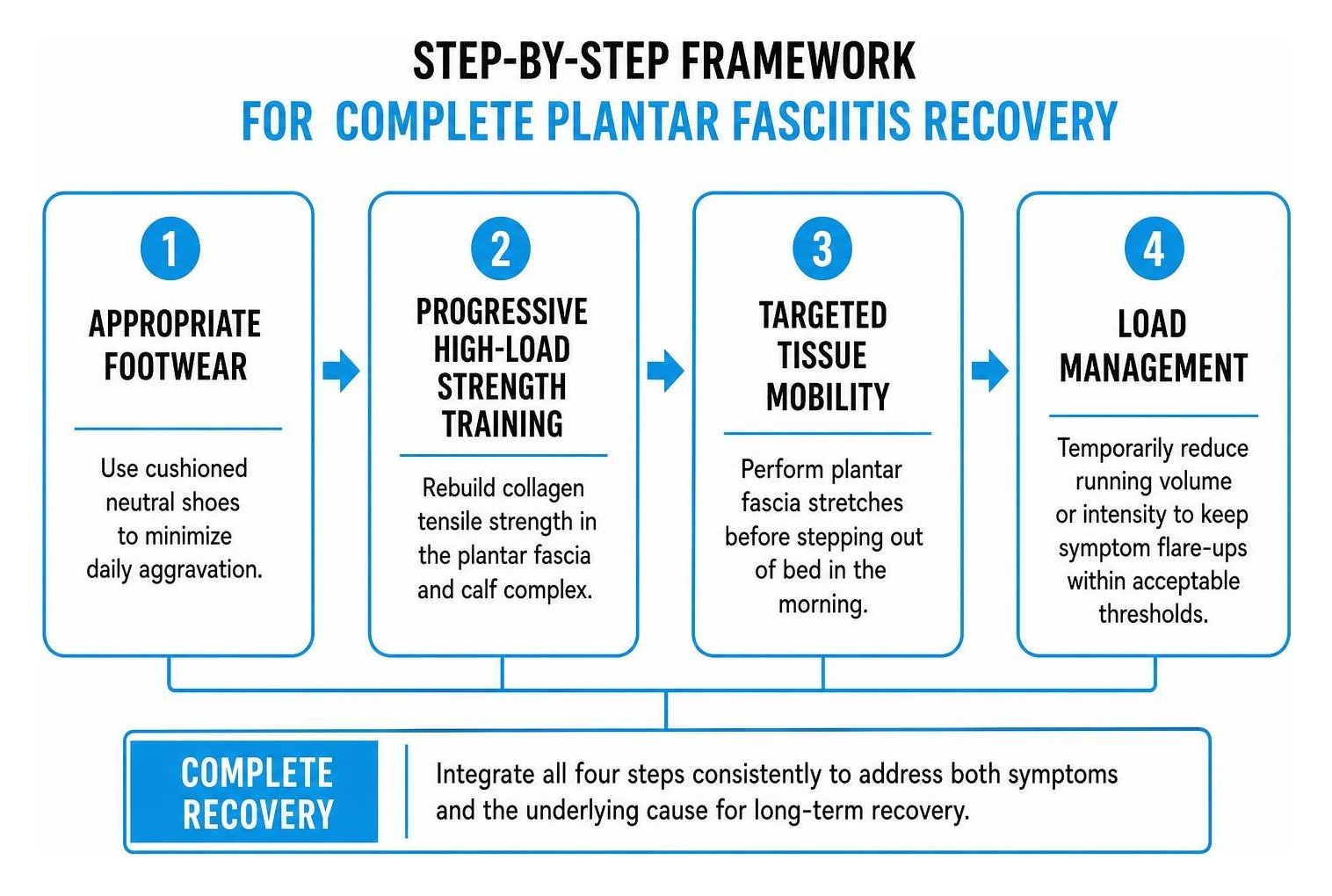
A comprehensive conservative treatment plan should integrate:
- Appropriate Footwear: Using cushioned neutral shoes to minimize daily aggravation.
- Progressive High-Load Strength Training: Rebuilding collagen tensile strength in the plantar fascia and calf complex.
- Targeted Tissue Mobility: Performing plantar fascia stretches before stepping out of bed in the morning.
- Load Management: Temporarily reducing running volume or intensity to keep symptom flare-ups within acceptable thresholds.
Frequently Asked Questions About Adidas Shoes and Plantar Fasciitis
Do I need special motion-control running shoes for plantar fasciitis?
No. Research does not support routinely prescribing motion-control shoes for plantar fasciitis. In fact, clinical trials have shown that motion-control footwear can lead to higher overall pain ratings and more missed training sessions compared to neutral or standard stability shoes. A comfortable, well-cushioned neutral trainer is generally a safer and more effective starting point.
How does Adidas Boost foam help manage plantar fascia discomfort?
Adidas Boost (e-TPU) provides high shock absorption and consistent energy return across varying temperatures. By dampening ground impact forces when your heel strikes the pavement, Boost reduces the repetitive peak pressure exerted on the inflamed plantar fascia attachment site at the base of the heel.
Should I use custom orthotics inside my Adidas running shoes?
Not necessarily. A Cochrane review found insufficient evidence to definitively prove custom orthotics are superior for plantar fasciitis, while a comprehensive systematic review pooling 20 RCTs and 1,756 patients concluded orthoses are not superior to sham insoles or standard conservative treatments. Many runners achieve excellent comfort simply using the factory insoles in cushioned models like the Ultraboost or Solar Glide.
Conclusion
Finding the right Adidas running shoe can make daily mileage and walking far more comfortable while managing heel pain. Choosing a well-cushioned neutral model like the Adidas Ultraboost or a balanced trainer like the Solarboost provides dependable impact attenuation and gentle guidance without rigid motion-control constraints.
Footwear works best as a supportive tool within a broader rehab strategy that includes progressive loading and calf strengthening. If your daily routine extends from running trails to long hours on hard floors at work, explore our comprehensive work footwear guide for plantar fasciitis to keep your feet protected all day long.
