
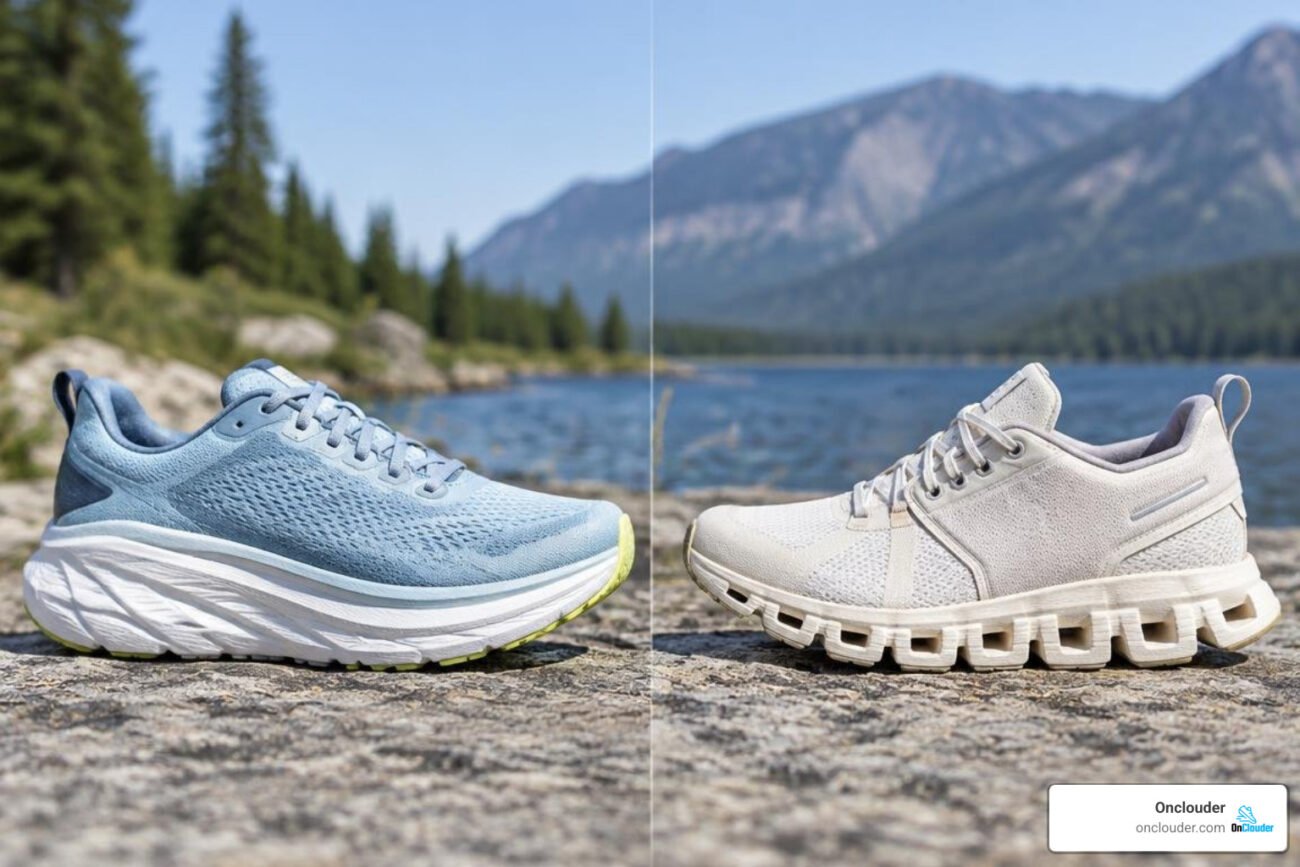
Hoka Clifton 10 vs On Cloud 6: Key Specifications and Performance
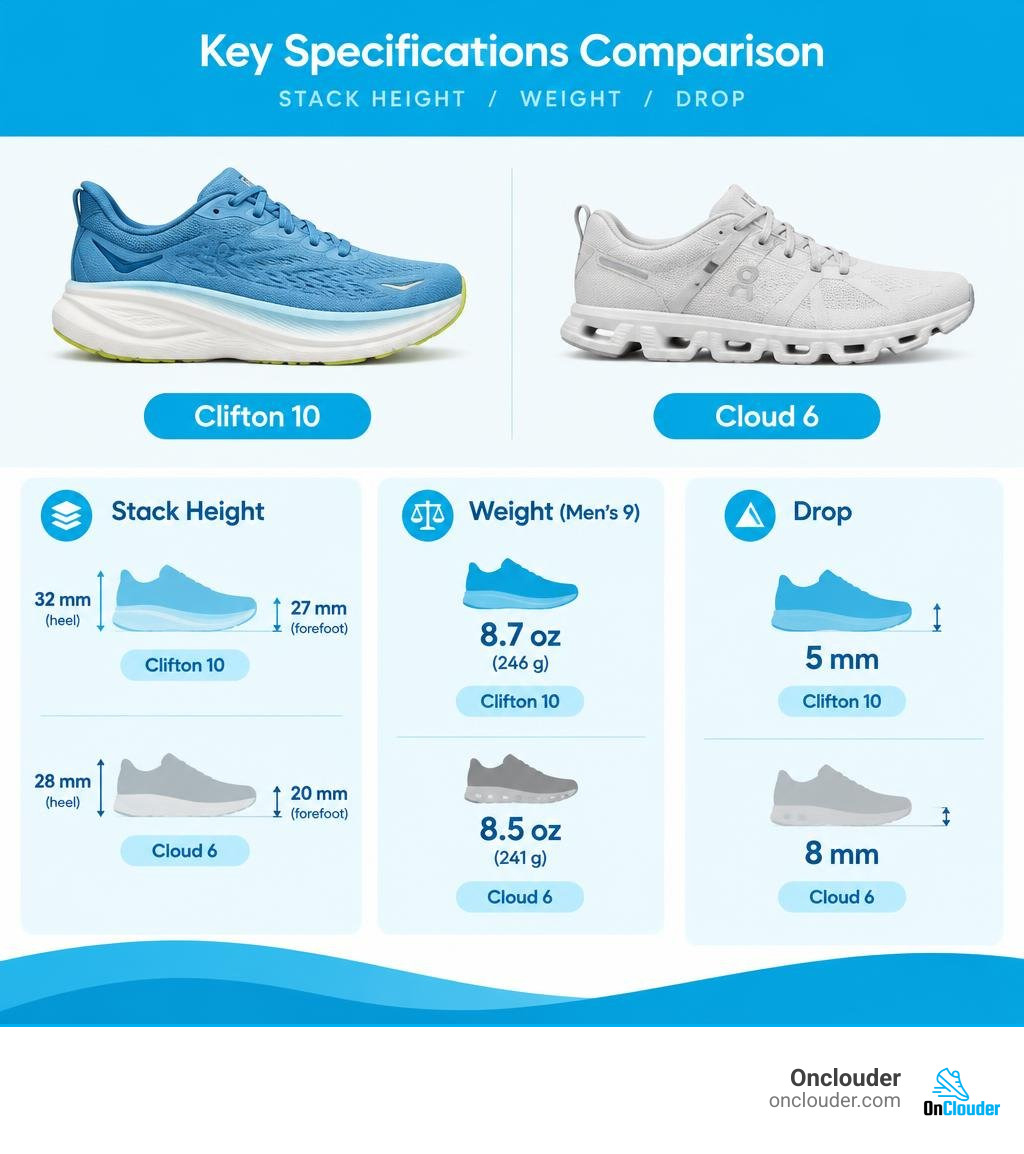
When you place these two footwear icons next to each other, their differing design philosophies become clear. Hoka builds upon high-stack maximalism designed to absorb heavy road impact, while On emphasizes precision Swiss engineering with individual CloudTec pods and an internal Speedboard plate. Understanding their baseline numbers helps explain how they feel underfoot during daily mileage and routine tasks.
| Specification | Hoka Clifton 10 | On Cloud 6 |
|---|---|---|
| Category | Maximal Daily Trainer / Walking | Lightweight Lifestyle / Active Daily Wear |
| Heel Stack Height | ~32 mm | ~28 mm |
| Forefoot Stack Height | ~27 mm | ~20 mm |
| Heel-to-Toe Drop | 5 mm | 8 mm |
| Weight (Men’s 9) | ~8.7 oz (246 g) | ~8.5 oz (241 g) |
| Midsole Material | Compression-Molded EVA Foam | Zero-Gravity EVA Foam with CloudTec |
| Plate Technology | None (Early-Stage Meta-Rocker) | Full-length Speedboard |
| Lacing System | Traditional Flat Laces | Speed-Lacing (Standard laces in box) |
| Outsole | High-abrasion zonal rubber | Targeted rubber grip pads on pods |
| Retail Price | ~$145 | ~$140 |
Comparing the hoka clifton 10 vs on cloud 6 highlights how stack height shapes the ride. The Clifton 10 provides a higher, broader base of protection across both the heel and forefoot, while the Cloud 6 sits lower to the ground with a traditional 8 mm drop that promotes swift, agile steps.
Hoka Clifton 10 vs On Cloud 6 Cushioning and Ride
The cushioning story between these two models comes down to soft, rolling absorption versus structured ground connection. In our detailed look at On Cloud vs Hoka, we frequently explore how Hoka’s plush EVA foam isolates your joints from hard asphalt. The Clifton 10 continues this legacy with a refined foam formula that feels light, soft, and bouncy without turning mushy. Its signature Early-Stage Meta-Rocker acts like a subtle rocking chair for your foot, guiding your transition smoothly from heel strike to toe-off.
In contrast, the On Cloud 6 relies on hollow CloudTec pods that compress vertically and horizontally upon impact. Working in harmony with On’s embedded Speedboard—a semi-rigid plastic plate nestled directly above the pods—the Cloud 6 converts your landing energy into forward snap. The result is a firmer, highly responsive underfoot sensation.
If you prefer sinking slightly into a pillowy base, the Clifton delivers that plush sensation. If you prefer a snappy step where you retain tactile feedback from the sidewalk, the Cloud 6 offers a crisper dynamic.
Weight, Stack Height, and Midsole Response
Midsole thickness plays a massive role in overall agility. The Clifton series has shed weight over recent generations—dropping roughly 15% across its last three updates—bringing the Clifton 10 down to an airy ~8.7 oz despite its chunky 32 mm heel stack. This weight reduction keeps the shoe nimble over double-digit mileage.
The Cloud 6 remains exceptionally light at ~8.5 oz, pairing a 28 mm heel with an athletic silhouette. Its lower stack gives you enhanced ground awareness, making rapid directional changes or quick dashes through an airport terminal feel natural. As we track the evolution of On Cloud shoes in 2026, the brand continues to hone this blend of minimalist bulk and energetic snap, appealing to runners and walkers who find maximalist foam platforms too bulky.
Comfort, Fit, and Upper Construction
A shoe can boast high-grade midsole engineering, but upper comfort and secure lockdown ultimately dictate your daily experience.
Hoka Clifton 10 vs On Cloud 6 Fit and Sizing Differences
Fit profiles between these brands differ substantially:
- Hoka Clifton 10: Built around a medium-to-wide foot shape. The midfoot is supportive, and the toe box offers generous vertical volume, allowing your toes room to splay naturally. If you have particularly broad feet, Hoka offers dedicated Wide (2E) options that resolve midfoot pinching issues found in earlier versions like the Hoka Clifton 8.
- On Cloud 6: Features a snug, foot-hugging Swiss cut. It holds narrow-to-standard feet securely through the heel and midfoot. While the forefoot is roomier than older iterations, runners with broad feet or high insteps may find the sidewalls snug and might need to size up by half a size.
If you struggle with specific knee or joint tracking issues related to foot placement, assessing arch height and base geometry is vital. Our analysis of which brand is better for your knees dives deeper into how these unique platform shapes alter leg mechanics.
Breathability, Lacing, and Upper Durability
The Clifton 10 utilizes an engineered knit upper constructed with recycled yarns that wrap the foot comfortably. It features a padded heel collar with an extended Achilles pull tab, minimizing friction around delicate tendons. Its traditional flat laces offer customizable midfoot lockdown, which is ideal for long runs.
The Cloud 6 showcases an ultra-breathable, antimicrobial mesh upper designed to keep your feet cool in warm conditions. It comes equipped with On’s signature hands-free speed-lacing system, letting you slip the shoes on and off without tying knots—a favorite feature for travelers and daily commuters. For those interested in packable, ultra-flexible footwear, lightweight travel models like the On Cloud 6 Coast take this convenience even further.
Real-World Performance: Running, Walking, and All-Day Standing
We put both models through hundreds of miles of road testing, casual walking, and shift-work simulations to evaluate how their distinct designs perform under continuous load.
Road Running and Daily Training
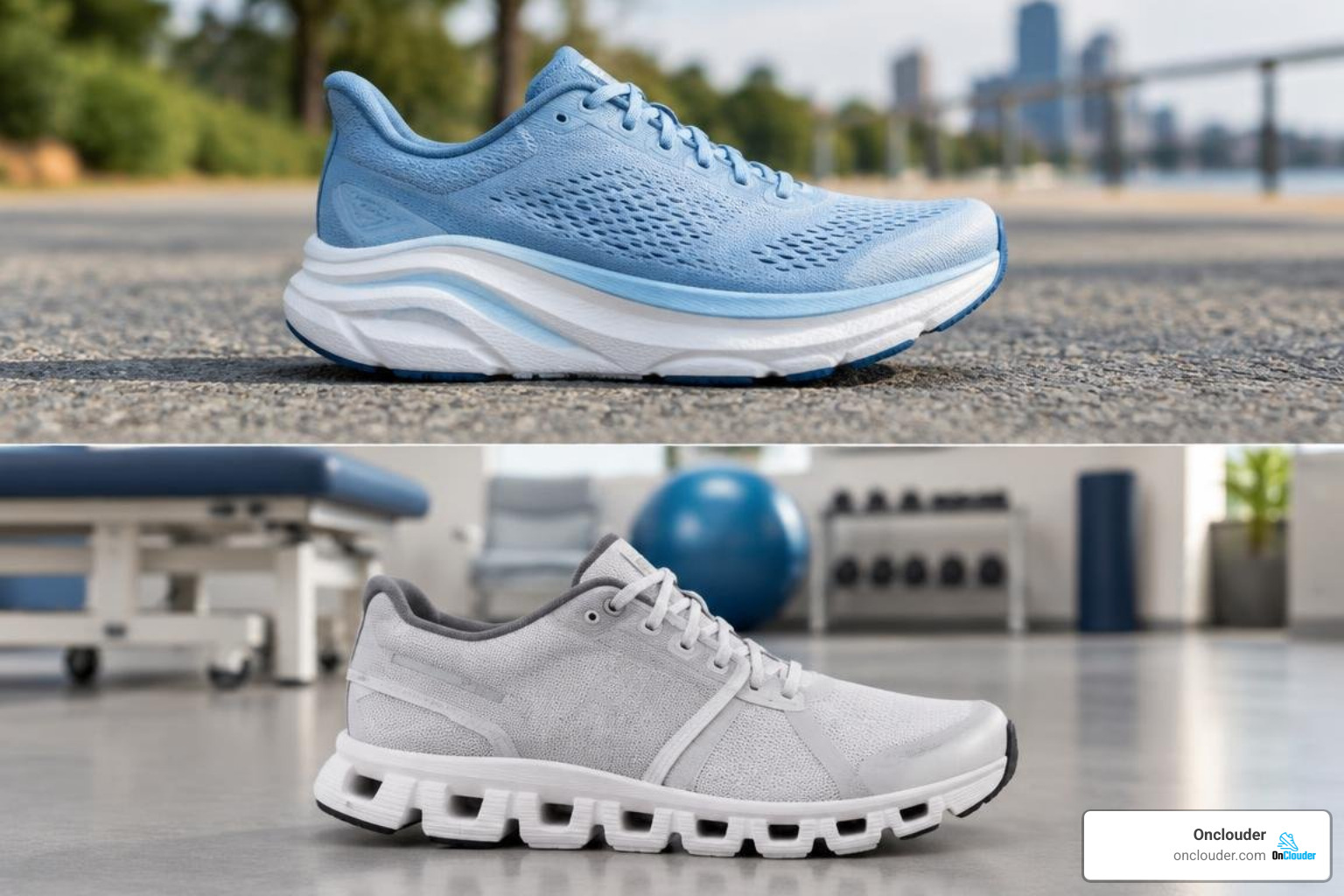
When logging regular road miles, the Hoka Clifton 10 clearly takes the lead as a dedicated distance trainer. The thick EVA foam absorbs repetitive pavement shock, keeping legs fresh across 5K recovery jogs and 15-mile weekend long runs. The rockered platform encourages continuous forward roll, reducing strain on your calves and ankles.
The Cloud 6 handles short, active workouts, treadmill warmups, and 3-to-5-mile neighborhood runs with agility. However, its firm Speedboard and thinner stack offer less impact relief over high-mileage training blocks. Runners seeking a firmer On running companion often cross-shop support lines like the On Cloud 5 vs Cloudflyer for longer workouts.
12-Hour Shifts and Lifestyle Wear
For professionals on their feet all day—such as healthcare workers, hospitality staff, and retail associates—both shoes deliver reliable comfort through different mechanisms:
- Hoka Clifton 10: The thick foam base isolates feet from hard hospital tile and concrete floors, reducing heel bruising during static standing. The aesthetic leans unapologetically into the chunky “dad shoe” trend, pairing seamlessly with scrubs and relaxed casual wear.
- On Cloud 6: The firm, stable platform keeps your foot level, preventing arch collapse caused by overly squishy midsoles during long shifts. With its sleek silhouette and clean lines, the Cloud 6 blends into smart-casual office settings, athleisure outfits, and travel wardrobes.
For a broader perspective on how these design languages clash across running categories, check out our breakdown of On Cloud vs Brooks Running.
Frequently Asked Questions About Clifton 10 and On Cloud 6
Which shoe provides better support for 12-hour standing shifts?
The Clifton 10 provides superior deep cushioning for static standing, softening direct pressure on your heels and lower back. However, if you prefer a stable, grounded platform that avoids sinking sensations, the On Cloud 6 offers balanced arch support with less bulk.
How do the Clifton 10 and On Cloud 6 fit compared to standard sizing?
The Clifton 10 runs true to size with a accommodating toe box and is readily available in wide widths. The On Cloud 6 runs slightly narrow through the midfoot; many wearers with standard-to-wide feet choose to go up a half size for optimal comfort.
What is the expected lifespan and mileage durability for each model?
The Hoka Clifton 10 typically lasts between 350 and 500 road miles before the compression-molded EVA foam loses its bounce. The On Cloud 6 offers durable upper materials and pods that last 300 to 450 miles, though aggressive pavement use may cause targeted outsole rubber pads to wear down faster than Hoka’s zonal rubber coverage.
Conclusion
Both the Hoka Clifton 10 and the On Cloud 6 are stellar options, but they serve distinct core needs:
- Choose the Hoka Clifton 10 if your priority is road running, plush impact protection, deep recovery cushioning, and relieving foot fatigue across long standing shifts.
- Choose the On Cloud 6 if you want a lightweight, sleek daily sneaker with hands-free speed lacing, firm stability, and unmatched versatility for travel, errands, and gym sessions.
By matching your foot shape and primary daily activity to the right shoe design, you can enjoy all-day comfort with every step you take.
