Best Cowboy Boots for Plantar Fasciitis: What to Look For
The best cowboy boots for plantar fasciitis have a stable 1- to 2-inch heel, a roomy toe box, firm arch support, and a secure fit at the instep. Look for a sturdy shank that limits twisting and a firm heel counter that keeps your foot from sliding. A removable insole is a plus if you need to use your own orthotic.
A cowboy boot can feel good from dawn to dusk, but western style alone does not make it supportive. In this roundup, we’ll focus on boots built for walking, work, and riding, and flag the fit details that matter most when your heels hurt.
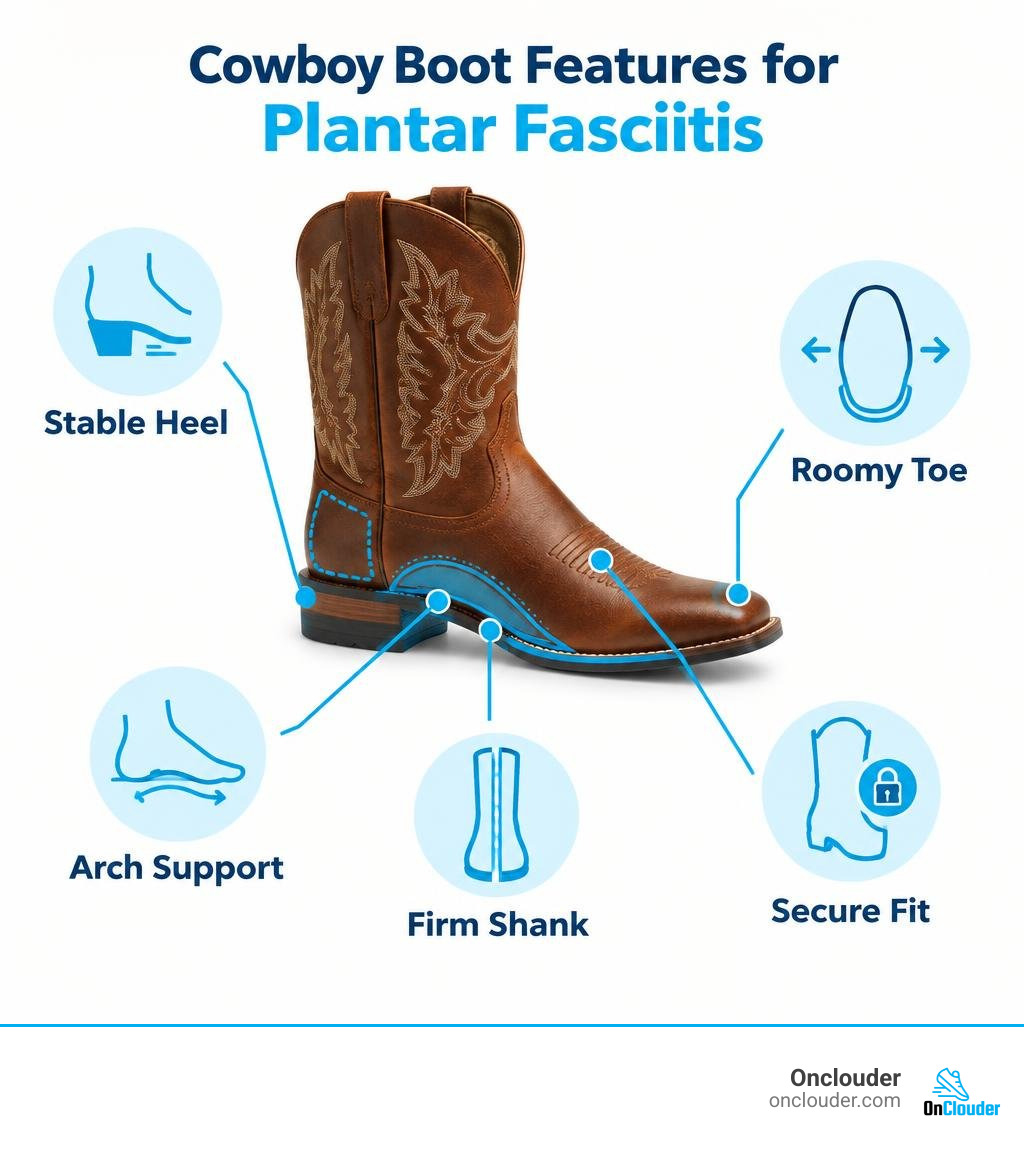
Best cowboy boots for plantar fasciitis word guide:
- best boots for plantar fasciitis
- arch support inserts plantar fasciitis
- supportive shoes for plantar fasciitis
Criteria for Choosing the Best Cowboy Boots for Plantar Fasciitis
When you are dealing with heel spurs or sharp morning arch pain, traditional footwear shopping goes right out the window. Cowboy boots are built differently than standard sneakers. Because traditional western pull-on boots lack laces, every single structural element must work together to hold your foot in healthy alignment.
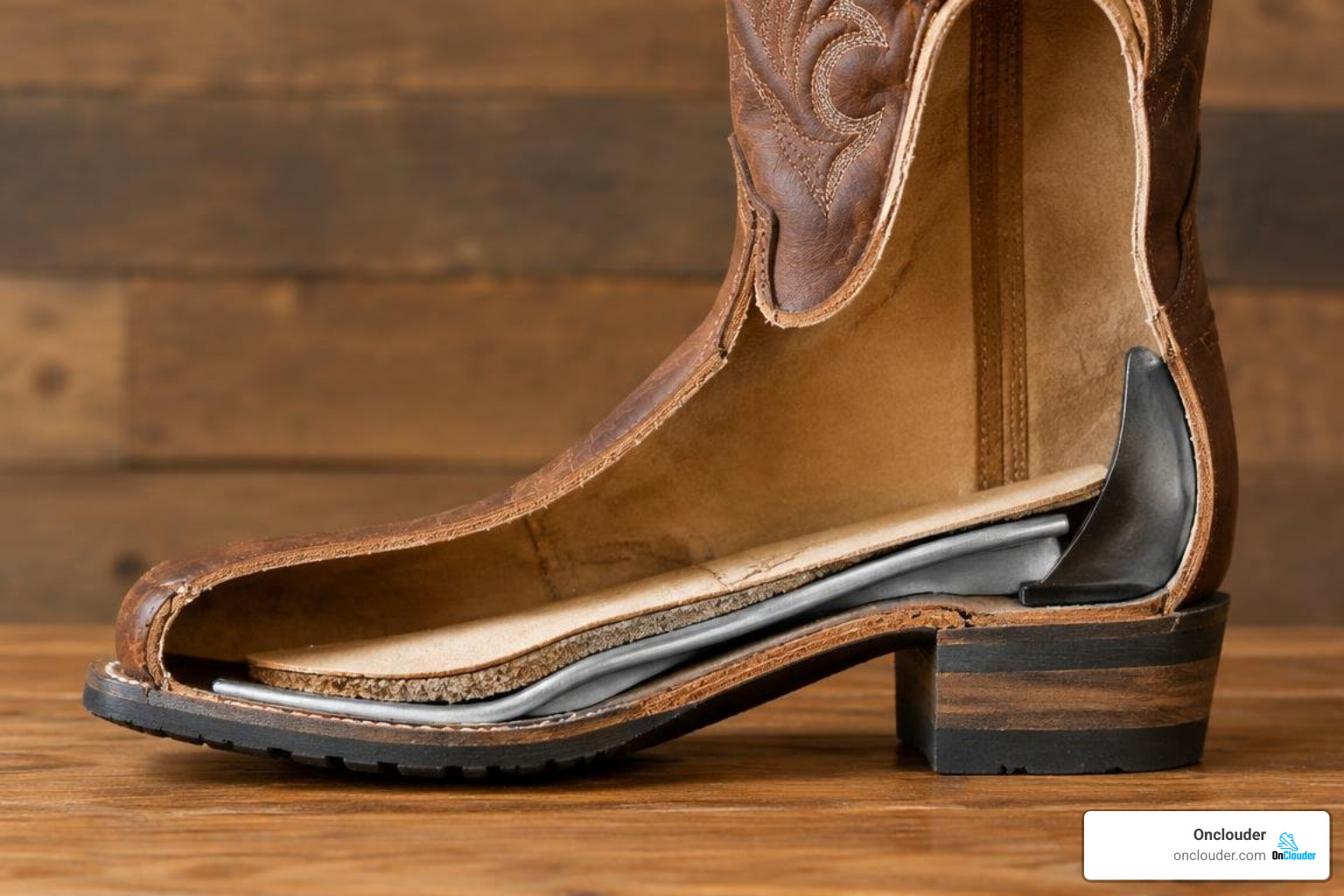
To protect your plantar fascia from excessive strain, keep these key structural criteria in mind:
- Elevated Heel (1 to 2 Inches): Completely flat footwear forces your Achilles tendon and plantar fascia to stretch to their absolute limits with every step. A modest western walking heel (typically 1.25 to 1.75 inches) elevates the calcaneus slightly, offloading acute tension along the bottom of the foot.
- Broad Toe Profiles (Wide or Square Toe): Pointed needle toes squeeze your metatarsals together, preventing your forefoot from splaying naturally. A broad square toe or rounded roper toe allows your toes to spread out, distributing ground reaction forces across the entire ball of the foot.
- Torsional Rigidity and a Stiff Shank: The plantar fascia acts like a windlass mechanism. If a boot bends easily in the middle of the arch, your fascia stretches and micro-tears. A tempered steel, composite, or fiberglass shank keeps the midfoot rigid so your boot flexes only at the ball of the foot.
- Firm Heel Counter: A reinforced heel cup cradles the fatty heel pad directly under your heel bone, preventing side-to-side slippage and keeping your foot aligned over the midsole cushioning.
- Instep Security: In lace-free boots, the instep acts as the primary anchor. A snug fit over the bridge of your foot stops your foot from sliding forward and jamming your toes or overworking your arches.
- Removable Insoles: While traditional leather hard-bottom boots mold nicely over months, boots featuring removable footbeds allow you to swap in customized orthotics seamlessly. If you spend long shifts standing on concrete, selecting top supportive boots to protect your arches on hard surfaces will make a massive difference in your daily recovery.
What Makes the Best Cowboy Boots for Plantar Fasciitis Stand Out?
The difference between a punishing boot and an all-day companion comes down to underfoot engineering. Historically, cowboy boots relied solely on a hard leather insole laid directly over a cork bed. Modern bootmakers have evolved significantly, integrating advanced athletic footbed technologies directly into western profiles.
When reviewing footbed options, understanding material composition is crucial:
- EVA (Ethylene-Vinyl Acetate): Lightweight and highly shock-absorbent, EVA excels at dampening immediate heel strike impacts when walking on packed dirt or asphalt.
- PU (Polyurethane): Denser and more resilient than EVA, PU resists compression over long work days, offering consistent arch height and structural support for years.
Many advanced western work boots also utilize subtle rocker bottom profiles in the outsole. A slight toe spring gently rolls your stride forward from midstance to toe-off. This eliminates extreme stretching of the plantar band and spares your foot from excessive stress. To discover how footbed density compares across different daily styles, explore our detailed plantar fasciitis shoes guide 2026.
Top Western Boot Styles for Targeted Arch and Heel Relief
Whether you are working horses in the round pen, navigating a job site, or dressing up for an evening out, you do not have to sacrifice foot health for western flair. Selecting the right category ensures your arches remain supported in every environment.

Men’s Heavy-Duty Work and Riding Boots
Heavy-duty western work boots combine the rugged aesthetics of classic ranch gear with modern orthotic engineering. For tough days on your feet, boots with dual-density PU midsoles and oil-resistant rubber outsoles deliver top-tier impact protection.
Key features to look for in men’s work and riding options include:
- Tempered Steel or Composite Shanks: Essential for standing on ladder rungs, stirrups, or uneven ground without foot fatigue.
- Wide Square Toe Boxes: Ample room for heavy work socks without pinching your forefoot.
- Shock-Absorbing Heel Pods: Embedded gel or high-rebound foam inserts inside the heel base that diffuse impact energy.
For those balancing tough outdoor duties with heel rehabilitation, pairing these boots with the guidelines found in our review of men’s shoes for plantar fasciitis guarantees balanced alignment across all your footwear choices.
Women’s Stylish and Supportive Western Footwear
Gone are the days when women had to choose between agonizingly flat fashion boots or bulky orthopedic shoes. Today’s women’s western boot lines include short booties, ropers, and tall performance boots that prioritize foot wellness.
When browsing women’s western footwear, prioritize:
- Under-Slung or Block Heels (1.5 to 2 Inches): Delivers classic silhouette styling while naturally reducing strain along the Achilles tendon.
- Ergonomic Footbeds with Deep Heel Cups: Centers the calcaneus to maximize the foot’s natural fat pad cushioning.
- Breathable Moisture-Wicking Linings: Keeps the foot dry and firmly seated inside the boot, preventing friction and blistering.
If you enjoy shorter western silhouettes for daily wear, check out our roundup of chic ankle boots that deliver uncompromised plantar fascia support. You can also explore our broader collection of ankle boots for plantar fasciitis to find complementary casual footwear.
Feature Comparison of Supportive Western Boots
| Boot Category | Typical Heel Height | Shank Type | Insole System | Toe Profile | Best Use Case |
|---|---|---|---|---|---|
| Western Work Boot | 1.25″ – 1.5″ (Roper/Block) | Tempered Steel / Composite | Removable Dual-Density PU | Wide Square Toe | Construction, Barn Work, Concrete Surfaces |
| Performance Riding | 1.5″ – 2.0″ (Riding Heel) | Ribbed Composite / Steel | Ergonomic Cushion Insert | Medium Square / U-Toe | Equine Riding, Ranching, Light Walking |
| Western Walking Roper | 1.0″ – 1.25″ (Flat Roper) | Fiberglass Shank | Orthotic Foam Insole | Round / Roper Toe | Daily Errands, Casual Walking, Travel |
| Fashion Western Boot | 1.5″ – 2.0″ (Stacked Leather) | Minimal / Steel Strip | Fixed Leather (Add Insole) | Snip / Square Toe | Social Events, Light Wear, Dining Out |
How to Fit, Maintain, and Enhance Western Boots with Plantar Fasciitis
Finding a supportive boot design is only half the battle; ensuring the boot fits your unique foot profile is what prevents recurring inflammation.
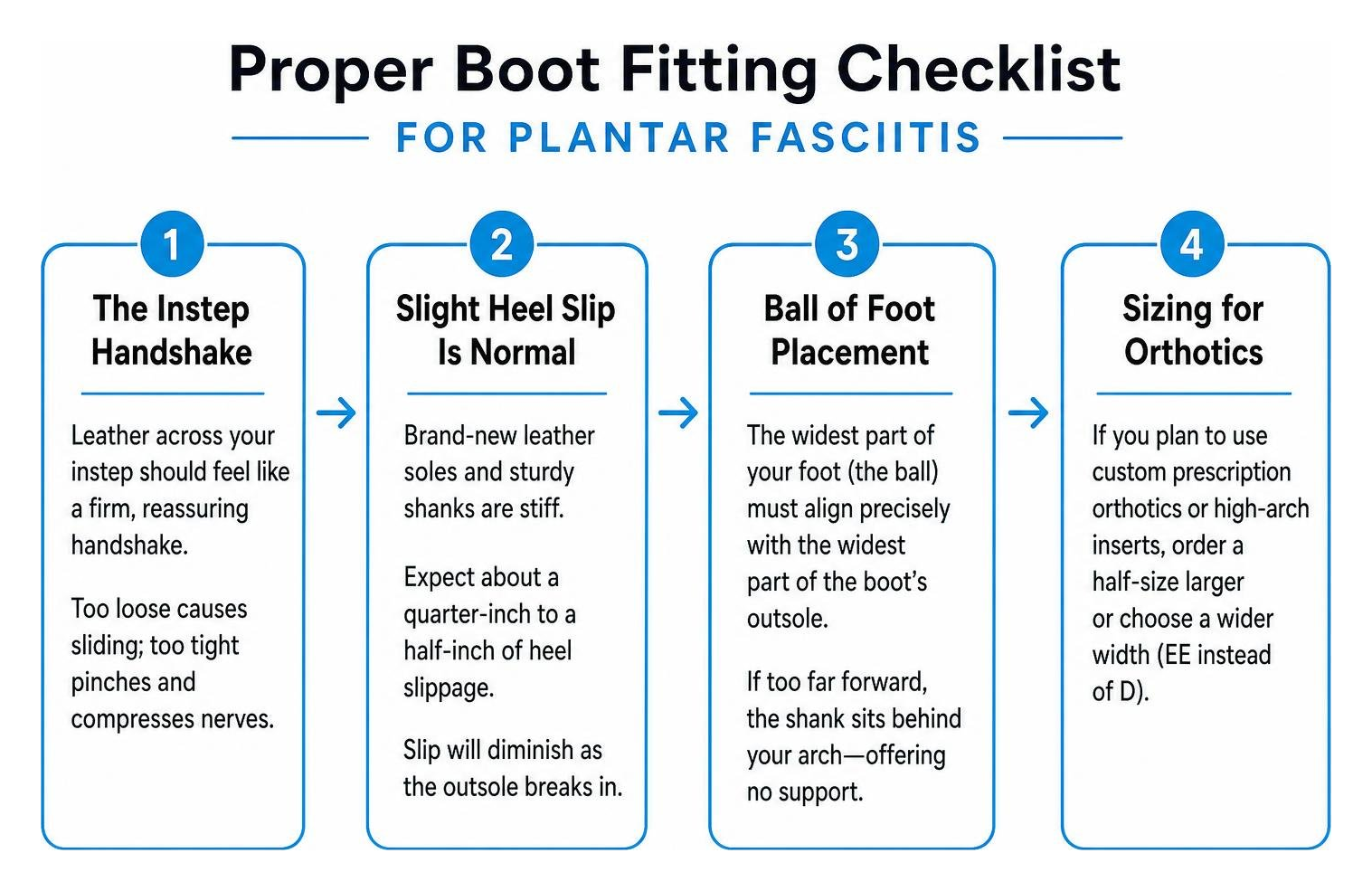
How to Properly Fit the Best Cowboy Boots for Plantar Fasciitis
Unlike athletic sneakers with laces that adjust across the entire shoe, a western boot relies on specific contact zones to lock your foot in place:
- The Instep Handshake: The leather across your instep should feel like a firm, reassuring handshake. If the instep is too loose, your foot slides forward into the toe box with every step, straining the arch. If it is painfully tight, it will pinch blood vessels and compress the dorsal nerves.
- Slight Heel Slip Is Normal: Brand-new leather soles and sturdy shanks are stiff. When walking in a new pair, expect about a quarter-inch to a half-inch of heel slippage. As the outsole flexes and breaks in, this slip will naturally diminish.
- Ball of Foot Placement: The widest part of your foot (the ball) must align precisely with the widest part of the boot’s outsole. If your ball sits too far forward, the built-in shank will sit behind your arch, offering zero support where you need it most.
- Sizing for Orthotics: If you plan to drop custom prescription orthotics or high-arch inserts into your boots, consider ordering a half-size larger or choosing a wider width (EE instead of D) to maintain proper volume across the instep.
Maintenance and Proactive Foot Care
Taking care of your boots ensures their internal support systems remain functional, while proactive body care helps your tissues heal:
- Insole Replacement Schedule: Cushioning foams lose their rebound ability long before the exterior leather wears out. Replace removable insoles every 6 to 12 months—or sooner if you notice visible compression indentations under the heel or ball of the foot.
- Conditioning the Leather: Regularly apply quality leather balms to maintain flexibility across the vamp while keeping the leather supple enough to mold around your foot’s unique contours.
- Daily Tissue Stretching: Perform gentle calf wall stretches and roll the arch of your foot over a cold water bottle for five minutes every morning and evening. Keeping the Achilles tendon limber relieves pulling forces on the plantar fascia attachment point.
If your daily routine involves extensive outdoor hiking or uneven trail work alongside ranch duties, explore our tested hiking boots for plantar fasciitis to keep your feet protected across every terrain. For broader everyday comfort, our master list of the best shoes for plantar fasciitis provides top footwear solutions for your entire wardrobe.
Frequently Asked Questions About Western Boots and Heel Pain
Are cowboy boots good for plantar fasciitis?
Yes, a well-constructed cowboy boot can be surprisingly beneficial for individuals managing plantar fasciitis. The standard 1.25- to 1.75-inch heel elevation shortens the Achilles tendon slightly during standing and walking, which directly offloads mechanical strain from the plantar fascia. Furthermore, boots equipped with rigid internal shanks provide exceptional torsional stability, preventing the midfoot from twisting excessively on uneven ground.
Can cowboy boots cause or worsen plantar fasciitis?
They certainly can if you select the wrong style or improper fit. Traditional fashion boots with paper-thin leather soles, lack of internal arch cushioning, tight pointed snip toes, and completely flat heels force the plantar fascia to absorb immense ground shock. Additionally, wearing boots that are overly loose at the instep causes repetitive heel slippage, which overworks the intrinsic foot muscles and worsens heel spur pain.
How often should insoles in western boots be replaced?
You should replace boot insoles every 6 to 12 months depending on daily wear frequency and your body weight. Over time, the microscopic air pockets inside EVA and PU foam break down under continuous compression. Even if the upper leather of your boots looks pristine, worn-out insoles lose their shock absorption capacity and arch contour, leaving your heels vulnerable to inflammation flare-ups.
Conclusion
Living with heel pain does not mean hanging up your western boots for good. By choosing boots engineered with rigid internal shanks, roomy square toe boxes, firm heel counters, and shock-absorbing footbed materials, you can comfortably work, ride, and walk without reigniting plantar fascia flare-ups.
At Onclouder, our team combines extensive hands-on footwear testing with unbiased biomechanical analysis to help you make confident, pain-free footwear choices. Whether you are saddling up for barn chores or clocking long hours on hard concrete, pairing the right western boot geometry with proper orthotic support keeps your arches happy from sunrise to sunset.
Ready to discover even more supportive footwear engineered for demanding work environments? Explore our comprehensive work shoe comparison for plantar fasciitis to find the ultimate footwear solutions for your active lifestyle.