How to Choose Shoes for Plantar Fasciitis
Choose shoes with firm arch support, cushioning under the heel, and a secure fit that keeps your heel from slipping. The sole should feel stable, not fold easily through the middle. Whether you need sneakers, boots, or sandals, start with the pair that supports your foot and feels comfortable when you walk.
The right shoes may ease heel pain and make daily activity more comfortable, but they are not a cure on their own. This guide explains which features matter, what the research says, and how footwear fits alongside stretching and other care.
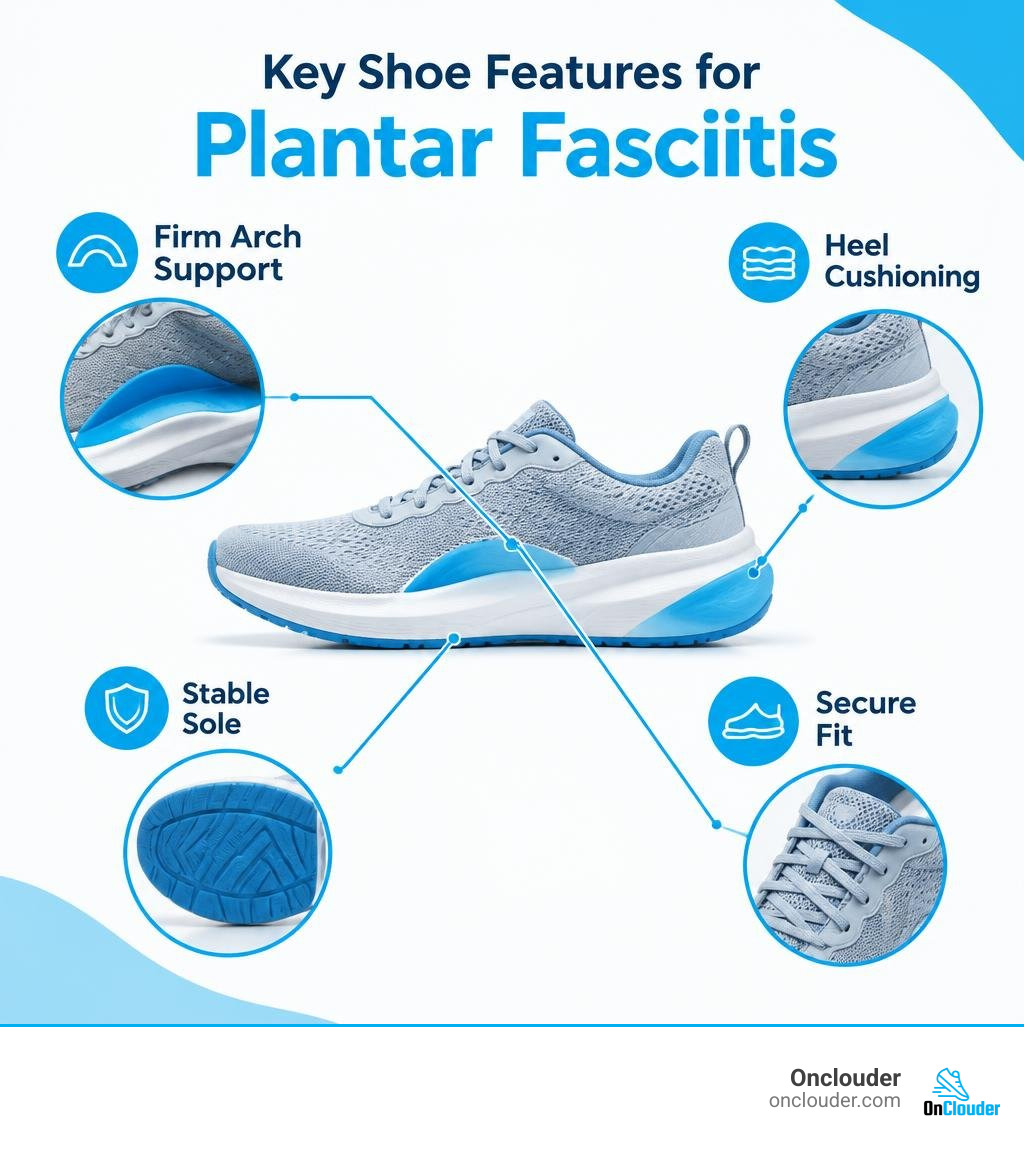
Plantar fasciitis shoes terminology:
- shoes that are best for plantar fasciitis
- supportive shoes for plantar fasciitis
- shoes with good arch support for plantar fasciitis
Essential Features of Effective Plantar Fasciitis Shoes
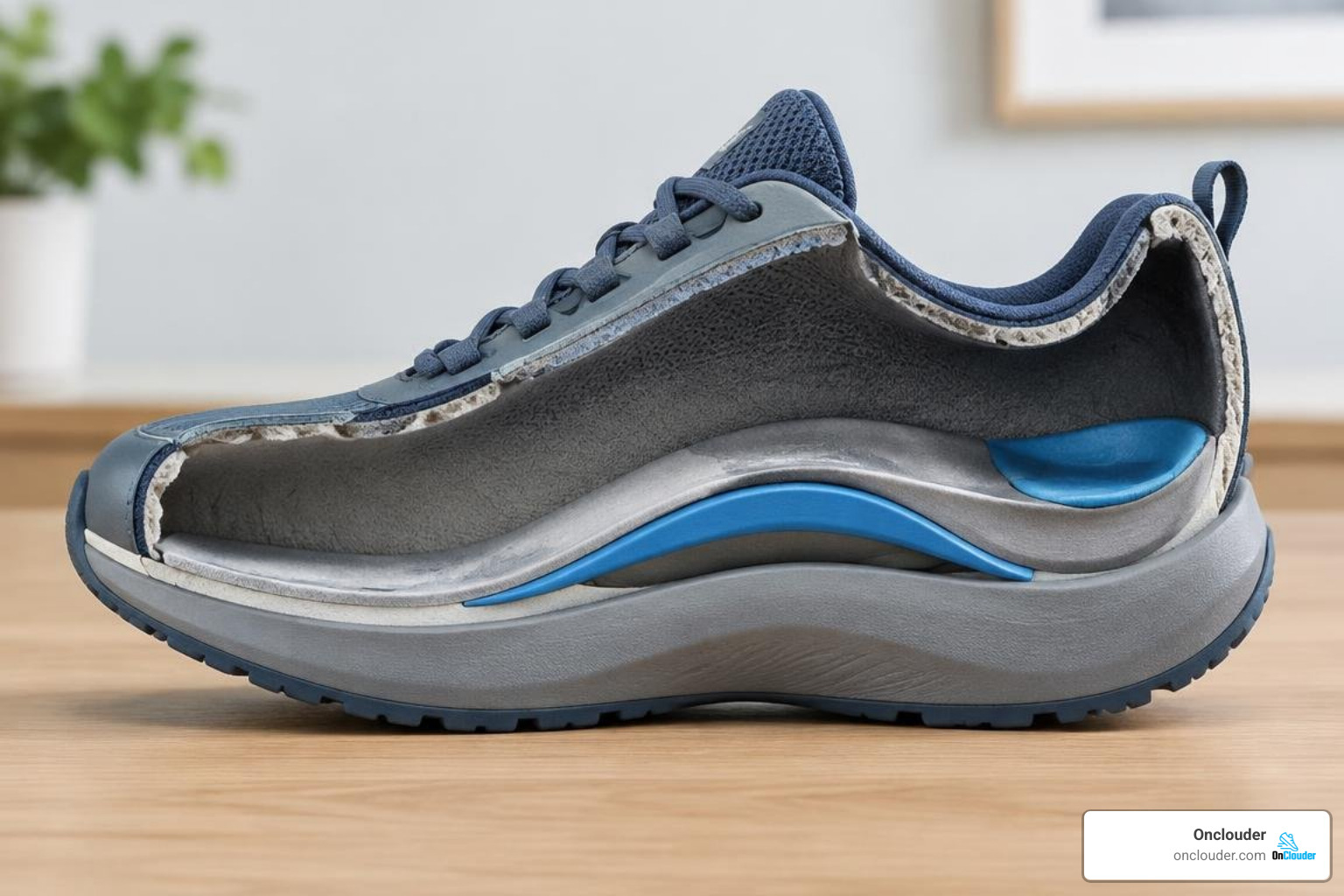
When dealing with chronic plantar heel pain, stepping onto a flat, unsupportive footbed feels like walking directly on sharp gravel. The plantar fascia—a thick band of connective tissue running from your calcaneus (heel bone) to the base of your toes—acts as a natural shock absorber. When overstressed, micro-tears develop, resulting in that notorious morning stiffness and sharp heel ache.
Finding the right footwear requires looking past flashy aesthetics and evaluating the shoe’s internal structural integrity. We have tested hundreds of designs over the last decade at Onclouder, and effective shoes consistently share several critical mechanical features.
To evaluate whether a shoe meets the mark, look for these foundational components:
- Rigid Arch Contour: An arch that collapses under your body weight does little to offload tension. The footbed must feature an anatomical contour that holds its shape, preventing the arch from dropping and overstretching the fascia.
- Deep Heel Cup: A molded, deep heel cup cradles the natural fatty pad beneath your calcaneus, consolidating it directly under the bone to provide natural shock absorption.
- Torsional Rigidity and a Stiff Shank: Grab the shoe by the heel and toe, then try to twist it like a wet towel. A supportive shoe resists twisting. If it bends easily in the middle rather than flexing only at the forefoot (toe break), it will overtax your plantar fascia.
- Targeted Impact Cushioning: While plush foam feels soft, excessive softness without structure increases muscle fatigue. Look for balanced, responsive cushioning beneath the heel and metatarsal heads.
- Rocker-Sole Geometry: A gentle curvature at the outsole (rocker bottom) guides the foot through a smooth heel-to-toe transition, reducing the force required to push off and minimizing the extension of the plantar fascia during the gait cycle.
- Extra Depth and Volume: Adequate interior volume ensures your toes can splay naturally and allows you to swap in medical-grade orthotic inserts if necessary.
Reviewing an ultimate checklist for supportive shoes can help you confirm these elements before buying. For an in-depth breakdown of how footbeds align your gait, explore our comprehensive guide to shoes with good arch support.
How Supportive Footwear Relieves Plantar Fascia Strain
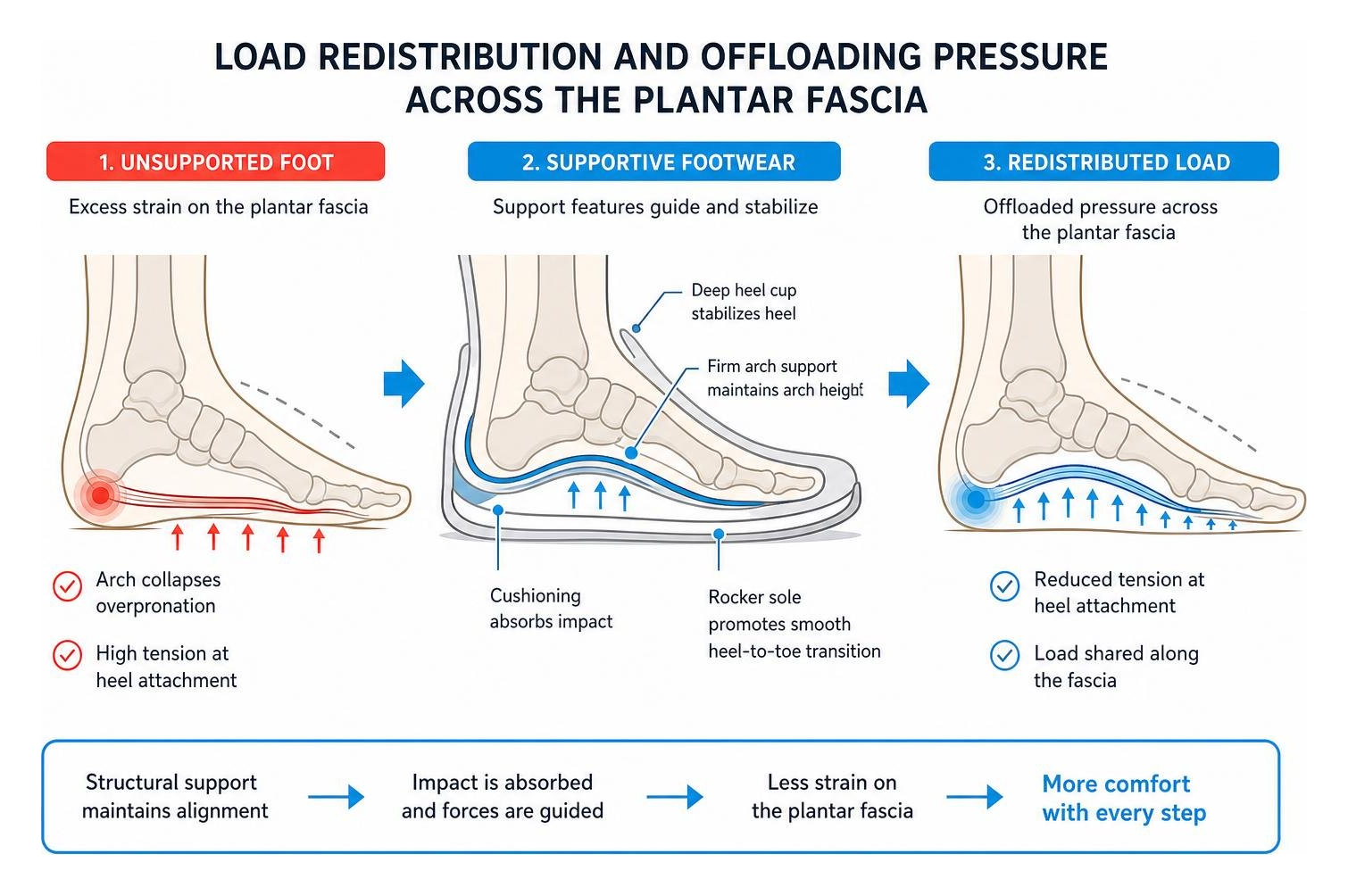
To understand how proper shoes provide relief, we must look at the biomechanics of the foot. Every time your foot strikes the ground, the arch flattens slightly to absorb impact, placing tensile stress on the plantar fascia. As you prepare to push off, your big toe extends upward, engaging what biomechanists call the windlass mechanism. This naturally tightens the plantar fascia and packs the bones of the foot into a rigid lever.
When your shoes lack structure, your foot overpronates (rolls inward excessively), causing the windlass mechanism to pull excessively on an already inflamed heel insertion point.
Supportive footwear intervenes through several mechanical pathways:
- Load Redistribution: By supporting the medial longitudinal arch, structured footbeds distribute impact forces across the entire plantar surface rather than concentrating peak pressure on the heel spur region.
- Overpronation Control: Firm medial posting or structured sidewalls prevent excessive inward rolling, keeping the ankle and Achilles tendon aligned.
- Calcaneal Off-Loading: Elevating the heel slightly (a moderate heel-to-toe drop of 8 mm to 12 mm) takes tension off the Achilles tendon, which connects directly into the plantar fascia via the calcaneus.
Leading manufacturers increasingly build supportive contours straight into their factory footbeds using data from tens of millions of anatomical foot scans rather than relying on flat foam liners. If you want verified options that satisfy these biomechanical principles, consult our podiatrist-approved footwear recommendations and browse our expert picks for supportive footwear.
Clinical Evidence and Research on Orthopedic Footwear
While marketing claims for therapeutic shoes are everywhere, clinical health technology assessments provide a clear view of what orthopedic footwear actually accomplishes.
Evidence synthesized in a comprehensive health technology review by the Canadian Agency for Drugs and Technologies in Health (CADTH) evaluated prefabricated orthopedic footwear across various lower-limb conditions (NBK595366). The findings demonstrate that while structured footwear is a valuable mechanical off-loading intervention, its clinical efficacy depends heavily on the specific design and condition being treated.
What Clinical Trials Reveal About Plantar Fasciitis Shoes
Clinical studies demonstrate that structured footwear alters plantar pressure dynamics, though results vary across trial designs:
- Pain and Mobility: A meta-analysis of clinical trials showed a statistically significant reduction in foot pain from baseline after wearing orthopedic shoes for 30 days to 6 months in populations with inflammatory foot conditions (NBK595366).
- Rocker-Sole Off-Loading: Outsole geometry plays a major role in pressure reduction. Research indicates that rigid rocker soles reduce peak forefoot and midfoot pressures substantially; in high-risk populations, rigid rocker outsoles reduced tissue re-ulceration risks by 64% compared to semi-rigid alternatives (NBK595366).
- Adverse Effects and Fit Rates: Orthopedic shoes are not entirely free of issues. Across clinical studies, adverse events—most commonly heel slippage, blisters, or thermal discomfort (shoes feeling excessively hot)—were reported by 8% to 12% of participants (NBK595366).
For readers interested in the broader scientific literature, you can review the clinical evidence on orthopedic footwear for lower-limb conditions hosted by the NCBI Bookshelf (NBK595366).
Prefabricated Shoes vs. Custom Orthotics
A common dilemma is whether to buy ready-made orthopedic shoes or invest in custom-molded medical orthotics. The table below outlines how prefabricated footwear compares to custom orthotic solutions.
| Feature / Consideration | Prefabricated Orthopedic Shoes | Custom-Made Foot Orthotics |
|---|---|---|
| Arch Matching | Standardized contour based on population foot scans | Precise 3D mold captured from your non-weight-bearing foot |
| Cost & Accessibility | Immediate purchase; moderately priced ($120–$200) | Requires clinical appointment; expensive ($300–$600+) |
| Biomechanical Focus | Integrated outsoles, rocker profiles, and cushioning | Direct angular control of rearfoot and midfoot alignment |
| Versatility | Limited to that specific pair of shoes | Transferable between multiple pairs with removable insoles |
| Clinical Verdict | Excellent first-line choice for standard foot shapes | Best for severe anatomical deformities or persistent pain |
For a deeper comparison of over-the-counter inserts versus prescription devices, read our shoe inserts versus custom orthotics guide, or check our practical guide to orthotic insoles.
Top Footwear Categories for Plantar Fascia Recovery
Managing plantar fasciitis is an all-day commitment. Wearing an ultra-supportive running shoe for your morning walk does little good if you spend the remaining eight hours barefoot on hardwood floors or crammed into flat, unyielding dress shoes.
You can find comfortable options that maintain adequate arch protection by exploring stylish everyday shoes protecting against plantar pain.
Daily Sneakers and Athletic Plantar Fasciitis Shoes
Athletic sneakers remain the gold standard for daily recovery because they combine high-grade EVA or TPU midsole foams with internal plastic shanks.
Look for walking and running models featuring a firm heel counter (the plastic cup hidden inside the fabric at the back of the heel) and a wider base of support through the midfoot. High-stack stability sneakers are especially helpful for absorbing ground reaction forces during long walks on pavement. You can view our favorites in our roundup of top running and walking shoes for arch relief.
Supportive Boots, Work Footwear, and Recovery Sandals
Occupational demands and changing seasons require options beyond athletic sneakers:
- Work & Hiking Boots: Heavy occupational standing on concrete requires rugged footwear with composite shanks, reinforced leather uppers, and oil-resistant shock-absorbing outsoles. Check out our tested supportive hiking boots for heel pain alongside versatile ankle boots with arch support.
- Recovery Sandals: Traditional flip-flops are notoriously bad for heel pain because your toes must claw the thin foam to keep the shoe on, straining the fascia. Orthopedic recovery sandals feature molded toe bars, high arches, and thick rocker outsoles. Discover supportive pairs in our guide to active recovery sandals.
- Indoor House Slides: Walking barefoot on tile or hardwood is a major cause of morning flare-ups. Keeping supportive slides or slippers next to your bed ensures your feet never take unassisted weight. Find top-rated indoor styles among our comfy house slides for arch relief.
Frequently Asked Questions About Plantar Fasciitis Footwear
How Soon Can You Expect Pain Relief After Switching Footwear?
Most people notice a reduction in acute standing pain within a few days of wearing supportive footwear, as the structural arch contour prevents the fascia from overstretching on every step.
However, full tissue remodeling takes time. Plantar fasciitis is a degenerative micro-tear condition rather than simple inflammation. Expect genuine structural recovery to take anywhere from 6 to 12 weeks of consistent footwear adherence combined with targeted stretching.
Can Supportive Shoes Completely Replace Physical Therapy and Stretching?
No. While supportive shoes reduce mechanical strain during daily movement, they do not resolve underlying soft-tissue tightness or muscular weakness.
The most effective conservative treatment combines proper footwear with:
- Daily eccentric calf and gastrocnemius stretching.
- Direct plantar fascia stretching (pulling the toes back toward the shin before taking your first morning step).
- Intrinsic foot muscle strengthening (such as towel curls and marble pickups).
- Night splints in stubborn cases to prevent the fascia from contracting overnight.
What Are the Main Drawbacks or Adverse Effects of Orthopedic Shoes?
As documented in clinical trials, between 8% and 12% of users report initial fit issues with therapeutic footwear (NBK595366). The most frequent problems include heel slippage (when the rearfoot doesn’t lock down securely over a stiff sole), increased heat retention from thick padding, and a brief adjustment period as your arches adapt to firm, unfamiliar contours.
If a new pair causes hot spots or blisters, break them in gradually—wearing them for one to two hours per day initially before progressing to full-day use.
Conclusion
Recovering from plantar heel pain requires relieving mechanical stress on your feet so the damaged tissue can heal. Swapping unsupportive, flat shoes for models built with firm arch contours, torsionally stable shanks, and impact-absorbing heel cushioning provides immediate off-loading with every step.
At Onclouder, we test and review footwear to help you stay comfortable and active on your feet. If your job keeps you standing on hard floors all day, make sure to explore our comprehensive guide to finding the best work shoes for plantar fasciitis to protect your arches throughout the workday.