
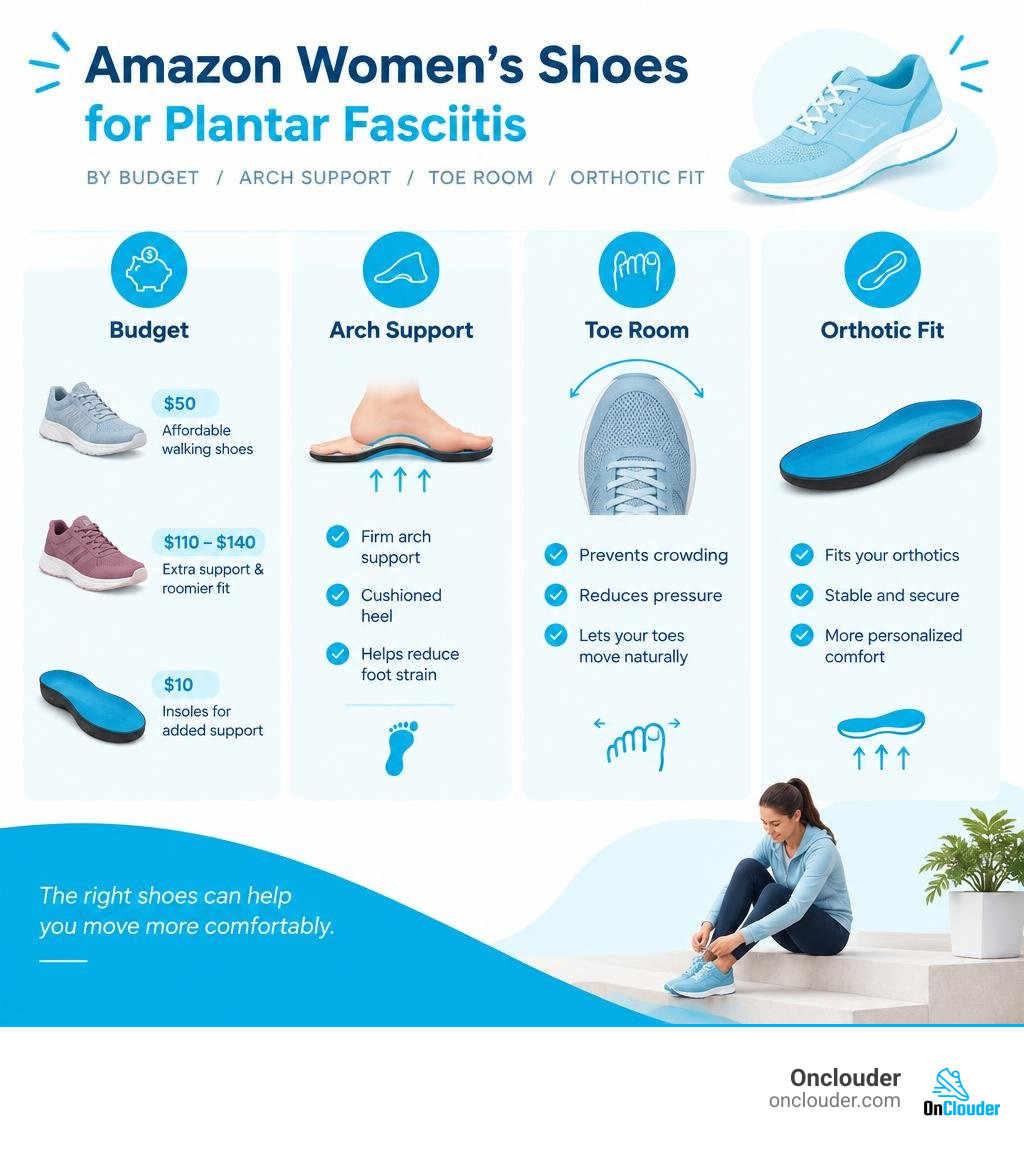
Amazon Women’s Shoes for Plantar Fasciitis: Where to Start
For an affordable walking shoe on Amazon, SURRAY is a place to start at about $50. If you need extra depth for orthotics or a roomier toe box, compare Orthofeet Verve and Joelle, which cost roughly $110 to $140 in the listings reviewed. Already have comfortable, supportive shoes? PROFOOT insoles offer a lower-cost option at about $10. Check current prices, widths, and return terms before ordering.
Plantar fasciitis often causes sharp heel pain with your first steps in the morning. Shoes with firm arch support, a cushioned heel, and enough toe room may make walking more comfortable, but the best choice depends on your foot shape and how you use the shoes.
Discover more about amazon women’s shoes for plantar fasciitis:
- best adidas shoes for plantar fasciitis
- asics for plantar fasciitis men’s
- best ecco shoes for plantar fasciitis
Understanding Heel Pain and Essential Footwear Support
Plantar fasciitis occurs when the thick band of connective tissue running across the bottom of your foot—the plantar fascia—becomes strained, inflamed, or micro-torn from repetitive stress. When you sleep, this ligament contracts and shortens. The moment your feet hit the floor in the morning, body weight abruptly stretches that tight ligament, triggering that notorious sharp stabbing sensation.
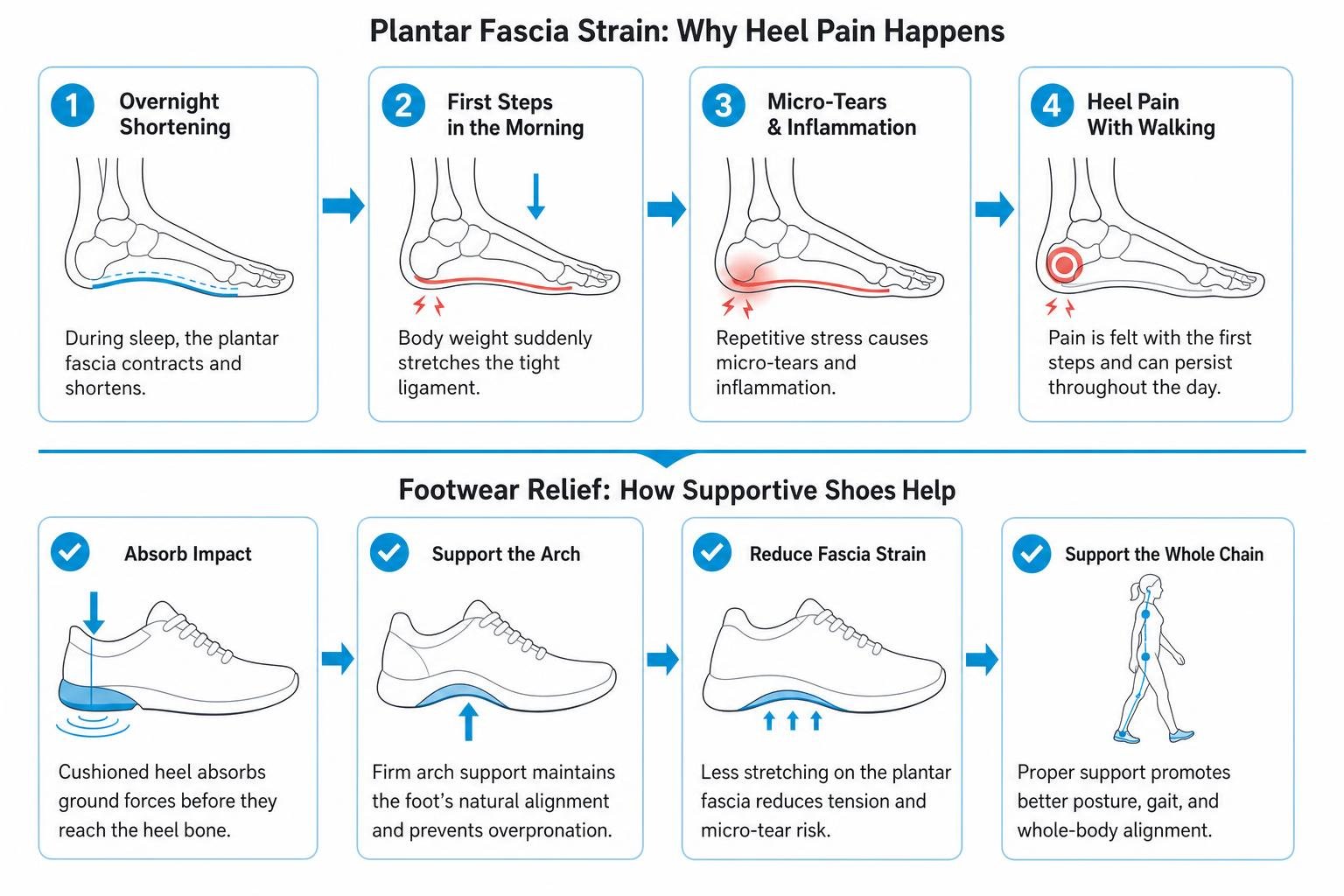
To calm this inflammation, your feet need specialized mechanics. Proper footwear absorbs ground reaction forces before they travel through your heel bone. When searching for podiatrist-approved best shoes for plantar fasciitis, you are looking for designs that stabilize your gait, maintain posture alignment, and take tension off the plantar fascia across the entire kinetic chain.
Key Features in Amazon Women’s Shoes for Plantar Fasciitis
Not every cushioned sneaker helps heel pain. In fact, overly squishy shoes without structural integrity can allow your arch to collapse further, worsening micro-tears.
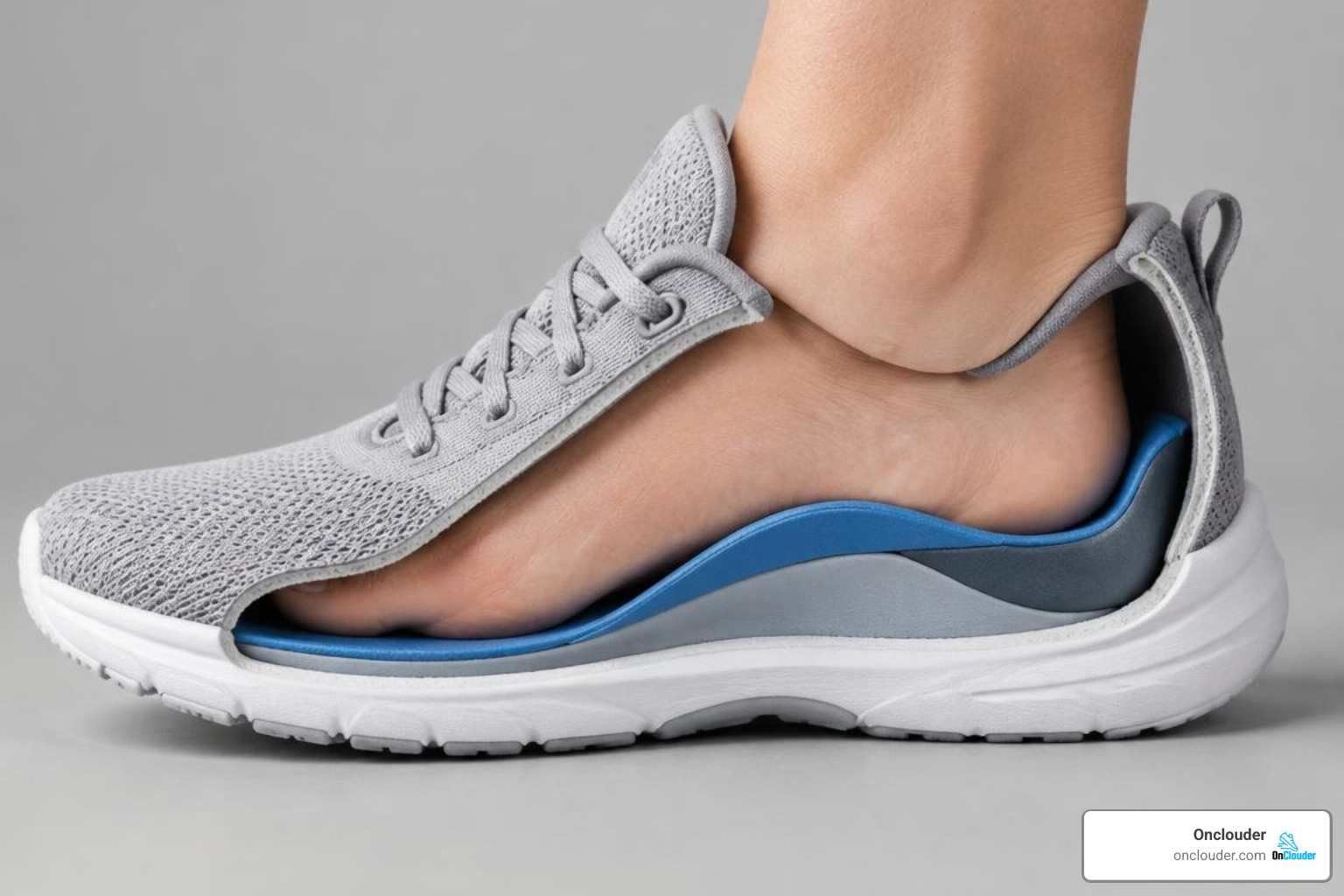
When browsing online selections, focus on these non-negotiable structural elements:
- Anatomical Arch Support: A firm contour that prevents overstretching by keeping the plantar ligament in a neutral position.
- Deep Heel Cups: A cupped cradle that centers the foot’s natural fatty heel pad right beneath the calcaneus bone for natural shock absorption.
- Rocker Bottom Soles: A curved outer sole that encourages a smooth heel-to-toe transition, reducing stress on the ball of the foot and the heel strike zone.
- Wide, Roomy Toe Box: Ample space for your toes to splay naturally, which prevents crowding and stabilizes the arch base.
If you want to upgrade your arch support with the best shoe brands for plantar fasciitis, prioritize structural stability over cloud-like softness alone.
Alignment and Joint Pain Prevention
Your feet form the structural foundation of your entire skeleton. When plantar fasciitis alters your natural stride—often causing you to limp or roll your foot outward to avoid heel pressure—the compensation travels upward. Misalignment at the ankle creates torque on the knee joint, tilts the pelvis, and strains the lower back. Quality orthotic walking shoes correct overpronation, re-establish biomechanical balance, and protect your knees and hips from unnecessary wear.
Top Amazon Women’s Shoes for Plantar Fasciitis Compared
| Model | Price (Approx.) | Amazon Rating / Reviews | Core Support Features | Best Use Case |
|---|---|---|---|---|
| Orthofeet Verve | $109.99 – $139.95 | 4.1 / 5 (2,200+ reviews) | Premium orthotic insole, tie-less closure, extra depth | Sensitive feet, custom orthotics, wide widths |
| Orthofeet Joelle | $135.00 | 4.2 / 5 (750+ reviews) | Ergonomic rocker sole, arch booster, leather upper | All-day walking on flat surfaces, arthritis relief |
| Dr. Scholl’s Feel Good | $109.99 | 4.1 / 5 (2,200+ reviews) | Shock Guard technology, BLOOM foam, heel cup | Everyday casual wear with sustainable materials |
| SURRAY Walking Shoes | $49.96 | 4.4 / 5 (60+ reviews) | Rigid arch contour, slip-resistant sole, breathable mesh | Budget-friendly fitness walking and gym workouts |
| PROFOOT Orthotic Insoles | $9.99 | 4.3 / 5 (16,900+ reviews) | Gel heel insert, targeted arch bridge, half-length fit | Adding targeted heel relief to existing supportive shoes |
Orthofeet Verve and Joelle Therapeutic Walking Shoes
Orthofeet has earned an exceptional reputation in therapeutic footwear. The Orthofeet Verve Orthopedic Women’s Sneakers feature a clever tie-less fastening system with adjustable side hook-and-loop tabs, making entry effortless while retaining a classic sneaker look. Inside, an anatomical orthotic insole and an optional “arch booster” let you customize support levels on demand.
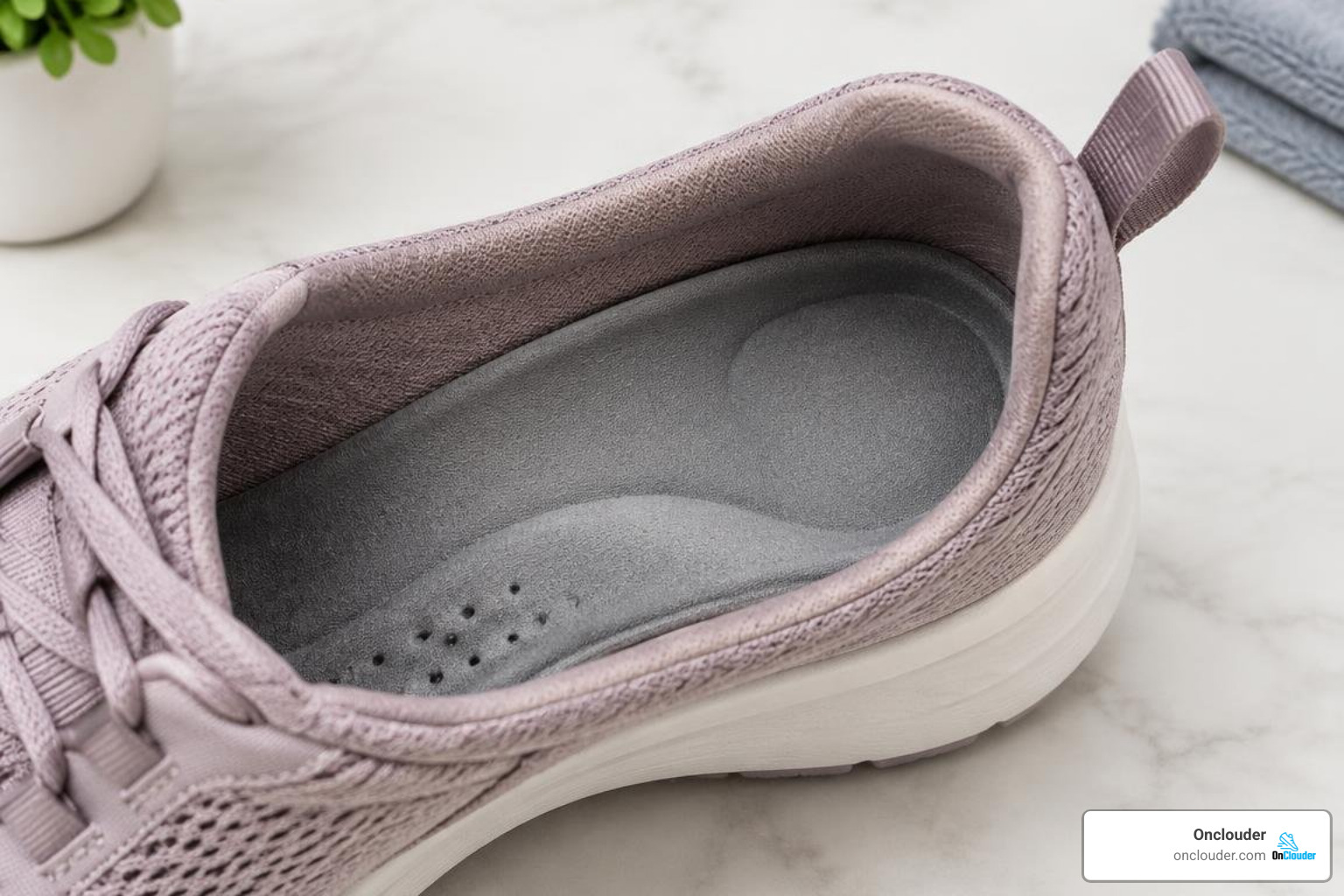
Similarly, the Orthofeet Innovative Plantar Fasciitis Shoes for Women – Joelle offer a durable leather upper paired with a mild rocker sole that eases joint impact. Both models provide extra interior depth and non-binding, seam-free uppers, making them lifesavers for women managing heel pain alongside bunions, hammertoes, or diabetic neuropathy.
Dr. Scholl’s Feel Good Sneaker and SURRAY Walking Shoes
If you prefer everyday casual styling, the Dr. Scholl’s Feel Good Sneaker pairs clinical Shock Guard technology with eco-conscious materials like plant-based BLOOM foam. It delivers structured arch support and a cupped heel designed to reduce tension with every step. That customer feedback suggests this style runs slightly large, so sizing down half a size is often wise.
For budget-conscious shoppers, the SURRAY Womens Plantar Fasciitis Walking Shoes punch well above their $50 price tag. Built with an orthotic arch profile, lightweight air-mesh uppers, and slip-resistant rubber outsoles, they provide solid support for brisk walks, running errands, or light gym routines.
Insoles vs Specialized Footwear: PROFOOT Orthotics
If you already own supportive sneakers with stiff midsoles, you might not need an entirely new pair of shoes. The PROFOOT Plantar Fasciitis Orthotic Insoles for Women (Sizes 6-10) cost under $10 and boast over 16,900 positive reviews. Their shock-absorbing gel heel cradles tender calcaneal spurs while supporting the arch bridge.
When deciding between shoe inserts vs custom orthotics for plantar fasciitis, over-the-counter inserts cannot fix a flimsy or overly flexible shoe. Gel inserts require a stable shoe base beneath them to function properly.
Choosing the Right Fit and Style for Your Daily Needs
Finding shoes that are best for plantar fasciitis requires matching your footwear to your daily activity. A nurse standing 12 hours on concrete requires far more firm midsole support and slip resistance than someone taking casual neighborhood walks.
Always verify whether the factory footbed is removable, especially if you plan to insert custom medical orthotics down the road.
Budget vs Premium Amazon Women’s Shoes for Plantar Fasciitis
Is a $140 pair of orthopedic shoes truly better than a $50 alternative? It comes down to longevity and anatomical engineering. Premium models from specialized orthopedic brands utilize multi-density polyurethane foams that resist packing out, alongside torsionally rigid shanks that prevent twisting. Sub-$50 sneakers often use basic molded EVA foam; while comfortable at first, they degrade faster and may need replacement every three to four months if worn daily.
Accommodating Bunions, Flat Feet, and Sensitive Soles
If you deal with overlapping foot issues, standard widths will only cause friction and pain. Look for models offering wide (W) and extra-wide (XW) sizing options with stretchable, non-binding uppers. A seam-free interior lining eliminates hot spots over bunion joints, while an integrated rigid arch prevents low arches from overpronating inward and pulling on the plantar fascia.
Frequently Asked Questions About Plantar Fasciitis Shoes
Can over-the-counter insoles replace dedicated plantar fasciitis shoes?
Insoles provide targeted arch lift and heel cushioning, but they cannot compensate for a shoe with poor torsional rigidity. If your shoe can be easily folded in half like a taco, an insole will not prevent foot strain. Use quality insoles only inside structurally sound shoes with firm heel counters.
How do I choose the correct width for plantar fasciitis shoes on Amazon?
Measure your feet in the afternoon when slight swelling is normal. If you have bunions, wide feet, or plan to use thick orthotic inserts, choose wide widths (D/W) or styles with designated extra interior depth.
How often should women replace walking shoes for heel pain relief?
Walking shoes typically lose their structural support and cushioning after 300 to 500 miles of use, or roughly every six months of daily wear. If you notice your morning heel pain returning or see visible creasing and tilt in the midsole foam, it is time for a fresh pair.
Conclusion
Living with morning heel pain can drain the joy out of your day, but the right footwear offers immediate relief and long-term recovery. Whether you choose the versatile adjustability of Orthofeet, the accessible comfort of Dr. Scholl’s, or budget-friendly walking shoes from SURRAY, prioritizing firm arch support, deep heel cups, and adequate width will protect your gait. For workplace recommendations and professional styling tips, explore our best work shoes plantar fasciitis guide to keep your feet comfortable all day long.
The Office Athlete: Why Oncloud is the Only Shoe That Survives a 9-to-5 and a 5K
