
Understanding Plantar Fasciitis and Footwear Mechanics
If you need the best Adidas shoes for plantar fasciitis, the Ultraboost series is the top recommendation for high-impact cushioning and all-day walking, while the SolarGlide and SolarBoost provide structured stability for walkers who need firmer midfoot guidance. Budget-friendly options like the Cloudfoam Pure and EQ21 Run offer lighter support for casual wear and shorter walks.
Plantar fasciitis is one of the most widespread causes of heel pain worldwide, most commonly striking adults between the ages of 40 and 60. Clinically, the condition is often better termed plantar fasciosis because chronic cases typically exhibit tissue degeneration, micro-tearing, and collagen disorganization rather than acute inflammatory cells.
When you bear weight, your plantar fascia acts like a dynamic bowstring across the sole of your foot, absorbing kinetic energy and supporting your medial longitudinal arch. However, factors such as Achilles tendon tightness, sudden spikes in mileage, prolonged standing on hard surfaces, and carrying excess body weight can overload this tissue. The result is calcaneal stress at the medial tubercle, leading to that notorious, knife-like morning heel pain.
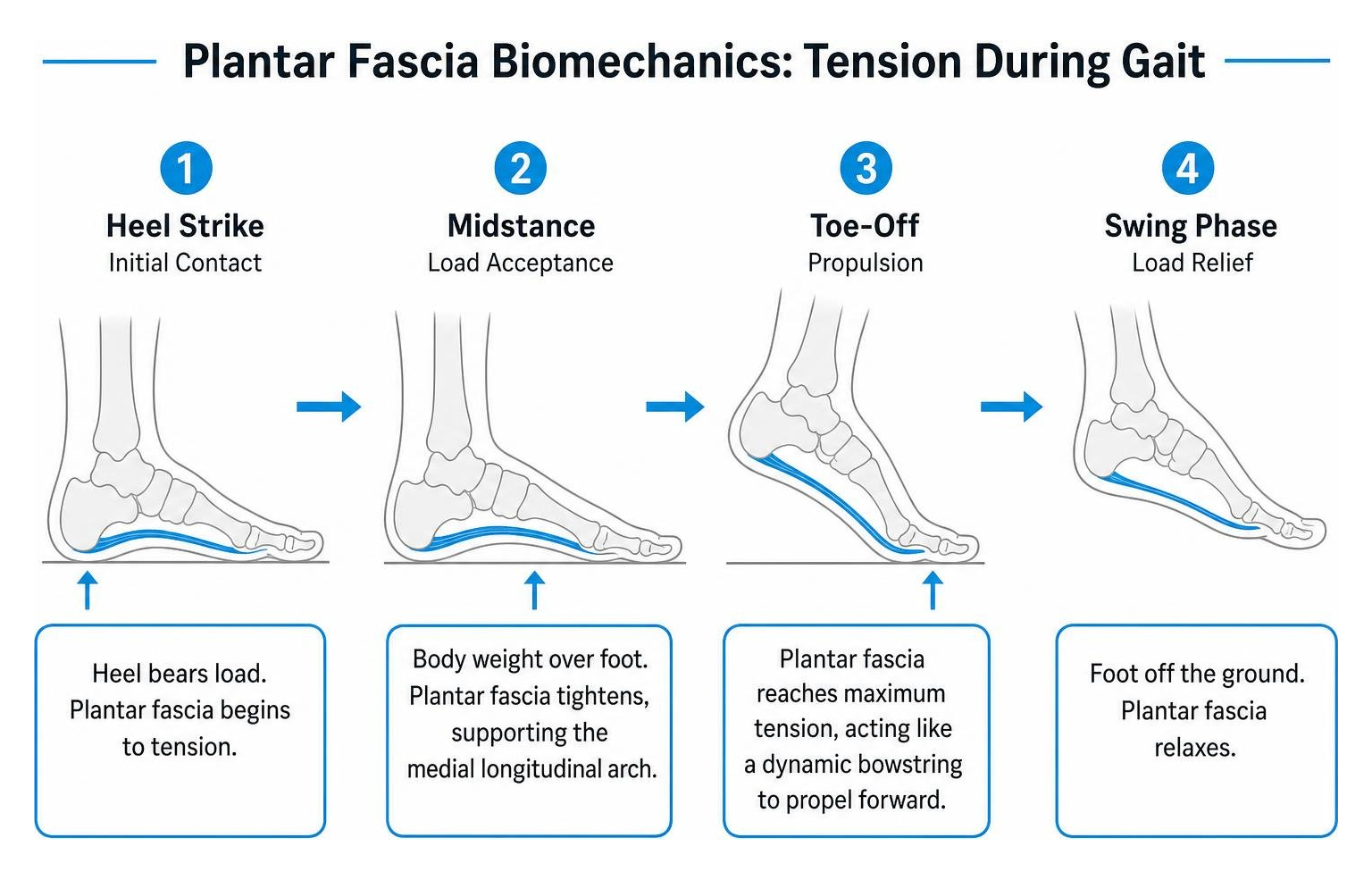
Footwear plays a pivotal role in modulating these mechanical loads. While no pair of sneakers can magically cure tissue degeneration on its own, well-engineered shoes alter ground reaction forces and reduce tensile stress along the plantar fascia. Exploring podiatrist approved best shoes for plantar fasciitis reveals consistent themes: balanced impact attenuation, midfoot torsional rigidity, and a supportive heel counter.
Interestingly, clinical research shows that simply buying a new pair of well-cushioned shoes provides meaningful relief. In a 12-week randomized trial, individuals who transitioned to fresh, cushioned neutral trainers experienced significant daily pain reduction (a 21.6 mm improvement on a 100 mm visual analog scale) compared to those who continued wearing their old, compressed shoes.
However, more structure is not always better. A landmark randomized trial involving 81 female runners revealed that aggressive motion-control shoes actually caused significantly more pain across both neutral and pronating foot types, leading to the highest number of missed training days among all groups tested. Furthermore, laboratory studies on plantar sensory feedback demonstrate that excessive foot numbness or overly stiff blockades can disrupt normal muscle activation patterns. The goal is finding a balanced platform that protects the heel while maintaining natural proprioception.
Essential Features: Cushioning, Torsion, and Arch Support
When evaluating the best Adidas shoes for plantar fasciitis, we focus on three core mechanical pillars:
- Midsole Cushioning: Adidas utilizes distinct foam compounds. Boost (made from expanded thermoplastic polyurethane, or e-TPU) offers responsive energy return and high compression resistance, effectively absorbing heel strike impacts. Cloudfoam (a modified EVA blend) delivers plush, lightweight step-in softness ideal for low-impact casual wear.
- Torsional Rigidity & The Torsion System: A shoe that twists like a washcloth places excessive strain on the plantar fascia. Adidas incorporates thermoplastic midfoot bridges—such as the classic Torsion System or modern Linear Energy Push (LEP) units—to prevent midfoot twisting and smooth out your heel-to-toe transition.
- Arch Support and Heel Geometry: A supportive arch distributes body weight across the entire plantar surface rather than concentrating pressure directly on the calcaneus. A moderate heel-to-toe drop (typically 8 mm to 12 mm) slightly unloads a tight Achilles tendon and plantar fascia. If your shoe needs extra structural customization, pairing it with our best arch support shoes insoles guide can help dial in your fit.
Evaluating the Best Adidas Shoes for Plantar Fasciitis by Foot Type
Every foot moves differently, and matching your footwear to your biomechanical profile is essential for lasting comfort:
- Flat Feet (Low Arches): Low arches tend to collapse under load, stretching the plantar fascia taut. Look for shoes with a stable base, midfoot guide rails, or room to add support. For detailed orthotic matching, read our guide to buying orthotic insoles for flat feet.
- High Arches (Pes Cavus): Rigid, high arches struggle to absorb shock naturally, sending heavy impact forces directly into the heel. High arches thrive in plush, highly cushioned trainers like the Ultraboost series.
- Neutral Gait: If your ankles remain relatively vertical through stance phase, a standard neutral cushioned trainer provides optimal comfort without adding unnecessary, rigid motion-control hardware.
Top Picks: Best Adidas Shoes for Plantar Fasciitis
To help you decide, we have broken down the standout Adidas models based on their midsole compound, stability elements, and primary use cases:
| Adidas Model | Cushioning Tech | Stability Level | Heel Drop | Ideal Use Case |
|---|---|---|---|---|
| Ultraboost Series | Full-Length Boost | Moderate (LEP System) | 10 mm | Daily walking, active recovery, high-impact cushioning |
| SolarBoost / SolarGlide | Boost + Control Rails | High (Stability Rail) | 10 mm | Road running, structured walking, overpronation control |
| EQ21 Run | Bounce + Geofit Collar | Moderate (Heel TPU clip) | 10.5 mm | Budget-friendly daily training, gym workouts |
| Cloudfoam Pure | Cloudfoam EVA | Neutral / Soft | 8 mm | Casual errands, light indoor walking, budget comfort |
| Run Falcon 5 | Cloudfoam Midsole | Moderate Neutral | 9 mm | Affordable walking, wide-foot casual use |
| X_PLR Path | Cloudfoam Cushioning | Neutral | 9 mm | Everyday lifestyle, wide toe splay |
Adidas Ultraboost Series
The Adidas Ultraboost remains the flagship recommendation for heel discomfort. Its defining feature is a substantial slab of e-TPU Boost foam that retains its bouncy, shock-absorbing properties far longer than traditional EVA midsoles.
The integrated Linear Energy Push (LEP) system acts as a rigid shank through the midfoot, keeping the shoe from bending under your arch where the plantar fascia is most vulnerable. A molded heel counter cups the calcaneus securely, stabilizing the subcalcaneal fat pad upon footstrike. For female walkers seeking a model tuned specifically for narrower heel dimensions, explore our breakdown of the best Adidas women’s shoes for plantar fasciitis.
- Pros: Incredible impact attenuation, durable foam that does not pack out quickly, plush upper fit.
- Cons: Premium price point; knit upper may feel overly stretchy for those needing heavy medial support.
Adidas SolarBoost and SolarGlide
If the Ultraboost feels slightly too flexible or soft underfoot, the SolarBoost and SolarGlide lines provide an ideal blend of responsive cushioning and structured guidance.
These models integrate an engineered EVA stability rail—a firmer frame around the perimeter of the Boost midsole that guides your foot through a straight, stable gait cycle. By keeping the foot centered and preventing excessive inward roll, these shoes minimize repetitive torsional strain on the plantar fascia during long walks or daily runs.
- Pros: Structured midfoot stability without the harsh rigidity of a traditional motion-control post; excellent durability.
- Cons: Slightly heavier than pure racing flats; firmer underfoot feel than the Ultraboost.
Adidas Cloudfoam Pure and EQ21 Run
For walkers seeking wallet-friendly options, the Cloudfoam Pure and EQ21 Run offer solid entry points into supportive footwear.
The Cloudfoam Pure features a plush memory sockliner that molds to your foot, delivering immediate relief for casual indoor wear. Meanwhile, the EQ21 Run steps up stability with Bounce foam cushioning and a rigid quarter-panel TPU clip that locks down the heel. If you spend long shifts on your feet, pairing affordable models with supportive design is key—check out our dedicated guide to Adidas footwear for standing all day.
- Pros: Budget-accessible pricing, lightweight step-in softness, sleek lifestyle styling.
- Cons: Standard EVA foam breaks down faster under heavy daily mileage; less aggressive midfoot arch structure.
Adidas Run Falcon and X_PLR Path
Foot swelling and compressed toes can aggravate fascia discomfort. The Run Falcon 5 and X_PLR Path feature broader forefoot geometries that allow your toes to splay naturally during push-off.
Giving your toes room to spread relieves pressure on the transverse arch and keeps the plantar fascia from over-tightening. If you frequently struggle with narrow sneakers pinching your forefoot, browse our curated roundup of spacious wide toe box Adidas sneakers for maximum forefoot comfort.
- Pros: Generous toe box volume, lightweight construction, easy slip-on comfort.
- Cons: Moderate arch structure requires aftermarket insoles for severe flat feet.
Non-Shoe Treatments and Complementary Rehabilitation
While finding the right footwear is a crucial foundation, clinical research consistently shows that shoes are most effective when paired with active rehabilitation. Footwear modifications alone rarely resolve chronic fascial pathology without targeted loading exercises.
Key evidence-based non-shoe treatments include:
- Plantar Fascia-Specific Stretching: Seated stretches that pull the toes back toward the shin (dorsiflexion with toe extension) load the windlass mechanism and reduce morning stiffness.
- High-Load Progressive Strength Training: A randomized clinical trial by Rathleff et al. demonstrated that performing high-load heel raises with a rolled towel under the toes produced Foot Function Index scores 29 points better at 3 months than stretching alone. The tensile load stimulates collagen remodeling in the plantar fascia.
- Radial Shockwave Therapy (RSWT): Extracorporeal shockwave therapy uses acoustic pulses to stimulate healing in recalcitrant cases. Notably, a study of 152 patients found that combining shockwave therapy with tissue-specific stretching achieved a 59% satisfaction rate at two months, compared to only 32% for shockwave therapy alone (Rompe et al., 2015).
- Night Splints: Wearing a nocturnal splint holds the ankle in neutral dorsiflexion, preventing the plantar fascia and calf muscles from contracting overnight.
Maintenance, Lifespan, and Fit Considerations
Even the best running shoes lose their supportive qualities over time. As foam compresses and thermoplastic shanks fatigue, shock absorption drops, transferring impact forces directly into your heel.
- Replacement Timeline: Plan to replace daily walking or running shoes every 300 to 500 miles (roughly every 4 to 6 months for daily wearers).
- Visual Warning Signs: Look for diagonal compression creases in the midsole foam, uneven wear along the outsole rubber, or a heel counter that tilts inward when placed on a flat table.
- Fit Tip: Always shop for shoes in the late afternoon when your feet are slightly swollen to ensure your sneakers do not compress your arches during daily wear.
- Shoe Care: Avoid tossing your shoes in high-heat dryers, which breaks down midsole glue and foams. Instead, follow our guide to cleaning your Adidas footwear to keep them clean without compromising cushioning.
How Long Do the Best Adidas Shoes for Plantar Fasciitis Last?
Adidas models equipped with full-length Boost cushioning generally outlast standard EVA shoes. Boost e-TPU pellets resist packing out, retaining resilience well past the 400-mile mark. Conversely, lightweight EVA models like Cloudfoam soften quickly and typically require replacement around 250 to 350 miles of heavy walking.
Frequently Asked Questions About Plantar Fasciitis Footwear
Can running shoes like Ultraboost be worn all day for plantar fasciitis?
Yes. Running shoes are designed with higher impact absorption, durable torsional shanks, and structured heel counters, making them well-suited for all-day walking and prolonged standing.
Are rigid motion-control shoes necessary for heel pain?
No. High-level clinical research shows that overly stiff motion-control shoes can actually increase pain and discomfort in runners. A cushioned, neutral-to-stable shoe with a supportive midfoot shank is generally more comfortable and effective.
What is the difference between Cloudfoam and Boost cushioning for foot pain?
Cloudfoam is a lightweight, pillowy EVA foam that provides immediate step-in softness at an accessible price. Boost is made of fused e-TPU capsules that offer higher energy return, superior long-term shock absorption, and greater resistance to compression over high mileage.
Conclusion
Finding relief from heel pain starts with choosing footwear that works with your body. By combining responsive cushioning, torsional midfoot support, and a stable heel counter, models like the Adidas Ultraboost and SolarGlide offer reliable comfort for daily walking.
Remember to pair your footwear choices with targeted strengthening, active stretching, and appropriate work footwear—such as the options detailed in our guide to the best work shoes for plantar fasciitis —to keep your feet feeling supported all day long.
References
Rompe JD, Furia J, Cacchio A, Schmitz C, Maffulli N. “Radial shock wave treatment alone is less efficient than radial shock wave treatment combined with tissue-specific plantar fascia-stretching in patients with chronic plantar heel pain..” International journal of surgery (London, England), 2015. PMID 25940060. Nurse MA, Nigg BM. “The effect of changes in foot sensation on plantar pressure and muscle activity..” Clinical biomechanics (Bristol, Avon), 2001. PMID 11714548.
