
Core ASICS Midsole Technologies for Distance Training
The top asics long run shoes for high mileage are the GEL-NIMBUS for maximum neutral cushioning, the GEL-CUMULUS for versatile daily training, and the GEL-KAYANO for structured stability. Runners seeking dynamic propulsion and heavy impact dispersion also rely on the GEL-KINSEI MAX for demanding weekend long runs.
When you are deep into an eighteen-mile training block, your running shoes need to absorb substantial ground impact while keeping your legs fresh for next week’s workouts. ASICS has spent decades refining proprietary midsole compounds at its Institute of Sport Science in Kobe, Japan. Understanding how these foams and cushioning elements function underfoot makes selecting your next trainer straightforward.
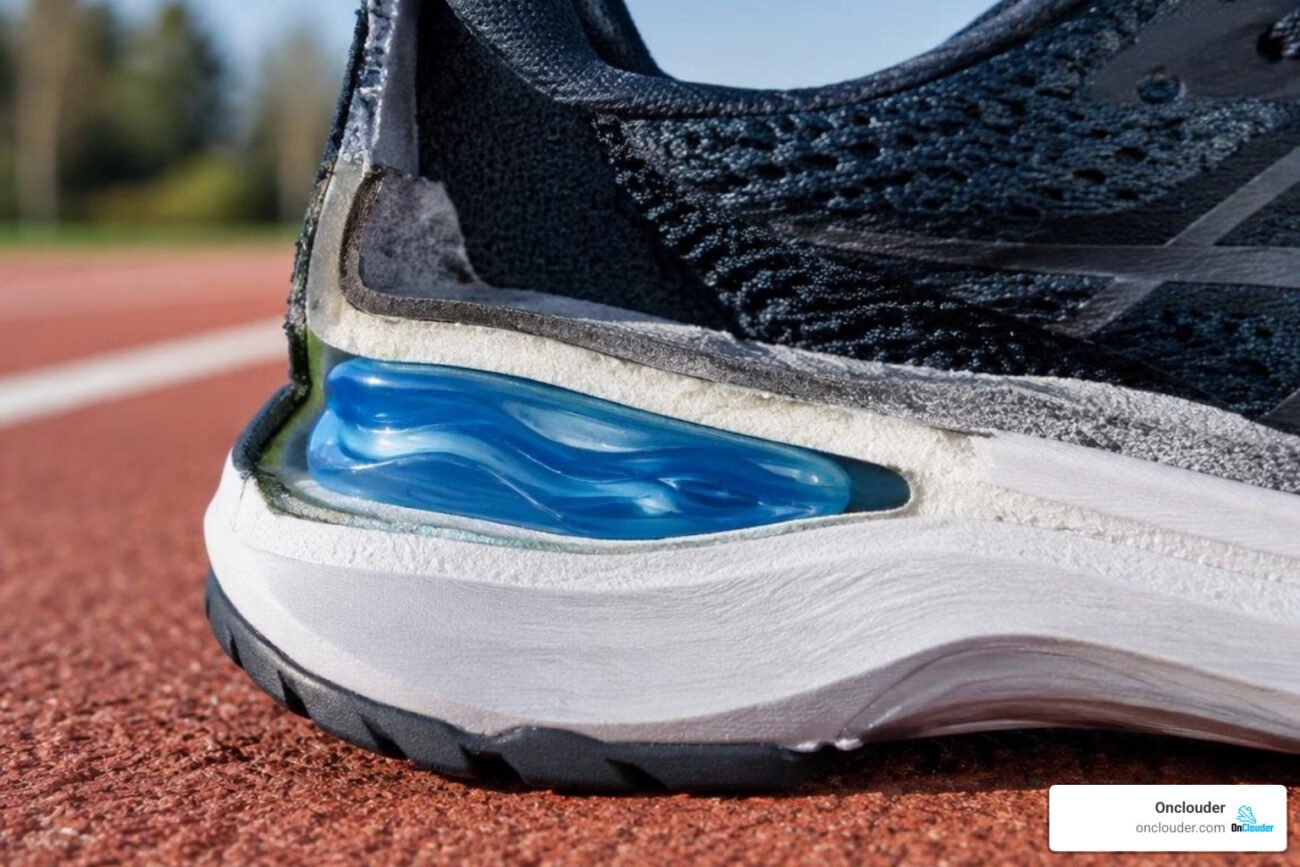
- PureGEL Technology: A modern evolution of the classic silicone-based GEL that ASICS introduced in the 1980s. PureGEL is positioned internally beneath the heel to dampen impact shock upon footstrike. It is approximately 65% softer than standard visible GEL, preserving joint comfort without adding unnecessary bulk.
- FlyteFoam Midsole Foam: Introduced in 2016, FlyteFoam utilizes reinforced organic fibers to provide durable lightweight cushioning that resists packing out over prolonged training cycles.
- FF BLAST PLUS & FF BLAST PLUS ECO: These expanded foams deliver high-energy rebound and a softer landing. The ECO version integrates roughly 24% bio-based content derived from renewable resources, ensuring cloud-like step-in comfort and lively toe-offs.
- AHARPLUS Outsole Rubber: High-abrasion rubber strategically placed across critical wear zones to resist asphalt friction and maintain reliable road grip.
Balancing these technologies helps distance runners manage impact forces over long efforts. For an in-depth breakdown of how cushioning, stack heights, and midsole materials impact training performance across top brands, explore our guide to the best long distance running shoes.
Comparing the Best ASICS Long Run Shoes for High Mileage
Selecting the right pair of asics long run shoes requires balancing cushioning volume against shoe weight and stability needs. High stack heights protect joints on Sunday long runs, while tuned geometric platforms keep foot strikes consistent as fatigue sets in.

| Shoe Model | Support Type | Cushion Level | Weight (Men’s / Women’s) | Heel Drop | Key Midsole Technology |
|---|---|---|---|---|---|
| GEL-NIMBUS 27 LUXE | Neutral / Underpronation | Maximum | 305 g (10.8 oz) | 8 mm | PureGEL + FF BLAST PLUS |
| GEL-CUMULUS 27 | Neutral | High | 265 g (9.3 oz) | 8 mm | PureGEL + FF BLAST PLUS |
| GEL-KINSEI MAX | Neutral / Structured | Maximum | 333 g (11.7 oz) / 287 g (10.1 oz) | 8 mm | Hybrid GEL + FF BLAST PLUS ECO + TPU Plate |
| GEL-KAYANO Series | Structured Stability | Maximum | ~305 g (10.8 oz) | 10 mm | 4D GUIDANCE SYSTEM + PureGEL + FF BLAST PLUS |
| GEL-NIMBUS LITE 2 | Neutral | Maximum | 221 g (7.8 oz) | 11 mm | FLYTEFOAM + Cellulose Nanofiber |
Top Neutral ASICS Long Run Shoes for Maximum Cushioning
For runners with a neutral gait or slight underpronation (supination), neutral distance trainers focus on plush step-in comfort, non-intrusive geometry, and fluid heel-to-toe transitions.
ASICS GEL-NIMBUS 27 LUXE
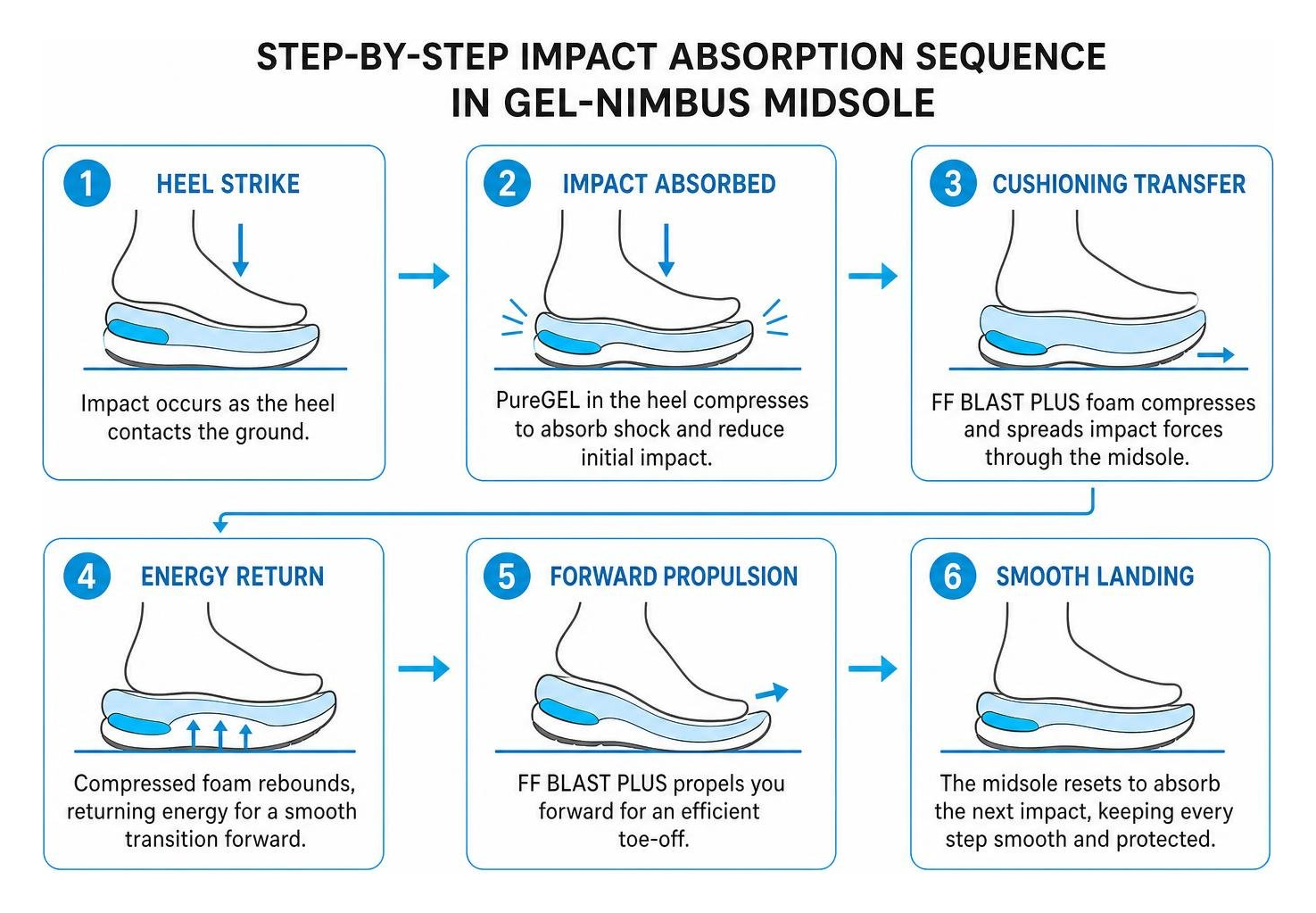
The GEL-NIMBUS 27 LUXE serves as the benchmark for plush, pillowy distance training. Weighing 305 grams with an 8 mm heel drop, it combines rearfoot PureGEL with a thick bed of FF BLAST PLUS cushioning to isolate feet from harsh surface chatter across 20-mile sessions.
The upper is constructed from an engineered jacquard mesh containing at least 75% recycled materials, wrapped around an OrthoLite X-55 sockliner for irritation-free comfort across high weekly mileage. Underneath, a HYBRID ASICSGRIP outsole ensures dependable traction across dry and wet asphalt alike.
ASICS GEL-CUMULUS 27
If you prefer a lighter, more nimble trainer that can comfortably handle both mid-week tempo efforts and weekend long runs, the GEL-CUMULUS 27 is an adaptable workhorse. Coming in at a lightweight 265 grams with an 8 mm heel drop, the shoe pairs FF BLAST PLUS cushioning with internal PureGEL. Its FLUIDRIDE outsole layout promotes natural foot flex and smooth transitions, making it an excellent all-around daily option for runners who find ultra-plush maximal shoes slightly too soft for picking up the pace.
Best Support and Stability ASICS Long Run Shoes
Runners who overpronate—where the ankle rolls inward excessively upon impact—require adaptive guidance to maintain efficient alignment over 15+ miles.
ASICS GEL-KINSEI MAX
Engineered for runners seeking maximum joint protection and a responsive toe-off, the GEL-KINSEI MAX for men (333 g) and GEL-KINSEI MAX for women (287 g) provide unmatched shock dispersion.
Both versions feature an 8 mm heel drop, an AHARPLUS heel plug, and a dual-layer midsole combining Hybrid GEL with bouncy FF BLAST PLUS ECO cushioning. A dynamic TPU midsole propulsion plate sits between the foam layers, redirecting downward impact forces into forward momentum to keep heavy legs moving through the final miles of a marathon block.
ASICS GEL-KAYANO Series
First introduced in 1993, the GEL-KAYANO remains a premier structured stability shoe. Modern iterations utilize adaptive geometry that works with your foot rather than rigidly forcing it into place. By pairing rearfoot PureGEL with specialized medial posting, a broad base of support, and sculpted sidewalls, the Kayano prevents arch collapse during late-stage fatigue without creating pressure points.
Lightweight and Sustainable Distance Trainers
For runners who want plush mileage protection without extra weight—or who prioritize eco-conscious manufacturing—ASICS has integrated sustainable engineering into performance footwear.
ASICS GEL-NIMBUS LITE 2
Weighing a mere 221 grams with an 11 mm heel drop, the GEL-NIMBUS LITE 2 strips back non-essential upper overlays while preserving maximum cushioning underfoot. Nearly the entire upper is woven from recycled fibers, and the FLYTEFOAM midsole integrates Cellulose Nanofiber—a sustainable wood pulp byproduct that enhances structural integrity and foam lifespan.
How to Choose Your Ideal Distance Trainer for Marathon Blocks
Preparing for a 26.2-mile race requires a strategic approach to footwear. ASICS’ performance running division generated over ¥363.5 billion in fiscal 2025, largely due to its wide range of footwear tailored to diverse running mechanics.
- Assess Your Foot Biomechanics: Have a running specialist assess your gait. Neutral runners and supinators generally benefit most from the plush freedom of the GEL-NIMBUS or GEL-CUMULUS, whereas mild to severe overpronators require the structured support of the GEL-KAYANO.
- Evaluate Cushion Volume vs. Responsiveness: If your long runs are done at an easy recovery pace, prioritize maximum dampening (NIMBUS or KINSEI MAX). If your long runs include marathon-pace tempo segments, a lighter, springier midsole compound will feel less sluggish.
- Account for Late-Run Foot Swell: Over 15 to 20 miles, your feet naturally flatten and expand. Ensure you have roughly a thumbnail’s width of space between your longest toe and the front of the shoe box.
- Implement a Shoe Rotation: Alternate between two pairs of trainers during high-mileage weeks. Alternating shoes allows EVA and TPU midsole foams 24 to 48 hours to decompress fully, preserving the shoe’s cushion and lifespan.
- Track Mileage Milestones: Most ASICS road trainers provide dependable shock absorption between 500 and 800 km (300 to 500 miles). Retiring shoes once the midsole loses responsiveness helps keep joints fresh.
Frequently Asked Questions About Long-Distance ASICS Trainers
How many miles do ASICS distance shoes typically last?
Most ASICS long-run shoes last between 500 and 800 kilometers (300 to 500 miles). Outsoles built with AHARPLUS rubber resist abrasive road wear effectively. However, the internal foam cells gradually compress over time. If you notice persistent joint tightness or visible creasing along the midsole walls, it is generally time to replace the pair.
Which ASICS model is best for heavy runners tackling long miles?
Heavier runners benefit significantly from the GEL-KINSEI MAX or the GEL-KAYANO series. The KINSEI MAX utilizes a TPU propulsion plate and dual-layer Hybrid GEL that distributes high downward impact loads evenly, preventing the foam from bottoming out early in a run.
Can you run a full marathon in the GEL-NIMBUS or GEL-KAYANO?
Yes. Both the GEL-NIMBUS and GEL-KAYANO are widely used by runners completing full marathons. While elite athletes chasing podiums often opt for ultra-light carbon-plated race shoes, marathoners prioritizing joint comfort, stable landings, and smooth transitions will find either model well-suited for covering 26.2 miles comfortably.
Conclusion
Finding the right trainer for your high-mileage weekends comes down to matching your personal running mechanics with the right level of support. Whether you choose the plush comfort of the GEL-NIMBUS 27 LUXE, the versatile balance of the GEL-CUMULUS 27, or the structured stability of the GEL-KAYANO, ASICS provides dependable protection across heavy training blocks.
If you are finalizing your footwear lineup for race day and want to see how various brands stack up over 26.2 miles, explore our comprehensive marathon running shoes comparison to lock in your ideal training setup.
Beyond the Hype: My Honest Experience Walking 10k Steps a Day in Onclouds
