What Shoes Are Best for Plantar Fasciitis?
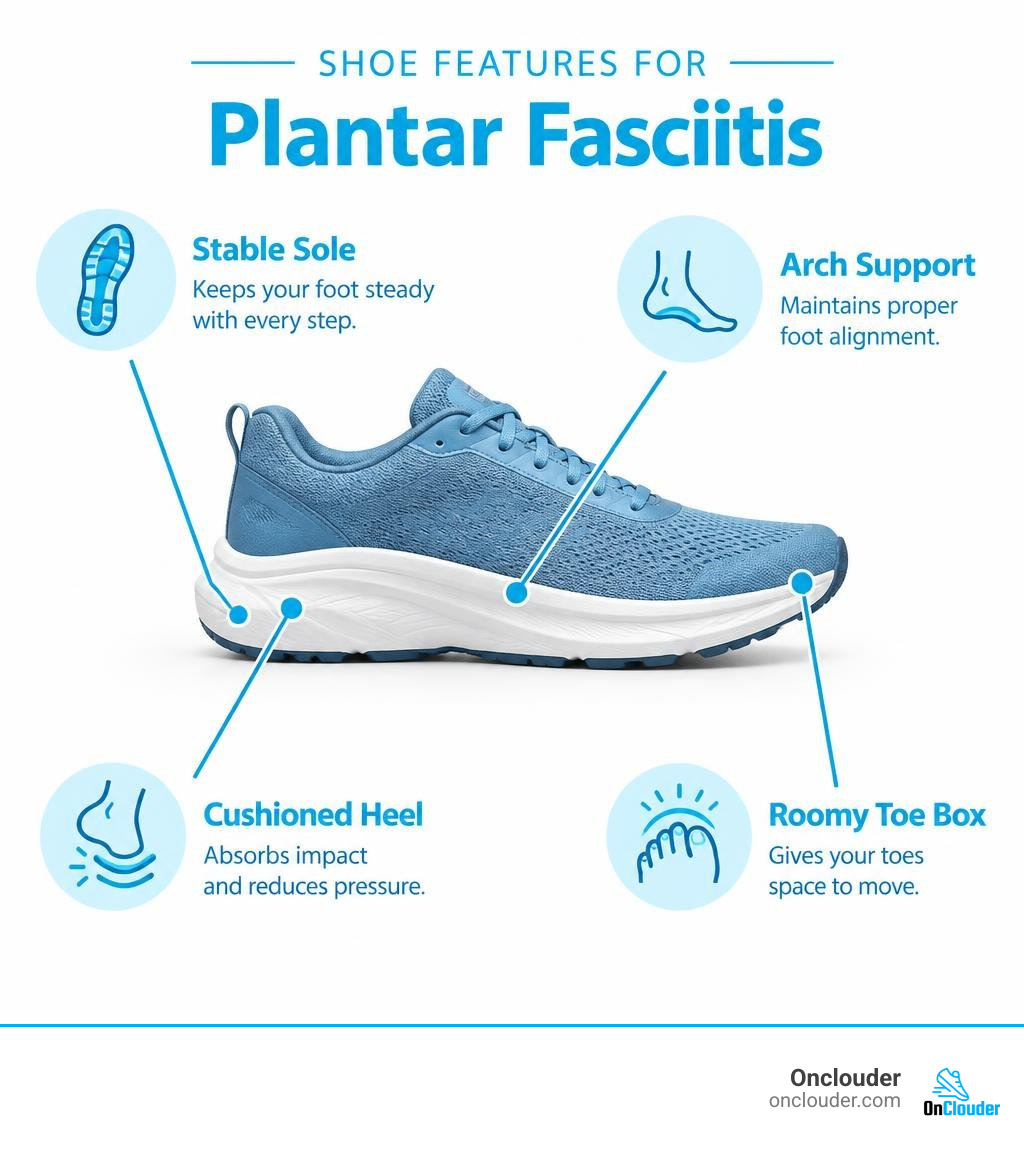
The best shoes to wear with plantar fasciitis have a comfortable fit, a stable sole, arch support, and enough cushioning to soften heel impact. Look for a firm heel that holds your foot in place and a toe box that does not squeeze your toes. The right shoe should feel supportive when you walk, not just soft when you press on it.
You do not need the most expensive pair. Start with a supportive walking or running shoe that fits your foot, then notice how your heel feels during daily use. If you have active heel pain, be cautious with flat, flexible shoes and barefoot walking on hard floors.
Explore more about best shoes to wear with plantar fasciitis:
Introduction
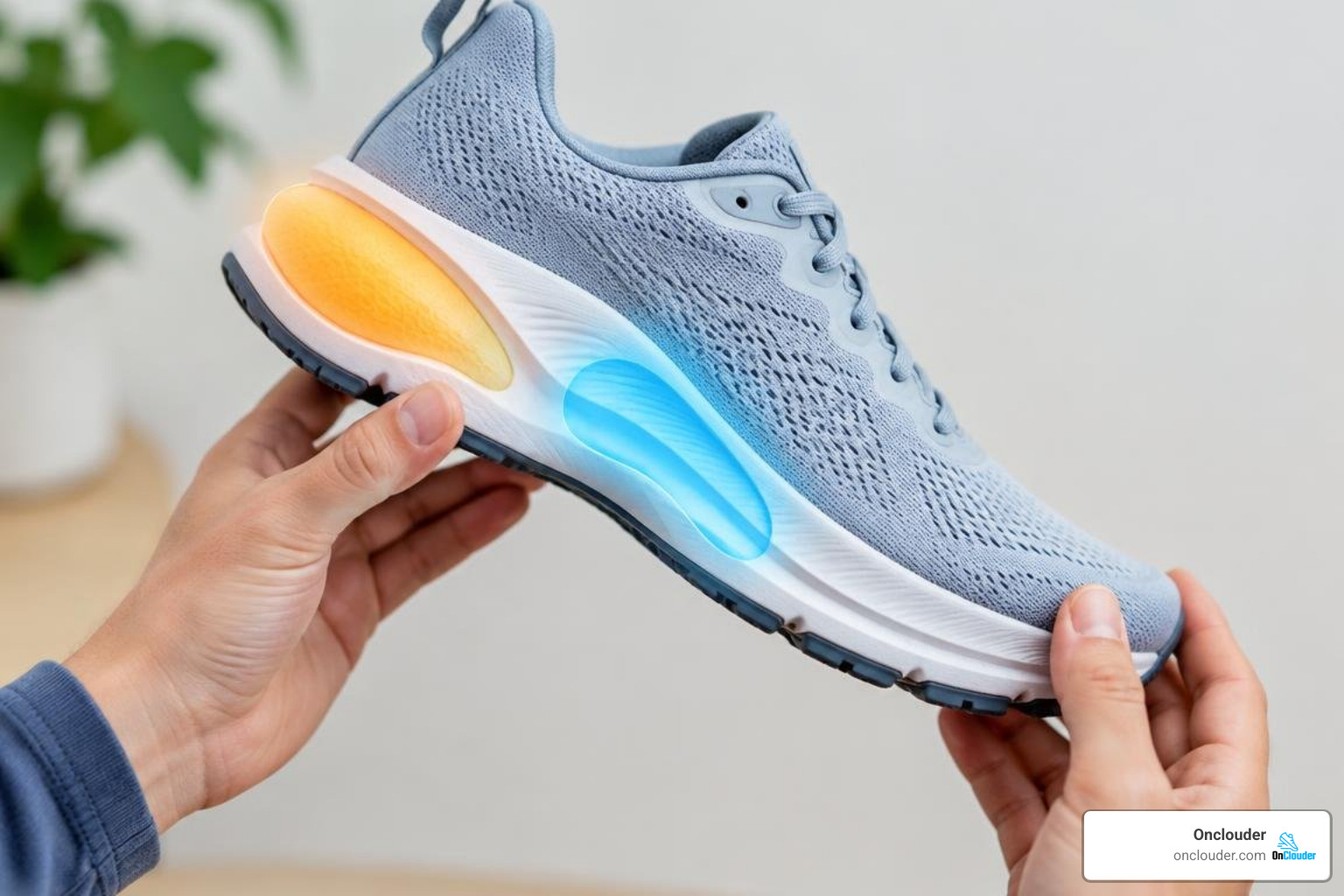
That sharp, stabbing sensation in your heel during your first steps out of bed in the morning is the hallmark of plantar fasciitis. When you rest, the thick band of fibrous tissue running along the bottom of your foot contracts. Taking that first step forces the tissue to stretch rapidly under your full body weight, engaging the natural windlass mechanism of the foot and pulling painfully at its calcaneal attachment.
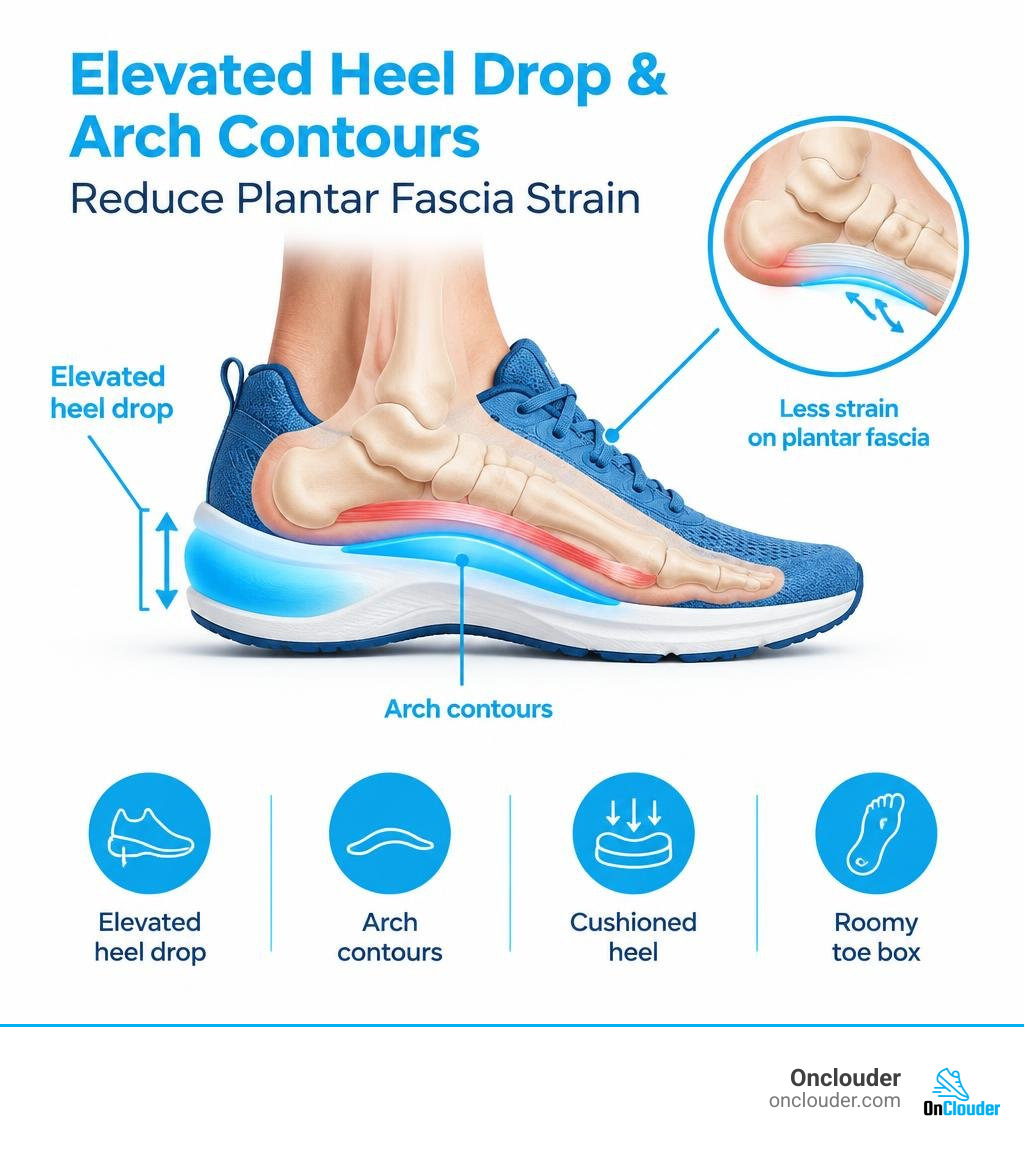
Footwear engineering has evolved significantly, offering targeted relief for this condition. The key lies in understanding how biomechanical features—such as arch contouring and heel elevation—work together to unload irritated connective tissue.
Selecting footwear that minimizes repetitive tension on the heel allows your body to heal while keeping you active throughout the day.
How to Choose the Best Shoes to Wear with Plantar Fasciitis
Finding the right footwear requires looking past flashy aesthetics and marketing buzzwords. When evaluating shoes for plantar fasciitis, structural integrity is paramount.
A critical biomechanical metric to check is the heel-to-toe drop—the height difference between the heel cushioning and the forefoot. A moderate-to-high drop of roughly 8mm to 12mm relieves tension along the entire posterior kinetic chain. In fact, a 10mm heel drop reduces resting fascial tension by approximately 12% compared to a completely flat shoe. This small elevation shortens the Achilles-calf complex, decreasing the constant upward pull on the heel bone.
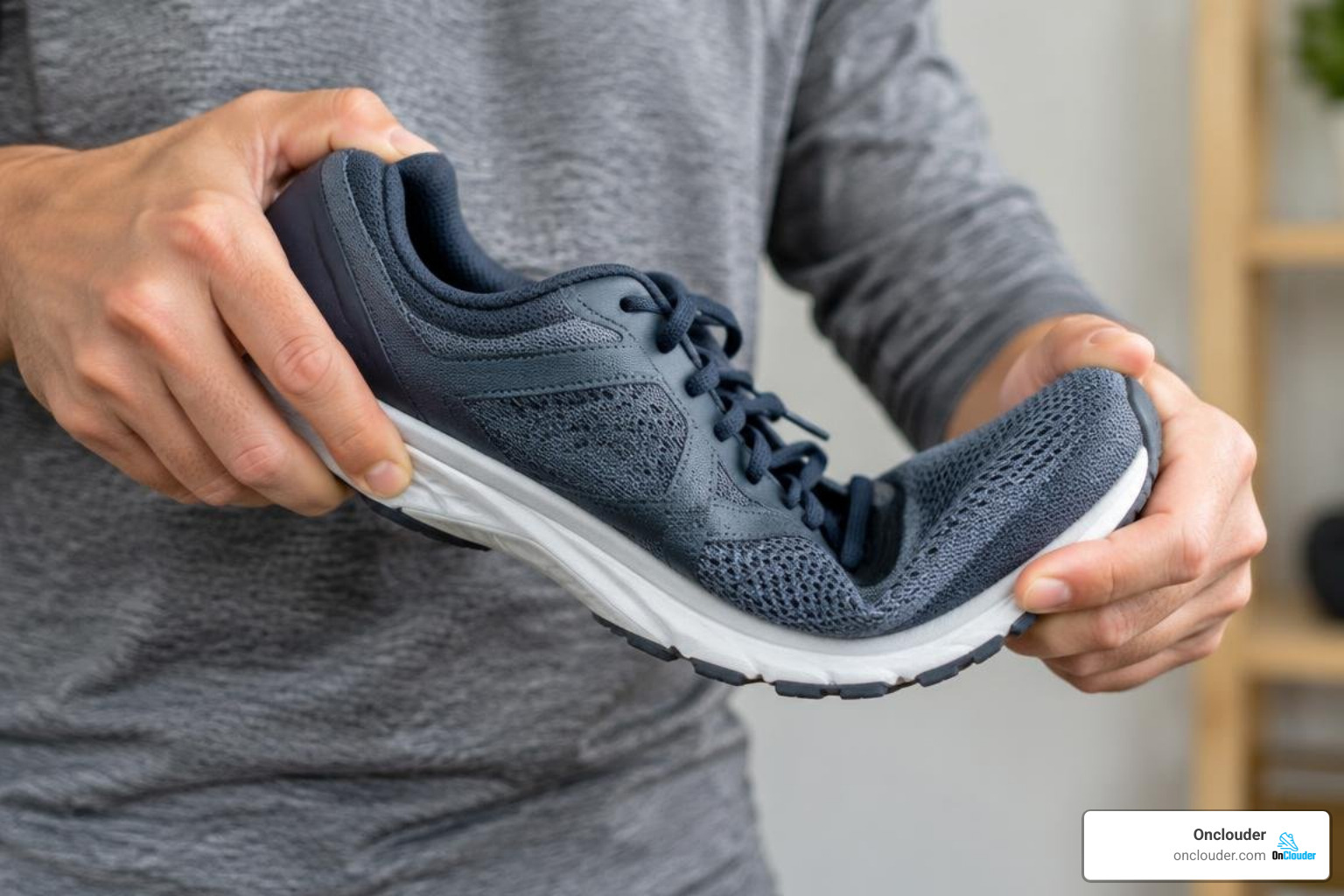
Another non-negotiable test is torsional rigidity. You can test this yourself: grab the shoe by the heel and toe, then try to twist it like a wet towel. A supportive shoe will resist twisting through the midfoot. Shoes with dual-density midsole foam provide firmness directly under the arch to prevent collapse, while maintaining softer shock absorption under the center of the heel.
Core Anatomical Criteria in the Best Shoes to Wear with Plantar Fasciitis
To properly protect an inflamed plantar fascia, your daily footwear must include several core biomechanical elements:
- Anatomical Arch Support: The shoe should mirror the contours of your foot, filling the gap under the arch to distribute weight across the midfoot rather than concentrating force at the heel. For a deeper breakdown of arch mechanics, read our comprehensive guide to shoes with good arch support for plantar fasciitis.
- Deep Heel Cup: A firm, cupped heel pocket cradles the calcaneus, consolidating your foot’s natural fat pad directly beneath the heel bone for maximum natural impact dispersion.
- Rocker Bottom Sole Geometry: Soles with a gentle upward curve at the toe and heel facilitate a smooth roll through the gait cycle. This reduces the amount of toe extension required at push-off, shielding the plantar fascia from excessive elongation.
- Targeted Shock Attenuation: High-grade midsole foams absorb impact forces when your heel strikes hard surfaces, preventing microtrauma from traveling directly into the inflamed tissue.
Why Cushioning Softness Alone Fails Plantar Fasciitis Patients
A common mistake when dealing with heel pain is choosing the squishiest shoe on the shelf. While a cloud-soft shoe feels pleasant for the first few minutes, excessive midsole give acts like walking on wet sand.
Without a firm foundation, soft foam compresses unevenly, causing the foot to overpronate and biomechanically collapse inward. This inward rolling increases the distance between the heel and the ball of the foot, stretching the plantar fascia under full body load. To protect the foot, firmness and stability must always balance soft cushioning. Reviewing podiatrist approved best shoes for plantar fasciitis highlights how structured midsoles keep your kinetic chain aligned and prevent symptom flare-ups.
The Wide Toe Box vs. Zero-Drop Dilemma
Many runners and walkers seek out wide toe box shoes to allow their toes to splay naturally and align the metatarsals. With roughly 30% of the population having wider than standard-width feet, extra space in the forefoot is essential to prevent bunions, nerve impingements, and restricted circulation.
However, a clinical paradox often catches patients off guard: many footwear brands package wide toe boxes exclusively in “zero-drop” or minimalist silhouettes. For detailed clinical perspectives on this design choice, see this clinical guide to wide toe box footwear.
The ideal solution for active plantar fasciitis is finding shoes built on authentic wide lasts (such as dedicated 2E or 4E widths) that maintain an elevated heel drop, rather than choosing flat, minimalist shoes simply to gain forefoot room.
Biomechanics of Zero-Drop vs. Elevated Heel Drop
Zero-drop shoes place the heel and forefoot at the exact same distance from the ground. While this mimics barefoot biomechanics, it forces the Achilles tendon and calf muscles (gastrocnemius and soleus) into full elongation with every step.
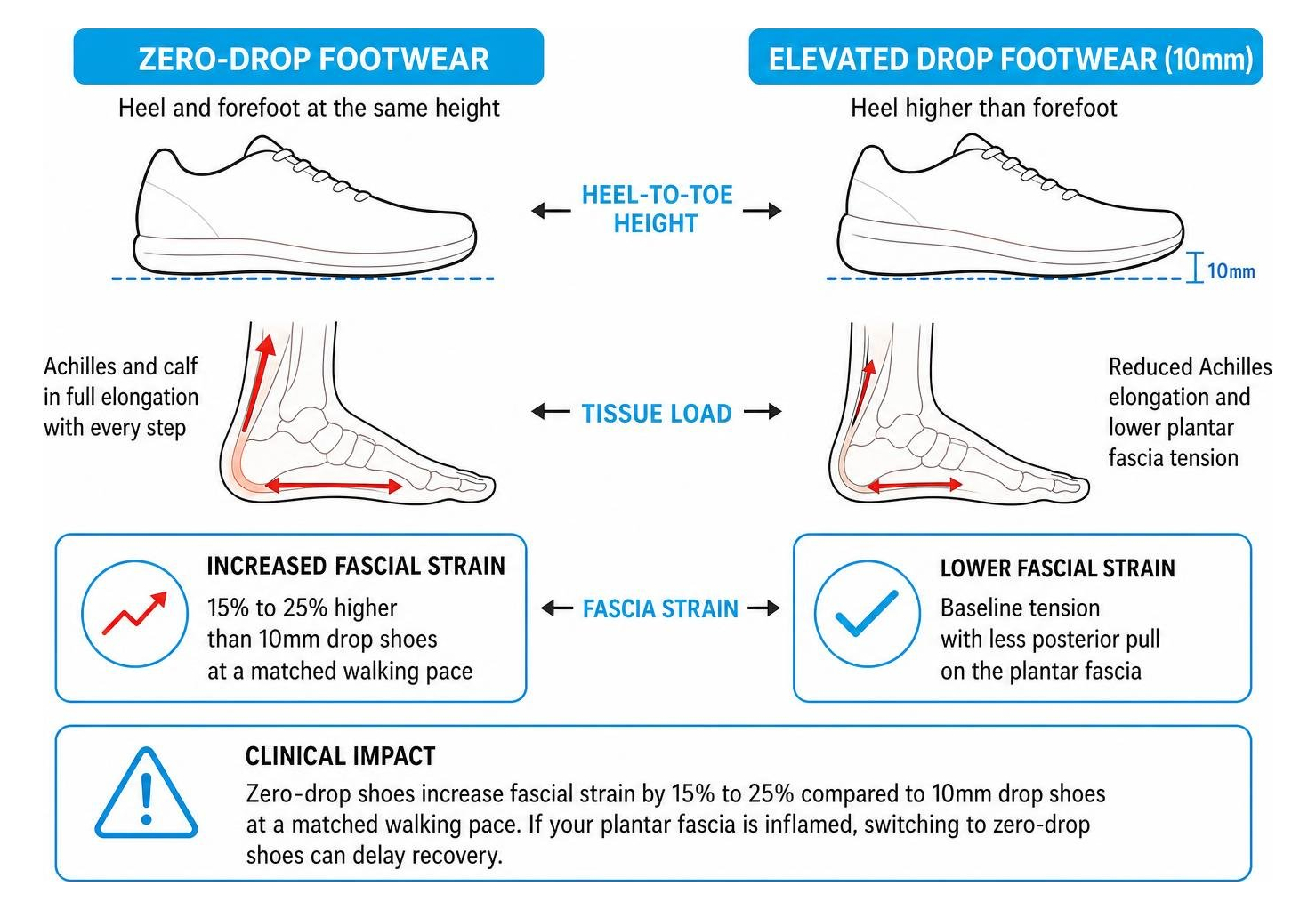
Because the Achilles tendon blends directly into the plantar fascia around the calcaneus, this increased posterior pull transfers straight to the plantar fascia. Biomechanical testing reveals that zero-drop shoes increase fascial strain by 15% to 25% compared to 10mm drop shoes at a matched walking pace. If your fascia is already micro-torn and inflamed, switching abruptly to a zero-drop shoe can delay recovery.
Phased Heel Drop Transition Protocol
If your goal is to transition toward lower-drop or more natural footwear, avoid making the jump while experiencing active heel pain. Follow a structured, phased reduction protocol once your morning pain has fully resolved and your calf flexibility has improved:
| Phase | Duration | Recommended Heel Drop | Clinical Focus & Criteria |
|---|---|---|---|
| Phase 1: Acute Recovery | Weeks 1–8 | 8mm – 12mm drop | Maximize fascial offloading, reduce morning stabbing pain, avoid barefoot walking. |
| Phase 2: Maintenance | Weeks 9–20 | 6mm – 8mm drop | Maintain arch support, begin progressive calf eccentric loading and gentle stretches. |
| Phase 3: Low-Drop Adaptation | Months 5–10 | 4mm – 6mm drop | Transition slowly; only proceed if you are completely pain-free with full ankle dorsiflexion. |
| Phase 4: Natural Footwear | Month 10+ (Optional) | 0mm – 4mm drop | Use only for short, low-intensity sessions; discontinue immediately if heel stiffness returns. |
Recommended Footwear Categories by Daily Use Case
Managing plantar fasciitis requires consistent arch support and heel protection throughout your entire day. Swapping between a supportive running shoe and unsupportive flat casual shoes undermines tissue recovery. To explore well-rounded choices across different styles, browse our breakdown of shoes that are best for plantar fasciitis.
Top Athletic and Walking Picks: The Best Shoes to Wear with Plantar Fasciitis
For daily fitness routines, road walking, or running errands, maximum-cushion trainers with built-in stability deliver the best outcomes. Look for engineered mesh uppers that breathe well while securing the midfoot, paired with rocker-sole profiles that reduce forefoot bending stress.
To explore current high-performing models, check out our 10 best support shoes for plantar fasciitis 2026 expert picks. These models combine supportive medial posts with plush landing zones to cushion heel strike while preventing excess pronation.
Occupational and All-Day Standing Footwear
Workplaces with concrete or tile flooring place immense, unyielding stress on the plantar fascia. Professionals such as healthcare workers, teachers, and service industry staff need shoes designed for continuous standing.
Look for supportive nursing clogs, structured leather oxfords, or slip-resistant duty shoes featuring rigid composite shanks, high heel bevels, and firm polyurethane midsoles. For occupational recommendations that meet work uniform requirements, refer to our dedicated work shoe guide.
Indoor Recovery Slides and Outdoor Trail Footwear
Stepping out of supportive work or running shoes directly onto hard home flooring is a common cause of recurring morning pain. Keep a pair of active recovery slides or structured indoor house shoes right by your bed. Quality recovery slides feature pronounced arch contours and elevated heel profiles that protect your plantar fascia on hardwood and tile.
When venturing off-road, rugged terrain creates uneven ground forces that can suddenly twist the plantar fascia. Choose hiking boots for plantar fasciitis built with supportive ankle collars, rock plates, and rigid torsional shanks to shield your arches over rocky paths.
Footwear Mistakes, Orthotic Integration, and Clinical Care
Recovering from plantar fasciitis requires eliminating hidden lifestyle triggers. The most common footwear missteps include:
- Wearing unsupportive flat flip-flops, worn-out canvas sneakers, or thin ballet flats.
- Keeping athletic shoes past their usable life; midsole foams degrade after 300 to 500 miles of use, losing their shock-absorbing capacity even if the outer tread appears intact.
- Walking barefoot across unyielding surfaces during an active inflammatory flare-up.
For an overview of self-care practices to pair with proper footwear, consult this guide on how to heal plantar fasciitis at home.
Custom Orthotics vs. Over-the-Counter Insoles
If your shoe’s stock insole lacks sufficient structure, aftermarket orthotics can help redistribute plantar pressures.
- Over-the-Counter (OTC) Insoles: High-grade OTC insoles feature semi-rigid plastic arch cradles and deep heel cups. They are cost-effective, readily available, and fit directly into footwear with removable factory sockliners to provide immediate stability.
- Custom Prescription Orthotics: Fabricated by a podiatrist from 3D foot scans or plaster molds, custom orthotics correct severe structural misalignments, fixed foot deformities, or significant leg-length discrepancies.
For most acute cases, pairing a high-quality OTC insole with a structured, supportive shoe provides substantial relief without the high price tag of custom devices.
When to Consult a Podiatrist for Chronic Heel Pain
Most people experience plantar fasciitis at some point in their lives, and the vast majority see it resolve within several months through conservative self-care. However, you should consult a licensed podiatrist if you experience:
- Severe, persistent morning pain that does not improve after 4 to 6 weeks of dedicated footwear changes and stretching.
- Numbness, tingling, or burning sensations radiating into your arch or toes, which may indicate nerve entrapment rather than simple fasciitis.
- Inability to bear full weight on your heel.
Podiatrists utilize diagnostic ultrasound and clinical gait analysis to assess fascial thickness and rule out calcaneal stress fractures or systemic arthritic conditions. It is worth noting that national clinical guidelines advise pursuing conservative interventions first, recommending surgical consultation only after 6 to 12 months of persistent, unresolved symptoms.
Frequently Asked Questions About Plantar Fasciitis Footwear
Are expensive shoes always better for relieving foot pain?
Not necessarily. A high price tag often reflects brand positioning, lightweight upper materials, or specialized carbon plates meant for racing, none of which guarantee arch support. What matters most is the shoe’s structural integrity—specifically torsional rigidity, arch contouring, and an elevated heel drop. An affordable, well-structured shoe will consistently outperform an expensive, flimsy lifestyle sneaker.
Is it safe to walk barefoot at home with active plantar fasciitis?
No. Walking barefoot across hardwood, tile, or laminate flooring forces your bare heel pad to absorb direct impact shocks while placing maximum elongation strain on your plantar fascia. During an active flare-up, avoid barefoot walking entirely. Instead, keep a pair of supportive, cushioned recovery slides or supportive indoor clogs next to your bed to wear around the house.
How much should I size up my shoes to accommodate swelling?
Active plantar fasciitis triggers localized fascial edema and soft-tissue inflammation, often increasing foot width by 3mm to 6mm over baseline. Additionally, gravity-dependent fluid shifts cause overall foot volume to increase by 3% to 8% by late afternoon compared to early morning.
Always shop for shoes in the late afternoon or evening, and ensure there is roughly a thumb’s width of space between your longest toe and the end of the shoe box to comfortably accommodate daily volume changes.
Conclusion
Overcoming plantar fasciitis does not require giving up an active lifestyle. By prioritizing footwear built with solid torsional stability, anatomical arch contours, roomy toe boxes, and an elevated heel drop, you can remove continuous tension from your plantar fascia and give your foot the environment it needs to recover.
Take a close look at your current shoe collection, replace worn-out midsoles, and keep supportive footwear on your feet from morning to night. For a side-by-side assessment of work-ready, highly supportive models tested by our team, explore our comprehensive work footwear comparison.