How to Choose Shoes for Plantar Fasciitis
Look for shoes with firm arch support, cushioning under the heel and forefoot, and a snug heel that does not slip. The shoe should feel stable when you walk, with enough room for your toes. Skip flat, thin-soled shoes if they make your heel pain worse. No single brand is best for every foot; fit and support matter more than the logo.
The right shoes can make daily walking more comfortable, but they are only one part of managing plantar fasciitis. Relief may take days or longer, and stretching or orthotics may also help. This guide explains which features matter, what the evidence says, and how to choose shoes for work, walks, and sports.
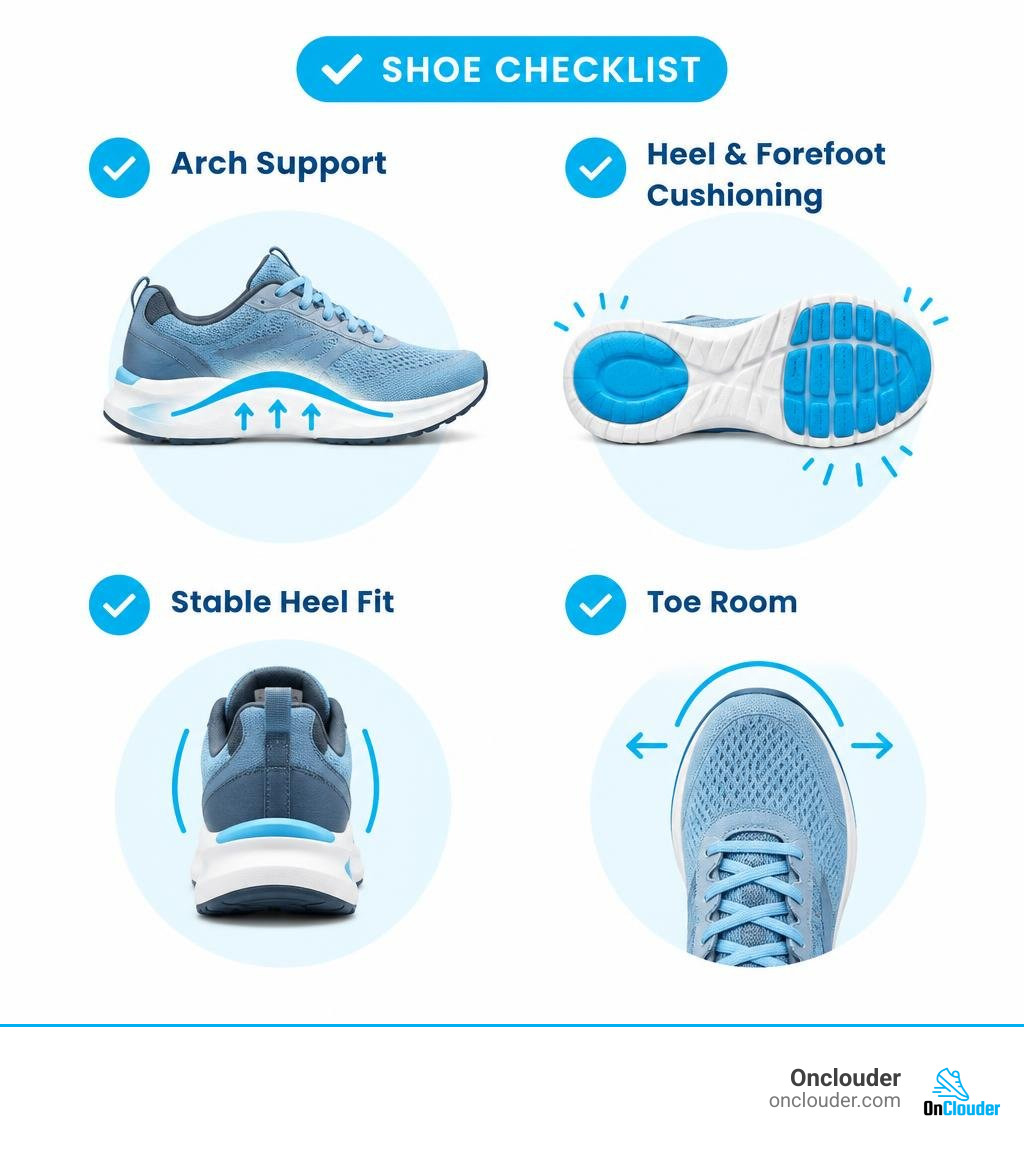
Fasciitis plantar shoes terms explained:
- shoes that are best for plantar fasciitis
- supportive shoes for plantar fasciitis
- plantar fascia orthotic insole
Biomechanics and Key Features of Fasciitis Plantar Shoes
When dealing with sharp heel pain, understanding how footwear interacts with your foot mechanics is the first step toward lasting relief. The plantar fascia is a thick band of connective tissue running along the bottom of your foot, supporting the arch and acting as a primary shock absorber. When footwear lacks structure, this tissue is subjected to repetitive overstretching.
To counteract this strain, high-quality footwear relies on biomechanical alignment. The goal is to minimize excessive pronation and control the movement of the subtalar joint. We evaluate shoes by examining their internal chassis, torsional rigidity, and rearfoot control. A flimsy shoe that can be twisted like a dishcloth will transfer every bit of ground impact directly into your inflamed heel tissue.
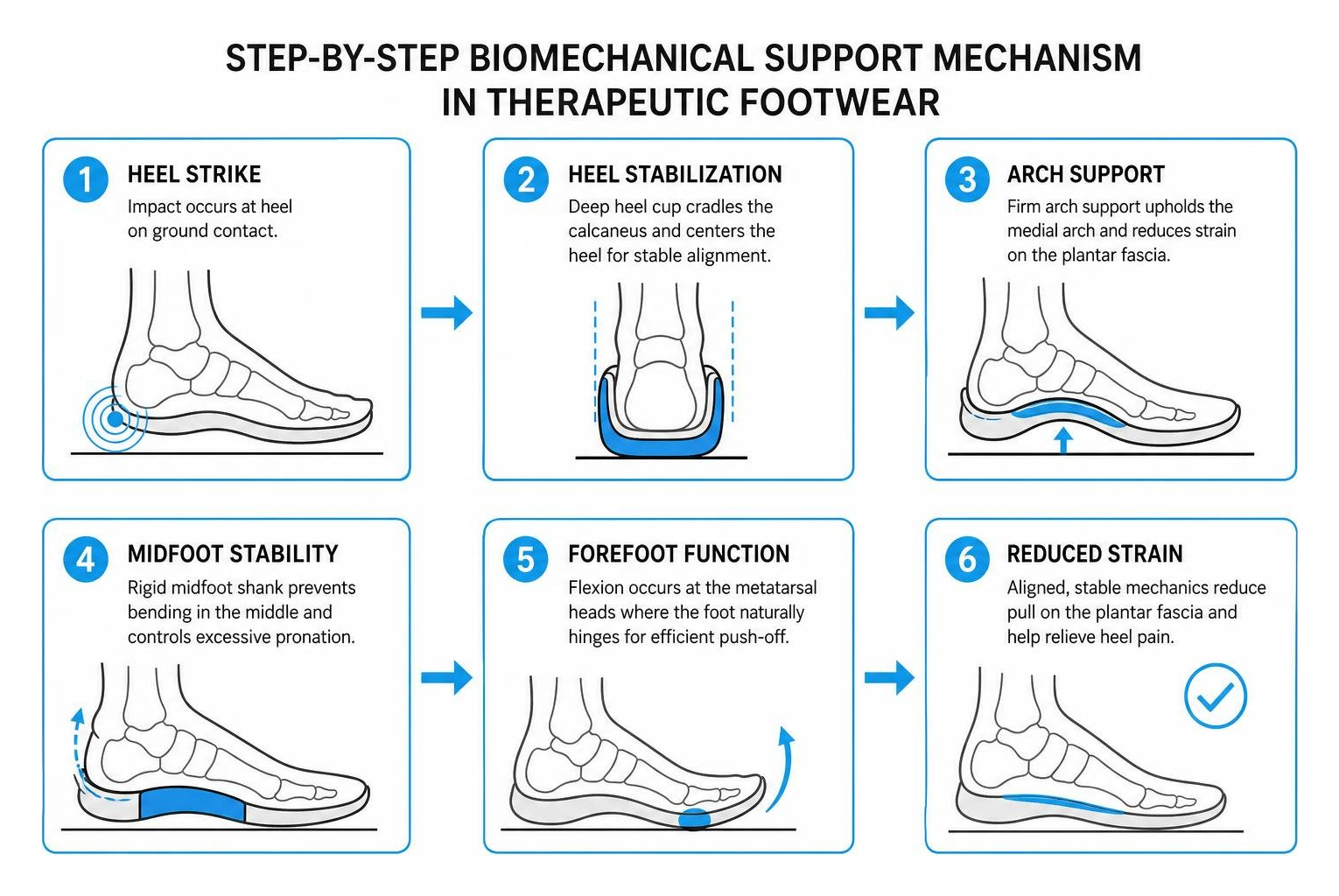
When reviewing our ultimate checklist for plantar fasciitis supportive shoes, we always prioritize three structural elements:
- Rigid Midfoot Shank: A stiff midfoot bridge prevents the shoe from bending in the middle, ensuring flexion happens exclusively at the metatarsal heads where the foot naturally hinges.
- Deep Heel Cup: Encapsulating the calcaneus stabilizes the natural fatty pad of the heel directly beneath the bone, optimizing natural impact absorption.
- Torsional Stability: Resisting horizontal twisting prevents excessive inward rolling (overpronation), which reduces the mechanical pull on the medial insertion of the fascia.
Exploring a comprehensive guide to shoes with good arch support for plantar fasciitis helps narrow down pairs that integrate these structural components seamlessly into daily wear.
Essential Anatomical Support in Fasciitis Plantar Shoes
True support goes beyond soft, squishy foam. A supportive arch contour must maintain its shape under full body weight. For instance, brands like Aetrex engineer their built-in support contours using anatomical data derived from more than 50 million foot scans. This data-driven contouring ensures the apex of the arch support aligns with the medial longitudinal arch.
Proper arch elevation assists the foot’s natural Windlass mechanism. As your big toe extends during the push-off phase of walking, the plantar fascia tightens to turn the foot into a rigid lever. If the arch collapses mid-stride, the fascia endures micro-tears at its calcaneal attachment. By bracing the arch with an anatomical contour, the peak mechanical load on the fascia drops substantially during weight-bearing activities.
Heel-to-Toe Drop and Cushioning Dynamics in Fasciitis Plantar Shoes
The heel-to-toe drop—the height difference between the heel cushion and the forefoot platform—plays a massive biomechanical role in managing foot tension. A moderate drop of 8 to 10 mm elevates the calcaneus slightly, reducing the passive tension placed on the Achilles tendon and the calf complex (gastrocnemius and soleus).
Because the Achilles tendon merges anatomically with the plantar fascia around the calcaneus, decreasing Achilles strain directly offloads the plantar fascia. Zero-drop footwear or flat flip-flops place the fascia on maximum stretch, which frequently aggravates acute inflammation. Pairing a protective drop with targeted rearfoot attenuation—such as the specialized heel engineering found in Asics heel support shoes for plantar fasciitis relief—creates a stable, pain-free platform for daily movement.
Clinical Evidence: Can Therapeutic Footwear Relieve Plantar Fascia Strain?
Scientific literature provides clear insights into the role of specialized footwear for lower-limb relief. According to clinical research on orthopedic footwear for lower-limb conditions reviewed by CADTH [[ADAPTIFYMEDICALCITATION:mcnbk3e9110ba42be:INLINE]], prefabricated orthopedic footwear significantly improves pain scores and physical functioning across various lower-limb and inflammatory conditions [[ADAPTIFYMEDICALCITATION:mcnbk3e9110ba42be:INLINE]]. A meta-analysis cited in the review demonstrated statistically significant foot pain reduction within 30 days to 6 months of transitioning to structured footwear [[ADAPTIFYMEDICALCITATION:mcnbk3e9110ba42be:INLINE]].
Clinical consensus highlights that rocker-bottom soles and prefabricated therapeutic footwear redistribute peak plantar pressures away from vulnerable zones, including the heel and metatarsal heads [[ADAPTIFYMEDICALCITATION:mcnbk3e9110ba42be:INLINE]]. For patients dealing with chronic plantar heel pain, wearing podiatrist approved best shoes for plantar fasciitis serves as a non-invasive mechanical therapy that supports connective tissue healing.
Recovery Timelines and What to Expect
Footwear changes do not cure chronic inflammation overnight. Based on clinical observations and our testing experience, relief typically follows a structured progression:
- Days 1 to 7 (Initial Adaptation): Your foot musculature adapts to the corrected arch profile and restricted torsional flex. Walking may feel noticeably firmer.
- Days 8 to 21 (Reduction in First-Step Morning Pain): As fascial micro-trauma diminishes throughout the day, the sharp “knife-in-the-heel” sensation during morning steps begins to soften.
- Day 30 and Beyond (Functional Recovery): Cumulative strain is reduced, allowing you to walk, stand, and exercise for longer intervals without immediate flare-ups.
To avoid undoing daytime progress, supportive habits should extend into the home. Walking barefoot on hard tile or hardwood floors can re-injure healing tissue. Keeping the comfiest house slides for plantar fasciitis relief right by your bed ensures your feet stay cushioned and supported from the moment you wake up.
Custom Orthotics vs. Built-In Support
Choosing between built-in shoe support and separate inserts depends on your foot anatomy and the severity of your symptoms.
For many individuals, footwear with built-in medial arch contours provides sufficient stability right out of the box. However, if you have severe overpronation, rigid high arches, or need higher weight-capacity support, you may benefit from exploring shoe inserts vs custom orthotics for plantar fasciitis. Heavier individuals often require dense composite materials, such as those covered in our guide on heavy duty insoles for 220 lbs with plantar fasciitis, to prevent premature foam collapse.
Top Footwear Categories and Athletic Performance Needs

Different activities generate vastly different forces through the lower limbs. While walking produces ground reaction forces roughly equal to 1.0 to 1.5 times body weight, high-impact athletic pursuits multiply these demands significantly.
| Footwear Category | Arch Support Profile | Heel-to-Toe Drop | Primary Impact Focus | Ideal Use Case |
|---|---|---|---|---|
| Max-Cushion Road Running | Moderate to High Dynamic | 8–12 mm | Rearfoot to Midfoot | Daily walking, road running, long shifts |
| Indoor Court / Volleyball | High Rigid Lateral Support | 8–10 mm | 100% Forefoot Attenuation | Volleyball, pickleball, racquetball |
| Trail / Hiking Footwear | Stiff Chassis & Shank | 6–10 mm | Torsional & Underfoot Shielding | Uneven terrain, outdoor hiking |
| Recovery Slides / Sandals | Contoured Cradle | 4–8 mm | Direct Plantar Offloading | Post-workout recovery, indoor home use |
Our testing in the 10 best support shoes for plantar fasciitis expert picks highlights how shoes tailored to your specific daily routine yield the best clinical outcomes.
High-Impact Court Sports and Jumping Biomechanics
High-intensity court sports represent the ultimate stress test for the plantar fascia. In volleyball, for example, a player experiences between 50 and 80 jump landings per match. When a 150-pound athlete lands from a 30-inch vertical jump, they generate 1,400 to 1,800 Newtons of ground reaction force—equivalent to 2 to 3 times their body weight—transmitted almost entirely through the forefoot.
Hardwood gym surfaces present a unique challenge because they have a high stiffness coefficient (roughly 95 to 100 kN/m), returning massive impact energy directly into the lower extremity. Clinical data from a podiatric guide to athletic court footwear for plantar fasciitis shows that female high school and collegiate outside hitters experience an annual plantar fasciitis incidence rate of 11% to 14%.
To mitigate these forces, athletic footwear utilizes specialized plate technologies, such as the Mizuno Wave plate. This mechanical wave insert disperses localized forefoot impact forces across the entire midsole plate, preventing acute shock concentrations beneath the metatarsal heads. Combining plate-based dispersion with neuromuscular landing training—such as deeper knee flexion and hip hinge mechanics—has been shown to reduce peak fascial loading by 25% to 38%.
Everyday Walking, Work, and Lifestyle Footwear
For everyday movement and long shifts on hard surfaces, maximal cushioning paired with structured guidance is essential. Many walkers find significant relief using Hoka walking shoes for plantar fasciitis, which combine wide base platforms with smooth rocker geometries that reduce the angle of metatarsal extension.
If your lifestyle involves varied daily routines:
- Athletic Walking: Consider responsive everyday trainers like those in our guide to upgrading your daily walk with Adidas plantar fasciitis footwear.
- Outdoor Adventures: Rocky trails demand reinforced shanks and ankle stability; check out our curated hiking boots for plantar fasciitis to keep your arches stable on uneven ground.
- Warm Weather: Ditch flat summer sandals in favor of contoured alternatives like the best flip flops for plantar fasciitis podiatrists recommend, which feature deep heel cups and molded arch profiles.
Longevity, Replacement Guidelines, and Shoe Maintenance
Even the most supportive therapeutic footwear has an expiration date. Over time, the ethylene-vinyl acetate (EVA) or proprietary polyurethane foam inside the midsole undergoes irreversible structural fatigue (known as compression set).
When midsole foam compresses permanently, it loses its resilience and shock absorption capabilities. As a result, impact forces that were previously absorbed by the shoe are transferred directly into your heels and arches.
Signs that your shoes require replacement include:
- The 300 to 500-Mile Mark: Most athletic and walking shoes lose significant shock absorption capacity within this mileage range.
- Visible Compression Creases: Deep horizontal wrinkles running along the sides of the foam midsole indicate cell collapse.
- Asymmetrical Outsole Wear: Heavy wear patterns on the outer or inner edges of the rubber tread compromise base stability.
- The Table Tilt Test: Place your shoes on a flat table at eye level. If either shoe leans or wobbles when gently tapped, the heel counter and midsole foundation have broken down.
- Return of Morning Heel Pain: A sudden recurrence of mild morning symptoms often serves as an early indicator that your shoe’s internal arch bridge is no longer providing adequate support.
Frequently Asked Questions About Plantar Fasciitis Footwear
What specific features should I prioritize when buying shoes for plantar fasciitis?
Focus on four primary features: a rigid midfoot shank that prevents bending through the center of the shoe, a firm internal heel counter that resists side-to-side pinching, an anatomically contoured arch that maintains its shape under your full body weight, and an 8 to 10 mm heel-to-toe drop to offload the Achilles-fascia complex.
How does a wave plate design protect the plantar fascia during jumping?
A wave plate redistributes vertical ground reaction forces horizontally across the length of the midsole. Rather than allowing impact force to focus solely on the forefoot or heel, the plate spreads energy outward, stabilizing the shoe during high-load landing phases and reducing tensile strain on the plantar fascia.
How often should shoes be replaced to prevent plantar fasciitis flare-ups?
For active walking and running, replace shoes every 300 to 500 miles, or every 6 to 9 months of regular wear. Court sport shoes used on stiff hardwood should be replaced every 4 to 6 months of active play, as rapid jumping quickly degrades forefoot foam cushioning.
Conclusion
Overcoming heel pain requires an intentional approach to your footwear choices. By selecting shoes equipped with rigid torsional support, targeted heel elevation, and resilient arch contours, you create an environment that relieves tension on healing tissue.
At Onclouder, our hands-on testing protocols are built on real-world evaluations to help you make informed decisions for your foot health. Whether you are searching for daily running shoes, indoor recovery slides, or a comprehensive guide to finding the best work shoes for plantar fasciitis, choosing the right footwear is a vital step toward staying active and pain-free throughout 2026.
References
- [[ADAPTIFYMEDICALCITATION:mcnbk3e9110ba42be:REFERENCE]]