How to Choose Walking Sneakers With Arch Support
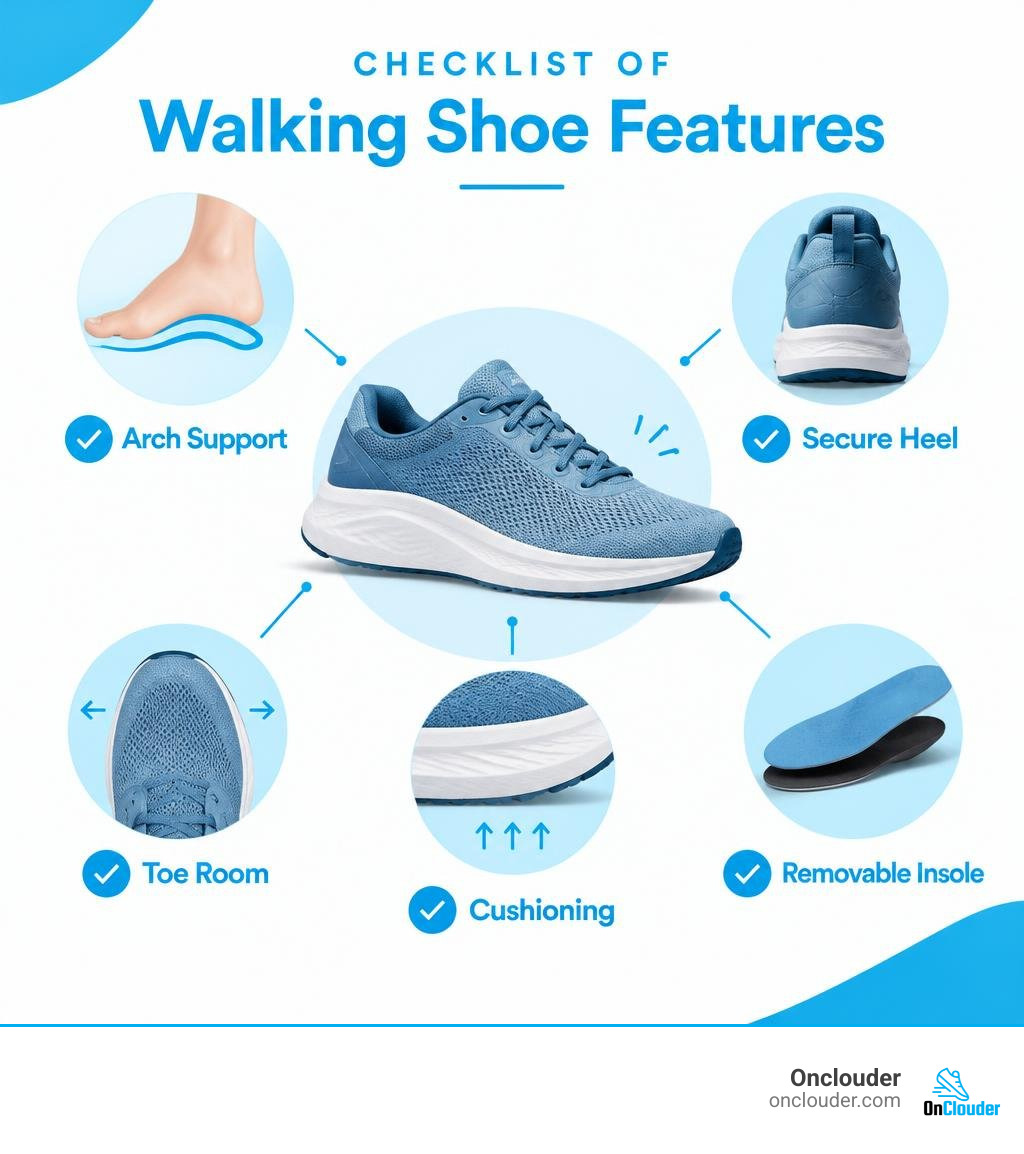
Start with fit, then support. Look for a contoured footbed that feels comfortable under your arch, a secure heel, and enough toe room to walk without rubbing. Cushioning should soften each step without making the shoe feel unsteady. If you use custom orthotics, choose a pair with removable insoles.
The best choice depends on your feet and your walks. A roomy fit may matter more than extra padding if your toes feel cramped. For longer walks, compare cushioning and heel stability as well as arch support. We’ll break down those differences so you can find a pair that feels good beyond the first few steps.
Walking sneakers with arch support definitions:
Key Features of Top Walking Sneakers with Arch Support
When we evaluate walking footwear at Onclouder, we look past flashy exterior designs to analyze how a shoe manages ground impact and body weight. Finding reliable walking sneakers with arch support requires understanding how internal geometry, foam chemistry, and structural stability interact with your feet over thousands of steps.
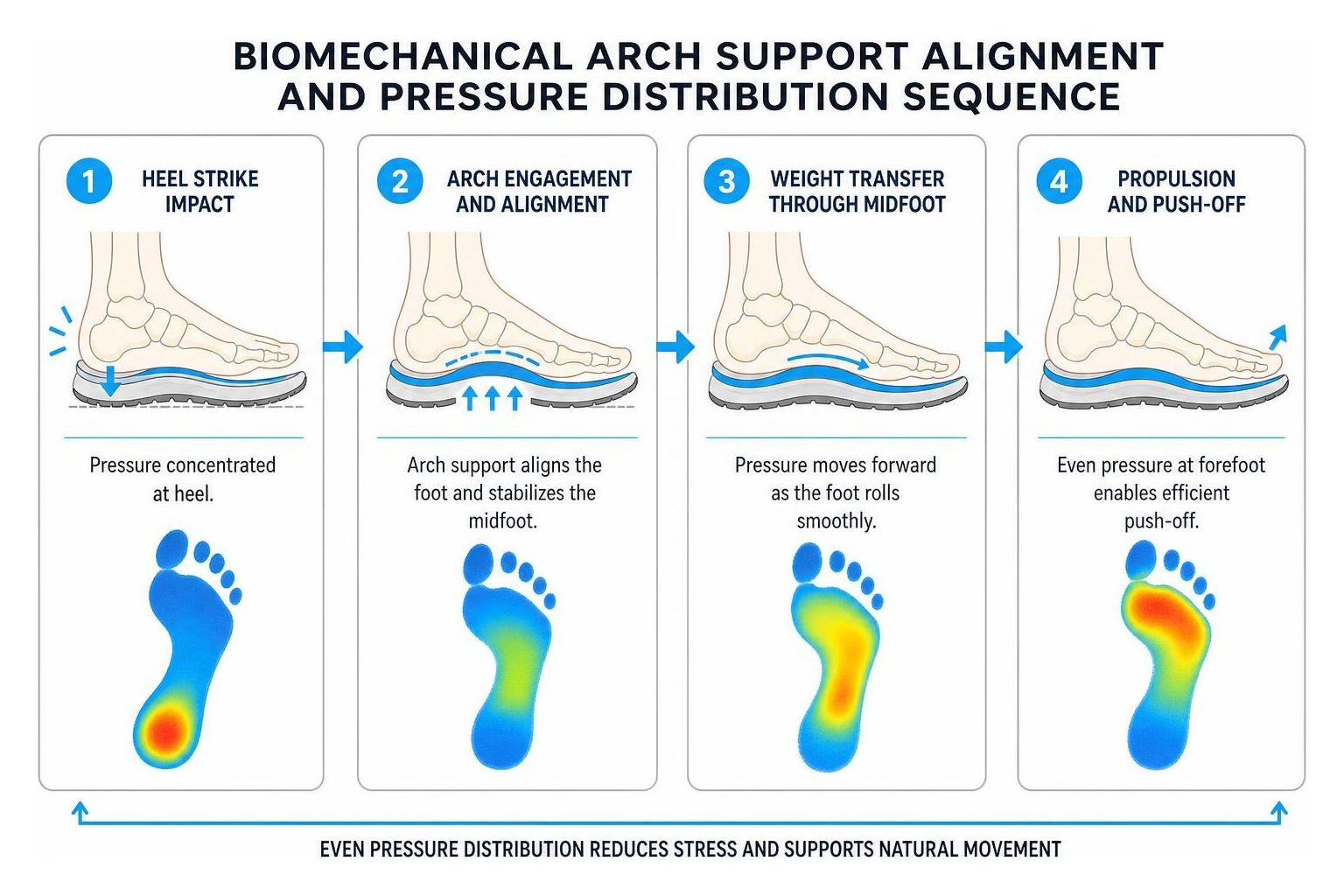
Proper arch support does not simply push upward against your foot; it distributes plantigrade pressure evenly across your entire plantar surface. By stabilizing the tarsal and metatarsal joints, supportive sneakers prevent your arch from collapsing excessively during pronation or absorbing undue shock during high-arched supination.
Footbeds in Walking Sneakers with Arch Support
The foundation of any supportive sneaker lies within its insole architecture. Modern footwear development relies heavily on data-driven design rather than guesswork. For instance, leading manufacturers develop their footbeds using vast digital scan datasets—building contoured systems from over 20 years of research and 120,000 unweighted foot scans, or analyzing data from over 50 million global foot scans.
Key footbed characteristics include:
- Anatomical Contouring: A pre-molded arch curve that mirrors the natural foot contour to disperse downward pressure away from the heel and ball of the foot.
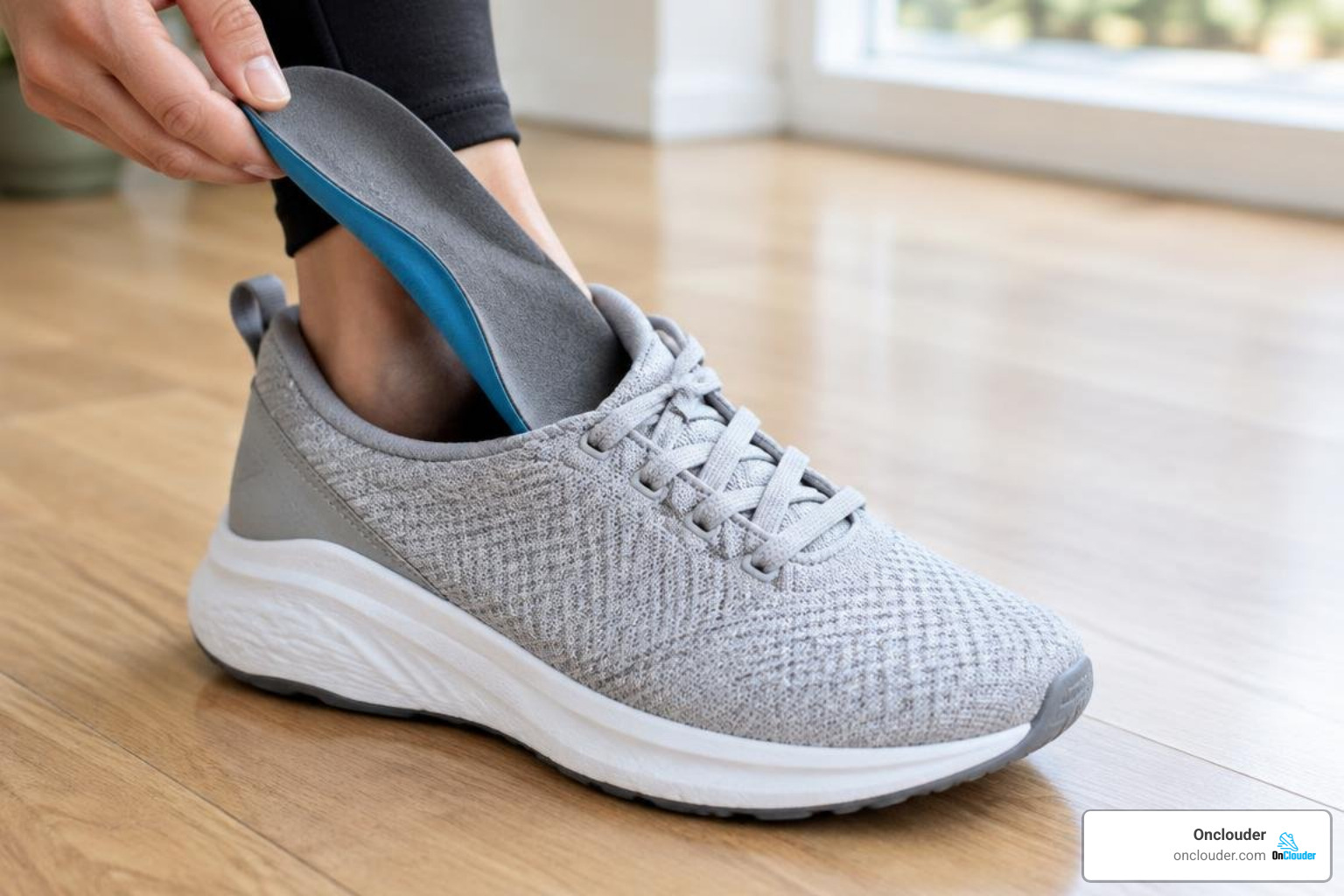
- Removable Insoles: A shoe with a removable footbed lets you easily swap in customized orthotics. If you want to customize your existing footwear, exploring our best arch support shoe insoles guide will help you identify the right inserts.
- Deep Heel Cups: By cradling the calcaneus, deep heel cups maintain the natural fatty pad of the heel directly under the bone, absorbing impact naturally.
Cushioning Technology in Walking Sneakers
Cushioning must strike a delicate balance between impact dampening and dynamic energy return. If a midsole is overly plush, your stabilizer muscles work overtime to keep you balanced, resulting in premature foot fatigue.
Midsole foams address this by varying their density and resilience:
- High-Rebound Responsive Foams: Lightweight, responsive foams engineered for high rebound without packing down over long mileage.
- High-Density Cushioning Foams: Formulated to offer soft cushioning while maintaining structural integrity under sustained pressure.
- Nitrogen-Infused Compounds & Carbon Infusions: Found in advanced performance walkers, these compounds maximize energy return while keeping overall shoe weight exceptionally low.
- Rocker Geometries: Curved sole profiles adapt dynamically to your natural stride, smoothing the transition from heel strike to toe-off.
Foot-Health Certification and Independent Reviews
Independent validation provides peace of mind when choosing footwear for daily pain relief. The most recognized benchmark in podiatric footwear is the American Podiatric Medical Association (APMA) Seal of Acceptance. This certification is awarded only after a panel of practicing podiatrists thoroughly reviews the shoe’s structural build, stability testing, and biomechanical safety.
Finding verified footwear is crucial for addressing acute foot conditions. If you experience sharp heel pain during your morning steps, our curated guide on shoes with good arch support for plantar fasciitis details the structural stiffness and heel cushioning required to soothe inflamed plantar tissue.
Comparing the Best Models for Daily Walking
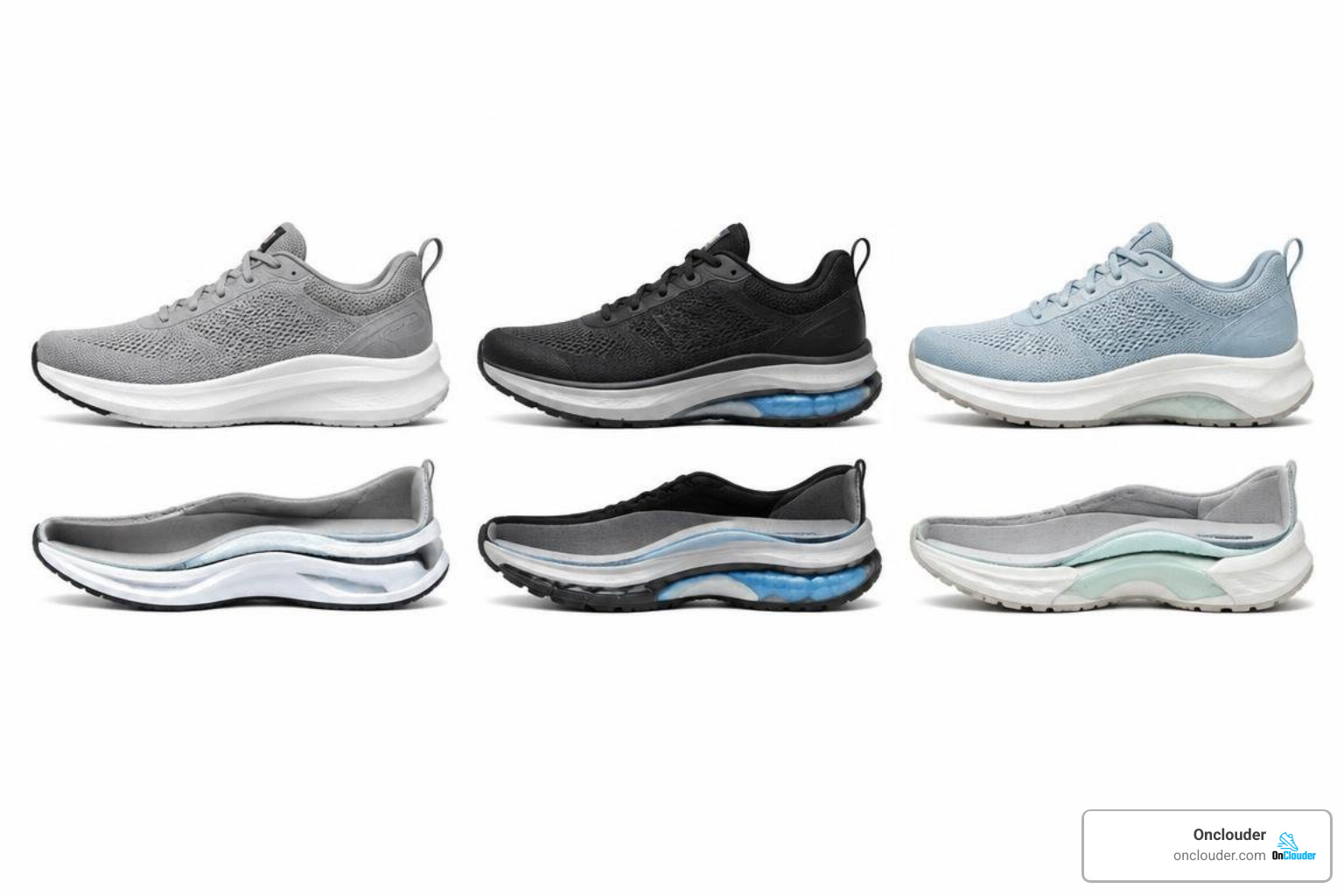
To help you choose the right model for your specific routine, we have compared three distinct walking sneaker categories designed for varying arch needs, fit preferences, and walking distances.
| Feature / Category | Maximum-Cushioning Arch-Support Sneaker | Relaxed-Fit Arch-Support Sneaker | Anatomical Arch-Support Sneaker |
|---|---|---|---|
| Arch Technology | Podiatrist-Certified Arch System (120k Scans) | Podiatrist-Certified Arch System (120k Scans) | Biomechanical Orthotic System (50M+ Scans) |
| Midsole Cushion | Max Cushioning + Responsive Foam | Lightweight Responsive Cushioning | Lightweight Orthotic Foam |
| Heel Height | ~2.0 inches (5.0 cm) | ~1.75 inches (4.5 cm) | ~1.1 inches (2.8 cm) |
| Closure Type | No-Tie Stretch Laces | Relaxed Bungee / No-Tie Fit | Traditional Adjustable Lacing |
| Upper Material | Engineered Breathable Knit (Vegan) | Relaxed Fit Vegan Knit Mesh | Breathable Athletic Mesh |
| Washability | Machine Washable | Machine Washable | Machine Washable |
| Price Point | ~$74.99 – $100.00 | ~$69.88 – $110.00 | ~$149.95 |
| Best For | High-impact walking & maximum joint relief | Everyday casual wear & wider forefeet | Plantar fasciitis & medical orthotic support |
Maximum-Cushioning Arch-Support Walking Sneaker
The Maximum-Cushioning Arch-Support Walking Sneaker combines maximum impact protection with clinical arch support. Featuring an elevated 2-inch heel stack, this design reduces tension along the Achilles tendon and calf muscles during long walks on hard concrete.
Its midsole pairs responsive lightweight foam with dynamic rocker technology, creating an effortless forward roll through every stride. Built with 100% vegan materials and convenient No-Tie Fit laces that never come undone, this shoe holds podiatric acceptance and delivers dependable shock reduction for high-mileage walkers.
Relaxed-Fit Arch-Support Walking Sneaker
For walkers who want reliable arch structure without a constricting upper, the Relaxed-Fit Arch-Support Walking Sneaker is built with extra room across the toe box and forefoot.
Its breathable knit construction and responsive midsole cushioning pair with an APMA-accepted contoured insole system to deliver all-day comfort for busy daily routines and long retail shifts.
Anatomical Arch-Support Walking Sneaker
The Anatomical Arch-Support Walking Sneaker takes a medical-grade approach to everyday walking. Designed with insights from over 50 million foot scans, it features proprietary orthotic technology placed strategically to offload pressure from the heel and metatarsals.
With an accessible 1.1-inch heel height, lightweight supportive cushioning, and built-in antimicrobial protection, this design provides targeted support for walkers managing bunions, arch strain, or metatarsalgia. If you’re exploring similar supportive designs tailored for women, browse our dedicated collection of womens sneakers with arch support.
Choosing Walking Sneakers with Arch Support by Foot Type
Selecting the right walking sneaker requires matching the shoe’s structure to your specific arch profile and gait pattern:
- High Arches (Underpronation / Supination): High arches place excessive pressure on the heel and ball of the foot while leaving the middle arch suspended. Look for shoes with tall, contoured arch bridges and soft cushioning to disperse shock. Read our recommendations for supportive sneakers for high arches to find models with targeted midfoot contact.
- Flat Feet (Overpronation): Flat or fallen arches cause the ankles to roll inward during gait cycles, straining the knees and hips. Opt for firm medial support, deep heel cups, and broad outsoles. Explore our curated list of sneakers designed specifically for flat feet for enhanced motion control.
- Neutral Arches: Walkers with neutral arches benefit from balanced, semi-curved footbeds and standard cushioning that promote natural foot mechanics without excessive rigidity.
Fit, Width, and Maintenance Guide
A sneaker can feature world-class arch geometry, but if the upper squeezes your forefoot or lets your heel slip, you will quickly develop hot spots and blisters. A proper walking fit requires a thumb’s width of space between your longest toe and the end of the shoe, alongside a snug midfoot wrap that anchors your arch over the contoured footbed.
Sizing for Medium, Wide, and Extra-Wide Feet
Foot widths vary significantly, and choosing the right width is essential for proper arch alignment:
- Medium (D Men’s / B Women’s): Standard fit suitable for typical foot proportions.
- Wide (2E Men’s / D Women’s): Ideal for walkers needing extra room across the metatarsal heads. Specialized wide-fit models pair generous width with responsive, high-rebound foam.
- Extra-Wide (4E Men’s / 2E+ Women’s): Essential for broad feet, high insteps, or bunions. Extra-wide designs allow toes to splay naturally without spilling over the midsole base.
Machine-Washable Sneakers and Proper Shoe Care
Many modern walking sneakers feature machine-washable construction, making post-walk cleanup simple:
- Remove Insoles: Always take out removable arch-support insoles before washing to preserve their molded shape and foam density.
- Pre-Treat Debris: Brush off excess dried mud and dirt from the outsole tread.
- Gentle Cycle: Wash your sneakers in a mesh laundry bag using cold water and mild detergent on a gentle spin cycle.
- Air Dry Only: Never place your shoes in a high-heat machine dryer, as extreme heat can warp the arch shanks, melt bonding adhesives, and shrink knit uppers. Allow them to air-dry thoroughly away from direct sunlight.
Frequently Asked Questions About Walking Footwear
What makes a foot-health seal of acceptance important for walking shoes?
The APMA Seal of Acceptance confirms that a footwear model has undergone objective clinical evaluation by a committee of licensed podiatric physicians. Rather than relying on self-declared marketing terms like “orthopedic,” this certification ensures the shoe maintains safe biomechanical alignment, stable torsional stiffness, and effective pressure distribution.
How do different arch-support technologies differ?
Arch-support designs vary based on their engineering focus and construction:
- Molded Mass-Scan Systems: Utilize data from over 120,000 foot scans to build a gentle, universal arch contour that molds gradually to the wearer’s foot via body heat and pressure.
- Targeted Biomechanical Orthotics: Feature firm posting near the calcaneus and plantar fascia origin to directly offload tension from the heel spur area and metatarsal heads.
- Dynamic Rocker Systems: Combine contoured midsoles with curved rocker profiles to guide the foot forward, reducing the muscular effort required by the arch during toe-off.
How much should you spend on arch support walking shoes?
Expect to spend between $60 and $150 for high-quality walking sneakers with verified arch support:
- Budget-Friendly ($60 – $85): Reliable everyday walking shoes with proven contoured insoles, machine-washable uppers, and standard EVA foam midsoles.
- Mid-Range ($85 – $120): Advanced responsive foams, APMA certifications, engineered breathability, and hands-free lacing features.
- Premium ($120 – $160+): Medical-grade orthotic systems, carbon-infused plates, specialized rocker geometry, or premium materials tailored for chronic foot pain relief.
Conclusion
Finding the right walking footwear transforms daily steps from a painful chore into an enjoyable routine. By prioritizing data-backed footbeds, responsive cushioning, and correct sizing widths, you protect your joints and keep arch fatigue at bay across every mile.
For an in-depth breakdown of supportive footwear across various activities, read our ultimate guide to best shoes with arch support to find the perfect pair for your walking routine.