How Support Shoes Can Help Plantar Fasciitis
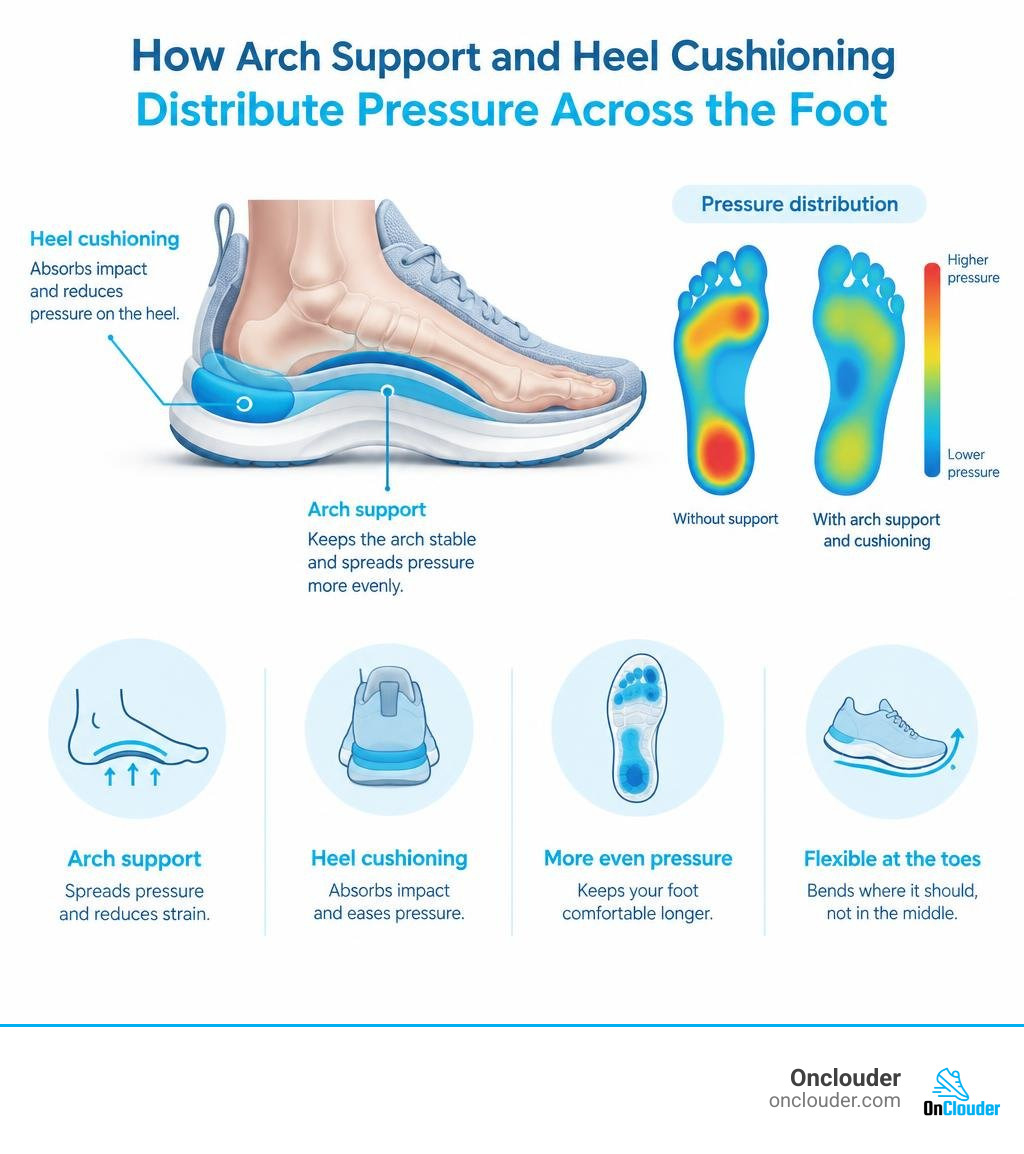
Choose shoes with firm arch support, a stable heel, enough cushioning, and a fit that keeps your foot from sliding. The shoe should bend near your toes, not fold easily through the middle. These features can reduce strain on the plantar fascia, the band of tissue along the bottom of your foot.
Supportive shoes may ease heel pain during walks, workouts, and long days on your feet. They are not a cure on their own, and the best fit matters more than the brand name. This guide will help you compare shoe features, including rocker soles, and know when to seek care.
Support shoes plantar fasciitis terms made easy:
- shoes that are best for plantar fasciitis
- supportive shoes for plantar fasciitis
- shoes with good arch support for plantar fasciitis
Essential Features of Support Shoes for Plantar Fasciitis
When you are dealing with that sharp, stabbing sensation in the base of your heel, the right footwear changes everything. The plantar fascia acts like a bowstring across the bottom of your foot, absorbing tension every time your heel hits the ground. When that tissue is overworked, micro-tears develop, leading to inflammation and acute discomfort.
Finding proper footwear requires looking beyond plush padding. The cornerstone of genuine relief is a firm, anatomically shaped arch contour. Premium orthopedic footwear utilizes real-world biomechanical data—in some cases derived from more than 50 million foot scans—to map an arch profile that mimics the foot’s natural resting posture. This structured support prevents the arch from collapsing under full body weight, taking immediate mechanical load off the plantar fascia.
Beyond arch contouring, a supportive shoe must include:
- A Deep Heel Cup: Cups the calcaneus (heel bone), stabilizing your natural fatty pad beneath the heel to maximize its innate shock-absorbing capabilities.
- Motion Control and Midsole Stability: Prevents excessive inward rolling (overpronation), which is a primary biomechanical driver of plantar fascia strain.
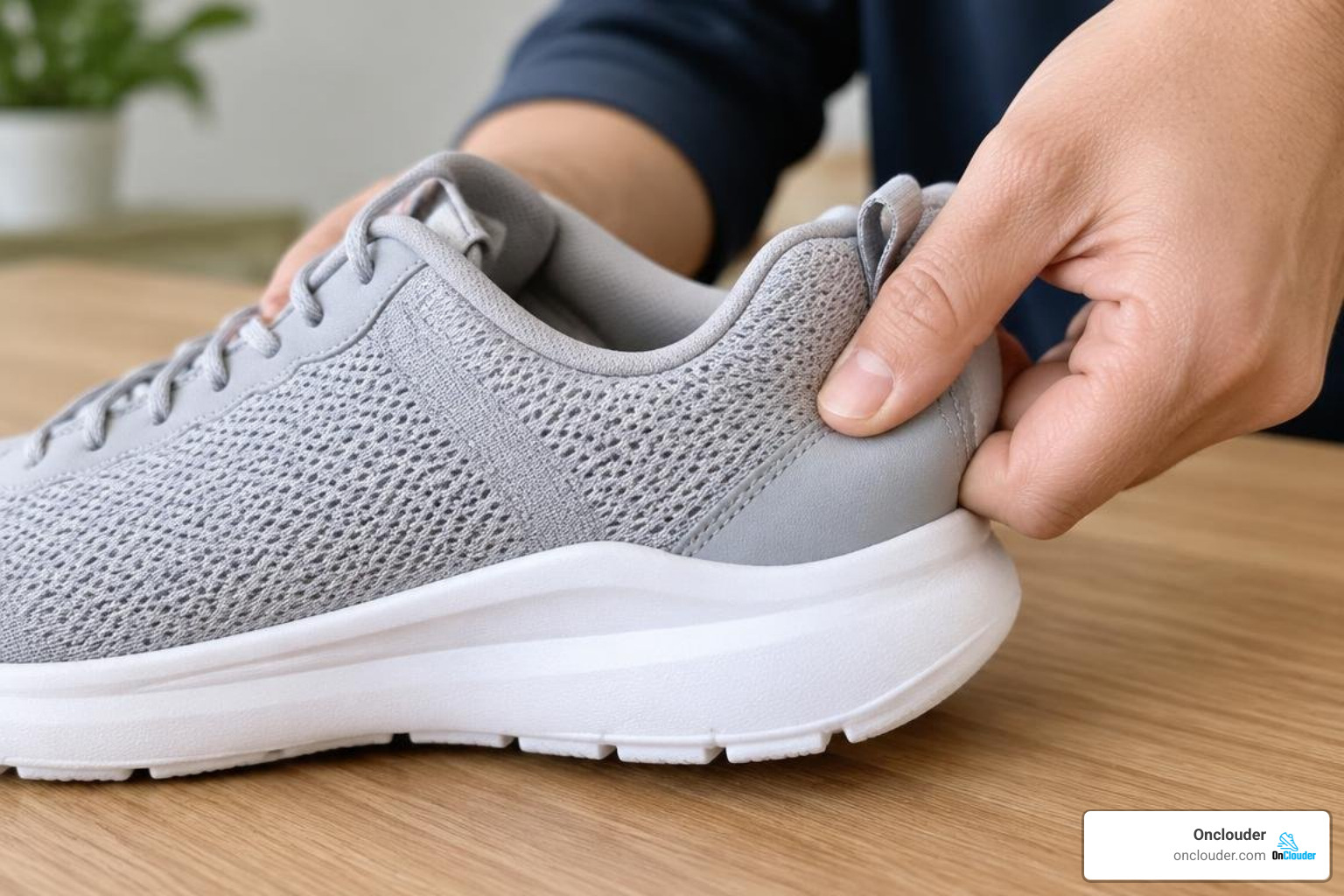
- A Rigid Heel Counter: The back of the shoe surrounding your heel must remain firm when squeezed from the sides. If the heel collar easily squishes down, it will not prevent ankle wobble.
For a step-by-step breakdown of must-have features before you make a purchase, check out our ultimate checklist for supportive footwear to ensure your next pair meets every orthopedic standard. To better understand how structure influences alignment, browse our comprehensive arch support guide.
Evaluating Cushioning and Flexibility in Support Shoes for Plantar Fasciitis
Many people mistakenly assume the best shoe for foot pain is the softest shoe available. In reality, walking on a cloud of unstructured foam causes the foot to work harder to maintain balance, fatiguing the intrinsic muscles and placing extra strain on the plantar fascia.
The golden rule of shoe testing is checking both torsional rigidity and the flex point:
- The Twist Test (Torsional Rigidity): Grab the shoe at the heel and the toe box, then twist in opposite directions. The shoe should resist twisting through the midfoot shank. If it wrings out like a wet towel, it lacks the structure needed to protect your arch.
- The Bend Test (Flex Point): Place the shoe on a flat surface and push down on the toe. The shoe should bend exclusively at the forefoot (where your toes naturally bend during push-off). It should never fold in half across the arch.
To absorb heel strikes without sacrificing structural integrity, look for shoes with dual-density midsoles. These combine dense, supportive foam around the arch with targeted, energy-returning cushioning directly beneath the heel and forefoot. You can explore our curated selections in our overview of podiatrist-approved shoe characteristics.
Arch Support vs. Rocker Bottom Soles: Biomechanics and Relief
Two primary footwear designs dominate the conversation around foot pain management: traditional structured arch support shoes and rocker bottom shoes. Both aim to reduce plantar tension, but they achieve this through different mechanical approaches.
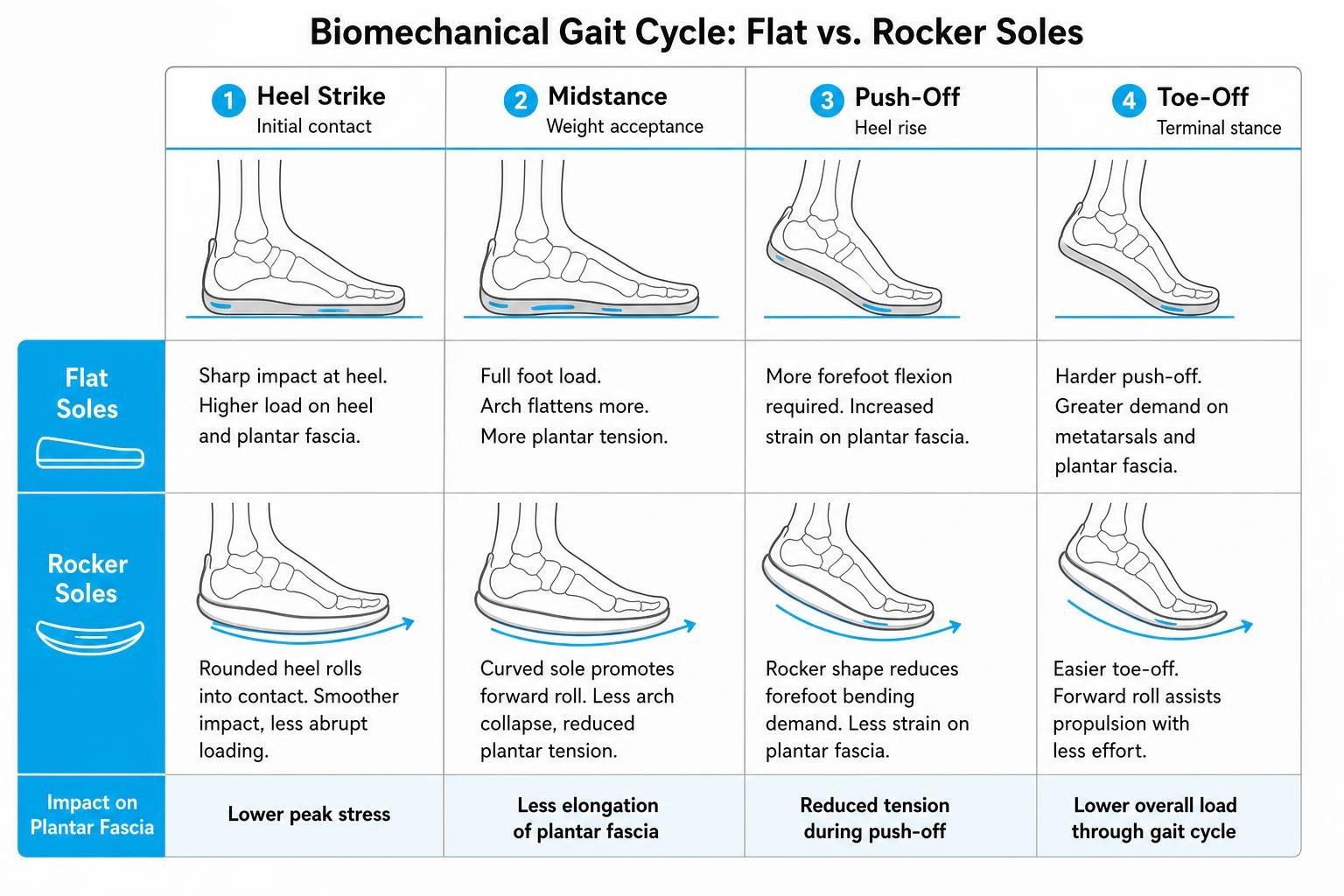
Traditional arch support shoes stabilize the foot internally, holding the skeletal structure in neutral alignment to limit the elongation of the plantar fascia. In contrast, rocker bottom shoes feature a thick, curved sole (often praised by clinicians and highlighted in guides like podiatrist reviews of rocker bottom footwear). This rounded sole rolls your foot smoothly from heel strike to toe-off, mechanically reducing the amount of flex required by the metatarsal joints and the plantar fascia.
| Feature / Metric | Traditional Arch Support Footwear | Rocker Bottom Footwear |
|---|---|---|
| Primary Mechanism | Internal contouring & arch stabilization | External curved sole rolling through gait |
| Plantar Fascia Load | Prevents excessive arch flattening | Reduces tensile load during toe-off |
| Joint Motion Required | Standard metatarsal flex | Decreased big toe & forefoot extension |
| Midsole Flexibility | Rigid midfoot, flexible forefoot | Rigid throughout entire platform |
| Adaptation Period | Immediate comfort for most walkers | 1 to 2 weeks for calf and balance adjustment |
| Best For | Standing, lateral movement, pronation | Forward walking, running, severe joint stiffness |
Pros and Cons of Rocker Soles for Heel Pain
Rocker soles can be game-changers for chronic heel pain sufferers, but they are not a one-size-fits-all solution.
The Pros:
- Offloads Forefoot and Heel Pressure: The continuous rolling curve disperses impact evenly across the gait cycle, preventing peak pressure spikes at the heel strike.
- Reduces the Windlass Effect: By limiting how far your toes must bend upward during push-off, rocker soles prevent the plantar fascia from over-tightening.
- Eases Joint Strain: Reduces the range of motion required at the ankle and metatarsophalangeal joints, offering relief for those with concurrent arthritis or Achilles tightness.
The Cons:
- Decreased Lateral Stability: Because of the curved base and elevated stack height, quick side-to-side movements can feel unstable.
- Altered Muscle Recruitment: Rocker soles change the workload of the lower leg, which can temporarily fatigue unused calf muscles and the Achilles tendon.
- Not Ideal for Heavy Standing: When standing stationary, the curve can require slight, continuous balance adjustments compared to a flat, stable platform.
Choosing Rocker Bottom or Arch Support Shoes for Plantar Fasciitis
To choose the right profile, analyze your daily movement patterns and arch type. If you have flat feet, flexible arches, or need to accommodate custom orthotics, a shoe with removable insoles and classic internal stability is often the safer, more customizable choice. Look into our breakdown of shoes with superior arch support to explore options with spacious footbeds.
Conversely, if you have rigid, high arches that struggle with shock absorption, or if you spend hours engaged in forward-striding walks and runs, a rocker-sole shoe can significantly reduce the mechanical fatigue of your gait.
Top Footwear Categories and Recommended Models for Heel Pain
Finding the right shoe depends largely on the context of your day. We test dozens of models in our lab and on the road to evaluate how different designs perform under real-world conditions. You can check our detailed expert picks for supportive footwear or see our full rankings of the best overall shoes for plantar fasciitis.
Daily Walking and Running Shoes
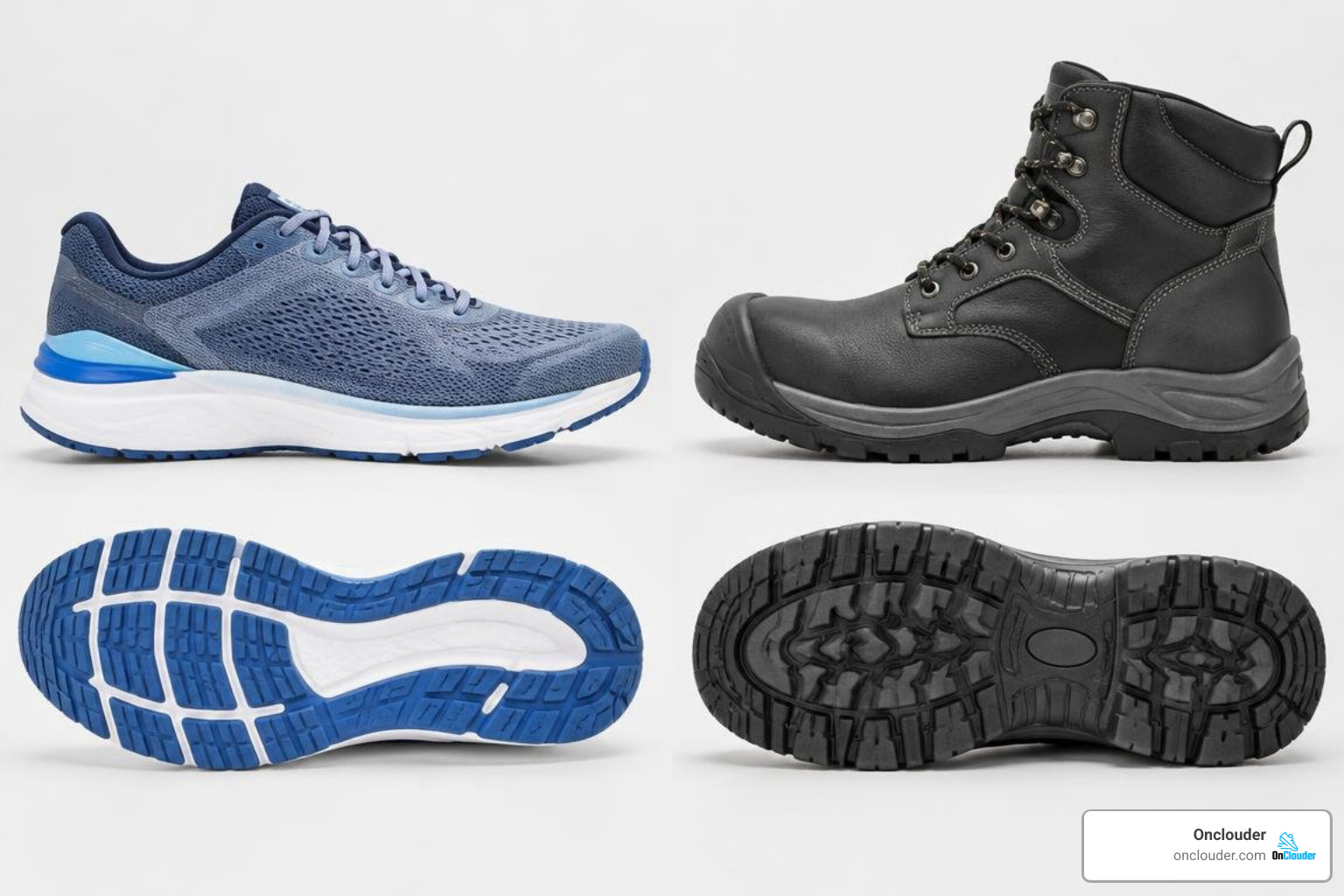
For active daily use, running and walking shoes provide the advanced foam technologies necessary for impact reduction.
- Maximum Cushion with Rocker Geometries: Models featuring high-stack, plush foams paired with early-stage rocker profiles—such as the New Balance Fresh Foam X More v4 or specific high-cushion styles—provide immense relief during long road walks. If you favor smooth roll-through transitions, take a look at our podiatrist-recommended Hoka shoes for plantar fasciitis.
- Targeted Heel Decoupling and Support: If you experience severe heel-strike pain, shoes with dedicated gel units or dual-density posting help dampen shock immediately upon ground contact. Learn more in our review of ASICS heel support shoes.
- Everyday Men’s Profiles: Men seeking broader toe boxes and stiffer midfoot shanks can explore men’s supportive footwear recommendations to find shoes that handle higher impact loads.
Occupational and Standing Footwear
Standing on unyielding concrete or hardwood floors for eight to twelve hours poses a severe challenge for plantar fasciitis. When you stand stationary, your plantar fascia remains under continuous, static tensile load without the dynamic pumping action of walking to circulate blood flow.
Occupational footwear must prioritize:
- A stable, slip-resistant outsole that avoids excessive rocker curvature to prevent balance fatigue.
- A firm midsole shank that will not compress flat by the end of an eight-hour shift.
- Spacious toe boxes that allow toes to splay naturally without pinching the metatarsals.
For medical professionals, hospitality workers, and tradespeople, check out our supportive occupational footwear guide for slip-resistant, all-day options designed specifically for hard surfaces.
Pain Relief Timelines and When to See a Podiatrist
Switching to proper footwear is one of the most effective mechanical interventions for heel pain, but patience is essential. Soft tissue healing takes time.
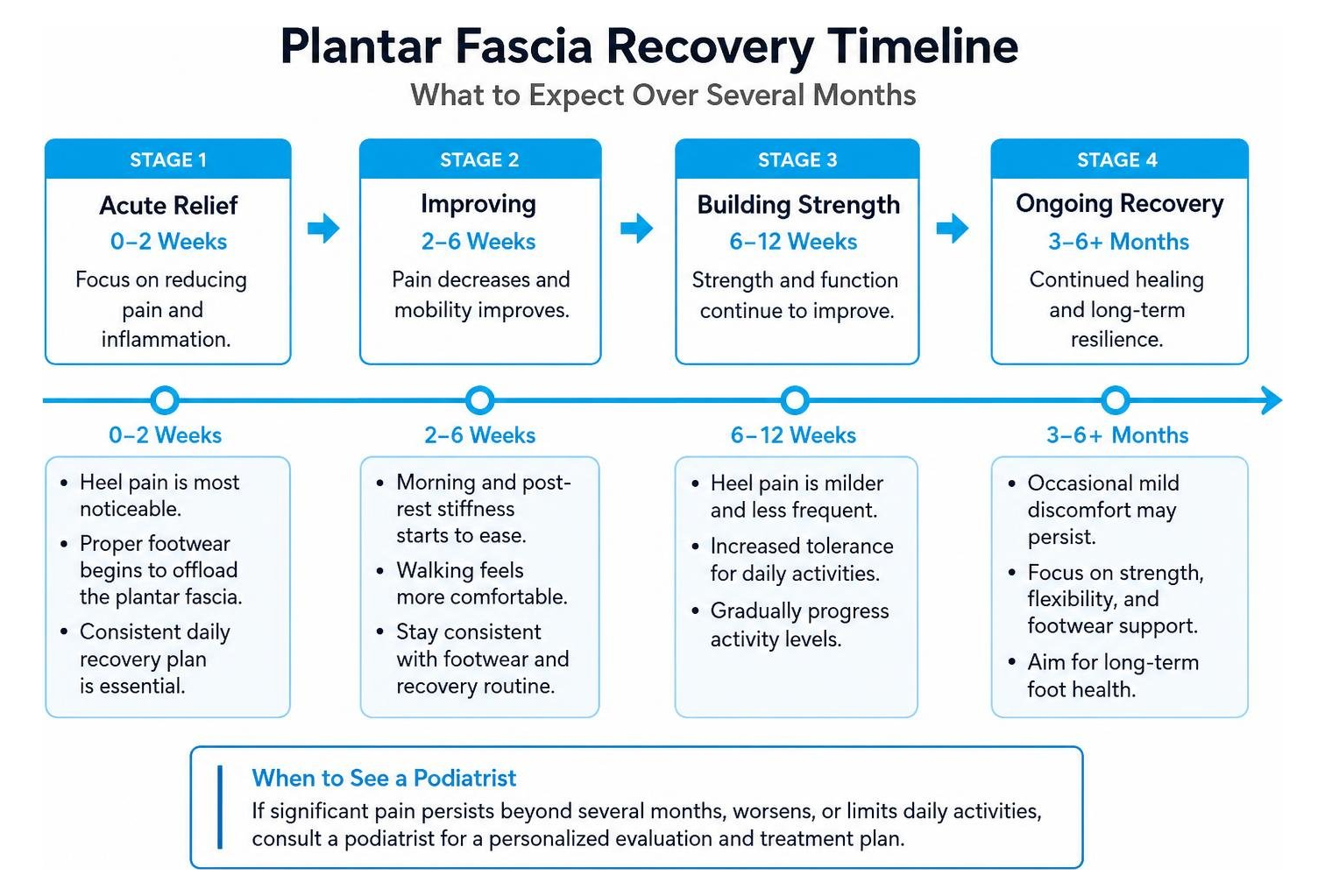
Maintaining foot health is essential for overall longevity. Research demonstrates that achieving just one or two moderate- to vigorous-intensity activity sessions per week can reduce your risk of cardiovascular disease mortality by 40%, cancer mortality by 18%, and all-cause mortality by 30%. Pain-free feet are the vehicle that keeps you active enough to reap those life-saving benefits.
Comprehensive Recovery Protocol
Footwear should be the foundation of a broader daily recovery plan:
- Gentle Morning Stretching: Before getting out of bed, loop a towel around your forefoot and gently pull back toward your shin with your knee straight to stretch the plantar fascia and Achilles tendon.
- Calf Foam Rolling: Tight gastrocnemius and soleus muscles directly increase pull on the calcaneus.
- Night Splints: For severe morning stiffness, a night splint holds your foot in a gentle dorsiflexed position overnight, preventing the tissue from healing in a contracted state.
When to Consult a Medical Professional
While supportive footwear provides noticeable symptom relief, you should consult a licensed podiatrist or orthopedist if:
- Heel pain remains sharp, severe, or unchanged after 4 to 6 weeks of wearing supportive footwear.
- You experience numbness, tingling, or a burning sensation (which can indicate nerve entrapment such as Tarsal Tunnel Syndrome).
- Your pain is present even during non-weight-bearing rest or disrupts your sleep at night.
- You notice visible swelling, redness, or heat radiating from the heel bone.
A podiatrist can perform diagnostic ultrasound or X-rays to check for plantar fascia tears or calcaneal spurs, prescribe custom orthotics, or recommend targeted physical therapy and shockwave interventions.
Frequently Asked Questions about Plantar Fasciitis Footwear
Can supportive shoes alone cure plantar fasciitis?
No single shoe is a standalone cure. Plantar fasciitis is an inflammatory and degenerative condition caused by biomechanical strain, muscle tightness, and tissue fatigue. Supportive footwear offloads tension so your tissues can rest, but permanent recovery requires stretching, strengthening the lower leg, and managing overall activity.
How quickly will I experience relief after switching footwear?
Most people experience immediate comfort and a reduction in sharp heel pressure upon slipping into a properly structured shoe. However, resolving the underlying inflammation and tissue micro-tears typically takes between 4 and 12 weeks of consistent support. Wearing unsupportive shoes or walking barefoot at home can undo days of progress.
Why do flat shoes and flip-flops worsen morning heel pain?
Thin, flat shoes offer zero arch elevation and zero torsional rigidity. When you walk flat-footed, the foot overpronates, stretching the plantar fascia to its absolute limit across the arch. This triggers micro-tears at the heel insertion point, leading to severe inflammation that tightens overnight and causes agonizing first steps the next morning.
Conclusion
Plantar fasciitis can make every step feel like walking on hot needles, but you do not have to accept chronic heel pain as your daily reality. By choosing footwear with rigid torsional stability, an anatomically contoured arch, a deep heel cup, and the right balance of responsive cushioning, you can dramatically reduce strain across your foot and get back to moving comfortably.
At Onclouder, our mission is to eliminate the guesswork from finding footwear that works. We test the shoes ourselves to provide transparent, biomechanically sound recommendations. If you are ready to find your next pair, read our comprehensive comparison of supportive work and walking shoes to step back into comfort today.