
Key Technologies in Adidas Long Run Shoes
For high-mileage training, the Adizero Boston 12 is our top pick for long tempo and progression runs, while the Adizero Adios Pro 3 is the best choice for marathon race day and fast pace blocks. Runners who want maximum impact protection on easy long runs should look to the Adistar 2.0, and the Ultraboost Light is a durable cruiser for steady everyday miles. When training for half marathons or 26.2-mile races in October 2026, the gear under your feet dictates how your legs hold up past mile sixteen. Over a decade of hands-on testing has shown us that the Three Stripes brand builds high-mileage footwear around a distinct blend of resilient foams, structural rods, and industry-leading outsoles.
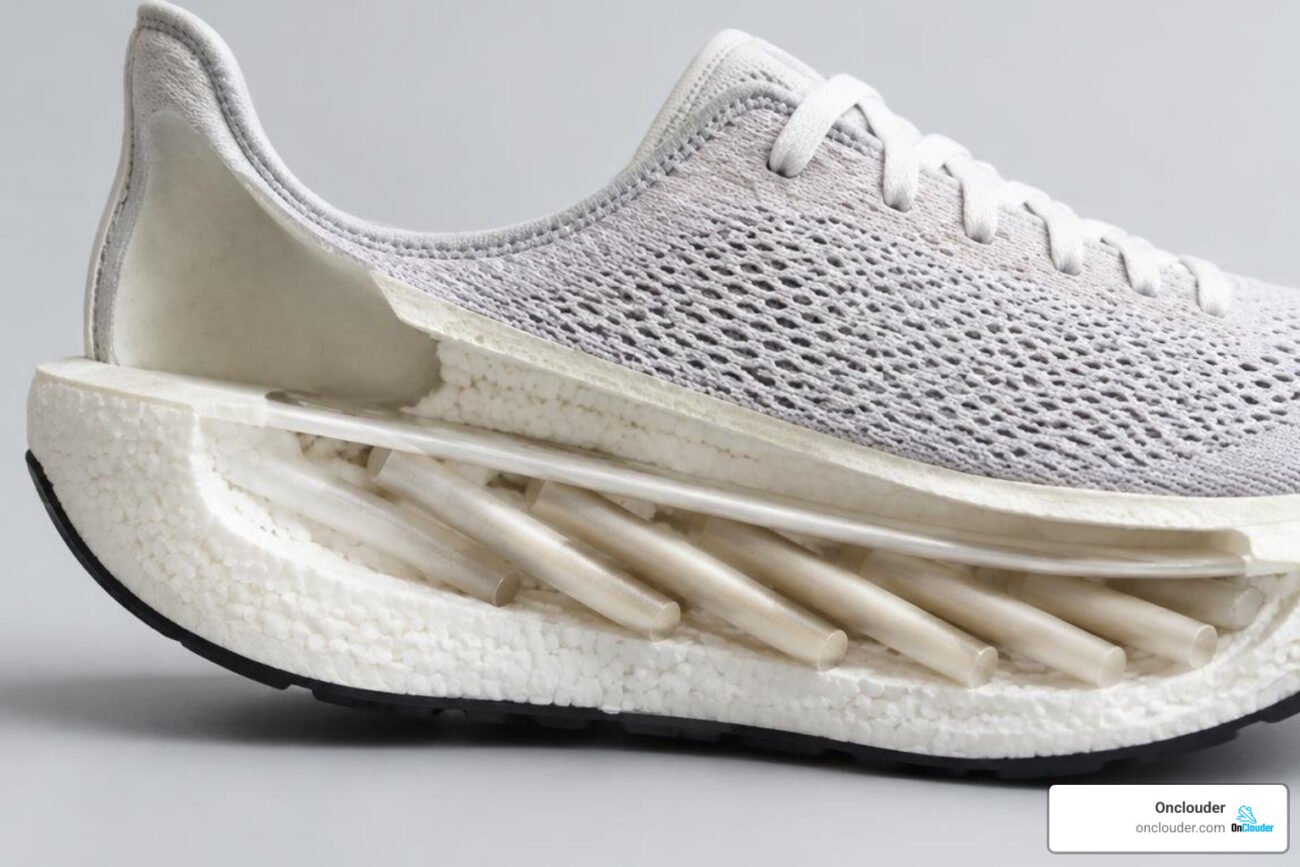
At the heart of modern high-performance adidas distance running shoes are five core engineering pillars:
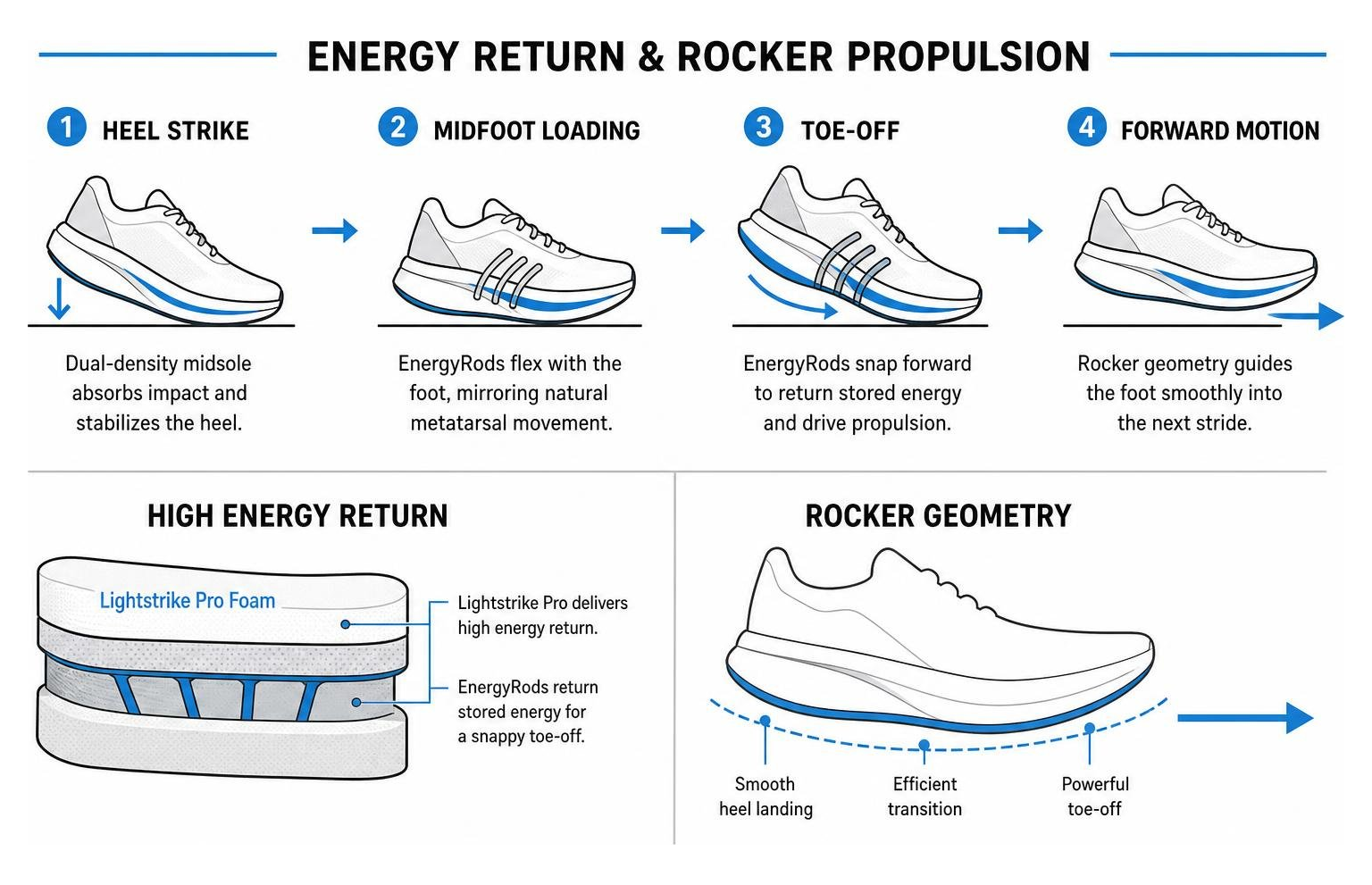
- Lightstrike Pro Foam: This ultra-lightweight, resilient thermoplastic elastomer (TPE) compound delivers high energy return. It absorbs footstrike shock and springs back immediately, sparing your calf muscles and quads from deep fatigue during high-volume training weeks.
- Dual-Density Repetitor Midsoles: Designed for steady endurance cruising, this system sandwiches a softer, lighter base foam with a firmer, recycled EVA compound (Repetitor+) around the heel to stabilize rearfoot impact.
- EnergyRods 2.0: Rather than a stiff, single carbon plate that can feel overly harsh on everyday training runs, adidas utilizes anatomical carbon-infused or glass-fiber rods. These mirror the human metatarsal bones, flexing naturally during landing before snapping forward at toe-off.
- Continental Rubber Outsoles: Sourced from the automotive tire manufacturer, this rubber compound offers top-tier wet and dry traction while resisting the abrasive friction of coarse asphalt.
- Primeknit & Engineered Mesh Uppers: Woven for zoned support, these uppers stretch around the forefoot while locking down the midfoot. Breathable weaves manage internal heat during 2-hour-plus summer long runs, while targeted overlays prevent lateral foot slippage on tired turns.
For runners who also run into daily comfort hurdles off the road, the brand’s stabilizing platforms provide structural relief. Those managing heel discomfort often explore Adidas Ultra Boost review for runners with plantar fasciitis to see how specific heel cups and knit uppers cushion high-impact pressure points.
Evaluating Cushioning and Rocker Profiles in Adidas Long Run Shoes
Distance training demands a careful balance between underfoot protection and efficient forward motion. Traditional distance shoes relied solely on deep slabs of soft EVA, but modern footwear uses tuned rocker geometry to reduce the mechanical workload on your ankles.
In models like the ADISTAR Distance Running Trainers, the combination of a high-stack dual-density platform and a pronounced forefoot rocker assists the foot through a smooth heel-to-toe transition. The firmer Repetitor+ cradle acts as a chassis, ensuring the softer foam doesn’t collapse under fatigue. Meanwhile, hybrid daily trainers utilize Lightstrike 2.0 alongside premium super-foams to provide a snappy, energetic toe-off without the aggressive harshness of pure track spikes.
Mileage Longevity and Outsole Wear of Adidas Long Run Shoes
Outsole failure is often the primary reason runners discard distance footwear prematurely. Thin, exposed foams can shred after 150 miles on rough roads. Adidas circumvents this by outfitting its high-mileage lineup with Continental rubber outsoles and resilient compound matrices.
In testing standard distance trainers like the Ultrarun 5 distance trainer, we regularly observe outsole lifespans extending well beyond the 400-to-500-mile mark. The Continental rubber compound maintains grip over slick road paint, wet asphalt, and light crushed-gravel pathways. Working in tandem with an integrated midfoot torsion system, the shoe resists twisting under lateral torque, ensuring structural integrity even as your running form breaks down toward the end of a long workout.
Top Ranked Distance Models Road Tested for 2026
We logged hundreds of miles across tarmac, concrete bridges, and tempo track loops to assess how the current lineup performs across real marathon training cycles. When building a weekly rotation, reviewing the best running shoes for distance training and daily miles will help you balance soft recovery options with high-tempo performance shoes.
Adidas Adizero Adios Pro 3: Elite Marathon Racing
For race day and peak marathon-pace workouts, the Adios Pro 3 remains a top-tier choice. Built on a tall, race-legal stack of pure Lightstrike Pro foam, this shoe features full-length carbon EnergyRods 2.0 that match the anatomy of your foot.
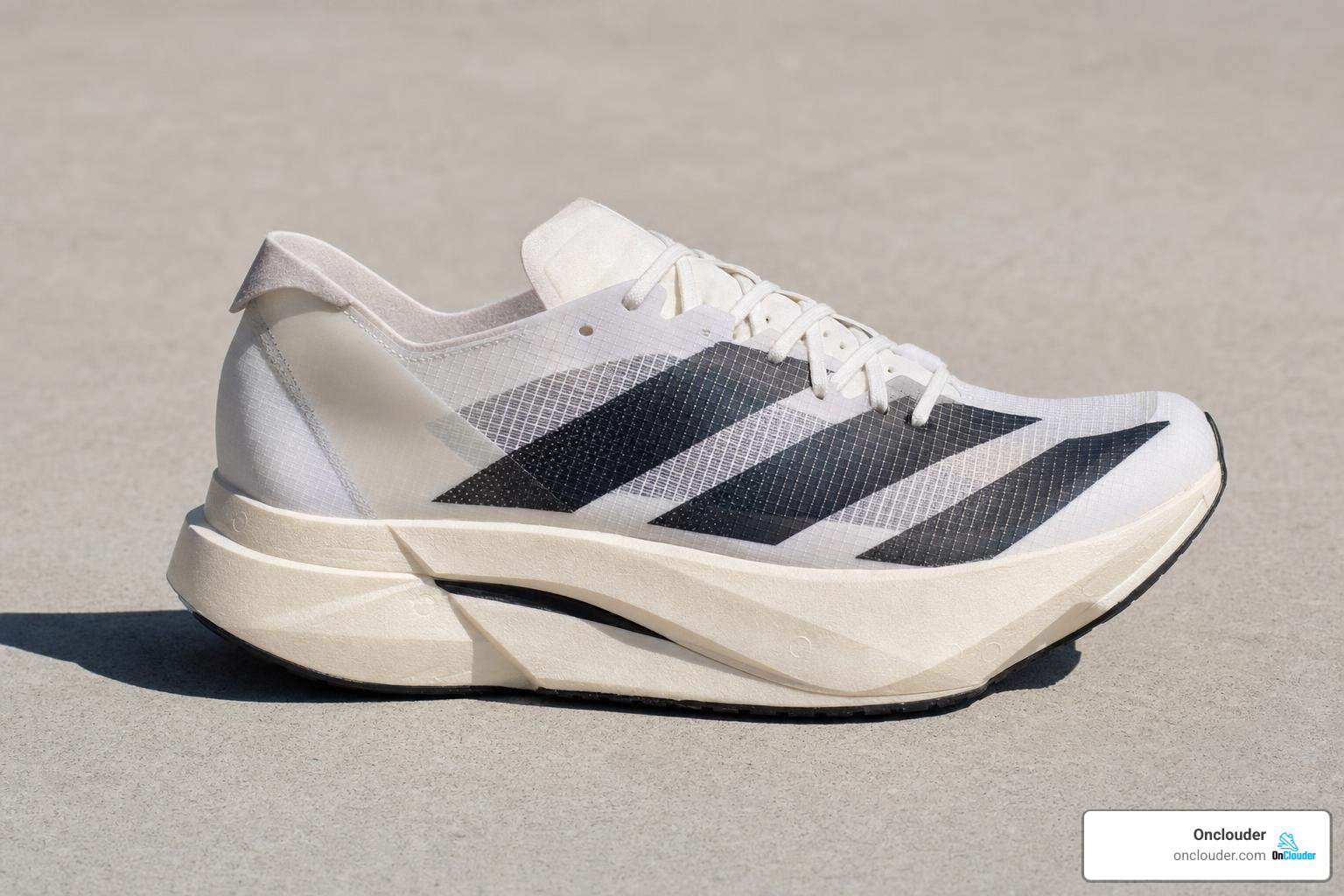
The sensation underfoot is propulsive and dynamic. The aggressive forefoot geometry encourages quick turnovers, while the wide forefoot platform provides surprising stability at race speeds. While the minimalist upper demands precise lacing to avoid heel slippage, the Adios Pro 3 stands among the shoes best for marathon running, delivering substantial energy savings in the final 10K of a 26.2-mile race.
- Best for: Marathon racing, half marathons, fast 18–22 mile pace blocks.
- Pros: Maximum energy return, lightweight build, resilient super-foam.
- Cons: Upper requires careful lacing; premium price point.
Adidas Adizero Boston 12: High-Mileage Tempo Workhorse
If you want a shoe that handles weekly 16-to-20-mile runs while effortlessly handling marathon-pace pickups, the Boston 12 is a standout option. It utilizes a dual-layer midsole: bouncy Lightstrike Pro directly beneath the foot, paired with durable Lightstrike 2.0 underneath for structure.
Instead of rigid carbon, the Boston 12 uses glass-fiber EnergyRods, which provide a snappy ride without beating up your calf muscles on routine days. The Continental outsole offers confident grip in downpours, making it a reliable pick when evaluating the best half marathon shoes for unpredictable spring and autumn race weather. Pairing it with technical gear like adidas Adizero Running Long Leggings ensures comfortable, distraction-free performance in colder conditions.
- Best for: High-mileage tempo runs, progression long runs, daily mid-to-long workouts.
- Pros: Highly durable, versatile across paces, stable glass-fiber rods.
- Cons: Firm heel feel for extreme heel strikers.
Adidas Adistar 2.0: Maximum Cushion for Easy Long Days
When your training schedule calls for a slow, 18-mile recovery run after a hard mid-week interval workout, speed becomes secondary to impact protection. The Adistar 2.0 is built around a high-stack Repetitor platform, featuring a firm 15% recycled Repetitor+ cradle wrapping the rearfoot.
The shoe feels solid, planted, and protective underfoot. While it lacks the springy bounce of the Adizero racing series, its rocker design promotes a smooth forward roll that spares tired Achilles tendons. It fits runners who naturally heel strike and want a secure, supportive trainer that lasts through grueling summer base-building blocks.
- Best for: Easy long runs, conversational base miles, slow recovery sessions.
- Pros: Protective dual-density cushioning, durable upper, stable heel landing.
- Cons: Heavy compared to the Adizero lineup; not suited for fast intervals.
Adidas Ultraboost Light: Premium Durability and Steady Comfort
The Ultraboost Light pairs long-distance durability with plush step-in comfort. Its redesigned Boost capsule compound reduces weight compared to older generations while preserving the plush, vibration-dampening ride that made the original line famous.
A reinforced external heel counter and an integrated Linear Energy Push (LEP) system provide arch and midfoot support over long road stretches. It shines as an ultra-durable cruiser for runners who value road-feel dampening over featherweight racing specs. As you assemble your shoe rotation from the best marathon training shoes of 2026, the Ultraboost Light fills the role of an indestructible workhorse that reliably logs hundreds of easy training miles.
- Best for: Moderate-distance weekend runs, easy long miles, post-run walking.
- Pros: Plush step-in comfort, durable outsole, secure foot lockdown.
- Cons: Heavier than super-foam racers; rides warm on hot summer afternoons.
Buyer’s Guide: Matching Foot Type, Gait, and Terrain
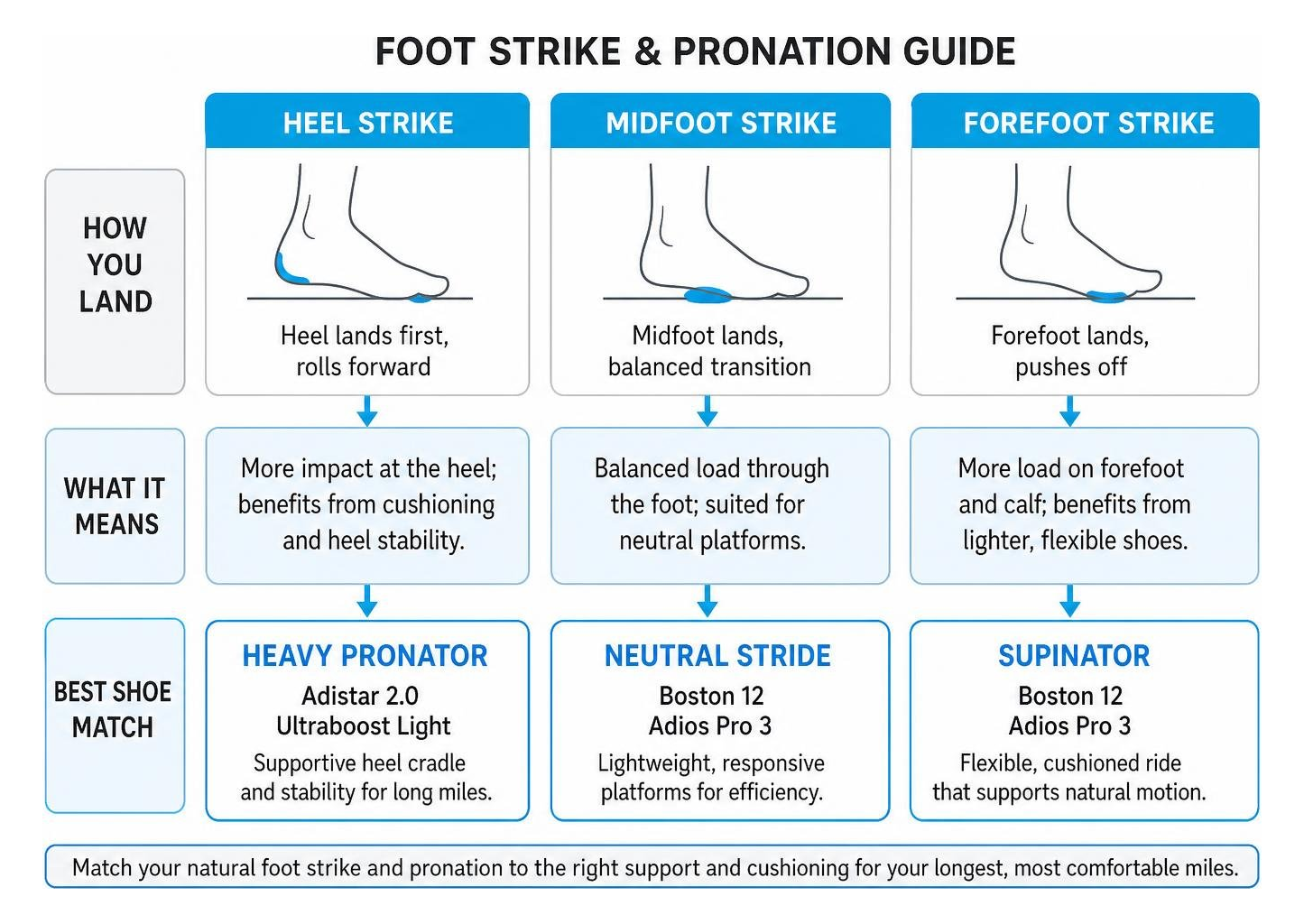
Choosing the right pair of distance shoes requires matching your foot shape and running style to the platform’s biomechanical support:
Pronation and Arch Mechanics
- Neutral Runners: If your feet land evenly and push off through the center of your forefoot, neutral models like the Boston 12 or Adios Pro 3 offer freedom of movement and lightweight performance.
- Overpronators: If your ankles roll inward under fatigue, opt for the Adistar 2.0 or Ultraboost Light. The firmer rearfoot cradles help prevent your arches from collapsing inward late in a run.
- Plantar Fascia Support: Runners managing heel discomfort need solid arch support and structured heel counters. We break down specialized fits and pressure-relieving designs in our guide on the runners buying guide to adidas plantar fasciitis shoes.
Foot Volume and Upper Fit
Adidas models within the Adizero line lean toward a snug, race-ready fit through the midfoot. If you have a wider foot, you may need to go up a half size in models like the Boston 12 or opt for standard-fit variants in the Adistar and Ultraboost collections. Running apparel matters too: wearing well-designed bottoms like the adidas Own The Run Long Running Leggings provides light muscular support that complements a smooth stride over high mileage.
Road vs. Light Trail Surfaces
While all these road models excel on asphalt and concrete, the deep Continental lugs on the Boston 12 and Adistar provide reliable traction on packed crushed limestone, canal paths, and damp greenway trails.
Performance Comparison and Value Analysis
Understanding stack height, weight, and price helps clarify which shoe fits your training budget and performance goals:
| Model | Weight (Men’s 9 US) | Heel-to-Toe Drop | Midsole Foam Tech | Primary Purpose | Expected Mileage | Price (USD) |
|---|---|---|---|---|---|---|
| Adizero Adios Pro 3 | ~7.7 oz (218g) | 6.5 mm | Lightstrike Pro + Carbon Rods | Marathon Race Day / Fast Tempo | 250 – 350 miles | $250 |
| Adizero Boston 12 | ~9.4 oz (266g) | 6.5 mm | Lightstrike Pro / 2.0 + Glass Rods | Versatile Tempo & Distance Work | 400 – 500 miles | $160 |
| Adistar 2.0 | ~11.2 oz (318g) | 6.0 mm | Dual-Density Repetitor & Repetitor+ | Easy High-Mileage Base Building | 500 – 600 miles | $130 |
| Ultraboost Light | ~10.5 oz (298g) | 10.0 mm | Light Boost Capsules + LEP System | Steady Long Runs & Everyday Miles | 450 – 550 miles | $190 |
When analyzing the price-to-mileage ratio, the Adizero Boston 12 emerges as the standout value for serious training cycles. It brings super-foam speed and anatomical rods into a durable package built for everyday wear. The Adistar 2.0 offers exceptional durability per dollar for runners seeking simple, reliable impact reduction on recovery days, while the Adios Pro 3 represents a worthwhile investment for hitting a marathon personal best.
Frequently Asked Questions
How many miles do adidas distance running shoes typically last?
Most distance models in the lineup deliver between 350 and 500 miles of reliable performance. Premium trainers equipped with Continental rubber outsoles and dense base compounds—such as the Adistar 2.0 and Boston 12—often surpass 500 miles before the tread wears smooth. Pure racing super-shoes like the Adios Pro 3 feature thinner outsoles and lighter foams optimized for speed; they generally maintain peak race responsiveness for 200 to 300 miles.
What is the difference between Adizero and Ultraboost models for high mileage?
The Adizero series focuses on lightweight performance, speed, and energy return through Lightstrike Pro foam and EnergyRods. In contrast, the Ultraboost line prioritizes plush comfort, road vibration dampening, and step-in feel using Boost capsules and structured heel counters. Choose Adizero if you want to run faster with less weight; choose Ultraboost if you want a soft, forgiving shoe for easy, consistent cruising.
Can I use the Adizero Boston for my weekly 20-mile long runs?
Yes. The Boston 12 is designed specifically for long, demanding training runs that incorporate sustained marathon-pace segments. The dual-density midsole provides enough impact cushioning under the heel while the Lightstrike Pro layer and glass-fiber rods maintain a lively, propulsive turnover through the final miles of a workout.
Conclusion
Finding the right distance shoe comes down to balancing your pacing goals with the level of cushioning your body requires. For race day propulsion, the Adios Pro 3 delivers world-class energy return. For day-in, day-out training versatility across long tempo blocks, the Boston 12 remains our top recommendation. Runners prioritizing impact absorption and steady paces will find durable support in the Adistar 2.0 and Ultraboost Light.
If you are exploring other brand platforms to see how different cushioning setups compare over 26.2 miles, dive into our comprehensive analysis on the best running shoes for marathons and whether alternative cushioning can handle the distance.
Top Budget vs Premium Running Shoes (2026 Guide)
