

Introduction
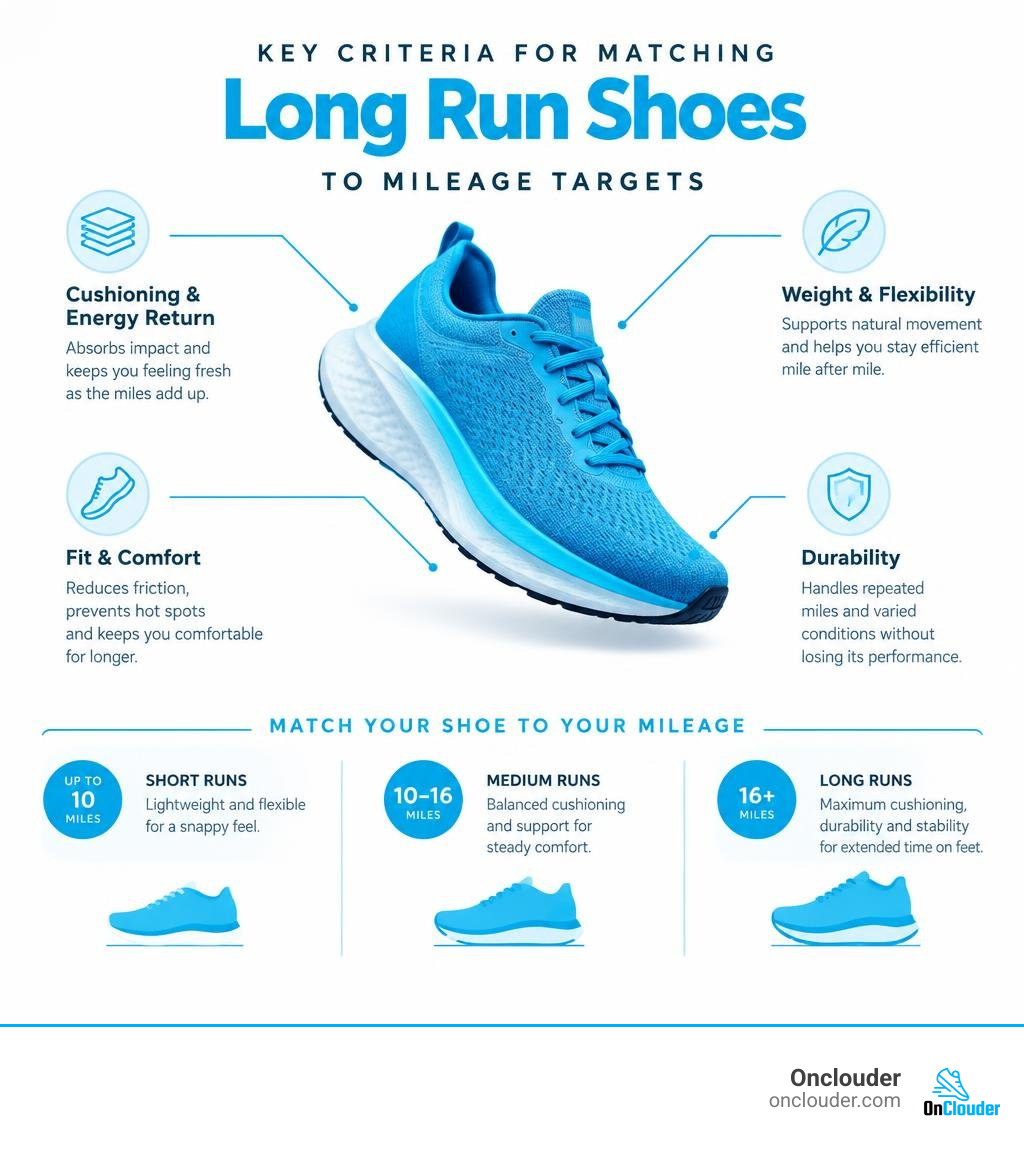
Selecting the best long run shoes 2026 has to offer ensures you balance protective cushioning, stable geometry, and resilient energy return across every weekly mileage target. For moderate 20–40 mile weeks, versatile daily trainers like the On Cloudrunner 2 and On Cloudsurfer 2 handle long runs up to 13 miles. For 40–70+ mile marathon blocks, max-cushion options such as the On Cloudeclipse and On Cloudmonster Hyper preserve your legs through 18–22 mile efforts. Logging consistent weekly mileage is the foundation of endurance running. Whether you are building an aerobic base for your first half marathon or deep into a 70-mile peak week for an autumn marathon, your weekend long run represents the single most demanding workout on your calendar. During these extended efforts, cumulative impact forces challenge your joints, tendons, and muscles.
Choosing footwear specifically tuned for extended time on feet reduces muscular leg fatigue and protects against repetitive impact. A standard lightweight speed shoe might feel effortless at mile three, but by mile sixteen, depleted midsole foam and minimal structure can leave your lower legs aching. Balancing protective impact dampening with responsive energy return makes training blocks sustainable and injury-free. According to research on running shoe cushioning and injury risk, modern midsole materials can influence loading patterns during prolonged running.
Key Features and Innovations in the Best Long Run Shoes 2026
Footwear engineering has evolved dramatically, shifting away from heavy, sluggish stability bricks toward dynamic, lightweight protection. Finding the best long run shoes 2026 brings to the roads requires understanding how modern foam chemistry, geometry, and structural design interact over 15 to 22 miles.
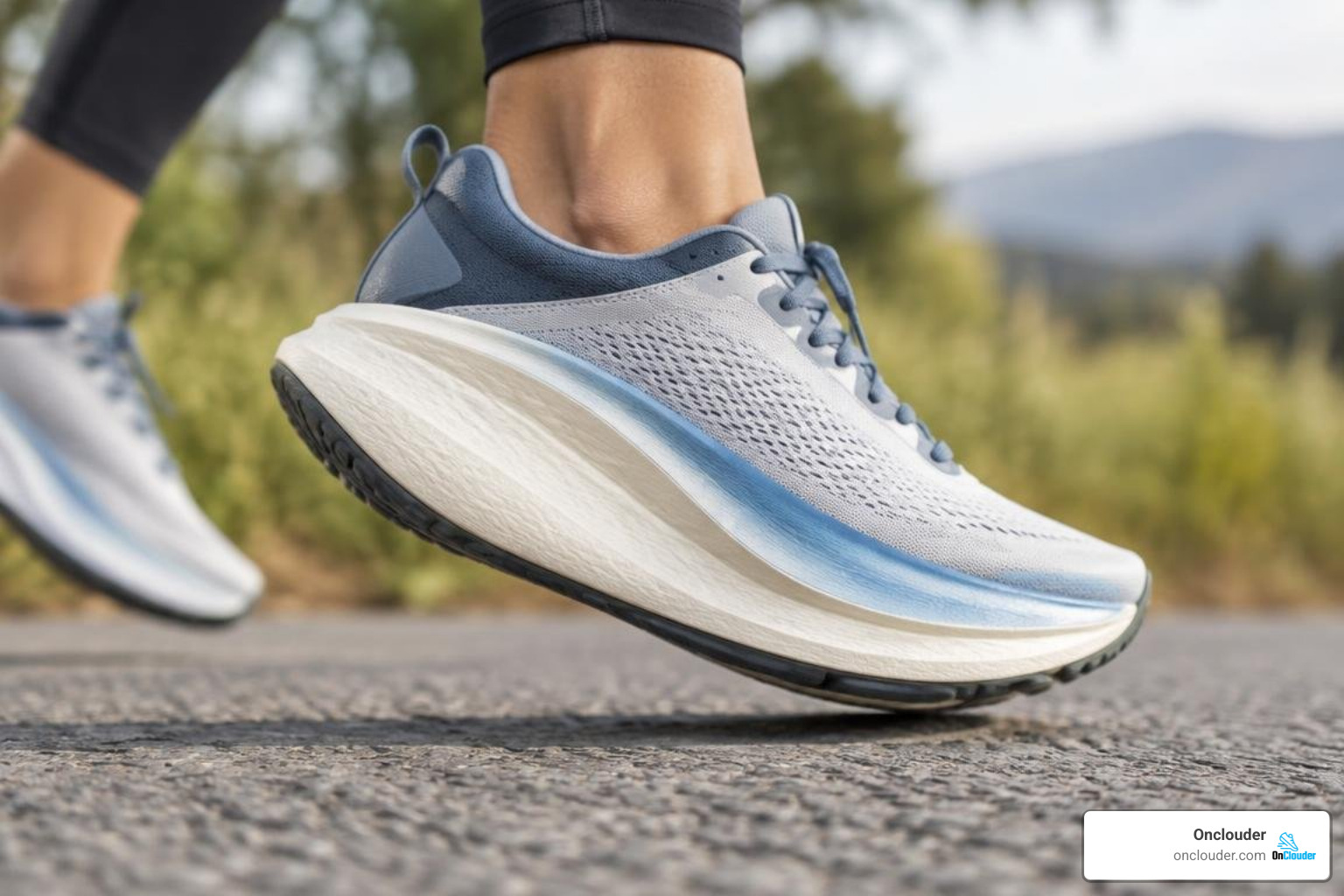
When evaluating modern long run trainers, four key features define performance:
- Midsole Foams (Supercritical and Nitrogen-Infused): Modern formulations infuse nitrogen or supercritical gases into TPU, PEBA, and EVA blends. This creates a closed-cell microstructure that offers deeper impact absorption without packing out over hours of continuous pounding.
- Rocker Geometry: Stiff, pronounced rockers curve the sole upward at the heel and forefoot. This design reduces the range of motion required by your ankle joint and calf complex, rolling your foot forward smoothly as your stride fatigues.
- Generous Stack Heights: Midsole heights between 36mm and 45mm in the heel have become the standard for distance footwear. These thick platforms provide an extensive mechanical buffer between your feet and hard pavement.
- Heel-to-Toe Drop Considerations: Ranging from 4mm up to 10mm, drop influences where impact forces distribute. Lower drops shift load toward the Achilles and calves, while higher drops direct forces toward the knees and hips.
To explore how these protective designs keep your legs fresh across demanding training blocks, read the ultimate guide to best cushioned running shoes.
Evaluating Cushioning and Energy Return in the Best Long Run Shoes 2026
The tension between plush cushioning and lively energy return has finally dissolved. Traditional EVA foams absorbed shock effectively but felt dead, dampening your push-off and requiring additional muscular effort to maintain pace.
Modern high-mileage options utilize PEBA (polyether block amide) blends and dual-density supercritical foams. These compounds return up to 75–85% of kinetic energy while preserving soft impact attenuation.
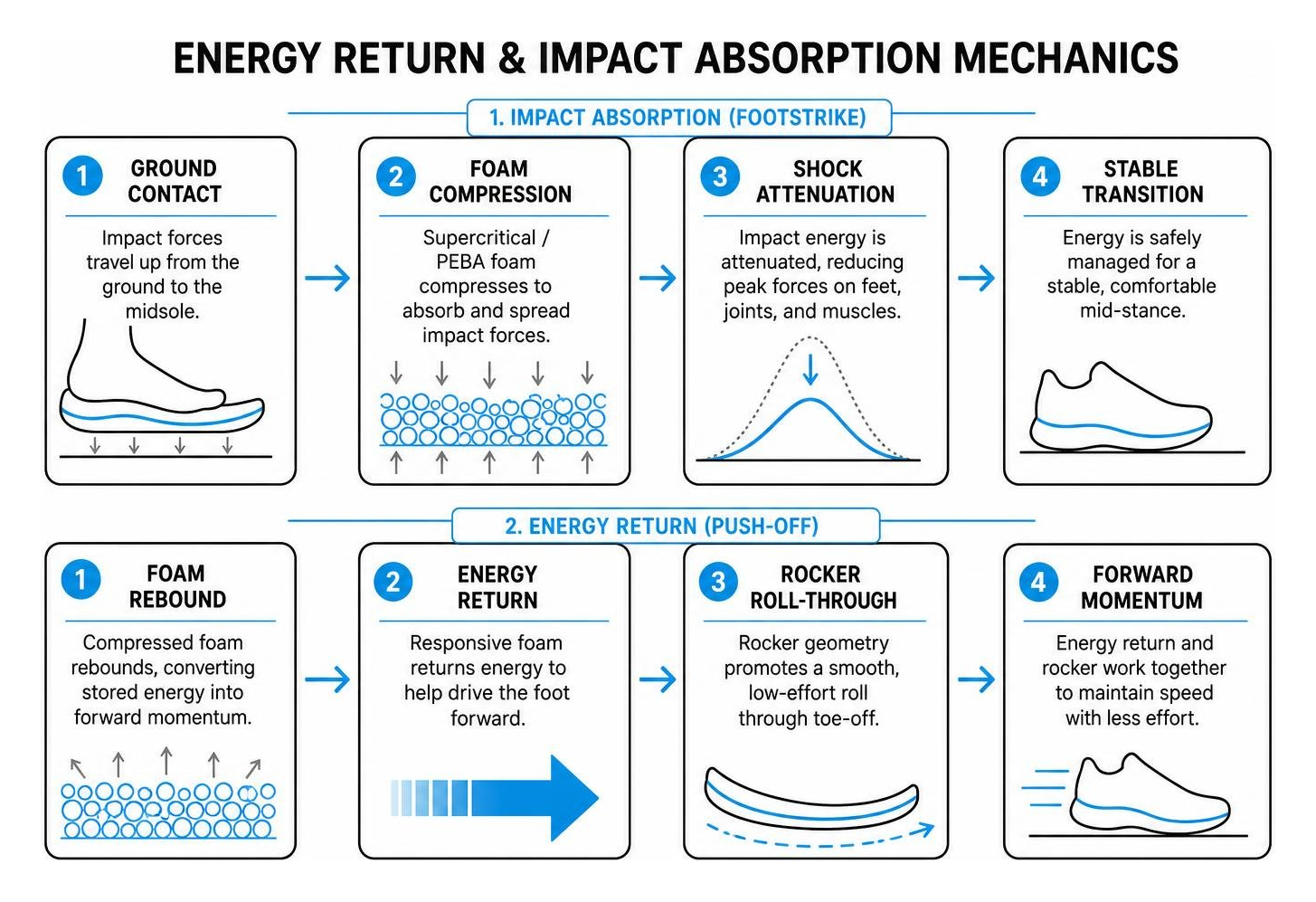
Over a two-hour run, this responsiveness limits late-stage muscular breakdown. Shoes engineered specifically as high mileage running shoes retain their bouncy underfoot dynamics from the first mile to the twenty-second without bottoming out under sustained body weight.
Stability and Upper Lockdown for Late-Run Fatigue
Even neutral runners experience biomechanical breakdown when fatigue sets in. As core strength wanes and hip stabilizers tire late in a long run, pronation tends to increase, footstrikes widen, and ground contact time lengthens.
Modern footwear addresses this stride breakdown through subtle geometric stability rather than aggressive medial posting:
- Wider Base Platforms: Flared midsoles through the heel and midfoot create an inherently stable contact area without altering natural gait patterns.
- Sidewall Guide Rails: Raised foam perimeters cup the heel and midfoot, keeping your foot centered during transition.
- Engineered Mesh with Structured Heel Counters: Non-stretch technical weaves, padded heel collars, and rigid internal counters eliminate heel slippage and prevent blister-causing lateral shifting.
Top Distance Running Shoes Categorized by Mileage Demands
Different weekly running volumes demand distinct footwear profiles. A runner tackling 25 miles per week needs durable versatility, whereas someone hitting 60+ miles requires specialized max-cushion recovery platforms and high-volume trainers.
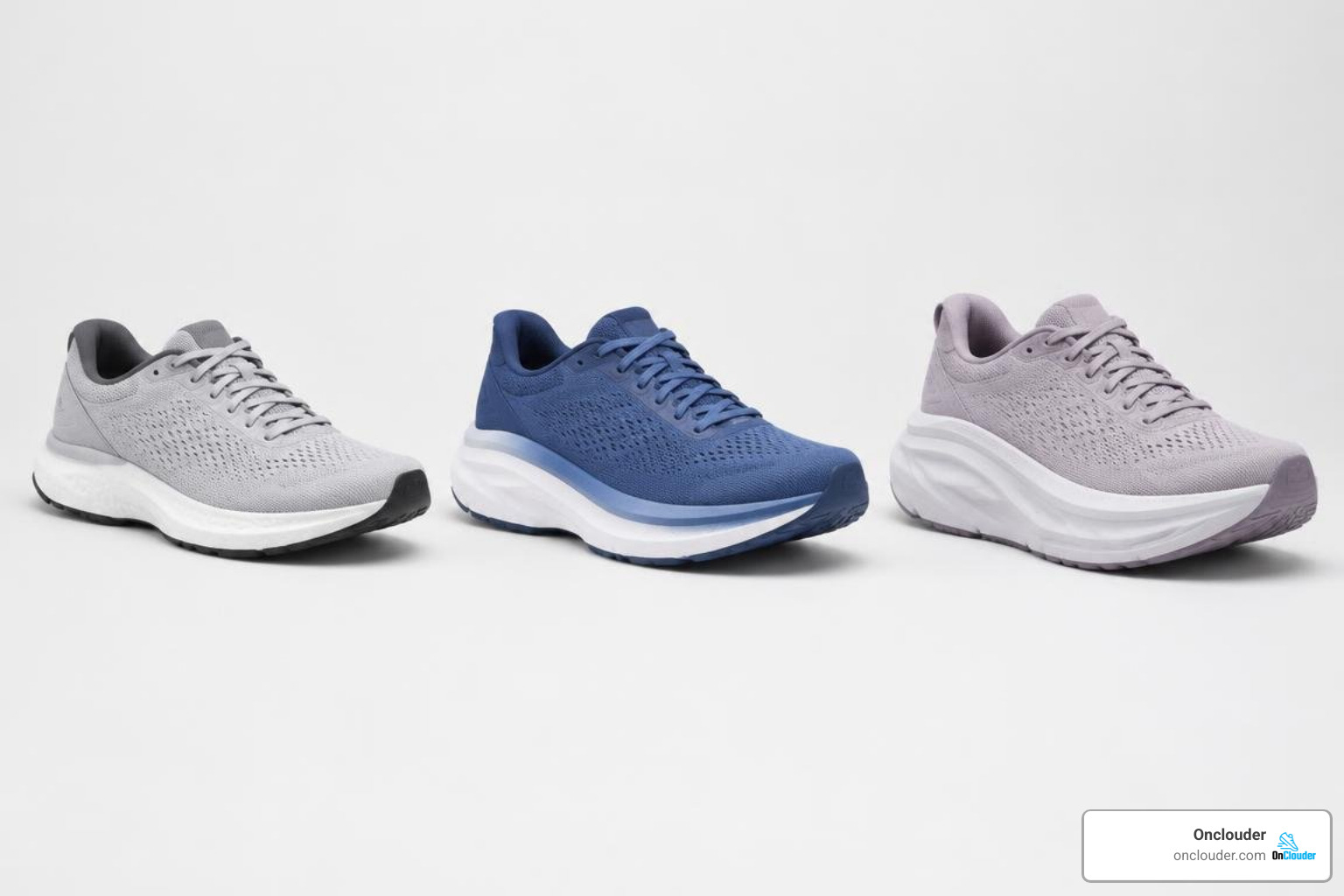
Selecting appropriate best long distance running shoes ensures your shoe rotation aligns with your physiological loading patterns and training goals.
Moderate Mileage and Everyday Distance Training (20–40 Miles/Week)
For runners maintaining weekly volumes between 20 and 40 miles, the weekly long run generally spans 8 to 13 miles. At this volume, versatility and cost efficiency take precedence over specialized super-trainers.
These runners benefit most from balanced daily trainers featuring resilient, durable rubber outsoles and dependable midsoles capable of handling recovery runs, tempo segments, and weekend distance. You can review capable options in our guide to best running shoes for distance training and daily miles.
- On Cloudrunner 2: A supportive daily distance trainer featuring durable Helion superfoam and a wider cradle base for enhanced stability over double-digit miles.
- On Cloudsurfer 2: Utilizes computer-optimized CloudTec Phase midsole collapse to deliver smooth heel-to-toe transitions and protective cushioning for double-digit weekend runs.
- On Cloudgo: Lightweight, neutral, and dependable, blending moderate stack heights with reliable transition geometry for everyday base building.
High-Volume Marathon Prep and Long Progression Runs (40–70+ Miles/Week)
Peak marathon preparation brings demanding workouts: 18- to 22-mile long runs containing fast-finish segments, marathon-pace blocks, and mid-week 14-mile medium-long runs. At 40 to 70+ miles per week, shoes must preserve legs for subsequent hard training days.
For structured long runs that demand race-pace efforts, consult our marathon shoe recommendations for training and race day.
| Shoe Model | Category / Primary Use | Heel / Forefoot Stack (mm) | Drop (mm) | Weight (Men’s 9 US) | Approximate Price (USD) |
|---|---|---|---|---|---|
| On Cloudeclipse | Max-Cushion Road Cruiser | 37 / 31 | 6 mm | 9.9 oz (281 g) | $180 |
| On Cloudrunner 2 | Structured Long-Distance Support | 34 / 24 | 10 mm | 9.8 oz (278 g) | $150 |
| On Cloudmonster 2 | High-Energy Max Cushion | 35 / 29 | 6 mm | 10.4 oz (295 g) | $180 |
| On Cloudmonster Hyper | Super-Foam High-Volume Trainer | 40 / 34 | 6 mm | 9.6 oz (272 g) | $220 |
| On Cloudultra 2 | Ultra-Distance Trail Specialist | 36 / 31 | 5 mm | 10.4 oz (295 g) | $180 |
Choosing Shoes for Varied Terrains and Biomechanics
Finding the right distance trainer requires matching the shoe’s outsole construction and chassis to the surfaces you run on, alongside your unique biomechanical needs. A max-cushion road shoe will struggle on loose scree, while a stiff trail lug pattern quickly wears down and irritates feet on pavement.
Review our curated selection of top-performing long run shoes to find shoes tailored to specific road and off-road profiles.
Road, Trail, and Treadmill Long Runs
- Road Running: Pavement provides zero impact dampening. Runners logging long road miles need thick, resilient midsole stacks paired with abrasion-resistant rubber along high-wear heel and forefoot contact zones.
- Trail Running: Off-road endurance requires dynamic toe protection, multidirectional lug patterns, and stabilizing dual-density foam cores. The On Cloudultra 2, for example, uses dual-layer Helion superfoam alongside Missiongrip outsoles for ultra-distance mountain efforts.
- Treadmill Running: Motorized treadmill decks have built-in flex and shock absorption. For 90+ minute indoor sessions, hyper-cushioned 42mm road stacks can feel overly unstable; medium-stack shoes with high-breathability uppers prevent overheating.
How to Select the Best Long Run Shoes 2026 for Different Foot Types
Individual foot shapes and biomechanical tendencies dictate which shoe architecture will keep you comfortable across extended mileage.
- Neutral Runners: Runners with standard arch movement and uniform wear patterns thrive in unconstrained, rockered max-cushion trainers with neutral geometries.
- Overpronators: Runners whose ankles roll inward excessively as miles tick by benefit from wide perimeter bases, flared soles, and integrated guide rails that offer gentle structural correction without unnatural rigidity.
- High Arches & Rigid Feet: High-arched runners naturally absorb less shock through foot flexion. Deep, soft PEBA or supercritical TPU midsoles disperse high focal pressures beneath the heel and metatarsal heads.
- Wide Forefeet and Swelling: Long runs inevitably cause feet to swell slightly over two hours. Shoes featuring anatomical toe boxes or stretchy engineered mesh prevent blister formation and pinched metatarsals.
Explore all of the best running shoes 2026 releases to match your structural mechanics with the latest footwear innovations.
Frequently Asked Questions About Long Run Footwear
How often should you replace long run shoes?
Most premium long run trainers should be retired between 350 and 500 miles (560 to 800 km). While outer rubber might show minimal abrasion, midsole foams undergo micro-cellular fatigue and lose energy return and shock absorption over time. If you notice unusual joint soreness or lower leg tightness following routine weekend distance, your midsole foam has likely compressed past its prime.
Should long run trainers feature a carbon plate?
For standard easy-paced aerobic base runs, non-plated or flexible nylon-plated shoes are preferable. Stiff, aggressive carbon plates alter natural foot mechanics and shift workload into specific muscle groups over long, easy efforts. Reserve rigid carbon-plated trainers for specific race-pace simulation long runs, fast-finish progression runs, or race day itself.
How much room should you leave in the toe box for long runs?
Always maintain a full thumb’s width of empty space between your longest toe and the end of the shoe when standing. During runs exceeding 90 minutes, blood flow, friction, and fluid retention cause feet to expand up to half a size. Adequate toe box volume prevents blackened toenails, subungual hematomas, and painful forefoot blisters.
Conclusion
Your weekend long run is the cornerstone of your endurance training. Investing in footwear specifically designed for extended distance protects your body, maintains running economy when fatigue strikes, and accelerates recovery between key sessions.
Rotate between a durable daily distance trainer and a protective, high-cushion long run shoe to balance muscle loading and extend the lifespan of your footwear.
To determine whether Swiss-engineered CloudTec footwear fits your upcoming marathon block, read our in-depth evaluation on the best running shoes for marathons and distance capabilities.

One thought on “The Best Long Run Shoes 2026 for Every Weekly Mileage Target”
Comments are closed.