

The Best Half Marathon Shoes for Race Day 2026
The best half marathon shoes right now are:
| Shoe | Type | Best For | Price |
|---|---|---|---|
| Nike Alphafly 3 | Carbon-plated | Sub-1:30 racers | ~$295 |
| Adidas Adizero Adios Pro 4 | Carbon-plated | High energy return | ~$250 |
| Saucony Endorphin Pro 4 | Carbon-plated | Accessible racing | ~$250 |
| ASICS Superblast 2 | Non-plated | Heavier/taller runners | ~$200 |
| Saucony Endorphin Speed 4 | Nylon-plated | Best value racer | ~$170 |
| Hoka Mach 7 | Non-plated | Comfort + speed | ~$145 |
| Brooks Glycerin 21 | Non-plated trainer | Beginners and training | ~$160 |
A half marathon sits in a unique sweet spot. At 13.1 miles, it’s long enough that cushioning and foot protection really matter — but short enough that speed and responsiveness still make a big difference.
The wrong shoe can turn a strong race into a painful slog. One runner put it bluntly after their first half in a heavy trainer: it “felt like bricks” by the final miles. The right shoe keeps your legs fresher, your stride efficient, and your feet comfortable all the way to the finish line.
The good news? You don’t need to spend $300 on carbon plates to run your best race. Whether you’re chasing a PR or just want to finish strong, there’s a shoe built for your goals and your budget.
I’m Faisal S. Chughtai, a footwear expert with a career dedicated to matching runners with the right shoe for performance and comfort — including helping people find the best half marathon shoes for their specific needs. Let’s break down exactly which shoes deserve a spot in your rotation for 2026.
Choosing the Best Half Marathon Shoes for Your 2026 Race
Selecting the best half marathon shoes isn’t just about picking the brightest color on the shelf. In 2026, the technology has evolved to a point where your foot shape, gait, and even your finish time goals should dictate your purchase. We’ve seen data from over 5 million foot scans used to refine how these shoes fit, and the results are clear: precision matters.
Understanding Your Biometrics
Before clicking “buy,” we recommend doing the “wet test” at home. Wet the bottom of your foot and step on a piece of cardboard. A full print suggests low arches (needing stability), a distinct curve shows a neutral arch, and a thin line indicates high arches (needing more cushion). This helps determine if you need a neutral shoe or one with supportive features like GuideRails.
The Technical Specs That Matter
- Stack Height: This is the amount of material between your foot and the pavement. For 13.1 miles, we suggest at least 25mm of heel cushioning to absorb the thousands of impacts you’ll endure.
- Heel Drop: The difference in height between the heel and forefoot. High-drop shoes (10mm+) like the Nike Pegasus 42 favor heel strikers, while lower drops (4mm-8mm) are often preferred by midfoot strikers.
- Energy Return: This is the “bounce.” Modern foams like PEBA can return up to 90% of energy, whereas traditional EVA foams might only return around 60%.

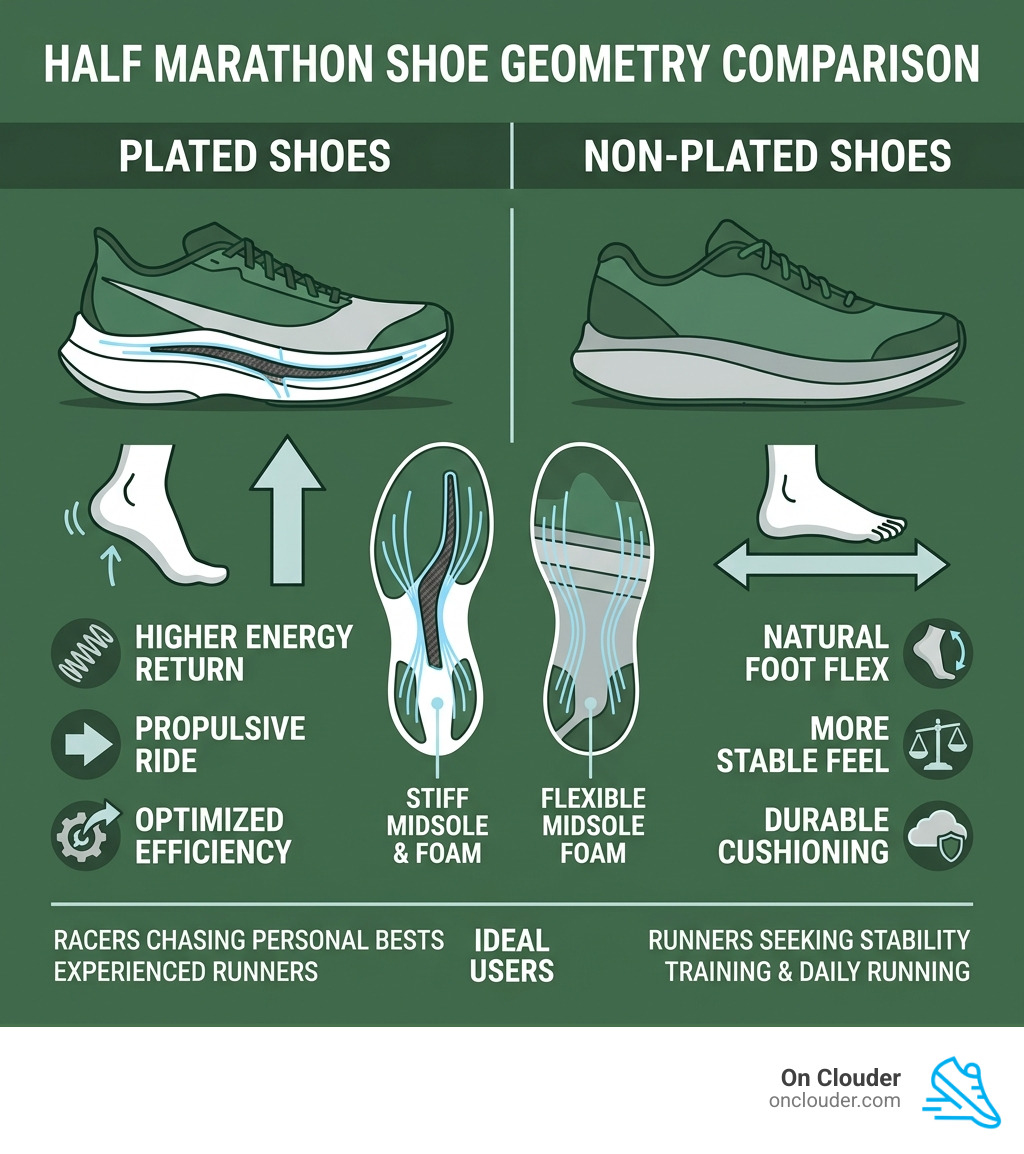
When deciding between technologies, consult this 7 Best Half Marathon Running Shoes in 2026 guide for lab-verified data. Generally, you’ll be choosing between the stiff, springy feel of carbon and the flexible, reliable feel of traditional trainers.
| Feature | Carbon-Plated Shoes | Non-Plated Shoes |
|---|---|---|
| Average Cost | ~$217 | ~$129 |
| Stiffness | 20.8N (to bend 30°) | 13.1N (to bend 30°) |
| Durability | 150–250 miles | 300–500 miles |
| Best For | Personal Bests / Elite Paces | Training / Comfort / Consistency |
Elite Performance: Carbon-Plated Super Shoes
If your goal is to shave minutes off your personal best, you’re likely looking at “super shoes.” These models combine ultra-lightweight uppers with stiff plates and high-rebound foams.
The Nike Alphafly 3 remains a titan in this category. Weighing in at just 7.1 oz (201g), it is 24.2% lighter than the average running shoe. It’s designed to make you feel like you’re “launching into space” with every stride. Similarly, the Adidas Adizero Adios Pro 4 utilizes a midsole that provides an incredible 80.4% energy return in the heel, compared to the industry average of 58.3%.
For those who want the speed of a carbon plate without the extreme $300 price tag, the Saucony Endorphin Pro 4 is a fantastic bridge. It is 141.6% stiffer than the average shoe, providing that snappy “pop” off the pavement, but with an outsole hardness of 85.3 HC, making it tougher and more durable than many of its elite competitors. You can explore more about these high-tech options in our guide to Marathon Super Shoes.
The Role of Carbon Plates in 21K Racing
Why does a plate matter for 13.1 miles? It’s not just about speed; it’s about efficiency. A carbon plate acts as a lever, reducing the workload on your calves and ankles. This stiffness (averaging 20.8N of force to bend) helps maintain your form when fatigue sets in at mile 10. Furthermore, Scientific data on marathon shoe efficiency suggests that these shoes can improve running economy by 2% to 4%. For a 1:45 half-marathoner, that could mean crossing the line nearly four minutes faster.
Speed and Comfort: Top Non-Plated Best Half Marathon Shoes
Not everyone wants or needs a carbon plate. In fact, many runners find them unstable or too aggressive for their natural stride. Non-plated shoes are often more stable, more durable, and significantly more affordable.
The ASICS Superblast 2 has become a cult favorite for a reason. Its dual-foam stack provides a massive amount of protection without the rigidity of a plate, making it ideal for heavier or taller runners who need more “shoe” underfoot. If you prefer a lower-to-the-ground feel with plenty of “pop,” the New Balance FuelCell Rebel v5 is a lightweight champion at just 7.5 oz.
Another standout is the Hoka Mach 7, which features a 36mm stack height. It offers a rockered geometry that encourages a smooth heel-to-toe transition, helping you maintain momentum even when your legs start to tire. For a deeper dive into how these perform over long distances, check out our Marathon Shoe Recommendations For Training And Race Day.
Why Choose Non-Plated Best Half Marathon Shoes for Speed
Choosing a non-plated shoe doesn’t mean you’re settling for a slow ride. Modern “super trainers” use the same premium foams found in elite racers.
- Natural Gait: Without a stiff plate, your foot can move more naturally, which can reduce the risk of injury for those with specific gait inefficiencies.
- Stability: Non-plated shoes generally have a wider base, providing a more “planted” feel when cornering.
- Versatility: These shoes can handle a Tuesday tempo run just as well as a Sunday race, giving you more bang for your buck.
Training and Stability: Best Half Marathon Shoes for Beginners
If this is your first 13.1-mile journey, your priority should be finishing healthy and happy. The best half marathon shoes for beginners focus on “leg-saving” technology—features that absorb shock so your joints don’t have to.
The Brooks Glycerin 21 is often cited as the “gold standard” for comfort. Its nitrogen-infused foam provides a soft landing without feeling “mushy.” For those who overpronate (your feet roll inward), the Saucony Hurricane 24 offers dual-density support that gently guides your foot into a neutral path. And we can’t forget the Nike Pegasus 42; with its 14mm drop and revamped traction (doubled from previous versions), it’s a reliable workhorse for those who want a familiar feel. Learn more about starting your journey with our Running Shoes For Beginners resources.
Key Features for High-Mileage Training
When training for a half marathon, you’ll be logging 20–40 miles a week. You need a shoe that can go the distance.
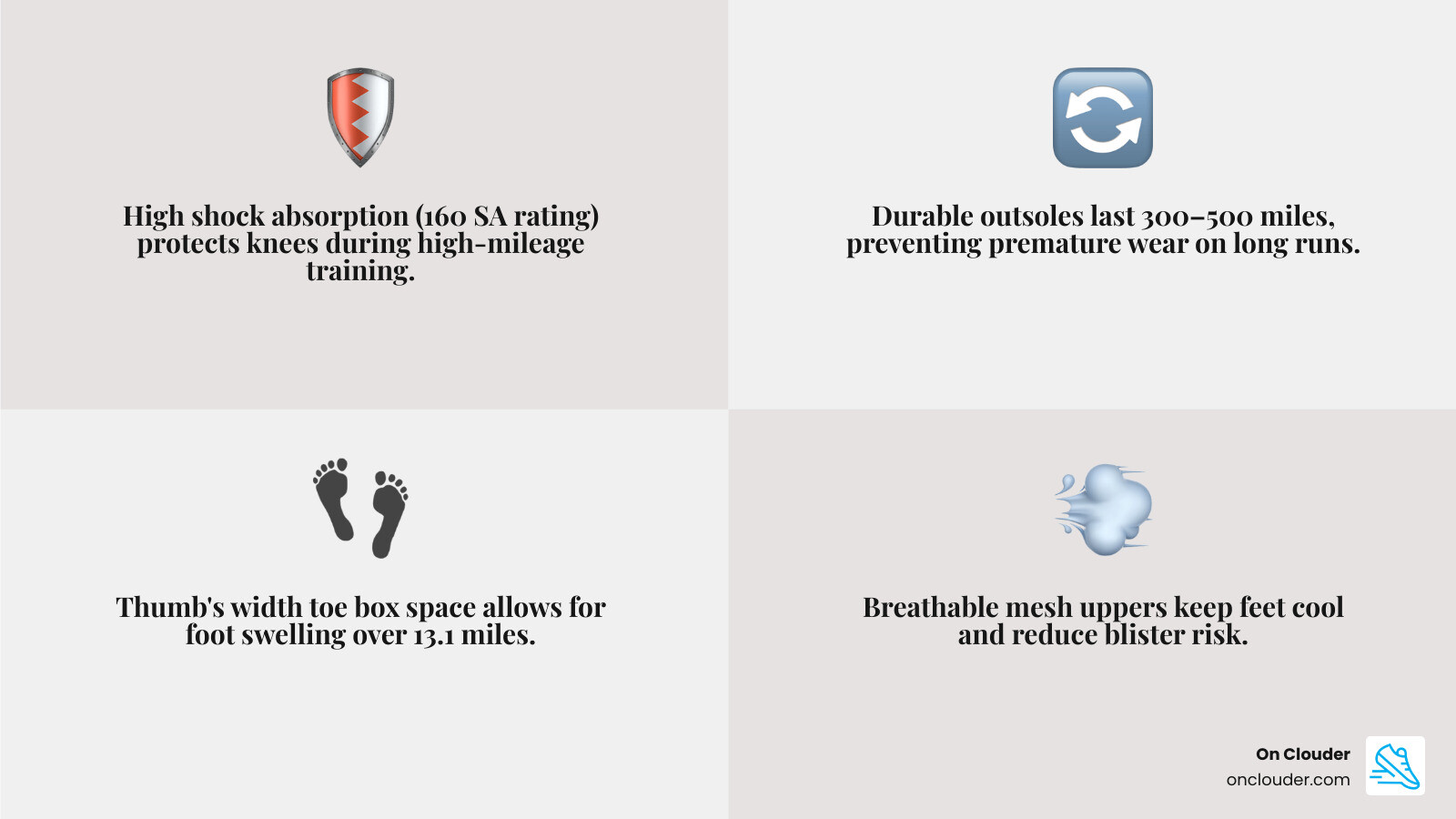
- Shock Absorption: Look for shoes with high shock absorption ratings (like the 160 SA found in some max-cushion models) to protect your knees.
- Durability: A good trainer should last 300–500 miles. Check for thick outsole rubber to prevent premature wear.
- Toe Splay: Ensure there is a “thumb’s width” of space at the front. Your feet will swell over 13.1 miles, and a tight toe box is a one-way ticket to black toenails.
For more advice on avoiding common pitfalls, see our guide: Dont Hit The Wall With These Best Marathon Training Shoes Of 2026.
Frequently Asked Questions about Half Marathon Footwear
Are carbon-plated shoes necessary for a 2-hour half marathon?
No, they are not a requirement. While carbon plates can improve economy, their benefits are most pronounced at faster speeds (sub-1:45 pace). For a 2-hour finisher, a high-quality “super trainer” or a cushioned daily trainer often provides better comfort and stability for the duration of the race.
How many miles should I run in my race shoes before the event?
We recommend putting 20 to 50 miles on your race-day shoes. This is enough to ensure there are no “hot spots” or rubbing issues, but not so much that you lose the “freshness” and bounce of the foam. Never wear a brand-new pair of shoes on race morning!
When should I replace my training shoes during a half marathon block?
Most standard trainers last between 300 and 500 miles. However, you should replace them sooner if you notice the foam feels “flat,” the outsole is smoothing out, or you begin to experience new aches in your knees or shins. If you are 4 weeks out from your race and your shoes have 400 miles on them, it’s time for a fresh pair.
Conclusion
Finding the best half marathon shoes is a personal journey that balances your speed goals with the needs of your feet. Whether you choose the record-breaking tech of the Nike Alphafly 3 or the plush, reliable comfort of the Brooks Glycerin 21, the most important factor is how the shoe feels at mile 10.
At On Clouder, we believe that the right footwear is the ultimate tool for any runner. Don’t forget to practice your lacing techniques and test your race-day socks during your long training runs. A successful 13.1 miles starts with the confidence that your gear can handle the distance.
Ready to find your perfect match? Check out our marathon shoe recommendations for training and race day to finalize your 2026 racing strategy.