How to Find Roomy Toe Box Running Shoes That Fit
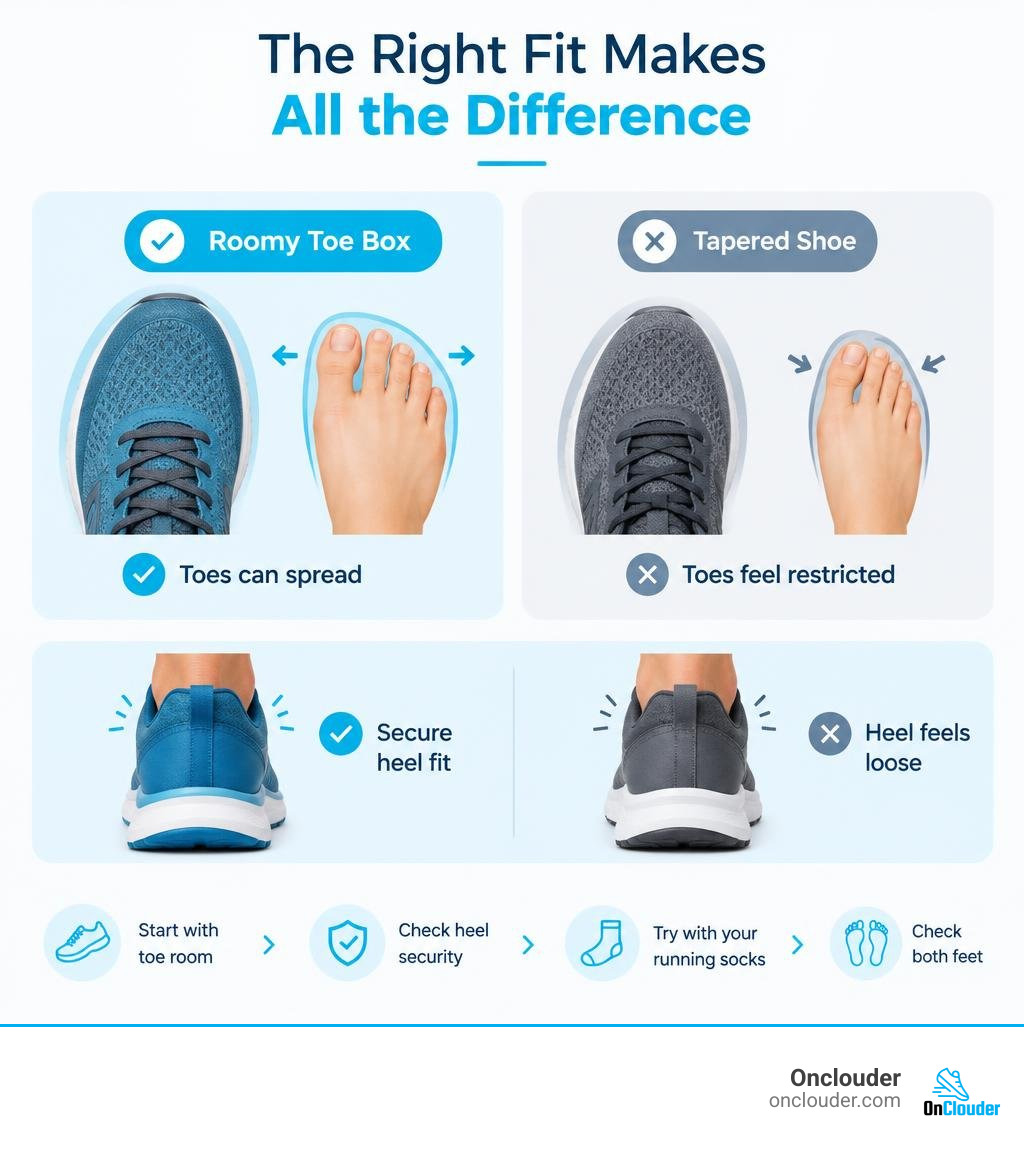
Start with toe room, then check the rest of the fit. When you stand, your toes should be able to spread without pressing against the sides or front of the shoe. Your heel should stay secure when you walk or jog. Try shoes on with your usual running socks, and check both feet.
A wide size is not always the answer: it may add space at the heel and midfoot when you only need more room for your toes. If you choose a zero-drop shoe, build up your time in it gradually.
Essential roomy toe box running shoes terms:
Key Benefits of Choosing Anatomical Running Footwear
Most traditional running shoes feature a pointed, tapered toe box designed around outdated aesthetics rather than human anatomy. When your foot hits the ground during a running stride, your toes are meant to spread naturally to absorb impact and provide a stable base for propulsion. Pointed shoes prevent this, bunching your toes together and setting off a chain reaction of biomechanical issues.
When you switch to broad toe shoes and ditch daily foot pain, you allow your forefoot to splay naturally. This reduces friction hotspots that cause painful blisters, relieves lateral pressure that aggravates bunions, and lets your big toe (hallux) engage properly to push off efficiently.
Understanding the science behind why Altra shoes give your toes room to breathe highlights how anatomical footwear restores intrinsic foot strength. By allowing the muscles, tendons, and arches of your foot to function without restriction, you reduce stress on your knees and hips. It is no surprise that top anatomical models regularly earn the American Podiatric Medical Association (APMA) Seal of Acceptance for actively promoting foot health.
FootShape™ Fits and Forefoot Geometry in Roomy Toe Box Running Shoes
Not all anatomical shoes share the exact same silhouette. Different runners have distinct foot volumes and performance preferences. For instance, Altra structures its footwear around three distinct FootShape™ profiles:
- Original Fit: The most generous cut available. It provides maximum width across the toe box alongside extra volume through the midfoot, ideal for wide feet, bunions, or high-volume foot structures.
- Standard Fit: Sits right in the middle. It delivers a spacious, anatomical toe box while maintaining a more tailored, locked-in midfoot wrap.
- Racing Fit: Designed for speed days and racing. It preserves space for toe splay but dials in a snug, secure fit through the waist and heel to eliminate any internal foot slide at fast paces.
Exploring why your squished toes deserve wide toe box Altra running shoes demonstrates that you do not need a sloppy shoe to achieve adequate toe freedom. A well-designed anatomical trainer locks down your heel and instep while letting your forefoot relax.
Zero-Drop Platform and Natural Gait Alignment
Many shoes with anatomical toe boxes also incorporate a balanced cushioning or zero-drop platform. In a zero-drop shoe, your heel and forefoot sit at the exact same distance from the ground (a 0mm heel-to-toe drop).
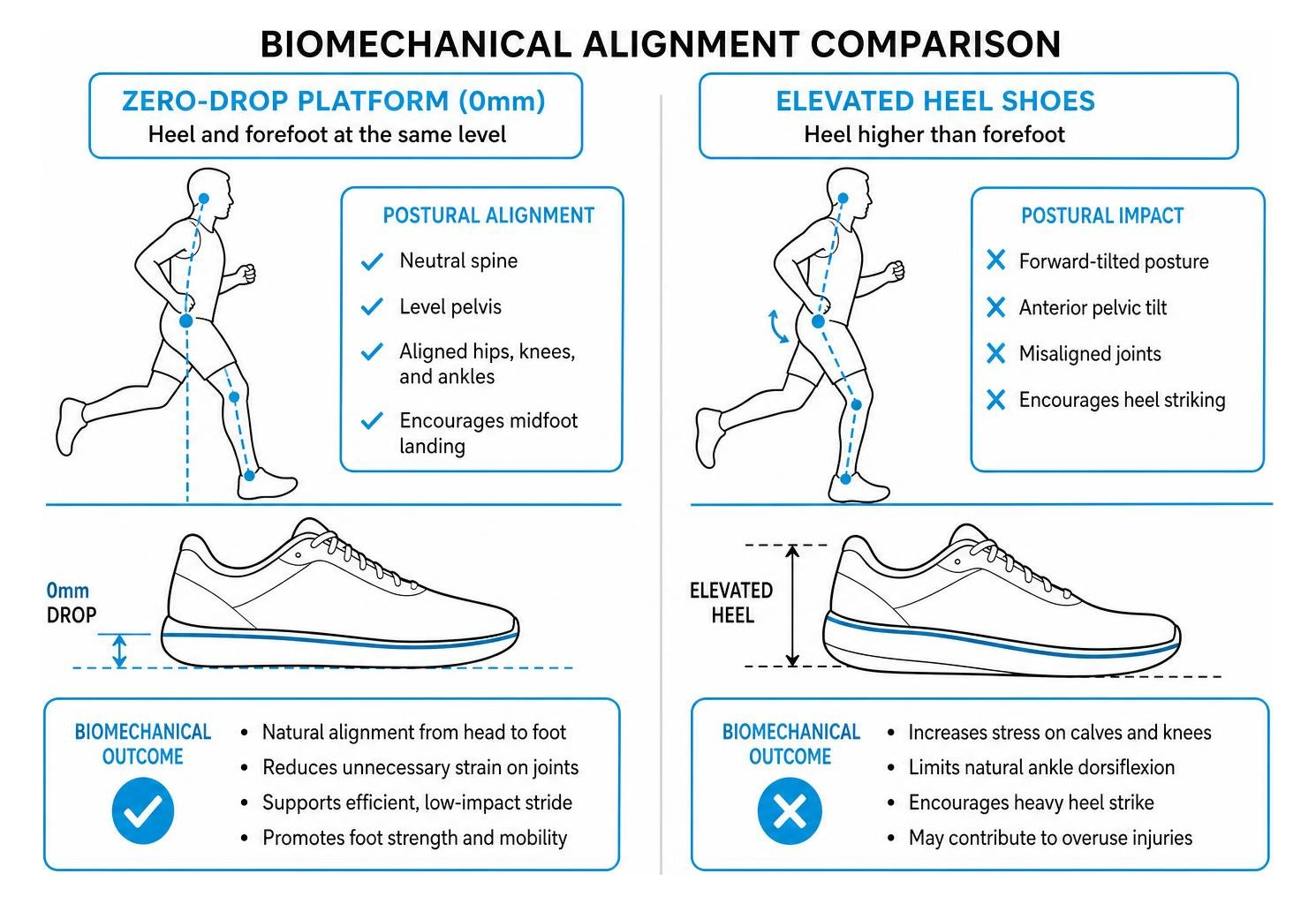
Elevated heels tilt your pelvis forward and shorten your calf muscles over time. A 0mm drop places your spine, hips, and lower legs in natural postural alignment, encouraging a light midfoot landing rather than a heavy heel strike. When you find supportive wide running shoes that actually fit, combining balanced cushioning with a generous toe box enables your entire lower kinetic chain to dissipate impact smoothly.
Top Models: Comparing Leading Wide Forefoot Trainers
Finding the right wide forefoot shoe comes down to balancing stack height, drop, and overall volume. Below is a head-to-head comparison of leading models built for spacious comfort.
| Shoe Model | Heel-to-Toe Drop | Stack Height | FootShape Profile / Cut | Cushioning Type | Best Use Case | APMA Certified |
|---|---|---|---|---|---|---|
| Altra Torin 8 | 0 mm | 30 mm | Standard FootShape™ | Altra EGO™ MAX | Daily Training, Long Runs, Walking | Yes |
| Altra FWD VIA 2 | 4 mm | 37 mm | Original FootShape™ | EGO™ P35 Foam | Max Cushion, Recovery, High Volume | Yes |
For a broader look at top-performing options across the category, check out our best wide toe box running shoes guide 2026.
Altra Torin 8: Balanced Zero-Drop Daily Trainer
The Torin 8 is a flagship neutral road trainer that embodies balanced cushioning. Featuring a 30mm stack height and a 0mm drop, it uses responsive Altra EGO™ MAX foam to deliver a ride that feels plush yet supportive underfoot. It holds a 4.6 out of 5-star rating among runners who praise its blend of step-in softness and forefoot room.
The shoe uses a Standard FootShape™ Fit, giving your toes ample room to move without losing midfoot security. The women’s model weighs in at 8.4 oz (238 g), while the men’s model sits at 10.15 oz (287.7 g). You can view full sizing specifications on the Women’s | Altra Torin 8 | Fleet Feet product page or check international colorways via Men’s Torin 8 Black | Altra Running GB and Women’s Torin 8 Black | Altra Running GB. Runners looking for great clearance pricing can also find deals like the Altra Torin 8 Road Running Shoes – Women’s | The Last Hunt. For road warriors prone to rubbing, it stands out as one of the best big toe box running shoes for blister free miles.
Altra FWD VIA 2: High-Stack Cushion with Original Fit
If you want maximum protection paired with the roomiest fit available, the Men’s FWD VIA 2 Road Running Shoe | Altra Running Australia provides an exceptional package. Unlike classic zero-drop models, the FWD VIA 2 incorporates an accessible 4mm low drop paired with an ultra-plush 37mm stack height.
The shoe is powered by upgraded EGO™ P35 midsole foam—engineered to be 19% softer and 15% more responsive than its predecessor. Combined with a subtle rocker geometry, it rolls you smoothly through your toe-off while utilizing the spacious Original FootShape™ Fit for maximum forefoot expansion. It is a premier choice if you are exploring the ultimate guide to big toe box shoes that arent barefoot.
The Ultimate Checklist for Buying Roomy Toe Box Running Shoes
Finding the perfect pair requires evaluating five critical checkpoints before you take your first stride:
- [ ] Trace and Measure Your Foot: Stand on a piece of paper against a wall, trace your outline, and measure the widest point across your metatarsals. Always add 0.5 cm to your length measurement to ensure adequate clearance.
- [ ] Verify Forefoot Shape: Ensure the toe box mirrors an anatomical curve rather than angling inward at the big or pinky toes.
- [ ] Test Midfoot and Heel Lockdown: Check that the shoe grips your instep and heel cup securely so your foot does not slide forward into the front bumper during downhill runs.
- [ ] Inspect Upper Breathability: Look for flexible engineered jacquard mesh that accommodates foot swelling over long miles without causing friction.
- [ ] Assess Cushioning and Drop Compatibility: Choose a stack height and drop profile (0mm vs. low-drop 4mm) that aligns with your running experience and calf flexibility.
For a detailed walkthrough on matching shoe shapes to your feet, see our step by step guide to finding comfortable shoes for toes.
How to Transition Safely to Zero-Drop and Roomy Toe Box Running Shoes
Transitioning from traditional high-drop footwear (8mm to 12mm) to a zero-drop platform stretches and loads your calves, Achilles tendons, and plantar fascia in new ways. Moving too fast can lead to strain.
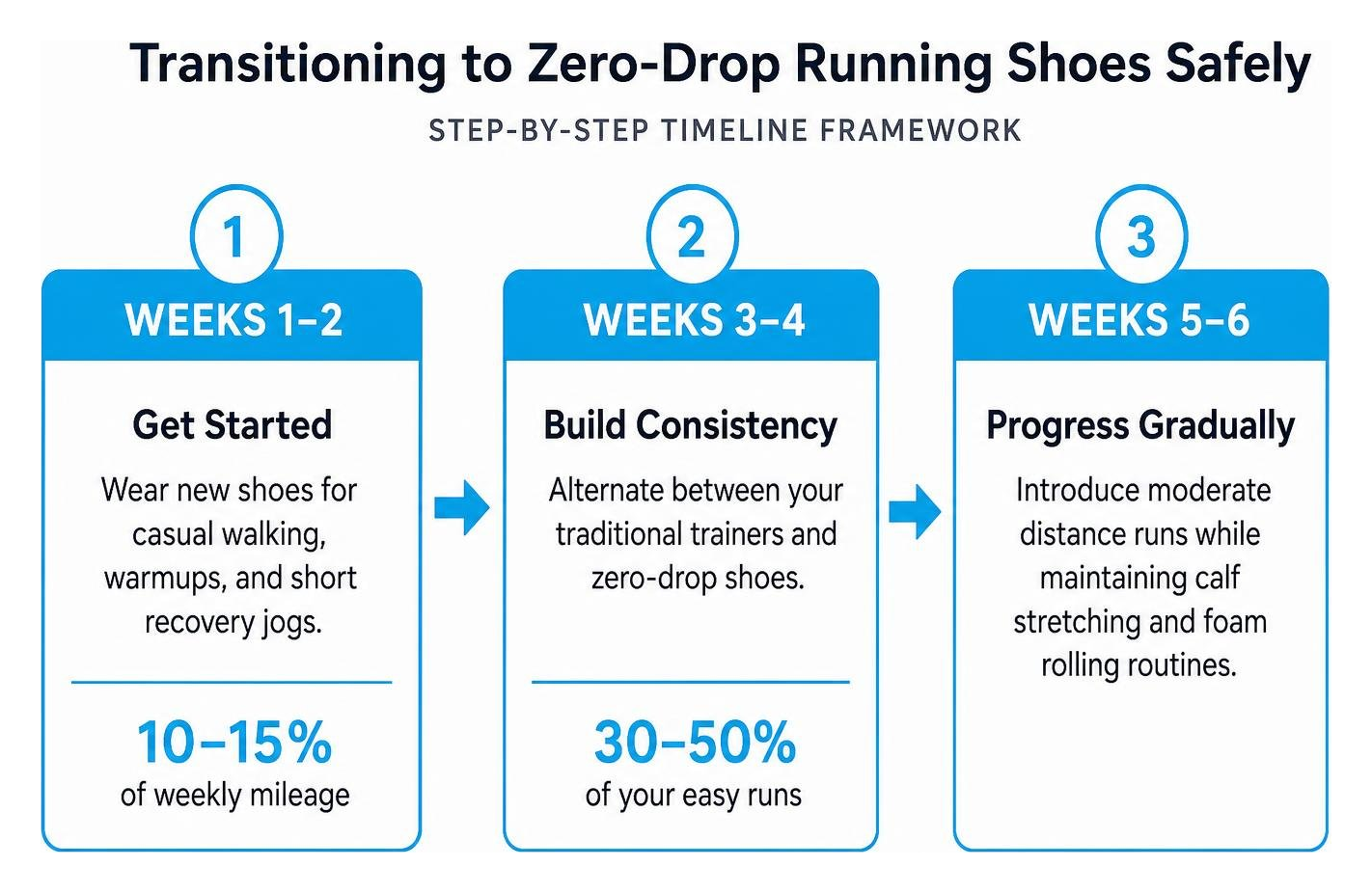
When planning to upgrade your marathon training with broad toe running shoes, follow this conservative transition structure:
- Weeks 1–2: Wear your new shoes for casual walking, warmups, and short recovery jogs (10–15% of weekly mileage).
- Weeks 3–4: Alternate between your traditional trainers and the zero-drop shoes, increasing use to 30–50% of your easy runs.
- Weeks 5–6: Gradually introduce moderate distance runs while maintaining calf stretching and foam rolling routines.
- Week 7 and Beyond: Shift the majority of your daily base miles to your anatomical trainers as your lower legs adapt.
Frequently Asked Questions About Wide Toe Box Footwear
What is the difference between standard wide (2E) shoes and roomy toe box shoes?
Standard wide shoes (2E or 4E) increase total internal volume uniformly from heel to toe. This often creates excessive slop around the ankle and arch, leading to heel slippage. In contrast, anatomical shoes maintain a standard, snug heel and midfoot profile while broadening solely across the forefoot. You can easily stop the slip with the best narrow heel and wide toe box shoes without sacrificing toe room.
Are roomy toe box shoes effective for all-day standing and walking?
Yes. Extended standing causes blood pooling and natural foot swelling. When your toes are trapped in narrow footwear, joint compression leads to fatigue and plantar pain. Selecting top rated wide toe box walking shoes for ultimate comfort equipped with plush foam like EGO™ MAX keeps your feet relaxed throughout long shifts.
How do I decide between Original and Standard FootShape™ fits?
Choose the Original Fit if you have wide feet, prominent bunions, use custom orthotic inserts, or simply prefer maximum wiggle room. Opt for the Standard Fit if you have average-width feet, prefer a locked-in performance feel, or want a balanced daily trainer. For an in-depth breakdown of width profiles across brands, consult our wide toe box shoes complete guide.
Conclusion
Choosing running shoes with a spacious forefoot is one of the most effective upgrades you can make for your long-term foot health and running efficiency. By matching your foot shape to the appropriate cut—whether you need the all-around balance of the Torin 8 or the high-stack comfort of the FWD VIA 2—you protect your joints and eliminate cramped toes.
Ready to explore minimalist and barefoot-inspired alternatives? Check out our comparison to stop the squeeze with these barefoot wide toe box shoes and take the next step toward pain-free running.