Which Wide Toe Box Running Shoes Should You Choose?
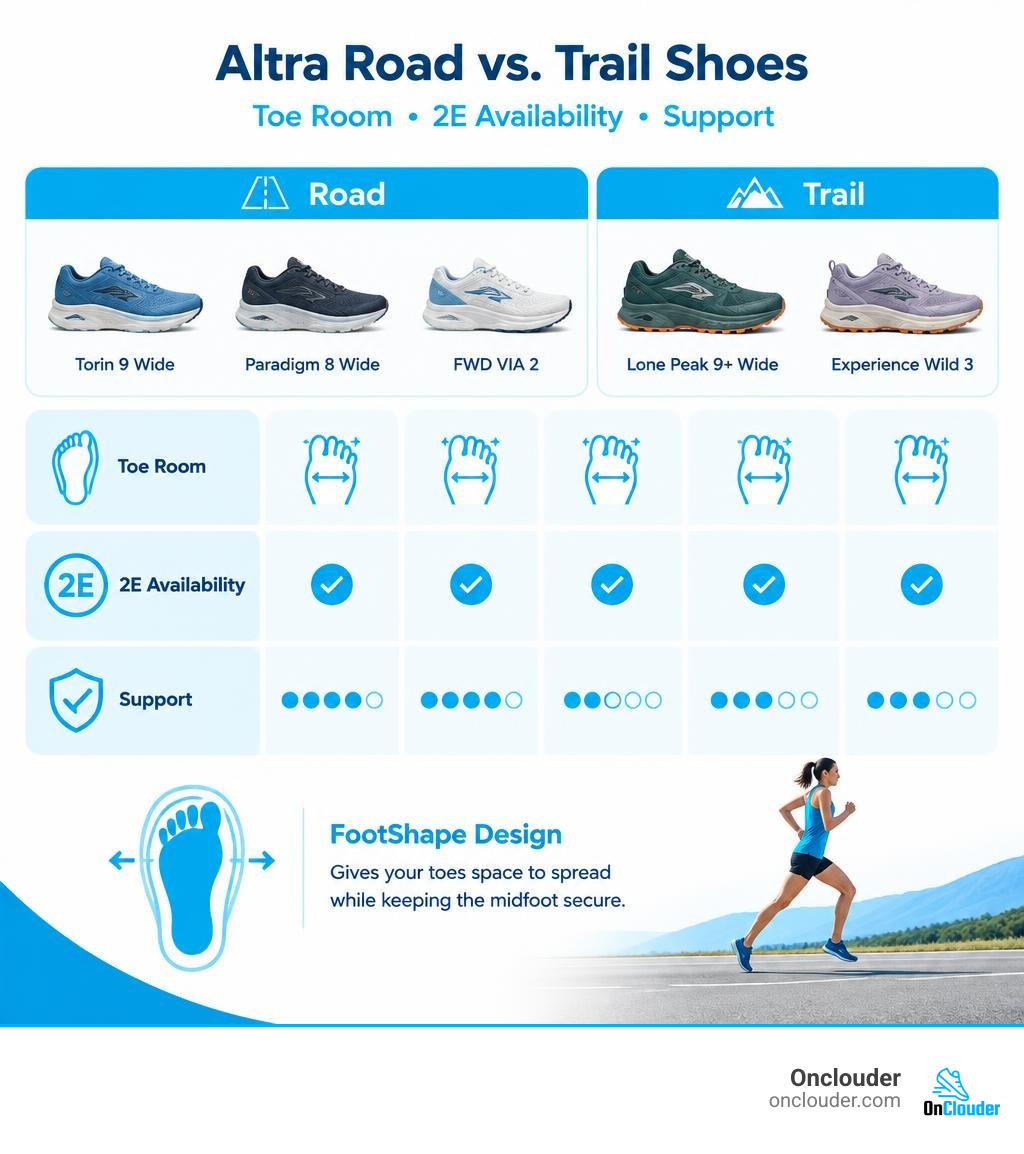
Start with your terrain and fit needs. For road running, choose the Torin 9 Wide for daily miles or the Paradigm 8 Wide if you want added stability. For trails, choose the Lone Peak 9+ Wide. All three come in a dedicated 2E width. If your toes need room but the rest of your foot fits a standard-width shoe, consider the cushioned FWD VIA 2 for roads or the Experience Wild 3 for trails.
FootShape design gives toes space to spread while keeping the midfoot secure. That’s different from simply making the whole shoe wider. When evaluating altra running shoes wide toe box options, you should verify both forefoot dimensions and secure heel lockdown before committing to daily miles.
For more advice on forefoot freedom, check our guide on switching to broad toe shoes.
How FootShape Technology Redefines Wide Toe Box Design
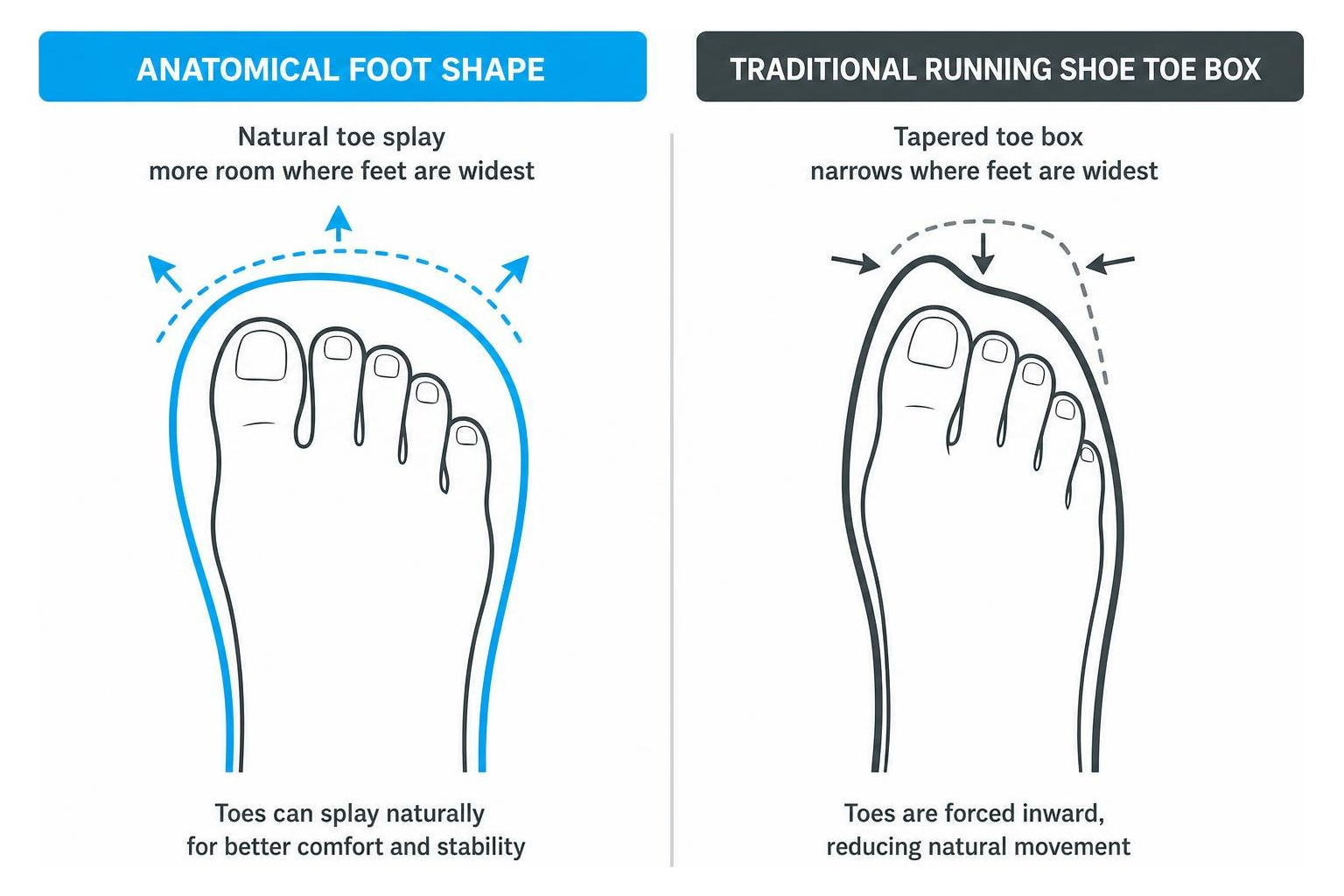
When we look at standard running footwear, we often find a fundamental design flaw: the toe box tapers inward right where our feet are naturally at their widest. This forces the big toe and pinky toe toward the center, restricting natural movement, pinching nerves, and often worsening conditions like bunions.
FootShape™ comfort approaches shoe construction differently. Instead of designing a symmetrical, pointy upper, the brand builds shoes around the natural biological outline of human feet. This anatomical geometry lets the toes splay outward upon foot strike, which enhances stability, absorbs shock naturally, and engages the intrinsic muscles of the foot. For any runner, understanding natural forefoot expansion in wide toe box shoes is essential when dealing with chronic friction, black toenails, or compressed metatarsals.
Understanding Original, Standard, and Racing FootShape Fits
Not every runner wants the exact same volume across the forefoot, which is why this design offers three distinct FootShape™ profiles:
- Original FootShape™: This is the roomiest cut available. It provides maximum volume and the widest toe box geometry, mirroring the classic feel that long-distance trail runners and thru-hikers rely on for natural toe splay.
- Standard FootShape™: Sitting right in the middle, this cut provides a roomy toe box while pulling the midfoot and heel slightly closer to the foot. It accommodates the vast majority of runners seeking daily road comfort without excess upper material.
- Racing FootShape™: Designed specifically for fast paces, speed sessions, and race day, this profile offers a snug, dialed-in lockdown across the midfoot and heel while retaining more forefoot room than conventional racing flats.
Traditional Wide (2E) Widths vs Anatomical Toe Splay
A common point of confusion is the difference between a traditional “wide” shoe and an anatomical toe box. In typical industry sizing, ordering a 2E wide shoe simply scales up the overall circumference and girth of the entire shoe—from heel to toe—often leaving you with a loose heel while still constricting the front of your toes.
For runners seeking specific guidance for wide fit running shoe shoppers, this approach combines FootShape™ toe box geometry with dedicated Wide (2E) options on select models. In these dedicated wide versions, you get extra volume through the midfoot and instep without sacrificing the secure heel counter, paired with the spacious forefoot perimeter your toes need.
Top Running Shoe Lineup: Detailed Model Breakdown and Comparison
To help you decide which model fits your training routine in 2026, we have broken down the core specifications across the top wide-fitting road and trail models from this lineup.
| Model | Width Category | Stack Height | Heel-to-Toe Drop | Weight | Best For |
|---|---|---|---|---|---|
| Paradigm 8 Wide | 2E Wide Option | 30 mm | 0 mm | 308 g | Max-cushion stability & all-day standing |
| Torin 9 Wide | 2E Wide Option | 28 mm | 0 mm | 269 g | Daily neutral road mileage |
| Lone Peak 9+ Wide | 2E Wide Option | 25 mm | 0 mm | 327.4 g | Technical trails & thru-hiking |
| FWD VIA 2 | Roomy FootShape | 33 mm / 37 mm | 4 mm | 300.5 g | Plush, rockered road recovery runs |
| Experience Wild 3 | Roomy FootShape | 28 mm / 32 mm | 4 mm | 314.7 g | Nimble, low-drop trail running |
Paradigm 8 Wide: Maximum Cushion with GuideRail Support
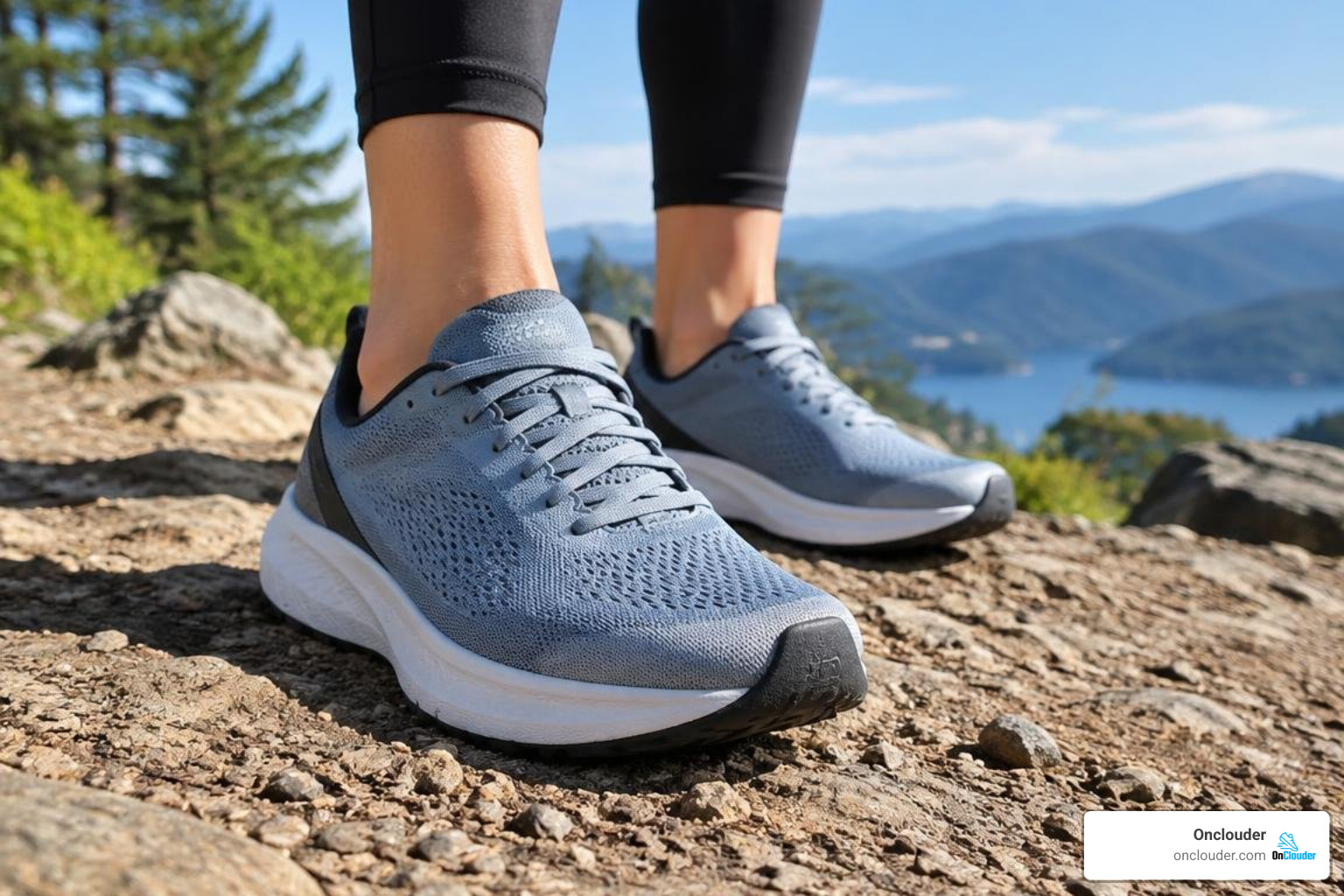
The Paradigm 8 Wide represents this brand’s most supportive road offering. It pairs a plush 30 mm stack height of updated EGO™ MAX foam with a balanced 0 mm drop, weighing in at 308 g.
What sets this shoe apart is its GuideRail™ technology. Unlike traditional, intrusive medial posts that force your foot into an artificial position, GuideRail™ acts like highway rumble strips: it sits along the medial side of the foot and only engages when your foot fatigues and begins to overpronate. It is an exceptional choice for high-mileage road runners, overpronators, and professionals who stand on hard floors all day.
Torin 9 Wide: Versatile Daily Road Trainer
For everyday neutral training on tarmac and sidewalks, the Torin 9 Wide is the benchmark. With a balanced 28 mm stack height, a true zero-drop platform, and a lightweight 269 g build, it provides a smooth, uninhibited ride.
The Torin 9 features an upgraded P35X dual-density midsole foam paired with a high-traction rubber outsole that provides 8.5% more grip than previous iterations. Wrapped in an engineered mesh upper, this shoe gives wide-footed runners a reliable, flexible daily workhorse for everything from recovery jogs to marathon training.
Lone Peak 9+ Wide: Legendary Trail Traction
If your routes lead off the pavement, the Lone Peak 9+ Wide delivers legendary performance. Weighing 327.4 g with a balanced 25 mm stack height, it maintains the beloved ground feel and responsive EGO™ cushioning trail runners have trusted for years.
Built for rugged paths, this version features an upgraded sticky-rubber outsole for traction on slick rock and mud, along with a durable upper made from 100% RPET ripstop mesh. For hikers and runners exploring options for blister-free big toe box trail running, the Lone Peak’s Original FootShape geometry combined with a 2E wide platform offers unmatched forefoot freedom.
FWD VIA 2: Low-Drop Plush Road Cruiser
Not every runner wants a completely flat zero-drop profile. The FWD VIA 2 is engineered for those who desire a generous toe box alongside a gentle 4 mm heel-to-toe drop and max-stack cushioning (33 mm forefoot / 37 mm heel, weighing 300.5 g).
It features an EGO™ P35 midsole foam, which is 19% softer than previous compounds, paired with an efficient rocker geometry that rolls you smoothly through toe-off. This makes it one of the premier cushioned big toe box shoes that maintain foot health without going barefoot.
Experience Wild 3: Nimble Low-Drop Trail Performer
For trail adventurers seeking low-drop geometry and responsive cushioning, the Experience Wild 3 provides an agile ride. It features a 28 mm / 32 mm stack height (4 mm drop) and weighs 314.7 g.
The shoe incorporates the lightweight EGO™ P35 foam, a redesigned heel collar for rugged descents, and a signature debris-blocking gaiter attachment system. When evaluating trail and road footwear selections, the Experience Wild 3 stands out for technical terrain where precision and toe room must coexist.
Midsole Foams, Drop Profiles, and Foot Health Benefits
Cushioning and drop work in tandem with toe box width to dictate how your body handles impact. Understanding the foam technology and drop profiles across this lineup ensures you pick the right balance of protection and ground feedback.
Midsole Compounds: EGO, EGO MAX, and EGO P35
The brand tailors its ride characteristics using distinct midsole formulations across the lineup:
- EGO™: Found in models like the Lone Peak 9+, this classic foam balances ground feel with resilient energy return. It provides firm stability on uneven terrain.
- EGO™ MAX: Utilized in the Paradigm 8 Wide, this compound delivers a luxurious, highly cushioned underfoot experience designed to withstand high impact without adding excessive weight.
- EGO™ P35 & P35X: The brand’s newest supercritical and dual-density formulations. EGO™ P35 (found in the FWD VIA 2 and Experience Wild 3) is 19% softer than previous iterations, delivering a light, energy-efficient ride. The P35X variant used in the Torin 9 Wide blends a firmer outer layer for structural stability with a soft interior core for step-in comfort.
Zero-Drop vs 4mm Drop and Foot-Health Acceptance Seals
A defining hallmark of traditional footwear in this category is the Balanced Cushioning™ (0 mm drop) platform. By placing the heel and forefoot at equal distance from the ground, your body maintains a natural alignment where the Achilles tendon, calf muscles, and lower back function without artificial elevation.
For runners transitioning from traditional high-drop shoes (8 mm to 12 mm), the Low Drop (4 mm) lineup—such as the FWD VIA 2 and Experience Wild 3—provides a gentle intermediary step that combines a smooth forward rocker with a roomy anatomical toe box.
Both design philosophies support podiatric health. Several models in this lineup carry the prestigious American Podiatric Medical Association Seal of Acceptance, a recognition granted to footwear proven to promote natural foot function and long-term foot health.
Finding Your Perfect Fit: Sizing and Measurement
Because anatomical toe boxes look and feel different from conventional tapered shoes, selecting the correct size requires a slightly different approach.
Sizing Guide for Wide Toe Box Running Shoes
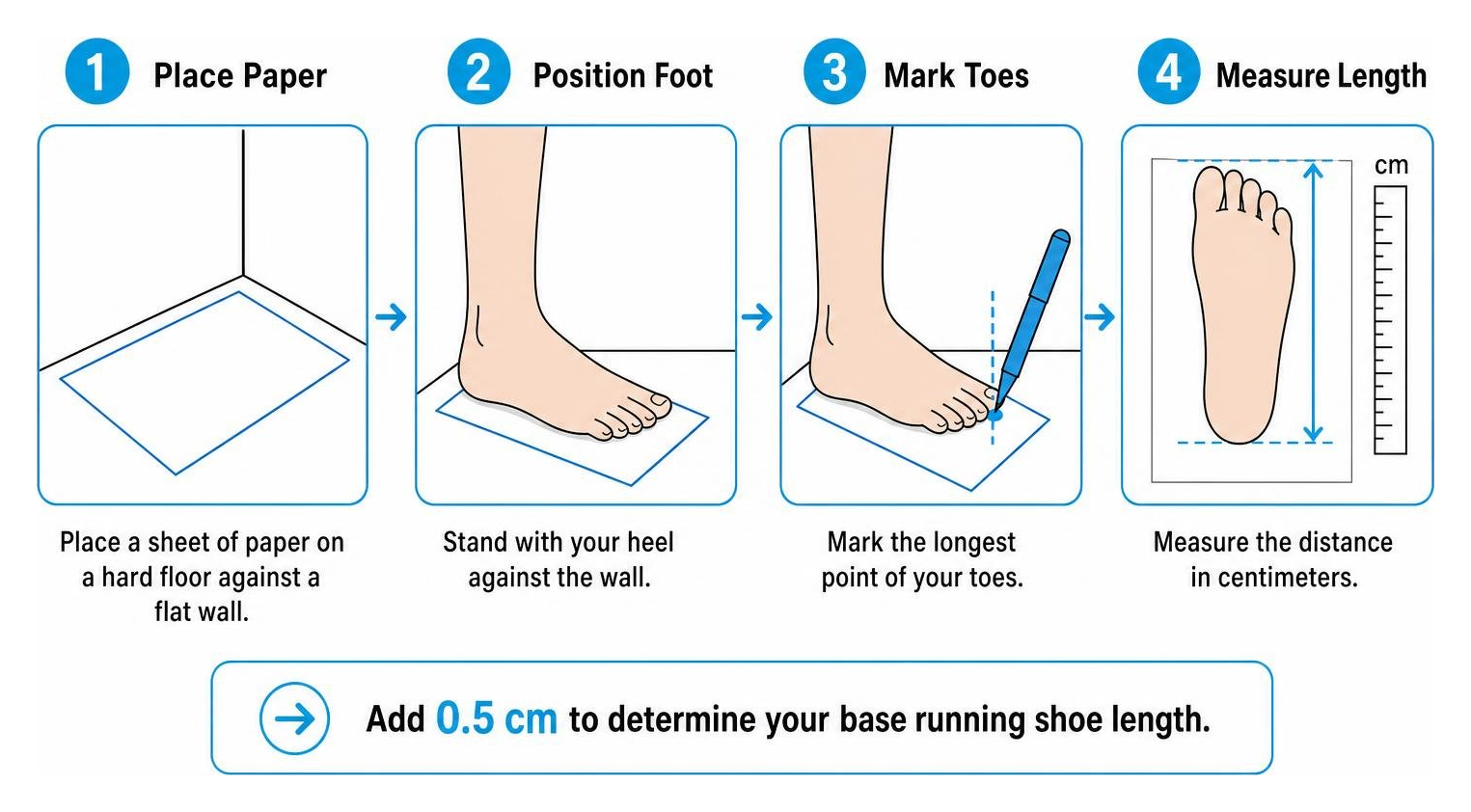
To ensure your toes have sufficient clearance during long runs, finding the ideal wide toe box running shoe fit requires following these fitting steps:
- Use the Wall-and-Paper Method: Place a sheet of paper on a hard floor against a flat wall. Stand with your heel against the wall, mark the longest point of your toes, and measure the distance in centimeters. Add 0.5 cm to determine your base running shoe length.
- Size Up Half a Size: Order running shoes ½ size larger than your dress shoe. Your feet naturally swell and lengthen under impact during running or extended walking.
- Check the Thumb Rule: When standing in the laced shoe, verify you have a full thumbnail’s width of empty space between your longest toe and the end of the shoe.
- Confirm Midfoot Security: Your toes should be completely free to wiggle and spread, but your midfoot and heel should feel locked down with zero slippage.
Frequently Asked Questions About Wide Toe Box Running Shoes
How do I know if I need an Original FootShape fit or a dedicated 2E Wide model?
If your main issue is pinched toes or bunions, but your heel and midfoot fit standard-width shoes comfortably, an Original FootShape™ standard-width model often provides ample space. However, if your feet spill over the footbed along the sides of the midfoot or if you have a high-volume instep, opt for a dedicated 2E Wide version such as the Torin 9 Wide, Paradigm 8 Wide, or Lone Peak 9+ Wide.
Does transitioning to zero-drop running shoes require an adjustment period?
Yes. If you are accustomed to shoes with a high heel drop (10 mm+), your calves and Achilles tendons will experience greater stretch and engagement in a 0 mm zero-drop platform. We recommend rotating your new zero-drop shoes into your routine gradually over 3 to 4 weeks, starting with short walks and easy runs before increasing mileage.
Which wide toe box running shoes have a foot-health acceptance seal?
Models across the core lineup—including the Torin series, Paradigm series, and FWD VIA series—have received the APMA Seal of Acceptance for their design, which supports natural foot posture and alignment.
Conclusion
Squeezing your feet into narrow, tapered running shoes does not have to be the price of performance. FootShape™ design and dedicated 2E wide models prove that runners can enjoy high-mileage cushioning, responsive energy return, and trail-tested traction while giving their toes the space they need. If you are ready to eliminate forefoot pain and let your feet function as nature intended, explore roomy footwear solutions and stop toe squeeze to find your ideal pair today.