Find Room for Your Toes on Long Runs
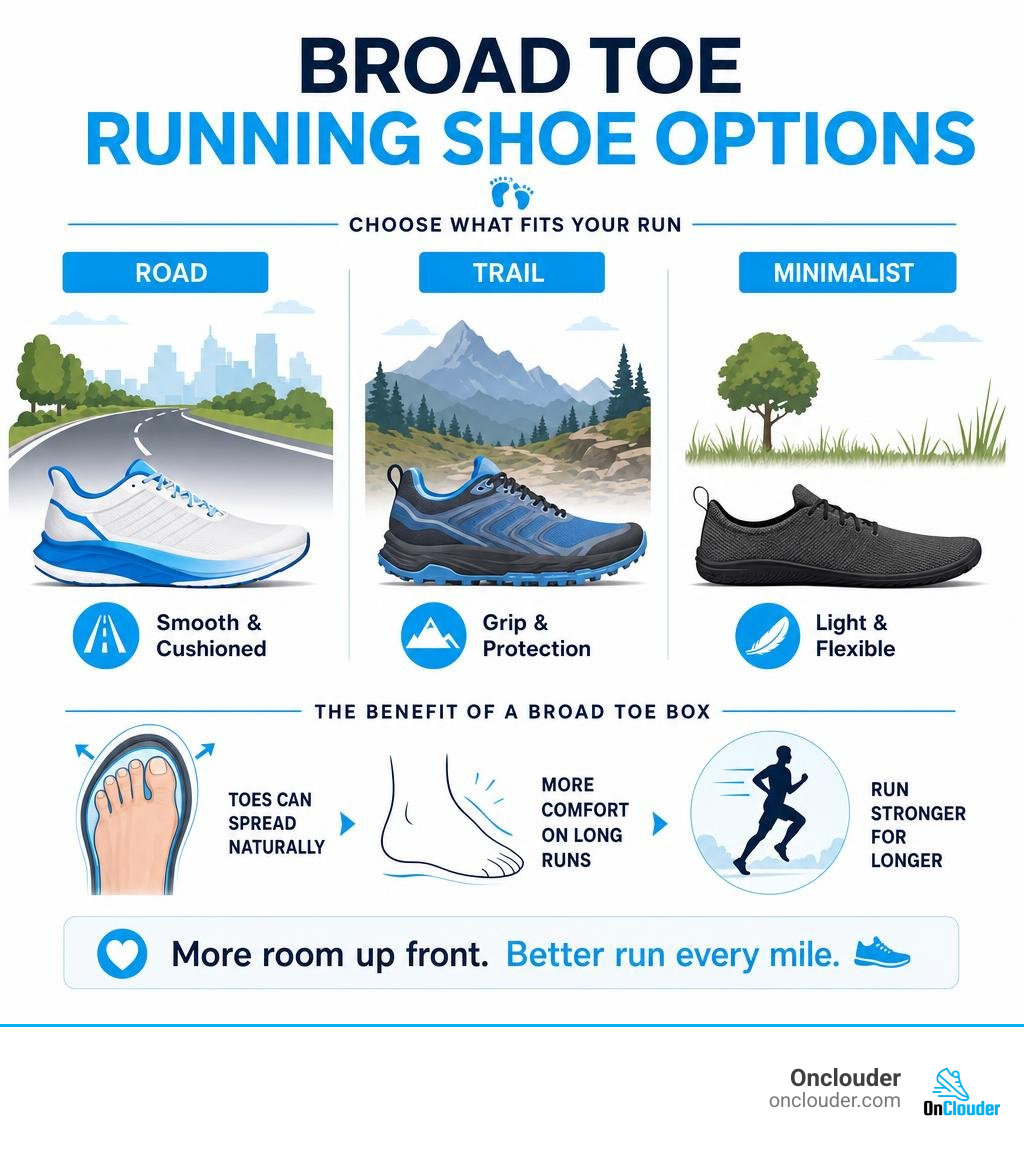
Start with where you run and how much cushioning you want. For road training, look for cushioned wide-fit models with foot-shaped profiles that absorb daily impact. For trails, seek out wide platforms with protective rock plates and deep lug traction. If you prefer a thin, flexible sole, consider zero-drop minimalist designs that allow maximum ground feedback.
A broad toe box gives your toes room to spread instead of pressing them together. That can feel especially useful late in a long run, when your feet naturally swell. Check the fit at your toes and heel: you want space up front without your heel slipping. According to the American Podiatric Medical Association, proper shoe fit is essential for preventing common running injuries and maintaining foot health over high-mileage training cycles.
Why Choose Broad Toe Running Shoes for Marathon Training?
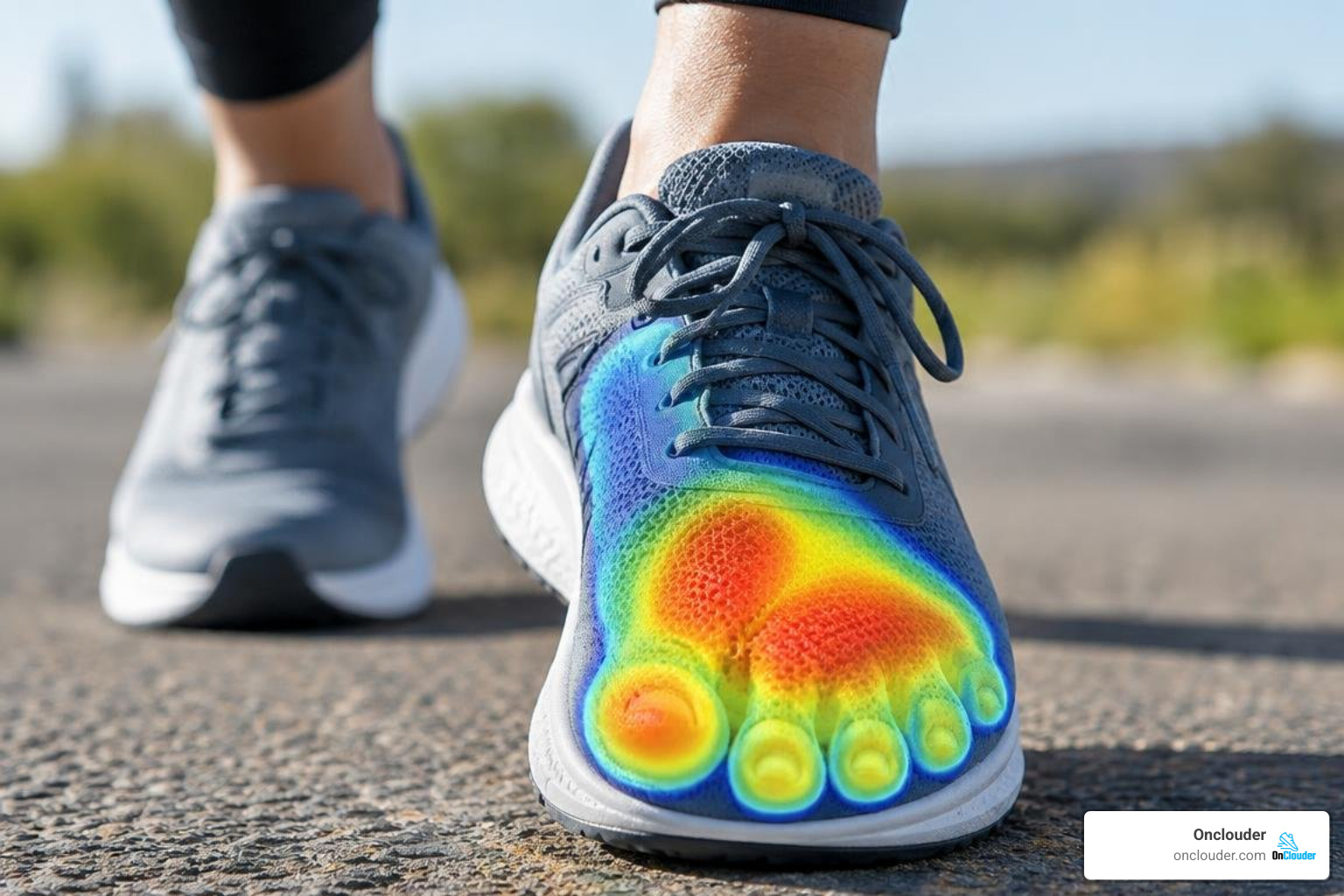
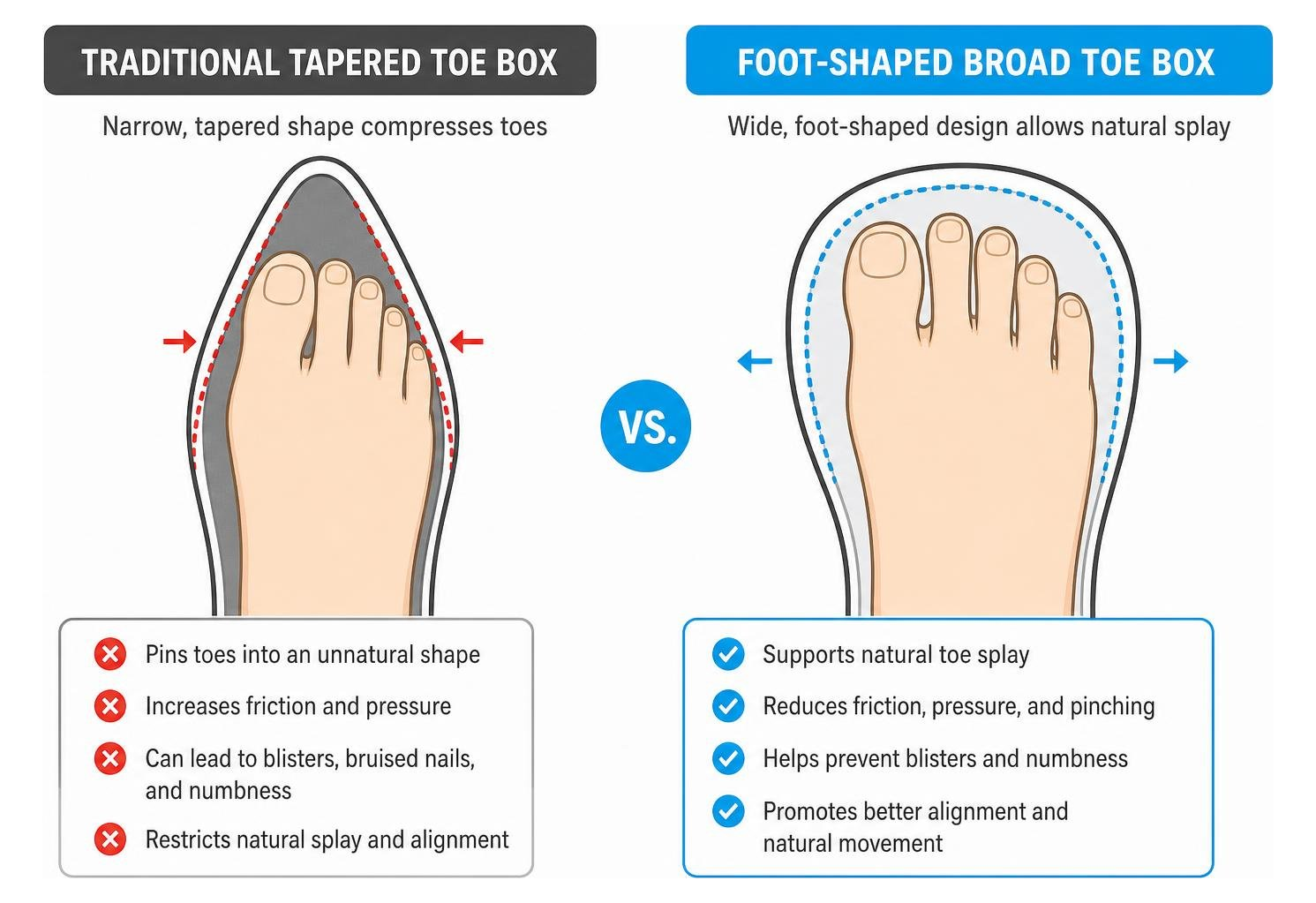
When you log 15 to 20 miles on a weekend long run, your feet undergo tremendous physiological stress. Every footstrike exerts downward force equal to several times your body weight, causing the metatarsal arches to expand and the foot to naturally splay outwards. Standard running shoes often taper dramatically at the forefoot, cramming the five toes into an unnatural arrowhead shape.
Over long distances, this pinching leads to excessive friction, bruised toenails, and numbness. Investing in the best big toe box running shoes for blister-free miles allows your foot to function as an organic shock absorber. By allowing your great toe (hallux) to stay straight, your foot maintains optimal mechanical alignment, naturally activating the plantar fascia and stabilizing your entire gait cycle from landing through toe-off.
Who Benefits Most from Broad Toe Running Shoes?
While any distance runner can enjoy extra forefoot real estate, certain athletes notice dramatic improvements in comfort and injury prevention:
- Runners with Bunions or Tailor’s Bunions: Pointed toe boxes aggravate bunion angles by forcing the big toe inward. A broad forefoot removes lateral pressure against sensitive joints.
- Athletes Using Corrective Toe Spacers: Runners wearing silicone spacers during daily runs need the expanded perimeter that foot-shaped designs provide.
- Runners with Low or Collapsing Arches: Discovering the ultimate list of running shoes for flat and wide feet is essential for avoiding medial blister points when the forefoot widens under load.
- Narrow-Heeled, Wide-Forefoot Runners: Many athletes struggle when traditional wide shoes slip at the heel. Specialized solutions for finding the perfect match for your narrow heels and wide forefoot provide a snug midfoot and heel collar paired with an unrestricted toe box.
Understanding Anatomical Foot Shapes vs Traditional Wide Widths
It is crucial to differentiate between an anatomical toe box and a standard wide-width shoe (2E/4E):
- Traditional 2E/4E Widths: These shoes scale up the entire circumference and volume of the shoe. While wider across the ball of the foot, the upper still tapers inward near the toes, which can still compress the outside digits.
- Anatomical / Foot-Shaped Toe Boxes: These shoes mirror the natural human foot outline. The inner edge runs straight along the big toe rather than curving inward, offering ample splay space while retaining a standard, secure heel and midfoot fit.
- High-Volume (HiVo) Builds: These models increase internal vertical volume, accommodating thick custom orthotics or high insteps without pinching.
If you are just getting started, our beginners guide to wide fit running shoes breaks down how traditional shoe sizing interacts with foot volume.
Top Wide and Broad Forefoot Running Shoes Compared
Selecting the right trainer depends on how much road impact protection you prefer and whether you run on pavement or gravel paths. Here is how leading wide and broad toe box categories stack up:
| Category / Model Type | Heel-to-Toe Drop | Stack Height | Typical Weight | Best For |
|---|---|---|---|---|
| Zero-Drop Foot-Shaped Road Trainer | 0 mm | 28 mm | ~269 g (9.5 oz) | Balanced daily road miles & natural gait |
| Hybrid Trail & Road Wide Trainer | 5 mm | 35 mm / 30 mm | ~295 g (10.4 oz) | Trail-to-road transitions & technical paths |
| Minimalist Barefoot Trainer | 0 mm | 5 mm | ~180–290 g (6.4–10.2 oz) | Pure barefoot minimalist road/trail running |
| High-Cushion Wide Road Trainer | 8 mm | High (Cushioned) | ~255 g (9.0 oz) | Energetic road tempo runs & long runs |
| Stability Guide-Rail Wide Trainer | 10 mm | 36 mm / 26 mm | ~280 g (9.9 oz) | Mild-to-moderate overpronation support |
| Max-Cushion High-Volume (HiVo) Trainer | 8 mm | 34 mm / 26 mm | ~340 g (12.0 oz) | Max-cushion recovery & high-volume feet |
For more deep-dive comparisons across multiple categories, check our best wide toe box running shoes guide.
Zero-Drop Max-Comfort Road Trainers
Zero-drop road trainers built on anatomical foot-shaped platforms are premier daily workhorses for long-distance marathon builds. Featuring a balanced stack height and dual-density midsole foam, they provide a softer inner layer for cloud-like road absorption and a firmer outer perimeter for structural guidance. Durable rubber outsoles deliver dependable wet-road grip through high-mileage blocks.
Hybrid Trail and Road Stability Shoes
If your marathon route includes packed gravel, fire roads, or uneven park paths, hybrid trail trainers shine. They pair a generous wide forefoot with snug midfoot and heel lockdown. Featuring a moderate 5mm heel-to-toe drop, they provide plush foam cushioning underfoot while multi-terrain outsoles handle loose dirt without feeling harsh on tarmac.
Minimalist Barefoot Running Shoes
For runners seeking pure sensory ground feedback and zero artificial support, handcrafted minimalist broad-toe running shoes offer unmatched forefoot width. Built with ultra-thin zero-drop soles, they provide complete freedom for toes to splay and strengthen the foot’s intrinsic musculature.
High-Cushion Road and Stability Trainers
Runners who prefer a standard heel drop with extra forefoot width have outstanding choices:
- High-Rebound Wide Trainers: Combine lightweight construction with responsive, energetic super-critical foams and breathable recycled uppers.
- Supportive Wide Stability Trainers: Feature moderate-to-high drops along with guide-rail rims to gently center feet that tend to overpronate during fatigue.
- High-Volume Anatomical Trainers: Engineered specifically for runners with higher insteps or custom orthotics, offering extra vertical volume alongside a broad base.
How to Size and Select Broad Toe Running Shoes
Finding the proper size in foot-shaped footwear requires paying close attention to length and internal volume.
- Measure with the Wall-to-Book Method: Stand barefoot on a hard floor with your heel firmly touching a wall. Place a flat book flush against your longest toe. Measure the exact distance in millimeters between the wall and the book late in the afternoon when your feet are largest.
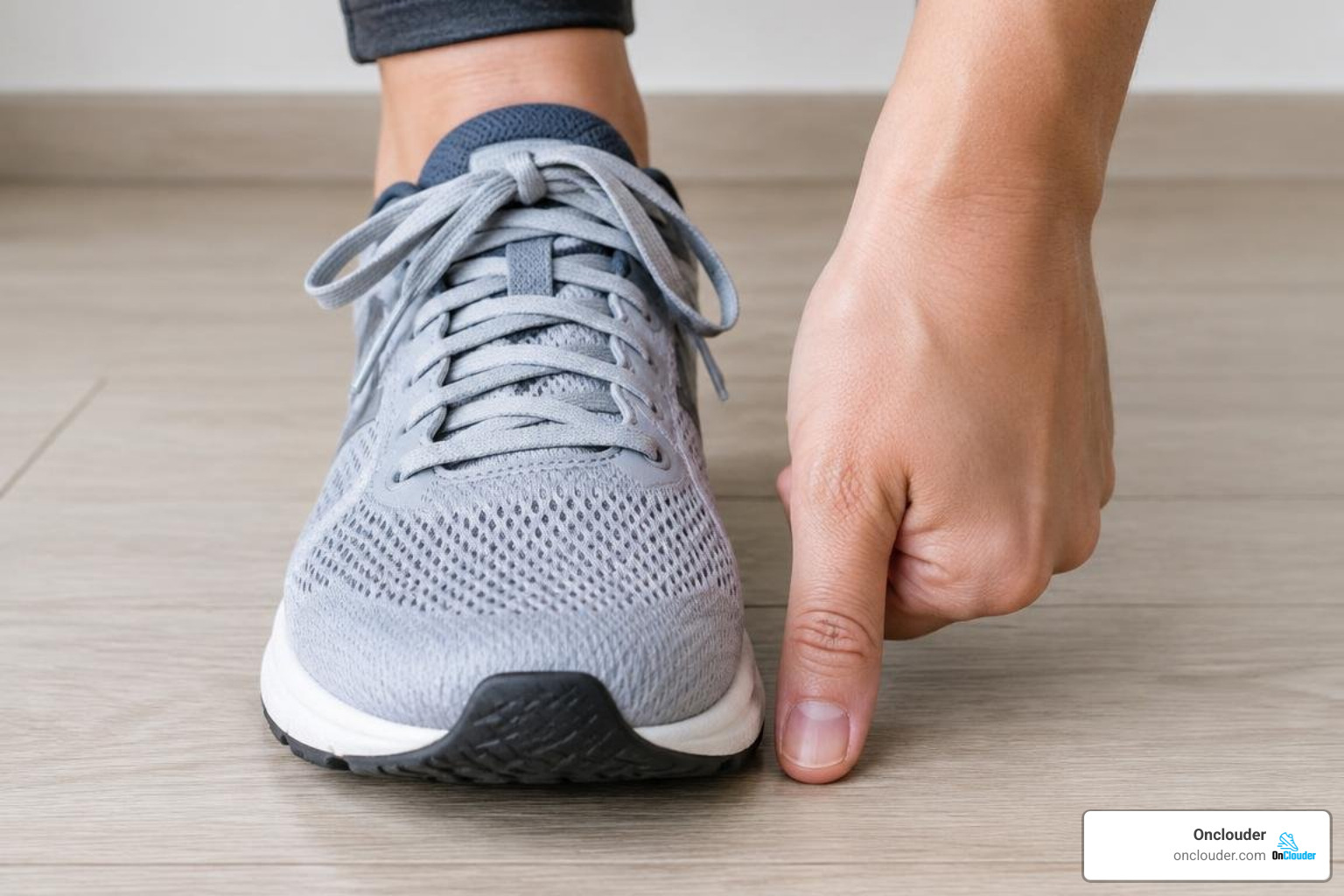
- Ensure a Full Thumb-Width Gap: You need roughly 10–12 mm (one thumb’s width) of clearance between the end of your longest toe and the tip of the shoe. During a 26.2-mile race, foot elongation and swelling are inevitable.
- Check Brand-Specific Sizing Quirks:
- Minimalist/Barefoot Models: Often designed on shorter internal lasts; check whether ordering a half or full size up from your street shoe size is recommended.
- High-Volume (HiVo) Models: Often include thicker contoured sockliners; order a half size up if you require extra toe clearance.
- Standard Anatomical Wide Models: Generally fit true-to-size in length, but going up a half size is recommended if you wear thick cushioned merino wool running socks.
Matching Terrain and Gait with Broad Toe Running Shoes
- Road Racing & Fast Marathons: Look for responsive, rockered midsoles and high-rebound foams that return energy without pinching the forefoot.
- Trail & Varied Terrain: Select models featuring specialized rubber outsoles with multi-directional 3–4mm lugs to ensure dependable lateral grip over roots, rocks, and mud.
- Stability & Pronation Control: If your ankles roll inward excessively as your muscles fatigue, prioritize shoes with structured guide rails or dual-density midsole rims rather than relying solely on traditional rigid medial posts.
Material Durability, Upper Breathability, and Shoe Longevity
To ensure your shoes withstand hundreds of training miles, proper upper and outsole care is essential:
- Engineered Jacquard Mesh: Extremely breathable and stretchy; clean by removing the insoles and wiping down gently with warm water and mild soap. Never machine wash or place running shoes in a heated dryer.
- Leather and Natural Uppers: Found on select minimalist models. Condition the upper occasionally with natural leather conditioner to keep it supple and water-resistant.
- Outsole Longevity: Monitor high-wear zones under the ball of the foot and outer heel. Most high-performance trainers deliver between 350 and 500 miles of reliable cushioning before foam compression compromises support.
Frequently Asked Questions About Broad Toe Footwear
Should runners size up when buying broad toe running shoes?
Yes, in specific models. While anatomical toe boxes naturally provide more lateral width, some brands utilize unique manufacturing lasts that run slightly shorter in length. Always verify thumb-width clearance at the front, and consider going up a half size if you run in thick performance socks.
Can broad toe running shoes prevent running blisters and bunions?
While footwear cannot magically cure genetic bone alignment issues, shoes with broad forefeet significantly alleviate pressure on the first and fifth metatarsals. By stopping toes from rubbing against each other or pressing hard against the sidewall, you dramatically reduce friction hotspots and shear forces that cause deep blisters.
How does heel drop impact running in wide toe box shoes?
Heel-to-toe drop dictates how load is distributed across your joints. A zero-drop shoe places your heel and forefoot at equal distance from the ground, promoting midfoot landing and strengthening calf muscles and the Achilles tendon. Traditional 8–10mm drop trainers shift impact loads higher up toward the knees and hips. When transitioning from high-drop shoes to lower-drop models, build your mileage gradually over 4 to 6 weeks to avoid calf tightness.
Conclusion
Completing a successful marathon training block requires footwear that supports your natural anatomy rather than forcing your feet into restrictive molds. Choosing broad toe running shoes allows your toes to splay freely, reduces blistering, and preserves foot stability through the final miles of your race.
Ready to liberate your feet on your next run? Explore our detailed comparison to stop the squeeze with these barefoot wide toe box shoes and find the perfect match for your marathon journey!