Find Ladies’ Shoes With a Wide Toe Box That Actually Fit
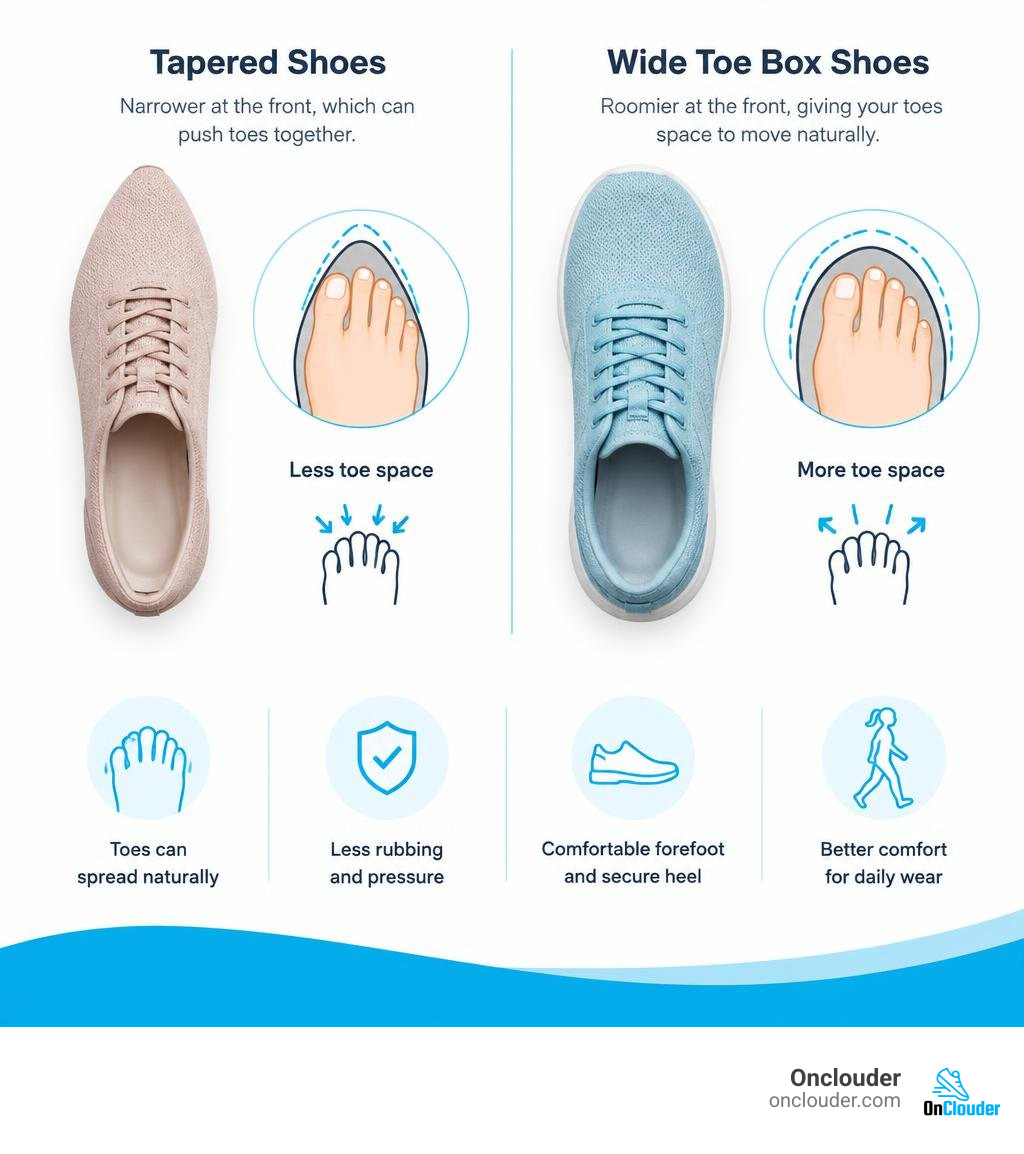
Start with the shape of your toes, not just the width label. Look for a shoe that lets your toes rest without being pushed together, while the heel stays secure. Measure both feet while standing, then try shoes on with the socks you plan to wear. Leave about a thumbnail’s width between your longest toe and the front of the shoe.
A roomy toe box can ease rubbing and pressure during daily walks or workouts. But a wide-width label alone does not guarantee enough toe space. The key is a comfortable forefoot and a stable fit through the rest of the shoe. For many women, shopping for ladies’ shoes with a wide toe box starts with understanding that fit is fundamentally about shape rather than size alone.
Helpful resources for choosing anatomical footwear:
Understanding Foot Health and Ladies Shoes Wide Toe Box Mechanics
For decades, traditional women’s footwear has prioritized a tapered silhouette that pinches the forefoot into an unnatural triangle. When we force our feet into narrow shoes, we compromise basic biomechanics. The human foot naturally widens at the front, with the toes fanning out to form a stable tripod of support.
When you switch to anatomical designs, your foot regains its intended architecture. Exploring a comprehensive guide to wide toe box ladies shoes shows how natural toe spread directly influences posture, balance, and kinetic chain alignment from the ground up.
| Feature | Traditional Tapered Footwear | Anatomical Wide Toe Box Footwear |
|---|---|---|
| Toe Positioning | Squeezed medially into a pointed shape | Allowed to fan out naturally into an anatomical fan shape |
| Hallux Alignment | Deviated inward toward second toe | Kept straight, maintaining full ground engagement |
| Plantar Pressure | Concentrated under metatarsal heads | Evenly distributed across the entire forefoot surface |
| Heel Fit | Often loose if sized up for toe room | Locked in place with contoured heel counters |
| Postural Impact | Shifts balance backward or destabilizes stride | Promotes level, natural posture and stable gait mechanics |
Biomechanics of Splay: Why Forefoot Freedom Matters
When your foot strikes the ground during a normal walking cycle, the metatarsal bones and phalanges undergo a natural widening called dynamic splay. This movement absorbs impact shock and prepares the foot for forward propulsion.
The big toe (the hallux) acts as the foot’s primary stabilizer. When compressed by a narrow shoe, the hallux cannot anchor to the floor. As a result, the foot compensates by overpronating, placing excess stress on the knees, hips, and lower back. Footwear that respects your foot’s natural shape allows the hallux to stabilize each step, relieving pressure from the metatarsal heads while integrating smoothly with supportive arch profiles.

Idiopathic Toe Walking and Forefoot Strain in Adults
Forefoot tension isn’t always caused solely by footwear choices; underlying gait patterns also play a critical role. Idiopathic toe walking (ITW)—walking without heel-to-toe progression in the absence of neurological conditions—is estimated to occur in 7% to 24% of children, with around 12% continuing to display symptoms into adolescence and young adulthood (Engelbert et al., 2011).
Research reveals that individuals with a history of ITW have a threefold higher chance of severe restriction in active dorsal extension of the ankle joint, meaning their ankles cannot easily bend upward past neutral (Engelbert et al., 2011). This localized ankle stiffness shifts peak weight-bearing forces directly onto the ball of the foot and the toes.
For women dealing with reduced ankle dorsiflexion or residual toe-walking habits, a broad, anatomical toe box is essential. It provides a larger surface area to distribute intense forefoot pressures, preventing focal tissue breakdown and joint strain.
Foot Conditions Alleviated by Roomy Forefoot Designs
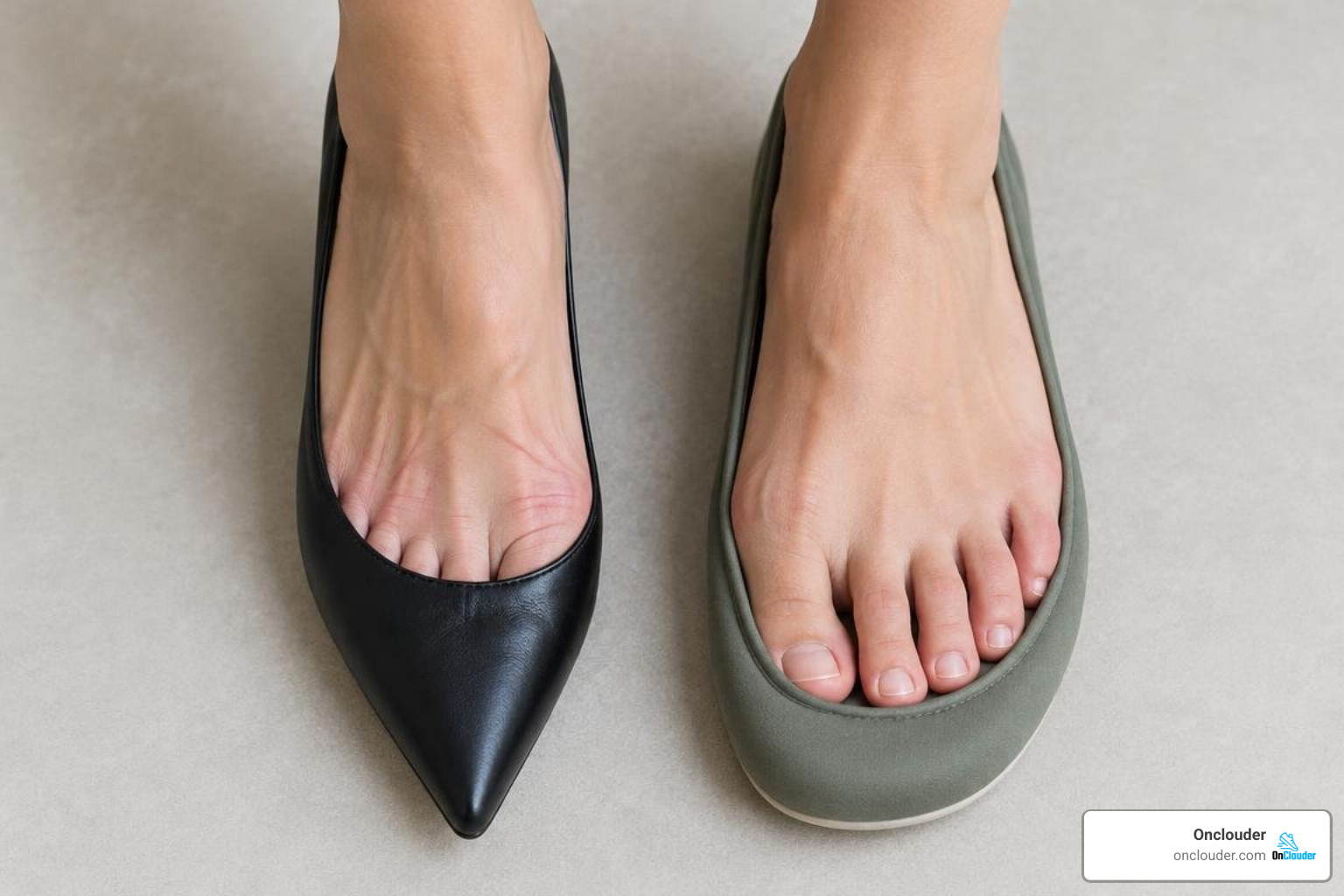
When footwear squeezes the forefoot, it creates friction hotspots and traps peripheral nerves. Roomy forefoot designs provide immediate relief for various common podiatric conditions by removing mechanical compression.
- Metatarsalgia: Constant friction against cramped metatarsal heads inflames the ball of the foot. Broad toe boxes restore even weight dispersion.
- Peripheral Neuropathy & Diabetic Foot Care: Adequate volume prevents rub spots, blisters, and hidden pressure points that could escalate into serious ulcers.
- Bunion Progression: Giving the big toe space halts the forced lateral deviation that accelerates joint damage. Learning more about relieving bunion pressure reveals how simple footwear adjustments can halt daily discomfort.
Selecting Ladies Shoes Wide Toe Box for Bunions and Hammertoes
Bunions (hallux valgus) and hammertoes develop or worsen when footwear forces the digits into confined spaces. A bunion forms when the base of the big toe shifts outward while the tip points inward. Hammertoes occur when cramped toe boxes force the smaller joints into a permanent upward curl.
When browsing women’s wide toe box footwear, look for options featuring soft, pliable leather or elastic stretch panels around the first and fifth metatarsophalangeal joints. These materials accommodate structural prominences without rubbing, allowing existing joint misalignments to sit naturally without constant pressure.
Managing Plantar Fasciitis and Morton’s Neuroma
Morton’s neuroma involves the thickening and irritation of the tissue surrounding the digital nerve between the metatarsal bones, most commonly between the third and fourth toes. Cramped shoes pinch these bones together, creating a painful burning sensation.
A broad toe box gives the metatarsal bones room to separate naturally, decompressing irritated nerves. For plantar fasciitis, combining ample toe room with a stable heel cup, gentle arch support, and mild rocker sole profiles helps offload tension from the plantar fascia during toe-off. Investing in proper spacious footwear options ensures that therapeutic insoles fit comfortably without crowding the forefoot.
How to Measure Your Feet Accurately for the Perfect Fit
Many people mistakenly assume they have wide feet overall when they simply have an anatomical foot shape featuring a wide forefoot and a narrow heel. Reviewing a practical guide to comfortable wide toe box footwear can help you select shoes that accommodate your forefoot without slipping at the back.
Step-by-Step At-Home Sizing Method
- Measure at the End of the Day: Your feet naturally swell and expand throughout the day due to gravity and movement.
- Bear Full Weight: Stand upright on a piece of paper placed against a flat wall on a hard floor. Have a friend trace the outline of both feet with a pencil held strictly vertical.
- Measure Length: Measure the distance from the back edge of the heel to the tip of your longest toe (which may be your second toe if you have Morton’s toe).
- Measure Forefoot Girth: Use a flexible measuring tape to measure the circumference around the widest part of your foot—across the first and fifth metatarsal joints.
- Account for Dynamic Movement: Ensure there is roughly 1/2 inch (a full thumbnail’s width) of clearance between your longest toe and the end of the shoe to allow for natural forward slide during walking.
Navigating Width Designations and Extra Depth
Standard women’s shoe width is designated as Medium (B). Wide sizes progress to D (Wide), 2E (Extra Wide), and up to 4E or 6E. Across most manufacturers, each width step adds approximately 1/8 inch of circumference to the upper.
However, width alone does not define vertical room. Double-depth shoes offer an extra 1/4 to 1/2 inch of vertical clearance throughout the interior. This extra volume is helpful for accommodating high insteps, rigid hammertoes, or thick custom orthotics without pressing downward onto sensitive toenails.
Essential Features and Styles for Everyday and Professional Wear
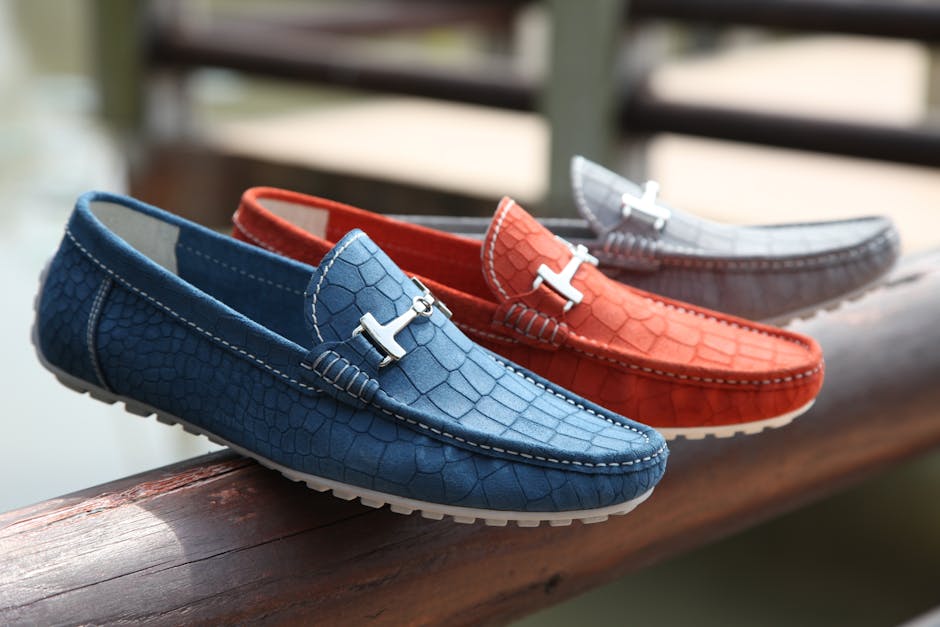
Gone are the days when roomy forefoot footwear meant clunky, orthopedic-looking shoes. Modern footwear combines anatomical room with sleek materials, tapered midfoot waists, and supportive sole units. Our top wide flats collection highlights how modern styling blends seamlessly with spacious forefoot profiles.
Elegant Dress Styles in Ladies’ Shoes with a Wide Toe Box
Professional and formal events no longer require cramped, pointed pumps. Several design approaches offer roomy toe boxes while maintaining an elegant look:
- Block Heel Pumps: Styles with a stable low block heel paired with an extra-wide toe box and cushioned foam panels protect sensitive bunion joints.
- Structured Leather Loafers: Handcrafted leather loafers that pair supple materials with built-in arch support and flexible side panels for forefoot give.
- Therapeutic Dress Shoes: Dress shoes designed with an ergonomic heel height, multilayer cushioning, double-depth volume, and adjustable straps suit sensitive feet.
- Flexible Dress Flats: For classic office wear, explore stylish ballet flats with broad toe boxes designed with rounded vamps and flexible toplines that prevent slipping.
Everyday Loafers, Flats, and Boots with Natural Toe Splay
For casual daily wear, errands, and commuting, functional footwear prioritizes natural foot alignment and durable materials:
- Minimalist & Near-Zero Drop Loafers: Minimalist leather loafers with a low 2mm-4mm drop, full-grain leather, and a wide anatomical toe box promote natural posture.
- Multi-Width Casual Flats: Casual flats offered across a range from narrow to extra-wide widths use pillow-cushioned removable footbeds and elastic toplines.
- Platform Dress Heels: For women seeking extra height without forefoot strain, extra wide width heels with a raised platform sole reduce pitch angle, keeping pressure off the balls of the feet.
- Durable Everyday Styles: Check out our breakdown of spacious everyday shoes to find reliable options for long days on your feet.
Frequently Asked Questions About Women’s Wide Toe Box Footwear
What is the difference between a wide width shoe and a wide toe box shoe?
A traditional wide shoe (such as a ‘D’ or ‘EE’ width) expands the overall volume of the shoe uniformly from heel to toe. This can lead to a loose heel and slipping if you only have a broad forefoot.
In contrast, a wide toe box shoe is built on an anatomical last: it features a standard or snug heel cup and midfoot to secure the foot, while flaring out exclusively at the ball and toe box to allow natural splay.
Can wide toe box shoes look stylish for business and formal wear?
Yes. Modern shoemakers use clever design elements like deep vamps that conceal the widest part of the foot, asymmetric almond toes, and hidden stretch panels. Combined with rich suedes and high-grade leathers, these features provide ample toe room while maintaining a refined, professional look.
How much space should remain between the longest toe and the shoe front?
You should aim for roughly 1/2 inch—about the width of an adult thumbnail—between your longest toe and the inside tip of the shoe while standing. This gap allows your foot to expand and slide forward naturally during the push-off phase of walking without jamming your toes against the front.
Conclusion
Finding the right footwear is essential for long-term foot health and daily comfort. By choosing shoes that respect your natural foot anatomy, you can alleviate common issues like bunions, nerve compression, and plantar strain while supporting proper posture from the ground up.
Take a few moments to accurately measure your feet, choose silhouettes that provide proper forefoot clearance, and compare the best barefoot and wide toe box shoes to stop the squeeze to give your toes the room they deserve.
References
Engelbert R, Gorter JW, Uiterwaal C, van de Putte E, Helders P. “Idiopathic toe-walking in children, adolescents and young adults: a matter of local or generalised stiffness?.” BMC musculoskeletal disorders, 2011. PMID 21418634.